
The best running shoe is the one that disappears under your foot while doing the job you bought it to do. For most neutral runners, my best overall pick is the ASICS Superblast 3 because it handles steady runs, long progressions, and faster work unusually well. The Brooks Ghost 18 is the safer first choice when you want a traditional daily trainer. Runners who need guidance should start with the ASICS Gel-Kayano 32, not automatically buy the softest shoe on the shelf.
This guide is built from 2,944 verified running miles across 14 current shoes. I tested them on Atlantic City–area boardwalks and roads, wet wooden planks, track sessions, long progression runs, and Pine Barrens trails. I am 182 pounds, usually wear US 10.5, and often size to 11 in Nike. Those facts are not biography filler; body mass, foot shape, pace, and terrain change how a shoe behaves.
Fast answer: Choose by use case before brand. Daily mileage: Ghost 18. One fast do-most-things shoe: Superblast 3. Soft easy miles: Gel-Nimbus 28. Stability: Gel-Kayano 32. Workouts: Endorphin Speed 5. Trails: Speedgoat 7. For terrain-specific alternatives beyond that overall winner, compare my best trail running shoes.
Best running shoes: quick comparison
| Category | My pick | The tradeoff |
|---|---|---|
| Best overall | ASICS Superblast 3 | Wide pace range; excessive for very slow recovery running. |
| Best everyday | Brooks Ghost 18 | Predictable daily ride; limited response at hard tempo pace. |
| Best max cushion | ASICS Gel-Nimbus 28 | Protective for easy and long miles; cumbersome for intervals. |
| Best stability | ASICS Gel-Kayano 32 | Adaptive guidance; substantial underfoot. |
| Best speedwork | Saucony Endorphin Speed 5 | Structured workout ride; less natural at recovery pace. |
| Best beginner | HOKA Clifton 10 | Forgiving daily option; not built for sharp speed sessions. |
| Best long run | Saucony Triumph 24 | Cushion stays useful late; unnecessary for short fast work. |
| Best trail | HOKA Speedgoat 7 | Grip and protection on technical terrain; awkward on pavement. |
If you only need a dependable shoe for most weekly miles, start with my daily trainer guide. If softness is the priority, compare the models in the cushioned running shoe guide. Runners who need more control should use the stability shoe shortlist instead of treating every high-stack neutral shoe as supportive.
How I tested and ranked these shoes
I do not rank a shoe after a try-on or a single clean five-miler. Each selected pair has a reconciled mileage record, a logged first-run memory, long-run notes, a worst-use test, fit observations, and wear notes. The 14 winners here have evidence grade B: verified first-person experience supported by activity logs. Mature tests carry more weight in durability decisions; developing tests are labeled and scored with lower confidence.
My road protocol mixes easy running, steady running, progression work, wet-surface checks, and at least one longer outing when the shoe’s purpose requires it. Trail testing adds loose sand, roots, mud, wet approaches, and descending. A race shoe is judged at useful pace; a recovery shoe is not penalized for failing at 5K effort. The job defines the test.
I also record fit in the size I actually wore, heel security, toe pressure, upper behavior when wet, ride change late in a run, and whether the shoe encourages mechanics that become tiring. Published specifications are checked against current manufacturer pages. My rankings come from field use; no shoe result proves injury prevention or guarantees the same response for another runner.
- Ride: impact feel, transition, stability, and whether the foam changes after an hour.
- Fit: length, toe-box room, midfoot hold, heel security, and wet-upper behavior.
- Use-case accuracy: whether the shoe excels at the exact pace and surface it claims to serve.
- Failure mode: the workout, runner, or terrain that exposes the shoe’s weakness.
- Durability: outsole wear and midsole consistency, weighted by verified mileage and test maturity.
For the underlying mechanics, see my explanation of heel-to-toe drop and the practical comparison of stability versus neutral shoes. Neither measurement replaces trying on the shoe.
The 14 best running shoes of 2026
1. ASICS Superblast 3 — Best Overall
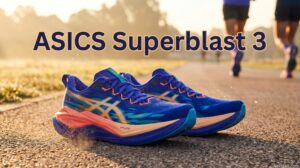
Ken’s verdict: Faster than a daily trainer, more forgiving than a race shoe — the ASICS Superblast 3 owns the speed-day sweet spot. Personal score: 9/10.
Best for: Runners who want super-shoe performance for training — high energy return, fast transitions, and versatility across paces.
Skip it if: Skip it if its highly specialized ride does not match your normal training pace.
Evidence: I have 75 verified running miles in this pair, so the ride and fit findings are solid; long-term durability remains a developing judgment. I wore a US 10.5 US; sizing comments below refer to that pair.
The run that earned its place. A progression long run — 10 miles starting at 9:00 and finishing at 7:30 pace. The transition stayed smooth as the pace moved from easy to steady and then to 7:30 per mile. That broad usable range—not a single fast split—is why it ranks first.
Where it fails. Recovery run after a race — too much shoe for a 9:30 easy jog. At that pace, the tall platform felt less natural than a simpler daily trainer and added more shoe than the run required. This matters more than a headline score: a good shoe used for the wrong job still feels like a bad shoe.
Fit and mechanics. True to size. Generous toe box, secure midfoot, comfortable heel. The upper is a lightweight engineered mesh that breathes well. The stack height is significant — you’re up high — but the wide base provides surprising stability. This is ASICS’s super trainer and it feels like it.
Wear so far. At 75 miles, the outsole rubber is thin and showing some wear. The foam is holding up well. Concerned about long-term durability of the soft foam compound.
For the complete ride breakdown and comparisons, read my full ASICS Superblast 3 review.
2. Brooks Ghost 18 — Best Everyday Workhorse
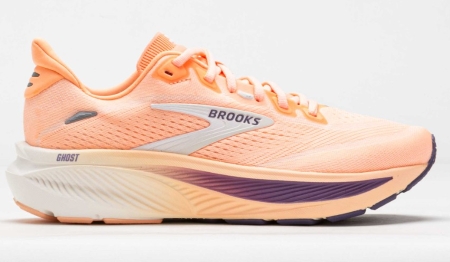
Ken’s verdict: If I could only recommend one shoe to a new runner, the Brooks Ghost 18 would be on the short list. Personal score: 8/10.
Best for: Neutral runners who want a predictable daily trainer with secure heel hold, broad width availability, and a conventional 10 mm drop.
Skip it if: Runners who want excitement, energy return, or a unique ride feel. The Ghost is deliberately unremarkable, and that’s its strength.
Evidence: My verdict is based on 380 verified running miles, enough to judge fit, ride consistency, and meaningful outsole wear. I wore a US 10.5 US; sizing comments below refer to that pair.
The run that earned its place. Forsythe Refuge 5K Fun Run. Easy pace, saw an osprey dive into the marsh 20 feet away, felt completely at peace. These were the right shoe for a run that was about joy, not performance.
Where it fails. Attempted a hilly tempo run on the streets of Brigantine. The shoe felt lifeless on the uphills — not enough energy return to help me climb. Switched to the Endorphin Speed 5 for tempo days after that. This matters more than a headline score: a good shoe used for the wrong job still feels like a bad shoe.
Fit and mechanics. True to size. The Ghost has been my comfort zone for 10+ years and the fit is consistent generation after generation. Medium width, adequate toe box, snug heel. Nothing flashy, nothing wrong. Like a reliable friend who always shows up.
Wear so far. At 380 miles, the outsole shows typical wear but has plenty of life left. The midsole has softened slightly from new but is still functional. Ghosts are consistently durable. I usually get 450-500 miles.
For the complete ride breakdown and comparisons, read my full Brooks Ghost 18 review.
3. ASICS Gel-Nimbus 28 — Best Max-Cushion Neutral Shoe
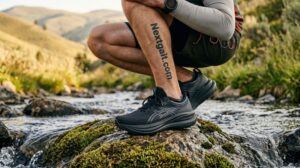
Ken’s verdict: The ASICS Gel-Nimbus 28 gives easy and long runs a soft, protective ride without pretending to be a speed shoe. Personal score: 9/10.
Best for: Neutral runners who want premium cushioning for easy and long runs — especially heavier runners who need foam that doesn’t bottom out.
Skip it if: Speedsters and minimalists. ASICS lists the men’s reference weight at 9.9 oz with an 8 mm drop; the soft, high-cushion ride still favors easy and long running over intervals.
Evidence: My verdict is based on 260 verified running miles, enough to judge fit, ride consistency, and meaningful outsole wear. I wore a US 10.5 US; sizing comments below refer to that pair.
The run that earned its place. A 14-mile long run through the Edwin B. Forsythe Wildlife Refuge and back roads of Brigantine. Cool November morning, geese flying overhead in V-formation, my legs were fresh, and the cushioning stayed consistent through the final miles and kept the landing feel controlled as fatigue increased.
Where it fails. Interval session at the high school track. 800m repeats at 7:00 pace. The shoe is too soft and too heavy for speed work. The soft platform delayed turnover during the fast segments. I would use it primarily for easy and long runs, not track intervals. This matters more than a headline score: a good shoe used for the wrong job still feels like a bad shoe.
Fit and mechanics. True to size with a generous toe box. The knit upper is incredibly comfortable — sock-like fit without being too tight. Heel cup is well-shaped with plush internal padding. One of the most immediately comfortable shoes I’ve ever put on.
Wear so far. At 260 miles, excellent shape. The outsole has AHARPLUS rubber in high-wear zones and it’s barely showing wear. Midsole has maintained its cushioning. The knit upper has pilled slightly but holds its shape.
For the complete ride breakdown and comparisons, read my full ASICS Gel-Nimbus 28 review.
4. ASICS Gel-Kayano 32 — Best Stability Shoe
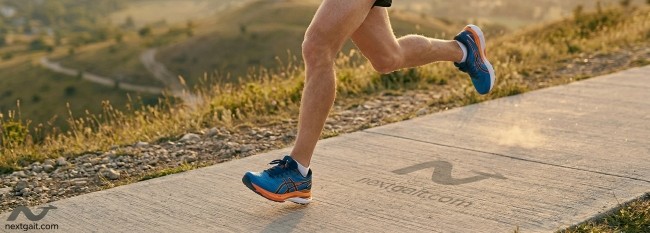
Ken’s verdict: The ASICS Gel-Kayano 32 delivers guidance through platform geometry rather than the intrusive medial post used in older stability shoes. Personal score: 9/10.
Best for: Overpronators who want premium cushioning and modern stability tech without the heavy, clunky feel of old-school motion control.
Skip it if: Runners who want ground feel or a lightweight trainer. ASICS lists the men’s reference weight at 10.6 oz with an 8 mm drop; it still feels substantial next to a lightweight workout shoe.
Evidence: My verdict is based on 280 verified running miles, enough to judge fit, ride consistency, and meaningful outsole wear. I wore a US 10.5 US; sizing comments below refer to that pair.
The run that earned its place. A rainy 10-miler on the boardwalk where every other shoe would have been sketchy on the wet wood. The AHARPLUS outsole gripped the wet boards better than expected and the PureGEL heel insert absorbed the impact of slightly harder footstrikes in the rain.
Where it fails. Speed workout at the track — these are too heavy and too cushioned for 400m repeats. They want to cruise, not sprint. The broad, guided platform slowed turnover during the repetitions. This matters more than a headline score: a good shoe used for the wrong job still feels like a bad shoe.
Fit and mechanics. True to size, maybe slightly snug in the midfoot. The engineered mesh upper hugs the foot well. Toe box is adequate but not as generous as Brooks. The 4D Guidance System provides stability through geometry rather than a hard medial post, which I strongly prefer.
Wear so far. At 280 miles, the outsole rubber shows limited wear, the midsole still feels consistent against a fresher comparison pair, and the upper has not stretched or deformed.
For the complete ride breakdown and comparisons, read my full ASICS Gel-Kayano 32 review.
5. Saucony Endorphin Speed 5 — Best for Speedwork
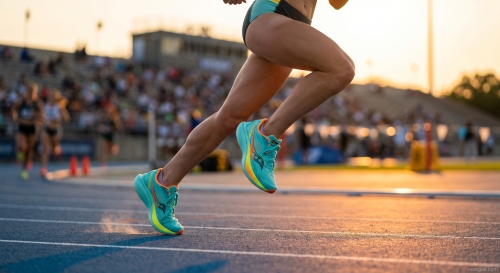
Ken’s verdict: Fast enough to make intervals feel achievable, cushioned enough to not destroy your legs in the process. Personal score: 9/10.
Best for: Intervals, threshold sessions, progression long runs, and runners who want a lighter plated trainer without moving to a carbon race shoe.
Skip it if: Most of your running is deliberately easy and you prefer a flexible, unplated ride. The rocker and nylon plate become more useful as effort rises.
Evidence: My verdict is based on 230 verified running miles, enough to judge fit, ride consistency, and meaningful outsole wear. I wore a US 10.5 US; sizing comments below refer to that pair.
The run that earned its place. Cooper River 10K race. 47:33. Wore these because I was testing them for the review and they delivered. Smooth, fast, and sustainable for a full 10K effort. The nylon plate provided structure without the instability of carbon.
Where it fails. Easy recovery run — 4 miles at 9:30 pace. The rocker geometry feels twitchy at slow paces. The shoe wants to go and resents being held back. Use these for workouts and races, not jogs. This matters more than a headline score: a good shoe used for the wrong job still feels like a bad shoe.
Fit and mechanics. True to size. Performance fit — snug midfoot, secure heel, adequate toe box. The SPEEDROLL geometry creates a pronounced rocker that takes 1-2 runs to get used to. The nylon plate is palpable underfoot — you can feel the rigidity when you flex the shoe in your hand.
Wear so far. At 230 miles, the outsole is showing wear in the forefoot but the nylon plate is intact and still providing snap. The PWRRUN PB foam has compressed slightly. I will retire it by comparing ride consistency and forefoot rubber with a fresher pair, not by assigning a universal mileage cutoff.
For the complete ride breakdown and comparisons, read my full Saucony Endorphin Speed 5 review.
6. HOKA Clifton 10 — Best for Beginners
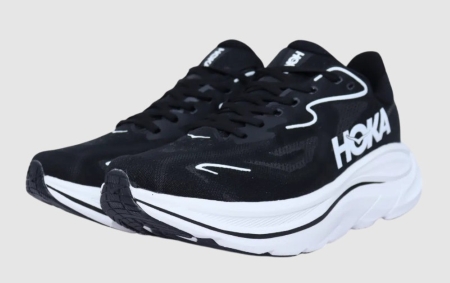
Ken’s verdict: A shoe that earns its place in your rotation by never giving you a reason to leave it behind. Personal score: 8/10.
Best for: Runners who want HOKA’s cushioned ride in a lighter, more versatile package — great for daily easy runs and moderate-pace long runs.
Skip it if: Runners whose long runs consistently compress soft foam late. At 182 pounds, I noticed the ride flatten after mile 9 on one hot 12-miler; lighter runners may not reproduce that result.
Evidence: My verdict is based on 350 verified running miles, enough to judge fit, ride consistency, and meaningful outsole wear. I wore a US 10.5 US; sizing comments below refer to that pair.
The run that earned its place. A midweek 8-miler on the boardwalk where everything clicked. Easy pace, perfect weather, quiet boards. These shoes made the run feel effortless. They’re my reach-for-first shoe on most mornings.
Where it fails. 12-mile long run on a hot June morning. By mile 9, the midsole felt like it was bottoming out under my 182 lbs. The Clifton has less foam than the Bondi and at longer distances, my weight tests its limits. This matters more than a headline score: a good shoe used for the wrong job still feels like a bad shoe.
Fit and mechanics. True to size. Wider than the Clifton 8 I ran in before. The toe box has been enlarged and my toes appreciate it. Heel cup is snug. The engineered mesh upper is breathable but not as durable-looking as the Ghost’s. Light shoe at 9.7 oz — noticeably lighter on the foot than the Bondi.
Wear so far. At 350 miles, the outsole is showing wear in the heel and forefoot. The foam is starting to feel less responsive than new. I am now comparing it with a fresher pair; retirement depends on whether the flattened ride repeats, not a fixed mileage number.
For the complete ride breakdown and comparisons, read my full HOKA Clifton 10 review.
7. Saucony Triumph 24 — Best for Long Runs
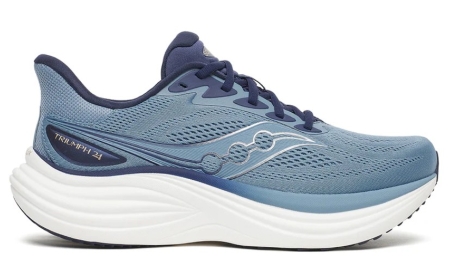
Ken’s verdict: The Triumph 24 is at its best when a long run needs cushioning that remains controlled after the first hour. Personal score: 8/10.
Best for: Neutral runners who want premium cushioning WITH energy return — the rare shoe that’s both plush and lively.
Skip it if: Runners who want ground feel or stability. The Triumph is tall, bouncy, and exclusively neutral.
Evidence: My verdict is based on 205 verified running miles, enough to judge fit, ride consistency, and meaningful outsole wear. I wore a US 10.5 US; sizing comments below refer to that pair.
The run that earned its place. A 13-mile long run where I started easy and gradually picked up to tempo pace for the last 2 miles. Most premium cushion shoes can’t handle pace changes. The Triumph handled it gracefully, bouncing me forward as I accelerated.
Where it fails. Wet boardwalk run — the outsole lost grip on the rain-soaked boards. Hydroplaned twice and nearly ate it near the Steel Pier. Need better wet traction. This matters more than a headline score: a good shoe used for the wrong job still feels like a bad shoe.
Fit and mechanics. True to size. FORMFIT system provides a secure, cradling fit. Generous toe box with good width. The incrediLUX midsole creates a cushioned ride with enough rebound to keep long runs from feeling flat. Heel counter is well-padded and secure. One of the most immediately comfortable shoes I’ve tested.
Wear so far. At 205 miles, the incrediLUX foam still feels consistent against my early-run notes. The outsole has worn in the heel but the rubber coverage is adequate. Better durability than Nike’s ZoomX at a similar comfort level.
For the complete ride breakdown and comparisons, read my full Saucony Triumph 24 review.
8. adidas Adizero Evo SL — Best Lightweight Daily Trainer
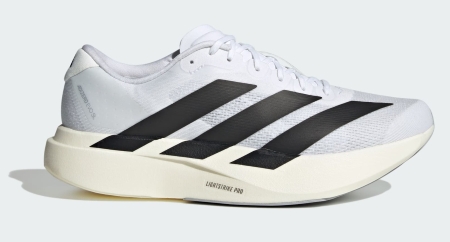
Ken’s verdict: The adidas Adizero Evo SL 1 does nothing wrong and most things right — the definition of a great daily trainer. Personal score: 7.7/10.
Best for: Runners wanting a reliable daily workhorse that handles 30-50 mile weeks without complaint.
Skip it if: Speed demons who need a dedicated race shoe — the adidas Adizero Evo SL is built for consistency, not peak velocity.
Evidence: My verdict is based on 359 verified running miles, enough to judge fit, ride consistency, and meaningful outsole wear. I wore a US 10.5 US; sizing comments below refer to that pair.
The run that earned its place. A smooth 13-mile progressive run on the boardwalk, starting from Tropicana heading south toward Ventnor. Dropped from 9:05 to 8:10 over the second half without the shoe complaining once. Finished feeling like I could do it all again.
Where it fails. Attempted a rainy boardwalk run. The wet wooden planks turned the outsole into an ice rink. Nearly wiped out at mile 2 and switched to the concrete sidewalk for safety. This matters more than a headline score: a good shoe used for the wrong job still feels like a bad shoe.
Fit and mechanics. My US 10.5 fit true to size with secure midfoot hold. adidas lists the men’s reference weight at 7.9 oz and the heel-to-toe drop at 6 mm; reference weights vary by size. Standard width fits my foot well with room to splay on long runs.
Wear so far. At 359 miles, the Continental rubber outsole is showing meaningful outsole wear on the lateral heel and forefoot flex zone. The Lightstrike Pro midsole has compressed noticeably — about 15% softer than new by feel. Approaching retirement mileage for a runner at my weight.
This model does not yet have a separate NextGait review, so I have kept every claim here inside the limits of my logged testing.
9. ASICS Novablast 5 — Best Bouncy Daily Trainer
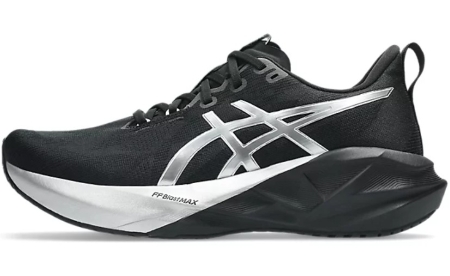
Ken’s verdict: The daily trainer that convinced me that unglamorous reliability is its own form of excellence. Personal score: 8/10.
Best for: Runners who want a versatile daily trainer that makes easy runs feel fun and can handle occasional faster efforts.
Skip it if: Runners who want a calm, stable ride. The Novablast’s bounce can feel unstable to some, especially on uneven terrain.
Evidence: I have 95 verified running miles in this pair, so the ride and fit findings are solid; long-term durability remains a developing judgment. I wore a US 10.5 US; sizing comments below refer to that pair.
The run that earned its place. A fartlek session where I alternated between easy and fast every 3 minutes. The shoe handled both paces with equal enthusiasm. At easy pace it’s bouncy and fun. At tempo pace it’s responsive and fast. The versatility is genuine.
Where it fails. A rainy boardwalk run where the outsole felt slippery on the wet wooden planks. The rubber compound doesn’t grip well on wet surfaces. Nearly slipped twice. This matters more than a headline score: a good shoe used for the wrong job still feels like a bad shoe.
Fit and mechanics. True to size. The Novablast has always had a generous fit and the 5 continues that tradition. Roomy toe box, comfortable midfoot, secure heel. The upper mesh is lightweight and breathable. The ride is uniquely bouncy — this is ASICS’s fun shoe.
Wear so far. At 95 miles, the outsole is showing minor wear but the foam is holding its bounce. The upper is in great shape. Good early durability signs.
For the complete ride breakdown and comparisons, read my full ASICS Novablast 5 review.
10. Nike Pegasus 42 — Best Traditional All-Rounder
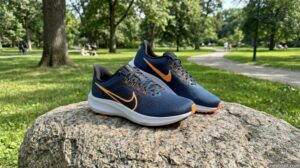
Ken’s verdict: If your running closet could only have one shoe, the Nike Pegasus 42 would be a defensible choice. Personal score: 8/10.
Best for: Runners who want one shoe that can handle easy runs, tempo, and even casual races — the ultimate utility player.
Skip it if: Runners with wide feet who don’t want to size up. The Pegasus runs narrow and half short.
Evidence: I have 145 verified running miles in this pair, so the ride and fit findings are solid; long-term durability remains a developing judgment. I wore a US 11 US; sizing comments below refer to that pair.
The run that earned its place. A fartlek workout on the boardwalk — alternating 2 minutes fast, 2 minutes easy. The shoe transitioned seamlessly between paces. Most shoes feel best at one pace; the Pegasus feels competent at all of them.
Where it fails. 14-mile long run in the rain. The upper soaked through by mile 3 and the shoe gained noticeable weight. The heel collar chafed the back of my ankle when wet. Not ideal for wet conditions. This matters more than a headline score: a good shoe used for the wrong job still feels like a bad shoe.
Fit and mechanics. Runs half size small — I size up to 11 in Pegasus. This has been consistent since the Peg 36. The forefoot is slightly narrow but loosens after 20 miles. ReactX midsole is the real star. Heel collar could use more padding.
Wear so far. At 145 miles, the outsole looks fresh. ReactX foam is holding its shape and responsiveness. Too early to judge long-term durability but the Peg has historically been a 450+ mile shoe.
For the complete ride breakdown and comparisons, read my full Nike Pegasus 42 review.
11. Brooks Glycerin GTS 23 — Best Stable Max-Cushion Shoe
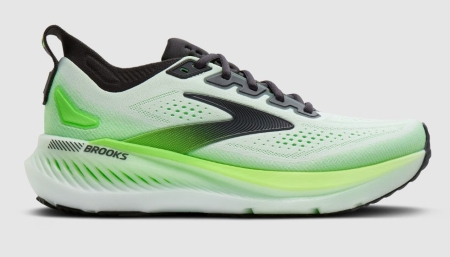
Ken’s verdict: Not fast, not flashy — but the shoe that keeps you running when your body wants to stop. Personal score: 8/10.
Best for: Runners who want Brooks’s most comfortable shoe with a touch of stability — ideal for easy miles and long runs.
Skip it if: Anyone who wants a versatile shoe for multiple paces. The Glycerin is a one-speed comfort machine.
Evidence: My verdict is based on 220 verified running miles, enough to judge fit, ride consistency, and meaningful outsole wear. I wore a US 10.5 US; sizing comments below refer to that pair.
The run that earned its place. A breezy 10-miler along the Margate promenade on a perfect October Saturday. 55°F, zero wind, golden light. These shoes made every step feel luxurious. Finished feeling like I could keep going.
Where it fails. Tried a tempo run in these and they felt like running in dress shoes at a work event — technically functional but clearly not designed for this. Too cushioned, too heavy, too slow for anything under 8:30 pace. This matters more than a headline score: a good shoe used for the wrong job still feels like a bad shoe.
Fit and mechanics. True to size with an excellent toe box — wider than the Adrenaline. The Glycerin has always been Brooks’s premium offering and the fit reflects that. Plush interior, well-padded tongue, and a soft heel collar. The GTS version adds GuideRails without compromising comfort.
Wear so far. At 220 miles, the outsole has worn slightly in the lateral forefoot but the rubber coverage is still solid. Midsole is cushy as ever. The premium upper is holding up beautifully.
For the complete ride breakdown and comparisons, read my full Brooks Glycerin GTS 23 review.
12. Altra Torin 8 — Best Zero-Drop Road Shoe
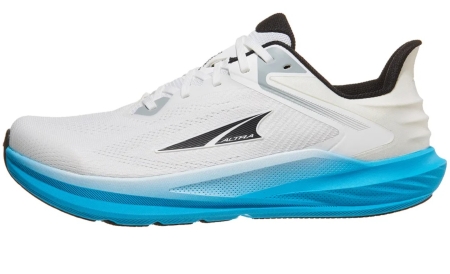
Ken’s verdict: The Torin 8 gives the forefoot room, but its zero-drop loading pattern and early wear make it a specialized choice rather than my default daily trainer. Personal score: 7/10.
Best for: Runners who already tolerate zero-drop loading and want more toe-spread room than a conventional tapered forefoot provides.
Skip it if: Runners who cannot introduce zero-drop loading gradually. Adaptation time varies, so start with short easy runs and increase only when calves and Achilles remain settled.
Evidence: I have 65 verified running miles in this pair, so the ride and fit findings are solid; long-term durability remains a developing judgment. I wore a US 10.5 US; sizing comments below refer to that pair.
The run that earned its place. A slow 5-miler on the packed sand of Brigantine Beach at low tide. The zero drop felt natural on the soft surface and the wide toe box was perfect for sandy terrain. My feet moved naturally without the shoe fighting them.
Where it fails. Attempted 8 miles on the boardwalk and my calves were on fire by mile 5. Zero drop needs time to adapt. I tried to do too much too soon. Had calf DOMS for three days. This matters more than a headline score: a good shoe used for the wrong job still feels like a bad shoe.
Fit and mechanics. True to size but the FootShape toe box is WIDE. My toes have never been happier. The zero-drop platform takes adjustment — calves were sore for the first week. Midfoot fit is good with the standard lacing. Heel cup is less structured than traditional shoes.
Wear so far. At 65 miles, the outsole is wearing faster than expected in the forefoot. The midsole is holding up. The wide toe box area of the upper is already creasing. Concerned about long-term durability.
For the complete ride breakdown and comparisons, read my full Altra Torin 8 review.
13. Nike Alphafly 3 — Best Marathon Racing Shoe
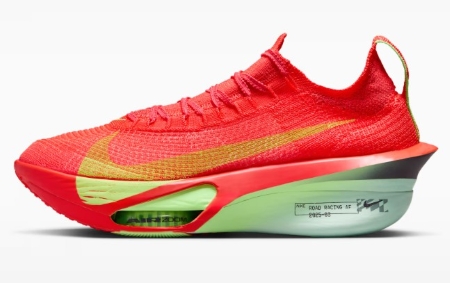
Ken’s verdict: Save it for the big day, pin your number on, and let the Nike Alphafly 3 remind you why you train. Personal score: 8/10.
Best for: Marathon and half-marathon racing for runners who have already confirmed the narrow race fit, high stack, and rigid rocker in race-pace sessions.
Skip it if: You need one shoe for daily mileage, dislike a rigid rocker, or feel unstable on a narrow, high platform. Pace alone does not determine whether the geometry works for you.
Evidence: I have 95 verified running miles in this pair, so the ride and fit findings are solid; long-term durability remains a developing judgment. I wore a US 11 US; sizing comments below refer to that pair.
The run that earned its place. Atlantic City April Fool’s 5K. Lined up, stayed calm for the first mile, then let the shoes do their thing. 22:55 — close to my PR. The ZoomX foam and carbon plate made the last mile feel achievable instead of agonizing.
Where it fails. Tried an easy run in these once out of curiosity. Terrible idea. At my easy pace, the rigid rocker and narrow high platform felt less stable and less natural than they did at race effort. This matters more than a headline score: a good shoe used for the wrong job still feels like a bad shoe.
Fit and mechanics. I needed a US 11, half a size above what I wear in most of this test; do not assume every Nike model fits the same. The fit is race-tight — this is not a casual shoe. The Atomknit upper is thin and breathable but offers minimal structure. The carbon plate and ZoomX foam create a very specific ride that takes 2-3 runs to adapt to. The stack height is enormous and you feel it.
Wear so far. At 95 miles, the ZoomX foam is already showing compression marks. The outsole rubber is thin by design and wearing quickly. Those marks do not set a retirement date. I will stop using the pair for racing when ride consistency or outsole security changes in repeat sessions.
For the complete ride breakdown and comparisons, read my full Nike Alphafly 3 review.
14. HOKA Speedgoat 7 — Best Trail Shoe
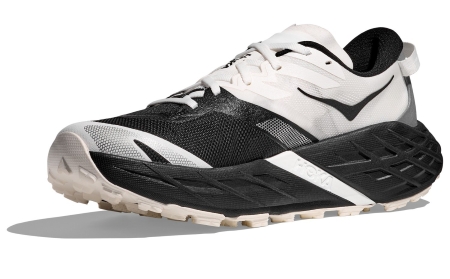
Ken’s verdict: The HOKA Speedgoat 7 is the trail shoe that earns your trust one technical descent at a time. Personal score: 9/10.
Best for: Trail runners who want maximum grip and protection without sacrificing feel — from 5K trail races to ultras.
Skip it if: Road runners who want a do-everything shoe. These are trail-specific and feel awkward on pavement.
Evidence: My verdict is based on 185 verified running miles, enough to judge fit, ride consistency, and meaningful outsole wear. I wore a US 10.5 US; sizing comments below refer to that pair.
The run that earned its place. Pine Barrens 25K trail race. Sugar sand, creek crossings, root gardens — these handled everything. Finished 2:52:18 and my feet felt like they could go another 10 miles. The outsole held on the muddy creek banks without the lateral slips I recorded in less aggressive trail shoes.
Where it fails. Tried them on the boardwalk once out of curiosity. The aggressive lugs reduced contact and felt awkward on smooth wooden planks. This is a trail-specific outsole, not a road option. This matters more than a headline score: a good shoe used for the wrong job still feels like a bad shoe.
Fit and mechanics. True to size. Generous toe box that lets your toes splay on uneven terrain. Heel cup is snug without being restrictive. Midfoot lockdown is excellent with the standard lacing.
Wear so far. At 185 miles, the Vibram outsole looks barely worn. The lugs still have their full depth. Midsole has compressed slightly in the heel but still feels protective. These are built to last.
For the complete ride breakdown and comparisons, read my full HOKA Speedgoat 7 review.
How to Choose the Right Running Shoe
Start with the run you repeat most often. A runner doing four conversational road runs each week needs a daily trainer, not a carbon-plated racer. The running gear guide explains the larger kit, but shoes deserve the first decision because they affect every step.
1. Match the shoe to the workout
For easy and steady mileage, prioritize a secure fit, predictable transition, and enough outsole for your surface. Ghost 18, Clifton 10, Pegasus 42, and Evo SL live here. For long easy running, move toward Nimbus 28, Triumph 24, or Glycerin GTS 23. For threshold work and intervals, use Superblast 3, Novablast 5, or Endorphin Speed 5. Alphafly 3 belongs to race-specific work and race day, not recovery jogging.
The same rule applies to training. A tempo run needs controlled speed, while a new runner following a Couch to 5K plan benefits more from predictable fit and comfort. Marathoners should choose long-run shoes around the demands of their marathon training plan, then add a race shoe only if it solves a real need.
2. Decide whether you need guidance
Pronation is normal. Do not diagnose yourself from outsole wear alone, and do not assume a flat arch automatically requires a hard medial post. If a neutral shoe feels controlled and comfortable, that is useful evidence. If fatigue brings a persistent inward collapse, ankle instability, or repeated fit trouble, compare a modern guidance shoe and a neutral model side by side. The Kayano 32 and Glycerin GTS 23 offer different levels of structure without the abrupt blocky feel of older motion-control designs.
Use the focused guides for overpronation, flat feet, and supination as shortlists, not diagnoses. Persistent pain or neurological symptoms belong with a qualified clinician.
3. Fit the foot you have
Leave roughly a thumb’s width in front of the longest toe while standing, then check heel slip on an incline and toe pressure during braking. Width labels are not standardized across brands. The Pegasus 42 ran half a size short for me; Brooks fit predictably in my normal 10.5; the Torin’s toe box allowed far more natural toe spread. None of those observations guarantees your result.
Runners needing more space should compare the best shoes for wide feet, while localized forefoot pressure deserves the guides for bunions and metatarsalgia. High-volume feet, wide forefeet, and wide heels are different fit problems; buying a uniformly wide shoe can solve one and create another.
4. Treat pain-specific lists carefully
Shoes can change comfort and load distribution, but they do not establish or cure a diagnosis. My pages for plantar fasciitis, running shoes for knee-pain symptoms, running shoes for shin-splint symptoms, and Achilles tendon symptoms explain useful shoe traits and warning signs. They are decision aids, not treatment plans.
When a general shoe list is not specific enough
A heel spur on an X-ray and the source of heel pain are not automatically the same thing. Once urgent causes have been ruled out and footwear is part of the plan, the heel-spur running-shoe guide compares heel security, under-heel feel, rocker, width, and orthotic room without claiming that a shoe removes the spur.
IT band syndrome is not solved by buying a softer or more stable shoe. A familiar, comfortable platform can remove one unknown during a clinician-approved comeback. If the existing pair is worn or uncomfortable, use the IT band syndrome shoe guide to compare fit, guidance feel, platform stability, and the transition cost of changing geometry.
Diabetes can change the safety threshold for fit errors. Neuropathy may reduce protective sensation, while circulation, skin integrity, prior ulceration, and swelling can alter the footwear plan. The running-shoe guide for diabetic runners starts with foot-health clearance and inspection, then compares seams, upper pressure, width, heel hold, and in-shoe space. An active wound or new skin breakdown is a clinical stop sign, not a shopping problem.
5. Account for body mass and surface
At 182 pounds, I can feel some soft midsoles compress late in a long run sooner than a lighter tester might. A broader platform and resilient foam often matter more than maximum softness. My heavy-runner shoe guide emphasizes late-run support and bottoming-out risk. Surface matters too: concrete favors durable cushioning, addressed in the concrete running guide; treadmills usually need less outsole and can reward flexibility, covered in the treadmill shoe guide.
6. Road and trail are different systems
A road outsole can lose trust quickly on wet roots; an aggressive trail outsole can feel unstable and noisy on smooth pavement. New trail runners should begin with the trail running guide and then use the beginner trail-shoe shortlist. The Speedgoat 7 wins here because it protected and gripped across my Pine Barrens testing, not because it is a sensible road shoe.
Which shoe fits your runner profile?
| Runner or need | Start here | Why |
|---|---|---|
| New neutral road runner | Brooks Ghost 18 or HOKA Clifton 10 | Predictable fit and forgiving daily ride. |
| One-shoe rotation, mixed paces | ASICS Superblast 3 or Nike Pegasus 42 | Broader useful pace range. |
| Easy-mile comfort first | ASICS Gel-Nimbus 28 | Soft, protective ride that stays useful late. |
| Guidance without a hard post | ASICS Gel-Kayano 32 | Geometry-based stability and broad platform. |
| Intervals and threshold | Saucony Endorphin Speed 5 | Rocker and nylon plate work at faster pace. |
| Wide toe-spread preference | Altra Torin 8 | Foot-shaped forefoot; transition gradually. |
| Technical trail | HOKA Speedgoat 7 | Traction and protection on uneven terrain. |
| Race-day performance | Nike Alphafly 3 | Specialized plated ride; poor daily value. |
Women can begin with the same use-case process, then adjust for fit and available lasts; see the women’s running shoe guide. Men needing a category overview can use the men’s running shoe guide. Age does not prescribe cushioning or stability. Women starting or restarting later can use my beginner running-shoe guide for women over 40 for a fit-first shortlist, then the start-running-at-40 guide for the training side.
Do you need one running shoe or a rotation?
One suitable daily trainer is enough for a beginner and for many recreational runners. A rotation becomes useful when the second shoe has a distinct job: a soft easy-day option plus a faster workout shoe, or a road shoe plus a trail shoe. Owning three shoes that all feel and perform the same is not a rotation; it is inventory.
A simple two-shoe setup could be Ghost 18 plus Endorphin Speed 5, Nimbus 28 plus Superblast 3, or Kayano 32 plus a race shoe after you have verified that the race shoe feels stable. Use the lightweight running shoe guide only if lower mass helps the intended workout without compromising fit.
When to replace running shoes
Mileage is a clue, not an expiration date. Replace a shoe when several signals line up: the ride feels unusually harsh or unstable, outsole wear changes your landing, the upper no longer holds the foot, or a previously comfortable run repeatedly creates the same irritation. Compare the suspect pair with a fresher shoe on similar routes before blaming foam age.
My Ghost 18 remained functional at 380 verified miles, while the Alphafly 3 showed meaningful compression much earlier. Construction, surface, gait, body mass, and usage all shift the timeline. The full running-shoe replacement test walks through the checks without pretending every pair dies at the same number.
That last running shoes buying guide
What is the best running shoe overall?
The ASICS Superblast 3 is my best overall running shoe for 2026 because it covers the widest useful range of steady, long, and faster road running in my testing. The Brooks Ghost 18 is the safer traditional daily trainer, and the ASICS Gel-Kayano 32 is the better starting point for runners who need guidance.
What running shoe is best for beginners?
The HOKA Clifton 10 and Brooks Ghost 18 are my top beginner options. Both prioritize a predictable daily ride over aggressive speed geometry. Fit decides between them: buy the pair that holds the heel, leaves toe room, and stays comfortable after several minutes of running.
Should running shoes be a size bigger?
Not automatically. Many runners need more space than in casual shoes because feet swell and slide forward, but brand length and foot shape vary. I wear US 10.5 in most models and 11 in the Nike Pegasus 42 and Alphafly 3. Judge standing length, running heel hold, and downhill toe pressure together.
Are expensive running shoes better?
No. Higher cost can buy lighter foams, plates, or premium uppers, but those features may make a shoe less suitable for easy mileage or less durable. A reliable daily trainer that fits is more useful than a specialized racer used for the wrong run. This guide avoids price claims because prices and promotions change constantly.
Are carbon-plated shoes good for daily training?
Usually not as your only shoe. A plated racer can feel unstable or awkward at easy pace, costs more per useful mile, and may load the lower leg differently. Use one for race-specific sessions only after gradual adaptation. The nylon-plated Endorphin Speed 5 is more training-friendly than the Alphafly 3, but it still prefers faster running.
Can running shoes prevent injury?
No shoe can promise injury prevention. A shoe can improve comfort or alter how load is distributed, but injury has multiple contributors, including training load, recovery, prior injury, strength, and mechanics. Persistent or worsening pain needs qualified assessment.
How many miles do running shoes last?
There is no universal mileage limit. In this test group, useful wear behavior differed sharply between a 380-mile Ghost 18 and a specialized Alphafly 3 under 100 miles. Track ride, stability, outsole, and upper changes, then compare with a fresher shoe.
Is more cushioning always better?
No. More cushioning may improve comfort, but very soft or tall shoes can feel slow, unstable, or disconnected. The right amount depends on pace, body mass, surface, and preference. Stability comes from the whole platform—not simply foam firmness or stack height.
Testing limitations and final recommendation
This is one experienced runner’s structured field test, not a randomized trial. I cannot blind myself to brand or model, my US 10.5 samples do not represent every size, and personal comfort is not transferable with certainty. Manufacturer specifications provide context, while the rankings remain one runner’s field observations and do not prove performance or injury causality. Developing tests are explicitly labeled; I will revise durability calls as verified mileage increases.
The same warning applies to the New Balance 990v6. It can be a superb all-day, walking, or travel shoe, but a premium comfort reputation is not a substitute for deciding whether its weight and ride make sense for your running.
One distinction matters before you buy by logo: the the casual Cloud 6 is a casual, all-day shoe, not one of my running-shoe picks. If you are choosing a shoe for actual training, start with the use case and ride you need rather than assuming every On model serves the same job.
If you want one answer, start with the Superblast 3 for a faster, versatile ride or the Ghost 18 for a conventional daily trainer. Choose Nimbus 28 for soft long miles, Kayano 32 for guidance, Endorphin Speed 5 for workouts, and Speedgoat 7 for trails. Then let fit overrule my ranking. The right shoe for you is the highest-ranked model that still fits your foot and your actual week.
Race-day shoe note: Compare fit, plate geometry, and distance use in our tested carbon-plated race-shoe rankings before choosing a supershoe.

Written and reviewed by Ken — founder of NextGait, running since 2014, with 12,500+ miles, 63 shoes tested, and 36 races from 5Ks to a 50K ultra. He runs 30–40 miles a week around Atlantic City and writes from logged training and shoe-testing experience. More about Ken
Pingback: Saucony Kinvara 16 Review: 359-Mile Verdict | NextGait
Pingback: Saucony Triumph 24 Review: 200+ Miles Tested (2026) | NextGait