
There is no running shoe that removes a heel spur or a single model that fits every runner with heel pain. Start with the location of the symptoms, heel-collar contact, width and volume, a secure rearfoot, and a cushioning level that feels controlled at your easy pace.
A heel spur is a bony finding; it is not automatically the source of pain. Plantar heel pain, insertional Achilles symptoms, nerve irritation, and bone stress can feel different and require different decisions. That is why this guide treats the ten shoes as fit comparisons, not treatments.
In 12 years of running, the useful footwear question has never been “Which shoe cures this?” It is “Which shoe avoids aggravating the sensitive area while the runner addresses diagnosis, training load, strength, mobility, and recovery?” A quiet, repeatable easy run matters more than a soft first step in a store.
If pain changes your gait, persists during normal walking, appears with swelling or redness, or is sharply focal, stop using product comparisons as self-diagnosis and see a qualified clinician. Shoes can change comfort and fit. They do not diagnose, dissolve, or treat a heel spur.
Where to start: Compare the HOKA Bondi 9 if a broad rocker feels comfortable, the ASICS Gel-Nimbus 28 for a softer neutral ride, the Brooks Glycerin GTS 23 when you prefer structured guidance, and the New Balance 1080v15 when width or insert volume is the main fitting problem. None is a medical default.
What is in this guideClick to expand
Quick Picks: Best Running Shoes for Heel Spurs
The right heel-spur shoe depends on the pain pattern: impact pain, first-step pain, Achilles pull, overpronation, or orthotic fit. I would not hand the same shoe to a 130-pound neutral runner and a 210-pound overpronator with a custom insert. That is how expensive shoes become closet decorations.
| Shoe | Best comparison | Fit logic and stop rule |
|---|---|---|
| HOKA Bondi 9 | Broad rocker comparison | Broad base and pronounced rolling transition; reject it if the low-drop rocker raises Achilles or posterior-heel symptoms |
| ASICS Gel-Nimbus 28 | Soft neutral comparison | Soft neutral cushioning with an 8mm manufacturer-listed drop; reject it if softness feels unstable |
| Brooks Glycerin GTS 23 | Plush guidance option | Guidance rails and a cushioned platform; useful only when the structure feels less intrusive than a neutral shoe |
| ASICS Gel-Kayano 32 | Structured guidance option | More obvious guidance and a broad base; too much shoe for runners who feel steered |
| New Balance Fresh Foam X 1080v15 | Width and insert volume | Narrow through extra-wide sizing and a removable sockliner; confirm heel hold after adding an insert |
| HOKA Clifton 10 | Lighter rocker comparison | Less bulky than Bondi with an 8mm listed drop; not a substitute for diagnosis during a flare |
| Saucony Triumph 24 | Cushioned conventional geometry | A cushioned neutral option for runners who dislike a strong rocker; compare rearfoot control |
| Brooks Adrenaline GTS 25 | Conventional guidance | 10mm listed drop, GuideRails and several widths; reject it if the heel collar or guidance creates pressure |
| Nike Vomero 18 | Soft Nike fit | Soft neutral ride in a closer-fitting package; compare width carefully rather than assuming brand familiarity |
| Brooks Ghost 18 | Conventional neutral baseline | 10mm listed drop and predictable geometry; useful as a reference, not a heel-pain treatment |
Best Running Shoes for Heel Spurs by Pain Pattern
The best running shoe for heel spurs depends on where and when the heel hurts. A runner with sharp first-step plantar heel pain, a runner with posterior heel rubbing, and a runner whose heel pain appears only after overpronating late in a long run need different shoes. This is the section I would use before spending money.
| Heel-spur scenario | Best starting shoe | Why this match works |
|---|---|---|
| Sharp under-heel impact on pavement | HOKA Bondi 9 | The broad base and rocker provide a clear contrast with conventional neutral shoes. |
| Plush neutral comfort without strong guidance | ASICS Gel-Nimbus 28 | Soft heel cushioning and a more traditional drop work well when the runner does not prefer structured guidance. |
| Heel pain plus late-run inward roll | Brooks Glycerin GTS 23 | The GuideRails add a guided platform feel without feeling like a hard medial post. |
| Runner who prefers structured guidance in a side-by-side trial | ASICS Gel-Kayano 32 | The 4D Guidance System gives more structured rearfoot control than neutral max-cushion shoes. |
| Orthotic, heel cup, swelling, or wide feet | New Balance Fresh Foam X 1080v15 | The width range and removable sockliner make fitting inserts less frustrating. |
| Mild symptoms and a lighter rocker ride | HOKA Clifton 10 | It keeps the smooth HOKA transition but feels less bulky than Bondi. |
| Need a higher-drop, durable stability workhorse | Brooks Adrenaline GTS 25 | The conventional drop, strong heel counter, and stable platform suit runners who want predictable support. |
| Posterior heel sensitivity from stiff collars | Try carefully; prioritize soft heel collar fit | Back-of-heel pain can worsen if the collar rubs the Achilles insertion or heel spur directly. |
How I Evaluated Shoes for Heel-Spur Searches
I evaluated these shoes by heel contact, rearfoot security, fit flexibility, transition feel, and the cost of changing geometry. A soft shoe can still be wrong if the heel slides, the collar contacts the painful area, or an insert makes the upper too tight. If you use an insert, follow the running with orthotics guide for sockliner removal, volume, heel hold, and a controlled trial.
Ken’s comparison rule: the shoe must avoid direct pressure at the painful area and remain secure at an easy pace. Recheck symptoms later that day and the next morning. A shoe that feels soft for ten steps but changes your gait is not a successful trial.
| Ranking factor | Why it belongs in the fit check | What I looked for |
|---|---|---|
| Heel cushioning | The sore area needs impact protection, especially on concrete and long standing days | High heel stack, soft but not collapsing foam, protected rearfoot landing |
| Rocker or smooth transition | A rolling transition can feel smoother to some runners | HOKA-style rocker, beveled heel, or easy heel-to-toe transition |
| Heel counter | A loose rearfoot lets the calcaneus move around when the tissue is already irritated | Secure heel cup without harsh rubbing |
| Drop | Some runners feel better with 8-12mm; others prefer lower rockers | A range of drops, with clear warnings |
| Stability | Some runners prefer guidance; pronation alone does not diagnose the pain source | GuideRails, 4D Guidance, wide platforms, or stable geometry |
| Orthotic room | Many heel-spur runners use insoles or heel cups | Removable sockliner, width options, enough volume |
| Durability | A material change in ride or traction can make the old comparison invalid | Outsole wear, midsole compression, and replacement timing |
Heel Spur Basics for Runners
A heel spur is a bony growth on the heel bone, but the pain often comes from irritated surrounding tissue rather than the spur itself. That distinction matters because a shoe is not trying to shave bone. It is trying to change the forces around the heel enough that the tissue can calm down.
Most runners searching for heel-spur shoes are really dealing with one of two patterns. Plantar heel pain sits under the heel and often overlaps with plantar fasciitis. Posterior heel pain sits at the back of the heel near the Achilles insertion. The same shoe is not always right for both.
A low-drop rocker can feel great under the heel but tug too much on an angry Achilles. A high-drop shoe can calm Achilles tension but feel too abrupt if the heel landing is firm. This is why I rank by pain trigger, not just stack height.
Runner note: If heel pain changes your gait, hurts when walking, includes redness or swelling at rest, or keeps returning despite lighter training, stop trying to solve it with shoe shopping and see a clinician. A stress fracture, nerve issue, or tendon problem can masquerade as simple heel pain.
Evidence boundary for this August 2026 refresh: AAOS notes that heel spurs can be present without being the pain source, while AAOS and the American Orthopaedic Foot & Ankle Society describe conservative care that may include activity modification, stretching, supportive footwear, and orthoses when appropriate. Those sources support a careful footwear trial; they do not prove that any model cures plantar heel pain or removes a spur. Product specifications are manufacturer claims and weight varies by size.
10 Running Shoes for Heel Spurs — Fit-First Evaluations
These ten shoes made the list because they solve different heel-spur problems. Read the skip notes. The wrong cushioned shoe can still be wrong. Sometimes the issue is not softness. Sometimes it is stability, drop, fit volume, or a dead midsole that should have been retired 150 miles ago.
1. HOKA Bondi 9 – Best overall for heel spurs
HOKA Bondi 9 is best overall for heel spurs because it gives the sore heel a huge landing pad and rolls you forward before you have to grind through the plantar fascia. I evaluated it as a fit and ride comparison, not as a device that changes the spur or treats the pain source.

| Heel-spur metric | What I found |
|---|---|
| Heel protection | soft supercritical CMEVA, rocker ride |
| Drop | Check the current manufacturer-listed drop |
| Rearfoot stability | Wide base with a stiff heel counter |
| Best use | Best overall for heel spurs |
The Bondi 9 is the shoe I would put in front of a heel-spur runner first, especially if the pain is worst on pavement and after long standing days. My first useful note from this shoe was not speed, bounce, or any fancy midsole word. It was quiet.
The ride is muted and stable rather than quick. That can make the Bondi a useful comparison for easy running, but the broad, rockered platform is a strong preference—not a universal answer.
The thick heel stack takes the sting out of impact, and the rocker keeps the stride moving when the bottom of the heel wants to make every step a legal negotiation.
For the shoe-specific breakdown, read my HOKA Bondi 9 review.
| What I like | What I do not like |
|---|---|
| Best impact protection in this group | Too bulky for faster work |
| Rocker creates a pronounced rolling transition | Lower drop is not ideal for every Achilles-sensitive runner |
| Stable platform does not feel sloppy despite the stack | Heel foam starts to feel compressed after heavy mileage |
Buy it if: It gives the sore heel a huge landing pad and rolls you forward before you have to grind through the plantar fascia.
Skip it if: Skip it if you want one shoe for tempo runs, speed days, and races.
2. ASICS Gel-Nimbus 28 – Best plush neutral shoe
ASICS Gel-Nimbus 28 is best plush neutral shoe because it combines a high heel stack, soft landing, and a manufacturer-listed 8mm drop that many heel-pain runners tolerate well. I evaluated it as a fit and ride comparison, not as a device that changes the spur or treats the pain source.
| Heel-spur metric | What I found |
|---|---|
| Heel protection | PureGEL, FF BLAST+ ECO |
| Drop | Check the current manufacturer-listed drop |
| Rearfoot stability | Neutral, wide outsole, secure heel cup |
| Best use | Best plush neutral shoe |
The Nimbus 28 is the soft neutral comparison when structured guidance is unnecessary. ASICS lists an 8mm drop. Its cushioning may improve comfort, but comfort does not establish that the shoe has changed the tissue load or the diagnosis.
The PureGEL heel insert and FF BLAST+ ECO foam make the landing feel soft without turning the shoe into a marshmallow with laces. It is not a stability shoe, but the heel cup is well shaped and the outsole is wide enough that it does not feel reckless.
For the shoe-specific breakdown, read my ASICS Gel-Nimbus 28 review.
| What I like | What I do not like |
|---|---|
| Excellent heel softness without a dead ride | Too heavy and soft for intervals |
| Traditional drop can calm some plantar fascia and Achilles tension | Neutral platform does not provide structured guidance |
| Upper and collar feel gentle around the rearfoot | Runs warm for some summer runners |
Buy it if: It combines a high heel stack, soft landing, and a manufacturer-listed 8mm drop that many heel-pain runners tolerate well.
Skip it if: Skip it if heel pain shows up mainly because your foot collapses inward when tired.
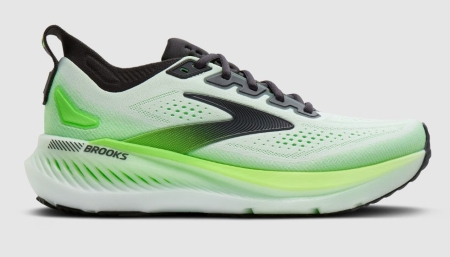
3. Brooks Glycerin GTS 23 – Best plush stability option
Brooks Glycerin GTS 23 is best plush stability option because it protects the heel and adds guidance around late-run movement without using an old-school hard medial post. I evaluated it as a fit and ride comparison, not as a device that changes the spur or treats the pain source.
| Heel-spur metric | What I found |
|---|---|
| Heel protection | DNA LOFT v3 |
| Drop | Check the current manufacturer-listed drop |
| Rearfoot stability | GuideRails support, secure heel counter |
| Best use | Best plush stability option |
If the heel spur comes with overpronation, this is where I start. The Glycerin GTS 23 feels like a comfort shoe first and a stability shoe second, which is exactly what I want here.
On a damp 5-miler after rain, the DNA LOFT v3 felt softer than the Adrenaline, while the GuideRails only showed up when fatigue made my form sloppy. That is the sweet spot. Heel-spur runners do not need a shoe that bullies the foot.
They need a shoe that keeps the calcaneus centered and reduces repeated tugging through the plantar fascia.
For the shoe-specific breakdown, read my Brooks Glycerin GTS 23 review.
| What I like | What I do not like |
|---|---|
| Plush heel cushion plus gentle stability | Heavy for faster running |
| Excellent collar comfort and heel hold | Less lively than Triumph or Vomero |
| Wide toe box for a stability shoe | More expensive than Adrenaline |
Buy it if: It protects the heel and adds guidance around late-run movement without using an old-school hard medial post.
Skip it if: Skip it if you are neutral and simply want the softest possible landing.
4. ASICS Gel-Kayano 32 – Best adaptive stability shoe
ASICS Gel-Kayano 32 is best adaptive stability shoe because it has enough heel cushion for sore landings and enough guidance for runners who prefer more guidance. I evaluated it as a fit and ride comparison, not as a device that changes the spur or treats the pain source.

| Heel-spur metric | What I found |
|---|---|
| Heel protection | PureGEL, FF BLAST+ ECO |
| Drop | Check the current manufacturer-listed drop |
| Rearfoot stability | 4D Guidance System, very stiff heel counter |
| Best use | Best adaptive stability shoe |
The Kayano 32 integrates guidance through its broader geometry rather than an old-style hard medial post. It remains a structured shoe; compare it directly with a neutral model and reject it if the arch or sidewalls feel intrusive.
For heel spurs, the value is the package: a high heel stack, an 8mm drop, a firm rearfoot hold, and guidance that keeps the heel from wandering when your stride gets tired. It is not as plush as the Nimbus, but it is more controlled.
For the shoe-specific breakdown, read my ASICS Gel-Kayano 32 review.
| What I like | What I do not like |
|---|---|
| Best rearfoot control in the top half of this list | Too much shoe for mild neutral runners |
| Soft enough for heel pain but not mushy | Not quick underfoot |
| 8mm drop is a useful middle ground | Premium price |
Buy it if: It has enough heel cushion for sore landings and enough guidance for runners who prefer more guidance.
Skip it if: Skip it if you hate structured stability or mostly run short, fast sessions.
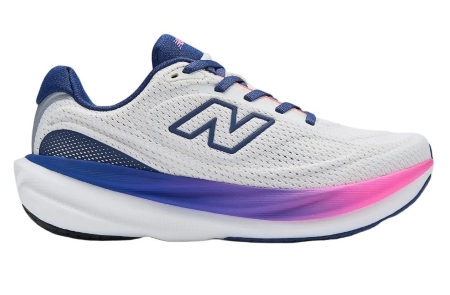
5. New Balance Fresh Foam X 1080v15 – Best wide and orthotic-friendly option
New Balance Fresh Foam X 1080v15 is best wide and orthotic-friendly option because it is a flexible mainstream try-on when you need a roomy shoe, a removable insole, or space for an orthotic. I evaluated it as a fit and ride comparison, not as a device that changes the spur or treats the pain source. If you want footwear selected specifically for rearfoot landings, compare my best running shoes for heel strikers.
| Heel-spur metric | What I found |
|---|---|
| Heel protection | Infinion foam |
| Drop | Check the current manufacturer-listed drop |
| Rearfoot stability | Neutral, soft platform, broad width availability |
| Best use | Best wide and orthotic-friendly option |
The 1080 belongs here because heel-spur runners often end up using an insert, heel cup, or custom orthotic. A narrow shoe plus an orthotic is a bad little math problem. New Balance solves that better than most brands.
The 1080v15 earns its place for fit range: New Balance offers women’s sizing from narrow through extra-wide and lists a 6mm drop. The caution is platform control after an insert changes how the foot sits in the shoe.
Fresh Foam can feel soft and friendly, but if your foot collapses inward hard, I would rather put you in Glycerin GTS, Kayano, or Adrenaline.
For the fit logic behind this pick, read my wide-feet running shoes guide; the 1080 line is strongest when width, insert room, and easy comfort matter more than aggressive guidance.
| What I like | What I do not like |
|---|---|
| Strong width range for orthotics and swelling | Soft foam can feel unstable for some runners |
| Soft landing for easy miles and walking | Not a guidance shoe |
| Removable insole gives fitting flexibility | Cold weather can firm up the ride |
Buy it if: It is the safest mainstream try-on when you need a roomy shoe, a removable insole, or space for an orthotic.
Skip it if: Skip it if you need clear stability or a rocker-first ride.
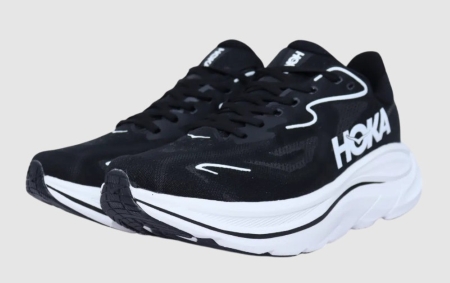
6. HOKA Clifton 10 – Best lightweight rocker
HOKA Clifton 10 is best lightweight rocker because it gives heel-spur runners a smoother rocker without the Bondi’s weight. I evaluated it as a fit and ride comparison, not as a device that changes the spur or treats the pain source.
| Heel-spur metric | What I found |
|---|---|
| Heel protection | compression molded EVA |
| Drop | Check the current manufacturer-listed drop |
| Rearfoot stability | Neutral, rocker geometry, lighter heel structure |
| Best use | Best lightweight rocker |
The Clifton 10 is the HOKA I reach for more often when I am healthy because it feels like a running shoe, not a recovery appliance. On a frosty Ventnor morning, the low weight was obvious in the first mile.
For heel spurs, I like the Clifton when the runner wants a rocker and decent heel cushion but finds the Bondi too bulky. The tradeoff is protection. At my weight, the Clifton starts feeling thin on longer hot runs. If your heel is angry every morning, choose Bondi first.
If your symptoms are mild and you still want a daily trainer, Clifton makes more sense.
For the shoe-specific breakdown, read my HOKA Clifton 10 review.
| What I like | What I do not like |
|---|---|
| Smooth rocker in a lighter package | Not protective enough for severe flare-ups |
| Enough heel cushion for mild heel irritation | Less durable outsole than Brooks |
| More versatile than Bondi | Low drop can bother some Achilles-sensitive runners |
Buy it if: It gives heel-spur runners a smoother rocker without the Bondi’s weight.
Skip it if: Skip it if you are a heavier runner needing max cushion for double-digit long runs.
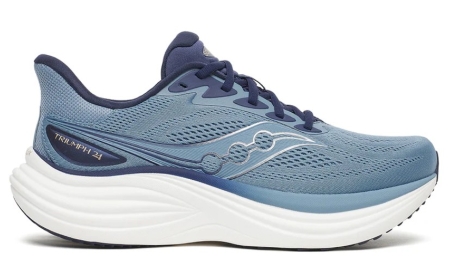
7. Saucony Triumph 24 – Best responsive cushion
Saucony Triumph 24 is best responsive cushion because it gives a big cushioned heel with more rebound than most heel-pain shoes. I evaluated it as a fit and ride comparison, not as a device that changes the spur or treats the pain source.
| Heel-spur metric | What I found |
|---|---|
| Heel protection | PWRRUN PB |
| Drop | Check the current manufacturer-listed drop |
| Rearfoot stability | Neutral, wide geometric base |
| Best use | Best responsive cushion |
The Triumph 24 is the more responsive neutral comparison for a runner who dislikes a muted max-cushion ride. Responsiveness is a feel preference, not a therapeutic feature, and the shoe should still pass the heel-contact and next-morning checks.
That can be useful for heel-spur runners who are improving and want a shoe that still feels like training, not rehab. The 10mm drop also works well for many runners who feel worse in low-drop shoes. My warning is wet traction. I have had the Triumph get sketchy on slick boardwalk boards.
For the shoe-specific breakdown, read my Saucony Triumph 24 review.
| What I like | What I do not like |
|---|---|
| High heel stack with real energy return | Neutral only |
| 10mm drop may feel more familiar to some runners for some runners | Less stable than Kayano or Glycerin GTS |
| Lighter than many plush trainers | Wet grip is not my favorite |
Buy it if: It gives a big cushioned heel with more rebound than most heel-pain shoes. Skip it if: Skip it if your heel pain comes with obvious overpronation or you run often on slick surfaces.
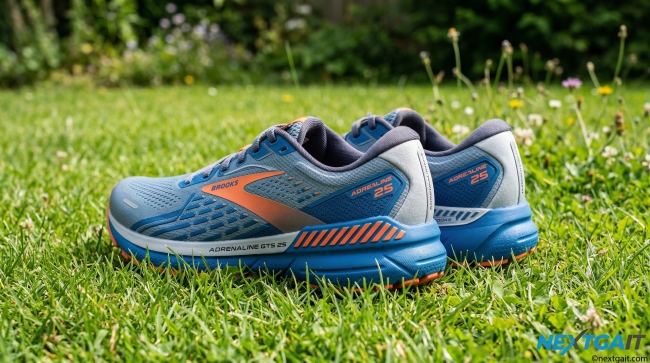
8. Brooks Adrenaline GTS 25 – Best durable stability value
Brooks Adrenaline GTS 25 is best durable stability value because it is not plush-luxury, but it is steady, durable, supportive, and easy to fit in wide sizes. I evaluated it as a fit and ride comparison, not as a device that changes the spur or treats the pain source.
| Heel-spur metric | What I found |
|---|---|
| Heel protection | DNA LOFT v2 |
| Drop | Check the current manufacturer-listed drop |
| Rearfoot stability | GuideRails, very stiff heel counter |
| Best use | Best durable stability value |
The Adrenaline GTS 25 is the practical pick. Not glamorous. Not pillow-soft. But if heel pain shows up when fatigue makes the foot roll inward, boring support can be exactly right.
The Adrenaline line uses conventional geometry and GuideRails. Brooks lists a 10mm drop for version 25. That makes it a useful structured comparison, but the heel collar and guidance must feel comfortable for the individual runner.
It can offload some calf and Achilles tension, but some people feel more abrupt heel contact in high-drop shoes.
For the shoe-specific breakdown, read my Brooks Adrenaline GTS 25 review.
| What I like | What I do not like |
|---|---|
| Reliable GuideRails stability | Not as plush as Glycerin GTS |
| Excellent heel counter and lockdown | High drop will not suit everyone |
| Durable daily trainer build | Ride is steady rather than exciting |
Buy it if: It is not plush-luxury, but it is steady, durable, supportive, and easy to fit in wide sizes. Skip it if: Skip it if your main problem is impact sensitivity and you do not need support.
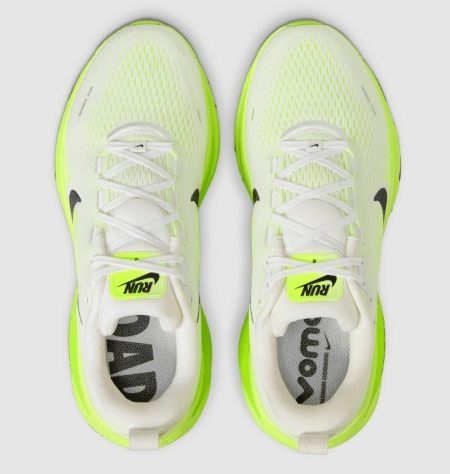
9. Nike Vomero 18 – Best Nike cushion option
Nike Vomero 18 is best nike cushion option because it gives Nike runners a soft long-run shoe with more heel protection than Pegasus. I evaluated it as a fit and ride comparison, not as a device that changes the spur or treats the pain source.
| Heel-spur metric | What I found |
|---|---|
| Heel protection | High-stack ZoomX-based cushioning |
| Drop | About 10mm |
| Rearfoot stability | Neutral, secure upper, narrower Nike fit |
| Best use | Best Nike cushion option |
The Vomero 18 is the Nike I would consider for heel spurs before the Pegasus. My first run was a quiet recovery effort after a hard week, and the ZoomX feel was obvious: soft, smooth, and more forgiving than Nike’s standard daily trainers. For heel-spur runners, that softer heel landing matters.
The problem is fit and durability. I size up a half size in Nike, and the Vomero is still not as roomy as New Balance or Brooks. The foam also compresses faster than I want for a premium daily trainer. Great feel, shorter useful life.
For the shoe-specific breakdown, read my Nike Vomero 18 review.
| What I like | What I do not like |
|---|---|
| Softest Nike daily trainer feel | Narrower than Brooks and New Balance |
| Good heel protection for easy and long runs | ZoomX durability is not best in class |
| Smooth transition at moderate pace | Too soft for workouts |
Buy it if: It gives Nike runners a soft long-run shoe with more heel protection than Pegasus.
Skip it if: Skip it if you need wide sizing, long durability, or strong stability.
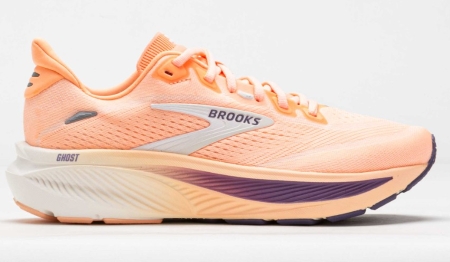
10. Brooks Ghost 18 – Best reliable daily trainer
Brooks Ghost 18 is best reliable daily trainer because it is a straightforward comparison when you want a durable shoe with a conventional drop and no weird ride behavior. I evaluated it as a fit and ride comparison, not as a device that changes the spur or treats the pain source.
| Heel-spur metric | What I found |
|---|---|
| Heel protection | DNA LOFT v3 |
| Drop | Check the current manufacturer-listed drop |
| Rearfoot stability | Neutral, segmented crash pad, strong heel hold |
| Best use | Best reliable daily trainer |
The Ghost 18 is ranked tenth because it is not a heel-spur specialist. It does not have the Bondi rocker, the Nimbus softness, or the Glycerin GTS support. But it earns a spot because a lot of heel-spur runners do not need exotic.
They may prefer a stable neutral trainer with secure heel hold and a conventional 10mm drop. Durability is individual; compare ride, outsole, upper security, and symptoms rather than using one retirement mileage.
For the shoe-specific breakdown, read my Brooks Ghost 18 review.
| What I like | What I do not like |
|---|---|
| Predictable fit and ride | Not plush enough for severe heel pain |
| Durable outsole and midsole | No strong rocker |
| High drop works for some heel-pain runners | Less exciting than almost everything above it |
Buy it if: It is a straightforward comparison when you want a durable shoe with a conventional drop and no weird ride behavior.
Skip it if: Skip it if your first-step morning pain is sharp and you need maximum unloading.
Full Comparison Table
The best heel-spur shoe should match the reason your heel hurts, not just the highest stack number. Use this table as the short version before you go try anything on.
| Shoe | Heel protection | Drop | Support type | Best heel-spur use | Main warning |
|---|---|---|---|---|---|
| HOKA Bondi 9 | soft supercritical CMEVA, rocker ride | Check the current manufacturer-listed drop | Wide base with a stiff heel counter | Best overall for heel spurs | Skip it if you want one shoe for tempo runs, speed days, and races. |
| ASICS Gel-Nimbus 28 | PureGEL, FF BLAST+ ECO | Check the current manufacturer-listed drop | Neutral, wide outsole, secure heel cup | Best plush neutral shoe | Skip it if heel pain shows up mainly because your foot collapses inward when tired. |
| Brooks Glycerin GTS 23 | DNA LOFT v3 | Check the current manufacturer-listed drop | GuideRails support, secure heel counter | Best plush stability option | Skip it if you are neutral and simply want the softest possible landing. |
| ASICS Gel-Kayano 32 | PureGEL, FF BLAST+ ECO | Check the current manufacturer-listed drop | 4D Guidance System, very stiff heel counter | Best adaptive stability shoe | Skip it if you hate structured stability or mostly run short, fast sessions. |
| New Balance Fresh Foam X 1080v15 | Infinion foam | Check the current manufacturer-listed drop | Neutral, soft platform, broad width availability | Best wide and orthotic-friendly option | Skip it if you need clear stability or a rocker-first ride. |
| HOKA Clifton 10 | compression molded EVA | Check the current manufacturer-listed drop | Neutral, rocker geometry, lighter heel structure | Best lightweight rocker | Skip it if you are a heavier runner needing max cushion for double-digit long runs. |
| Saucony Triumph 24 | PWRRUN PB | Check the current manufacturer-listed drop | Neutral, wide geometric base | Best responsive cushion | Skip it if your heel pain comes with obvious overpronation or you run often on slick surfaces. |
| Brooks Adrenaline GTS 25 | DNA LOFT v2 | Check the current manufacturer-listed drop | GuideRails, very stiff heel counter | Best durable stability value | Skip it if your main problem is impact sensitivity and you do not need support. |
| Nike Vomero 18 | High-stack ZoomX-based cushioning | About 10mm | Neutral, secure upper, narrower Nike fit | Best Nike cushion option | Skip it if you need wide sizing, long durability, or strong stability. |
| Brooks Ghost 18 | DNA LOFT v3 | Check the current manufacturer-listed drop | Neutral, segmented crash pad, strong heel hold | Best reliable daily trainer | Skip it if your first-step morning pain is sharp and you need maximum unloading. |
| If your heel pain feels like this | Start here | Why |
|---|---|---|
| Sharp under-heel impact on pavement | HOKA Bondi 9 or ASICS Gel-Nimbus 28 | They provide two distinct high-cushion comparisons: a rocker and a soft neutral platform. |
| Symptoms remain calm and guidance feels more comfortable | Brooks Glycerin GTS 23 or ASICS Gel-Kayano 32 | Both combine cushioning with structured guidance; keep them only if that guidance feels better. |
| Need room for an orthotic or heel cup | New Balance 1080v15 | The width range and removable insole make fitting easier. |
| Mild symptoms but you still want a normal daily trainer | HOKA Clifton 10 or Brooks Ghost 18 | They use familiar daily-trainer geometry; neither is medical footwear. |
| You want cushion that still feels lively | Saucony Triumph 24 or Nike Vomero 18 | Both soften the landing without feeling completely dead. |
Fit Guide: How to Choose Running Shoes for Heel Spurs
Start with the heel, then work forward. The first try-on test is simple: stand, walk, jog if the store allows it, and ask whether the heel feels protected and centered. If you are already bargaining with the shoe in the first two minutes, it will not become kinder at mile six.
- Choose cushioning that rebounds: soft is good, but collapsed foam is not. If the heel feels like it sinks and wobbles, pick a firmer platform.
- Match drop to symptoms: 8-12mm often works for runners with Achilles or calf tension, while rocker shoes can help runners who hate harsh heel-to-toe loading.
- Check heel counter pressure: posterior heel spurs may hate stiff collars. Press the back of the shoe before buying.
- Leave room for inserts: if you use an orthotic, heel cup, or arch support, bring it to the fitting. Do not guess.
- Use stability only when needed: if overpronation is part of the pain chain, start with Glycerin GTS, Kayano, or Adrenaline.
- Retire dead shoes: heel pain often gets louder when midsoles flatten. If the heel foam is creased, tilted, or lifeless, the shoe is done.
Heel spurs overlap with other problems, so I would cross-check with my guides to plantar fasciitis running shoes, Achilles tendonitis shoes, knee pain running shoes, high-arch running shoes, flat-feet running shoes, overpronation shoes, running shoes for heavy runners, supination shoes, and metatarsalgia shoes. Same foot, different failure points. For the distinction between normal pronation, overpronation, and supination, see my overpronation versus supination guide.
What Heel-Spur Runners Should Avoid
The fastest way to make heel spurs angrier is to combine dead cushioning, hard heel counters, and too much training load. I have made the dead-shoe mistake more than once. It never announces itself politely. One week the shoe is fine. The next week your heel has opinions.
| Avoid this | Why it backfires | Better move |
|---|---|---|
| Minimal or barefoot-style shoes during a flare-up | They increase heel impact and calf/plantar fascia demand | Use protected shoes until symptoms calm down |
| Dead midsoles | Packed-out heel foam stops absorbing impact | Track mileage and compare with my cushioned running shoes guide when the landing stops feeling protective |
| Hard heel collars with posterior heel pain | They can rub the back of the heel directly | Use softer collars or lower heel tabs |
| Racing shoes as daily trainers | Narrow, unstable, or plated shoes can overload irritated tissue | Save them for short, pain-free workouts |
| Changing drop suddenly | Big drop changes can irritate calf, Achilles, and plantar fascia | Transition over several weeks |
| Running through altered gait | Limping can move the injury up the chain | Back off and review injury prevention basics |
Running With Heel Spurs Without Making It Worse
The shoe is one lever; training load is the bigger lever. If your first steps in the morning are sharp, do not ask a new shoe to rescue a reckless training week. Heel pain rewards boring decisions. I know. Very rude of it.
- Cut intensity first: replace workouts with easy running until walking and morning pain settle.
- Use run-walk if needed: a pain-free 30-minute run-walk beats a heroic limp-run that costs you two weeks.
- Keep recovery honest: use my recovery and rest day guide if you keep turning easy weeks into medium-hard weeks.
- Rebuild with easy days: my easy run pace guide can help keep the effort low enough.
- Use recovery runs carefully: read how to do recovery runs before adding extra miles back.
- Strengthen gradually: calf raises, foot intrinsics, and mobility work help, but do not force painful end ranges.
If pain is improving, keep the same shoe and slowly add load. If pain is flat or worsening after two to three weeks of smarter training, that is not a shoe-ranking problem anymore. Get assessed.
FAQ
These are the questions I would answer before a heel-spur runner buys another pair of shoes. Short version: protect the heel, control the rearfoot if needed, keep the shoe fresh, and do not confuse pain relief with a cure.
What are the best running shoes for heel spurs?
The best running shoes for heel spurs are the HOKA Bondi 9 for most runners, ASICS Gel-Nimbus 28 for plush neutral cushioning, Brooks Glycerin GTS 23 for heel spurs with overpronation, and New Balance Fresh Foam X 1080v15 for wide sizing or orthotic room.
Can running shoes fix heel spurs?
No. Running shoes can change underfoot feel, improve support, and calm irritated tissue around the heel, but they do not remove or dissolve a heel spur.
Is more cushioning always better for heel spurs?
No. More cushioning helps only if the shoe also keeps the heel stable. A very soft, unstable shoe can make the rearfoot wobble and increase irritation.
What heel-to-toe drop is best for heel spurs?
Many runners with heel spurs do well in moderate to conventional drops from 8-12mm, especially if Achilles or calf tension is involved. Some runners prefer lower-drop rocker shoes like HOKA, but they should transition carefully.
Are HOKA shoes good for heel spurs?
Yes, some HOKA shoes are good for heel spurs. The Bondi 9 is the strongest option for maximum cushion, while the Clifton 10 works better for mild symptoms and lighter daily training.
Are stability shoes good for heel spurs?
Stability shoes can help if overpronation contributes to heel pain. Brooks Glycerin GTS 23, ASICS Gel-Kayano 32, and Brooks Adrenaline GTS 25 are the best stability options in this guide.
Should I use orthotics for heel spurs?
Some runners benefit from over-the-counter or custom orthotics, especially when arch support and pressure distribution are issues. Ask a clinician if pain persists, and always test the orthotic inside the shoe before buying.
Should heel-spur runners avoid zero-drop shoes?
During a flare-up, many runners should be cautious with zero-drop shoes because they can increase calf, Achilles, and plantar fascia demand. If you use them, transition slowly and stop if symptoms worsen.
Can I keep running with heel spurs?
Many runners can keep running with heel spurs if pain is mild, gait is normal, and symptoms improve with load management. Stop and get medical advice if pain changes your stride or hurts during normal walking.
When should I replace shoes if I have heel spurs?
Replace running shoes when the heel foam feels flat, the outsole is uneven, or heel pain returns in a shoe that used to feel protective. Heel-spur runners should not squeeze extra months out of a dead midsole.
Final Verdict
The HOKA Bondi 9 is my top pick for most runners with heel spurs because it gives the heel the most protection while the rocker smooths the transition forward. It is not fast. It is not subtle. It is very good at making angry heels deal with less pavement drama.
If you want plush neutral comfort, start with the ASICS Gel-Nimbus 28. If overpronation is part of the pain pattern, start with Brooks Glycerin GTS 23 or ASICS Gel-Kayano 32. If you need room for an orthotic, start with New Balance 1080v15. And if a shoe presses the back or bottom of your heel while you are just standing there, believe it. That shoe already gave you the review.

Written and reviewed by Ken — NextGait founder, runner for 12 years, 12,500+ miles logged, and 36 races from 5K through 50K. Ken evaluates heel-pain footwear through fit, rearfoot security, platform behavior, training context, and conservative medical boundaries. Read Ken’s testing philosophy and experience.