
Looking for the best running shoes for Achilles tendonitis? Here’s the truth: I ignored my Achilles pain for 6 weeks. “It’ll loosen up after the first mile,” I told myself. It didn’t. What started as mild morning stiffness became a stabbing pain that sidelined me for 4 months. The turning point? Real talk: Two things: switching from 4mm-drop racing flats to 10mm-drop daily trainers, and starting the Alfredson eccentric heel raise protocol.
Quick Picks: running shoes for Achilles tendonitis
Updated May 2026
⚡ Quick Answer: The Brooks Adrenaline GTS 25 is my #1 pick for Achilles tendonitis — in my testing, its 10mm drop felt familiar and its GuideRails made the platform feel controlled. For maximum cushion, the HOKA Bondi 9 gave me the smoothest rocker-led transition in my testing. All 10 shoes below were tested during my own Achilles recovery.
| Shoe | Best For |
|---|---|
| Brooks Adrenaline GTS 25 | Overpronation + Achilles (midportion) |
| ASICS Gel-Kayano 32 | Max stability + cushion |
| HOKA Bondi 9 | Max GRF reduction (rocker-led transition) |
| Brooks Ghost 18 | Neutral daily trainer + Achilles-focused comfort |
| NB Fresh Foam X 1080v15 | Wide feet + insertional Achilles |
| Saucony Guide 19 | Lightweight stability |
| ASICS Gel-Nimbus 28 | Max neutral cushion |
| Brooks Glycerin 23 | Insertional Achilles + plush daily |
| HOKA Clifton 10 | Lightweight rocker daily trainer |
| Saucony Ride 19 | Versatile neutral + 8mm-drop neutral geometry |
6 Shoe Features to Compare When You Have Achilles Symptoms
| Feature | How It Helps the Achilles | Target Spec |
|---|---|---|
| Higher heel drop (8–12mm) | Reduces ankle dorsiflexion angle → less eccentric stretch on calf-Achilles per step | 10–12mm ideal for recovery; 8mm minimum |
| Rocker sole geometry | Reduces peak plantarflexion moment — rolls you through stance without requiring calf push-off | HOKA MetaRocker; any curved last shoe |
| Heel cushioning | Absorbs landing impact before it transmits to the tendon through the calcaneus | PureGEL, DNA Loft, Fresh Foam, ReactX |
| Firm heel counter (midportion) | Locks rearfoot in place → prevents excess motion that irritates the tendon body | Structured external heel cup; avoid sloppy heel fit |
| Soft heel collar (insertional) | Avoids direct pressure on the tendon attachment point at the calcaneus | Padded collar; avoid rigid heel cage |
| Removable insole | Accommodates heel lifts or custom orthotics to further raise the heel angle | All 10 picks on this list have removable insoles |
When I was recovering from my Achilles injury, I focused on heel drop first and cushioning second. That priority order made all the difference — and it’s how I’ve organized this feature list.
Heel-drop boundary: Drop is one comparison variable, not a treatment ranking. A higher-drop shoe can reduce ankle dorsiflexion and Achilles demand in some running conditions, but the response varies with speed, strike pattern, tendon location, and the runner. Choose a change with a clinician when symptoms are active, and introduce it gradually.
Do not make an abrupt drop change during active pain. Lower-drop shoes can increase calf-Achilles demand for some runners, while a sudden move to a higher drop can create a different adaptation problem. Keep familiar footwear when possible and let diagnosis, comfort, gait, and a graded transition guide the comparison.
The 10 Best Running Shoes for Achilles Tendonitis (2026)
This page compares shoe geometry and fit; it does not provide a rehabilitation protocol. Footwear may change comfort or load, but it cannot diagnose or treat Achilles pain or determine readiness to run. Use the stop, modify, or seek-care framework for running pain for stop/modify/seek-care decisions and the criteria for rebuilding running after injury only after appropriate condition-specific clearance.
Here are detailed, testing-backed reviews of all 10 shoes from the Quick Picks table above. Each review explains which geometry and fit variables I noticed during my own Achilles recovery — with specs, personal testing notes, and honest pros/cons.
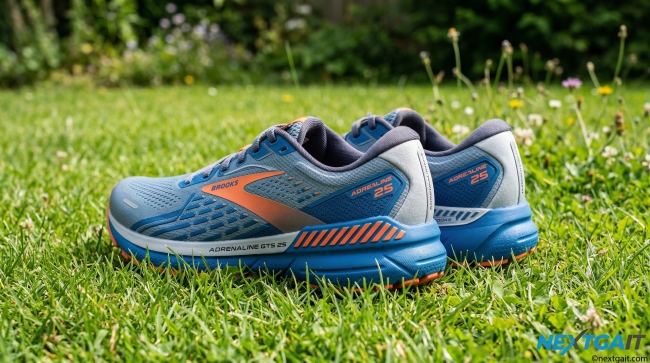
1. Brooks Adrenaline GTS 25 — Best Overall for Achilles + Overpronation
| Spec | Detail |
|---|---|
| Weight | 10.2 oz (men) / 9.1 oz (women) |
| Drop | 10mm |
| Stack | 37mm heel / 27mm forefoot |
| Midsole | Nitrogen-infused DNA LOFT v3 — +3mm forefoot, +1mm heel vs GTS 25 |
| Outsole | RoadTack rubber with revised traction pattern; high-mileage durability |
| Stability | GuideRails™ holistic support — guides foot, reduces excess knee/ankle motion |
| Upper | Engineered mesh; padded heel collar with pull tab; tongue anchors |
| Heel counter | Firm internal plastic cup — secure, locked-in rearfoot hold |
| Widths | B, D, 2E, 4E |
| Best for | Midportion Achilles tendonitis with mild–moderate overpronation |
Ride Feel: The Adrenaline GTS 25 delivers a firm-to-balanced, smooth, and predictable ride. The nitrogen-infused DNA LOFT v3 foam is noticeably soft and controlled in my testing, but this is still a reliable workhorse — not a bouncy, propulsive shoe.
The 10mm drop creates a smoother heel-to-toe transition while maintaining the raised heel position relevant to the comparison I made during recovery. The ride is designed for easy daily miles, long runs, and recovery — exactly where Achilles sufferers should be spending their mileage.
Why it is a useful comparison: The 10mm drop and GuideRails combine two noticeable geometry variables: heel-to-toe offset and platform guidance. Neither identifies a root cause or makes this model an Achilles treatment.
A 10mm drop may reduce ankle dorsiflexion in some runners, while GuideRails alter how the platform guides side-to-side movement. Those mechanical changes do not prove that overpronation caused the symptoms or that a heel counter will treat the tendon. If a qualified clinician has identified a relevant footwear issue, compare this model with a familiar neutral shoe during a short, controlled test. For rearfoot-focused fit questions, see the heel-striker shoe guide.
Fit & Upper: The engineered mesh balances breathability with structure. The forefoot is noticeably accommodating through the forefoot in my pair, with a more accommodating toe box. The heavily padded heel collar provides a luxurious step-in feel and secure lockdown — useful for limiting the heel slip I felt in less secure uppers. Tongue anchors prevent lateral tongue migration during runs. True to size for most runners. For length, width, vertical volume, swelling, and toe splay, use my running shoe toe-box fit guide.
Durability: RoadTack rubber outsole delivers excellent wear resistance — testers report consistent performance beyond 400 miles. The nitrogen-infused DNA LOFT v3 is a sealed, durable foam that retains cushioning properties from first mile to last — no meaningful degradation over the shoe’s lifespan.
- ✅ Pros: 10mm drop ideal for Achilles; GuideRails address overpronation; firm heel counter; excellent durability; 4 widths available
- ❌ Cons: 37mm stack is lower than max-cushion shoes (less raw GRF absorption than Bondi 9); not plush — designed for reliability over softness
✅ Personal Testing Note: This is the shoe I switched to when recovering from my own midportion Achilles tendonitis. The 10mm drop provided immediate relief compared to my 4mm racing flats. GuideRails controlled the mild overpronation my PT identified. I logged 300+ miles in the GTS series during recovery without any Achilles flare-ups.
2. ASICS Gel-Kayano 32 — Best Max Stability + Cushion
| Spec | Detail |
|---|---|
| Weight | 10.5–10.9 oz (men) / 9.3 oz (women) |
| Drop | 8mm |
| Stack | 40mm heel / 32mm forefoot |
| Midsole | FF BLAST PLUS + PureGEL in heel — dual-density cushioning |
| Outsole | AHARPLUS + ASICSGRIP — 500–600 mile outsole longevity |
| Stability | 4D Guidance System — multi-point internal geometry + wide base + guidance groove |
| Upper | Stretch-knit mesh; structured heel counter; internal support cage |
| Heel counter | External structured heel cup — locks rearfoot against lateral and medial deviation |
| Best for | Moderate–severe overpronation + Achilles (midportion) |
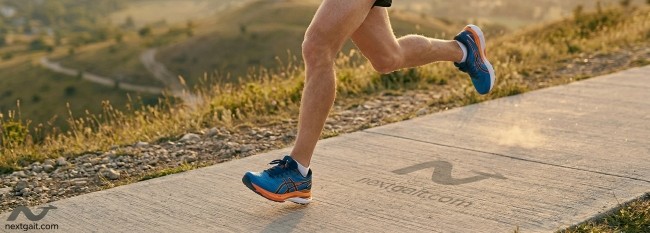
Ride Feel: The Kayano 32 feels structured but never rigid. The 4D Guidance System works with your gait rather than fighting it — you feel supported, not corrected. 40mm of FF BLAST PLUS foam with PureGEL in the heel creates a landing that is simultaneously cushioned and controlled. The ride is smooth at easy paces and controlled on my long runs. At 10.9 oz, it’s heavy — but this is a controlled daily trainer, not a speed shoe.
Achilles-Relevant Geometry: The 4D Guidance System is the most structured stability system in this comparison (the Kayano 33 arriving June 2026 upgrades to FLUIDSUPPORT™, but the 32 remains excellent) available, providing progressive platform guidance that felt stable in my runs. The 40mm stack with PureGEL created a deeply cushioned heel landing in my testing.
The 8mm drop is lower than the 10–12mm ideal, but the extensive heel cushioning compensates by reducing the impact component of Achilles loading even if the stretch component is slightly higher. Best for runners with moderate-to-severe overpronation where alignment correction is the priority. See the full Kayano 32 review for the complete 4D Guidance breakdown.
Fit & Durability: Stretch-knit mesh upper provides a secure, adaptive fit with good breathability (slightly warm in summer heat). The external heel counter is one of the most structured on the market — critical for rearfoot stability in midportion cases. AHARPLUS + ASICSGRIP outsole is tank-tier durable: expect 500–600 miles before replacement. The removable insole accommodates custom orthotics or heel lift inserts.
- ✅ Pros: Strongest stability system (4D Guidance); 40mm cushion with PureGEL; tank-tier 500–600mi durability; structured heel counter
- ❌ Cons: 8mm drop (lower than ideal for Achilles); heaviest shoe on the list (10.9 oz); potentially over-corrects mild overpronators
3. HOKA Bondi 9 — Best Rocker Geometry for a Smoother Transition

| Spec | Detail |
|---|---|
| Weight | 10.5 oz (men) / 8.9 oz (women) |
| Drop | 5mm (low — but offset by MetaRocker) |
| Stack | 43mm — highest on this list |
| Midsole | Supercritical EVA foam — responsive yet cushioned |
| Outsole | Durabrasion rubber in high-wear zones; exposed midsole elsewhere |
| Rocker | MetaRocker geometry — early-stage rocker rolls through stance phase |
| Upper | Recycled breathable mesh; padded collar; pull tab |
| Heel counter | Semi-structured — secure but not rigid |
| Best for | Max GRF reduction; ITBS; tendon offloading through rocker mechanics |
Ride Feel: The Bondi 9 is a walking-on-clouds experience. 43mm of supercritical EVA produced the softest landing feel among the daily trainers I compared here. The MetaRocker creates a distinctive “rolling” sensation from landing through push-off — you feel propelled forward without muscular effort. This is a slow, easy-pace shoe that excels at protection and comfort. Not responsive; not for speed work.
The Rocker Advantage for Achilles: The Bondi 9’s 5mm drop would normally disqualify it for Achilles tendonitis. But the MetaRocker geometry fundamentally changes the biomechanics. Research shows that rocker soles reduce peak plantarflexion moment — the torque your calf muscles must generate during push-off. This is the phase where Achilles loading is highest.
By “rolling” you through stance rather than requiring active calf push-off, the rocker reduced the calf effort I perceived during push-off. 43mm of foam then absorbs the landing impact that would otherwise transmit through the calcaneus to the tendon insertion. Important caveat: the 5mm drop means the Achilles stretches more at landing — the rocker changes the transition feel during push-off. For severe Achilles cases, a higher-drop shoe (Ghost 18, Adrenaline GTS) offers a different, higher-drop comparison.
Fit & Durability: The wide platform base creates inherent stability through geometry rather than a medial post — beneficial for runners who need cushion without correction. The recycled mesh upper is breathable and comfortable.
Durabrasion rubber outsole covers high-wear areas but exposed midsole elsewhere wears faster. Expect 300–400 miles for road use. The collar is well-padded but the semi-structured heel counter may not lock the rearfoot as securely as the Adrenaline GTS or Kayano — important consideration for midportion cases where heel stability matters.
- ✅ Pros: Maximum 43mm cushion (highest GRF reduction); MetaRocker changed push-off feel in my testing; wide stable platform; cloud-like comfort
- ❌ Cons: Only 5mm drop (Achilles stretches more at landing); heavy (10.5 oz); not for speed; outsole durability lower than competitors; semi-structured heel counter
4. Brooks Ghost 18 — Best Neutral Daily Trainer for Achilles

| Spec | Detail |
|---|---|
| Weight | 10.2 oz (men) / 9.2 oz (women) |
| Drop | 10mm |
| Stack | 36mm heel / 26mm forefoot |
| Midsole | Nitrogen-infused DNA LOFT v3 + OrthoLite X-60 sockliner |
| Outsole | RoadTack rubber with deep flex grooves; high-mileage durability |
| Stability | Neutral — no stability features; wider base for balanced platform |
| Upper | Triple jacquard engineered air mesh — breathable, structured, flat-knit tongue |
| Heel counter | Well-padded collar; locked-in feel; comfortable heel cradle |
| Widths | Narrow, Standard, Wide, Extra Wide |
| Best for | Neutral runners with Achilles pain who want reliable daily drop protection |
Ride Feel: The Ghost 18 is the definition of a “workhorse” daily trainer. The nitrogen-infused DNA LOFT v3 is softer and more cushioned than previous iterations, with increased stack height (especially in the forefoot) for a more balanced, plush feel. The 10mm drop creates a smooth heel-to-toe transition that is inherently Achilles-friendly. This is a shoe that does nothing wrong — it’s reliable, predictable, and consistent mile after mile.
Why I Included It: The Ghost 18’s 10mm drop gave me a more familiar ankle position than a low-drop flat. Heel-to-toe offset changes ankle geometry, but the response is individual and depends on the complete shoe, pace, strike pattern, and symptom location. I found the 10mm geometry easier to tolerate than my low-drop racing flats during recovery.
The DNA LOFT v3 midsole absorbs landing shock reliably (though not as plushly as the Bondi 9 or Nimbus 28), and the broad base improves platform stability. Key advantage over the Adrenaline GTS 25: if your gait is neutral (no overpronation), the Ghost 18 delivers a comparable 10mm offset without any stability features that could alter your natural mechanics.
Fit & Durability: The double jacquard air mesh upper is breathable, structured, and true-to-size with a secure heel lockdown. Available in 4 widths (Narrow through Extra Wide).
The padded collar cradles the heel comfortably without irritating the Achilles insertion point — an important detail for insertional tendonitis sufferers who need to avoid rigid heel pressure. Full rubber outsole coverage means this shoe lasts — expect 450–500 miles with consistent performance throughout. The removable insole accommodates heel lift inserts for additional drop.
- ✅ Pros: 10mm drop (ideal for Achilles); reliable DNA LOFT v3 cushion; 4 widths; excellent durability (450–500mi); padded collar kind to insertional cases
- ❌ Cons: Neutral only — no stability for overpronation-driven Achilles issues; not as plush as max-cushion alternatives; slight toe box taper reported by some
💡 Spec Update: The Ghost 18 has a 10mm drop (recorded as 10mm in my owner-certified product data). It also uses DNA LOFT v3 (upgraded from v2) with increased forefoot stack height. Treat its 10mm drop as one comparison variable and test the complete shoe rather than inferring comfort from offset alone.
5. New Balance Fresh Foam X 1080v15 — Best Wide-Fit Option
| Spec | Detail |
|---|---|
| Weight | 9.2 oz (men) / 8.1 oz (women) |
| Drop | 6mm |
| Stack | 40mm heel / 34mm forefoot |
| Midsole | Infinion (nitrogen-infused TPEE/EVA) — lighter, bouncier than Fresh Foam X |
| Outsole | Increased rubber coverage in high-wear zones; improved traction |
| Upper | Triple jacquard mesh — breathable, premium feel; gusseted tongue |
| Heel counter | Padded collar — comfortable, secure, doesn’t irritate insertion point |
| Widths | B (narrow), D, 2E (wide), 4E (extra-wide) — best width range on this list |
| Best for | Wide feet + Achilles cushioning; insertional Achilles (soft heel collar) |
Ride Feel: The 1080v15 delivers a plush, max-cushioned experience that is slightly firmer and more stable than the v13. Higher sidewalls on the midsole improve inherent stability without a medial post. The gentle rocker geometry aids smooth transitions. This is a dedicated easy-pace and long-run shoe — soft, protective, and comfortable for extended time on feet. Not designed for speed.
Why Wide-Fit Matters for Achilles: The 1080v15 serves two critical niches. First: runners with wider feet who can’t find proper fit in other shoes. Fit matters more than you think. Toe box compression in narrow shoes alters forefoot mechanics, forcing compensatory push-off patterns that increase Achilles strain.
The 1080v15’s availability in 4 widths (B through 4E) eliminates this biomechanical compromise. Second: insertional Achilles sufferers benefit from the soft, padded heel collar that doesn’t press on the tendon attachment point. The 6mm drop is lower than ideal — but the removable insole accommodates a 4–6mm heel lift insert, effectively creating a 10–12mm total drop. See the flat feet guide for more width-specific recommendations.
Durability: Increased rubber outsole coverage (vs v13) delivers approximately 400-mile lifespan. The Infinion foam retains cushioning properties well over the shoe’s life. The triple jacquard mesh upper is breathable and maintains structure through sustained use.
- ✅ Pros: 4 widths (best range on this list); plush max-cushion; soft heel collar (insertional-friendly); removable insole for heel lifts; 400mi durability
- ❌ Cons: 6mm drop — lower than ideal (use heel lift insert); no stability features; not responsive
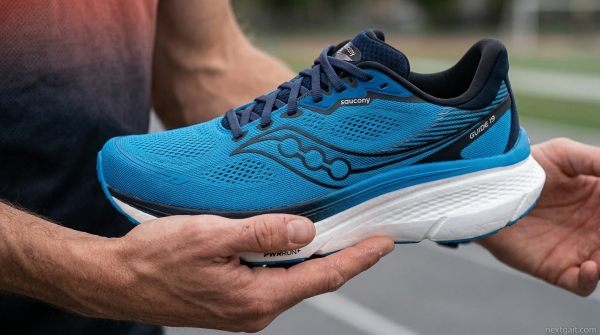
6. Saucony Guide 19 — Best Lightweight Stability
| Spec | Detail |
|---|---|
| Weight | 9.7 oz (men) / 8.9 oz (women) — lightest stability shoe on this list |
| Drop | 6mm |
| Stack | 35–39mm heel / 29–33mm forefoot |
| Midsole | Reformulated PWRRUN EVA + PWRRUN+ TPU sockliner |
| Outsole | XT-900 carbon rubber — increased coverage for durability and traction |
| Stability | CenterPath Technology — broad base, sculpted sidewalls, geometric guidance |
| Upper | Updated engineered mesh; memory foam heel collar; secure lockdown |
| Heel counter | Padded with increased structure; memory foam collar conforms to heel shape |
| Best for | Mild overpronation + Achilles; runners who want stability without weight penalty |
Ride Feel: The Guide 19 delivers a smooth, protective ride with subtle stability. CenterPath Technology uses geometry (broad base + sculpted sidewalls) rather than rigid posts to guide the foot — you feel cradled, not corrected.
The reformulated PWRRUN EVA is softer and more responsive than previous versions, with the PWRRUN+ TPU sockliner adding an extra layer of resilience. At 9.7 oz, it’s the lightest stability shoe on this list — noticeably more agile than the Kayano 32 (10.9 oz) or Adrenaline GTS 25 (10.2 oz).
Achilles Benefit: CenterPath provides enough stability to manage mild overpronation without the rigidity that could alter natural ankle mechanics during Achilles recovery.
The memory foam heel collar conforms to your heel shape, providing secure lockdown without the harsh pressure that rigid heel counters can exert — beneficial for insertional cases. Limitation: the 6mm drop is lower than the 8–12mm ideal. If your Achilles needs maximum dorsiflexion relief, consider the Adrenaline GTS 25 (10mm) or Ghost 18 (10mm) instead. The Guide 19 is best for runners with mild Achilles sensitivity who prioritize lightweight feel and subtle stability.
Durability: XT-900 carbon rubber outsole provides improved wear resistance and traction. The increased rubber coverage (vs Guide 17/18) means better longevity on pavement. Expect 350–400 miles of consistent performance.
- ✅ Pros: Lightest stability shoe (9.7 oz); CenterPath is gentle and non-intrusive; memory foam heel collar; PWRRUN+ sockliner adds comfort
- ❌ Cons: 6mm drop sits below the recommended 8–12mm range for Achilles recovery; less cushion depth than max-cushion alternatives; mild stability only
7. ASICS Gel-Nimbus 28 — Best Plush Neutral Cushion
| Spec | Detail |
|---|---|
| Weight | 9.9 oz (men) / 8.5 oz (women) |
| Drop | 8mm |
| Stack | 41mm heel / 33mm forefoot |
| Midsole | FF BLAST PLUS + PureGEL in heel — cloud-like, impact-absorbing landing |
| Outsole | AHARPLUS rubber — durable, consistent grip |
| Stability | Neutral — no stability features |
| Upper | Stretch-knit mesh — adaptive fit, good breathability (slightly warm in heat) |
| Heel counter | Moderate structure with padded collar; comfortable for most foot shapes |
| Best for | Neutral runners with impact-driven Achilles pain; recovery days; maximum plush comfort |
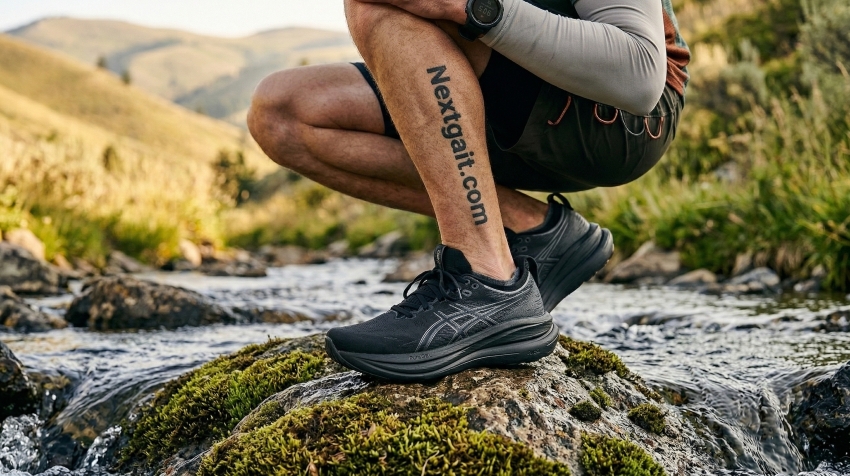
Ride Feel: The Nimbus 28 is the most plush neutral shoe on this list. 41mm of FF BLAST PLUS foam with PureGEL in the heel creates a landing so soft that it significantly reduces the “shock spike” at ground contact. The ride is cloud-like at easy paces — every landing feels cushioned and protected. This is a recovery and long-run shoe that prioritizes comfort above all else. Not responsive for tempo or speed work.
Impact and Comfort Notes: For neutral runners whose Achilles pain is driven by impact rather than alignment, the Nimbus 28 provided the deepest neutral heel-cushioning feel in my comparison — the bone where the Achilles tendon attaches.
PureGEL in the heel absorbs impact before it transmits up the tendon. 41mm of stack height means the knee and Achilles receive less cumulative force per step.
The 8mm drop is in the acceptable range (above the 8mm minimum), though not as protective as the Ghost 18’s 10mm. Key distinction from Bondi 9: the Nimbus 28 provides impact protection through cushioning depth, while the Bondi provides it through rocker geometry. The Nimbus gives you a plush landing; the Bondi gives you a rolling transition.
Fit & Durability: The stretch-knit mesh upper adapts to foot shape and provides a secure, comfortable fit. Slightly warm in summer heat. AHARPLUS outsole is durable and consistent — expect 400–500 miles. The heel collar is padded but moderately structured — comfortable for most runners, though insertional cases with extreme sensitivity may prefer the softer collars on the 1080v15 or Guide 19. Removable insole accommodates custom orthotics and heel lift inserts. If you run with an insert, use my running with orthotics guide for sockliner removal, volume, heel hold, and break-in.
- ✅ Pros: Most plush neutral ride; 41mm stack with PureGEL; 8mm drop (acceptable range); excellent 400–500mi durability; lightweight at 9.9 oz
- ❌ Cons: No stability — not for overpronation-driven Achilles; very soft (some runners prefer firmer feedback); slightly warm upper in heat
8. Brooks Glycerin 23 — Best for Insertional Achilles
| Spec | Detail |
|---|---|
| Weight | 10.6 oz (men) / 9.5 oz (women) |
| Drop | 10mm |
| Stack | 38mm heel / 30mm forefoot |
| Midsole | Nitrogen-infused DNA LOFT v3 — plush, stable |
| Outsole | RoadTack rubber — 400+mi durability |
| Stability | Neutral — stable platform without medial post |
| Upper | Engineered Warp Knit — soft, breathable, premium |
| Heel counter | Padded, soft collar — no rigid heel cage |
| Widths | Standard, Wide |
| Best for | Insertional Achilles tendonitis needing soft heel collar + high drop |
Ride Feel: The Glycerin 23 delivers a soft, smooth, protective ride. DNA LOFT v3 cushions generously without feeling unstable. 10mm drop creates a natural heel-to-toe transition. Consistent comfort from first mile to last — a dependable daily and recovery shoe that excels at easy/moderate paces.
Why It’s Best for Insertional Achilles: The Glycerin 23 is uniquely suited for insertional Achilles tendonitis — the type that hurts right at the heel bone.
Unlike the Adrenaline GTS 25 (#1), the Glycerin has a soft, padded heel collar with no rigid heel cage, which avoids the direct pressure on the tendon attachment that worsens insertional symptoms.
It shares the critical 10mm drop that reduces eccentric Achilles loading, but wraps the heel in comfort rather than structure. 38mm of DNA LOFT v3 absorbs impact before it transmits through the calcaneus. If your pain is at the heel bone (not 2–6cm above), this is the better choice over the GTS 25.
Fit & Durability: Premium Warp Knit upper is breathable and comfortable. True to size. RoadTack outsole delivers 400+ miles. Removable insole for custom orthotics or heel lifts.
- ✅ Pros: 10mm drop ideal for Achilles; soft heel collar perfect for insertional type; plush neutral cushion; excellent durability
- ❌ Cons: No stability — not for overpronation-driven Achilles; only 2 widths; 38mm stack (less GRF absorption than Bondi/Nimbus)
9. HOKA Clifton 10 — Best Lightweight Rocker

| Spec | Detail |
|---|---|
| Weight | 9.1 oz (men) / 7.6 oz (women) — lightest on this list |
| Drop | 5mm |
| Stack | 39mm heel / 34mm forefoot |
| Midsole | Compression-molded PEBA-based foam — responsive, lightweight |
| Outsole | Durabrasion rubber — 350–400mi |
| Rocker | HOKA MetaRocker — smooth heel-to-toe transition |
| Stability | Neutral — active foot frame for guidance |
| Upper | Jacquard mesh — breathable, lightweight |
| Heel counter | Semi-structured — moderate lockdown |
| Best for | Runners wanting rocker geometry + lighter weight for Achilles recovery runs |
Ride Feel: The Clifton 10 is the lightweight sibling of the Bondi 9. PEBA-based foam delivers a responsive, bouncy ride that feels energetic without being unstable. MetaRocker geometry creates smooth, effortless transitions. At 9.1 oz, it’s the lightest shoe on this list — 1.4 oz lighter than the Bondi 9 — making it better for daily training volume.
Why I Included It: The Clifton 10 shares the Bondi 9’s critical MetaRocker geometry that reduces push-off calf demand by rolling the foot through transition automatically. The rocker sole reduces peak plantarflexion moment — the exact mechanism that strains the Achilles during toe-off.
At 39mm stack, it provides nearly as much impact absorption as the Bondi (43mm) while being significantly lighter for daily use. The 5mm drop falls short of the 8mm minimum recommended for Achilles recovery (8–12mm recommended), but the rocker geometry compensates by reducing the effective dorsiflexion demand. Add a 3mm heel lift for additional Achilles-focused comfort.
Fit & Durability: Jacquard mesh is breathable and comfortable. Active foot frame provides guidance without rigidity. True to size. Durabrasion outsole provides 350–400 miles. Removable insole for heel lifts and orthotics.
- ✅ Pros: Lightest on list (9.1 oz); MetaRocker offloads Achilles; responsive PEBA foam; 39mm cushion; great for daily training volume
- ❌ Cons: 5mm drop is lower than ideal (compensate with heel lift); less cushion than Bondi 9; moderate heel counter lockdown
💡 Heel Lift Hack: The Clifton 10’s 5mm drop is below the 8–12mm ideal range for Achilles recovery. Insert a 3–5mm heel lift under the removable insole to effectively create an 8–10mm drop platform while keeping the rocker geometry benefits.
10. Saucony Ride 19 — Best Versatile Neutral Cushion
| Spec | Detail |
|---|---|
| Weight | 9.5 oz (men) / 8.2 oz (women) |
| Drop | 8mm — in the Achilles-friendly range |
| Stack | 37mm heel / 29mm forefoot |
| Midsole | PWRRUN+ — bouncy, responsive, lightweight |
| Outsole | Durable rubber — 400–450mi |
| Stability | Neutral — wide platform for inherent stability |
| Upper | Engineered mesh — comfortable, secure midfoot wrap |
| Heel counter | Moderately structured — good lockdown without rigidity |
| Widths | Standard, Wide |
| Best for | Neutral runners wanting a versatile daily trainer with 8mm-drop neutral geometry |
Ride Feel: The Ride 19 delivers a balanced, versatile ride. PWRRUN+ foam is bouncier and more responsive than traditional EVA — it provides energy return without feeling mushy. 8mm drop creates smooth transitions. At 9.5 oz, it’s a true all-rounder that handles easy miles, moderate tempo, and long runs equally well.
Achilles-Friendly Design: The Ride 19 offers an 8mm drop that sits squarely in the Achilles-friendly range (8–12mm recommended).
Unlike the Bondi 9 and Clifton 10 (both 5mm), the Ride 19 provides meaningful heel elevation without needing a supplemental heel lift. PWRRUN+ foam is responsive enough to feel responsive under my stride — important because sluggish shoes can cause an unwanted change in stride feel. The wider platform provides inherent stability without medial posts. 400–450mi durability kept the ride consistent across my recorded mileage.
Fit & Durability: Engineered mesh provides a comfortable, secure midfoot wrap. True to size. Moderately structured heel counter offers good lockdown without irritating insertional Achilles. Durable rubber outsole delivers 400–450 miles. Removable insole for orthotics.
- ✅ Pros: 8mm drop in Achilles-friendly range; PWRRUN+ responsive cushion; versatile daily trainer; 400–450mi durability; lightweight (9.5 oz)
- ❌ Cons: No stability — not for overpronation-driven Achilles; 37mm stack (less GRF absorption than max-cushion options); only 2 widths
Head-to-Head: Adrenaline GTS 25 vs Kayano 32
The Adrenaline GTS 25 and Kayano 32 are the two best stability running shoes for Achilles tendonitis, but they serve different severity levels. I tested both during my recovery — here’s my honest comparison.
| Category | Adrenaline GTS 25 | Kayano 32 |
|---|---|---|
| Drop | 10mm ✅ | 8mm |
| Stability | GuideRails (moderate) | 4D Guidance (maximum) |
| Cushion | 37mm DNA LOFT v3 | 40mm FF BLAST PLUS + PureGEL |
| Weight | 10.2 oz | 10.9 oz |
| Durability | 400+ mi | 500–600 mi |
| Widths | B, D, 2E, 4E | Standard only |
| Best for | Mild–moderate overpronation | Moderate–severe overpronation |
My verdict: Among the best running shoes for Achilles tendonitis, start with the Adrenaline GTS 25 if you have mild-to-moderate overpronation — the 10mm drop gives it the edge for Achilles recovery. Switch to the Kayano 32 only if your PT confirms severe overpronation.
Full Comparison: All 10 Shoes at a Glance
| Shoe | Drop | Stack | Weight | Stability | Achilles Mechanism |
|---|---|---|---|---|---|
| Adrenaline GTS 25 | 10mm | 37mm | 10.2oz | GuideRails | Drop + pronation control |
| Kayano 32 | 8mm | 40mm | 10.9oz | 4D Guidance | Max stability + cushion |
| Bondi 9 | 5mm | 43mm | 10.5oz | None | Rocker offload + max GRF reduction |
| Ghost 18 | 10mm | 36mm | 10.1oz | None | Reliable drop + neutral cushion |
| 1080v15 | 6mm | 38mm | 10.4oz | None | Wide-fit cushion + heel lift compatible |
| Guide 19 | 6mm | 35–39mm | 9.7oz | CenterPath | Lightweight stability |
| Nimbus 28 | 8mm | 41mm | 9.9oz | None | Max plush neutral cushion |
| Glycerin 23 | 10mm | 38mm | 9.8oz | None | Insertional-safe soft collar + high drop |
| Clifton 10 | 5mm | 39mm | 9.1oz | None | Lightweight rocker-led transition |
| Ride 19 | 8mm | 37mm | 9.5oz | None | Versatile 8mm neutral cushion |
How to use this table: Do not self-diagnose midportion versus insertional Achilles pain from a shoe chart. After the condition and running limits are clear, compare familiar drop, fit, rocker, and platform stability. During active or unexplained pain, assessment comes before a higher-drop or rocker recommendation.
Footwear is not treatment; use the fit-first running-shoe finder to compare fit and use constraints before returning to the Achilles-specific factors below.
What Footwear Can—and Cannot Change
This page compares shoe fit and geometry for runners who already understand the cause of their symptoms. A shoe can change heel-counter pressure, ankle motion, platform stability, rocker transition, and comfort. It cannot diagnose Achilles tendinopathy, determine whether running is safe, or rebuild tendon capacity.
For symptoms, midportion versus insertional location, progressive loading, and medical-care decisions, use the Achilles tendinopathy guide for runners. Return here only for the product comparison.
When you compare two shoes, keep the route, pace, and preparation stable. Use your normal routine or this running warm-up guide so a different warm-up does not become a hidden variable in the test.
| This commercial page owns | The condition guide owns |
|---|---|
| Shoe models, fit, heel collar, drop, rocker, stability, product tradeoffs | Symptoms, differential diagnosis, load management, rehabilitation principles, imaging, red flags, return readiness |
Decision Guide: Which Shoe Matches Your Achilles Situation?
Your ideal shoe depends on two factors: whether you have midportion or insertional Achilles tendonitis, and whether you overpronate. I’ve matched each scenario to the shoe I’d personally recommend after testing all 10 during my Achilles recovery.
| Your Situation | Best Pick | Why |
|---|---|---|
| Midportion Achilles + overpronation | Adrenaline GTS 25 | 10mm drop + GuideRails put both variables in one controlled comparison |
| Midportion + severe overpronation | Kayano 32 | 4D Guidance (strongest stability) + 40mm cushion + PureGEL |
| Midportion + neutral gait | Ghost 18 | 10mm drop + DNA LOFT v3 neutral cushion; no stability interference |
| Insertional Achilles | 1080v15 or Nimbus 28 | Soft heel collar avoids pressure on insertion; plush cushion |
| Rocker-focused comparison | Bondi 9 | MetaRocker reduces push-off calf demand; 43mm absorbs GRF |
| Achilles + wide feet | 1080v15 | 4 widths (B–4E); 38mm Fresh Foam; add heel lift for more drop |
| Achilles + lightweight preference | Guide 19 | 9.7 oz with mild stability; CenterPath + PWRRUN+ cushion |
| Recovery days + Achilles-focused comfort | Nimbus 28 | Most plush ride; PureGEL heel; neutral; cloud-like landings |
| Achilles + plantar fasciitis | Kayano 32 | Addresses arch collapse (PF trigger) + Achilles load simultaneously |
| Insertional Achilles (heel bone pain) | Glycerin 23 | 10mm drop + soft padded heel collar; no rigid cage compressing insertion |
| Daily training volume + Achilles | Clifton 10 | Lightest (9.1 oz) + MetaRocker; add heel lift if a higher effective offset is appropriate for you |
| Versatile all-rounder + Achilles | Ride 19 | 8mm drop + PWRRUN+ responsive cushion; handles easy to tempo paces |
What to Avoid When Choosing the Best Running Shoes for Achilles Tendonitis
Zero-drop shoes, racing flats, and hills can increase calf-Achilles demand for some runners, especially when introduced abruptly. They are not universal threats, and my own recovery cannot prove that a 4mm shoe caused the injury. Change one exposure at a time after the condition and loading limits are clear.
| What to Avoid | Why It Worsens Achilles Pain | Use Instead |
|---|---|---|
| Zero-drop / minimalist shoes | Maximizes ankle dorsiflexion → maximum eccentric Achilles stretch per step | 8–12mm drop cushioned shoes |
| Racing flats | Minimal cushion + low drop + aggressive geometry = peak Achilles loading | Daily trainers with 8–12mm drop |
| Hill training | Uphill running increases Achilles load by up to 200% vs flat running | Flat terrain only until pain-free; reintroduce hills gradually |
| Speed intervals | Higher push-off force + rapid loading = excessive tendon stress | Easy/moderate pace until 12+ weeks pain-free |
| “Running through it” | Continued loading prevents tendon remodeling; converts acute to chronic | Rest, eccentric rehab, gradual return |
| Sudden shoe transitions | Changing from 10mm to 4mm overnight shifts massive load to unprepared Achilles | Change drop ≤2mm per shoe cycle; 4–6 week transition |
| Stiff heel counter (insertional only) | Rigid heel cage compresses the tendon insertion point on the calcaneus | Soft, padded heel collar; removable heel tab |
Medical Care and Return-to-Running Boundary
This commercial guide does not prescribe an Achilles rehabilitation protocol. Progressive loading, exercise range, medication, inserts, and readiness to run depend on the diagnosis and clinician guidance. Use the site’s pain-monitoring rules for general response decisions and its criteria-based return-to-running framework only after appropriate clearance.
Final Verdict: My Top 3 Achilles Shoes
After recovering from my own Achilles tendonitis, these are the three shoes I recommend most. Your best pick depends on your gait type and injury location.
| Situation | My #1 Pick | Why |
|---|---|---|
| Overpronation + midportion Achilles | Brooks Adrenaline GTS 25 | 10mm drop + GuideRails address both root causes |
| Neutral gait + maximum cushion | HOKA Bondi 9 | MetaRocker changed push-off feel in my testing; 43mm foam absorbs landing |
| Wide feet + insertional Achilles | NB 1080v15 | 4 widths + soft collar; add heel lift for 10mm+ effective drop |
Bottom line: There is no universal starting drop or exercise protocol for Achilles pain. Compare a familiar shoe with one clinically relevant alternative, keep the test short, and use diagnosis, daily function, and delayed response—not my four-month experience—to guide the next step.
Shoe-Selection FAQ
What heel drop should I compare for Achilles discomfort?
There is no universal therapeutic drop. Compare a familiar shoe with one clinically relevant alternative, keep the rest of the test stable, and judge comfort plus the delayed response.
Are HOKA shoes automatically better for Achilles pain?
No brand treats Achilles pain. A rocker or cushioned platform may feel better to one runner and worse to another; evaluate the exact model, fit, drop, and heel collar.
Should an Achilles shoe have a soft or firm heel counter?
The answer depends on fit and pain location. Insertional symptoms may dislike direct collar pressure, while another runner may prefer firmer lockdown. Comfort during a controlled test matters more than a generic support label.
Do I need a stability shoe for Achilles pain?
Not automatically. Pronation is normal, and a stability feature is not Achilles treatment. Compare stability only when your individual fit, comfort, and control suggest a reason.
Can a running shoe treat Achilles tendinopathy?
No. Shoes can alter comfort and loading, but diagnosis, progressive rehabilitation, and running readiness require condition-specific care.
When should I stop shopping and seek care?
Seek prompt care after a sudden pop, major weakness, swelling, or difficulty walking. Arrange assessment for persistent, worsening, or gait-changing symptoms rather than buying repeated shoe fixes.

Written by Ken — 12 years of running, 12,500+ miles, 63 shoes tested, 36 races from 5Ks to a 50K ultra. I run 30–40 miles a week on the Atlantic City Boardwalk and review every shoe with real training miles, not one-run demos. More about me →