
The best cushioned running shoes protect the run without making me fight the platform. After more than 2,100 logged miles across these ten models, I rank the ASICS Gel-Nimbus 28 first overall, the Brooks Glycerin 23 for premium plush comfort, and the HOKA Bondi 9 for recovery running and walking.
I do not rank cushion by stack height or first-step softness. I separate four traits: how the foam compresses, how well the base controls that compression, how the shoe transitions forward, and what happens after fatigue arrives. That is how I distinguish useful cushioning from a shoe that merely feels dramatic in a store.
For the broader market, see my best running shoes. If you have not defined your main run or preferred platform, start with my shoe-selection framework.
Quick Picks: 3 Cushioned Running Shoes I Would Compare First
These three represent distinct cushioning outcomes: balanced premium protection, calm plush comfort, and maximum recovery-focused geometry. I compare the skip condition before price, then open the exact width and size I need.
| Shoe | Cushioning profile | Who should skip it | Check price |
|---|---|---|---|
| ASICS Gel-Nimbus 28 | Best overall: plush landing, broad control, smooth long-run transition | Runners wanting low stack, flexibility, or a workout-first ride | Check Nimbus 28 price |
| Brooks Glycerin 23 | Best plush comfort: soft landing with a calm, stable neutral base | Runners prioritizing low weight or interval pace | Check Glycerin 23 price |
| HOKA Bondi 9 | Best maximum cushion: broad rocker for slow recovery runs and walking | Runners wanting speed, ground feel, or high-drop geometry | Check Bondi 9 price |
10 Best Cushioned Running Shoes: In-Depth Reviews
Each review uses a four-part cushion fingerprint—landing, platform control, transition, and late-run behavior—so two tall shoes do not receive the same recommendation merely because both contain a lot of foam.
1. ASICS Gel-Nimbus 28 — Best cushioned running shoe overall
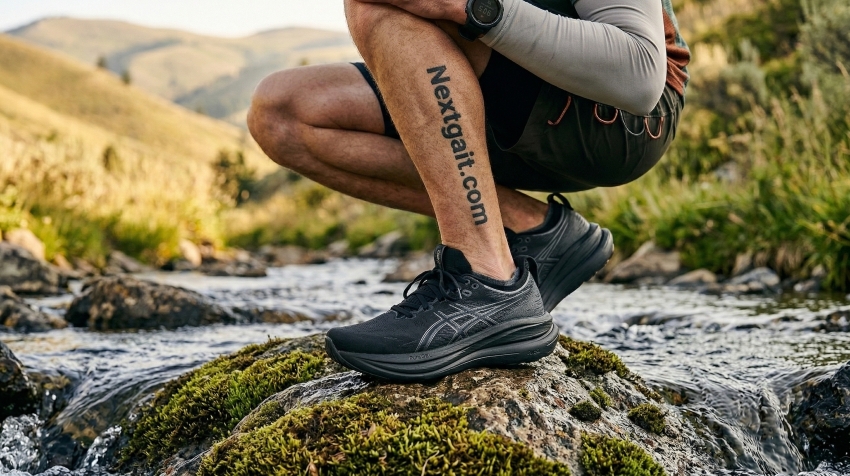
| Cushion fingerprint | My test record |
|---|---|
| Plush but controlled | 285 miles |
| Best use | Easy runs, long runs, and one premium cushioned daily trainer |
| Configuration | 9.9 oz/281 g; 8 mm drop; neutral; standard, wide, extra-wide |
I rank the Gel-Nimbus 28 first because it gives me the most complete cushioning profile in this group: a soft landing, a broad platform, and a transition that stays calm when my legs get tired. Across 285 miles, it has worked for recovery runs, ordinary easy miles, and long runs without feeling like a one-purpose marshmallow.
The important word is controlled. FF BLAST PLUS and rearfoot PureGEL soften impact, but the base does not collapse unpredictably when I corner or land off-center. I can add a steady finish, though I would still choose Novablast or Triumph when pace range matters more than pure comfort.
The men’s version is 9.9 ounces with an 8 mm drop and comes in Standard, Wide, and Extra Wide. I check heel hold because a soft tall platform magnifies looseness. I also fit the forefoot after swelling rather than assuming the knit upper will create space.
I choose Nimbus 28 for the runner who wants one premium cushioned road shoe and values comfort without a stability system. I skip it when the runner wants ground feel, lateral gym use, or a workout-first shoe.
My cushion verdict: Plush but controlled. I buy it for easy runs, long runs, and one premium cushioned daily trainer, not simply because it has a tall stack.
My Gel-Nimbus review covers its ride and fit in greater depth.
2. Brooks Glycerin 23 — Best premium plush cushion
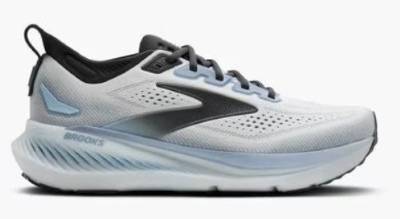
| Cushion fingerprint | My test record |
|---|---|
| Soft landing, stable transition | 214 miles |
| Best use | Long runs and comfort-first daily mileage without a guidance system |
| Configuration | 10.6 oz/300.5 g; 8 mm drop; balanced neutral support; multiple widths |
Glycerin 23 is my premium plush pick because its DNA TUNED midsole feels soft on landing yet holds its shape through transition. I logged 214 miles and kept reaching for it when comfort mattered more than speed. It feels calmer than Triumph and less rockered than Bondi or Ghost Max.
Brooks calls the neutral version balanced support, which matches my experience: the wide platform creates inherent stability without GuideRails. That distinction matters. Runners wanting structured guidance should compare the GTS version; I keep this neutral model for runners who want the shape without an added control system.
At 10.6 ounces and 8 mm drop, it is substantial but conventional. The accommodating upper and multiple widths improve the fit path, yet I still check instep pressure and heel hold. Plush padding cannot repair the wrong last.
I choose Glycerin 23 for long runs and repeatable comfort. I skip it for intervals, low-weight priorities, or runners who prefer a low and flexible forefoot.
My cushion verdict: Soft landing, stable transition. I buy it for long runs and comfort-first daily mileage without a guidance system, not simply because it has a tall stack.
My Brooks Glycerin review explains how its tuned foam differs from simple softness.
3. HOKA Bondi 9 — Best maximum cushion for recovery
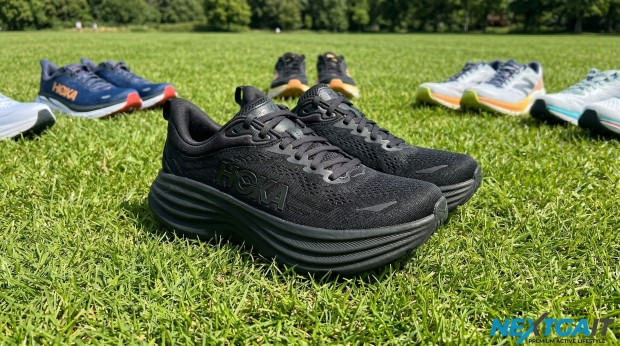
| Cushion fingerprint | My test record |
|---|---|
| Broad, rockered, deliberately slow | 240 miles |
| Best use | Recovery running, walking, and hard-surface easy mileage |
| Configuration | About 10.5 oz/298 g; 5 mm drop; neutral; standard, wide, extra-wide |
Bondi 9 is the shoe I choose when the goal is explicitly recovery. Over 240 miles, its broad supercritical-EVA platform has worked best on slow runs, run-walk days, concrete, and long periods of walking. It is not subtle, and I do not ask it to be.
The 5 mm drop and rocker define the experience as much as the foam. The shoe rolls instead of flexing deeply at the forefoot. That can feel smooth when I am tired, but it can also feel prescriptive if the rocker point does not match the runner’s foot and stride.
Standard, Wide, and Extra Wide cover many feet. I still transition gradually from high-drop shoes and confirm that the foot sits fully on the platform. More foam does not compensate for a heel sliding inside the shoe.
I choose Bondi 9 for easy recovery mileage and walking. I skip it for speed, sharp cornering, lateral work, or runners who want a flexible traditional ride.
My cushion verdict: Broad, rockered, deliberately slow. I buy it for recovery running, walking, and hard-surface easy mileage, not simply because it has a tall stack.
My HOKA Bondi review separates its real recovery strengths from max-cushion marketing.
4. New Balance Fresh Foam X 1080v15 — Best cushioned fit range
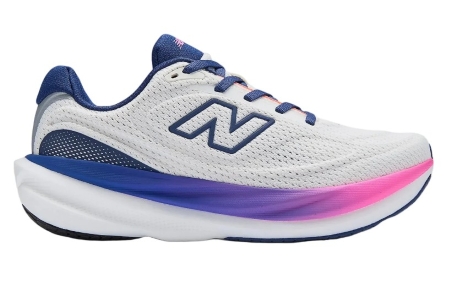
| Cushion fingerprint | My test record |
|---|---|
| Soft-smooth with controlled rebound | 195 miles |
| Best use | Long runs, daily training, and feet that need precise width choice |
| Configuration | About 9.2 oz/261 g; 6 mm drop; neutral; narrow through extra-wide |
The 1080v15 wins the fit-range category because cushion only works when the foot has the correct space. Across 195 miles, its Infinion foam has felt soft enough for long runs but coherent enough that I do not sink deeper as fatigue accumulates.
It sits between categories: less plush than Nimbus, less rockered than Bondi, and less bouncy than Novablast. That middle position makes it useful for daily miles and travel. The 6 mm drop gives the shoe a smoother, less heel-dominant feel than Glycerin or Vomero.
New Balance offers men’s sizes from Narrow through Extra Wide in the US, subject to inventory. I choose width before extra length and then recheck heel volume. A 4E label is valuable only when the heel and instep still lock down.
I choose 1080v15 for long runs, high-volume weeks, and hard-to-fit feet. I transition its lower drop if the current rotation is entirely 10–12 mm.
My cushion verdict: Soft-smooth with controlled rebound. I buy it for long runs, daily training, and feet that need precise width choice, not simply because it has a tall stack.
My New Balance 1080 review goes deeper on width and late-run behavior.
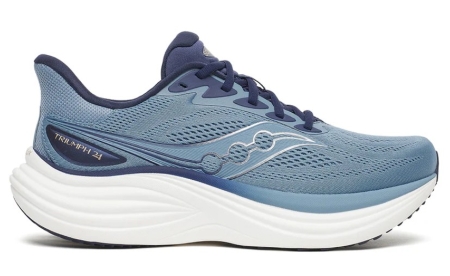
5. Saucony Triumph 24 — Best lively premium cushion
| Cushion fingerprint | My test record |
|---|---|
| Elastic rather than sleepy | 175 miles |
| Best use | Easy-to-steady runs when cushioning must still handle pace changes |
| Configuration | About 10.3 oz/292 g; 10 mm drop; neutral; standard and wide |
Triumph 24 earns the lively-cushion spot because its PWRRUN PB midsole returns more energy than most comfort-first trainers. During 175 miles, it handled easy starts, steady middle miles, and progression finishes without becoming the wrong shoe halfway through the run.
I do not confuse energy return with instability. Triumph feels more elastic than Nimbus or Glycerin, so a runner who lands heavily off-center may prefer their calmer bases. The 10 mm drop also creates a more heel-to-toe relationship than 1080 or Bondi.
The fit works best for medium-volume feet, with a Wide option where offered. I test the forefoot during a faster segment because the foot moves differently when cadence and toe-off force rise.
I choose Triumph 24 when a cushioned shoe must handle rhythm changes. I skip it when maximum platform stability, extra-wide sizing, or a deliberately slow recovery ride is the goal.
My cushion verdict: Elastic rather than sleepy. I buy it for easy-to-steady runs when cushioning must still handle pace changes, not simply because it has a tall stack.
My Saucony Triumph review explains where the responsive foam helps and where it asks for control.
6. HOKA Clifton 10 — Best lightweight cushioned rocker

| Cushion fingerprint | My test record |
|---|---|
| Smooth, light-for-stack, guided forward | 310 miles |
| Best use | Daily road mileage when Bondi feels too large and traditional shoes feel too flat |
| Configuration | 9.8 oz/278 g; 8 mm drop; neutral; standard, wide, extra-wide |
Clifton 10 is my lightweight-rocker choice. I accumulated 310 miles in it, using it for ordinary road mileage, moderate long runs, and travel. Its 42/34 mm geometry provides real depth, yet the shoe feels less cumbersome than Bondi.
The 8 mm drop is a major change from Clifton 9 and makes the transition more familiar for runners coming from conventional trainers. The rocker still guides the stride, so I fit the hinge point as carefully as the upper. If it rolls with me, the shoe feels smooth; if it tips me early, I do not force it.
At 9.8 ounces, it is light for its stack rather than objectively featherweight. Standard, Wide, and Extra Wide help, but arch contour and midfoot volume remain HOKA-specific fit questions.
I choose Clifton 10 for a runner who wants cushion and a rocker without Bondi’s footprint. I skip it when deep softness, a flat flexible platform, or maximum rubber coverage is the priority.
My cushion verdict: Smooth, light-for-stack, guided forward. I buy it for daily road mileage when bondi feels too large and traditional shoes feel too flat, not simply because it has a tall stack.
My HOKA Clifton review covers the rocker timing and fit trade-offs.
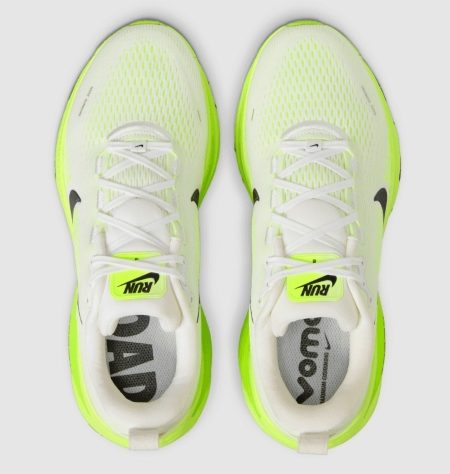
7. Nike Vomero 18 — Best dual-foam cushioning
| Cushion fingerprint | My test record |
|---|---|
| Soft upper layer, steadier foundation | 160 miles |
| Best use | Long easy running with a tall, smooth, modern Nike ride |
| Configuration | About 11.5 oz/325 g in men’s US 10; 10 mm drop; regular and wide |
Vomero 18 is my dual-foam pick because ZoomX over ReactX gives me two distinct jobs: a softer landing above and a steadier foundation below. Through 160 miles, that combination worked best for long easy runs on hard roads.
The platform is tall—Nike lists 46 mm at the heel and 36 mm at the forefoot—and the 10 mm drop keeps the geometry conventional despite the height. The shoe feels smooth rather than fast. Its approximately 11.5-ounce men’s US 10 weight is noticeable beside Clifton or Novablast.
Nike’s MR-10 last works for many feet, but I needed to take sizing seriously. I compare Regular and Wide, check toe taper, and run downhill before committing. A plush upper can disguise forward slide in a store.
I choose Vomero 18 for runners who want a soft modern Nike ride and do not mind the mass. I skip it for extra-wide feet, quick workouts, or runners who feel unstable high above the road.
My cushion verdict: Soft upper layer, steadier foundation. I buy it for long easy running with a tall, smooth, modern nike ride, not simply because it has a tall stack.
My Nike Vomero review covers fit, stack, and the dual-foam ride.
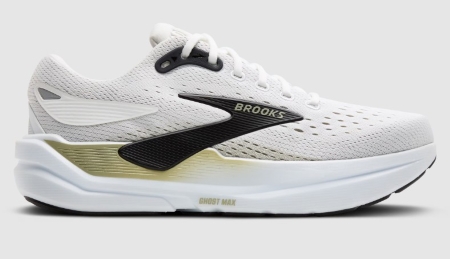
8. Brooks Ghost Max 3 — Best stable cushioned rocker
| Cushion fingerprint | My test record |
|---|---|
| Broad, protective, directional | 180 miles |
| Best use | Easy running and walking when rocker assistance matters more than plushness |
| Configuration | 11.2 oz/317.5 g; 6 mm drop; neutral broad base; multiple widths |
Ghost Max 3 is my stable-rocker pick because its broad base and GlideRoll geometry matter more than raw softness. Across 180 miles, I found it most useful when tired legs wanted a repeatable path through toe-off.
At 11.2 ounces with a 6 mm drop, it is protective and deliberate. It does not have Glycerin’s plush premium feel or Novablast’s bounce. The advantage is that the platform stays broad under the foot and the rocker reduces deep forefoot flex.
Brooks offers multiple widths, but I still check where the rocker sits beneath the metatarsals. Runners between widths should not tighten the upper to create control; I would rather choose the width that lets the foot remain centered.
I choose Ghost Max 3 for easy running, walking, and runners who value rocker assistance. I skip it for speedwork or anyone wanting a flexible conventional trainer. Because Ghost Max 4 is now current, I buy the 3 only when the tested fit works and the discount is meaningful.
My cushion verdict: Broad, protective, directional. I buy it for easy running and walking when rocker assistance matters more than plushness, not simply because it has a tall stack.
My Brooks Ghost Max review gives the full context for this previous-generation value pick.
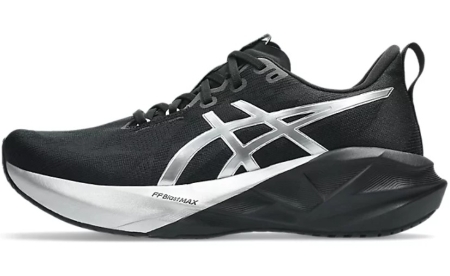
9. ASICS Novablast 5 — Best bouncy cushioning
| Cushion fingerprint | My test record |
|---|---|
| Energetic and playful | 165 miles |
| Best use | Daily runs and progression work for runners comfortable on lively foam |
| Configuration | 9.0 oz/255 g; 8 mm drop; neutral; standard and wide |
Novablast 5 is the bouncy option in this ranking. I logged 165 miles and used it when I wanted a cushioned daily run to progress naturally. FF BLAST MAX compresses and rebounds more obviously than Nimbus, so the shoe feels playful rather than tranquil.
That energy is why I rank it ninth in a cushioning-first guide rather than first. A runner wanting calm protection may find it too lively, especially when tired or on uneven ground. A runner wanting pace range may rank it much higher.
The men’s model weighs 9.0 ounces with an 8 mm drop and comes in Standard and Wide. Heel lockdown matters because springy foam exposes excess movement. Novablast 6 is now current, so I treat the 5 as a tested value choice when discounted.
I choose Novablast 5 for a neutral runner comfortable on energetic high-stack foam. I skip it for maximum stability, recovery-only use, or full-price shopping against the current generation.
My cushion verdict: Energetic and playful. I buy it for daily runs and progression work for runners comfortable on lively foam, not simply because it has a tall stack.
My ASICS Novablast review explains the pace range and stability boundary.
10. Saucony Ride 19 — Best value cushioned trainer

| Cushion fingerprint | My test record |
|---|---|
| Balanced, grounded, uncomplicated | 220 miles |
| Best use | Daily mileage and first rotations without max-cushion bulk or premium pricing |
| Configuration | About 9.0 oz/255 g; 8 mm drop; neutral; standard and wide |
Ride 19 is my value pick because it delivers enough cushion without turning every run into a max-stack experience. Across 220 miles, PWRRUN+ has felt balanced, durable, and easy to understand—qualities I value in a first rotation or a high-mileage workhorse.
The ride is more grounded than Nimbus, Bondi, or Vomero. That means less dramatic softness, but also less platform to manage. It handles easy running and strides without the specialized behavior of a rocker or highly elastic foam.
The 8 mm drop and Standard/Wide choices fit a broad middle of the market. I still protect toe clearance and do not size long to solve width. Beginners often mistake a casual-shoe fit for a running fit.
I choose Ride 19 when budget, simplicity, and repeated daily use matter. I skip it when the runner explicitly wants the softest possible landing or an extreme max-cushion experience.
My cushion verdict: Balanced, grounded, uncomplicated. I buy it for daily mileage and first rotations without max-cushion bulk or premium pricing, not simply because it has a tall stack.
My Saucony Ride review covers why its ordinary-looking balance is useful.
How I Tested and Verified These Shoes
I use a cushion stress test rather than a generic score. The shoe must pass at fresh pace, under asymmetric landings and corners, after an hour, across ordinary surfaces, and after the foam has accumulated mileage. I then verify the exact model configuration separately from what I felt underfoot.
| Test lens | What I check | Failure signal |
|---|---|---|
| Compression | How the foam yields at heel, midfoot, and forefoot | Bottoming out, a dead spot, or excessive sink |
| Platform control | Whether the base keeps the foot centered | Wobble, edge collapse, or bracing |
| Transition | How flex, drop, and rocker move me forward | A rocker that tips early or a forefoot that fights toe-off |
| Fatigue | What changes after the easy opening miles | Late-run instability, pressure, or harshness |
| Conditions | Grip and ride on normal roads and temperatures | Slipping, temperature-sensitive harshness, or insecure corners |
| Mileage | Whether the familiar ride remains coherent | Uneven compression, outsole loss, or upper deformation |
I establish fit before I judge softness
I fit both feet late in the day, use running socks, and check toe length, forefoot width, instep pressure, and heel hold. A soft shoe in the wrong size is still the wrong shoe. I use width rather than unnecessary length to solve lateral pressure.
I map where the foam compresses
I run easy first and note whether the heel, midfoot, or forefoot carries the load. I do not treat one finger-press result as a ride test. Body mass, strike pattern, pace, and geometry determine how the same foam behaves.
I challenge the base, not only the midsole
I corner, run mild camber, and let normal fatigue reduce perfect landing control. A broad base can make soft foam usable; narrow geometry can make moderate foam feel unstable. This is why I never rank by softness alone.
I test the transition at the intended pace
Rockered Bondi, Clifton, and Ghost Max get easy forward running. Triumph and Novablast get progression work. Nimbus, Glycerin, and 1080 get long easy mileage. I do not reward a recovery shoe for sprinting outside its job.
I wait until the run stops feeling fresh
After an hour, I check whether the shoe still holds its shape, whether the heel begins to move, and whether I brace against the platform. Cushion that works only for twenty minutes is not a long-run recommendation.
I verify model, size basis, drop, and widths
Weight can change by size and region, so I preserve the manufacturer’s stated size basis where it matters. I separately verify the exact generation, drop, foam, support category, and offered widths. Product facts check what the shoe is; my miles describe how my pair behaved.
I track wear instead of assigning a universal lifespan
I log mileage and inspect outsole rubber, exposed foam, creasing, heel counter, upper, and ride change on a familiar route. My replacement guide explains the evidence I use rather than forcing every shoe to retire at one number.
My testing rule: A cushioned shoe must stay comfortable and controlled after the first-step softness disappears from attention. Stack, lab numbers, and marketing categories support the decision; they do not replace the moving fit and late-run test.
How to Find the Best Cushioned Running Shoes
I build a cushion profile from the runner backward. I start with the sensation wanted, add the control needed, choose the transition style, and only then compare products. This prevents ‘maximum cushion’ from becoming one vague category.
1. Choose the sensation: plush, balanced, or lively
For plush calm, I start with Glycerin or Nimbus. For balanced protection, 1080, Clifton, or Ride. For lively cushioning, Triumph or Novablast. I do not call one sensation superior; I match it to pace and preference.
2. Decide how much platform control you need
Soft foam should not make me tense my ankles or widen my stride. I choose a broader, calmer base when fatigue or body mass produces uneven compression. My guide for heavier runners expands that control-first decision.
3. Choose flexible or rockered transition
Ride and Pegasus-style geometry lets the forefoot flex more naturally; Bondi, Clifton, and Ghost Max roll forward. A rocker can feel efficient, but only when its pivot agrees with the foot and pace. I test it running, not by looking at the sidewall.
4. Match drop to the current rotation
I do not jump from a 10 mm Glycerin or Vomero directly into repeated long runs in a 5 mm Bondi. I introduce the change on short easy runs. My heel-drop guide explains why adaptation matters more than declaring one offset best.
5. Fit width and volume independently
A wide option solves side-to-side space; it does not guarantee a high instep or narrow heel. I choose the width that keeps the foot on the platform, then solve heel hold with the correct last and lacing. I never add excess length just to escape side pressure.
6. Match the shoe to the surface and duration
Concrete and long runs expose insufficient control and outsole coverage. I use Nimbus, Glycerin, 1080, Bondi, or Vomero when protection dominates, then check my concrete running-shoe guide and long-distance shoe guide for the specific job.
7. Separate recovery shoes from daily trainers
Bondi and Ghost Max can be excellent easy-day specialists without being the best only pair. Ride, Clifton, Nimbus, or 1080 covers more ordinary mileage. I use my recovery shoe guide when the slower-day role is explicit.
8. Test after the foot swells
I run long enough for the upper to warm and the foot to spread. Toe contact, numbness, pressure ridges, or heel movement are failures, not break-in tasks. I check the response later that day and the next morning.
9. Buy the return path with the shoe
I confirm generation, width, seller, and testing policy. Previous-generation Novablast 5 and Ghost Max 3 can be strong value only when the price reflects their status and the fit is already proven.
- Choose plush, balanced, or lively sensation.
- Set the required platform control.
- Choose flexible or rockered transition.
- Account for drop changes.
- Fit width, instep, and heel separately.
- Match surface and duration.
- Separate recovery from daily roles.
- Retest after swelling and fatigue.
- Confirm generation and returns before buying.
My buying rule: I keep the cushioned shoe that lets me relax into the intended pace, holds the foot centered when tired, and causes no worsening response during or after the run. I do not buy by stack height alone.
Frequently Asked Questions
What is the best cushioned running shoe overall?
I rank the ASICS Gel-Nimbus 28 first because it combines a soft landing, broad neutral platform, useful width range, and predictable long-run behavior. I choose Glycerin 23 for a calmer plush ride, Bondi 9 for recovery and walking, and Novablast 5 when bounce matters more than quiet control.
What is the most cushioned running shoe?
Bondi 9 and Vomero 18 provide the clearest sense of a large protective platform, but stack height alone does not decide comfort. Foam firmness, base width, rocker position, fit, and the runner’s loading pattern determine whether that cushion feels useful or unstable.
Are cushioned running shoes good for beginners?
Yes, if the shoe fits and remains controlled. Ride 19 is my simplest starting point; Nimbus 28 and Glycerin 23 work for beginners who prefer more softness. I avoid choosing the tallest or softest shoe automatically because a new runner still needs stable, natural movement.
How much cushioning do I need for long runs?
I want enough depth that the platform remains comfortable late in the run, but not so much softness that I brace or wander. Nimbus 28, Glycerin 23, and 1080v15 are my strongest long-run starting points. Duration, surface, body mass, and preference change the answer.
Do cushioned running shoes reduce injury risk?
I do not treat cushioning as injury protection. It changes underfoot sensation and how load is distributed, but fit, training progression, sleep, strength, prior injury, and movement all matter. I keep the shoe that feels comfortable and controlled and causes no worsening response.
Should heavier runners always wear max-cushion shoes?
No. A heavier runner may prefer a broad, moderately firm platform over very soft foam that deforms unevenly. I prioritize fit, base control, outsole coverage, and how the shoe behaves under fatigue rather than assigning cushion from body weight alone.
What heel-to-toe drop is best in a cushioned shoe?
There is no universal best drop. Eight to ten millimeters feels familiar to many runners; five to six millimeters changes ankle and lower-leg demands enough to deserve a gradual transition. I judge comfort during and after the run instead of chasing one number.
Are soft running shoes better than firm running shoes?
Not automatically. Softness can feel comfortable at first step but vague under load. A firmer cushioned shoe can feel more stable and consistent late in a run. I choose the firmness that lets the runner stay relaxed without bottoming out or bracing.
Is more stack height always more cushioning?
No. Stack describes material depth, not the exact sensation or control. Foam formulation, geometry, outsole, plate or rocker, and the runner’s weight all change the result. Two shoes with similar stack can feel completely different.
Can I run fast in cushioned running shoes?
Yes, but the shoe should match the pace. Triumph 24 and Novablast 5 manage progression running better than Bondi 9 or Ghost Max 3. For dedicated intervals, I usually prefer a lighter workout shoe and preserve the plush pair for easy mileage.
What is the difference between a cushioned shoe and a stability shoe?
Cushion describes underfoot protection and ride; stability describes how the platform guides or controls motion. A neutral shoe can be inherently stable through a broad base, while a stability shoe adds guidance features. One category does not automatically imply the other.
Are rockered cushioned shoes better for tired legs?
They can reduce how much the forefoot bends and create an easier rolling transition, which some runners appreciate when tired. The rocker must match foot length and stride. If it tips the runner too early or creates pressure, a traditional geometry is the better choice.
Which cushioned running shoe is best for wide feet?
New Balance 1080v15 offers the most complete width path in this list. Nimbus 28, Bondi 9, Clifton 10, and Glycerin 23 also offer useful wide options. I still match heel and instep volume because a wide forefoot label does not guarantee whole-foot fit.
How long do cushioned running shoes last?
Many remain useful around 300–500 miles, but I replace by evidence: uneven compression, exposed outsole, new instability, upper failure, or a repeatable change in comfort. Softness alone is not a reliable mileage gauge, and different runners can get very different service life.
Can I use cushioned running shoes for walking?
Yes. Bondi 9, Ghost Max 3, Nimbus 28, and Glycerin 23 are particularly suitable for running-plus-walking use. I avoid tall soft road shoes for lateral gym work and still fit the shoe for the activity occupying the most time.
When should pain end a shoe test?
I stop when pain increases, becomes focal, changes my gait, persists after the run, or appears at night. I do not run through pain to break in a shoe. Persistent or concerning symptoms deserve assessment from a qualified clinician.

Written by Ken — 12 years of running, 12,500+ miles, 63 shoes tested, 36 races from 5Ks to a 50K ultra. I run 30–40 miles a week on the Atlantic City Boardwalk and review every shoe with real training miles, not one-run demos. More about me →