
The Brooks Ghost Max 3 is the best running shoe for metatarsalgia for most runners. Its GlideRoll Rocker, broad base, 6mm drop, multiple widths, and explicit orthotic compatibility create the strongest all-around starting point. The HOKA Bondi 9 is the better plush rocker; the Topo Athletic Phantom 4 is the better fit when side-to-side forefoot compression is the main problem.
That answer needs one boundary. Metatarsalgia is a description of pain in the ball of the foot, not a single diagnosis. A running shoe may change comfort and pressure distribution, but it cannot tell you whether the cause is overload, a stress injury, a plantar-plate problem, arthritis, a callus, or an interdigital nerve condition. Burning or tingling between the toes deserves the separate differential discussed in my Morton’s neuroma shoe guide.
I rebuilt this guide around what can be defended: current manufacturer specifications, known fit and geometry, primary plantar-pressure research, and clear limitations. I removed invented symptom ratings, unsupported pressure percentages, and the idea that one stack-height cutoff makes a shoe therapeutic.
Updated July 20, 2026: All ten product pages and width options were rechecked. Brooks Ghost Max 4 is available for preorder with an August 1 release, so it is covered below but not ranked as a current retail pick. HOKA Clifton 11, Saucony Hurricane 26, and Triumph 24 were also checked against current manufacturer material.
Quick Picks: Best Running Shoes for Metatarsalgia
| Shoe | Best for | Use case |
|---|---|---|
| Brooks Ghost Max 3 | Best overall | Most runners who need an assisted transition, a stable landing, and room for an orthotic |
| HOKA Bondi 9 | Best plush rocker | Easy running and walking when a pronounced rolling transition feels better than a flexible forefoot |
| Topo Athletic Phantom 4 | Best roomy toe box | Runners whose symptoms worsen when the forefoot is squeezed from the sides |
| Brooks Glycerin Max 2 | Best maximum-cushion transition | Long easy runs when the runner wants more cushioning than Ghost Max without giving up a rocker |
| New Balance 1080v15 | Best width range | Runners who need a precise width match or more upper volume than the standard max-cushion fit |
| ASICS Gel-Nimbus 28 | Best traditional neutral cushion | Neutral runners who want a familiar heel-to-toe setup with several width choices |
| ASICS Gel-Kayano 32 | Best stability shoe | Runners who need adaptive guidance in addition to cushioning and forefoot room |
| Brooks Glycerin 23 | Best balanced long-run shoe | Runners who want a plush but less aggressively rockered shoe for steady mileage |
| Saucony Triumph 24 | Best lighter premium cushion | Runners who want a cushioned daily trainer that feels less cumbersome than the largest rockered shoes |
| Nike Vomero Plus | Best soft Nike option | Nike-shaped feet that respond well to soft cushioning and do not need a firm rocker |
Ken’s Ranking Rule
Ken’s ranking rule: A shoe moves up only when its geometry, fit options, and stability work together. More foam is not enough. If the upper compresses the forefoot, the rocker feels mistimed, or the platform makes the foot search for balance, that shoe loses regardless of price or stack height.
My order of operations is simple: rule out a diagnosis that should not be run on; remove pressure from the upper; compare rocker versus conventional flex; choose enough platform stability; then consider cushioning feel. This is why the top three are not simply the three softest shoes.
- Forefoot fit: no lateral squeeze, dorsal pressure, toe curling, or forward sliding.
- Transition: the shoe should move through stance without forcing painful bending at the ball of the foot.
- Stability: the foam and base should remain predictable when the runner tires.
- Width and volume: a labeled Wide must create usable space in the correct part of the shoe.
- Orthotic compatibility: removable sockliner, adequate depth, secure heel, and no new arch conflict.
- Training utility: a shoe must still work for the pace and surface the runner actually uses.
This hierarchy differs from a general max-cushion shoe ranking. Metatarsalgia changes the question from ‘Which shoe feels soft?’ to ‘Which shoe avoids concentrating irritation at my forefoot while remaining stable and correctly fitted?’
Choose by Pain Pattern, Not by Brand
The fastest way to waste money is to compare three shoes that solve the same problem. Start with the symptom pattern, then try two different mechanisms. The comparison tells you more than trying two nearly identical max-cushion trainers.
| What you notice | First shoe to try | Contrast shoe | What the comparison tests |
|---|---|---|---|
| Pain peaks while bending through toe-off | Brooks Ghost Max 3 | HOKA Bondi 9 | A controlled GlideRoll transition versus a plusher, more pronounced MetaRocker |
| The forefoot feels squeezed or develops burning between toes | Topo Phantom 4 | New Balance 1080v15 in the correct width | An anatomical toe box versus a conventional last with a deeper width ladder |
| Soft shoes feel wobbly late in runs | Brooks Ghost Max 3 | ASICS Gel-Kayano 32 | Stable-neutral geometry versus formal adaptive guidance |
| A prescribed orthotic crowds the current shoe | Brooks Ghost Max 3 | Topo Phantom 4 Wide | Extra internal volume versus anatomical forefoot space |
| You want a normal daily-trainer feel as symptoms settle | ASICS Gel-Nimbus 28 | Brooks Glycerin 23 | Two conventional neutral platforms with different upper and foam behavior |
Ken’s two-shoe rule: Try one shape-first shoe and one rocker-first shoe. Keep the pair that reduces pressure without creating heel slip, arch conflict, toe gripping, or next-morning symptom escalation. If neither works, stop shopping and reassess the diagnosis.
How This Guide Was Built
I checked the current US manufacturer pages available on July 20, 2026, for drop, weight, widths, foam, support classification, and rocker language. Manufacturer data is useful for identifying the product; it is not independent evidence that a shoe treats pain. Weight references also differ by men’s and women’s sample size, so the table does not pretend unlike samples are directly comparable.
A small study of 18 healthy female runners found that a rocker shoe reduced central and lateral forefoot plantar-pressure measures compared with a standard running shoe, while increasing heel pressure and receiving lower comfort ratings. That is a useful mechanism signal, not a clinical trial of these ten shoes in runners with metatarsalgia.
Evidence status: No independent study has compared all ten current models in runners with diagnosed metatarsalgia. The ranking is an evidence-informed product shortlist. It is not a medical treatment guideline, and it does not assign fabricated pressure-reduction percentages or symptom ratings.
What Metatarsalgia Actually Means
Metatarsalgia means pain in the forefoot beneath or near the metatarsal heads. People describe aching, burning, sharp pain, or the feeling of a pebble in the shoe. The label tells you where the symptom is; it does not tell you why it is there.
Training spikes, repeated forefoot loading, tight shoes, foot shape, toe deformity, excess callus, and changes in mechanics can contribute. The same area can also hurt because of a metatarsal stress injury, Morton’s neuroma, an inflamed metatarsophalangeal joint, a plantar-plate injury, arthritis, or another condition. Those problems do not share one return-to-run timeline.
| Pattern | What it may suggest | Next step |
|---|---|---|
| Diffuse ache under several metatarsal heads that rises with volume | Mechanical overload is possible | Reduce the provoking load and arrange assessment if it does not settle |
| Burning, tingling, or numbness into adjacent toes | Interdigital nerve irritation may be involved | Use a wide forefoot and seek a diagnosis if persistent |
| One sharply tender point with swelling after a training increase | Stress injury must be considered | Stop impact running and obtain clinical assessment |
| Pain beneath the second toe with instability or toe drift | MTP joint or plantar-plate involvement is possible | Foot and ankle evaluation is appropriate |
| Thick callus under one metatarsal head | A focal pressure pattern may be present | Professional assessment is especially important with diabetes or neuropathy |
A shoe guide also cannot infer the cause from arch shape. Runners with flat feet can have no forefoot pain, and runners with high arches can develop it. Use the fit distinctions in my flat-feet guide and high-arches guide only after identifying what the painful foot actually needs. For a fuller framework covering arch, width, volume, flexibility, and asymmetry, use my running foot types guide.
Five Shoe Features That Matter
1. Rocker geometry, not a marketing curve
A forefoot rocker can reduce how much the shoe bends beneath the metatarsal heads and move the center of pressure forward differently. The strongest running-specific evidence in this area shows reduced forefoot pressure in a particular rocker shoe, not in every shoe described as rockered. Rocker location, stiffness, speed, and the runner’s gait all matter.
Test the rocker by walking slowly, then at normal pace. It should feel like the shoe meets the foot and carries it forward. If it tips you abruptly, makes the toes grip, or feels unstable while turning, the geometry is wrong even if the product page sounds ideal.
2. Width and volume in the right place
Forefoot width is not the same as overall looseness. The shoe needs room across the metatarsal heads and enough height over the toes, while the heel and midfoot remain secure. Buying a longer shoe to gain width can move the flex point, encourage sliding, and create new friction.
Start with the brand’s width system, then verify the actual shape. My wide-feet running-shoe guide explains why a 2E in one model may not feel like a 2E in another.
3. Forefoot cushioning without instability
Cushioning can improve comfort, but soft is not synonymous with protective. A very compliant foam may deform unevenly and ask the foot to stabilize the platform. A firmer rocker may feel less plush in the store yet reduce uncomfortable forefoot bending during motion.
There is no clinically validated 27mm, 30mm, or 35mm forefoot-stack threshold for metatarsalgia. I removed that kind of cutoff from this guide. Judge the complete ride and symptom response rather than one catalog number.
4. A stable base
Stability means the platform behaves predictably, not that every runner needs a stability shoe. Broad geometry, sidewalls, heel seating, and foam tuning can make a neutral shoe stable. Formal guidance becomes useful only when the runner’s mechanics and comfort support it.
Use my overpronation shoe guide and supination shoe guide as separate fit pathways. Do not pick Kayano solely because the outsole wears medially or because an internet footprint test labels the arch.
5. A familiar heel-to-toe drop
Heel drop changes the relationship between heel and forefoot, but it does not act alone. Two 6mm shoes can feel entirely different because stack, rocker, stiffness, and foam differ. During an irritable phase, a familiar drop is usually easier to interpret than two simultaneous changes in shoe and training load.
The practical explanation in Heel Drop Explained for Runners covers transition effects. The short version: do not jump from a conventional trainer to zero drop because a roomy toe box looks attractive. Adaptation still counts.
Comparison Table
| Shoe | Drop / weight reference | Key geometry | Main fit advantage |
|---|---|---|---|
| Brooks Ghost Max 3 | 6mm / 11.2 oz / 317.5g (men’s reference) | GlideRoll Rocker, broad base, DNA LOFT v3 | Medium, Wide, Extra Wide (men’s US listing) |
| HOKA Bondi 9 | 5mm / 10.5 oz / 297g (men’s reference) | Smooth MetaRocker, broad platform, supercritical EVA | Regular and Wide; selected regional listings add more options |
| Topo Athletic Phantom 4 | 5mm / 9.3 oz / 264g (men’s size 9 reference) | 35/30mm platform, anatomical toe box, ZipFoam | Standard and Wide |
| Brooks Glycerin Max 2 | 6mm / 11.3 oz / 320.3g (men’s reference) | Dual-cell DNA TUNED, GlideRoll Rocker, stacked cushion | Width availability varies by current colorway |
| New Balance 1080v15 | 6mm / 9.2 oz / 261g (men’s reference) | Infinion cushioning, 6mm offset, neutral platform | B, D, 2E, 4E for men; 2A, B, D, 2E for women |
| ASICS Gel-Nimbus 28 | 8mm / 9.9 oz / 281g (men’s reference) | FF BLAST PLUS, PureGEL, 8mm offset | Standard, Wide, Extra Wide on the current men’s US listing |
| ASICS Gel-Kayano 32 | 8mm / 10.6 oz / 300g (men’s reference) | FF BLAST PLUS, 4D Guidance System, broad stability platform | Standard with wider options on selected US listings |
| Brooks Glycerin 23 | 8mm / 10.6 oz / 300.5g (men’s reference) | DNA TUNED, wider platform, 2mm more forefoot foam than v22 | Medium and Wide on selected US listings |
| Saucony Triumph 24 | 10mm / 8.8 oz / 250g (men’s reference) | 43/33mm stack, incrediLUX A-TPU foam, XT-900 rubber | Regular and Wide |
| Nike Vomero Plus | 10mm / 10.3 oz / 292g (men’s US 10 reference) | Full-length ZoomX, high-abrasion rubber, tall neutral platform | Regular; a men’s Wide SKU is also listed in the US |
Do not rank the table by stack or weight. For a sensitive forefoot, the most useful comparison is Ghost Max versus Bondi for rocker feel, then Phantom versus 1080 for shape and width. Kayano enters only if additional guidance improves comfort.
The 10 Best Running Shoes for Metatarsalgia
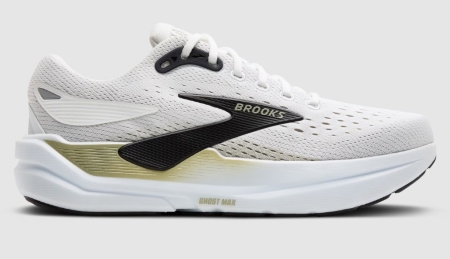
1. Brooks Ghost Max 3 – Best overall
Why it ranks here: It combines the three features I value most for ball-of-foot pain: a visible rocker, a broad and predictable base, and enough width choice to solve compression rather than merely adding softness.
| Best for | Drop | Weight reference | Widths |
|---|---|---|---|
| Most runners who need an assisted transition, a stable landing, and room for an orthotic | 6mm | 11.2 oz / 317.5g (men’s reference) | Medium, Wide, Extra Wide (men’s US listing) |
The Ghost Max 3 is my first fitting-room recommendation, not a promise that it will cure metatarsalgia. Brooks builds the shoe around a GlideRoll Rocker, a wide platform, and a 6mm offset. That package can make the transition from landing to toe-off feel less dependent on bending through a painful forefoot.
The important part is control. Very soft shoes can feel wonderful while standing, then let the foot drift or sink unevenly once pace and fatigue arrive. Ghost Max 3 has cushioning, but its broad footprint keeps the ride calmer than many tall neutral trainers. Brooks also lists orthotics among its intended uses, which matters if a clinician has prescribed an insert or metatarsal addition.
Fit still decides the result. The men’s range reaches Extra Wide on selected colorways, but width labels do not guarantee the correct internal shape. Check whether the upper presses directly over the painful metatarsal heads and whether an inserted orthotic steals too much vertical room. If the toes curl to create space, the shoe is too short or too shallow.
The drawback is weight. This is an easy-run, long-run, and walking shoe, not my choice for intervals. Some runners also dislike a strongly assisted roll. If the rocker catches you too early or makes balance feel uncertain, the number-one ranking does not apply to your foot.
For more context, read my broader running-shoe guide.
- What I like: Clear rocker and assisted transition; Broad, stable platform; Multiple men’s widths; Designed to accommodate orthotics.
- What I do not like: Heavy for faster running; Rocker timing will not suit every gait; Extra Wide availability varies by color and size.
- Who should skip it: Skip it if a tall rockered platform feels unstable, or if your pain is focal enough that normal walking is already altered.
2. HOKA Bondi 9 – Best plush rocker
Why it ranks here: The Bondi’s geometry is more important than its stack height. The Smooth MetaRocker and relatively stiff forefoot can reduce how much the shoe bends beneath the metatarsal heads during forward progression.

| Best for | Drop | Weight reference | Widths |
|---|---|---|---|
| Easy running and walking when a pronounced rolling transition feels better than a flexible forefoot | 5mm | 10.5 oz / 297g (men’s reference) | Regular and Wide; selected regional listings add more options |
Bondi 9 is the strongest alternative when the Ghost Max feels too conventional. HOKA increased the stack and moved to supercritical EVA, but I rank it for the Smooth MetaRocker and broad surface area, not for a bigger millimeter number. A thick shoe that flexes in the wrong place can still irritate the forefoot; the Bondi tries to move the whole platform forward as a unit.
At easy pace, the ride is deliberate. The shoe is happier rolling than snapping, which can be useful when toe-off is the painful phase. The rearfoot-focused Active Foot Frame also gives the heel a seated feeling instead of leaving the foot perched on top of soft foam. If you want footwear selected specifically for rearfoot landings, compare my best running shoes for heel strikers.
The standard HOKA shape can be the limiting factor. A runner with broad metatarsal heads may need Wide even if the usual shoe is standard width. Do not judge this while sitting. Stand, spread the toes, perform a slow lunge, and make sure neither edge of the forefoot is pressing into the upper or hanging over the midsole.
Bondi 9 is expensive and bulky. It is also not automatically better because it is softer. I would choose Ghost Max for easier orthotic integration and Bondi when the MetaRocker clearly makes walking and easy jogging feel smoother during a supervised return.
For more context, read my full HOKA Bondi 9 review.
- What I like: Pronounced, smooth rocker; Plush cushioning without a narrow base; Stable rearfoot seating; Wide version available.
- What I do not like: Bulky at faster paces; Standard fit may taper too much for a broad forefoot; High price.
- Who should skip it: Skip it if the arch shape feels intrusive, the rocker disrupts balance, or the standard upper touches the painful area.
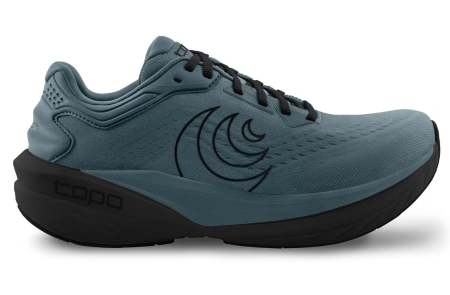
3. Topo Athletic Phantom 4 – Best roomy toe box
Why it ranks here: It gives the metatarsal heads more horizontal room without leaving the midfoot and heel loose, and its 5mm offset is less abrupt than moving straight to a zero-drop shoe.
| Best for | Drop | Weight reference | Widths |
|---|---|---|---|
| Runners whose symptoms worsen when the forefoot is squeezed from the sides | 5mm | 9.3 oz / 264g (men’s size 9 reference) | Standard and Wide |
Phantom 4 solves a different problem from the two shoes above it. Its main advantage is shape. Topo uses a roomy anatomical toe box with a more secure midfoot and heel, so the forefoot can spread without the entire shoe feeling oversized. That can matter when lateral compression, a bunion, or an interdigital nerve symptom sits alongside metatarsalgia.
The 35/30mm platform is cushioned but not a towering rocker. ZipFoam has a balanced feel, and the 5mm drop gives more heel elevation than a zero-drop Altra. I prefer that middle ground for runners who want toe room but have not adapted their calves and feet to a flat platform.
Roomy does not mean universally comfortable. Topo’s midfoot contour and arch sensation can feel prominent. A forefoot that fits beautifully is not enough if the arch pushes the foot laterally or the heel cannot settle. Walk on an incline and jog a figure eight before keeping the pair.
I rank Phantom 4 third because fit can remove a major irritant, but it has less explicit toe-off assistance than Ghost Max or Bondi. Choose it when compression is the obvious trigger. Choose a stronger rocker when bending through the forefoot is the bigger problem.
For more context, read my Topo Athletic Phantom review.
- What I like: Anatomical toe-box shape; Secure heel and midfoot; Standard and Wide versions; Moderate 5mm offset.
- What I do not like: Arch contour can feel pronounced; Less rocker assistance than the top two; Wide upper volume still may not match every foot.
- Who should skip it: Skip it if the arch pushes your foot outward or if a flexible transition reproduces pain during a slow lunge.
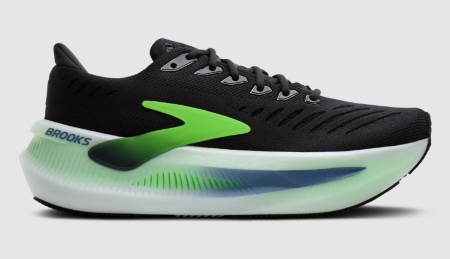
4. Brooks Glycerin Max 2 – Best maximum-cushion transition
Why it ranks here: It pairs a large amount of foam with Brooks’ GlideRoll geometry, so the cushioning and transition strategy work together instead of relying on softness alone.
| Best for | Drop | Weight reference | Widths |
|---|---|---|---|
| Long easy runs when the runner wants more cushioning than Ghost Max without giving up a rocker | 6mm | 11.3 oz / 320.3g (men’s reference) | Width availability varies by current colorway |
Glycerin Max 2 is the luxury option in this ranking. Brooks uses dual-cell DNA TUNED foam and a GlideRoll Rocker, creating a softer landing zone and a more responsive forefoot. The point for a metatarsalgia shortlist is not energy return. It is that the tall platform is shaped to keep progression moving rather than folding sharply under the ball of the foot.
The shoe feels substantial. That can be reassuring on straight, easy road miles, where the broad base and rocker do most of their work. It can also be cumbersome on tight turns, uneven shoulders, and faster sessions. Low weight is not a treatment feature, but excessive bulk can change how confidently a runner places the foot.
This model needs an especially careful fit check because a tall insole or custom orthotic can raise the foot into the upper. Verify heel hold after inserting the device, then check that the laces do not have to be cranked down to stop movement. Pressure from above can be just as irritating as a narrow sidewall. If you run with an insert, use my running with orthotics guide for sockliner removal, volume, heel hold, and break-in.
I put it behind Phantom 4 because shape is often the harder problem to solve. If your forefoot already fits Brooks well and you want the most cushioned rockered experience in the brand, Glycerin Max 2 becomes a serious top-three candidate.
For more context, read my shoe guide for heavier runners.
- What I like: High cushioning with a deliberate rocker; Broad and composed ride; Comfortable for easy and recovery work; Good option when soft foam alone feels unstable.
- What I do not like: Heavy; Expensive; Tall platform is not ideal on uneven roads; Width stock can be inconsistent.
- Who should skip it: Skip it if you need a low, agile platform or if an orthotic makes the upper shallow and the heel loose.
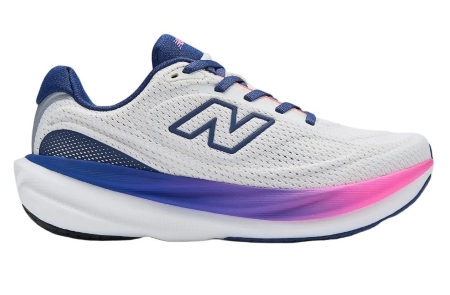
5. New Balance 1080v15 – Best width range
Why it ranks here: New Balance offers the most useful width ladder in this group, making it easier to solve forefoot compression without buying a shoe that is unnecessarily long.
| Best for | Drop | Weight reference | Widths |
|---|---|---|---|
| Runners who need a precise width match or more upper volume than the standard max-cushion fit | 6mm | 9.2 oz / 261g (men’s reference) | B, D, 2E, 4E for men; 2A, B, D, 2E for women |
The 1080v15 earns its place through sizing discipline. New Balance lists four men’s widths and four women’s widths, including narrow and extra-wide choices. That matters because sizing up in length to gain width moves the flex point and can let the foot slide forward, both poor trades when the ball of the foot is sensitive.
The new Infinion midsole is extra soft by New Balance’s classification, but the shoe is not as heavily rockered as Ghost Max or Bondi. I see it as the fit-first option: useful when a standard-width shoe squeezes the metatarsal heads, less compelling when pain occurs mainly during toe-off and a stiffer roll clearly helps.
Do not assume 4E is automatically correct. Excess width can let the forefoot migrate and create friction. The heel should remain secure without locking the laces over the top of the foot, and the widest part of the shoe should align with the widest part of the foot.
The 1080 is also lighter than most max-cushion picks here, which makes it easier to use as a normal daily trainer. The tradeoff is a softer neutral platform that may feel vague to runners who need more guidance when fatigued.
For more context, read my running-shoe guide for bunions.
- What I like: Excellent width range; Soft, lighter daily-trainer feel; APMA Seal of Acceptance; Easy to fit without adding excess length.
- What I do not like: Less rocker assistance than the leaders; Soft neutral ride may feel unstable; The correct width can differ from another New Balance model.
- Who should skip it: Skip it if softness increases your sense of forefoot movement or if a rocker is the feature that clearly reduces symptoms.
6. ASICS Gel-Nimbus 28 – Best traditional neutral cushion
Why it ranks here: It provides deep cushioning and real width options in a conventional neutral package, useful for runners who dislike a strongly guided rocker.
| Best for | Drop | Weight reference | Widths |
|---|---|---|---|
| Neutral runners who want a familiar heel-to-toe setup with several width choices | 8mm | 9.9 oz / 281g (men’s reference) | Standard, Wide, Extra Wide on the current men’s US listing |
Nimbus 28 is the conservative neutral choice. ASICS pairs FF BLAST PLUS with PureGEL and an 8mm offset, then offers Wide and Extra Wide in the men’s US range. The ride is smoother and less mechanically obvious than Bondi or Ghost Max.
That normality can be valuable. Some runners with forefoot pain dislike a rocker that tips them forward before they are ready. Nimbus lets the foot progress more naturally while still placing a substantial cushion package underneath it. The engineered knit upper also has fewer rigid overlays pressing across the forefoot.
The caution is the same: cushioning is not proof of offloading. An 8mm drop, soft foam, and a flexible transition can redistribute load differently from runner to runner. A high heel does not automatically move pressure away from the metatarsals during running, and a low drop does not automatically make it worse. Test the complete geometry.
I would choose Nimbus over 1080 when the runner prefers a slightly more structured, traditional ride. I would choose 1080 when width precision is the dominant need. Neither outranks a comfortable rocker when painful toe extension is the main complaint.
For more context, read my full Gel-Nimbus review.
- What I like: Maximum cushioning in a familiar neutral format; Multiple men’s widths; Soft engineered-knit upper; Lighter than the biggest max-cushion shoes.
- What I do not like: No strong rocker advantage; Softness does not guarantee pressure relief; High stack can feel bulky on turns.
- Who should skip it: Skip it if forefoot flex reproduces symptoms or if the knit upper cannot hold the midfoot without lace pressure.
7. ASICS Gel-Kayano 32 – Best stability shoe
Why it ranks here: It addresses the runner whose symptoms are aggravated by unstable late-run mechanics, using a broad platform and adaptive guidance instead of a hard medial post.

| Best for | Drop | Weight reference | Widths |
|---|---|---|---|
| Runners who need adaptive guidance in addition to cushioning and forefoot room | 8mm | 10.6 oz / 300g (men’s reference) | Standard with wider options on selected US listings |
Kayano 32 belongs here for a specific runner, not because everyone with metatarsalgia needs stability. Its 4D Guidance System and broad base can help the foot feel more centered as fatigue increases. That may matter when a soft neutral shoe allows excessive movement and the forefoot repeatedly loads the same irritated area.
ASICS uses high cushioning and an 8mm offset, but the ride feels more controlled than Nimbus. There is no old-fashioned hard post under the arch. The support comes from geometry, platform width, and how the foam responds through stance.
Do not diagnose overpronation from a wet footprint or wear pattern. Flat feet, pronation, and metatarsalgia are related in some runners but are not interchangeable. If a neutral shoe feels stable and comfortable, there is no prize for buying more guidance.
Kayano ranks seventh because support can solve one problem while creating another. A prominent arch sensation, too much medial pressure, or a poor forefoot shape is an immediate veto. It is the best stability option only after the fit and symptom pattern justify it.
For more context, read my full Gel-Kayano 32 review.
- What I like: Adaptive stability without a hard post; Broad, controlled platform; High cushioning; Useful when neutral foam feels unstable.
- What I do not like: Heavier than Nimbus; Support is unnecessary for many runners; Arch interaction can be polarizing.
- Who should skip it: Skip it if you are comfortable in neutral shoes or feel the guidance pressing the arch and shifting the foot laterally.
8. Brooks Glycerin 23 – Best balanced long-run shoe
Why it ranks here: Brooks added forefoot cushioning and retained a wide, steady platform, making it a sensible conventional trainer when the Max models feel too bulky.
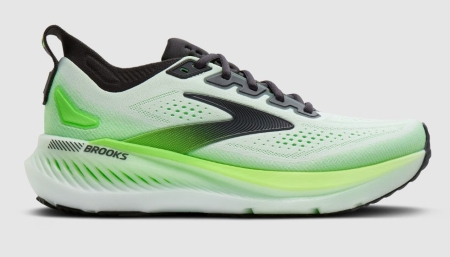
| Best for | Drop | Weight reference | Widths |
|---|---|---|---|
| Runners who want a plush but less aggressively rockered shoe for steady mileage | 8mm | 10.6 oz / 300.5g (men’s reference) | Medium and Wide on selected US listings |
Glycerin 23 is the middle path. It has more forefoot DNA TUNED cushioning than its predecessor, a wide platform, and an 8mm offset, yet it does not create the same rolling sensation as Ghost Max or Glycerin Max 2. Runners who want a normal daily shoe often prefer that restraint.
The dual-cell foam is designed for softer landings and more responsive toe-offs. For metatarsalgia, I care less about the marketing promise and more about whether the forefoot remains composed under load. The platform is steady enough that it does not feel like a narrow slab of soft foam.
Its weakness is specificity. Nothing about Glycerin 23 guarantees less metatarsal-head pressure, and the toe box is not as anatomical as Topo’s. It makes the list because it is a comfortable, stable-neutral shoe with useful forefoot material, not because it is a medical device.
Choose it when the Max versions feel overbuilt and your symptoms are mild, improving, and compatible with a normal flex pattern. For active pain during push-off, I would start with a stronger rocker and compare directly.
For more context, read my long-distance running-shoe guide.
- What I like: Balanced cushioning; Stable-neutral platform; Added forefoot foam; Less bulky than the Max models.
- What I do not like: Not an anatomical toe box; Less toe-off assistance; Still fairly heavy for a standard trainer.
- Who should skip it: Skip it if lateral compression or painful toe-off is the primary trigger and a more specialized shape works better.
9. Saucony Triumph 24 – Best lighter premium cushion
Why it ranks here: It combines a Wide option, a secure upper, and a lighter premium-cushion package, though it lacks the explicit offloading geometry of the leaders.
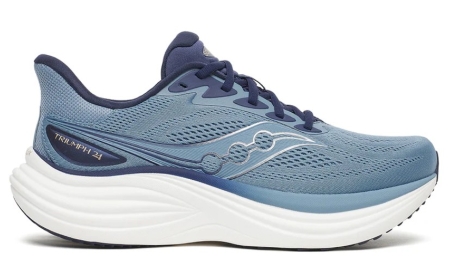
| Best for | Drop | Weight reference | Widths |
|---|---|---|---|
| Runners who want a cushioned daily trainer that feels less cumbersome than the largest rockered shoes | 10mm | 8.8 oz / 250g (men’s reference) | Regular and Wide |
Triumph 24 is the livelier choice near the bottom of this ranking. Saucony replaced the previous midsole with incrediLUX A-TPU foam and lists a 43/33mm stack, 10mm drop, and 8.8-ounce men’s reference weight. The XT-900 rubber and plush upper keep it positioned as a high-mileage neutral trainer.
I include it because not every runner tolerates a bulky rocker. Triumph gives a more conventional transition with enough material under the forefoot and a true Wide version. That can be the better compromise once symptoms are settling and the runner wants one shoe for easy mileage and controlled steady running.
It is not my first choice during an irritable phase. A lively foam can feel pleasant without reducing pressure at the exact painful location, and the shoe does not provide the obvious forefoot-roll strategy of Ghost Max, Bondi, or Glycerin Max 2.
Buy it for fit and normal training utility, not because ‘premium foam’ sounds therapeutic. If a slow lunge or short jog still produces a sharp focal response, changing to another soft trainer is not the next medical step.
For more context, read my Saucony Triumph 24 review.
- What I like: Regular and Wide versions; Lighter feel than many max-cushion shoes; Durable outsole concept; Versatile daily-training ride.
- What I do not like: No strong rocker advantage; New foam has limited long-term public evidence; Ten-millimeter offset may feel too conventional for runners seeking an early roll.
- Who should skip it: Skip it during an acute flare if a conventional forefoot transition still hurts.
10. Nike Vomero Plus – Best soft Nike option
Why it ranks here: It is the most credible current Nike option for deep cushioning, and the separate Wide listing improves its fit range, but softness alone keeps it tenth.
| Best for | Drop | Weight reference | Widths |
|---|---|---|---|
| Nike-shaped feet that respond well to soft cushioning and do not need a firm rocker | 10mm | 10.3 oz / 292g (men’s US 10 reference) | Regular; a men’s Wide SKU is also listed in the US |
Vomero Plus uses a full-length ZoomX midsole and a 10mm drop. The ride is tall, soft, and responsive, with rubber covering the high-wear areas. For runners who already know that the Nike last fits them, it offers more underfoot material than the standard Vomero line.
The Wide SKU is important. A soft midsole cannot compensate for an upper that squeezes the forefoot, and Nike’s standard shape is not the broadest in this group. Verify that the wide version changes the space where your foot needs it rather than only increasing upper volume.
This is also the shoe most likely to be overbought for the wrong reason. Standing comfort and running comfort are different tests. ZoomX compresses readily, which can feel protective to one runner and unstable to another. There is no evidence that this specific model treats metatarsalgia.
I would keep Vomero Plus on the shortlist only when fit is clean, soft foam has worked before, and the runner does not need a stiff rolling transition. It is a reasonable option, not the default answer.
For more context, read my Nike Vomero review.
- What I like: Deep full-length ZoomX cushioning; Men’s Wide version listed; Durable rubber coverage; Comfortable for easy road running.
- What I do not like: Soft platform can feel unstable; Standard Nike fit may squeeze a broad forefoot; Less rocker-specific than the top picks.
- Who should skip it: Skip it if soft high stacks make your foot search for stability or if the standard upper touches the painful area.
Popular Shoes I Did Not Rank
A current guide should explain its exclusions. These shoes are not bad; each misses the list for a specific timing, fit, or use-case reason.
| Shoe | Current status | Why it is not in the top 10 | Who should still try it |
|---|---|---|---|
| Brooks Ghost Max 4 | US preorder; Brooks lists an August 1, 2026 release | It is not yet the current retail model. Published specs are promising: 6mm drop, 10.3 oz men’s reference, GlideRoll Rocker, broad base, and extra orthotic room. | Runners who can wait and want a lighter update to Ghost Max 3 |
| HOKA Clifton 11 | Newly released | The Smooth MetaRocker is relevant, but Bondi 9 offers the more specialized plush-rocker experience and Clifton 11 has not yet earned a higher evidence-informed ranking here. | Runners who find Bondi too bulky and already fit HOKA well |
| Saucony Hurricane 26 | Current | Its 6mm drop, 41/35mm platform, Wide option, and CenterPath geometry are compelling, but extra guidance is useful only when the runner needs it. | Runners who want a lighter max-cushion stability alternative to Kayano |
| Altra Torin 8 | Current but discounted in some regions | The toe box is roomy, but a sudden move to zero drop can add foot, calf, and Achilles demand while the forefoot is already irritable. | Runners already adapted to zero drop whose main trigger is lateral compression |
| Carbon-plated racers | Category, not one model | A stiff plate may reduce bending, but narrow race fits, aggressive rockers, and unstable superfoam make these poor first-line experiments during active pain. | Symptom-free runners who have already proven the exact race shoe in training |
The Ghost Max 4 decision will be revisited after its retail release. I would rather mark a promising preorder as unranked than call it the best before ordinary buyers can test the production fit.
The 10-Minute Fit Test
Try the shoe late in the day with the sock and any prescribed insert used for running. Test both feet and let the larger or more symptomatic foot lead the decision. A painful break-in is not acceptable for a forefoot problem.
- Insole outline: remove the sockliner and stand on it. The forefoot should not spill markedly beyond the edge, and the toes should not hang over the front.
- Standing length: keep roughly a thumb’s width ahead of the longest toe without buying so much length that the foot slides.
- Slow lunge: perform five controlled lunges per side. Reject direct pressure, toe curling, tingling, or a flex point that feels misaligned.
- Incline walk: check whether the heel lifts after adding an orthotic or changing the lacing.
- Figure eight: jog gentle turns. A tall shoe should feel stable enough that the toes do not grip for balance.
- Short run: when running is medically appropriate, begin easy and stop for sharp pain or altered gait.
- Twenty-four-hour response: compare symptoms later that day and the next morning before increasing duration.
Width codes and women’s fit
In the US, men’s standard is usually D and women’s standard is usually B, but the label does not describe toe-box shape, instep height, or heel volume. A women’s Wide is commonly D; a men’s Wide is commonly 2E. Those codes are starting points, not interchangeable lasts.
Women who need forefoot space should first try the correct women’s width before converting to men’s sizing. New Balance 1080v15 offers the broadest published women’s ladder in this list, from 2A through 2E. If a men’s conversion solves forefoot width but creates heel lift, it has not solved the fit.
Fit veto: Side pressure, dorsal pressure, numbness, heel slip, toe gripping, or a reproducible increase in focal pain overrules every review on this page.
Once a pair works, monitor it rather than replacing it by calendar alone. The photo and ride checks in When to Replace Running Shoes are more useful than assuming every shoe expires at the same mileage.
Metatarsal Pads and Orthotics
A metatarsal pad is not meant to sit directly under the sore metatarsal head. It is generally placed just behind the metatarsal heads to support the transverse arch and change pressure distribution. Small changes in position can change comfort and pressure, so the correct location is individual.
A laboratory comparison found that both a soft plastazote insole and metatarsal pads reduced forefoot plantar pressure, with pad position affecting the result. A 2023 systematic review found customized orthoses reduced central metatarsal pressure versus no treatment, but were not clearly superior to standardized footwear, standard orthoses, or isolated metatarsal domes in the included comparisons.
- Remove the factory sockliner if the device is designed to replace it; do not stack inserts unless instructed.
- Recheck toe-box height and heel hold after adding any device.
- Introduce the device during walking before a run when your clinician considers impact appropriate.
- Stop if pain, burning, tingling, numbness, or a new pressure point increases.
- Do not self-treat callus or pressure lesions if you have diabetes, neuropathy, or poor circulation.
Orthotics do not make an incompatible shoe compatible. Ghost Max is the easiest first option here, but any insert that lifts the heel, crowds the toes, or pushes into the arch needs a different shoe-device combination.
Returning to Running Without Guessing
There is no responsible universal six-week plan for metatarsalgia because the label includes several causes. A stress injury, nerve irritation, joint problem, and simple overload should not be progressed by the same schedule. Use diagnosis and criteria rather than a date on the calendar.
- Normal walking and daily activities are comfortable without limping.
- The painful area is not increasingly swollen, bruised, or sharply tender.
- The runner can perform clinician-approved loading tasks without a meaningful symptom increase.
- The first run is short, flat, and easy, with no speed work or hills added at the same time.
- Symptoms during the run remain mild and do not change gait.
- Symptoms return to baseline by the next morning before duration or frequency increases.
- A flare leads to reduced load and reassessment, not a softer shoe and another forced run.
Surface is a smaller lever than diagnosis, load, and fit. Concrete is not automatically injurious, but long uninterrupted road exposure can be provocative when the forefoot is already irritable. My concrete running-shoe guide and treadmill running-shoe guide explain how surface and shoe behavior interact without pretending one surface cures the problem.
New runners should be especially conservative because fitness often improves faster than tissue tolerance. Pair the shoe decision with the progression principles in my beginner running-shoe guide.
Frequently Asked Questions
What are the best running shoes for metatarsalgia?
The Brooks Ghost Max 3 is the best starting point for most runners because it combines a rocker, broad stable base, multiple widths, and orthotic compatibility. HOKA Bondi 9 is the plushest rocker, while Topo Phantom 4 is the best option when forefoot compression is the main trigger. The best shoe is the one that fits without pressure and passes a symptom-guided test.
Can running shoes cure metatarsalgia?
No. Metatarsalgia describes pain in the ball of the foot and can have several underlying causes. A shoe may improve comfort or change load distribution, but it cannot diagnose or cure a stress fracture, nerve problem, plantar-plate injury, arthritis, or another medical cause.
Is a rocker sole good for metatarsalgia?
A rocker can be useful because research has shown reduced forefoot plantar pressure in healthy runners wearing rocker shoes. That biomechanical result does not prove that every rockered running shoe relieves every runner’s symptoms. Comfort, fit, balance, and the rocker position still need to be tested individually.
How much cushioning do I need for ball-of-foot pain?
There is no evidence-based minimum stack height. Enough cushioning should prevent a harsh sensation without allowing the foot to sink or drift. Rocker geometry, platform stability, forefoot shape, and fit can matter as much as the amount of foam.
Is a high heel-to-toe drop better for metatarsalgia?
There is no universally best drop. Drop is only one part of the shoe, and the runner’s gait can change the result. Keep a familiar drop during an irritable phase unless a clinician recommends otherwise, and transition gradually whenever the number changes substantially.
Are zero-drop shoes good for metatarsalgia?
Not automatically. A roomy zero-drop shoe may remove side pressure, but changing to zero drop can increase demand on the foot, calf, and Achilles before the runner adapts. Do not make a sudden transition while the forefoot is already painful.
Should running shoes for metatarsalgia have a wide toe box?
They should have enough width and volume to avoid squeezing the metatarsal heads or toes. That may mean a standard anatomical shape, Wide, or Extra Wide. A shoe can also be too wide, allowing sliding and friction, so choose the smallest width that stays pressure-free during standing, lunging, and jogging.
Do metatarsal pads help runners?
They can reduce pressure for some people when positioned correctly, generally just behind the painful metatarsal heads rather than directly under the sore spot. Placement and diagnosis matter. A pad that increases pain, numbness, or tingling should be removed and assessed by a qualified clinician.
Can I put custom orthotics in these shoes?
Ghost Max 3 is explicitly listed by Brooks for orthotic use, and several other picks have removable sockliners. After adding an orthotic, recheck heel hold, toe-box height, arch pressure, and overall volume. The device and shoe must function as a single fit system.
Can I keep running with metatarsalgia?
Do not use a shoe to push through sharp, worsening, focal, or gait-altering pain. Return decisions depend on the underlying cause. A reasonable symptom-guided progression begins only when normal walking and daily activities are comfortable and a clinician has ruled out conditions that need different management.
When should I see a podiatrist or sports-medicine clinician?
Seek assessment for persistent pain, swelling, bruising, pain at rest or at night, numbness or tingling, a single sharply tender bone, inability to walk normally, or symptoms after a sudden training increase. People with diabetes, neuropathy, poor circulation, or a history of stress injury should use a lower threshold for care.
How should running shoes for metatarsalgia fit?
Leave about a thumb’s width ahead of the longest toe, align the shoe’s widest point with the foot’s widest point, and require a secure heel without painful lace pressure. Test late in the day with normal socks and any prescribed insert. Reject side pressure, toe curling, sliding, or a flex point that sits behind or ahead of the forefoot.
Are carbon-plated shoes good for metatarsalgia?
A stiff plate can reduce forefoot bending in some shoes, but aggressive racing geometry, narrow fit, and unstable foam may create other problems. Carbon shoes are not a first-line medical solution. Use them only after symptoms settle and only if the exact model has already proven comfortable.
How long should I try a new shoe before deciding?
Start with indoor walking and a short easy run only when running is appropriate. Judge symptoms during the session, later that day, and the next morning. Return the shoe if it creates focal pressure, numbness, altered gait, or a reproducible symptom increase rather than waiting for a painful break-in.
Should I buy the Brooks Ghost Max 3 or wait for Ghost Max 4?
As of July 20, 2026, Ghost Max 3 remains the current retail pick, while Brooks lists Ghost Max 4 for preorder with an August 1 release. The new model keeps a 6mm drop and rocker, reduces the men’s reference weight to 10.3 ounces, and adds explicit room for orthotics. Wait if your purchase is not urgent; choose Ghost Max 3 now only if its fit is proven and the price is favorable.
Is the HOKA Clifton 11 good for metatarsalgia?
Clifton 11 is a reasonable try-on because it has a Smooth MetaRocker, an 8mm drop, and a lighter build than Bondi 9. It is not ranked here yet because it is newly released and gives less maximum-cushion specialization than Bondi. Forefoot width and rocker timing still need to pass the fit test.
What are the best running shoes for women with metatarsalgia?
Start with the same mechanisms, then use women’s-specific volume and width choices. New Balance 1080v15 offers 2A through 2E for women, while several ASICS, Brooks, and HOKA models offer Wide versions. Do not assume a men’s conversion has the same heel, midfoot, or upper volume.
Are these shoes also good for walking with metatarsalgia?
Ghost Max 3 and Bondi 9 are the strongest walking options because their brands position them for walking and their rockers assist forward progression. A walking shoe must still remain stable at slower speed, fit without forefoot pressure, and accommodate any clinician-prescribed insert.
Medical boundary: Do not run through sharp, focal, worsening, or gait-altering forefoot pain. Persistent symptoms, swelling, bruising, numbness, night pain, or one exquisitely tender metatarsal need clinical assessment. Shoes are equipment, not a diagnosis.
Final Verdict
The Brooks Ghost Max 3 is the best running shoe for metatarsalgia for most runners because its rocker, stable base, width range, and orthotic compatibility cover the largest number of practical needs. Choose HOKA Bondi 9 when a plusher MetaRocker feels clearly smoother. Choose Topo Phantom 4 when the main problem is forefoot compression and a standard tapered toe box will not work.
The ranking narrows the shelf; it does not overrule the foot. Use the 10-minute fit test, compare the next-morning response, and stop treating footwear as a substitute for diagnosis when pain is focal, persistent, neurologic, swollen, or gait-changing.