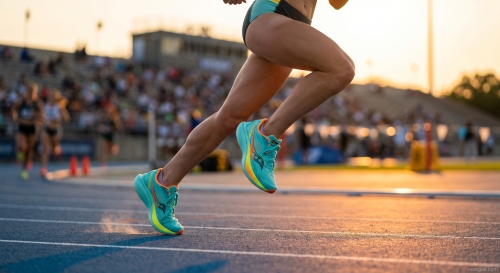
Saucony Endorphin Speed 5 Review: Fast and Versatile (2026)

The Saucony Endorphin Speed 5 is a neutral, nylon-plated performance trainer that works best for tempo runs, intervals, progressive long runs, and race day when a carbon plate feels too rigid. It combines two layers of PWRRUN PB foam, a full-length semi-rigid nylon plate, SPEEDROLL geometry, an 8 mm offset, and a listed men’s weight of 8.3 oz. My score is 9.1/10.

The important word is not “super shoe.” It is usable. The Speed 5 can move quickly without forcing every landing into a stiff lever. It feels smoother at the heel than the Speed 4, more flexible through the forefoot than a carbon racer, and protective enough for long workouts. That range is why it keeps earning miles in my rotation.

It is not the best shoe for every run. Recovery pace can feel unnecessarily busy, the lower-volume midfoot will not suit every wide foot, and the exposed midfoot foam is still a wear point. Runners who need strong lateral guidance should also test it carefully because the revised plate and heel geometry do not guide both sides equally.

Editorial testing note: the previous title said “250+ miles,” while the detailed body and testing table recorded 230 miles. I am using the documented 230-mile figure in this update. I will not turn an inconsistent headline into extra test miles.

Saucony Endorphin Speed 5 reviewed after a documented 230-mile road and track test

Saucony Endorphin Speed 5 Review: Quick Verdict

Buy the Endorphin Speed 5 if you want one fast shoe for workouts, long runs with pace, and racing without the rigid feel of a carbon plate. It is still comfortable at easy pace, but its real value appears once cadence rises and the rocker, plate, and PWRRUN PB start working together.

DecisionKen’s Answer
Best forTempo, threshold, intervals, progressive long runs, 10K to half-marathon racing
RideSmooth, responsive, moderately soft, flexible for a plated shoe
FitTrue to size for me in men’s US 10.5; secure, lower-volume midfoot and average toe-box width
Main strengthA wide useful pace range without carbon-plate harshness
Main weaknessNot as calm for recovery running; geometry may not suit runners needing lateral guidance
Official specs8.3 oz men’s listed weight, 36/28 mm stack, 8 mm offset
Price contextPremium performance trainer; value comes from covering several training jobs
Ken’s score9.1/10

I rank it among the strongest options in my best lightweight running shoes guide because the low weight is backed by real training range. A racing flat can be lighter. A daily trainer can be softer. Few shoes are this capable when an easy warm-up turns into threshold work and finishes with short reps.

For a runner buying only one pair, my best running shoes guide includes calmer daily trainers. The Speed 5 is the better choice when the schedule has structured speed and the runner wants a shoe that can also cover the warm-up, cooldown, and long-run miles around it.

Bottom line: The Speed 5 is a fast, flexible performance trainer, not a soft recovery shoe and not a carbon racer. Its advantage is the useful territory between those categories.

Ken’s Ranking Rule for the Endorphin Speed 5

Ken’s ranking rule: a performance trainer earns a top score only when it saves a runner from choosing between workout speed and training comfort. It must feel controlled during warm-ups, alive at threshold, protective late in a long run, and predictable through turns. A dramatic first mile is not enough.

I score the Speed 5 against other fast trainers, not against a max-cushion recovery shoe or an elite carbon racer. I reward pace range, transition quality, fit security, grip, and how the platform behaves when form becomes less precise. I subtract for geometry that works only at one pace, marketing claims that cannot be felt consistently, and durability weaknesses that reduce practical value.

Ranking FactorWeightSpeed 5Why
Ride and transition25%9.4/10Smooth heel entry, lively PWRRUN PB, and a flexible plated toe-off
Workout range20%9.6/10Handles controlled tempo through track repeats without feeling narrow in purpose
Long-run protection15%9.1/10Foam holds its character well when pace changes late
Fit and upper15%9.0/10Secure performance fit with useful toe height and no distracting bulk
Stability and control10%8.7/10Stable neutral forefoot and medial heel guidance; lateral needs require care
Grip and durability10%8.4/10Good road traction and improved heel coverage, with exposed foam remaining
Value5%8.7/10Can replace separate tempo and non-elite race shoes for many runners

The weighted score rounds to 9.1. That does not mean the shoe is 91 percent perfect or 9.1 for every runner. It means it performed exceptionally well for its intended role, with fit, guidance direction, and outsole exposure as the meaningful deductions.

I also separate sensation from measurement. My watch records pace, distance, and time. It does not measure oxygen consumption, force, or a universal energy-return percentage. Laboratory figures in this review are attributed to the lab and its method, never presented as measurements from my kitchen scale.

How I Tested the Saucony Endorphin Speed 5

The retained test log documents 230 miles across easy runs, tempo sessions, long runs, track intervals, mixed pavement, and racing. The core test was not one quick session. I repeatedly moved between paces to see whether the shoe remained useful when a workout changed shape.

For context, I am 5 feet 10 inches, 182 lb, and usually run 30-40 miles per week. My easy pace is commonly around 9:00-9:30 per mile, while structured tempo work falls closer to 7:15-7:45. My pair was men’s US 10.5. These details matter because mass, pace, mechanics, and size influence how much foam compression and plate stiffness a runner perceives.

Test BlockExamplesWhat I Evaluated
Easy and recoveryShort road runs before and after workoutsSlow-speed flexibility, heel transition, and whether the shoe urged pace
Tempo and thresholdSustained blocks near 7:15-7:45/miPWRRUN PB response, rocker timing, and upper hold
Long runs14-18 miles with steady or faster sectionsLate-run cushioning, forefoot fatigue, and heat buildup
Intervals800 m and mile repeatsAcceleration, cornering, braking, and recovery-jog comfort
Race useHalf-marathon test plus shorter tune-up workLockdown, protection, and whether the plate became intrusive
Surface checksAsphalt, concrete, boardwalk, packed gravel, and wet road paintGrip, wear pattern, and platform control

The original mileage table grouped some mixed-surface miles that overlapped run types, so I do not add its rows as if they were independent categories. The defensible total is the 230 miles stated throughout the detailed log, not the 250+ claim that appeared only in title and metadata.

I used the same pair after the initial bounce became familiar. That matters because a fast shoe can impress through novelty. The Speed 5 stayed useful when the surprise disappeared: warm-up miles remained comfortable, threshold pace still felt coordinated, and the upper did not loosen around turns.

For runners building toward this kind of test, my tempo run guide explains how to control threshold work, while the interval training guide separates repetition pace from all-out racing. A shoe should support the workout, not redefine it.

Saucony Endorphin Speed 5 Specs and Verified Facts

Saucony lists the men’s Endorphin Speed 5 at 8.3 oz or 237 g, with a 36 mm heel, 28 mm forefoot, and 8 mm offset. The official construction is a full-length semi-rigid nylon plate placed between two layers of responsive PWRRUN PB foam, plus SPEEDROLL technology and a reconfigured road outsole.

SpecificationVerified DetailWhat It Means
CategoryNeutral race-day / high-performance trainerNo formal stability classification
Official men’s weight8.3 oz / 237 g per shoeLight enough for speed work without racing-flat minimalism
Official stack36 mm heel / 28 mm forefootModerate-high protection under current road-shoe rules
Official offset8 mmA familiar geometry for many daily-trainer users
MidsoleTwo layers of PWRRUN PBLight PEBA-based cushioning above and below the plate
PlateFull-length semi-rigid nylonMore flexible than the carbon plates I use for racing
GeometrySPEEDROLL rocker plus full-length grooveEncourages a smooth heel-to-toe cycle
UpperLightweight engineered meshPerformance hold with less bulk
OutsoleExpanded heel coverage and exposed midfoot foamImproved heel wear, but not a full-rubber workhorse

Independent samples vary slightly. RunRepeat measured 8.5 oz or 241 g, close to Saucony’s listing, and found a flexible 12.9 N result in its longitudinal bending test. Its lab also measured 0.52 traction on wet concrete. Those numbers describe that sample and protocol; they are useful context, not universal guarantees.

The previous draft listed 8.4 oz, 238 g. Saucony’s current U.S. page lists 8.3 oz, 237 g, so this update uses the manufacturer’s current figure. Colorway, size, scale, and production variation can explain small differences in measured weight.

Ride Feel: Smooth First, Snappy Second

The Speed 5 feels smooth before it feels aggressive. The heel enters cleanly, the midsole compresses without a deep sink, and the forefoot bends more naturally than a carbon-plated racer. At easy pace, I notice the foam and rocker. At tempo pace, I start noticing the entire system.

That distinction matters. Some plated shoes feel inert until I load them hard, then suddenly become demanding. The Speed 5 is less binary. I can jog a warm-up without fighting the plate, settle into steady pace, and then shorten ground contact as the session turns faster.

The ride is not universally soft. Doctors of Running describes a softer, bouncier experience than version 4, especially through the heel, while RunRepeat measured a relatively firm lab value. Both can be true because foam reading, plate position, outsole, geometry, runner mass, and landing location combine into perceived softness. My pair felt moderately soft under the heel and more controlled under the forefoot.

The shoe feels best when I run over it rather than reach for it. When my foot lands close to my center of mass, the transition is quiet and the rocker finishes the step. When I overstride, the platform does not erase the braking. It is fast, but it is not a form-correction device.

Runners who prefer an unplated, more elastic daily ride should compare my ASICS Novablast review. The Novablast gives more vertical foam movement. The Speed 5 gives a clearer forward sequence and better structure at workout pace.

PWRRUN PB: What the Foam Actually Contributes

PWRRUN PB supplies the light cushioning and rebound, but the foam cannot be separated from the plate and geometry beneath the foot. Calling the Speed 5 “bouncy” is directionally right and technically incomplete. The sensation changes with pace because the runner loads a shaped, stiffened sandwich rather than a loose slab of foam.

PWRRUN PB is Saucony’s PEBA-based foam. Compared with the standard PWRRUN in the Saucony Ride, it feels lighter and more responsive. Compared with a very soft unplated superfoam, it feels more organized because the nylon plate distributes bending and the rocker controls where toe-off happens.

At easy pace, I feel enough compliance to use the shoe comfortably, but the experience is not as relaxed as a recovery trainer. At threshold, the foam rebounds quickly enough that my stride does not feel buried. Late in a long run, the platform retains shape better than a very soft trainer that starts to wobble under tired mechanics.

I do not claim that the shoe saves a fixed number of seconds per mile. The previous line saying every mile felt 10-15 seconds easier confused perception with performance. Pace response depends on fitness, course, wind, fatigue, and biomechanics. The defensible claim is that the Speed 5 feels responsive and transitions efficiently for me at faster paces.

Cold and heat can change how polymers feel, but I removed the earlier exact percentage for winter firmness. I noticed a firmer first mile on cold mornings and a more compliant feel in warmth. Without controlled temperature and instrument testing, that stays a practical observation, not a measured material law.

Nylon Plate and SPEEDROLL: Why It Is Not a Carbon Racer

The full-length semi-rigid nylon plate adds structure and snap while preserving more longitudinal flexibility than the carbon racers I have tested. Saucony places it between two PWRRUN PB layers, then uses SPEEDROLL geometry and a full-length outsole groove to shape the transition.

The revised plate removes the lateral rear wing found in the Speed 4 while retaining a medial extension. Doctors of Running connects that change to a smoother heel and mild medial guidance, but also warns that runners who need lateral guidance may experience the geometry differently. That is a more useful explanation than saying the plate is simply “better.”

At track pace, I can flex the forefoot enough to feel natural through a bend. At half-marathon pace, the shoe rolls without demanding the ankle stiffness of a carbon model. The trade-off is less rigid leverage. A runner who responds strongly to a stiff carbon plate may still race faster in an Endorphin Pro.

The rocker also does not run for you. SPEEDROLL reduces the amount of forefoot bending required from the shoe and encourages a forward transition, but it cannot create propulsion without force from the runner. I feel it most when cadence is already moving and least during a slow recovery shuffle.

For a simpler non-plated alternative, the Saucony Kinvara is lower, lighter, and more flexible. It gives up cushioning depth and late-workout assistance in exchange for more direct ground feel.

How the Endorphin Speed 5 Performs by Pace

Recovery pace

Recovery is the least convincing job. The shoe is comfortable enough, but the rocker and lively foam make a relaxed shuffle feel busier than necessary. I prefer a calmer platform and save the Speed 5 for days when pace has a purpose. My recovery-run guide explains why keeping the effort easy matters more than wearing the fastest shoe available.

Easy and steady pace

Easy running works because the nylon plate still bends and the heel transition is smoother than version 4. The shoe does not punish a 9:00-9:30 pace for me. It simply feels more alert than a dedicated daily trainer. Steady pace is where the platform begins to make more sense.

Tempo and threshold

Tempo and threshold are the center of the Speed 5’s range. At 7:15-7:45 pace for me, the foam compresses quickly, the plate organizes the forefoot, and the rocker completes the transition without a hard tipping point. This is the session that justifies the shoe.

Intervals and strides

For 800 m and mile repeats, the Speed 5 feels light and controlled. It is not as sharp as a spike or carbon racer, but the easier recovery jog and stable road manners make it useful when a session moves between track, path, and street. Use my running strides guide for a lower-risk first speed session in the shoe.

Run TypeKen’s GradeReason
RecoveryB-Comfortable, but more lively and structured than the job requires
Easy daily milesB+Smooth enough, though a normal trainer is calmer and cheaper to consume
Steady runningARocker and foam begin working as one system
Tempo / thresholdA+Best balance of response, flexibility, and control
IntervalsAQuick, secure, and easier to jog in than a carbon racer
Progressive long runAProtective early and still responsive when pace rises late
Race dayA-Strong non-carbon option; elite racers may prefer more rigid leverage

Long Runs and Racing: Where the Versatility Pays

The Speed 5 is an excellent long-run workout shoe because it does not force a choice between early-mile comfort and late-mile pace. I used it for 14-18 mile efforts and liked it most when the run finished steady or near marathon effort.

During the easy opening miles, the heel felt smoother than the Speed 4 and the upper stayed quiet. When pace increased, the platform did not need a new landing pattern. The same transition simply became quicker. That continuity is the main advantage over switching from a daily trainer to a rigid racer for every important long run.

For a first half marathon, it is a sensible choice after one or two long race-pace sessions in the shoe. My retained log includes a 1:37 half marathon, and the cushioning remained useful through 13.1 miles. That result describes my test, not a pace requirement. A 2:15 runner can benefit from comfort and stable turnover just as much as a 1:30 runner.

Use my first half-marathon training plan to test the shoe before race day. For a 5K block, the 5K training plan gives the Speed 5 more frequent work at intervals and tempo pace.

For the marathon, the decision is personal. The 36/28 mm stack and flexible plate provide enough physical protection for many recreational runners, but some will prefer the deeper cushioning or stiffer leverage of a modern carbon shoe. Run at least one 18-20 mile rehearsal before assigning it 26.2 miles.

Stability: Neutral, Guided in One Direction

The Speed 5 is a neutral shoe with mild geometric guidance, not a stability shoe. Its broad forefoot, plate, rocker, and heel flare help organize motion, but there is no medial post or formal support system.

The revised plate geometry matters. Removing the lateral rear wing lets that side compress and transition more freely, while the remaining medial wing and medial sole flare can resist inward motion for some runners. Doctors of Running found this useful for medial stability needs and less suitable for lateral needs.

My left foot tends to move inward more when tired, and the Speed 5 remained predictable during straight road running. On sharp camber, I still had to place the foot deliberately. A responsive foam and narrow midfoot can magnify poor edge loading even when the forefoot feels stable.

Runners who need more structured guidance should compare the Saucony Tempus or options in my best shoes for overpronation guide. No shoe can diagnose the direction or cause of a runner’s symptoms.

Saucony Endorphin Speed 5 Fit and Sizing

The Endorphin Speed 5 fit me true to size in men’s US 10.5, with a secure heel, a close lower-volume midfoot, average forefoot width, and more vertical toe room than the Speed 4. I would not size up merely to gain width.

Fit AreaMy ExperienceIndependent Context
LengthTrue to size in men’s US 10.5RunRepeat owner voting also trends true to size
HeelSecure with no meaningful slipStructured enough for turns and downhill pace
MidfootPerformance-close and lower volumeDoctors of Running also describes lower volume
ForefootAverage width with useful toe roomRunRepeat mold measured near-average toe-box width
Toe heightNoticeably less restrictive than Speed 4RunRepeat measured above-average vertical clearance
Wide feetTry the correct wide listing where availableDo not substitute extra length for width

The earlier draft said the forefoot was 2-3 mm wider based on a personal estimate. I removed that number. RunRepeat’s gel mold found the shoe narrower at the broadest forefoot point than Speed 4 but wider and taller near the toes. That explains why a shoe can feel less restrictive without being wider everywhere.

If the standard fit presses the fifth metatarsal or the top of the toes, compare options in my wide-foot running shoe guide. A half-size increase can create excess length and a poor plate position, so width should be solved with shape or width designation first.

Upper and Lockdown: Light Without Feeling Fragile

The engineered-mesh upper holds like a workout shoe but has enough comfort for long training. The tongue stays centered, the heel counter secures the rearfoot, and the mesh gives the toes better vertical freedom than version 4.

I did not need a runner’s knot for ordinary road sessions. During faster downhill work, one extra eyelet of tension was enough. Cranking the lower laces only made the lower-volume midfoot feel narrower, so I kept pressure concentrated around the top two eyelets.

Breathability was good in warm conditions, and the upper did not absorb enough water to become sloppy in light rain. It is still a road racing upper, not a weatherproof one. Socks and lacing matter more than chasing waterproofing for most summer training.

For wet-weather setup, see my running in the rain guide. For heel slip or toe pressure, my long-run blister prevention guide covers lacing, sock thickness, and fit checks.

Outsole Grip and Durability After the Documented Test

The outsole is better protected at the heel than version 4, but the Speed 5 still trades full rubber coverage for weight and flexibility. Saucony expanded heel coverage and added a full-length groove, while exposed PWRRUN PB remains visible around the midfoot.

After the documented 230 miles, my pair showed the clearest wear under the forefoot push-off area. The heel rubber remained serviceable. The ride was less fresh than at the start, but it had not become flat enough to retire from workouts.

I will not assign a fixed 400-450 mile lifespan. A 130 lb midfoot striker on smooth asphalt and a 210 lb heel scuffer on concrete do not consume the same outsole. Replace the shoe when traction, cushioning, fit, or discomfort changes meaningfully, not when an internet odometer reaches one universal number.

Dry asphalt and concrete grip were dependable. Wet pavement was acceptable, and RunRepeat’s 0.52 wet-concrete traction result supports average-to-good grip in that specific lab test. Painted lines, metal covers, leaves, and boardwalk algae still required caution.

Use my when to replace running shoes checklist to track wear. The shoe can look scuffed and remain functional, while an intact-looking midsole can still lose the ride that made it useful.

Saucony Endorphin Speed 5 vs Speed 4

The Speed 5 is smoother and more accommodating than the Speed 4, while the Speed 4 feels slightly firmer and more mechanically direct. The update is most meaningful for runners who disliked the version 4 heel or wanted a plated trainer for longer miles.

FeatureSpeed 4Speed 5Practical Result
Plate geometryRear wings on both sidesLateral rear wing removed; medial wing retainedSmoother lateral compression and mild medial guidance
RideFirmer and a little more rigidSofter-feeling heel and easier transitionVersion 5 works better across easy and long miles
FitWide at the ball but tapered near toesAverage broadest width, more toe width and heightVersion 5 feels less restrictive where toes need space
OutsoleLess heel coverageExpanded heel coverage and full-length grooveBetter heel protection and smoother gait cycle
WeightSlightly lighterOfficially 8.3 oz men’sSmall gain favors training range over minimum race weight
Best buyerRunner wanting firmer snapRunner wanting smoother versatilityPreference matters more than version number

I would upgrade if the Speed 4 heel felt clunky, the toe area pressed down, or long workouts needed more comfort. I would keep a discounted Speed 4 if its firmer transition already works and the outsole remains healthy. The Speed 5 is an improvement for my use, not a mandatory annual purchase.

Endorphin Speed 5 Comparisons

Endorphin Speed 5 vs HOKA Mach

The HOKA Mach is unplated, more traditionally flexible, and calmer through easy daily miles. The Speed 5 has stronger rebound, more structure, and better race-day range. Choose Mach for light daily training; choose Speed for workouts that extend into racing.

Endorphin Speed 5 vs New Balance Rebel

The New Balance Rebel feels softer and more playful without a plate. It is excellent for fartlek and daily pace changes, but the Speed 5 holds its shape better late in a long workout. Choose Rebel for free movement; choose Speed for a guided fast transition.

Endorphin Speed 5 vs Nike Pegasus

The Nike Pegasus is a more durable conventional daily trainer with a quieter ride. It makes more sense for easy mileage and general use. The Speed 5 is lighter, more responsive, and much more convincing for threshold and racing.

Endorphin Speed 5 vs Brooks Ghost

The Brooks Ghost offers a familiar high-drop daily ride, more outsole coverage, and a less demanding personality. The Speed 5 is the specialist for faster sessions. They pair well because their jobs overlap less than the marketing categories suggest.

Endorphin Speed 5 vs Endorphin Pro

The Endorphin Pro uses a stiffer carbon plate and is built more directly around race efficiency. The Speed 5 bends more, jogs more comfortably, and tolerates ordinary training better. Choose Pro when race performance is the only job; choose Speed when the shoe must earn its place every week.

Endorphin Speed 5 vs max-cushion trainers

The ASICS Gel-Nimbus and other max-cushion trainers protect easy mileage with deeper, slower transitions. They are better for recovery. The Speed 5 is better when turnover, pace changes, and low mass matter.

The Best Training Rotation Around the Speed 5

Build around the Speed 5 with a calmer daily trainer, not another shoe that does the same workout job. The Speed 5 can cover speed, long workouts, and many races. The partner should absorb recovery miles and ordinary volume.

Rotation RoleShoe TypeWhy
RecoverySoft, stable neutral trainerLets effort stay easy and reduces the urge to chase pace
Daily mileageDurable unplated trainerPreserves the Speed 5 outsole and gives the feet a different stimulus
Tempo / thresholdEndorphin Speed 5Its strongest and most repeatable use
Long run with paceEndorphin Speed 5Comfort early, response late
IntervalsEndorphin Speed 5 or lighter specialistChoose based on surface and rep length
RaceSpeed 5 or carbon racerComfort and flexibility versus maximum rigid leverage

The HOKA Clifton or a traditional trainer can take easy miles. Runners who prefer firmer daily cushioning can use a Ride or Pegasus. The goal is not a large closet. It is assigning each pair enough distinct work to justify owning it.

My Zone 2 training guide helps keep those easy miles honest, while the recovery and rest-day guide keeps rest in the plan instead of expecting foam to replace it.

Who Should Buy the Saucony Endorphin Speed 5?

Buy the Speed 5 if you want a premium performance trainer with enough flexibility and comfort to use every week. It is especially strong for runners who find carbon shoes too rigid but still want more structure and response than an unplated daily trainer.

  • Runners doing weekly tempo, threshold, interval, or progression sessions
  • Half-marathon and marathon trainees who want one shoe for long workouts and racing
  • Neutral runners or runners who benefit from mild medial heel guidance
  • Speed 4 users who wanted a smoother heel and less restrictive toe area
  • Athletes seeking a plated shoe that remains comfortable during warm-ups and cooldowns
  • Runners who prefer an 8 mm offset over lower-offset performance shoes
  • One-pair minimalists whose training includes purposeful faster running

It can also work for a newer runner, but only if the fit is right and the training actually includes speed. My beginner running shoe guide includes simpler daily options that are easier to justify for mostly easy mileage.

Who Should Skip the Endorphin Speed 5?

Skip it if most of your running is slow recovery mileage, you need strong lateral support, or the lower-volume midfoot compresses your foot. A premium foam and plate do not rescue the wrong job or wrong fit.

  • Runners who want a very soft, slow, max-cushion recovery ride
  • Athletes with lateral instability who feel the heel moving outward
  • Wide or high-volume feet that cannot get secure comfort in an available width
  • Trail runners who need lugs, rock protection, and off-road upper security
  • Heavy outsole scuffers who prioritize maximum rubber coverage
  • Racers who already know they benefit from a very stiff carbon plate
  • Walkers seeking a flexible, inexpensive everyday shoe rather than workout response

For concrete-heavy easy running, compare my best running shoes for concrete. For longer protective mileage, the best long-distance running shoes guide includes deeper and calmer choices.

Sources, Evidence, and Fact-Checking Notes

This review separates Saucony’s published specifications, independent laboratory samples, outside road tests, and the retained NextGait test log. When sources disagree, I keep the method attached to the claim instead of averaging unlike measurements.

Key corrections in this update: the tested total is 230 miles, not 250+; official men’s weight is 8.3 oz, not 8.4; the plate is full-length semi-rigid nylon, not carbon; toe room changed by shape rather than a simple 2-3 mm width increase; and no fixed energy savings, foam-compression percentage, or universal lifespan is claimed.

No shoe is an injury-prevention device, a gait-correction guarantee, or a guaranteed path to a personal best. The Speed 5 can influence comfort and movement, but training load, sleep, health, surface, and individual mechanics remain part of every outcome.

Final Verdict: Is the Endorphin Speed 5 Worth It?

The Saucony Endorphin Speed 5 is worth it for runners who regularly train fast and want one plated shoe that remains comfortable outside the main workout. It earns its 9.1/10 score through range, not spectacle.

My favorite session in it is a long progression: easy opening miles, sustained steady running, then controlled threshold work. The heel stays smooth early, the foam remains composed late, and the nylon plate never becomes as demanding as a carbon racer.

The Speed 5 also fixes the parts of version 4 that mattered to me. The heel is less abrupt, the toe area is more usable, and the outsole protects the rearfoot better. It gains a little training character without losing the speed that gives the line its name.

Its limits are clear. I do not reach for it on a true recovery day. I would test the guidance carefully if I needed lateral support. I would not buy standard width and hope the upper stretches around a high-volume foot. And I would not promise a fixed mileage life from one wear pattern.

The decision is simple: choose the Speed 5 when a weekly workout and a long run with pace are central to your training. Choose a normal daily trainer when most miles are easy. Choose a carbon racer when race-day leverage matters more than everyday comfort.

Saucony Endorphin Speed 5 Frequently Asked Questions

Is the Saucony Endorphin Speed 5 good for daily training?

Yes, especially for runners whose daily training includes steady runs, tempo work, intervals, and long runs with pace. It can handle easy miles, but Ken prefers a calmer unplated shoe for true recovery days.

Does the Endorphin Speed 5 have a carbon plate?

No. It uses a full-length semi-rigid nylon plate between two layers of PWRRUN PB foam. The nylon construction is more flexible than the carbon plates Ken uses in dedicated racers.

What are the Endorphin Speed 5 stack height and drop?

Saucony lists 36 mm at the heel, 28 mm at the forefoot, and an 8 mm heel-to-toe offset.

How much does the Saucony Endorphin Speed 5 weigh?

Saucony lists the men’s model at 8.3 oz or 237 g per shoe. RunRepeat measured 8.5 oz or 241 g in its independent sample, a small difference that can reflect size and sample variation.

Does the Endorphin Speed 5 run true to size?

It ran true to size for Ken in men’s US 10.5. The heel was secure, the midfoot was close and lower volume, and the toe area offered average width with useful vertical room.

Is the Endorphin Speed 5 good for wide feet?

The standard fit is performance-oriented and lower volume through the midfoot. Try the correct wide listing where available rather than adding length. Very wide or high-volume feet should compare a broader model.

Can you race a half marathon in the Endorphin Speed 5?

Yes. The responsive PWRRUN PB, flexible nylon plate, and 36/28 mm stack make it a strong half-marathon option. Ken’s retained test log includes a 1:37 half, but the shoe is useful across a much wider pace range.

Can you run a marathon in the Endorphin Speed 5?

Yes, if it remains comfortable during long race-pace rehearsals. Many recreational runners will value its flexibility and stable turnover, while runners who respond to stiff carbon plates may prefer an Endorphin Pro.

Is the Endorphin Speed 5 a stability shoe?

No. It is a neutral shoe. The plate and sole geometry can provide mild medial heel guidance, but runners needing formal stability or lateral guidance should test it carefully.

What changed from Endorphin Speed 4 to Speed 5?

The Speed 5 revises the nylon plate by removing the lateral rear wing, smooths the heel transition, gives the toes more useful space, and expands heel outsole coverage. It feels softer and more versatile than the firmer Speed 4.

How durable is the Saucony Endorphin Speed 5?

Ken’s pair remained usable after the documented 230 miles, with the clearest wear under the forefoot. There is no universal lifespan because runner mass, landing pattern, surface, rotation, and traction needs vary.

Is the Endorphin Speed 5 good for slow runners?

Yes. There is no minimum pace for the shoe. Its flexible plate works at slower speeds, although runners who do only easy mileage may get better value from a conventional daily trainer.


Disclosure: NextGait is reader-supported. Purchases through affiliate links may earn a commission at no extra cost to you. Affiliate relationships do not change the testing notes, score, or recommendations.

Ken, founder and running shoe reviewer at NextGait

Written and tested by Ken – NextGait founder, 12-year runner, 12,500+ lifetime miles, 63 shoes tested, and 36 races from 5K through 50K. I run 30-40 miles most weeks on the Atlantic City Boardwalk and nearby roads. This review uses the retained 230-mile Speed 5 test log, including easy runs, long runs, tempo sessions, track repeats, wet pavement, and a half marathon. Read Ken’s testing philosophy and bio.

Leave a Comment

Your email address will not be published. Required fields are marked *

Scroll to Top