
Brooks Ghost 18 vs Nike Pegasus 42 comes down to ride preference: choose the Ghost 18 for a calmer, more accommodating daily trainer, or choose the Pegasus 42 for a firmer, more energetic shoe that changes pace more easily. My pick for easy mileage, walking, and width options is the Ghost. My pick for a one-shoe running rotation is the Pegasus.
I have run in the Ghost line for more than a decade, starting with the Ghost 7, and the Ghost 16 was the first shoe I reviewed for NextGait. I currently use the Ghost 18 as a straightforward daily trainer. My Pegasus 42 log currently stands at 145 miles, enough to discuss its daily ride but too early for a final durability claim.
These shoes occupy the same neutral daily-trainer shelf, use a 10mm drop, and rely on durable rubber outsoles. Yet they do not feel interchangeable. Ghost 18 settles the foot and keeps easy running easy. Pegasus 42 feels more connected to the road and gives me a cleaner response when I ask for a faster turnover.
My Ghost history is longer than my time in the Ghost 18, so I keep the two separate when judging durability. I compare the current shoes on fit, easy-run comfort, and how readily they change pace; I will not pretend the two pairs have identical mileage.
Quick verdict: Buy the Brooks Ghost 18 if comfort, secure heel hold, wide sizing, and predictable easy miles matter most. Buy the Nike Pegasus 42 if you want one durable trainer for easy runs, steady efforts, short tempo work, treadmill sessions, and casual racing. Neither is a max-cushion shoe or a true speed shoe.
Brooks Ghost 18 vs Nike Pegasus 42 at a Glance
Ghost 18 is the comfort and fit winner; Pegasus 42 is the versatility and pace-change winner. The gap is not huge at easy pace. It becomes obvious when feet swell, the road gets wet, or the run shifts from relaxed to steady.
| Category | Winner | Why |
|---|---|---|
| Easy runs | Ghost 18 | Calmer landing and more accommodating fit |
| Steady and progression runs | Pegasus 42 | Full-length Air Zoom and firmer toe-off change pace more cleanly |
| Long easy runs | Ghost 18 | More forgiving fit as my feet swell |
| One-shoe rotation | Pegasus 42 | Covers the widest pace range |
| Wide feet | Ghost 18 | Narrow through Extra Wide options in the line |
| Treadmill and gym | Pegasus 42 | More direct ride and easier turnover |
| Walking and standing | Ghost 18 | More padded upper and less pressure through the forefoot |
| Wet fit | Try both | Check collar comfort and heel hold with damp socks |
| Durability | Tie | Both use substantial road rubber; wear depends on mechanics |
| Best overall | Pegasus 42 | More useful across a mixed training week |
Ken’s ranking rule: I rank a daily trainer by how many weekly runs it handles without making me wish I had changed shoes. Comfort wins a category. Useful pace range wins the overall ranking. That rule gives the Pegasus 42 my narrow overall win, while the Ghost 18 remains the shoe I would recommend first to a runner who prioritizes fit and easy mileage.
Table of contents
- Quick comparison
- Specifications
- Testing method and credibility note
- Cushioning and ride
- Performance by run type
- Fit, sizing, and upper
- Ken’s 5-minute fit test
- Stability and foot strike
- Long runs and recovery
- Walking, treadmill, and gym
- Durability and wet grip
- Ghost and Pegasus family map
- Value and shoe rotation
- Who should buy each shoe
- Ghost 17 and Pegasus 41 upgrades
- Alternatives
- FAQ
- Final verdict
Ghost 18 vs Pegasus 42 Specifications
Both shoes use a 10mm drop, no plate, breathable mesh uppers, and durable road-rubber outsoles. Ghost 18 uses Brooks DNA LOFT v3 foam. Pegasus 42 combines ReactX foam with a curved, full-length Air Zoom unit.
| Specification | Brooks Ghost 18 | Nike Pegasus 42 |
|---|---|---|
| Category | Neutral daily trainer | Neutral daily trainer |
| Men’s listed weight | 10.6 oz / 300.5 g | 10.59 oz / 300 g in men’s US 10 |
| Women’s listed weight | 9.2 oz / 260.8 g | 8.6 oz / 243 g in women’s US 8 |
| Heel-to-toe drop | 10mm | 10mm |
| Midsole | DNA LOFT v3 | ReactX plus full-length Air Zoom |
| Ride label | Balanced cushioning | Responsive cushioning |
| Support | Balanced neutral support | Neutral platform |
| Widths | Narrow, Medium, Wide, Extra Wide | Regular and Wide |
| Outsole | RoadTack rubber | High-abrasion Waffle rubber |
| Best use | Daily runs, walking | Daily runs across more paces |
I use the specifications to understand the shoes, then decide by the run. The Pegasus has a full-length Air Zoom unit beneath the ReactX foam; the Ghost relies on DNA LOFT v3. Neither construction tells me by itself which will fit your foot or feel better after an hour.
Weight comparison warning: Brooks and Nike do not publish the men’s weight in the same reference size. Comparing those catalog numbers as if both came from one scale is misleading. I would not choose between them by subtracting the two catalog figures. I would try both on and judge which one lets me run without adjusting the fit.
How I Tested These Daily Trainers
I compare shoes on repeated road, boardwalk, and treadmill routes at easy, steady, and faster efforts. I am 5 feet 10 inches, 182 pounds, a heel-to-midfoot striker, and a mild overpronator. I normally run 30 to 40 miles per week around Atlantic City and Brigantine.
My Ghost context is unusually deep. Switching from worn Nike Free shoes to a Ghost 7 helped me discover what a conventional daily trainer should feel like. Since then, I have used multiple Ghost generations and commonly retire them around 450 to 500 miles.
For Ghost 18, I lean on fit and ride observations from the current pair, while keeping older Ghost mileage as line history. My Pegasus 42 has 145 logged miles; I am still watching how the upper and cushioning age. For either shoe, I would try the regular size first and compare a half size up only if the forefoot feels short.
I grade both shoes on five questions:
- Does the fit remain secure after the foot warms and swells?
- Can the shoe change pace without fighting my stride?
- Does cushioning stay balanced after an hour?
- What changes when the upper and outsole get wet?
- Would I choose the shoe again for the same workout?
I do not infer injury prevention from softness, heart rate from one unmatched run, or lifespan from outsole appearance alone. I start with fit and the job the shoe must do. If you want a wider shortlist before deciding, see my guide to choosing the right running shoes.
Cushioning and Ride Feel
Ghost 18 feels calmer and more conventional; Pegasus 42 feels firmer, springier, and more alert. Both retain moderate ground feel. Neither produces the deep sink of a max-cushion trainer or the aggressive rebound of a plated racer.
Ghost 18: smooth without much drama
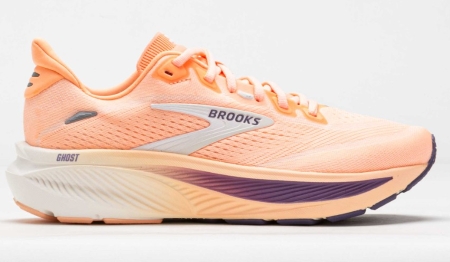
DNA LOFT v3 compresses enough under my heel to soften pavement, then settles quickly. The shoe rolls naturally rather than forcing me through a rocker. The result is steady and quiet.
I like that behavior on ordinary five-mile mornings. The Ghost does not tempt me to turn an easy run into a test. It lets cadence and effort stay boring, which is useful during a proper recovery run.
The downside appears on climbs and faster finishes. When I push the pace, the Ghost gives me less help at toe-off than the Pegasus. That matters if faster finishes are a regular part of your week.
Pegasus 42: more response, not a super-shoe bounce
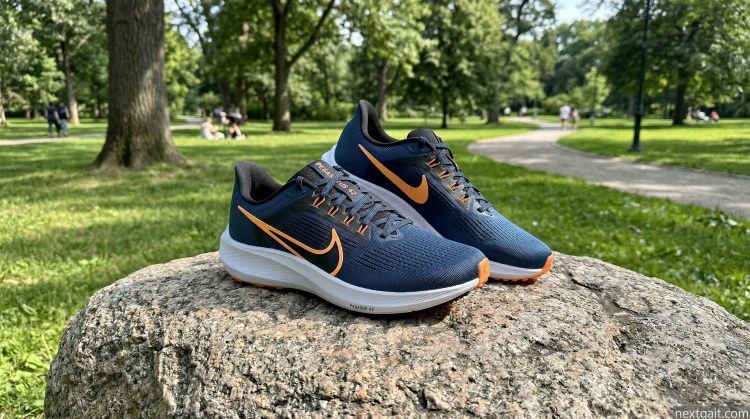
The curved, full-length Air Zoom unit changes how the Pegasus moves through the stride. Older versions used separate heel and forefoot units. In the 42, the sensation feels more continuous from landing to toe-off.
I notice the Pegasus advantage when I change from easy running to a quicker effort: the transition feels more immediate than in the Ghost. It is a useful quality for fartlek or a progression run, even though I would use a lighter shoe for dedicated speed work.
Responsive is relative. To my feet, the Pegasus is lively beside the Ghost; it does not have the pronounced rebound of a modern super-trainer. I would pick it for a varied training week, not promise race-shoe speed.
Easy Runs, Tempo Work, and Race Pace
Pegasus 42 covers more paces; Ghost 18 is better when the purpose is staying easy. The Pegasus can handle short tempo blocks and progression runs, but I would still choose a lighter performance shoe for serious intervals or a goal race.
| Run type | Better choice | Reason |
|---|---|---|
| Recovery jog | Ghost 18 | Calmer ride and more forgiving upper |
| Routine easy run | Ghost 18 | Predictable effort and smooth transition |
| Steady aerobic run | Pegasus 42 | Firmer toe-off holds rhythm |
| Progression run | Pegasus 42 | Changes pace with less resistance |
| Tempo intervals | Pegasus 42 | Useful for occasional work, though not ideal |
| Easy long run | Ghost 18 | More accommodating once feet swell |
| Fast-finish long run | Pegasus 42 | Better response late in the run |
| Goal race | Neither | A lighter race shoe offers a clearer advantage |
At my usual easy pace, the difference is modest. Once I move under roughly 8:30 per mile, the Pegasus begins to make more sense. The Ghost can get there, but I notice the shoe rather than forgetting it.
For structured workouts, see my tempo run guide. New runners building consistency will get more from a sensible running base than from choosing the livelier shoe.
Fit, Sizing, and Upper Comfort
I would start with my usual size in both shoes and pay particular attention to the Pegasus forefoot. Nike widened the Pegasus 42 toe box compared with the 41, but the Ghost offers more width choices and feels more accommodating to me.
The Ghost upper feels padded and secure. Its flat-knit tongue spreads lace pressure well, and the heel counter holds without requiring a runner’s knot. The shape is familiar if you have worn recent Ghost models.
Pegasus 42 uses Nike’s updated MR-10 2.0 last. The extra toe room is noticeable, but I would compare sizes if the front feels short rather than assume the updated last will fit every foot. The midfoot holds securely while the heel collar has less padding than the Ghost.
The Pegasus collar has less padding than the Ghost, so I check it carefully when the shoe and socks are wet. If it rubs during a short try-on, I would not count on a long run to fix it.
Wide-footed runners should start with the Ghost because Brooks offers Narrow through Extra Wide options. Pegasus 42 has Regular and Wide fits. My guides to running shoes for wide feet and running shoes for bunions explain why adding length is not the same as adding width.
Ken’s 5-Minute Ghost vs Pegasus Fit Test
Try both shoes after your feet are warm, using the same socks, and test the Pegasus in your normal size plus a half size up. Five focused minutes reveal more than pressing the foam or walking once across a carpet.
- Match the setup. Wear the socks and any removable insole or orthotic you actually use for running. Lace both shoes to the same tension.
- Check length while standing. Leave roughly a thumb’s width ahead of the longest toe. More important, make sure the shoe bends near your big-toe joint rather than behind it.
- Check width without overtightening. The forefoot should lie flat without pinky-toe pressure or upper bulging. If the standard Ghost feels loose, try a narrower width. If the Pegasus feels short and narrow together, compare Wide before adding more length.
- Jog easy for two minutes. Listen for heel slip, lace pressure, arch irritation, and any side-to-side movement. Do not assume the softer first step is the better running fit.
- Run faster for 30 seconds. Pegasus should feel cleaner as cadence rises. Ghost should remain secure even if it feels less lively. Reject either shoe if the foot slides forward or the heel lifts.
- Turn and perform five heel raises. These expose collar rubbing and forefoot pressure that straight-line jogging can hide.
My decision rule is simple: if Pegasus only works after aggressive lacing or a length increase that puts the flex point too far forward, choose the Ghost in the correct width. If both fit cleanly and the faster 30-second effort feels noticeably better in the Pegasus, its wider pace range earns the win.
Reject pressure, not unfamiliarity. A new foam may feel different and become normal. Numb toes, concentrated arch pressure, heel rubbing, or a foot that must be clamped down are fit problems, not break-in requirements.
Stability and Foot Strike
Both are neutral shoes with inherent stability, not dedicated support shoes. Ghost 18 feels steadier under my mild overpronation because its heel hold, broad contact, and less energetic transition create fewer surprises. Pegasus 42 feels more agile but also more sensitive to fit.
A 10mm drop can feel comfortable for heel strikers and runners accustomed to traditional trainers. It does not make either shoe a stability model. Drop describes the height difference between heel and forefoot, not pronation control.
Midfoot and forefoot strikers can use both. The Pegasus offers the more noticeable forefoot response, while the Ghost feels smoother and less mechanical. Heel strikers may prefer the Ghost’s rearfoot comfort or the Pegasus’s continuous Air unit depending on softness preference.
Do not select either shoe as treatment for flat feet, shin splints, or knee pain. Comfort can help training, but footwear cannot diagnose the cause of pain. Read my stability vs neutral shoe guide, and consult a qualified clinician if pain persists or changes your gait.
Long Runs and Recovery Miles
Ghost 18 is my better easy long-run shoe; Pegasus 42 is better when the long run includes pace changes. The Ghost gives swollen feet more room and asks less of my attention. The Pegasus keeps a stronger rhythm but feels more demanding through the forefoot.
For a relaxed 10 to 12 miles, I would take the Ghost. Its upper remains comfortable and the ride stays even. It does not provide dramatic late-run bounce, but it also does not pressure me to run faster than planned.
For a progression long run, I would take the Pegasus. The Air Zoom unit helps the shoe feel coherent when cadence rises. I would test the collar and upper in the conditions I actually run; a good dry fit is only part of the decision.
Heavier runners should not assume Ghost automatically wins. Some prefer its steadiness; others find both shoes too traditional and choose deeper cushioning. My running shoes for heavier runners guide covers broader, more cushioned options.
Walking, Treadmill, and Gym Use
Ghost 18 wins walking and standing; Pegasus 42 wins treadmill running and mixed gym use. The Ghost’s upper is more comfortable over long hours. The Pegasus’s direct ride and firmer platform feel quicker on a treadmill belt and less bulky during general training.
For travel, I would choose based on the trip. Ghost works for airport walking, easy hotel miles, and long days on foot. Pegasus makes more sense if I expect a treadmill workout, short outdoor run, and basic strength session from one pair.
Neither is a dedicated lifting shoe. Both compress more than I want for heavy squats or deadlifts. For indoor running choices, use my treadmill running shoe guide.
Durability, Outsole, and Wet Grip
Durability is a tie until longer matched testing proves otherwise. Ghost 18 uses substantial RoadTack rubber, while Pegasus 42 uses a high-abrasion Waffle outsole. Both are built like traditional workhorse trainers.
At 145 miles, my Pegasus outsole still looks healthy and ReactX has retained its shape. That is encouraging, not a final lifespan result. I will not turn it into a 450-mile prediction before the pair gets there.
Ghost models commonly last 450 to 500 miles for me, but that is a line-history range. Ghost 18 may follow it, yet current-pair wear should be reported separately from older generations. I cannot claim that one current pair will outlast the other by a fixed distance.
On damp boardwalk planks, both provide useful road grip. Wet grip and wet fit are separate questions: I check traction underfoot, then whether damp socks change heel hold or collar comfort. Replace either shoe based on ride symmetry, upper hold, and discomfort, not cosmetic tread wear alone. See my shoe replacement checklist.
Do Not Confuse the Ghost and Pegasus Families
Ghost 18 and Pegasus 42 are the direct comparison because both are conventional neutral daily trainers. Ghost Max, Ghost Trail, Pegasus Plus, Pegasus Premium, and Pegasus Trail change the cushioning, terrain, or performance role.
| Model family | Main difference | Best reason to choose it |
|---|---|---|
| Brooks Ghost 18 | Traditional balanced daily trainer | Fit, widths, easy miles, walking |
| Brooks Ghost Max | Higher stack, broad base, rocker | More protection and assisted transition |
| Brooks Ghost Trail | Road-to-trail outsole and upper | Gravel and groomed trails |
| Nike Pegasus 42 | ReactX plus full-length Air Zoom | Daily running across varied paces |
| Nike Pegasus Plus | Lighter, more performance-oriented foam | Faster training |
| Nike Pegasus Premium | More elaborate cushioning package | Premium bounce over simplicity |
| Nike Pegasus Trail | Trail-focused traction and protection | Mixed surfaces and light trails |
Do not buy Ghost Max because Ghost 18 sounds insufficiently cushioned, or Pegasus Premium because Pegasus 42 sounds basic, without trying the geometry. The standard models are often easier to live with precisely because they are less extreme.
Value and Shoe Rotation
Pegasus 42 offers better one-pair value; Ghost 18 offers better fit value for runners who need its widths or comfort. Current prices change by color and retailer, so I judge value by jobs covered rather than a temporary sale.
If I owned only one running shoe, I would choose the Pegasus because it handles easy, steady, progression, treadmill, and occasional tempo work. The ride has enough range to keep a simple training week from feeling compromised.
If I already owned a fast workout shoe, I would choose the Ghost for daily and recovery mileage. Its calmer character creates a more useful contrast with a plated or lightweight trainer.
Owning Ghost 18 and Pegasus 42 together is possible but not especially efficient. Their roles overlap. A better two-shoe rotation pairs either one with a clearly faster race or workout shoe.
My value rule: if two shoes cover the same run, buy the better-fitting one. If one shoe adds a weekly job the other cannot handle comfortably, buy the more versatile one. Brand prestige and feature count do not create value by themselves.
Who Should Buy the Ghost 18 or Pegasus 42?
Choose by fit first, weekly role second, and ride excitement third. A responsive shoe that pinches your forefoot is not versatile. A comfortable shoe that feels dead during every planned workout is not a one-shoe solution.
Choose the Brooks Ghost 18 if:
- You prioritize easy miles, walking, and all-day comfort.
- You need Narrow, Wide, or Extra Wide sizing.
- You prefer a padded upper and secure heel.
- You already own a faster workout shoe.
- You want a familiar, traditional daily-trainer ride.
Choose the Nike Pegasus 42 if:
- You want one trainer for the widest range of paces.
- You enjoy a firmer, more connected ride.
- Your runs include progressions, fartleks, or short tempo blocks.
- You split time between roads, treadmill, and gym.
- The updated Nike forefoot fits without forcing a size compromise.
Skip Ghost 18 if you want a lively toe-off or one shoe for frequent faster work. Skip Pegasus 42 if you need Extra Wide sizing, dislike firm forefoot feel, or notice collar irritation during your fit test. Skip both if you want true max cushioning or a dedicated racing platform.
Should Ghost 17 or Pegasus 41 Owners Upgrade?
Ghost 17 owners can wait unless upper comfort is the problem; Pegasus 41 owners have a stronger reason to try the 42. Ghost 18 focuses on upper, tongue, and sockliner refinement. Pegasus 42 replaces separate Air units with a curved full-length unit and changes the last.
Upgrade from Ghost 17 if its tongue, heel hold, or upper fit bothers you. If the ride works and the pair still has life, Ghost 18 does not create a new training category.
Try Pegasus 42 if the Pegasus 41 Air pods felt disconnected or the toe box felt cramped. The new last gives more forefoot room and the full-length Air unit changes the transition. That does not guarantee better fit for every Nike runner.
Do not replace a healthy shoe for a version number. Use the signs of wear in your current pair before changing versions.
Best Alternatives
Choose an alternative when neither the Ghost’s calm ride nor the Pegasus’s traditional responsiveness solves your main need.
- Saucony Ride: a balanced daily trainer with a fit and ride between these two.
- ASICS Gel-Cumulus: another traditional neutral trainer with heel-focused cushioning.
- HOKA Clifton: a lighter, softer option with a lower drop and rocker. Compare it in my Bondi vs Clifton guide.
- Brooks Glycerin: choose it when Ghost fit works but you want a softer premium ride. See my Ghost vs Glycerin comparison.
- Nike Vomero: choose it when you like Nike fit but want more easy-run cushioning than Pegasus.
For a broader shortlist, use my running shoe guide, full Brooks Ghost review, and Nike Pegasus review.
Brooks Ghost 18 vs Nike Pegasus 42 FAQ
Which is better, Brooks Ghost 18 or Nike Pegasus 42?
Nike Pegasus 42 is better for runners who want one daily trainer for varied paces. Brooks Ghost 18 is better for runners who prioritize easy-run comfort, walking, secure fit, and multiple width options. My overall pick is Pegasus 42; my comfort-first pick is Ghost 18.
Is the Ghost 18 softer than the Pegasus 42?
Ghost 18 feels calmer and more forgiving to me, especially through the upper and heel. Pegasus 42 feels firmer and more responsive because ReactX works with a curved full-length Air Zoom unit. Neither is a truly soft max-cushion shoe.
Which fits wider, Ghost 18 or Pegasus 42?
Ghost 18 is the safer wide-foot choice. Brooks offers Narrow, Medium, Wide, and Extra Wide versions. Nike widened the Pegasus 42 toe box compared with Pegasus 41 and offers a Wide fit, but the standard Nike shape still feels shorter and narrower on my foot.
Which is better for beginners?
Ghost 18 is easier to fit and more comfortable at easy pace, while Pegasus 42 covers more types of training. A beginner focused on run-walk sessions and comfort should start with Ghost. A beginner who wants one shoe through a future 5K or 10K plan may prefer Pegasus.
Which is better for long runs?
Ghost 18 is better for relaxed long runs because its upper is more accommodating as feet swell. Pegasus 42 is better for progression long runs or faster finishes. Runners wanting substantially more cushioning should consider a different category.
Which is better for walking and standing all day?
Ghost 18 is my better walking and standing choice because its padded upper, secure heel, and balanced ride remain comfortable at slower transitions. Pegasus 42 is the better pick when the same shoe also needs to handle treadmill running or mixed gym work.
Can I run a half marathon in either shoe?
Yes. Ghost 18 works for a comfort-focused half marathon, while Pegasus 42 is better if you plan to push pace. For a goal personal record, most runners will benefit from a lighter race shoe. Use my half marathon training plan to match footwear to the workout.
How long do Ghost 18 and Pegasus 42 last?
Both are durable workhorse trainers, but no exact mileage applies to every runner. My Ghost models commonly reach 450 to 500 miles. My Pegasus 42 remains healthy at 145 miles, which is too early for a final lifespan claim. Surface, body weight, gait, and rotation all affect wear.
Final Verdict: Ghost 18 vs Pegasus 42
Nike Pegasus 42 wins my overall ranking because it covers more of a mixed training week. The ReactX and full-length Air Zoom combination changes pace more cleanly, works better on a treadmill, and handles occasional faster running without requiring an immediate shoe change.
Brooks Ghost 18 remains my better recommendation for comfort-first runners. Its fit is easier to trust, the width range is much better, and the calmer ride suits easy mileage, walking, and recovery work.
The close call should be settled by fit. If both fit equally well and you own one pair, buy the Pegasus. If the Nike feels short, narrow, or firm, buy the Ghost and do not look back. A slightly less versatile shoe that fits correctly is more useful than a responsive shoe you avoid wearing.
Need more than this head-to-head? Use my broader daily trainer rankings to see how both shoes compare with the wider field.

Written by Ken – 12 years of running, 12,500+ miles, 63 shoes tested, and races from 5K to 50K. I compare daily trainers at easy pace, faster efforts, on long runs, while walking, and in wet conditions, because that is where fit and ride differences become useful rather than theoretical. More about me.