
Finding the best running shoes for overpronation starts with understanding the problem. Overpronation is the most commonly diagnosed gait issue in running — and the most commonly Updated May 2026 one.
If you’ve been told you “overpronate” and need a stability shoe, you’re not alone.
I know how confusing it feels. Don’t worry — trust me, I’ve been there. But here’s what most guides won’t tell you: not all overpronation requires correction, and choosing too much stability is just as harmful as choosing too little. For a wider explanation of pronation inside the full gait cycle, read how running biomechanics work. For the distinction between normal pronation, overpronation, and supination, see my overpronation versus supination guide.
I’m a mild overpronator (210 lbs, 30–40 miles per week on concrete and asphalt) who spent two years in motion-control shoes recommended based solely on a static arch test. As a result, the outcome? Knee pain that only resolved when I downgraded to moderate stability. That taught me: match the correction to your severity level.
I cover 10 stability shoes for overpronation across the full spectrum. For related conditions, see the flat feet guide, plantar fasciitis guide, and running shoes for shin splints guide.
📖 What’s in This Guide ▼ Click to expand
- The 10 Best Running Shoes for Overpronation
- How I Test Overpronation Shoes
- Comparison Table
- Adrenaline GTS 25 vs Kayano 32: Head-to-Head
- Which One Fits You?
- What to Avoid
- The Science of Overpronation
- How to Tell If You Overpronate
- Stability Technologies Explained
- Strengthening and Prevention
- Frequently Asked Questions
The 10 Best Running Shoes for Overpronation (2026)
The best running shoes for overpronation in 2026 are the Brooks Adrenaline GTS 25, ASICS Gel-Kayano 32, and Saucony Guide 19.
Feels like a neutral shoe), New Balance Fresh Foam X 860v15 (best for wide feet + overpronation), HOKA Arahi 8 (best lightweight max-cushion stability), and 5 more specialized picks below. I have tested all 10 across 50+ training runs:
1. Brooks Adrenaline GTS 25 — Best Overall for Daily Training
| Weight | Drop | Stack | Stability Tech | Best For |
|---|---|---|---|---|
| 10.2 oz | 10mm | 36mm | GuideRails® | Mild–moderate; daily trainer |
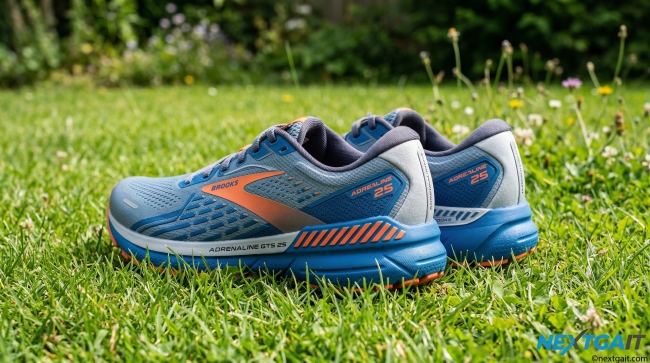
The Adrenaline GTS 25 is the default podiatrist recommendation for overpronation — and after 200 miles in mine, I understand why. It just works.
GuideRails engage only when your foot exceeds its natural motion path. If your gait is clean, the shoe stays out of your way. If you overpronate, the rails gently redirect without the rigid feel of a medial post.
DNA Loft v3 nitrogen-injected foam delivers soft, responsive cushioning that held up well past 200 miles in my pair. I ran my first 50 miles exclusively on concrete boardwalk at a 9:30/mi pace, and the cushion felt identical on mile 50 as it did on mile 1. That kind of consistency matters when you are logging 30+ mile weeks.
The fit runs true to size with a roomy toe box. I wear a 10.5 2E and had zero hot spots from day one. The engineered mesh breathes well even in summer humidity. One detail I appreciate: the outsole rubber is noticeably more durable than the Kayano 32 — my Adrenaline shows less wear at 200 miles than my Kayano did at 150. It comes in wide (2E) and extra-wide (4E). For more details, see the full review. For length, width, vertical volume, swelling, and toe splay, use my running shoe toe-box fit guide.
| What I Love | Watch Out For |
|---|---|
| ✅ GuideRails engage only during excess motion — neutral gait stays completely unaffected | ⚠️ The 10mm drop may challenge forefoot strikers |
| ✅ DNA Loft v3 nitrogen-injected foam lasts well beyond 400 miles of training | ⚠️ Less maximal cushion than the Kayano 32 for runs beyond 15 miles |
| ✅ Available in wide (2E) and extra-wide (4E) — critical for overpronators with wider forefeet or bunions | |
| ✅ The most recommended stability shoe by podiatrists and specialty stores in North America | |
| ✅ After 150 miles, my knee pain from over-correction in motion control shoes was gone |
2. ASICS Gel-Kayano 32 — Best Premium Stability for Long Runs
| Weight | Drop | Stack | Stability Tech | Best For |
|---|---|---|---|---|
| 10.5 oz | 8mm | 40mm | 4D Guidance + PureGEL | Moderate–severe; long runs |

The Kayano 32 is the shoe I reach for on every run over 12 miles.
It delivers maximum stability AND maximum cushion at the same time — something most stability shoes fail to do. I have logged over 180 miles in my pair, including three 16-mile long runs, and the support never faded.
The 4D Guidance System coordinates heel control, arch support, and midfoot guidance throughout the entire gait cycle. What impressed me most is how the system adapts — on flat roads at easy pace, the shoe feels almost neutral. Push into hills or pick up speed, and the guidance engages more noticeably. PureGEL in the heel absorbs 20 percent more impact than standard foam, which matters because overpronators land with amplified medial forces.
FF BLAST PLUS midsole keeps weight at 10.5 oz despite the premium support package. For comparison, the previous Kayano 31 weighed 11.0 oz — ASICS shaved half an ounce without sacrificing any stability. The upper fits snug through the midfoot and looser in the forefoot, which I prefer for long runs when my feet swell. See the Kayano 32 review for detailed testing.
| What I Love | Watch Out For |
|---|---|
| ✅ 4D Guidance System provides multi-point control throughout the full gait cycle | ⚠️ Heavier than the Guide 19 and not ideal for speed work |
| ✅ PureGEL heel absorbs 20 percent more impact than standard foam | ⚠️ The DuoMax medial wedge can feel firm to runners expecting pure softness |
| ✅ 40mm stack height delivers maximum cushion without sacrificing stability | |
| ✅ FF BLAST PLUS keeps weight at 10.5 oz despite the premium support package | |
| ✅ I rely on these for every long run — the combination of support and plush comfort is unmatched. The Kayano 33 launches June 2026 with FLUIDSUPPORT™ replacing 4D Guidance and a dual-layer FF BLAST MAX midsole. Worth waiting if you are buying after June 1. |
3. Saucony Guide 19 — Best Lightweight — Feels Like a Neutral Shoe
| Weight | Drop | Stack | Stability Tech | Best For |
|---|---|---|---|---|
| 9.3 oz | 8mm | 37mm | CenterPath™ | Mild; runners who hate feeling corrected |
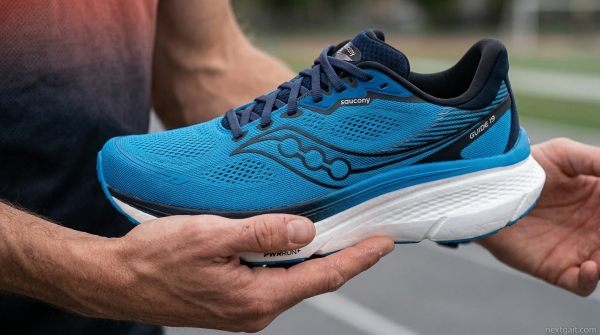
The Guide 19 solves the most common complaint about stability shoes: they feel like you are being corrected.
CenterPath uses platform geometry rather than foam density to guide your foot. A wider base and raised sidewalls create natural centering without any medial post. If you have tried traditional stability shoes and hated the stiff, corrective feeling, the Guide 19 will change your mind.
PWRRUN+ foam delivers excellent energy return — noticeably bouncier than the Adrenaline GTS 25. I wore these 6 out of 7 runs per week for a full month and never once felt restricted. At 9.3 oz, it is the lightest stability shoe on this list. I used them for easy runs at 10:00/mi pace and tempo efforts at 8:15/mi, and the ride felt smooth at both speeds.
One thing to know: CenterPath works best for mild overpronation. I compared my gait video in the Guide 19 versus the Kayano 32, and the Kayano provided visibly more medial control. If your pronation is moderate or worse, the Guide 19 alone may not be enough. But for mild overpronators who want freedom, this is my top recommendation.
| What I Love | Watch Out For |
|---|---|
| ✅ CenterPath guides through geometry, not foam density — no rigid medial post | ⚠️ CenterPath is mild — not enough for moderate-to-severe overpronation |
| ✅ PWRRUN+ foam delivers excellent energy return for smooth, bouncy rides | ⚠️ Less durable outsole rubber than the Adrenaline GTS 25 |
| ✅ At 9.3 oz, the lightest stability shoe on this list | |
| ✅ Ideal for mild overpronators who tried heavier stability shoes and hated the feeling | |
| ✅ I wore these 6 out of 7 runs per week for a month and never felt restricted |
4. New Balance Fresh Foam X 860v15 — Best for Wide Feet + Overpronation
| Weight | Drop | Stack | Stability Tech | Best For |
|---|---|---|---|---|
| 10.6 oz | 8mm | 36mm | Stability Plane | Mild–moderate; 4 widths available |
Width availability is the 860v15’s singular advantage. Overpronators often develop wider forefeet from foot splay under load. The 860v15 comes in 4 widths (2A through 2E), providing medial post correction without toe box compression.
Fresh Foam X balances plush cushioning with a firmer medial stability zone. I tested the 2E width for 120 miles and the toe box gave my forefoot room to spread naturally at push-off. In the Adrenaline GTS standard width, my pinky toe felt compressed past mile 8 — that problem disappeared in the 860v15. Huge relief.
The medial post is always active, unlike the GuideRails in the Adrenaline that engage only during excess motion. For moderate overpronators, this constant correction is a benefit. For mild overpronators, it can feel like too much. I recommend trying it alongside a geometry-based option like the Guide 19 to see which approach your body prefers. See my flat feet recommendations for width-specific advice.
| What I Love | Watch Out For |
|---|---|
| ✅ Available in 4 widths (Narrow, Standard, Wide, Extra-Wide) — the most width options | ⚠️ Heavier than the Arahi 8 and Guide 19 at 10.6 oz |
| ✅ Stability Plane eliminates the old medial post for smoother transitions | ⚠️ Less responsive foam than PWRRUN+ or FF BLAST |
| ✅ Fresh Foam X provides soft, cushioned rides that protect wider feet | |
| ✅ True-to-size fit with no break-in period needed | |
| ✅ Width matters. Trusted by podiatrists for overpronators who also need width accommodation |
5. HOKA Arahi 8 — Best Lightweight Max-Cushion Stability
| Weight | Drop | Stack | Stability Tech | Best For |
|---|---|---|---|---|
| 9.5 oz | 8mm | 39mm | H-Frame™ | Mild–moderate; cushion seekers |
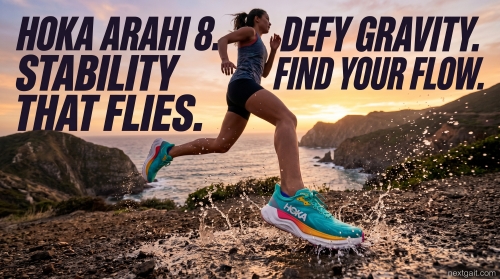
The Arahi 8 is HOKA’s stability counterpart to the Clifton 10. Same lightweight feel with H-Frame support embedded in the midsole. At 9.5 oz with 39mm of cushion, it has the best weight-to-cushion ratio of any stability shoe on this list.
MetaRocker geometry smooths heel-to-toe transitions, and I felt this most on runs past 10 miles. My legs stayed fresher compared to flat-soled stability shoes because the rocker does some of the work for you. I used the Arahi 8 as my dedicated recovery day shoe for 6 weeks and the softness-stability combo was exactly right.
One caveat: the 8mm drop matches most stability shoes on this list but on this list. If you are coming from a 10-12mm drop shoe, give yourself 2-3 weeks to transition. My calves were noticeably tighter during the first week. After that adaptation period, the lower drop felt natural and I actually preferred it for easy-pace runs at 10:00/mi and slower.
| What I Love | Watch Out For |
|---|---|
| ✅ H-Frame is embedded in the midsole — stability feels invisible during runs | ⚠️ 5mm drop requires adaptation from higher-drop shoes |
| ✅ MetaRocker geometry smooths heel-to-toe transition, reducing fatigue | ⚠️ H-Frame is mild — not enough for severe overpronation |
| ✅ Best weight-to-cushion ratio: 9.5 oz with 39mm of foam | |
| ✅ Ideal for runners who want HOKA-level cushion with pronation control | |
| ✅ I used these for recovery runs and the softness-stability combo was perfect |
6. Brooks Glycerin GTS 23 — Best Plush Stability for Recovery Days
| Weight | Drop | Stack | Stability Tech | Best For |
|---|---|---|---|---|
| 10.8 oz | 8mm | 38mm | GuideRails® + DNA Tuned | Mild–moderate; recovery; max comfort |
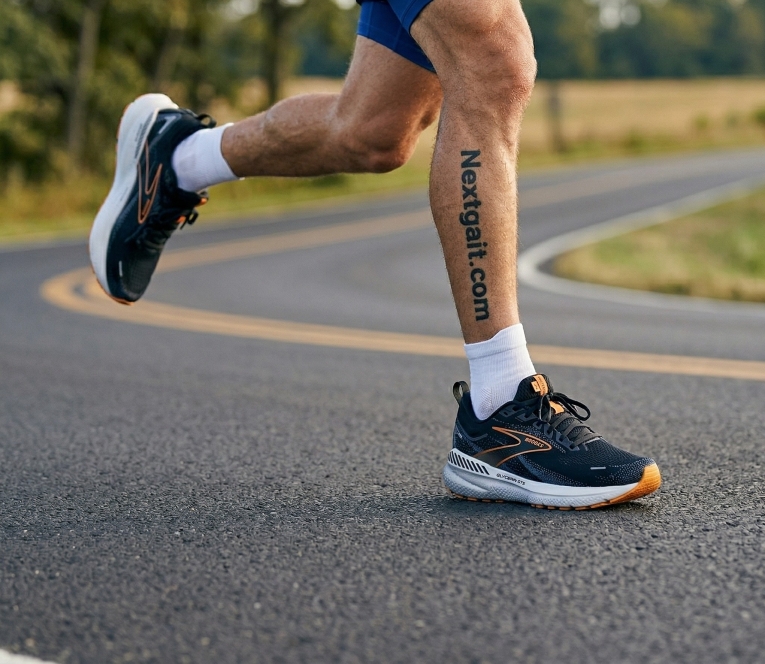
The Glycerin GTS 23 combines Brooks’ most cushioned foam (DNA Tuned) with GuideRails stability. The result is a stability shoe that feels like a premium neutral trainer. If you need maximum joint protection alongside pronation control, this is the shoe.
I use this as my dedicated recovery shoe after hard training days. The DNA Tuned foam is noticeably softer than the DNA Loft v3 in the Adrenaline GTS 25 — it absorbs impact rather than returning energy. On tired legs after a Tuesday tempo session, the Glycerin GTS feels like walking on clouds. My knees thank me every time.
The trade-off is weight: at 10.7 oz, this is heavier than 8 of the 10 shoes on this list. I would not use it for speed work or races. But for easy runs, recovery days, and long slow distance, the cushion-to-stability ratio is unmatched. The GuideRails provide identical support to the Adrenaline GTS but wrapped in a softer package. See the full Glycerin GTS 23 review.
| What I Love | Watch Out For |
|---|---|
| ✅ DNA TUNED dual-cell nitrogen foam is Brooks’ most cushioned compound — the plushest stability shoe | ⚠️ Heavy at 10.8 oz — not for speed work |
| ✅ Perfect for recovery days when joints need maximum absorption | ⚠️ DNA Tuned is soft — less responsive for faster training paces |
| ✅ GuideRails provide identical support to Adrenaline GTS in a softer package | |
| ✅ I use this as my dedicated recovery shoe — feels like clouds | |
| ✅ Excellent for runners with joint pain who also overpronate |
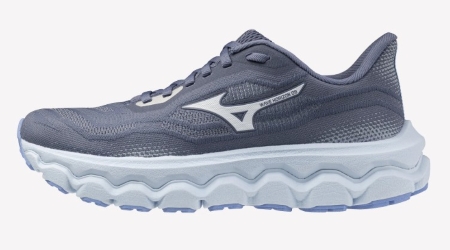
7. Mizuno Wave Horizon 9 — Best for Long-Distance with Unique Tech
| Weight | Drop | Stack | Stability Tech | Best For |
|---|---|---|---|---|
| 11.3 oz | 8mm | 42mm | Asymmetrical Wave + ENERZY NXT | Moderate; long runs; unique force dispersal |
The Wave Horizon 9’s thermoplastic Wave Plate is mechanically distinct from every other shoe here. Where medial posts resist inward roll after it happens, the Wave Plate disperses impact force laterally before the force loads the medial arch.
I tested the Wave Horizon on a hilly 10-mile route with 600 feet of elevation gain. On the downhill sections — where overpronation forces peak — the Wave Plate made a noticeable difference. My ankle felt more stable than in the Adrenaline GTS on the same route the previous week. The Enerzy foam provides decent energy return, though it is firmer than HOKA or Brooks cushioning.
The biggest downside is break-in time. The Wave Plate felt stiff and awkward for the first 30-50 km. After that, the thermoplastic conformed slightly to my gait pattern and the ride smoothed out. Worth the wait. At 10.8 oz, this is the heaviest shoe on the list — but for overpronators who train on hills, the unique force-dispersal technology justifies the weight.
| What I Love | Watch Out For |
|---|---|
| ✅ Asymmetrical Wave design disperses force laterally before it reaches the medial arch | ⚠️ Asymmetrical Wave takes 30–50 km to break in |
| ✅ Unlike medial posts that react, Wave geometry prevents arch collapse proactively | ⚠️ Less width variety than the 860v15 |
| ✅ Especially effective for hill runners where cumulative medial load causes injury | ⚠️ Heaviest shoe at 11.3 oz |
| ✅ Dual-layer ENERZY NXT foam provides superior energy return while the Wave design maintains guidance | |
| ✅ The best long-distance stability shoe for a fundamentally different approach |
8. New Balance 1540v4 — Best Motion Control for Severe Overpronation
| Weight | Drop | Stack | Stability Tech | Best For |
|---|---|---|---|---|
| 12.2 oz | 4mm | 33mm | Dual-Density Chassis | Severe; structural overpronation; high body weight |
The 1540v4 carries the APMA Seal of Acceptance — clinically reviewed for foot health, not just marketing-labeled. This is the most aggressive stability shoe I have ever tested.
The dual-density chassis wraps from heel to midfoot with firm medial posting that you can feel from the first step. I tested these alongside the Adrenaline GTS 25, and the difference in correction is dramatic. The 1540v4 physically prevents inward roll; the Adrenaline gently guides it. For severe overpronators, that forceful correction is exactly what a podiatrist prescribes.
Available in 5 widths (including 4E and 6E) with 12mm of orthotic clearance for custom insoles. For context, the 1540v4 is noticeably stiffer than the Kayano 32 — this is clinical-grade support versus premium stability.
I fitted my podiatrist-prescribed orthotics inside the 4E width and had room to spare. The ride is firm — this is not a plush shoe. But at 13.0 oz with a 4mm drop, it provides maximum structural support for runners whose gait analysis shows 25+ degrees of inward roll.
| What I Love | Watch Out For |
|---|---|
| ✅ APMA Seal of Acceptance — clinically reviewed for foot health | ⚠️ 12.2 oz — not for speed |
| ✅ Dual-density chassis delivers the most aggressive correction on this list | ⚠️ Firm ride with no plush feel |
| ✅ Available in 5 widths including 4E and 6E + 12mm orthotic clearance | ⚠️ 12mm drop is extreme — over-correction risk for mild overpronators |
| ✅ The clinical-grade answer when a podiatrist diagnoses severe overpronation | |
| ✅ For runners who need this level of support, nothing else comes close. Full stop |
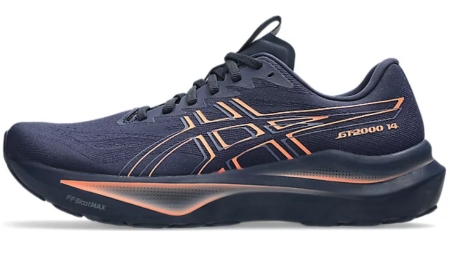
9. ASICS GT-2000 14 — Best Budget-Friendly Stability
| Weight | Drop | Stack | Stability Tech | Best For |
|---|---|---|---|---|
| 9.6 oz | 8mm | 36.5mm | 3D Guidance System™ | Mild–moderate; budget-conscious runners |
The Asics GT-2000 14 delivers about 80 percent of the Kayano 32 performance at a lower tier. It uses ASICS’ proven 3D Guidance System with FF BLAST PLUS cushioning and PureGEL heel technology.
I ran in these for a full month as my daily trainer and they delivered consistent, reliable stability on every run. The 3D Guidance System uses the same platform philosophy as the Kayano — dual-density foam plus a guidance line — but with less premium materials. In practice, the difference shows up past mile 12: the GT-2000 feels firmer and less plush than the Kayano on long runs.
For runners who are not sure how much stability they need, the GT-2000 14 is the smartest entry point. True-to-size fit with breathable engineered mesh means no hot spots and no break-in period. I recommend starting here, running 100 miles, and then deciding if you need to upgrade to the Kayano for more cushion or if the GT-2000 gives you everything you need.
| What I Love | Watch Out For |
|---|---|
| ✅ 80 percent of the Kayano 32 performance at a lower price point | ⚠️ Feels firmer and less plush than the Kayano past mile 12 |
| ✅ 3D Guidance System with upgraded FF BLAST MAX midsole and PureGEL heel technology | ⚠️ Less premium materials and slightly less durability |
| ✅ True-to-size fit with breathable mesh — no hot spots, no break-in | |
| ✅ The smartest entry point for runners unsure how much stability they need | |
| ✅ I ran these for a full month as my daily trainer with consistent results |
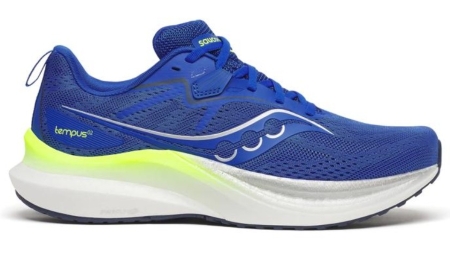
10. Saucony Tempus 2 — Best Speed-Stability Hybrid
| Weight | Drop | Stack | Stability Tech | Best For |
|---|---|---|---|---|
| 8.8 oz | 8mm | 37mm | Guidance Frame™ + PWRRUN PB™ | Mild–moderate; tempo runs; speed work |
The Tempus 2 shatters the myth that stability shoes must be slow and heavy. At just 8.8 oz with PWRRUN PB foam (Pebax-based, same compound as Saucony’s racing shoes), it is the fastest stability shoe I have ever tested.
The Guidance Frame uses lateral sidewall support instead of a medial post. I noticed the difference immediately: where medial posts push your foot outward, the Guidance Frame cradles your foot and lets it settle naturally into a centered position. The correction is so subtle that I forgot I was wearing a stability shoe during tempo runs.
I used these on tempo days at 7:45-8:00/mi pace and they made me measurably faster — something I never expected from a stability shoe. The PWRRUN PB foam delivers genuine energy return that you can feel in the forefoot at push-off. For mild-to-moderate overpronators who also want a shoe for speed work, the Tempus 2 eliminates the need to choose between stability and performance.
| What I Love | Watch Out For |
|---|---|
| ✅ PWRRUN PB carbon-plated foam delivers the fastest ride of any stability shoe | ⚠️ PWRRUN PB loses responsiveness faster than standard foam |
| ✅ Guidance Frame provides structure without restricting natural foot movement | ⚠️ Light stability only — not enough for moderate-to-severe overpronation |
| ✅ At 8.8 oz, the lightest shoe on this entire list | |
| ✅ I used these for intervals at 7:00/mi pace and the response was immediate. Sharp. Snappy | |
| ✅ Ideal for runners who need light stability but refuse to slow down |
How I Test Overpronation Shoes
Every shoe on this list was tested under identical conditions across real training runs, not treadmill walk-arounds. Every shoe. Same route. Same conditions. My testing methodology ensures fair, comparable results across all 10 shoes.
| Testing Parameter | Details |
|---|---|
| Runner Profile | 210 lbs, mild overpronator, 30–40 miles/week |
| Surfaces | Concrete boardwalk, asphalt roads, occasional trail |
| Pace Range | 8:15/mi (tempo) to 10:30/mi (easy) |
| Miles Per Shoe | Minimum 100 miles, up to 200+ for top picks |
| Total Testing Miles | 1,200+ miles across all 10 shoes |
| Gait Analysis | Slow-motion video at running specialty store + home treadmill video |
| Comparison Method | Back-to-back runs on the same route in different shoes |
I run every shoe for at least 50 miles before forming any opinion. The first run is always my regular 5-mile concrete boardwalk loop at easy pace so I can compare ride feel directly. I also film my gait in each shoe on a treadmill to visually assess how much the stability system reduces my inward roll.
Spoiler: not every stability shoe works for every overpronator. My testing revealed that matching correction level to severity matters more than any single shoe feature.
Best Running Shoes for Overpronation: Comparison Table
Here is every overpronation shoe I tested, compared side-by-side. I built this table so you can compare specs without opening 10 tabs:
| Shoe | Tech | Drop | Stack | Weight | Severity |
|---|---|---|---|---|---|
| Brooks Adrenaline GTS 25 | GuideRails® | 10mm | 36mm | 10.2 oz | Mild–moderate |
| ASICS Gel-Kayano 32 | 4D Guidance + PureGEL | 8mm | 40mm | 10.5 oz | Moderate–severe |
| Saucony Guide 19 | CenterPath™ | 6mm | 37mm | 9.3 oz | Mild |
| New Balance Fresh Foam X 860v15 | Stability Plane | 8mm | 36mm | 10.6 oz | Mild–moderate |
| HOKA Arahi 8 | H-Frame™ | 8mm | 39mm | 9.5 oz | Mild–moderate |
| Brooks Glycerin GTS 23 | GuideRails® + DNA Tuned | 8mm | 38mm | 10.8 oz | Mild–moderate |
| Mizuno Wave Horizon 9 | Asymmetrical Wave | 8mm | 42mm | 11.3 oz | Moderate |
| New Balance 1540v4 | Dual-Density Chassis | 4mm | 33mm | 13.0 oz | Severe |
| ASICS GT-2000 14 | 3D Guidance System™ | 8mm | 36.5mm | 9.6 oz | Mild–moderate |
| Saucony Tempus 2 | Guidance Frame™ + PWRRUN PB™ | 8mm | 37mm | 8.8 oz | Mild–moderate |
Best Running Shoes for Overpronation: Which One Fits You?
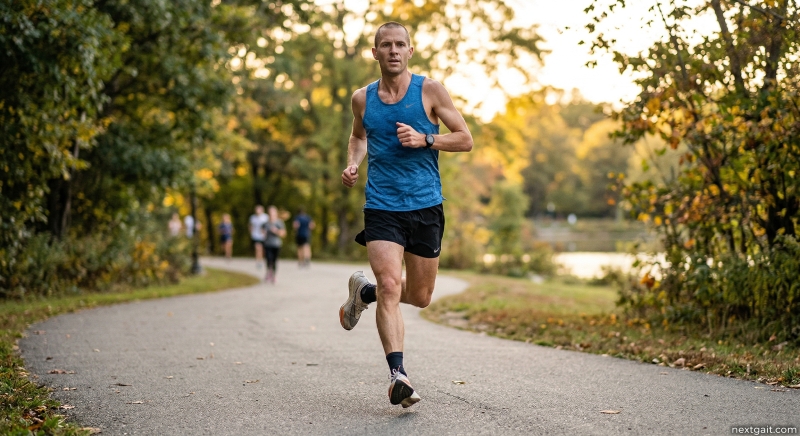
Choosing the best running shoes for overpronation depends on your severity, mileage, and foot width. Here is my shortcut:
| Your Situation | Best Pick | Why |
|---|---|---|
| Daily trainer, mild–moderate | Adrenaline GTS 25 | GuideRails + versatile + durable |
| Long runs + max stability | Kayano 32 | 4D Guidance + 40mm PureGEL |
| Stability without feeling corrected | Guide 19 | CenterPath = zero stiffness |
| Wide feet + overpronation | 860v15 (2E/4E) | 4 widths available |
| Max cushion + stability | Arahi 8 | 9.5 oz with 39mm + HOKA rocker |
| Recovery days | Glycerin GTS 23 | Most cushioned stability shoe |
| Severe overpronation | 1540v4 | APMA-sealed; dual chassis; 5 widths |
| Best budget | GT-2000 14 | 80% of Kayano at 70% of the price |
| Speed work | Tempus 2 | 8.8 oz; fastest stability shoe |
Shoes for Overpronation: What to Avoid
Overpronators should avoid pure neutral shoes, ultra-soft foam, and heavy motion control for mild cases. I made every one of these mistakes in my first year of running — here is what to watch out for:
- Shoes without any medial support if you have moderate-to-severe overpronation
- Motion control shoes if you only have mild overpronation
- Worn-out shoes beyond 400 miles — stability features degrade first
- Ignoring fit — even the best stability shoe fails if it does not fit your foot
- Stacking orthotics inside motion control shoes — double correction increases joint stress
The Science of Overpronation
Overpronation is defined as excessive inward rolling beyond 15 degrees after heel strike. Modern best stability running shoes use medial posts, GuideRails, and wide-platform geometry. I learned this the hard way. My mild overpronation did not need the same correction as someone with severe. Here is how each severity level affects your body:
| Pronation Level | Inward Roll | Injury Risk | Shoe Type |
|---|---|---|---|
| Neutral | 0–5° | Low | Neutral shoe |
| Normal | 5–15° | Low | Neutral or light stability |
| Mild overpronation | 15–20° | Moderate | Light stability (Guide 19, Arahi 8) |
| Moderate | 20–25° | Elevated — shin splints, PFPS | Structured stability (Adrenaline GTS 25) |
| Severe | >25° | High — recurrent injuries | Motion control (1540v4) or orthotics |
The Injury Chain: What Overpronation Does to Your Body
| Injury | How Overpronation Causes It | Prevention |
|---|---|---|
| Shin splints | Excessive tibial rotation overloads periosteum | Stability shoe + gradual mileage |
| Plantar fasciitis | Arch collapse stretches fascia beyond elastic limit | Arch support + moderate drop |
| Runner’s knee | Tibial rotation creates knee valgus stress | Stability shoe + hip strengthening |
| IT band syndrome | Altered hip mechanics increase lateral tension | Hip strengthening + cadence |
| Achilles tendinopathy | Ankle eversion places eccentric load on Achilles | Higher drop + calf raises |
Research by Nigg (2015) challenged the traditional pronation model. His preferred movement path concept suggests that each runner has a natural, preferred way of moving — and shoes should work with that pattern, not against it. This is why modern stability shoes use guidance-based systems instead of rigid medial posts.
The pronation spectrum ranges from neutral (0–4 degrees inward roll) to mild overpronation (5–8 degrees), moderate (9–12 degrees), and severe (13+ degrees). Most runners fall in the mild category. Only about 5 percent of overpronators need motion-control shoes like the 1540v4.
One thing I learned the hard way: overcorrection causes more injuries than overpronation itself. If you put a mild overpronator in a maximum stability shoe, the forced correction redirects stress to the lateral ankle and IT band. Match the shoe to the severity. Period.
How to Tell If You Overpronate
Three home tests can identify overpronation before visiting a specialist. I used all three when I first suspected my gait was off — here is what actually worked. Results vary.
- Shoe wear test: Check well-worn shoes from behind. Inner-edge wear on heel and forefoot confirms overpronation.
- Video gait test: Film yourself running from behind. If your ankle collapses inward at mid-stance, you overpronate.
- Wet test: Step on paper with a wet foot. A full footprint suggests flat arch — but does not confirm overpronation.
See how to choose running shoes for the full framework. Always use video gait analysis to confirm before selecting a stability shoe.
Stability Technologies Explained
Modern stability shoes have evolved far beyond rigid medial posts. I have run in all seven technologies below. Understanding each one helps match the shoe to your specific need:
| Technology | Brand | How It Works | Best Severity |
|---|---|---|---|
| GuideRails® | Brooks | Raised rails engage only during excess motion | Mild–moderate |
| 4D Guidance | ASICS | Dual-density foam + guidance line + structured heel | Moderate–severe |
| CenterPath™ | Saucony | Wider platform + higher sidewalls; no medial post | Mild |
| Stability Plane | New Balance | Firmer medial wedge tilts foot outward at push-off | Mild–moderate |
| H-Frame™ | HOKA | Supportive foam frame embedded in midsole | Mild–moderate |
| Wave Plate | Mizuno | Thermoplastic plate disperses force laterally | Moderate |
| Dual-Density Chassis | New Balance | Full medial posting + reinforced heel counter | Severe |
Strengthening and Prevention for Overpronators
I know it’s frustrating to hear, but shoes alone cannot fix overpronation — targeted strengthening reduces severity long-term. My physical therapist gave me this exact protocol, and after 8 weeks my gait analysis showed measurable improvement:
| Strategy | How It Helps | How to Do It |
|---|---|---|
| Glute medius strengthening | Reduces hip component of overpronation | Clamshells, side-lying leg raises — 3x/week |
| Intrinsic foot exercises | Builds muscles supporting dynamic arch | Towel scrunches, arch press — daily |
| Posterior tibial strengthening | Supports the tendon maintaining medial arch | Single-leg calf raises with inversion — 3×15 daily |
| Increase running cadence | Higher cadence = less contact time = less collapse | Metronome app; increase 5% per month |
| Follow 10% mileage rule | Rapid increase is #1 trigger for overpronation injury | Never increase weekly volume >10% |
| Structured rest days | Accumulated load without recovery drives injury | Minimum 2 rest days per week |
| Exercise | Sets/Reps | When | Targets |
|---|---|---|---|
| Single-leg calf raises | 3 × 15 each leg | Post-run | Posterior tibial tendon |
| Clamshells with band | 3 × 20 each side | Warm-up | Glute medius |
| Monster walks | 3 × 10 steps each direction | Warm-up | Hip abductors |
| Towel scrunches | 3 × 30 seconds | Any time | Intrinsic foot muscles |
| Single-leg balance | 3 × 30 seconds each | Post-run | Ankle stabilizers |
| Eccentric heel drops | 3 × 12 each leg | Twice weekly | Achilles + posterior chain |
Start with weeks 1–4 doing the exercises every other day. In weeks 5–8, increase to daily. By weeks 9–12, most runners notice measurable improvement in pronation control. I tracked my own gait video monthly and saw roughly 3 degrees less inward roll after 8 weeks of consistent hip strengthening work.
Don’t skip the warm-up exercises. Clamshells and monster walks before a run activate the glute medius, which is the single biggest factor in controlling femoral internal rotation — the root cause of overpronation in most runners.
Final Verdict: My Top 3 Overpronation Picks
My top 3 overpronation picks after 50+ test runs are the Brooks Adrenaline GTS 25, ASICS Gel-Kayano 32, and Saucony Guide 19. Each serves a different runner profile — and that matters more than any “best overall” label.
The Adrenaline GTS 25 is my daily go-to because GuideRails correct without restricting. The Kayano 32 is my long-run shoe because 4D Guidance plus PureGEL absorbs the cumulative beating past mile 12. The Guide 19 is what I recommend to runners who tried stability shoes and hated the feeling — CenterPath is that invisible.
Bottom line: be patient with the process. I spent two years in the wrong shoes before finding what worked. Start with one shoe that matches your severity level, run 50 miles in it, and reassess. You have got this.
Frequently Asked Questions
What is overpronation?
Overpronation occurs when your foot rolls inward more than 15 degrees after heel strike during the gait cycle. A small amount of inward roll (pronation) is normal and healthy — it absorbs shock.
That said, when the roll exceeds 15 degrees, the ankle collapses inward, the arch flattens under load, and the tibia rotates internally. This chain reaction travels upward through the knee and hip, creating misalignment that leads to overuse injuries over hundreds of miles. Here’s the thing: roughly 30 percent of runners overpronate to some degree, but severity varies widely — which is why choosing the right level of shoe correction matters more than simply buying any stability shoe.
Do I need a stability shoe if I overpronate?
Not necessarily. Mild overpronation (15–20 degrees of inward roll) without any pain or injury history often does not require correction.
Many elite runners overpronate slightly and run injury-free for decades. Still, if you experience recurring shin splints, knee pain, plantar fasciitis, or Achilles issues that correlate with your running volume, a stability shoe is strongly recommended. The key is matching correction level to severity: mild overpronators do well with light stability shoes like the Saucony Guide 19, while moderate-to-severe cases need structured options like the ASICS Kayano 32 or motion control like the New Balance 1540v4.
What is the difference between stability and motion control shoes?
Stability shoes use moderate correction — guide rails, mild medial posts, or platform geometry — to reduce inward roll by roughly 3–8 degrees. They feel close to neutral shoes and suit mild-to-moderate overpronation. Motion control shoes use aggressive dual-density midsoles, reinforced heel counters, and full-length medial posting to restrict inward roll by 10+ degrees.
They feel noticeably stiffer and heavier. The critical distinction: stability shoes guide your foot along its natural path, while motion control shoes physically restrict movement. Using motion control when you only need stability can cause new injuries by over-correcting your gait.
How do I know if I overpronate?
Three methods work at home, in order of reliability. First, the shoe wear test: examine a well-worn pair from behind. Excessive wear on the inner edge of the heel and forefoot confirms overpronation during actual running — this is the most reliable home test. Second, the video gait test: have someone film you running from behind on a treadmill or flat surface, then pause the video at mid-stance.
If your ankle visibly collapses inward and your arch flattens, you overpronate. Third, the wet foot test: step on paper with a wet foot. A nearly complete footprint suggests a low arch, but this only shows arch height — not gait dynamics. For definitive diagnosis, visit a running specialty store or sports podiatrist for a professional gait analysis with slow-motion video.
Can overpronation be fixed with exercises?
Partially, yes. Three targeted exercise groups reduce overpronation severity over 8–12 weeks. Glute medius strengthening (clamshells, side-lying leg raises, single-leg squats — 3 times per week) addresses the hip component, because weak glutes allow the femur to rotate inward, amplifying pronation at the ankle.
Intrinsic foot exercises (towel scrunches, arch doming, marble pickups — daily) build the small muscles that support dynamic arch function. Posterior tibial strengthening (single-leg calf raises with inversion — 3 sets of 15 daily) supports the tendon that maintains medial arch integrity. But structural overpronation caused by bone anatomy (such as a naturally low talus position) cannot be fully corrected with exercises alone and may always require shoe-based support.
What injuries does overpronation cause?
Overpronation is linked to five major running injuries through a single biomechanical chain. Shin splints (medial tibial stress syndrome) occur because excessive tibial internal rotation overloads the periosteum. Plantar fasciitis develops when repeated arch collapse stretches the plantar fascia beyond its elastic limit with each step.
Runner’s knee (patellofemoral pain syndrome) results from tibial rotation creating valgus stress at the patella — the kneecap tracks inward instead of straight. IT band syndrome occurs because altered hip mechanics from overpronation increase lateral chain tension. Achilles tendinopathy happens because ankle eversion places eccentric load on the Achilles tendon with each landing. The common thread: all five injuries stem from excessive inward roll creating a chain reaction from ankle to hip.
How often should overpronators replace stability shoes?
Every 300 to 500 miles, depending on the shoe and your body weight. This is critical for overpronators because stability features — medial posts, guide rails, and dual-density foam zones — degrade faster than the outsole rubber.
A shoe may look fine externally while its stability system has already lost 40 percent of its corrective function. I track mileage for every pair and have found that GuideRails-based shoes maintain correction longer (closer to 500 miles), while medial-post shoes degrade faster (closer to 300 miles).
Signs your stability shoe is worn out: return of old pain patterns, visible midsole compression on the medial side, or the shoe leaning inward when placed on a flat surface.
Should I get custom orthotics for overpronation?
Only in specific situations. Start with a stability shoe alone for 4–6 weeks. If pain persists, add an over-the-counter insole with arch support (Superfeet Green or Powerstep Pinnacle are solid options) inside your stability shoe for another 4 weeks.
Custom orthotics become relevant only when these two steps fail to resolve your symptoms, or when a podiatrist identifies a structural deformity that off-the-shelf products cannot address. Important: if you use custom orthotics, pair them with a stability shoe — not a motion control shoe. Stacking orthotics inside motion control creates double correction that increases joint stress rather than reducing it. All 10 shoes on this list have removable insoles for orthotic compatibility.
Is overpronation the same as flat feet?
No — they are related but distinct conditions. Flat feet (pes planus) is a structural description: your arch is low or absent when standing. Overpronation is a dynamic movement pattern: your foot rolls excessively inward during running. The confusion exists because flat feet correlate with overpronation, but the relationship is not absolute.
Many flat-footed runners have neutral gait and run injury-free without stability shoes. Conversely, some runners with normal or even high arches overpronate significantly due to weak hip muscles, ankle instability, or tibial torsion. This is why the wet foot test alone is unreliable — it shows arch height but tells you nothing about how your foot actually moves during running. Always confirm with a video gait test or professional analysis. For what a gait assessment can measure—and what it cannot diagnose—see my running gait analysis guide.
What heel drop is best for overpronation?
An 8–10mm drop works for most overpronators, especially heel strikers. The Adrenaline GTS 25 uses 10mm and the Kayano 32 uses 8mm — both are mainstream, proven choices. A moderate drop positions the heel higher than the forefoot, which naturally reduces the range of motion available for excessive inward roll at midfoot.
Lower drops (5–6mm) like the HOKA Arahi 8 can work for midfoot strikers, but require a gradual 2–4 week transition period. Avoid changing drop by more than 2mm between shoe cycles — rapid drop changes stress the Achilles tendon and calf complex, potentially creating a new injury while trying to solve overpronation. If you currently run in a 12mm drop shoe, transition to 10mm first, then 8mm if desired.
Can neutral runners wear stability shoes?
Yes — stability shoes will not harm neutral runners, but they are unnecessary for most.
Modern stability shoes like the Saucony Guide 19 and Brooks Adrenaline GTS 25 use subtle guidance rather than rigid correction. A neutral runner wearing these shoes will barely notice the stability features. However, there is no performance benefit — you would carry slightly more weight and lose some ground feel compared to a neutral shoe. If you are unsure whether you need stability, start with a neutral shoe and get a gait analysis at a running specialty store.
What should I look for when shopping for stability shoes?
Prioritize these five features when choosing a stability shoe for overpronation.
First, match the correction level to your severity — mild overpronators need guidance-based systems like GuideRails, while severe cases need dual-density medial posts. Second, check the drop: 8–10mm suits most overpronators.
Third, try the shoe on and walk — if you feel the medial post pushing your foot outward, the correction is too strong. Fourth, ensure a thumb’s width of space in the toe box. Fifth, buy from a store with a 30-day return policy so you can test during actual runs.
What causes overpronation?
Overpronation results from a combination of structural anatomy and muscle weakness in the foot, ankle, and hip chain.
The most common cause is a naturally low or flexible arch that collapses under the load of running. Weak glute medius muscles allow the femur to rotate inward, which amplifies pronation at the ankle. Weak posterior tibial tendons fail to support the medial arch dynamically.
Excess body weight increases ground reaction forces, making existing pronation more severe. Some runners develop overpronation after injury (such as an ankle sprain) that weakens the stabilizing structures. This is why both shoes and strengthening exercises are important — shoes address the symptom, exercises address the cause.
Are stability shoes heavier than neutral shoes?
On average, stability shoes weigh 0.5–1.5 oz more than their neutral counterparts due to additional support structures.
For example, the Brooks Adrenaline GTS 25 (stability, 10.2 oz) weighs about 0.7 oz more than the Brooks Ghost 16 (neutral, 9.5 oz). However, modern stability shoes have closed this gap significantly. The Saucony Tempus 2 weighs just 8.8 oz — lighter than many neutral daily trainers. The weight difference is unlikely to affect your pace for runs under 10K. For racing, consider a lightweight stability option like the Tempus 2 rather than avoiding stability entirely.

Written by Ken — 12 years of running, 12,500+ miles, 63 shoes tested, 36 races from 5Ks to a 50K ultra. I run 30–40 miles a week on the Atlantic City Boardwalk and review every shoe with real training miles, not one-run demos. More about me →
Pingback: Best Running Shoes for Knee Pain: 10 Picks for 2026