
The Best Running Shoes for Beginners should feel secure, comfortable, and predictable at an easy pace. After 2,441 logged miles across the 10 shoes in this guide, the Brooks Ghost 18 is my best overall pick because it gives a new runner a balanced reference point without forcing an extreme level of softness, stability, or rocker.
My first serious running mistake was not buying the “wrong” brand. It was going from three runs a week to six in about two weeks, while wearing beat-up Nike Free Runs on concrete. The shin pain that followed kept me out for six weeks.
I blamed the shoes at the time. Twelve years later, I see the bigger picture: the workload jump was the loudest warning, and the worn shoes did not help. Switching to a Brooks Ghost 7 coincided with a much more comfortable return, but no shoe could have made that training jump sensible.
That distinction matters when you are choosing your first pair. The best beginner running shoe is not the softest shoe, the most supportive shoe, or the model with the biggest stack. It is the shoe that fits your foot securely, feels comfortable at an easy pace, and suits the surface you will actually run on.
Quick answer: the best beginner running shoes
The Brooks Ghost 18 is my best overall running shoe for most beginners because its fit, 10 mm drop, stable neutral platform, and balanced cushioning make it easy to understand. It does not force you toward an extreme ride.
Choose the HOKA Clifton 10 if you prefer a lighter rocker and more cushioning. Try the Brooks Adrenaline GTS 25 if a neutral shoe feels unsettled and gentle guidance feels better. The New Balance 880v15 is the first model I would try for harder-to-fit feet because the men’s version is sold in Narrow through X-Wide. The HOKA Mach 7 is the more energetic option once easy running already feels controlled.
Quick Picks: shop the 10 winners
| Need | My pick | Why it made the list | Availability |
|---|---|---|---|
| Safest starting point | Brooks Ghost 18 | Balanced, stable-neutral, predictable | Check price & sizes |
| Walk-run comfort | HOKA Clifton 10 | Smooth rocker, lighter than it looks | Check price & sizes |
| Firm, familiar ride | Nike Pegasus 42 | Clean turnover without a strong rocker | Check price & sizes |
| Softest neutral pick | ASICS GEL-NIMBUS 28 | Plush upper and deep cushioning | Check price & sizes |
| Balanced and flexible | Saucony Ride 19 | Lighter transition, roomy forefoot | Check price & sizes |
| Moderate guidance | Brooks Adrenaline GTS 25 | Secure fit and nonintrusive GuideRails | Check price & sizes |
| Plush stability | ASICS GEL-KAYANO 32 | High cushion plus modern guidance | Check price & sizes |
| Mostly walking at first | HOKA Bondi 9 | Broad max-cushion rocker | Check price & sizes |
| More width choices | New Balance 880v15 | Narrow, standard, Wide, and X-Wide | Check price & sizes |
| Light, faster option | HOKA Mach 7 | Responsive trainer for strides and progression | Check price & sizes |
If you want a broader market view, start with my guide to the best running shoes. This page is narrower: every recommendation here is meant to work as a new runner’s primary road shoe.
The 10 best running shoes for beginners in 2026
| Shoe | Best for | Category | Drop | Listed men’s weight* | Ken’s logged miles |
|---|---|---|---|---|---|
| Brooks Ghost 18 | Best overall | Neutral daily trainer | 10 mm | 10.2 oz | 380 |
| HOKA Clifton 10 | Cushioned walk-run training | Neutral rocker | 8 mm | 9.8 oz | 350 |
| Nike Pegasus 42 | Firm, versatile ride | Neutral daily trainer | 10 mm | 10.6 oz | 145 |
| ASICS GEL-NIMBUS 28 | Plush neutral cushioning | Max-cushion neutral | 8 mm | 9.9 oz | 260 |
| Saucony Ride 19 | Lighter natural transition | Neutral daily trainer | 8 mm | 9.5 oz** | 110 |
| Brooks Adrenaline GTS 25 | Moderate guidance | Stability daily trainer | 10 mm | 10.6 oz | 340 |
| ASICS GEL-KAYANO 32 | Plush stability | Stability trainer | 8 mm | 10.6 oz | 280 |
| HOKA Bondi 9 | Walking-to-running plans | Max-cushion neutral | 5 mm | 10.5 oz | 310 |
| New Balance 880v15 | More width choices | Neutral daily trainer | 6 mm | 10.5 oz | 146 |
| HOKA Mach 7 | Faster progression | Responsive neutral trainer | 5 mm | 8.8 oz** | 120 |
My testing context: I am 5’10”, 182 pounds, and wear a men’s US 10.5 D. I have a medium arch, mild overpronation, and usually land from heel to midfoot. A shoe that works for my build may feel different under a lighter runner, a wider foot, or a forefoot striker. That is why each pick includes a clear reason to buy it and a reason to skip it.
How I chose and tested these shoes
I have run since 2014 and have tested 63 running shoes. My race history includes 15 5Ks, eight 10Ks, nine half marathons, three marathons, and one 50K. The 10 shoes in this guide account for 2,441 logged running miles in my shoe records.
I did not rank them by how exciting they felt during one fast run. A beginner’s main shoe needs to survive ordinary training: easy miles, run-walk intervals, tired legs, wet pavement, and the occasional faster finish. I evaluated five things:
- Fit: heel hold without pinching, enough forefoot room, and no concentrated lace pressure.
- Comfort at easy effort: the ride should feel natural when you can still speak in sentences.
- Predictability: the shoe should remain easy to control as form gets less tidy late in a run.
- Use-case range: one pair should cover most early training rather than demand a shoe rotation.
- Evidence discipline: manufacturer specifications are treated as product facts; my ride notes are personal observations, not universal outcomes.
A running shoe can change how you move, but this list cannot promise that a shoe will prevent an injury. Training load, recovery, strength, prior injury, and individual mechanics still matter.
Detailed beginner running shoe reviews
1. Brooks Ghost 18 — best overall
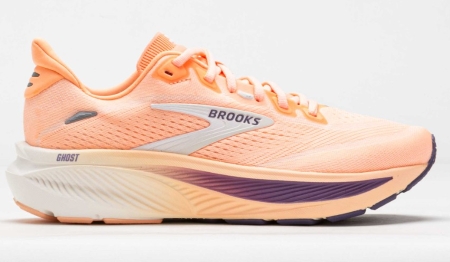
Ken’s verdict: The Ghost 18 is the pair I would place in front of a beginner who cannot yet describe the ride they like. It is stable without being corrective, cushioned without feeling vague, and durable enough to expose your preferences before it needs replacing. Personal score: 8/10.
Best for: a new runner who wants one dependable neutral shoe for easy runs, a first 5K plan, treadmill sessions, and walking.
Skip it if: you want a very soft rocker, a low-drop platform, or a lively speed-day feel.
The Ghost 18 wins because it is easy to read underfoot. Brooks lists a 10 mm drop and 10.2-ounce men’s weight, with DNA LOFT v3 cushioning and RoadTack rubber. The platform feels planted without turning the shoe into a traditional stability model.
Across 380 logged miles, I kept coming back to the same word: predictable. My 10.5 D foot has enough forefoot room, the padded heel stays put, and the cushioning does not make me hunt for the center of the platform. On damp pavement and boardwalk planks, the outsole gave me more confidence than the smooth-looking bottom suggests.
The tradeoff is personality. The Ghost is not especially soft or fast, and the upper becomes heavy when fully soaked. I still prefer that honesty for a first shoe. A beginner needs to learn what easy running feels like; an uncomplicated daily trainer makes that easier. Read my full Brooks Ghost review for fit and durability details.
The run that earned its place: damp sea mist on the Margate beach shoulder. The road was slick enough to make me pay attention, yet the RoadTack outsole stayed quiet and planted. That calm, forgettable competence is exactly what I want from a first shoe.
What 380 miles revealed: roughly 1.6 mm of smoothing is visible through my main landing and toe-off zones. The midsole has softened and creased, but the mesh has no blowouts and the ride is still usable. The failure mode is water retention: in one downpour, the soaked upper turned the final five miles of an 11-miler into a heavy slog.
2. HOKA Clifton 10 — best cushioned walk-run shoe

Ken’s verdict: The Clifton 10 is the smoothest handoff between brisk walking and easy running in this group. It is not automatically safer because it has more foam; it simply makes slow transitions feel less abrupt. Personal score: 8/10.
Best for: beginners who mix walking and running and prefer a smooth rocker with more foam underfoot.
Skip it if: tall shoes feel unstable, you want strong ground feel, or you regularly run on uneven surfaces.
The Clifton 10 specifications include an 8 mm drop and a curved MetaRocker; HOKA’s launch material lists a 42/34 mm stack. It is lighter than its size suggests at roughly 9.8 ounces in HOKA’s men’s reference size. The rocker matters more than the raw stack number: it makes the transition from a walking heel strike into a running toe-off feel less abrupt.
I have 350 logged miles in it. On long boardwalk runs, the broad base and bucket-seat geometry kept the ride controlled as my stride shortened. The fit has enough room for my slightly wide forefoot, and the heel collar does its job without needing a runner’s knot.
Its compression-molded EVA does become firmer in very cold weather, and the high platform filters out more road feel than some beginners will like. Cushioning is a preference, not a protective score. Compare that ride in my HOKA Clifton review, or see the broader cushioned running shoe guide.
The run that earned its place: 10.5 miles past Steel Pier on hard wooden planks. The rocker kept rolling when my stride shortened, and I finished with more life in my legs than I expected. At 16°F windchill on a January track morning, the same foam hardened enough to feel blunt. Temperature is part of the ride.
What 350 miles revealed: about 1.5 mm of outsole smoothing in my wear path, deep midsole creasing, no upper failure, and a softer ride than day one. The shoe remains functional, but the transition is less crisp. That is a better replacement signal than a calendar reminder.
3. Nike Pegasus 42 — best firm all-rounder
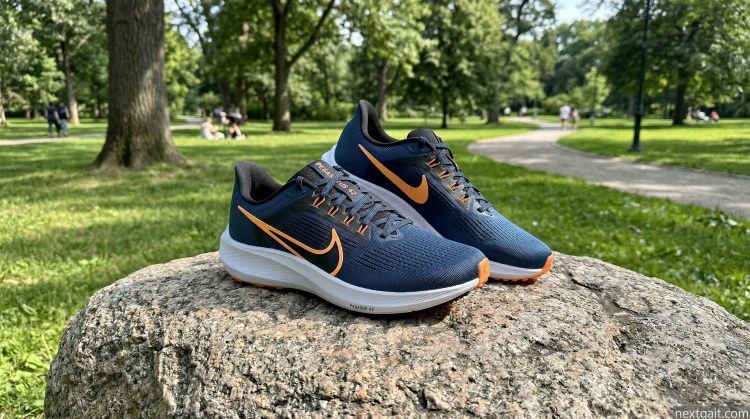
Ken’s verdict: Choose the Pegasus 42 when soft shoes make you feel disconnected. Its firmer landing and clean flex teach you more about the road, but its tapered forefoot is less forgiving of a borderline fit. Personal score: 8/10; durability verdict still developing.
Best for: a beginner who prefers a firmer, responsive ride and wants one shoe for easy runs plus occasional strides or gym work.
Skip it if: your forefoot needs generous volume or you want a soft, relaxed landing.
Nike lists the Pegasus 42 at about 10.6 ounces in a men’s US 10, with a 10 mm drop, ReactX foam, and a curved full-length Air Zoom unit. The current forefoot is roomier than the Pegasus 41, but Nike’s overall fit still deserves a two-size try-on if your foot runs wide.
My evidence here is less mature than it is for the Ghost or Clifton: 145 logged miles. So far, the Pegasus feels best when I want clean turnover without a pronounced rocker. It lands more firmly than the Nimbus or Bondi and works well on flat roads. During a hot long run, my fifth-metatarsal area became the pressure point, which is why I would not buy it online without a good return policy.
Nike’s claim that ReactX is more responsive than its previous React foam is a manufacturer comparison, not proof that you will run faster. My Nike Pegasus review separates those specifications from the ride I actually felt.
The run that earned its place: a flat Brigantine sea-wall session where the landings were nearly silent and the upper disappeared in warm air. The weak point appeared on a humid 14-miler: my fifth-metatarsal area developed a hot spot as the upper saturated and my foot expanded.
What 145 miles revealed: approximately 0.9 mm of wear at my lateral landing zone, moderate ReactX creasing, and no overlay separation. That is enough evidence for fit and ride, but not enough for me to promise a final lifespan.
4. ASICS GEL-NIMBUS 28 — best plush neutral option
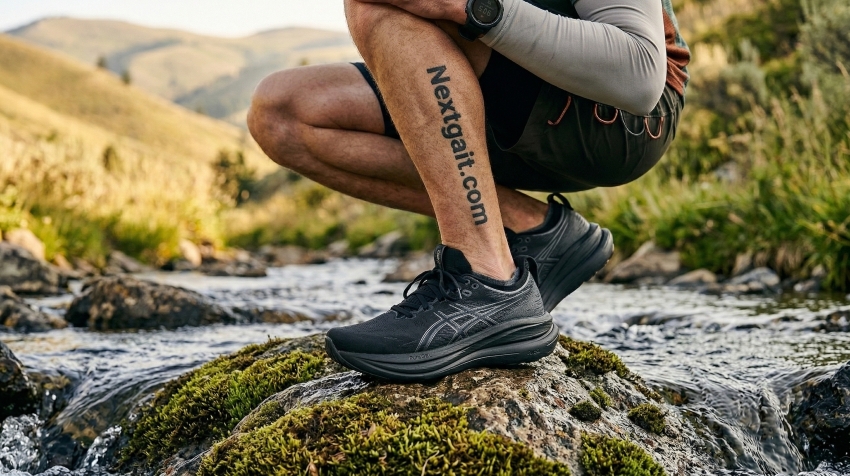
Ken’s verdict: The Nimbus 28 delivers the deepest soft-neutral ride here without collapsing into an uncontrolled landing under my 182-pound frame. Buy it for preference and comfort, not because a body-weight chart tells you to. Personal score: 9/10.
Best for: new runners who like a soft, highly cushioned neutral shoe for easy and longer efforts.
Skip it if: you dislike high stacks, want direct road feedback, or need a lower-priced first shoe.
The GEL-NIMBUS 28 pairs FF BLAST PLUS foam with PureGEL. ASICS lists an 8 mm drop and 9.9-ounce men’s reference weight. The engineered knit upper wraps the foot more softly than the Ghost’s structured mesh, while the wide platform keeps the tall stack from feeling as loose as the number suggests.
My 260 logged miles were mostly easy and longer runs. At 182 pounds, I can compress very soft foam enough to make some shoes feel vague. The Nimbus stays plush but gives me a clear landing area on flat pavement. On loose sand or sharply cambered ground, the height is more noticeable and I shorten my stride.
Do not choose it because somebody says heavier runners “need” maximum cushioning. Body weight is only one input. Try it because you prefer this ride, then compare it with the ASICS GEL-NIMBUS review and a lower-stack daily trainer.
The run that earned its place: 14 recovery miles after a 50-mile training week. The boardwalk was unforgiving, my legs were not, and the broad landing area kept the softness from becoming work. On loose Pine Barrens sugar sand, the 43 mm heel stack felt like stilts. Tall foam does not replace surface control.
What 260 miles revealed: roughly 1.2 mm of outsole smoothing, visible FF BLAST PLUS compression creases, and an intact stretch-knit upper. The ride has softened but still has a recognizable center. That late-test stability is why it ranks above softer shoes that felt spectacular only when new.
5. Saucony Ride 19 — best lighter daily trainer

Ken’s verdict: The Ride 19 is the least bossy shoe on this list. It bends naturally, gives my toes room, and carries enough cushioning for normal mileage without turning every step into a rocker lesson. Personal score: 7/10; long-term verdict still developing.
Best for: beginners who want cushioning without the bulk or steering sensation of a max-cushion rocker.
Skip it if: your first priority is maximum softness or structured stability.
The Ride 19 uses reformulated PWRRUN+ foam, an 8 mm offset, and forefoot flex grooves. My men’s US 10.5 pair weighs 9.5 ounces. That is not racing-flat light, but it is enough to make the shoe disappear more readily than the stability options in this guide.
I have 110 logged miles, so this is another developing verdict. The Ride feels smooth at my easy pace and does not fight a natural forefoot bend. It also has enough width for my toes to spread late in a run. At very fast 5K effort, the shoe feels less sharp than a speed trainer, but that is not a meaningful problem for a first pair.
If you want a shoe that covers ordinary miles without dominating your stride, put it beside the Ghost during your try-on. My full Saucony Ride review explains the difference in transition and fit.
The run that earned its place: an 8:15-per-mile cruise from Albany Avenue along the Atlantic City Boardwalk. It balanced impact protection with enough road feedback that I never had to search for rhythm. At sub-6:30 interval pace, its rotational weight became obvious. That is a fair limit for a beginner-focused daily shoe.
What 110 miles revealed: more than 90 percent of the outsole groove depth remains, the PWRRUN+ midsole shows only fine lateral creases, and the mesh has no visible fraying. I can recommend the present ride; I am not yet calling its final durability.
6. Brooks Adrenaline GTS 25 — best moderate guidance
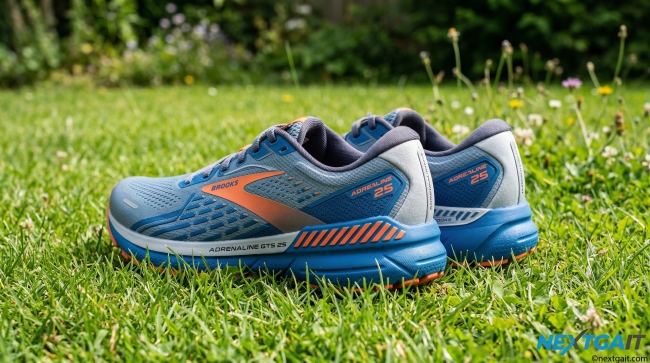
Ken’s verdict: The Adrenaline GTS 25 is my first stability comparison shoe, not my automatic prescription. Its guidance stays in the background until I drift toward it, and its traditional fit makes the neutral-versus-stability test easy to interpret. Personal score: 8/10.
Best for: a beginner who feels more comfortable in a guided shoe and wants a traditional, secure daily-trainer fit.
Skip it if: a neutral shoe already feels stable or support elements make your stride feel constrained.
The Adrenaline GTS 25 combines DNA LOFT v3 cushioning with Brooks GuideRails. Brooks lists a 10 mm drop and 10.6-ounce men’s weight. Unlike a hard medial post, the rails sit around the heel area and become more noticeable as the foot moves toward them.
I have mild overpronation and 340 logged miles in this version. For me, the appeal is not that the shoe “corrects” my foot. It is that the broad platform remains calm when I am tired, while the forefoot still rolls without a blocky sensation. The upper is secure and true to size on my 10.5 D foot.
Do not buy it from a wet-footprint test or because your arch looks low. Compare it against a neutral model on a treadmill and notice comfort, pressure, and how much you are aware of the guidance. See my Brooks Adrenaline GTS review and the best stability running shoes guide for alternatives.
The run that earned its place: a steady stretch through the Somers Point rail-trail corridor. The platform stayed quiet as fatigue arrived, and I could hold rhythm without feeling the GuideRails press against me. In 16°F windchill, the midsole became markedly firmer; cold-weather beginners should not judge the shoe from one frozen run.
What 340 miles revealed: about 1.5 mm of smoothing through my main wear path, deeper foam creasing, an intact upper, and a softer—but still centered—ride. The support geometry has not developed a harsh edge as the foam aged.
7. ASICS GEL-KAYANO 32 — best plush stability shoe
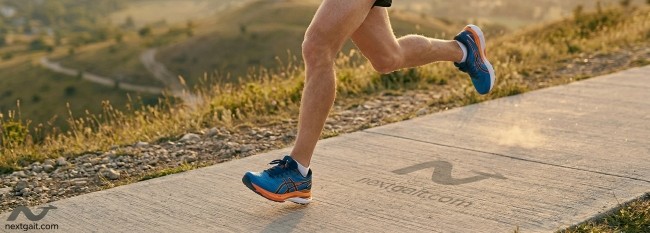
Ken’s verdict: The Kayano 32 is what I choose when I want guidance and softness in the same shoe. It controls my tired stride more smoothly than old medial-post designs, but there is too much shoe here for runners who prize flexibility. Personal score: 9/10.
Best for: beginners who prefer both high cushioning and a more guided platform.
Skip it if: you want a light, flexible shoe or do not notice any benefit from stability geometry.
ASICS lists the GEL-KAYANO 32 at 8 mm and about 10.6 ounces, with FF BLAST PLUS foam and the 4D Guidance System. That system uses geometry and material placement rather than the obvious firm wedge found in older stability shoes.
After 280 logged miles, I find it more comfortable than the stability shoes I wore a decade ago. The heel and midfoot feel contained, but the ride is not rigid. It works best for my easy and steady runs; the weight and tall platform become obvious when I push toward interval pace.
The Kayano is not automatically better than the Adrenaline. Try both: choose the Kayano if you prefer more underfoot softness and an enveloping fit, the Adrenaline if you want a simpler, firmer platform. The ASICS GEL-KAYANO review covers that decision in more detail.
The run that earned its place: an exposed Brigantine causeway outing in an 18 mph crosswind. Gusts moved my torso, but the broad footprint kept my landing calm without an obvious corrective shove. The weak point appeared on a hot 14-miler, when sweat and foot expansion created fifth-metatarsal friction.
What 280 miles revealed: roughly 1.3 mm of rubber smoothing, deep but even midsole creasing, and no knit failure. The foam is softer than new, yet the platform still feels coherent. That is the durability distinction I care about in a stability shoe.
8. HOKA Bondi 9 — best for walking-to-running plans
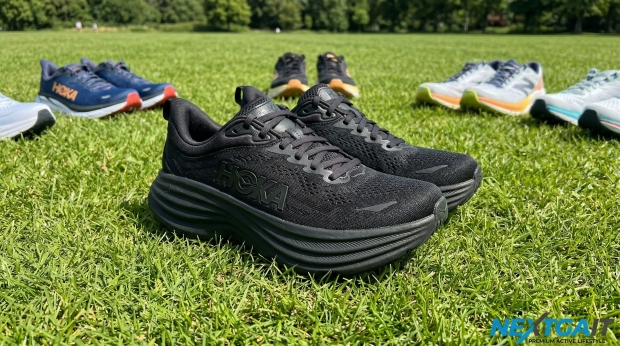
Ken’s verdict: The Bondi 9 makes sense when today’s workout is mostly walking and tomorrow’s goal is more running. It is a specialist, not the universal answer for heavier runners or sore joints. Personal score: 7/10.
Best for: beginners whose sessions contain more walking than running and who enjoy a broad, highly cushioned rocker.
Skip it if: you want one shoe for faster workouts, prefer ground feel, or feel wobbly on high platforms.
The Bondi 9 uses supercritical EVA, a rearfoot-focused Active Foot Frame, and a 5 mm drop. HOKA lists it at approximately 10.5 ounces. The rocker makes walking and slow running blend together cleanly, which is useful during a run-walk program.
My 310 logged miles confirm the obvious tradeoff. It is excellent when I want a protected, unhurried ride on flat pavement. It feels like too much shoe when I accelerate, and I avoid using it on broken shoulders or loose trail because the high stack reduces my sense of the ground.
I do not assign the Bondi from body weight alone. I assign it to a ride preference. If you enjoy the rocker during both a walk and a jog, it belongs on your shortlist. Read my HOKA Bondi review before choosing it over the Clifton.
The run that earned its place: a 12-mile flush run the day after a long effort. The asphalt disappeared without the midsole becoming mushy. At 14°F on the boardwalk, the thick foam hardened into a dense block. The Bondi is much less impressive when cold or when asked to change pace quickly.
What 310 miles revealed: approximately 1.4 mm of outsole smoothing, deep compression lines, and no upper blowout. It has softened but still rolls consistently at slow pace. If that rocker starts feeling flat rather than rolling, the ride—not the appearance—is the warning.
9. New Balance Fresh Foam X 880v15 — best range of widths
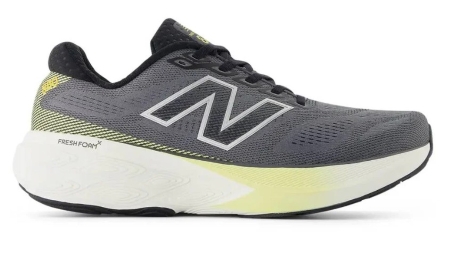
Ken’s verdict: The 880v15 belongs here because fit is more important than a dramatic foam story. New Balance gives men four widths and women four widths, and the neutral platform works for both easy mileage and a measured progression. Personal score: 7.6/10; durability verdict still developing.
Best for: runners who need more width choices or find performance-shaped uppers restrictive through the forefoot.
Skip it if: you want a light speed shoe, a pronounced rocker, or a snug low-volume upper.
New Balance lists the men’s 880v15 at 10.5 ounces and a 6 mm drop, with Fresh Foam X cushioning and Narrow, Standard, Wide, and X-Wide options. My tested US 10.5 D pair feels true to size, with enough horizontal toe room for my forefoot to expand without sloppy midfoot movement.
The heel collar wraps softly, and the engineered mesh gives rather than pressing on the top of my foot. That does not mean every wide-footed runner should buy the widest option. Excess width can let the foot slide and create its own friction. Start with your measured length and width, then compare shapes using my wide-foot running shoe guide.
The run that earned its place: a progression on the Ocean City Boardwalk from 8:40 down to 7:45 pace. The shoe stayed composed as turnover increased, and the outsole felt trustworthy on morning-damp planks. Its worst test was an 11-miler hit by a downpour at mile six; the saturated upper held water and felt heavy for the final five miles.
What 146 miles revealed: about 0.9 mm of rubber wear in my lateral landing zone, moderate foam creasing, and no separated overlays. The present ride is well supported by my log. Final lifespan is not; this remains a developing durability judgment.
10. HOKA Mach 7 — best faster option for a progressing beginner
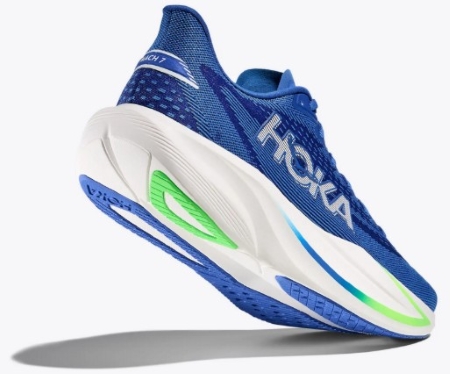
Ken’s verdict: The Mach 7 is the one pick here I would not hand to every day-one runner. It earns its place for the beginner whose easy running is established and who wants a lighter shoe for strides, hills, and controlled progression work without moving to a plated racer. Personal score: 8/10; durability verdict still developing.
Best for: a progressing runner who wants one responsive neutral trainer for normal runs and occasional faster segments.
Skip it if: you are still mostly walking, prefer a traditional 8–10 mm drop, or need structured stability.
The HOKA Mach 7 uses supercritically foamed EVA, sticky forefoot rubber, heel Durabrasion rubber, and a 5 mm drop. My men’s US 10.5 pair weighs 8.8 ounces. Its lower mass is noticeable beside the Bondi, Kayano, and 880, but the ride is still cushioned enough for ordinary training.
My slightly wide forefoot fits without rubbing, the bucket-seat geometry provides more sidewall security than the neutral label suggests, and the heel stays locked without crushing the Achilles area. The 5 mm geometry loads me differently from the Ghost or Pegasus. I would introduce it with short strides or one faster session, not abruptly replace every run.
The run that earned its place: 4 percent bridge repeats on the Route 52 causeway into Ocean City. The shoe changed direction quickly and kept the climbs crisp without the mechanical feel of a plate. During a hot 14-miler on the Brigantine causeway, sweat saturation and foot expansion produced a fifth-metatarsal hot spot. Its fast fit is less forgiving when swollen.
What 120 miles revealed: around 0.8 mm of outsole wear in my lateral landing zone, moderate compression lines, and no upper or overlay failure. That supports my ride verdict, not a full durability conclusion. If your first goal is simply finishing three easy runs a week, the Ghost or Clifton remains the more sensible buy. Save the Mach for when your longer running and faster segments have become distinct jobs.
If this is your first shortlist, find a running shoe for your actual needs before committing to a category or brand.
How to choose your first running shoe
Start with a daily trainer
A daily trainer is a road shoe built to handle most ordinary runs. It usually has enough cushioning for easy mileage, enough rubber for regular use, and no aggressive plate. For a first pair, versatility matters more than shaving an ounce.
The Ghost, Clifton, Pegasus, and Ride all fit this role with different ride preferences. If none feels right, use the wider shortlist in my daily trainer guide.
Use this five-minute fit check
- Try shoes late in the day or after a short walk, when your feet are not at their smallest.
- Measure both feet while standing. Fit the longer foot, and ignore the size printed on your casual shoes.
- Check front clearance. Your longest toe should not touch the end while standing or during a controlled downhill step. A thumb’s width is a starting point, not a law.
- Lock the heel. A little movement can be solved with lacing; repeated lift, rubbing, or toe-gripping means the shape is wrong. My heel-slip lacing guide shows the safe adjustment.
- Run, do not only stand. Use the store treadmill or return window. Reject concentrated arch pressure, numbness, toe contact, or a platform you have to fight.
Do not automatically buy half a size larger. I often need different sizes across brands, but the correct size depends on the last, width, sock, and your two feet.
Neutral or stability?
A neutral shoe does not mean “no stability.” A broad base, sidewalls, and geometry can make a neutral shoe feel very steady. A stability shoe adds guidance intended to limit or manage particular movement.
Start by comparing a neutral model with a modern stability model. If the stability shoe feels smoother and reduces the effort of controlling the platform, keep it in consideration. If you feel an intrusive arch or forced motion, leave it. Static arch shape alone is not enough to prescribe a shoe.
Runners with persistent symptoms or a complicated injury history should get an individual assessment from a qualified sports-medicine clinician. A buying guide cannot diagnose overpronation. For more context, see the guides to running shoes for flat feet and running shoes for overpronation.
Cushioning, stack, and drop are preferences with consequences
Stack height is the amount of material between your foot and the ground. More stack can feel protective, but it can also reduce ground awareness. Heel-to-toe drop is the height difference between heel and forefoot. It changes how load is distributed; it is not a score where lower or higher is automatically better.
Abruptly moving from a traditional 10 mm shoe to a very low-drop shoe can feel demanding on the calf and Achilles. Transition gradually if you change geometry. If comfort is your priority, compare the Clifton or Nimbus with one lower-stack option instead of assuming more foam is always better.
Match the shoe to your actual surface
Every pick here is primarily a road shoe. They can handle a treadmill and short stretches of packed gravel, but they are not trail shoes. If most of your running is indoors, the choice between treadmill and outdoor running may matter less than fit and ventilation. If your route is loose, muddy, steep, or technical, buy for traction and control instead.
What to do after you buy the shoes
Your first shoe does not need a ceremonial break-in period. A well-fitting modern running shoe should be comfortable immediately. Still, make the first outing short enough that you can notice pressure before it becomes a blister: 20 to 30 minutes of easy run-walk is plenty.
Keep the training decision separate from the shoe decision. Use a structured Couch-to-5K plan, learn how easy pace should feel, and keep early distance conservative with this guide to how far a beginner should run.
If you are returning later in life, the start-running-at-40 guide covers load and recovery. If higher body weight makes running feel intimidating, use the practical progression in how to start running if you are overweight. Neither situation demands a specific shoe; both deserve a sensible progression.
Shoes, pain, and injury: the boundary beginners need
Normal effort can produce temporary muscle soreness. Sharp pain, pain that changes your gait, worsening pain during the run, or symptoms that persist are different. Stop and assess rather than buying another pair and trying to run through it.
A shoe may feel better or worse for a particular symptom, but comfort is not a diagnosis and a product is not treatment. The evidence does not support promising that max cushioning prevents shin splints or that stability shoes fix knee pain. Use the symptom-specific guides to shoes and shin splints and shoes and knee pain as decision aids, then involve a clinician when symptoms persist.
Frequently asked questions
What is the best running shoe for a complete beginner?
The Brooks Ghost 18 is the safest starting point on this list because it combines a secure fit, balanced cushioning, a stable neutral base, and everyday durability. It is not automatically the best for your foot. Compare it with one softer shoe and one guided shoe, then choose the most comfortable pair during a short run.
How should beginner running shoes fit?
Your heel should stay secure, the midfoot should feel held without pressure, and your toes should have room to spread without touching the front. Fit the longer foot while standing. Do not rely on your casual-shoe size or a universal half-size-up rule.
Do beginners need stability shoes?
No. Many beginners are comfortable in stable neutral daily trainers. A stability shoe is worth comparing when it feels smoother or more controlled, or when a qualified clinician recommends one for your individual situation. Flat feet or visible pronation alone do not prove that you need support.
Should beginners buy max-cushion shoes?
Only if they prefer the ride. Max-cushion shoes put more material underfoot and can feel comfortable during run-walk sessions, but the taller platform may feel less natural or stable to some runners. Compare a max-cushion shoe with a standard daily trainer before buying.
Can I use one pair for every beginner run?
Yes. One comfortable daily trainer can cover easy runs, run-walk intervals, a first 5K plan, treadmill sessions, and occasional short strides. A shoe rotation becomes useful later, but it is not required to start. The broader running training guide explains when workout demands begin to diverge.
How much should a first running shoe cost?
Buy fit, not prestige. Current daily trainers often sit in the mid-$100 range at full price, but last year’s version can be an excellent first shoe if it fits and has not been stored or worn poorly. Avoid ranking by temporary sale price because inventory changes by size and week.
When should I replace my running shoes?
There is no universal mileage deadline. Track the pair and watch for a combination of outsole wear, midsole compression, a changed ride, upper failure, or new discomfort that repeats in that shoe but not another. Do not keep a dead pair just because the upper still looks clean.
My final recommendation
Start with the Brooks Ghost 18 if you have no established preference. Put the Clifton 10 beside it if you want more rocker and softness, or the 880v15 beside it if width is the problem. Only add the Adrenaline GTS 25 or GEL-KAYANO 32 comparison when guidance feels better under your foot—not because an online test labeled you an overpronator.
Then make the decision during motion. Jog, turn, walk downhill, and stand for several minutes. The winner should hold your heel, leave the toes quiet, and require no conscious effort to stay centered. A shoe that feels wrong in the store has not earned a 30-mile experiment.

Written and reviewed by Ken — founder of NextGait and a runner since 2014. He has tested 63 running shoes and completed 36 races from the 5K to the 50K. This guide draws on 2,441 logged miles in the 10 selected shoes, tested on Atlantic City roads, boardwalks, treadmills, and South Jersey routes. More about Ken