
The Brooks Ghost 18 is a durable, stable-neutral daily trainer for easy miles, steady runs, walking, and runners who prefer a traditional 10 mm-drop ride. After 130+ miles, my verdict is that the upper is meaningfully better than the Ghost 17, while the underfoot experience remains familiar: moderately firm, smooth, secure, and far more dependable than exciting.
That distinction matters. The Ghost 18 is not a soft max-cushion shoe, a lightweight tempo trainer, or a modern super-trainer. It is the running-shoe equivalent of a well-built hand tool. The weight and thick outsole are noticeable, but so are the predictable landings, straightforward toe-off, and lack of drama when my legs are tired.
My score is 8.8/10. I would buy it for beginner training, high-mileage easy days, walking, and a one-shoe road rotation where durability matters. I would not choose it for intervals, aggressive tempo work, or runners who want obvious bounce from every step.
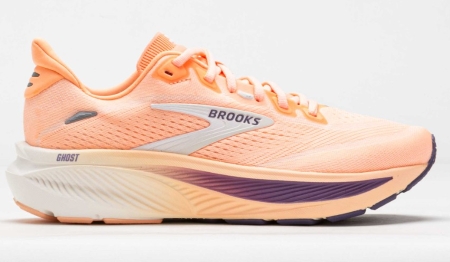
Jump to Section Click to expand
- Quick Verdict
- Ken’s Ranking Rule
- How I Tested
- Specs and Key Facts
- Ride Feel
- Performance by Pace
- Stable-Neutral Mechanics
- Fit and Sizing
- Upper and Lockdown
- Grip and Durability
- Ghost 18 vs Ghost 17
- Competitor Comparisons
- Walking and Standing
- Long Runs and Racing
- Best Shoe Rotation
- Who Should Buy
- Who Should Skip
- Final Verdict
- Frequently Asked Questions
Brooks Ghost 18 Review: Quick Verdict
Buy the Brooks Ghost 18 if you want a neutral daily trainer that feels stable, fits securely, and should tolerate a lot of routine mileage. Its best qualities are not hidden: a balanced DNA LOFT v3 midsole, a broad and planted platform, extensive RoadTack rubber, and a substantially more comfortable tongue than the previous version.
Skip it if your definition of a daily trainer includes fast workouts. At easy pace, the shoe settles into a calm rhythm. When I pushed the pace, the same rubber coverage and controlled foam that felt reassuring at 9:30 per mile began to feel like extra shoe to move. It can run faster; it simply gives little back for the effort.
| Decision | Ken’s Answer |
|---|---|
| Best for | Easy runs, daily mileage, walking, standing, beginner plans, heel strikers |
| Ride | Moderately firm, smooth, stable, traditional, lightly flexible at the forefoot |
| Fit | True to size for me; secure heel; snug-to-average volume through the midfoot |
| Main strength | A repeatable ride with strong outsole protection and low learning curve |
| Main weakness | Heavy and subdued when the pace gets quick |
| Ghost 17 owners | Upgrade for the upper and tongue, not for a new midsole experience |
| Ken’s score | 8.8/10 |
For a first pair, the Ghost 18 belongs on the shortlist in my best running shoes for beginners guide. It is forgiving in the practical sense: the shoe does not demand a special landing pattern, a high cadence, or a strong preference for rocker geometry. If you are still learning what feels good, compare the decision criteria in my best running shoes guide before deciding by brand alone.
Quick answer: The Ghost 18 is a safe, durable daily trainer with a better upper and the same basic ride philosophy as the Ghost 17. Its reliability is the feature. Its lack of speed is the trade-off.
Ken’s Ranking Rule for the Brooks Ghost 18
Ken’s ranking rule: a daily trainer earns its score on the fifth ordinary run, not the first impressive mile. I rank shoes by how consistently they handle the work they claim to do. For the Ghost 18, that means easy runs, recovery mileage, long aerobic work, walking, and repeated use when I do not want to negotiate with my footwear.
I weight five factors: ride consistency, fit security, late-run stability, outsole confidence, and how broad the useful pace range really is. A shoe does not receive extra credit for technology names. It earns credit when those materials solve an actual problem on the run.
| Ranking Factor | Weight | Ghost 18 Result | Why |
|---|---|---|---|
| Daily ride consistency | 30% | 9.2/10 | Landings and transitions changed very little across the test |
| Fit and lockdown | 20% | 9.0/10 | New tongue distributes lace pressure and the heel stays secure |
| Stability under fatigue | 20% | 9.1/10 | Broad platform and controlled foam remain composed late |
| Grip and durability | 15% | 9.2/10 | Extensive rubber protects high-wear areas |
| Pace versatility | 15% | 6.8/10 | Competent at steady pace, dull during faster work |
The weighted result explains the 8.8 score. A speed-focused reviewer may land lower because the shoe is not lively. A runner buying one dependable trainer may land higher because the exact things that reduce excitement – rubber, structure, moderate firmness – improve repeatability. My score reflects the intended job, not a fantasy version of the shoe.
I also separate comfort from softness. The Ghost 18 is comfortable because the platform is predictable, the upper holds the foot cleanly, and the step-in materials avoid obvious pressure points. It is not exceptionally soft. Runners who use those words interchangeably may order the wrong shoe.
How I Tested the Brooks Ghost 18
I logged 130+ miles over six weeks from April through May 2026, using the Ghost 18 on asphalt, sidewalk, boardwalk, and treadmill. My test pair covered easy daily runs, recovery outings, steady aerobic work, one 14-mile long run, shorter treadmill sessions, and walking-heavy days.
| Test Detail | Ken’s Protocol |
|---|---|
| Runner | 210 lb neutral runner, heel-dominant landing, US men’s 10.5 |
| Mileage | 130+ running miles plus casual walking |
| Duration | Six weeks, April-May 2026 |
| Surfaces | Mostly asphalt, with sidewalk, Atlantic City Boardwalk, and treadmill |
| Run types | Easy, recovery, steady, long run, short pickups, walking |
| Typical pace | Approximately 8:30-10:30 per mile, with most miles in the easy range |
| Weather | Cool mornings through humid low-80s conditions |
| Comparison | Ghost 17 plus current neutral daily trainers from Nike, Saucony, ASICS, HOKA, and Mizuno |
I did not use a laboratory, force plate, metabolic cart, accelerometer, or standardized energy-return rig for this review. That sentence is here deliberately. The earlier draft contained precise-looking lab values that could not be substantiated from a retained test record, so I removed them. The observations below are road-test findings, not clinical measurements.
My treadmill sessions were useful for checking heel hold and forefoot flex because the constant belt speed makes changes in form easy to notice. The shoe stayed centered without needing a runner’s knot, but the warm upper and heavier ride were more obvious indoors. For indoor-only training, compare it with my treadmill running shoe picks.
I also checked the shoe at the beginning and end of runs. Early miles reveal step-in comfort; late miles reveal whether the platform becomes unstable, the upper loosens, or the weight starts changing cadence. The Ghost 18 remained structurally consistent. The weight became more noticeable, but the landing did not become sloppy.
Brooks Ghost 18 Specs and Key Facts
The Brooks Ghost 18 is a neutral road-running shoe with a 10 mm heel-to-toe drop, a listed men’s weight of 10.2 oz, and nitrogen-infused DNA LOFT v3 cushioning. Brooks positions it for road running, daily runs, walking, and balanced support. Independent specifications list a 36 mm heel and 26 mm forefoot.
| Specification | Brooks Ghost 18 | What It Means on the Run |
|---|---|---|
| Category | Neutral daily trainer | No formal stability system or medial post |
| Men’s listed weight | 10.2 oz / 289.2 g | Not light; reassuring rather than quick |
| Women’s reported weight | 9.2 oz / 260 g | Still substantial for a modern daily trainer |
| Stack | 36 mm heel / 26 mm forefoot | Moderate protection with some ground connection |
| Drop | 10 mm | Favors a traditional heel-to-forefoot transition |
| Midsole | Nitrogen-infused DNA LOFT v3 | Balanced cushioning, controlled compression |
| Upper | Engineered air mesh with flat-knit tongue | Secure, padded, lower lace pressure |
| Sockliner | Updated comfort sockliner | Adds a soft first impression without changing the core ride |
| Outsole | RoadTack rubber | Broad coverage for traction and wear resistance |
| Best use | Daily runs, easy miles, walking | A workhorse rather than a workout shoe |
Shoe weight depends on size, and my US men’s 10.5 pair naturally weighs more than the listed sample size. I use the official weight as a comparison point, not as a promise about every pair. The same caution applies to width availability, which can change by color and men’s or women’s model.
The key technical context is that Brooks did not replace the midsole platform for version 18. The Ghost 17 made the larger geometry move when the line shifted from its old 12 mm setup to 10 mm. Version 18 refines contact with the foot: tongue, mesh, sockliner, and small upper details. That is why the shoe looks newer than it feels underfoot.
DNA LOFT v3 is nitrogen-infused EVA. In this implementation, it feels balanced rather than spring-loaded. It compresses enough to take the edge off pavement, then returns without the delayed squish I sometimes feel in very soft shoes. Brooks calls the ride soft and dynamic; in my heavier frame, “moderately cushioned and controlled” is more accurate.
Cushioning and Ride Feel
The Ghost 18 rides firm-to-medium by current standards, with a cushioned heel, a stable center, and a flexible enough forefoot for a natural toe-off. It does not sink deeply. It does not throw me forward. The sensation is closer to a well-damped traditional trainer than a rolling max-cushion platform.
At my easy pace, the heel compresses cleanly and the shoe moves through the midfoot without a noticeable dead zone. The 10 mm drop is present, but it did not feel like I was standing on a wedge. Heel strikers will access the most cushioning; midfoot strikers will notice more of the broad platform and less of the heel depth.
The forefoot has enough flex to let the toes work. That makes the Ghost 18 feel less prescriptive than shoes with a rigid rocker. On the boardwalk, where my rhythm is easy to hear and feel, the transition sounded slightly slappy when I overstrided, then quieted when I shortened the stride. The shoe did not correct the issue for me; it gave clear feedback.
Runners expecting a trampoline sensation may call the midsole flat. I would call it controlled. That control works especially well when my legs are tired and I would rather have a landing that repeats than a soft platform that shifts under load. It is one reason the Ghost has remained useful even as daily trainers become taller and more aggressive.
The first two outings felt stiffer than the middle of the test. Some of that change likely came from the upper relaxing and the sockliner settling, not the midsole suddenly transforming. By roughly 10-15 miles, the fit felt less snug and the transition smoother. I would not recommend buying a painful fit and hoping for a break-in, but mild new-shoe stiffness is plausible here.
For easy-day pacing, the shoe fits the principles in my easy run pace guide: conversational effort, repeatable mechanics, and no need to force speed. The Ghost 18 is at its best when the workout goal is aerobic volume rather than pace validation.
How the Ghost 18 Performs at Different Paces
Recovery and easy running
Easy running is the Ghost 18’s strongest use. The platform feels calm between 9:15 and 10:30 per mile for me. The cushioning does not call attention to itself, and the outsole gives enough protection that rough asphalt does not dictate foot placement.
On recovery days, I appreciated the stability more than the softness. My stride tends to widen when the legs are beat up. The heel and forefoot flare give me room to land imperfectly without feeling like I am tipping off an edge. That makes it a sensible option for the low-pressure miles described in my recovery run guide.
Steady aerobic running
At steady effort, the Ghost 18 remains smooth but stops disappearing. The weight is noticeable, yet the forefoot flex keeps it from feeling entirely blocky. I could hold a controlled pace without fighting it. This is useful for runners whose steady run is only modestly faster than easy pace.
The shoe responds better to cadence than to force. When I tried to push harder through the ground, the foam did not create much extra rebound. When I kept steps compact and quick, it rolled along adequately. That is a technique observation, not a claim that one cadence works for everyone; my running cadence guide explains the individual context.
Tempo, intervals, and strides
The Ghost 18 can complete faster sessions, but it is not the shoe I would choose for them. During pickups, the thick rubber and moderate foam response muted the snap I want. The upper held well, yet the total package felt reluctant compared with lighter trainers.
If tempo work is a weekly priority, use a faster shoe or build a two-shoe rotation. The Ghost can handle warm-ups, cool-downs, and the occasional controlled progression, but it is a poor match for the sustained faster running described in my tempo run guide.
Stable-Neutral Mechanics: Secure Without GuideRails
The Ghost 18 is neutral, but it is one of the more stable neutral daily trainers I have tested. Its stability comes from geometry and materials: a broad base, visible sole flare, moderate stack, firmer cushioning, a substantial outsole, and an upper that keeps the foot attached to the platform.
There is no medial post and no Brooks GuideRails system. That distinction matters for shoppers. A neutral shoe can feel steady without being designed to manage the same range of motion as a dedicated support model. The Ghost 18 gives me passive guidance; it does not actively redirect my stride.
At 210 lb, I did not feel the medial side collapsing late in the run. The heel landing remained centered, and the forefoot base gave me enough room to push off even when form became less tidy. Lighter runners may perceive the foam as firmer because they compress it less. Runners with strong lateral loading may also experience the flare differently.
For mild pronation without symptoms, the Ghost may provide enough inherent stability. For a known support need, persistent pain, or a history of finding neutral shoes unstable, compare options in my overpronation shoe guide and flat-feet running shoe guide. Foot shape and pronation are related only loosely; one does not automatically determine the other.
The shoe should not be described as injury prevention. No running shoe can promise that. Comfort, training load, recovery, strength, sleep, surface, and previous injury all matter. What I can say from this test is narrower: the Ghost 18 felt composed when I was tired and did not create an obvious pressure point or unstable landing for my gait.
Biomechanics note: Stable-neutral means the shoe uses its base, foam, outsole, and upper to create a steady ride without a formal support device. It is not a medical classification and does not guarantee relief from pain.
Brooks Ghost 18 Fit and Sizing
The Brooks Ghost 18 fit true to size in my US men’s 10.5, with secure heel hold, average forefoot width, and slightly low-to-average volume through the midfoot. I had a thumb’s width in front of the longest toe and did not need to size up for length.
The first few wears felt snug over the top of my foot. The flat-knit tongue is soft, but the overall upper volume is not especially generous. It relaxed enough during testing to become comfortable. Runners with a high instep should try the shoe late in the day, when feet are slightly fuller, and pay attention to pressure before assuming the material will solve it.
The forefoot shape is not sharply tapered, yet it is not anatomical. My toes could spread without rubbing, but runners accustomed to Altra or Topo will find the shape conventional. The heel counter is structured and held my rearfoot without irritation. I did not need heel-lock lacing.
| Foot Shape | Fit Guidance |
|---|---|
| Average width | Start true to size in the standard width |
| Wide forefoot | Try the wide option before adding length |
| High instep | Check tongue pressure and midfoot volume in person |
| Narrow heel | Standard lacing worked for me; runner’s knot remains available |
| Bunion sensitivity | Check the medial forefoot overlay and consider more width |
| Between sizes | Choose by toe clearance and heel hold, not the printed number alone |
Brooks offers multiple widths in the Ghost family, though exact combinations vary by model, sex, color, and inventory. A wide size is not simply a longer standard shoe; it can solve forefoot pressure without creating extra empty length. See my wide-foot running shoe guide for the fitting checkpoints I use.
Runners with bunions should be more cautious. The mesh has give, but independent testers have reported pressure near the bunion area during early wear. My bunion-friendly shoe guide explains why width, upper seams, and the location of the flex point matter more than a generic “roomy toe box” label.
Upper, Tongue, and Lockdown
The upper is the clearest reason to choose the Ghost 18 over the Ghost 17. The engineered air mesh looks cleaner, the flat-knit tongue spreads lace pressure, and the heel hold is dependable. These are modest changes on a spec sheet but meaningful ones over repeated daily use.
The tongue is not gusseted, yet it stayed centered during my test. Its padding is strategically placed rather than uniformly thick. I could tighten the lower eyelets enough to secure the midfoot without producing a hard line across the top of the foot. The laces also had enough length for a runner’s knot or double knot.
Breathability is acceptable, not exceptional. In cooler weather I had no complaint. On humid runs approaching the low 80s, the upper retained more heat than the open appearance suggested. Runners in hot climates should use thin socks and avoid interpreting “air mesh” as race-upper ventilation.
The heel counter is stiff enough to stabilize the rearfoot but did not touch my Achilles aggressively. The collar padding holds the calcaneus without feeling oversized. For walking, that structure is an advantage; for runners who prefer almost no upper, it adds to the traditional feel.
My only fit reservation is volume. The upper does soften after several uses, but a genuinely compressed instep or numb forefoot is a sizing problem, not a break-in phase. Try a different width or model rather than loosening the laces until the foot slides around.
RoadTack Outsole: Grip and Durability
The RoadTack outsole is a major reason the Ghost 18 feels durable and a secondary reason it feels heavy. Rubber covers most impact zones, protects the midsole, and creates predictable traction on ordinary road surfaces. It also reduces direct foam contact and mutes some rebound.
After 130+ miles, my pair showed light smoothing at the lateral heel and small cosmetic scuffs under the forefoot. I did not see exposed foam damage, torn rubber, or uneven wear severe enough to change the ride. That supports a favorable durability outlook, but it does not justify promising a fixed lifespan.
On dry asphalt and sidewalk, grip was routine and secure. On damp pavement, it remained dependable. Wet wood deserves more caution: no road shoe makes algae, painted lines, metal covers, or slick boardwalk planks predictable. The Ghost 18 performed well for me, but I shortened my stride as I would in any road shoe. My rain running guide covers those surface decisions.
Durability depends on runner weight, gait, surface, rotation, and storage. My lateral heel wear will not match a forefoot striker’s pattern. Rather than projecting a dramatic “450+ mile” promise, inspect tread depth, midsole consistency, new aches, and changes in stability. Use the checklist in my running shoe replacement guide.
| Outsole Question | 130+ Mile Finding |
|---|---|
| Dry-road traction | Confident and predictable |
| Wet pavement | Good, with normal caution on painted and metal surfaces |
| Boardwalk | Secure on dry wood; shorten stride when damp |
| Visible wear | Light lateral-heel smoothing and minor forefoot scuffing |
| Ride change | No meaningful loss of cushioning or stability noticed |
| Durability outlook | Above average, without a guaranteed mileage number |
Brooks Ghost 18 vs Ghost 17
The Ghost 18 is a fit-and-comfort refinement, not a ride overhaul. Both versions use DNA LOFT v3, a 10 mm drop, similar stack geometry, and a heavily rubbered daily-trainer platform. If the Ghost 17 ride works for you, version 18 should feel immediately familiar.
| Feature | Ghost 17 | Ghost 18 | Practical Difference |
|---|---|---|---|
| Midsole | DNA LOFT v3 | DNA LOFT v3 | Very similar cushioning and response |
| Drop | 10 mm | 10 mm | Same traditional transition |
| Upper | Engineered mesh | Updated air mesh | 18 feels more refined around the foot |
| Tongue | Conventional padded design | Soft flat-knit, pillowy design | Better lace-pressure distribution on 18 |
| Sockliner | Previous comfort liner | Updated sockliner | Softer initial step-in on 18 |
| Ride | Balanced and stable | Balanced and stable | No compelling performance leap |
| Best buying logic | Strong if discounted and fit works | Better upper if buying new | Choose by fit and actual price difference |
Ghost 17 owners do not need to upgrade for more bounce, lower weight, or a dramatic geometry change. Upgrade if the old tongue caused pressure, heel hold was inconsistent, or the new upper fits your foot better. Otherwise, the outgoing model may provide nearly the same training function.
Runners coming from Ghost 16 should note that the family already changed more substantially in version 17, including the move from 12 mm to 10 mm. The Ghost 18 continues that direction. If the old high-drop Ghost identity was the reason you loved the line, try version 18 before assuming the name guarantees the same sensation.
Brooks Ghost 18 vs the Best Daily-Trainer Alternatives
Brooks Ghost 18 vs Nike Pegasus
Choose the Ghost 18 for the broader, steadier platform and more protective outsole; choose the Pegasus for a slightly quicker, more compact feel. Both are traditional neutral trainers rather than max-cushion cruisers. The Ghost is my choice for easy mileage and walking, while the Pegasus is easier to imagine during short uptempo work. See the full Brooks Ghost vs Nike Pegasus comparison.
Brooks Ghost 18 vs Saucony Ride
The Saucony Ride line usually feels lighter and a touch more versatile, while the Ghost 18 feels more planted and substantial. I would steer a runner who wants one shoe for easy and steady work toward the Ride, then steer a runner prioritizing heel comfort, walking, and predictable structure toward the Ghost. Read my Saucony Ride review for the current ride details.
Brooks Ghost 18 vs ASICS Gel-Cumulus
The Gel-Cumulus is the closest conceptual match: neutral, durable, accessible, and built for routine miles. ASICS tends to create a softer and more guided transition, while the Ghost feels more traditional and flexible through toe-off. Compare fit first, then ride. My ASICS Gel-Cumulus review explains that alternative.
Brooks Ghost 18 vs HOKA Clifton
The Clifton uses a more obvious rocker and generally feels lighter on foot. The Ghost 18 gives more forefoot flex, a higher drop, and a more conventional ground path. Choose HOKA if rolling geometry helps your rhythm; choose Brooks if you want the shoe to stay out of the way. See my HOKA Clifton review.
Brooks Ghost 18 vs Mizuno Wave Rider
The Wave Rider is another durable, high-drop workhorse. Mizuno’s geometry often produces a firmer, more mechanical transition, while the Ghost 18 feels smoother and less intrusive. Runners who like a clearly structured heel may prefer Mizuno; runners wanting balanced cushioning may prefer Brooks. My Mizuno Wave Rider review covers the details.
Brooks Ghost 18 vs Altra Torin
These shoes sit at opposite ends of the geometry conversation. The Ghost uses a 10 mm drop and conventional toe shape; the Torin uses zero drop and a foot-shaped forefoot. Neither is universally better. Calf tolerance, preferred transition, and fit history should decide. Read my Altra Torin review before making a sudden drop change.
Is the Brooks Ghost 18 Good for Walking and Standing?
Yes. The Ghost 18 is one of the better running shoes for walking and standing because it combines moderate cushioning with a stable base and secure heel. It does not pitch me forward as aggressively as a strong rocker, and it does not become wobbly when I am moving slowly.
On walking-heavy days, the padded tongue and sockliner mattered more than they did during the run. The shoe felt comfortable during errands and long standing blocks, and the outsole handled concrete without leaving the forefoot feeling exposed. It is a strong crossover choice for travelers who want one pair for a morning run and the rest of the day.
For long work shifts, fit remains the deciding factor. Feet swell, and the Ghost 18 has only moderate internal volume. Try it with the socks you actually wear and leave enough forefoot space. My shoe guide for concrete includes alternatives with different cushioning and width profiles.
I would not use the Ghost 18 for heavy lateral gym work. The platform is stable for straight-line movement, but the stack and running-focused upper are not substitutes for a flat cross-training shoe during heavy squats, deadlifts, or direction changes. Walking, easy cardio, and basic machines are a better match.
Long Runs, Half Marathons, and Heavy Runners
The Ghost 18 can handle long runs and a half marathon when comfort and predictability matter more than speed. My 14-mile outing confirmed that the midsole did not bottom out under my 210 lb frame. The ride remained stable, although the weight felt more obvious during the final miles.
For heavy runners, the controlled foam can be an advantage. Very soft shoes may compress deeply and create extra movement; the Ghost stayed centered for me. Body weight alone does not determine the right shoe, but runners who regularly flatten soft foams should compare it with options in my heavy-runner shoe guide.
For a first half marathon, the Ghost 18 is a reasonable choice if it has already worked during long training runs. It is not fast, but a familiar shoe often beats an unfamiliar racer over 13.1 miles. Build the distance gradually with my first half-marathon training plan.
Experienced runners chasing a personal best will likely want a lighter race shoe. The Ghost can still serve as the training base: easy miles, recovery runs, and long aerobic volume, with a faster model reserved for quality work and race day. For more mileage-focused choices, see my long-distance running shoe guide.
I would avoid presenting the Ghost as a treatment for knee pain, plantar fasciitis, or shin splints. A runner may find its 10 mm drop, stable base, or moderate firmness comfortable, but symptoms need individual assessment. My knee-pain shoe guide explains the limits of footwear recommendations, and my plantar-fasciitis shoe guide focuses on fit and load management rather than promises.
Best Shoe Rotation for the Ghost 18
The cleanest rotation pairs the Ghost 18 with one lighter shoe for workouts and races. Use the Ghost for easy days, recovery mileage, routine long runs, walking, and days when the route or legs call for predictability. Use the second shoe when pace and efficiency become the objective.
| Rotation Role | Use | What to Look For |
|---|---|---|
| Daily workhorse | Ghost 18 | Easy, recovery, steady, walking, routine long runs |
| Workout shoe | Lightweight non-plated or plated trainer | Tempo, intervals, progression runs, strides |
| Race shoe | Optional lightweight racer | 5K through marathon when performance matters |
| Max-cushion option | Optional soft cruiser | Very easy days if you prefer more stack and rocker |
The Saucony Endorphin Speed is the kind of faster partner that expands the pace range without duplicating the Ghost. A max-cushion partner is less necessary because both shoes would target easy mileage, but runners who alternate ride geometries can browse my best cushioned running shoes.
Inside Brooks, the Glycerin is softer and more premium, while the Adrenaline adds formal support. Use my Ghost vs Glycerin comparison if cushioning depth is the question. Use my Brooks Adrenaline GTS review if you need GuideRails rather than the Ghost’s passive stability.
Rotating shoes is not mandatory. One well-fitting Ghost 18 can cover a complete beginner plan. A rotation becomes useful when the second shoe has a clearly different job, not because two similar daily trainers automatically reduce injury risk.
Who Should Buy the Brooks Ghost 18?
The Ghost 18 is best for neutral runners who value stability, durability, and a familiar 10 mm-drop ride over low weight or aggressive energy return. It is especially easy to recommend when the use case includes both running and walking.
- Beginner runners who want a straightforward shoe with a low learning curve
- Heel strikers who prefer noticeable rearfoot cushioning and a traditional transition
- Neutral runners who like passive stability from a broad, firm-enough platform
- Heavier runners who tend to compress very soft daily trainers deeply
- Walkers and standing workers who need secure heel hold and durable rubber
- Ghost 17 fans who want a more comfortable tongue and refined upper
- Runners building easy mileage who do not need one shoe to handle every speed session
The Ghost 18 is also a sensible choice for runners overwhelmed by modern shoe categories. There is no plate, no extreme rocker, no unusually low drop, and no narrow performance fit to decode. Put it on, check the fit, and run. That simplicity is not innovative, but it is useful.
Who Should Skip the Brooks Ghost 18?
Skip the Ghost 18 if you want a lightweight, highly responsive daily trainer or a soft max-cushion sensation. The shoe can run at different paces, but it does not reward acceleration the way modern lightweight trainers do.
- Tempo-focused runners who want one shoe for easy days and fast workouts
- Runners who prefer a pronounced rocker rather than a flexible forefoot
- Low-drop runners who are comfortable in 0-6 mm geometry
- People who want deep, plush compression under the heel and forefoot
- High-volume feet that feel compressed across the instep in the correct length
- Runners who need a dedicated stability system rather than passive support
- Ghost 17 owners who are happy with their upper and expect a transformed ride
If you are skipping it only because a spec table calls 10.2 oz heavy, try it first. Static weight and on-foot weight are related but not identical. The Ghost distributes its mass well at easy pace. The limitation appears when speed rises, not during every step.
Final Verdict: Is the Brooks Ghost 18 Worth It?
The Brooks Ghost 18 is worth buying for runners who want a stable, durable, traditional daily trainer and value the improved upper more than a dramatic midsole update. After 130+ miles, the shoe earned my trust through consistency. It was comfortable at easy pace, secure late in long runs, dependable on wet pavement, and useful for walking.
Its weaknesses are equally clear. The shoe is heavier than many modern rivals, the DNA LOFT v3 ride is controlled rather than lively, and faster running exposes the limits of the platform. The Ghost 18 does not fail at speed; it simply makes speed feel like your job alone.
My 8.8/10 score is not a consolation prize. It reflects an excellent specialist in ordinary running. If most of your weekly miles are easy, you want one pair for running and walking, and your foot agrees with the fit, the Ghost 18 is one of the safest daily-trainer choices in the U.S. market.
If you own the Ghost 17, decide with the upper. If you are new to the line, decide with the ride. Choose the Ghost 18 for composure, structure, and repeat mileage. Choose something lighter or softer when those qualities matter more than durability.
Brooks Ghost 18 Frequently Asked Questions
Is the Brooks Ghost 18 good for beginners?
Yes. Its stable-neutral platform, secure upper, moderate cushioning, and traditional geometry make it easy to understand. Beginners should still prioritize fit and start with gradual training volume.
Does the Brooks Ghost 18 run true to size?
It ran true to size for Ken in a US men’s 10.5. The length and heel hold were good, while the midfoot volume felt slightly snug at first. High-instep and wide-foot runners should compare widths rather than automatically adding length.
What is the heel-to-toe drop of the Brooks Ghost 18?
The Brooks Ghost 18 has a 10 mm drop, with independent specifications listing a 36 mm heel and 26 mm forefoot. It feels like a traditional higher-drop trainer without the old 12 mm Ghost geometry.
Is the Brooks Ghost 18 a stability shoe?
No. It is a neutral running shoe with a stable platform. Its broad base, sole flare, controlled foam, outsole coverage, and upper lockdown create passive stability, but it does not use GuideRails or a medial post.
Is the Brooks Ghost 18 good for walking?
Yes. The secure heel, moderate cushioning, broad base, and durable outsole work well at walking pace and during standing. Fit should leave enough space for normal foot swelling over a long day.
Can the Brooks Ghost 18 handle long runs?
Yes. Ken used it for a 14-mile long run and found the cushioning and stability consistent. The weight becomes more noticeable late, so faster runners may prefer a lighter long-run shoe.
Can I race a half marathon in the Ghost 18?
Yes, especially if comfort and familiarity matter more than speed. It is protective and predictable over distance, but lighter race shoes provide more assistance for runners chasing a personal best.
How is the Brooks Ghost 18 different from the Ghost 17?
The main changes are the upper, flat-knit tongue, and updated sockliner. The DNA LOFT v3 midsole, 10 mm drop, and general ride are very similar. Upgrade for fit and upper comfort, not for a new cushioning experience.
How long does the Brooks Ghost 18 last?
No fixed mileage applies to every runner. After 130+ miles, Ken observed only light outsole smoothing and no meaningful ride change. Replace it based on tread, cushioning consistency, stability, and comfort rather than one universal number.
Is the Brooks Ghost 18 good for speedwork?
It can complete short pickups and controlled steady work, but it is not ideal for regular tempo runs or intervals. Its weight, thick rubber, and moderate energy return favor easy and daily mileage.
Where it fits in a rotation: Use my daily trainers I trust for weekly mileage before deciding whether this model matches the pace you run most often.

Written and tested by Ken – NextGait founder, 12-year runner, 12,500+ lifetime miles, 63 shoes tested, and 36 races from 5K through 50K. I run 30-40 miles most weeks and test daily trainers on roads, boardwalk, treadmill, long runs, and ordinary walking days. Read Ken’s testing philosophy and bio.
Pingback: On Cloud 6 Review: My 40-Mile Verdict | NextGait