
This Nike Pegasus 42 review comes after 145 verified miles in my own pair, and my verdict is that Nike finally made the Pegasus feel complete again. I give it 8/10. It is smooth, stable, durable, and easy to trust for ordinary mileage. It is not the softest daily trainer or the most exciting one, but it is the shoe I can recommend when a runner wants fewer surprises and more usable days.
I have spent 12 years running and testing shoes, and the Pegasus has always been a useful benchmark for me. The question is never whether it can finish a run. The question is whether it can cover enough different runs to justify being the default shoe by the door. The Pegasus 42 passes that test for easy miles, steady running, and occasional quicker work. It starts to lose me when softness or speed becomes the priority.
If you want a dependable neutral trainer rather than a specialized sensation, keep reading. If you are still comparing the whole category, start with my guide to the best daily trainer running shoes.
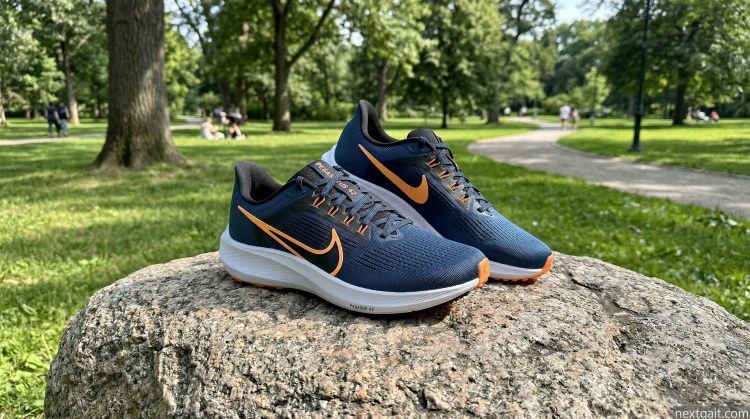
My decision in 20 seconds: Buy the Pegasus 42 if you want one neutral road shoe for easy runs, steady mileage, and occasional uptempo work. It fits true to size for me in men’s US 10.5, holds my heel securely, and stays stable under my 182-pound frame. Skip it if your first priority is a soft recovery ride, a roomy toe box, or the snap of a dedicated workout shoe. I would buy it again.
Updated September 2026 after I reconciled this review with my 145-mile training log.
My One-Shoe Verdict: Competent Beats Spectacular
The Pegasus 42 is the shoe I choose when I do not yet know exactly how the run will unfold. That is its advantage. I can leave at an easy effort, settle into a steady rhythm, and add a short pickup without feeling that I brought the wrong tool.
On an early Ocean City Boardwalk run, what stood out was how little I had to manage. The outsole landed quietly, the transition felt balanced, and the shoe disappeared into the assignment. That sounds less glamorous than “bouncy” or “fast,” but predictability is valuable when a trainer has to absorb most of a weekly schedule.
The limit is equally clear. The Pegasus does not create excitement by itself. It gives me a measured response and a familiar roll, not a deep sink or a sharp toe-off. When I want the shoe to soften a recovery day or energize a hard tempo, I reach for something more specialized.
| Decision | My Answer After 145 Miles |
|---|---|
| Best role | Everyday road mileage and one-shoe rotations |
| Ride | Balanced, smooth, stable, moderately responsive |
| Best pace range for me | About 7:30–9:15 per mile |
| Fit | True to size with a performance taper |
| Main strength | Versatility without an obvious weak point |
| Main weakness | Neither plush enough for pure recovery nor quick enough for serious speed |
| My score | 8/10 |
| Would I buy it again? | Yes |
I also think it is a sensible first serious running shoe. A newer runner can learn what easy, steady, and controlled faster running feel like without the shoe exaggerating any one sensation. My beginner running shoe guide explains the other fit and support checks I would make before buying.
How I Tested the Nike Pegasus 42
I logged 145 verified running miles in a men’s US 10.5 Pegasus 42, primarily on South Jersey roads and boardwalk corridors. My documented long-run notes reach 12 miles, including sessions that lasted beyond 90 minutes. I used the shoe for easy mileage, steady efforts, and controlled pace changes, then tracked fit, outsole wear, foam creasing, and whether the ride changed as the miles accumulated.
My context matters. I weigh 182 pounds, run 30–40 miles most weeks, have a medium arch and slightly wide forefoot, and mildly overpronate. I usually land through the rearfoot to midfoot. A lighter runner, a dedicated forefoot striker, or someone with a truly wide foot may read the same shoe differently.
| Test Detail | My Record | What I Watched |
|---|---|---|
| Total distance | 145 verified miles | Ride change, rubber loss, upper integrity |
| Longest documented runs | Up to 12 miles | Late-run comfort and stability |
| Primary terrain | Roads and wooden boardwalk | Transition, grip, impact feel |
| Runner profile | 182 lb, men’s US 10.5, slightly wide forefoot | Compression, toe room, heel hold |
| Pair | Black/Anthracite/White | Wear visibility and material integrity |
I am deliberately separating what I recorded from what the shoe could theoretically do. My verdict covers my pair, my stride, and the jobs I actually gave it. The useful question is not whether a Pegasus can be forced through every session. It is where it remains the sensible choice.
The Five-Job Audit: Where the Pegasus 42 Earns Its Place
I judge a daily trainer by assignments, not by adjectives. Here is how the Pegasus 42 performed when I divided its role into five practical jobs.
Job 1: Easy mileage — pass
This is the shoe’s center of gravity. At conversational effort, the ReactX midsole and full-length Air Zoom unit produce a smooth, controlled transition. The ride is not pillow-soft, but it takes the harsh edge off the road and stays composed under my weight. I pair it with effort, not ego; my easy-run pace method is the same test I use here.
Job 2: Steady running — strong pass
The Pegasus feels better once I add a little intent. The foam firms into the load rather than sinking, and the Air unit keeps the transition from feeling flat. Around the middle of my useful pace range, the shoe feels efficient and centered. This is where it separates itself from softer trainers that become vague when I press.
Job 3: Tempo work — conditional pass
I can run controlled tempo segments in it, but I would not buy it for that purpose. My pair weighs 10.09 ounces, and the response is progressive rather than explosive. It is acceptable when a normal run includes a faster finish. For a session built around threshold work, I want the quicker turnover described in my tempo run guide.
Job 4: Long runs — pass, with a ceiling
Through my documented runs up to 12 miles, the cushioning remained consistent beyond 90 minutes and the platform stayed stable. I did not get a mushy heel or a collapsing forefoot. The reason I add a ceiling is comfort, not structural failure: on one hot, exposed long run, sweat saturation contributed to a minor hotspot near my fifth metatarsal.
Job 5: Recovery days — usable, not ideal
When my legs are genuinely tired, I prefer more softness and a ride that asks less from the lower leg. The Pegasus remains stable and predictable, but its moderate firmness never turns into a recovery-shoe sensation. It can do the job; it simply does not make that job its specialty.
The pattern: The Pegasus 42 is strongest in the broad middle of training. Easy to steady is its home. Recovery and hard speed sit outside the sweet spot.
Ride and Midsole: Balanced Is the Feature
The Pegasus 42 gives me a firm-soft balance rather than a dramatic first impression. My pair measured roughly 37 mm at the heel and 27 mm at the forefoot, with an actual drop close to 10 mm. That geometry feels familiar under a rearfoot-to-midfoot stride: the heel is protected, the transition is easy to find, and the forefoot bends without feeling thin.
ReactX supplies the cushioning base while the full-length Air Zoom unit adds a subtle spring through the stride. I do not feel a separate air bag moving underfoot. I feel a continuous platform with slightly more life than a plain slab of daily-trainer foam. That integration is the improvement that matters to me.
The shoe also stays laterally calm. Under my 182-pound frame, the heel did not collapse inward and the forefoot did not feel tippy when form became less tidy. The Pegasus 42 is still a neutral shoe, not a corrective model, but its predictable base works well with my mild overpronation.
If your definition of comfort is deep softness, this ride may feel ordinary. If your definition is a shoe that keeps the same manners from mile one to the end of a routine run, it is very good.
Fit, Upper, and Lockdown: True to Size With a Taper
I wear my normal men’s US 10.5 in the Pegasus 42. Length is correct, the heel is secure, and the gusseted tongue stays centered. Nike’s notched collar and internal heel pods held my rearfoot without forcing me into a runner’s knot.
The forefoot deserves more nuance. My slightly wide foot had adequate toe splay in thin socks, but the upper has a performance taper rather than a broad anatomical shape. I would not size up just to chase width; extra length can weaken the excellent heel hold. If the outer edge of your forefoot already feels crowded in most Nike shoes, try before buying.
Airflow was strong in normal conditions. The mesh moved heat better than its structured appearance suggested, and the overlays stayed bonded. The hot-run hotspot was not my normal experience, but it is the reason I would choose thin, low-friction socks for a warm long run.
| Fit Area | My Experience | Buying Decision |
|---|---|---|
| Length | True to size | Start with your normal running-shoe size |
| Toe box | Adequate in thin socks, with a performance taper | Wide forefeet should try it on |
| Midfoot | Secure without tongue drift | Good for medium-volume feet |
| Heel | Excellent lockdown from collar and pods | No special lacing needed for me |
| Breathability | High airflow | Use thin socks for hot long runs |
What 145 Miles Changed—and What Stayed the Same
At 145 miles, my Pegasus 42 still felt like the same shoe I evaluated early in the test. The rebound remained useful, the midsole creasing was uniform, and the upper overlays were still fully bonded. I found no structural reason to demote the pair from daily mileage.
The outsole showed about 0.9 mm of wear through my lateral midfoot landing zone. That is visible, but it is orderly wear rather than a chewed or uneven edge. Traction remained quiet and dependable on the boardwalk and road surfaces in my log.
I do not retire shoes by calendar or by a universal mileage number. I look for a flatter ride, new discomfort, uneven wear, or a change in how the platform tracks. My running-shoe replacement checklist explains that process. The Pegasus 42 had not reached those warning signs at 145 miles.
Pegasus 42 vs the Alternatives I Would Actually Consider
I would not choose among these shoes by asking which one has the highest score. I would choose by naming the sensation or job I refuse to compromise.
| Alternative | Choose Pegasus 42 When | Choose the Alternative When | My Decision |
|---|---|---|---|
| Brooks Ghost 18 | You want more response and broader pace range | You want a softer, more forgiving easy ride | Pegasus for versatility; Ghost for comfort |
| Saucony Ride 19 | You value a slightly quicker response | You want a touch more cushioning | Close; Pegasus gets my versatility vote |
| HOKA Clifton 10 | You want stability and better tempo manners | You want a softer, lighter cruiser | Pegasus for mixed use; Clifton for easy miles |
| Nike Vomero 18 | You want one firmer, more versatile daily shoe | You want more softness and protection | Pegasus for one-shoe use; Vomero for recovery |
Pegasus 42 vs Brooks Ghost 18
The Ghost feels more forgiving at easy pace, while the Pegasus responds better when I move toward steady running. I would send comfort-first runners to my Brooks Ghost review. I would keep the Pegasus when one shoe needs to cover a wider pace window.
Pegasus 42 vs Saucony Ride 19
This is the closest call. The Ride gives me slightly more cushioning; the Pegasus gives me a small edge in response. My Saucony Ride review is the better route if you prefer a calmer landing. I choose the Pegasus when I expect pace changes.
Pegasus 42 vs HOKA Clifton 10
The Clifton feels softer and lighter. The Pegasus feels more stable to me and behaves better at tempo-adjacent pace. Read my HOKA Clifton review if comfort at relaxed effort is the priority; choose the Pegasus for a more traditional, adaptable ride.
Pegasus 42 vs Nike Vomero 18
The Vomero gives me the softer, more cushioned experience. The Pegasus is the cleaner one-shoe answer because it is easier to move through different paces and has worn well in my use. My Nike Vomero review is where I would send a runner building the rotation around comfort.
If your final comparison is the livelier ASICS Novablast, use my direct Nike Pegasus vs ASICS Novablast comparison. That choice turns on predictability versus bounce.
Who Should Buy the Pegasus 42—and Who Should Skip It
Buy the Pegasus 42 if you want the center of your rotation, not the extreme edge of it. It earns value by covering many ordinary training decisions well.
Buy it if you:
- Want one neutral trainer for most weekly mileage
- Prefer balanced cushioning over a very soft ride
- Mix easy running with steady or occasional uptempo work
- Value secure heel hold and stable geometry
- Want a predictable first serious running shoe
Skip it if you:
- Want maximum softness for recovery days
- Need a truly wide or anatomical toe box
- Expect race-shoe snap from a daily trainer
- Prefer a very light, flexible shoe
- Need prescribed support beyond stable neutral geometry
My final answer is yes. The Nike Pegasus 42 is not the shoe that wins every single-category comparison, but it is one of the easiest shoes to place in a real training week. It stayed smooth, secure, and structurally sound through 145 verified miles. I would buy it again because I know exactly what it will do before I start the run.
Nike Pegasus 42 Frequently Asked Questions
Is the Nike Pegasus 42 true to size?
Yes for me. My normal men’s US 10.5 gave me the right length, secure heel hold, and adequate toe splay in thin socks. The toe box has a performance taper, so genuinely wide forefeet should try it on.
Is the Nike Pegasus 42 good for long runs?
Yes for controlled long runs. In my documented runs up to 12 miles, the cushioning remained consistent beyond 90 minutes and the platform stayed stable. I would choose a softer or livelier shoe when the run is much longer or includes hard pace work.
Is the Pegasus 42 soft or firm?
It sits in the middle. The ride feels cushioned and controlled rather than plush, with enough firmness to stay stable and respond at steady pace. Runners who want a deep sink should consider a softer alternative.
Can the Nike Pegasus 42 handle tempo runs?
It can handle controlled tempo segments and faster finishes, but I would not choose it as a dedicated speed shoe. Its response is progressive, and the 10.09-ounce weight of my pair becomes more noticeable when turnover matters.
Is the Nike Pegasus 42 a stability shoe?
No. It is a neutral shoe with stable geometry. The platform stayed centered under my 182-pound frame and worked with my mild overpronation, but it does not use the corrective features of a dedicated stability model.
How durable is the Nike Pegasus 42?
My pair remained structurally sound at 145 miles. I measured about 0.9 mm of outsole wear at the lateral midfoot, while the foam kept useful rebound and the upper overlays remained bonded. Surface, stride, body weight, and rotation will affect your result.
Is the Pegasus 42 good for beginners?
Yes, if the fit works. Its balanced cushioning, stable neutral platform, and broad pace range let a newer runner use one shoe while learning different training efforts. Runners who need more width, softness, or support should choose for those needs first.

Written and tested by Ken. I have been running since 2014 and test shoes through the training they are designed to handle. This Nike Pegasus 42 review reflects 145 verified running miles in my own pair. Read my testing philosophy and runner profile.