
This Brooks Glycerin GTS 23 review comes after 220 verified miles in my own pair, and my verdict depends on one question: do you want support that waits for your stride to drift, or support you can feel all the time? The Glycerin GTS 23 sits between those extremes. Its GuideRails are not invisible, but they do not dominate every step. I give it 8/10.
I have spent 12 years running and testing shoes, and I judge stability models by when the guidance enters the conversation. On fresh legs, this shoe feels like a plush, broad daily trainer. As my form gets tired, the rearfoot structure becomes more useful. When I try to run fast, the same cushioning and support begin to feel like resistance.
That makes the Glycerin GTS 23 a strong recovery and long-run option for runners who want mild-to-moderate guidance inside a premium comfort package. It is not my choice for tempo work or for neutral runners who dislike feeling the shoe organize their stride. For the wider category, see my best stability running shoes.
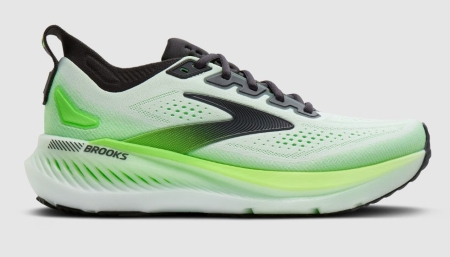
My decision in 20 seconds: Buy the Glycerin GTS 23 if you want a soft, high-mileage trainer with guidance that becomes more valuable as fatigue builds. My men’s US 10.5 fits true to size, holds my heel firmly, and gives my slightly wide forefoot enough room. Skip it if you want a light, neutral, or tempo-friendly ride. I would buy it again for recovery and long easy runs.
Updated September 2026 after reconciling this review with my 220-mile training and wear record.
My Verdict: Premium Comfort With a Visible Hand on the Wheel
My Brooks Glycerin GTS 23 review lands at 8/10 because the shoe solves fatigue better than it solves versatility. On easy days, the DNA TUNED midsole softens concrete and wooden planks without collapsing under my 182-pound frame. On long runs, the broad platform and GuideRails keep the rearfoot composed when my stride gets less tidy.
The shoe never disappears completely. I can feel the substantial heel counter, the wide base, and the guidance around the rearfoot. That is reassuring when I want structure. It is unnecessary when my mechanics are fresh and I want a freer transition.
I therefore rank it by role, not by prestige. It is a premium recovery and long-run stability shoe, not the universal answer for everyone who pronates. My guide to running shoes for overpronation explains why the amount and style of support matter more than the label.
| Decision | My Answer After 220 Miles |
|---|---|
| Best role | Recovery runs and long easy mileage with guidance |
| Ride | Plush, damped, broad, and deliberately centered |
| Best pace range for me | About 8:15–10:00 per mile |
| Fit | True to size with a secure padded heel |
| Main strength | Comfort and control when fatigue changes my form |
| Main weakness | Weight and softness resist faster turnover |
| My score | 8/10 |
| Would I buy it again? | Yes, for a defined recovery role |
If you are new to the category, compare the Glycerin GTS against the broader choices in my best running shoes guide. A premium shoe is only a good purchase when its specific intervention matches the runner.
How I Tested the Brooks Glycerin GTS 23
I logged 220 verified running miles in a men’s US 10.5 Glycerin GTS 23 across South Jersey roads and boardwalk corridors. My long-run notes reach 18 miles. I evaluated the shoe on recovery efforts, easy mileage, long runs, and controlled pace changes, then tracked how the guidance felt as fatigue increased.
My context matters. I weigh 182 pounds, have a medium arch and slightly wide forefoot, and mildly overpronate more when tired. I run 30–40 miles most weeks. That profile gives the GuideRails something to do late in a run without making formal support necessary on every step.
| Test Detail | My Record | What I Watched |
|---|---|---|
| Total distance | 220 verified miles | Guidance feel, rebound, rubber wear |
| Long-run coverage | Up to 18 miles | Late-run tracking and forefoot comfort |
| Primary surfaces | Road and wooden boardwalk | Impact damping and transition |
| Runner profile | 182 lb, men’s US 10.5, mild late-run overpronation | Support timing and foam compression |
| Pair | Coconut/Black/Chateau Grey | Upper and outsole integrity |
I kept the evidence boundary narrow. The verdict reflects my recorded training and wear history, not a promise that GuideRails will fix pain or work for every gait. Support is a fit and movement preference, not a medical diagnosis.
My Support Intervention Map: When the GuideRails Matter
I think of the Glycerin GTS 23 in four support zones. The shoe does not change construction during a run, but my need for its structure changes as pace, fatigue, and direction change.
Zone 1: fresh legs, straight road — mostly quiet
At the start of an easy run, I notice the cushioning more than the guidance. The landing is plush, the base feels broad, and my heel sits securely inside the padded counter. The rails register as structure around the rearfoot rather than a post pushing into my arch.
Zone 2: settled recovery pace — useful background control
Once I settle between roughly 8:15 and 10:00 per mile, the shoe becomes calm and repetitive. That is exactly what I want from a recovery tool. I use it for the low-pressure running described in my recovery run guide, where restraint matters more than pace.
Zone 3: late-run fatigue — the support earns its weight
Beyond 90 minutes, my landing becomes less consistent and my mild pronation is easier to feel. This is where the broad geometry and GuideRails make the strongest case. The medial side remains firm under load, the heel stays anchored, and I do less work to keep the platform centered.
Across long runs up to 18 miles, the forefoot gave me enough swelling room and the foam continued filtering the sting of hard coastal surfaces. For other long-run tools, my long-distance shoe guide separates supported cruisers from faster options.
Zone 4: faster turnover — support becomes resistance
When I ask the shoe to turn over quickly, the relationship changes. The broad base, 11.02-ounce weight, plush foam, and rearfoot structure all resist rapid repositioning. The shoe still tracks cleanly; it simply makes speed feel more expensive than it should.
My rule: I choose the Glycerin GTS when fatigue is likely to create the problem. I choose another shoe when pace is the problem I need to solve.
DNA TUNED Ride: Soft Landing, Dense Foundation
The Glycerin GTS 23 feels plush at step-in but denser once I run. The DNA TUNED dual-cell foam compresses enough to mute hard pavement, while the GuideRails, wide base, and outsole keep that compression from spreading sideways. I get comfort without a floating or unstable sensation.
My pair measured about 38 mm at the heel and 28 mm at the forefoot, producing an actual drop close to 10 mm. That geometry feels familiar under my rearfoot-to-midfoot stride. The heel takes the load, and the shoe transitions steadily rather than using an aggressive rocker.
The ride suits heavier loading. Under my 182-pound frame, the midsole has enough substance to avoid bottoming out. Lighter runners who prefer a very soft compression may experience the platform as firmer because they load it less deeply.
It is comfortable, but not lively. The foam returns enough energy to keep an easy run moving; it does not invite me to extend a pickup. That distinction is central to my decision.
Fit and Upper: Predictable, Padded, and Secure
I wear my normal men’s US 10.5 D in the Glycerin GTS 23. The length is correct, the forefoot accepts my slightly wide foot without pinching, and the gusseted tongue spreads pressure cleanly across my instep. I did not need a runner’s knot.
The heel counter is substantial. It anchors my calcaneus firmly and works with the GuideRails to make the rearfoot feel contained. Runners who dislike a lot of structure around the heel should try the shoe indoors before committing; this is not a minimal upper.
The air-mesh remained breathable through humid running while retaining its shape. The padding adds comfort and weight, but I did not experience rub or a long-run hotspot. If standard widths usually compress your forefoot, use my wide-foot shoe guide rather than solving width with extra length.
| Fit Area | My Experience | Buying Decision |
|---|---|---|
| Length | True to size | Start with your normal running-shoe size |
| Forefoot | Natural fit for my slightly wide foot | Use a Wide version when width is the issue |
| Midfoot | Secure without lace bite | Good for medium-volume feet |
| Heel | Firm, padded lockdown | Try first if you dislike structured counters |
| Upper | Supportive air-mesh with consistent airflow | Comfort-first rather than weight-first |
The Group Run That Exposed the Pace Limit
Trying to lift the pace to about 7:20 per mile made the Glycerin GTS 23 feel like wet dough. The landing stayed comfortable and the shoe remained stable, but the foam absorbed my effort instead of turning it into a quick toe-off. I had to work harder to reposition the platform.
That run gave me a clean boundary. A few relaxed pickups are fine; a sustained threshold session is the wrong assignment. My tempo run guide explains why rhythm and economy matter during that workout. I would rather use a lighter trainer than force a recovery shoe to imitate one.
Where I stop: I would not buy the Glycerin GTS 23 for intervals, tempo runs, racing, or a one-shoe rotation that must cover hard workouts.
What 220 Miles Changed—and What Stayed Intact
At 220 verified miles, my Glycerin GTS 23 remained a dependable recovery and long-run shoe. I measured about 1.1 mm of wear through my lateral midfoot landing zone. The rubber had smoothed, but the pattern was orderly and traction on my recorded road and boardwalk routes remained dependable.
The DNA TUNED foam showed moderate, uniform creasing and retained most of its useful rebound. More importantly, the platform still tracked consistently; support shoes become unreliable when wear changes one side faster than the other. All upper overlays remained bonded, and the heel hold was unchanged.
I do not promise a universal lifespan. I replace a shoe when the ride flattens, tracking changes, new discomfort appears, or material failure changes the fit. My running-shoe replacement checklist covers those signs. My pair had not reached them at 220 miles.
Glycerin GTS 23 vs the Alternatives I Would Actually Consider
I compare this shoe by the type of compromise I am willing to make: less plushness, less guidance, or less pace range. That decision is central to this Brooks Glycerin GTS 23 review. It matters more than brand loyalty.
| Alternative | Choose Glycerin GTS 23 When | Choose the Alternative When | My Decision |
|---|---|---|---|
| Brooks Adrenaline GTS 25 | You want plusher, more premium recovery comfort | You want more versatility and a simpler value case | Glycerin for comfort; Adrenaline for daily use |
| ASICS Gel-Nimbus 28 | You need mild guidance around a plush platform | You want a neutral ride with more response | Choose by support need |
| Saucony Triumph 24 | You prioritize softness and centered control | You want more bounce and tempo-adjacent range | Glycerin for recovery; Triumph for energy |
Glycerin GTS 23 vs Brooks Adrenaline GTS 25
The Glycerin feels plusher and more premium. The Adrenaline covers a broader everyday role and is the easier value decision. Read my Brooks Adrenaline GTS review if you want one supported daily trainer. I choose Glycerin when recovery comfort is the assignment.
Glycerin GTS 23 vs ASICS Gel-Nimbus 28
Both feel premium on long easy runs. The Nimbus is plusher and more responsive to me; the Glycerin GTS supplies more formal guidance. My ASICS Gel-Nimbus 28 review is the better choice for a neutral runner. I keep the Glycerin when rearfoot control matters.
Glycerin GTS 23 vs Saucony Triumph 24
The Glycerin is softer and more centered. The Triumph feels livelier and gives me a wider pace range. Use my Saucony Triumph review if you want comfort without surrendering as much turnover. I choose Glycerin for the quietest recovery miles.
Who Should Buy the Glycerin GTS 23—and Who Should Skip It
Buy the Glycerin GTS 23 when you can name both the cushioning job and the guidance job it will perform. If you only want one of those qualities, a simpler shoe may fit better.
Buy it if you:
- Want premium cushioning with mild-to-moderate guidance
- Need a recovery or long-run stability shoe
- Notice pronation more as fatigue builds
- Prefer a secure, padded heel and broad platform
- Load soft foam deeply and dislike unstable cushioning
Skip it if you:
- Want invisible support or a neutral ride
- Need one shoe for easy days and speedwork
- Prefer low weight and strong ground feel
- Dislike structured heel counters
- Already run comfortably in simple neutral geometry
My final answer is yes—with a defined role. The Brooks Glycerin GTS 23 makes my recovery and long easy runs calmer, and its guidance becomes more useful as fatigue changes my form. After 220 verified miles, the cushioning, upper, and platform remain trustworthy. I would buy it again, but I would never ask it to be my fast shoe.
Brooks Glycerin GTS 23 FAQ
Is the Brooks Glycerin GTS 23 a stability shoe?
Yes. It combines GuideRails with a broad, structured platform to provide guidance around the rearfoot and midfoot. The support became most useful to me as fatigue increased, but it remains more noticeable than stable neutral geometry.
Does the Brooks Glycerin GTS 23 run true to size?
Yes for me. My normal men’s US 10.5 D provided correct length, a secure heel, and comfortable forefoot width. Runners who need more width should compare the available wide options rather than adding unnecessary length.
Is the Glycerin GTS 23 soft or firm?
It feels plush at step-in and comfortably cushioned while running, but the broad base, GuideRails, and outsole create a denser foundation than the word soft suggests. Under my 182-pound frame, it compressed without becoming unstable.
Is the Glycerin GTS 23 good for long runs?
Yes, when the run stays easy. I used it up to 18 miles and appreciated the consistent cushioning, secure heel, forefoot room, and added control as my form tired. I would choose a lighter shoe for a fast progression finish.
Can the Glycerin GTS 23 handle tempo runs?
It can complete short pickups, but I would not use it for a tempo-focused session. Near 7:20 per mile, the soft platform and 11.02-ounce weight made turnover feel labored. Its strength is protected easy mileage.
How durable is the Brooks Glycerin GTS 23?
My pair remained dependable at 220 verified miles. I measured about 1.1 mm of lateral midfoot rubber wear; the foam showed uniform creasing but retained useful rebound, while the overlays and heel lockdown remained intact.
Who should choose the GTS version instead of the neutral Glycerin?
Choose the GTS version when you want GuideRails to add rearfoot and midfoot guidance, especially as fatigue changes your stride. Choose the neutral version when you already track comfortably and prefer a freer, less structured ride.

Written and tested by Ken – NextGait founder, 12-year runner, 12,500+ lifetime miles, 63 shoes tested, and 36 races from 5K through 50K. I run 30-40 miles most weeks and test support shoes when fresh, fatigued, walking, running long, and turning, because guidance that feels fine for one mile can become obvious later. Read Ken’s testing philosophy and bio.