
The best daily trainer running shoes make ordinary weekly mileage repeatable before they try to feel exciting. Brooks Ghost 18 is my best overall workhorse because its secure fit, stable-neutral platform and mature wear evidence create the fewest compromises across easy and steady days. Choose adidas Adizero EVO SL when faster running is the center of the week, New Balance 1080v15 for softer long mileage, or ASICS Gel-Kayano 32 only when its guidance feels helpful rather than intrusive.
I reached those conclusions after 2,426 logged miles across these ten models, not a store try-on. I am 182 pounds, usually wear a men’s US 10.5, run mostly on New Jersey asphalt and boardwalk, and test shoes through easy runs, long runs, progression work, wet surfaces, heat, and cold. Your mechanics will change the order; the testing boundaries below show where mine did.
My shortest recommendation: Ghost 18 for dependable daily mileage; EVO SL for speed range; 1080v15 for cushioning; Kayano 32 for stability; Atmos 2 for toe room.
Jump to a section
- Quick answer
- Comparison table
- How I tested
- How to choose
- 1. Brooks Ghost 18
- 2. adidas Adizero EVO SL
- 3. New Balance 1080v15
- 4. HOKA Clifton 10
- 5. Nike Pegasus 42
- 6. Saucony Ride 19
- 7. ASICS Gel-Kayano 32
- 8. Mizuno Wave Rider 29
- 9. Topo Athletic Atmos 2
- 10. On Cloudsurfer 2
- One shoe or rotation?
- Five-minute fit check
- FAQ
What are the best daily trainer running shoes?
The best daily trainers handle most weekly mileage without forcing your mechanics into a narrow use case. They should feel controlled at easy pace, remain coherent when you speed up, fit securely as feet swell, and retain their ride after the honeymoon period. A daily trainer does not have to win every category. It has to remain the pair I can assign ordinary miles to without renegotiating fit or ride each morning.
- Brooks Ghost 18 — Best Overall Daily Trainer. Choose it for easy, steady, short long runs, walking/travel. Skip it when: traditional mass and low excitement at faster efforts.
- adidas Adizero EVO SL — Best Fast Daily Trainer. Choose it for easy-to-steady running plus progression and uptempo finishes. Skip it when: narrow waist and surface-dependent wet grip.
- New Balance 1080v15 — Best Cushioned Daily Trainer. Choose it for easy mileage, long runs and controlled finishes. Skip it when: soft ride and slick-surface grip may not suit every runner.
- HOKA Clifton 10 (tested prior generation; Clifton 11 current and untested here) — Best Lightweight Cushioned Trainer. Choose it for ordinary easy mileage, moderate long runs, walking/travel. Skip it when: freshness, outsole wear and late-run flattening in Ken’s context.
- Nike Pegasus 42 — Best One-Shoe Utility Pick. Choose it for daily runs, pace changes, travel and occasional casual racing. Skip it when: size/volume dependence and water uptake in Ken’s wet run.
- Saucony Ride 19 — Best Balanced Value. Choose it for easy, steady and moderate daily mileage. Skip it when: only 110 miles of durability maturity and muted uphill snap in Ken’s test.
- ASICS Gel-Kayano 32 — Best Stability Daily Trainer. Choose it for easy and long mileage for runners who prefer guidance under fatigue. Skip it when: mass and structure unnecessary for runners who do not prefer guidance.
- Mizuno Wave Rider 29 — Best Firm, Durable Ride. Choose it for steady mileage for runners who dislike soft foam. Skip it when: warm upper, narrower midfoot and only 90 miles of direct wear maturity.
- Topo Athletic Atmos 2 — Best Roomy-Toe-Box Trainer. Choose it for easy and long mileage needing toe splay with a shaped heel/midfoot. Skip it when: cold-firming observation, high forefoot stack and last-shape mismatch risk.
- On Cloudsurfer 2 — Smoothest Quiet-Ride Pick. Choose it for easy runs and smooth moderate progressions. Skip it when: lower responsiveness and Ken’s late-run forefoot flattening observation.
If a daily trainer is only one part of your decision, use the find running shoes by fit and use to compare fit, surface, distance, and ride priorities before narrowing this shortlist.
Daily trainer comparison: ride, use, fit, and test mileage
Use this table to eliminate ride, fit, and training mismatches before comparing award labels. Awards are less useful than knowing whether a shoe’s geometry and fit agree with your normal week.
| Shoe | Best for | Ride |
|---|---|---|
| Brooks Ghost 18 | Easy runs, steady mileage, beginner one-shoe rotation | Balanced, stable-neutral, predictable |
| adidas Adizero EVO SL | Progression runs, steady runs, uptempo daily mileage | Light, springy, pace-friendly |
| New Balance 1080v15 | Easy mileage, long runs, higher-volume weeks | Soft-smooth with controlled rebound |
| HOKA Clifton 10 (tested prior generation; Clifton 11 current) | Easy runs, moderate long runs, walking and travel | Rockered, soft-balanced, light for its stack |
| Nike Pegasus 42 | Daily runs, fartlek, travel, occasional casual racing | Responsive, flexible, moderately firm |
| Saucony Ride 19 | Easy and steady runs, walking, first rotation | Smooth, balanced, lightly springy |
| ASICS Gel-Kayano 32 | Easy and long runs needing adaptive guidance | Plush, broad, guided rather than posted |
| Mizuno Wave Rider 29 | Steady mileage, heel strikers, runners who dislike soft foam | Firm-responsive, structured, smooth |
| Topo Athletic Atmos 2 | Easy/long runs needing toe room and a secure heel | Plush, broad, low-drop |
| On Cloudsurfer 2 | Easy runs and smooth moderate progressions | Rolling, quiet, controlled-soft |
Start with the job that must repeat all week
A daily trainer earns its place by staying predictable across ordinary mileage. Open the route closest to your week, then let the fit gate or failure cue overrule the award label.
My order: weekly job → warm-foot fit → pace range → tired-leg control → failure cue. If the failure cue appears twice, I move on.
Brooks Ghost 18Wants a predictable neutral workhorse for ordinary mileage.
Fit gate: Heel and midfoot remain secure without creating forefoot pressure across repeated days.
Weekly range earned: Easy, steady and routine daily mileage.
Why it works: Conventional neutral cushioning and transition favor consistency. Stable-neutral rear platform without active guidance.
Cost of that strength: Limited excitement at workout pace.
Stop and switch: Skip if the primary job is speedwork or very soft max cushion. Try instead: EVO SL for faster daily work; 1080v15 for softer long mileage.
adidas Adizero EVO SLWants a lighter daily shoe centered on uptempo running.
Fit gate: Upper and platform must remain controlled when pace falls below the shoe's preferred range.
Weekly range earned: Steady, progression and tempo-oriented daily use.
Why it works: Lightstrike Pro and fast geometry create a lighter, quicker daily response. Neutral geometry; control depends on fit, landing and pace rather than guidance hardware.
Cost of that strength: Less calm at recovery pace and less protective than cushioned mileage shoes.
Stop and switch: Skip if most miles are slow, stability-sensitive or require deep protection. Try instead: Ghost 18 for neutral repeatability; 1080v15 for softer long mileage.
New Balance 1080v15Prioritizes cushioned easy and long mileage with a broad width ladder.
Fit gate: Select actual width rather than extra length; soft platform must remain controlled on the runner's surfaces.
Weekly range earned: Easy mileage, long runs and controlled finishes.
Why it works: Infinion foam produces a soft mileage-oriented response. Neutral platform; softness and surface conditions determine relative control.
Cost of that strength: Not a wet-boardwalk specialist or dedicated speed shoe.
Stop and switch: Skip if soft compression feels unstable or slick-surface grip is the binding need. Try instead: Ghost 18 for firmer predictability; EVO SL for faster work.
Topo Athletic Atmos 2Needs toe splay with a shaped heel and midfoot in a high-cushion daily shoe.
Fit gate: Topo's last must match the whole foot; a roomy toe box does not guarantee midfoot or heel fit.
Weekly range earned: Easy and long mileage when toe-box shape is the binding fit need.
Why it works: ZipFoam and a 40/35 mm platform prioritize easy and long mileage. High broad forefoot geometry provides relative control without correction.
Cost of that strength: High forefoot stack, colder-weather firming observation and reduced agility.
Stop and switch: Skip if the heel/midfoot shape mismatches or nimble cornering is central. Try instead: 1080v15 for more width choices; Ghost 18 for lower-complexity daily use.
How I tested and ranked these daily trainers
Evidence identity: The 359-mile adidas Adizero EVO SL and 309-mile New Balance 1080v15 records are reconciled from their existing exact-model NextGait review owners. They are not new Day 14 test claims, and neither record transfers to a sibling or successor.
I ranked each shoe by the daily-training job, not softness, stack height, or novelty in isolation. Each shoe had to cover ordinary training and reveal its limit under at least one less-comfortable condition. Mileage comes from my activity log; construction and specification claims were checked against current manufacturer documentation during editorial review.
| Criterion | What I looked for | Weight in my decision |
|---|---|---|
| Ride consistency | Does the shoe stay controlled from fresh legs to late-run fatigue? | 25% |
| Fit and lockdown | Toe clearance, swelling room, heel security, pressure points | 20% |
| Versatility | Easy, steady, progression, strides, and moderate long runs | 20% |
| Durability | Outsole wear, foam change, upper deformation | 15% |
| Stability | Platform control during corners and fatigued landings | 10% |
| Traction and conditions | Dry asphalt, damp pavement, boardwalk, heat, cold | 10% |
I score stability as control, not as a medical claim. No shoe can diagnose overpronation, prevent a specific injury, or compensate indefinitely for load errors. If pain changes your gait or persists, stop using a buying guide as treatment and see a qualified clinician.
This roundup is narrower than my overall best running shoes guide. Race shoes, trail shoes, minimalist shoes, and recovery-only max-cushion models were excluded unless they could handle the center of a normal road-training week.
How to choose a daily trainer without buying the wrong strength
Start with the run you do most, then protect against the failure that bothers you most. If 70 percent of your week is easy road mileage, easy-run comfort and late-run control outrank how exciting a shoe feels during strides. If you own one pair and do workouts, versatility rises. If you already own a speed shoe, the daily trainer can specialize in comfort.
Choose ride before marketing category
Soft is not automatically protective, and firm is not automatically harsh. A very soft shoe may let the foot move more before the platform stabilizes; a firmer shoe may distribute load predictably. Decide whether you prefer sink-and-rebound, a smooth rocker, or direct flex. Your old successful shoe is the best clue.
Treat drop as an adaptation variable
Higher drop generally shifts some demand away from the ankle toward the knee; lower drop can increase calf and Achilles demand. That is not a prescription. Change gradually, especially if moving from a 10 mm Ghost or Pegasus to a 5 mm Atmos. See the complete heel-to-toe drop explanation.
Fit the longer foot after it has expanded
Try shoes late in the day or after a short run. Leave roughly a thumb’s width ahead of the longest toe, then confirm the heel stays seated without crushing the midfoot. Width is only one dimension: toe-box shape, instep volume, and heel width decide whether a listed wide shoe actually works.
For body-mass-specific tradeoffs, use my running shoes for heavier runners guide. For surface-specific wear and firmness, compare the best shoes for concrete.
1. Brooks Ghost 18: Best Overall Daily Trainer
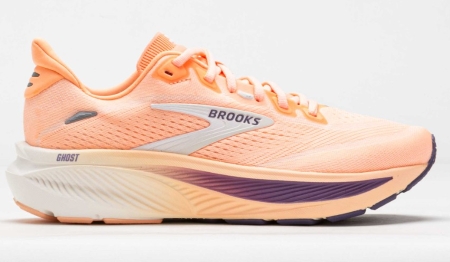
Bottom line: The Ghost 18 is my lowest-compromise recommendation because it fits the daily-trainer job better than it chases novelty.
| Logged mileage 380 miles | Best use Easy runs, steady mileage, beginner one-shoe rotation |
| Ride Balanced, stable-neutral, predictable | Official drop / men’s weight 10 mm / 10.2 oz (men’s) |
| Fit True to size; multiple widths | Evidence TESTED |
The best daily trainer is not the shoe that feels wildest during a two-minute store jog. It is the one that still makes sense on Thursday morning, when your legs carry Tuesday’s workout and you need six uneventful miles. That is the Ghost 18. Brooks uses nitrogen-infused DNA LOFT v3, a 10 mm drop, and a broad, planted geometry. The result is cushioned without becoming vague.
My first cold boardwalk run confirmed the character quickly: secure heel, familiar flex, no adaptation tax. At 380 miles, the outsole has ordinary lateral-heel wear and the midsole has softened, but the shoe is still runnable. That matters more to me than a dramatic first impression. I can assign it easy runs, steady runs, short long runs, walking, or travel and know exactly what I will get.
Its weakness is equally clear. On a hilly tempo, the Ghost felt flat when I asked for a hard surge. The foam returns enough energy for normal training, not enough to make climbing fun. If you want one shoe to cover frequent intervals, the EVO SL or Pegasus 42 is more willing. If you are building consistency, however, the Ghost’s lack of drama is a feature.
Brooks also gives the Ghost a practical fit advantage. The standard last is medium-volume, the heel is dependable, and width options make it easier to solve real feet than many fashionably narrow trainers. New runners should compare it with my beginner running-shoe picks; experienced runners can treat it as the mileage anchor beside a faster shoe.
What I like
- Predictable cushioning across easy and steady paces
- Stable platform without a corrective post
- Excellent upper security and useful width range
- Proven durability in my test pair
What would stop me buying it
- Does not reward aggressive tempo running
- Heavier and less playful than the EVO SL
- Runners who love very soft foam may find it ordinary
Buy it if: you want one neutral road shoe that minimizes fit and training surprises.
Skip it if: your daily run regularly turns into a threshold session, or you want a soft, trampoline-like ride.
For the outsole photos, fit notes, and mile-by-mile breakdown, read my Brooks Ghost 18 review.
2. adidas Adizero EVO SL: Best Fast Daily Trainer
Full review: Read my adidas Adizero EVO SL review for fit, pace range, ride limits, and long-term test notes.
Bottom line: The EVO SL is the pick when “daily trainer” must include easy miles and genuinely quick finishes.
| Logged mileage 359 miles | Best use Progression runs, steady runs, uptempo daily mileage |
| Ride Light, springy, pace-friendly | Official drop / men’s weight 6 mm / about 7.9 oz (men’s) |
| Fit True to size; moderate volume | Evidence TESTED RECONCILED |
The EVO SL makes a convincing one-shoe argument because its full-length Lightstrike Pro midsole changes character with pace. At an easy effort it is compliant enough to cruise. When cadence rises, the shoe stops feeling casual and starts rolling. There is no plate, so the forefoot still flexes more naturally than a race shoe and does not bully tired legs through every stride.
My best run in it was a 13-mile progression on the boardwalk. I moved from roughly 9:05 pace toward 8:10 in the second half, and the shoe stayed coherent rather than turning sloppy. That is the difference between a light shoe and a useful light trainer: the platform has enough substance for distance, not just a low scale number.
The tradeoff is stability and wet-surface confidence. On rain-darkened wooden boards, my pair required attention; I moved to concrete after an early slip. The narrow waist and soft, lively foam also demand more control than the Ghost or Ride when form deteriorates. Mildly unstable neutral runners should not buy it merely because it feels exciting.
I would pair the EVO SL with a cushioned easy-day shoe if weekly mileage is high. For runners who prize low mass, it belongs beside the models in my lightweight running-shoe guide. As a single trainer, it works best for efficient neutral runners who already know they tolerate flexible, energetic shoes.
What I like
- Most enjoyable pace range in this list
- Lightstrike Pro feels lively without a rigid plate
- Comfortable enough for long progression runs
- Lighter on foot than traditional workhorses
What would stop me buying it
- Less planted than Ghost, Ride, or Kayano
- Wet wooden surfaces exposed a traction limitation in my test
- Upper and tongue are less polished than the ride
Buy it if: you want one trainer for relaxed starts, fast finishes, and occasional workouts.
Skip it if: you need guidance, a wide platform, or consistently secure wet-boardwalk grip.
3. New Balance 1080v15: Best Cushioned Daily Trainer
Bottom line: The 1080v15 offers real long-run comfort without the mushy, disconnected feel that ruins some max-cushion shoes.
| Logged mileage 309 miles | Best use Easy mileage, long runs, higher-volume weeks |
| Ride Soft-smooth with controlled rebound | Official drop / men’s weight 6 mm / 9.2 oz (men’s) |
| Fit True to size; wide and extra-wide options | Evidence TESTED RECONCILED |
New Balance changed the 1080 formula with Infinion foam, but the job remains familiar: absorb daily mileage while keeping the transition smooth. The v15 feels softer than the Ghost and more protective under the forefoot, yet the 6 mm geometry prevents it from feeling like a heel-heavy recovery shoe. I can land, settle, and roll without waiting for a tall slab to catch up.
At 309 miles, my pair had visible outsole wear at the lateral heel and forefoot flex zone. The midsole was softer than new but had not collapsed into a dead platform. Its best surprise came during an easy run that became a tempo finish; the shoe did not feel fast in the EVO SL sense, but it did not fight me either.
I am less enthusiastic about the outsole on slick wooden boards. In rain, I shortened stride and moved off the boardwalk. That does not make it unsafe on normal wet asphalt, but surface matters, and generic “wet grip” labels miss that distinction. For a coastal runner, it is a real buying consideration.
The fit breadth is the commercial advantage. New Balance offers the sort of width matrix that can turn a good midsole into the right shoe. Runners with forefoot pressure should also see my wide-foot running-shoe guide; runners prioritizing softness can compare the full cushioned running-shoe shortlist.
What I like
- Protective cushioning that remains runnable at steady pace
- Excellent long-run and high-mileage use case
- Broad width availability
- Lighter and more responsive than its visual bulk suggests
What would stop me buying it
- Not my first choice for wet wooden surfaces
- Less precise than the Ghost when cornering
- Too much shoe for runners who prefer ground feel
Buy it if: your daily trainer must make repeated easy and long runs feel less punishing.
Skip it if: you prefer firm feedback, minimal stack, or routinely run on slick boardwalks.
4. HOKA Clifton 10: Best Lightweight Cushioned Trainer (Prior Generation; Clifton 11 Current)
Bottom line: The Clifton 10 is HOKA’s best middle ground for runners who want a high stack without a heavy, ponderous ride.

| Logged mileage 350 miles | Best use Easy runs, moderate long runs, walking and travel |
| Ride Rockered, soft-balanced, light for its stack | Official drop / men’s weight 8 mm / 9.8 oz (men’s) |
| Fit True to size; roomier than older Cliftons | Evidence TESTED PRIOR GENERATION — no transfer to Clifton 11 |
Generation boundary: This verdict and its 350-mile evidence apply only to the tested Clifton 10. Clifton 11 is current; I have not transferred fit, ride, wear, or ranking to it.
The Clifton 10 adds substantially more foam than the previous version and moves to an 8 mm drop, yet it still feels like the lighter HOKA. The rocker begins guiding the stride before the forefoot needs to bend deeply, which makes slow turnover feel smoother on tired days. It is not as pillowy as the Bondi and should not be purchased as a cheaper Bondi substitute.
My midweek eight-miler in the Clifton was exactly what I want from this category: quiet, easy, and absent from my thoughts. At 350 miles, however, outsole wear was clearer than on the Ghost, and the midsole had lost some early response. I expect usable life beyond that point, but not the same carefree longevity as the Brooks.
Body mass and distance changed my verdict. At 182 pounds, I began feeling the platform flatten late in a hot 12-mile run. Lighter runners may never meet that limit; heavier runners may meet it earlier. That is why a blanket label such as “best for long runs” is incomplete. For my mechanics, it is excellent through ordinary daily distances and merely adequate deep into a long run.
The updated forefoot is more accommodating than old Cliftons, and extra-wide sizing broadens the audience. If you are deciding between HOKA’s two famous neutral models, my Bondi vs Clifton comparison explains the weight-versus-protection tradeoff.
What I like
- High cushioning-to-weight ratio
- Smooth rocker for easy turnover
- Roomier and more inclusive fit than earlier Cliftons
- Comfortable for running, walking, and travel
What would stop me buying it
- Foam can feel less substantial late in long runs for heavier runners
- Outsole wear arrived sooner than on Ghost
- Rocker will not suit runners who want flexible forefoot mechanics
Buy it if: you want a light-feeling, high-stack trainer for most easy and steady mileage.
Skip it if: you are a heavier runner seeking maximum late-run protection or dislike rockered geometry.
For the outsole photos, fit notes, and mile-by-mile breakdown, read my HOKA Clifton 10 review.
5. Nike Pegasus 42: Best One-Shoe Utility Pick
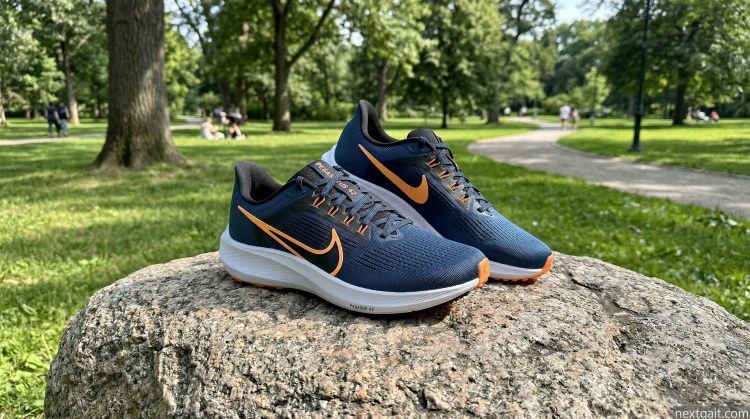
Bottom line: The Pegasus 42 is the utility player: not category-leading at one pace, unusually competent at nearly every normal training pace.
| Logged mileage 145 miles | Best use Daily runs, fartlek, travel, occasional casual racing |
| Ride Responsive, flexible, moderately firm | Official drop / men’s weight 10 mm / 10.59 oz (men’s US 10) |
| Fit Roomier forefoot than Peg 41; test sizing | Evidence TESTED |
Nike’s meaningful update is a curved full-length Air Zoom unit over ReactX foam. The ride has more continuous pop than the separate heel and forefoot units of prior versions, while the Waffle outsole keeps enough flex for daily use. In a fartlek alternating two minutes fast and two easy, the shoe switched gears more naturally than the Ghost or Ride.
Nike also opened the toe and forefoot compared with the Pegasus 41. My history with the line still makes me cautious: I have often sized up half a size, and I would not order blindly if your foot is wide or high-volume. Try it late in the day, with running socks, and verify that the heel remains seated when you leave a thumb’s width in front.
The weak run was a 14-miler in rain. The upper absorbed water, the shoe gained weight, and the wet heel collar irritated my ankle. On dry asphalt the high-abrasion rubber has been durable, and at 145 miles my outsole still looks young. I simply would not make it my wet-weather specialist.
The choice between this and Ghost is close enough that I wrote a full Ghost 18 vs Pegasus 42 comparison. Choose Ghost for a calmer, more planted daily ride; choose Pegasus if pace changes are part of the week.
What I like
- Handles the broadest mix of normal training paces
- Full-length Air Zoom adds continuous responsiveness
- Improved forefoot room over the prior model
- Durable, flexible road outsole
What would stop me buying it
- Fit still deserves a real try-on
- Wet upper and collar disappointed in my long-run test
- Not as soft as 1080v15 or as fast-feeling as EVO SL
Buy it if: you travel with one pair or mix easy miles, strides, fartlek, and steady runs.
Skip it if: you need a genuinely wide last, plush cushioning, or a dedicated wet-weather shoe.
For the outsole photos, fit notes, and mile-by-mile breakdown, read my Nike Pegasus 42 review.
6. Saucony Ride 19: Best Balanced Value
Bottom line: The Ride 19 is the rational buy when you want modern foam, low fuss, and no glaring weakness.

| Logged mileage 110 miles | Best use Easy and steady runs, walking, first rotation |
| Ride Smooth, balanced, lightly springy | Official drop / men’s weight 8 mm / 8.9 oz (men’s) |
| Fit True to size; secure heel, accommodating mesh | Evidence TESTED |
Saucony reformulated PWRRUN+ and added flex grooves, producing a trainer that is softer and lighter than the old “reliable but dull” Ride stereotype. It sits between the Ghost’s structured calm and the EVO SL’s bounce. The transition is the standout: heel contact moves through toe-off without a hard breakpoint or obvious rocker.
On a seven-mile run through Brigantine’s back streets, the shoe disappeared while I listened to a podcast. That sentence sounds unexciting until you remember what daily trainers are paid to do. At 110 miles, the rubber and midsole looked and felt close to new, though this remains an early durability read rather than a retirement verdict.
The Ride was less convincing on hills. The foam absorbed effort without returning the snap I wanted on climbs. Flat and rolling daily mileage is its home. If your training plan includes a weekly hard workout, pair it with a speed shoe instead of asking one neutral workhorse to impersonate everything.
Its fit is immediately friendly: secure counter, breathable interior, and more room than Saucony’s Guide on my foot. Read the complete Ride 19 review if you want the detailed mileage notes.
What I like
- Excellent heel-to-toe continuity
- Balanced cushioning suits a broad range of runners
- Comfortable, adaptable upper
- Strong early durability signs
What would stop me buying it
- Limited personality compared with EVO SL
- Underwhelming pop on steep climbs
- Not as protective as a max-cushion trainer for very long runs
Buy it if: you want a straightforward neutral trainer that does easy and steady work well.
Skip it if: you want soft maximalism, a dramatic rocker, or one shoe for hard hill sessions.
For the outsole photos, fit notes, and mile-by-mile breakdown, read my Saucony Ride 19 review.
7. ASICS Gel-Kayano 32: Best Stability Daily Trainer
Bottom line: The Kayano 32 is my guided daily-trainer pick for runners who feel more comfortable and controlled in its geometry when fatigue builds. That preference is neither a diagnosis nor evidence that the shoe corrects gait or prevents injury.

| Logged mileage 280 miles | Best use Easy and long runs needing adaptive guidance |
| Ride Plush, broad, guided rather than posted | Official drop / men’s weight 8 mm / 10.58 oz (men’s) |
| Fit True to size; snugger midfoot, widths available | Evidence TESTED |
The modern Kayano no longer feels like a hard medial-post correction device. ASICS uses the 4D Guidance System, a broad platform, sidewall geometry, and a responsive medial component to increase support as load rises. I notice guidance late in a run, but I do not feel a block under the arch at every step.
At 280 miles, the outsole showed little meaningful wear, the mesh had not bagged out, and the midsole still held its shape. A rainy 10-miler on wet boards was one of my better stability-shoe tests: the platform stayed composed when my foot placement got less tidy. It is a premium mileage tool, not a speed tool.
On 400-meter repeats, the Kayano felt like the wrong vehicle. Its mass, wide base, and cushioning mute quick turnover. Neutral runners should not treat “more support” as automatically better, either. A stable shoe can be comfortable, but it does not diagnose an injury or guarantee protection.
If you are unsure whether you need this category, begin with my stability vs neutral guide. Then compare the full best stability running shoes and my Kayano 32 review.
What I like
- Adaptive guidance without an intrusive hard post
- Excellent durability through 280 test miles
- Broad, confident platform for tired form
- Comfortable enough for sustained easy mileage
What would stop me buying it
- Heavy and reluctant during intervals
- Midfoot can feel snug
- Unnecessary structure for some neutral runners
Buy it if: you benefit from a broad, guided platform as fatigue accumulates.
Skip it if: you want ground feel, fast turnover, or have no reason to prefer stability geometry.
For the outsole photos, fit notes, and mile-by-mile breakdown, read my ASICS Gel-Kayano 32 review.
8. Mizuno Wave Rider 29: Best Firm, Durable Ride
Bottom line: The Wave Rider 29 is the anti-marshmallow trainer: smooth, structured, and far more alive than its firm first step suggests.
| Logged mileage 90 miles | Best use Steady mileage, heel strikers, runners who dislike soft foam |
| Ride Firm-responsive, structured, smooth | Official drop / men’s weight 10 mm / verify size-specific weight |
| Fit True to size; slightly narrow midfoot | Evidence TESTED |
Mizuno moved the Rider to a full-length, nitrogen-infused ENERZY NXT midsole and reduced the drop from 12 to 10 mm. The Wave Plate remains, but the ride is less mechanical than older Riders. The plate organizes the transition; it does not turn the shoe into a plated workout model.
During a progressive six-miler, the shoe became better as pace increased. The foam did not sink, so force moved forward cleanly. At 90 miles, the X10 rubber showed almost no visible concern. That is not a full durability life cycle, but it supports the Rider’s long-standing workhorse identity.
Heat and width are the caveats. On a warm long run, the upper trapped more heat than I wanted, and the midfoot pressure increased as my feet swelled. The shoe is true in length, not generous in volume. Wide-foot runners should look at the available wide configuration or move to Topo/New Balance.
This is a preference pick, not a universal eighth place. A runner who hates soft foam might rank it first. My full Wave Rider 29 review explains why the firm ride becomes smoother once you stop judging it by step-in feel.
What I like
- Structured, efficient transition
- Firm foam stays coherent when pace rises
- Excellent early outsole durability
- Stable-neutral feel without traditional correction
What would stop me buying it
- Midfoot and upper felt restrictive as my feet swelled
- Too firm for runners seeking plush recovery comfort
- Not the lightest option in this group
Buy it if: you prefer a traditional, responsive trainer that does not collapse under load.
Skip it if: soft cushioning and a roomy midfoot are non-negotiable.
For the outsole photos, fit notes, and mile-by-mile breakdown, read my Mizuno Wave Rider 29 review.
9. Topo Athletic Atmos 2: Best Roomy-Toe-Box Trainer
Full review: Read my my Atmos 2 testing notes for fit, pace range, ride limits, and long-term test notes.
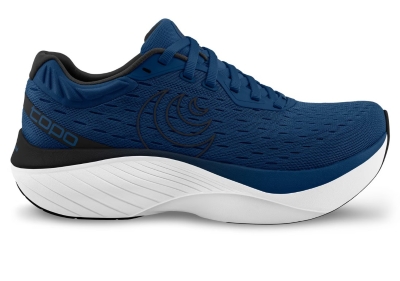
Bottom line: Atmos 2 solves the common wide-forefoot/narrow-heel problem better than simply making the whole shoe loose.
| Logged mileage 192 miles | Best use Easy/long runs needing toe room and a secure heel |
| Ride Plush, broad, low-drop | Official drop / men’s weight 5 mm / 9.9 oz (men’s US 9) |
| Fit Anatomical toe box; secure midfoot and heel | Evidence TESTED |
Topo’s fit is the reason to shortlist the Atmos 2. The toe box lets toes spread, while the midfoot and heel remain shaped enough to stop the foot sliding forward. That is different from a conventional wide size, which can add volume everywhere. Underfoot, 40 mm of heel stack and a 5 mm drop create a plush but not zero-drop experience.
My best outing was a 10-mile steady run where the ZipFoam held the same character from start to finish. At 192 miles, outer-heel wear was present but the rebound remained useful. The shoe feels calmer than the 1080 and less rockered than the Clifton, with a platform that rewards straightforward cruising.
Cold changed it. Around freezing, the midsole felt noticeably firmer and less expressive than on mild days. The high forefoot stack and broad shape also make it a poor choice for runners who want nimble cornering or close ground contact. Toe freedom is not automatically better if the rest of the last does not match your foot.
Runners shopping because of bunions, neuroma symptoms, or general forefoot width should begin with fit rather than a diagnosis-by-shoe. My wide-foot guide and Morton’s neuroma shoe guide explain the differences in volume and pressure relief.
What I like
- Anatomical toe room with secure rearfoot
- Plush protection without zero-drop adaptation
- Consistent long-run ride in mild conditions
- Standard and wide options
What would stop me buying it
- Foam felt firmer in near-freezing weather
- Bulky for agile workouts
- Foot-shaped fit is not necessary for every runner
Buy it if: your toes need space but your heel still needs real lockdown.
Skip it if: you want a narrow performance fit, low stack, or a lively speed-day feel.
10. On Cloudsurfer 2: Smoothest Quiet-Ride Pick
Full review: Read my my Cloudsurfer 2 test for fit, pace range, ride limits, and long-term test notes.
Bottom line: Cloudsurfer 2 earns its place through transition quality, not bounce: it rolls with less mechanical interruption than old On trainers.
| Logged mileage 211 miles | Best use Easy runs and smooth moderate progressions |
| Ride Rolling, quiet, controlled-soft | Official drop / men’s weight 9 mm / about 9.2 oz (men’s) |
| Fit True to size; secure standard-width fit | Evidence TESTED |
CloudTec Phase is a connected sequence of collapsing elements rather than the old sensation of separate, hollow pods. On the road, that produces a muted, tidy roll. It is the shoe I would give a runner who says, “I do not want to feel the shoe changing gears under me.” Helion foam supplies cushion, but the transition is the headline.
A 12-mile progression was the best evidence. I moved from relaxed running toward a solid steady finish, and the shoe stayed smooth. At 211 miles, the lateral heel showed expected wear and the midsole still rebounded. It is not dramatically fast; it simply wastes little attention.
At my 182-pound body weight, one eight-mile outing ended with the forefoot feeling flatter than I wanted. That was not every run, but it sets the boundary: I would choose 1080v15 for maximum late-run protection and EVO SL for faster work. Cloudsurfer 2 occupies the polished middle.
It also illustrates why heel-to-toe drop is not the whole ride. Geometry, foam deformation, and rocker timing matter together. My heel-drop guide explains how to change drop without overreacting to one number.
What I like
- Exceptionally smooth heel-to-toe sequence
- Quiet, polished feel for daily road mileage
- Secure upper and true-to-size length for my foot
- Capable of moderate progression runs
What would stop me buying it
- Forefoot protection faded on one longer run at my weight
- Not as energetic as EVO SL
- Value depends on how much you prioritize refinement
Buy it if: you value a seamless, refined transition over maximal softness or obvious bounce.
Skip it if: you need the most protective long-run platform or a true workout shoe.
Do you need one daily trainer or a shoe rotation?
One well-fitted daily trainer is enough for most beginners and many experienced runners. A rotation becomes useful when the second shoe solves a specific conflict: soft and stable for easy mileage, light and energetic for workouts, or grippy and weather-resistant for poor conditions. Buying two similar neutral cruisers adds choice, not capability.
| Your week | Best setup | Example |
|---|---|---|
| Three easy runs | One durable daily trainer | Ghost 18 or Ride 19 |
| Easy runs plus intervals | Workhorse + faster trainer | Ghost 18 + EVO SL |
| High mileage with long run | Cushioned trainer + faster option | 1080v15 + Pegasus 42 |
| Fatigue-related instability | Guided trainer + lighter second shoe | Kayano 32 + EVO SL, if both fit |
A shoe rotation does not replace sensible training. Pair the purchase with a realistic running training guide, or use the 5K plan and beginner marathon plan to match shoe roles to actual sessions. For the footwear side of the buildup, see my guide to the best marathon running shoes.
My five-minute fit check before I keep a daily trainer
A daily trainer fits when the toes can expand, the heel stays seated, and pressure never concentrates. I use this sequence before a shoe enters the mileage test.
- Stand with full weight on both feet. Confirm the longest toe has forward clearance and does not touch on a small decline.
- Jog, brake, and turn. The heel should stay seated; toes should not claw to stabilize the shoe.
- Check the first and fifth metatarsal heads. Upper stretch does not rescue a midsole platform that is too narrow.
- Use your normal socks and orthotic, if prescribed. Do not evaluate a different setup from the one you will run in.
- Reject immediate rubbing, arch intrusion, numbness, or a sense that one side is steering you. Break-in can soften materials; it rarely fixes geometry.
Track changes rather than obeying a universal mileage number. My running-shoe replacement guide shows outsole, midsole, and symmetry checks. If symptoms drive the search, use condition guides cautiously: plantar fasciitis, Achilles pain, running shoes for shin-splint symptoms, and running shoes for knee-pain symptoms are starting points, not diagnoses.
Best daily trainer FAQs
These answers cover the daily-trainer questions that most often change a real purchase decision. Fit and comfort still outrank any general rule.
What is a daily trainer running shoe?
A daily trainer is a road shoe designed to handle most routine weekly mileage: easy runs, steady runs, moderate long runs, and sometimes light workouts. It prioritizes dependable fit, ride consistency, and durability over race-day specialization.
What is the best daily trainer running shoe for most runners?
The Brooks Ghost 18 is my best overall pick because it combines stable-neutral geometry, secure fit, width availability, useful cushioning, and proven durability. The adidas EVO SL is better for runners who prioritize faster paces.
Can I use one pair of running shoes for every run?
Yes. Most runners can train successfully in one well-fitted daily trainer. Add a second shoe only when it solves a real need such as faster workouts, greater long-run protection, stability, or wet-weather traction.
How many miles should daily trainers last?
Many daily trainers remain usable for roughly 300–500 miles, but the meaningful endpoint is a change in ride, asymmetric wear, loss of comfort, or new recurring symptoms. Body mass, surface, gait, and foam construction alter lifespan.
Are max-cushion shoes better for daily training?
Not automatically. More foam can improve comfort, but it may also add mass, reduce ground feel, or feel unstable to some runners. Choose the least complicated shoe that stays comfortable and controlled for your normal distance.
Should daily trainers be neutral or stability shoes?
Use the category that feels comfortable and controlled for your gait. Stability geometry may help runners who prefer guidance, especially under fatigue, but neutral runners do not automatically benefit from more correction.
Can daily trainers handle tempo runs?
Versatile models such as the adidas EVO SL and Nike Pegasus 42 can handle tempo work. Traditional workhorses such as Ghost 18 and Ride 19 can run fast, but they are less rewarding than a dedicated speed trainer.
Should I size up in running shoes?
Do not size up by rule. Fit the longer foot with about a thumb’s width ahead of the longest toe while keeping the heel secure. Brand lasts differ, and foot swelling, width, instep volume, and sock thickness all matter.
Do not confuse the Cloudsurfer 2 with the On’s lifestyle-oriented Cloud 6 just because both carry the On name. The Cloudsurfer belongs in a running conversation; the Cloud 6 is a casual, all-day shoe, and I would not use its comfort-first design as a proxy for daily-trainer performance.
Choose by runner and distance: Continue with daily trainers for long-distance running, men’s running-shoe shortlist, women’s running-shoe shortlist when the general daily-trainer ranking is too broad for your use case.
Direct comparison: See the Novablast versus Pegasus head-to-head when these two daily trainers are your final choices.

Written by Ken – 12 years of running, 12,500+ miles, 63 shoes tested, and 36 races from 5Ks to a 50K ultra. I run 30-40 miles a week on the Atlantic City Boardwalk and review shoes with repeated training miles, not one-run demos. More about Ken
Pingback: Best Running Shoes of 2026: 14 Pairs Tested