
The best marathon running shoes are the pairs that remain predictable after swelling, pace drift and tired cornering—not the shoes that feel fastest for the first mile. Nike Alphafly 3 is my best overall choice for an experienced racer who has already validated its arch, height and forefoot system in a long marathon-pace block. Choose Adios Pro 4 for even rhythm, Superblast 3 for a more familiar non-plated first marathon, or Endorphin Speed 5 when one shoe must handle the build and race day.
Decision boundary: This page begins only after 26.2 miles is the binding job. If you still need to choose between a daily trainer, trail shoe, speed shoe and racer, reset with the best running shoes overall before narrowing to a marathon pair.
This ranking draws on 1,705 logged miles across ten test pairs. I am 5’10”, 182 pounds, wear a men’s US 10.5 in most brands, mildly overpronate, and run 30 to 40 miles per week on New Jersey asphalt and the Atlantic City Boardwalk. Those details explain my perspective; they do not make my winner universal.
Fast answer: PR-focused marathoner: Alphafly 3. Even-split racer: Adios Pro 4. Lowest weight: Metaspeed Sky Tokyo. One racer for 10K through marathon: Vaporfly 4. First carbon shoe: Endorphin Pro 5. First marathon without carbon: Superblast 3.
Watchlist boundary: SC Elite v6, Megablast, Fast-R 3, Cielo X1 3.0 and Cloudboom Strike 2 remain unranked until each exact model completes the same marathon protocol. Launch specifications do not inherit a tested shoe’s fit, ride, mileage or verdict.
This is a road-marathon ranking. It does not cover trail marathons, where lugs, rock protection, upper durability, and uneven-ground control change the decision. For an off-road race, begin with the trail running shoe guide and match the shoe to the course surface and elevation.
Best marathon running shoes: quick picks
| Shoe | Best for | Start here if |
|---|---|---|
| Nike Alphafly 3 | Best overall marathon racer | PR-focused marathoners who already tolerate tall plated shoes |
| adidas Adizero Adios Pro 4 | Best for steady marathon pacing | Runners who settle into one rhythm and want a smooth rocker |
| ASICS Metaspeed Sky Tokyo | Best lightweight marathon racer | Stride-style runners who gain speed mainly by lengthening stride |
| Nike Vaporfly 4 | Best for marathon plus shorter races | Runners who want one racer from 10K through 26.2 |
| Saucony Endorphin Pro 5 | Best first carbon marathon shoe | Runners who want a familiar fit and progressive transition |
| HOKA Rocket X 3 | Best stable-feeling rocker | Runners who prefer a guided roll and more planted platform |
| New Balance FuelCell SuperComp Elite v5 | Best tested wide option (prior generation; SC Elite v6 current) | Wide-footed runners who prefer a softer marathon ride |
| PUMA Deviate NITRO Elite 4 | Best grip | Wet-road races and runners who value outsole confidence |
| ASICS Superblast 3 | Best non-plated first-marathon shoe | Runners prioritizing comfort, versatility, and late-race control |
| Saucony Endorphin Speed 5 | Best training-to-race option | Runners who want one fast shoe for workouts and marathon day |
If race distance and training role are competing priorities, choose shoes for distance, speed, or race day before narrowing the marathon options.
Choose the shoe that still works at mile 20
The quickest fresh-leg split is not the marathon verdict. I rank the shoe that keeps its fit, transition and turning behavior when swelling rises and pace becomes harder to hold.
Race gate: Test goal pace, projected late-race pace, turns and aid-station slowing in the exact socks and lacing. One unresolved hot spot or control failure removes the shoe.
-
Nike Alphafly 3
Runner: Experienced racer chasing a marathon PR who already tolerates tall plated shoes.
Rehearse: Road marathon after exact race-sock, pace and tired-turn rehearsal.
Mile-20 check: Arch contour, race-tight upper and Air Zoom placement must remain quiet through a long marathon-pace block. Wider platform improves relative control, but off-center tired landings and sharp turns remain exposed.
Cost: High performance ceiling with a costly fit failure.
Do not race it when: Skip for persistent arch pressure, broad toe-box needs or uncertain cornering. Next comparison: Adios Pro 4 for steady rhythm; Superblast 3 for a non-plated first marathon.
-
adidas Adizero Adios Pro 4
Runner: Runs best from an even rhythm on flat-to-rolling road courses.
Rehearse: Steady marathon pacing and longer road racing.
Mile-20 check: Tapered forefoot and LIGHTLOCK lacing must survive swelling without using extra length to solve width. Moderate race-platform control when the foot remains centered.
Cost: Less forefoot depth than Alphafly for Ken and less reward from constant surges.
Do not race it when: Skip for square forefeet, dorsal pressure or heel movement. Next comparison: Alphafly 3 for deeper forefoot protection; Vaporfly 4 for broader race-distance use.
-
PUMA Deviate NITRO Elite 4
Runner: Needs outsole confidence for wet pavement or turn-heavy marathon courses.
Rehearse: Road racing where grip breaks an otherwise close decision.
Mile-20 check: Forefoot must retain swelling room and heel must stay centered through wet turns. PUMAGRIP reduces braking uncertainty on tested wet-road conditions; it does not prove every slick surface.
Cost: Less deep late-race cushioning and a narrow-standard forefoot.
Do not race it when: Skip if swelling reaches the tapered front or actual course surface was not represented in testing. Next comparison: Rocket X 3 for stronger rocker guidance; Alphafly 3 for deeper marathon protection.
-
ASICS Superblast 3
Runner: First marathoner or run-walk runner who values predictable pace-range behavior over a pure racer's minimum mass.
Rehearse: Long runs, marathon-pace work and non-plated race execution after rehearsal.
Mile-20 check: Standard upper must hold the heel while preserving toe and instep room after time on feet. Broad stable-neutral platform rather than active guidance.
Cost: Higher mass and lower race-specific ceiling than a well-matched carbon racer.
Do not race it when: Skip when a validated racer stays more comfortable and controlled at both goal and late-race pace. Next comparison: Endorphin Speed 5 for a faster training-to-race bridge; Alphafly 3 for proven high-stack racer tolerance.
Ken’s overall ranking rule: A marathon shoe must pass five gates in order: secure fit, comfort at actual goal pace, control on tired legs, adequate grip, and enough test maturity for a 26.2-mile recommendation. Weight and bounce decide only after those gates are clear.
The 10 best marathon running shoes
1. Nike Alphafly 3 – Best overall marathon racer
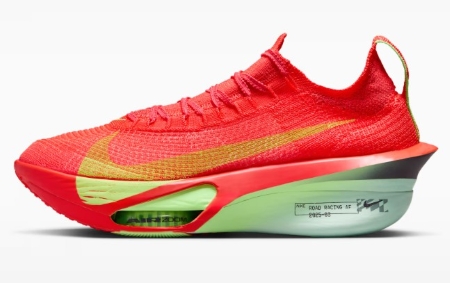
Best for: PR-focused marathoners who already tolerate tall plated shoes
Manufacturer weight: 7.7 oz / 218 g (men’s US 10)
Drop: 8 mm
Plate: Carbon Flyplate
Ken’s logged mileage: 95 miles
Marathon decision card: Pace behavior: Most convincing at sustained marathon effort; tall and disconnected on easy shuffles.
Course match: Flat or gently rolling roads with long straights; less attractive on repeated sharp turns.
Fit failure to screen: Race-tight upper and noticeable arch. Ken uses US 11 instead of his usual 10.5.
Mile-20 tradeoff: Deep forefoot protection remains useful, but off-center landings demand attention as form fades.
The Alphafly 3 wins this marathon-specific ranking because its deep ZoomX platform, forefoot Air Zoom units, and wider Flyplate keep working when the race becomes a durability problem. It is not my favorite shoe for every distance. It is the shoe here whose design makes the clearest sense at marathon effort.
My pair has 95 logged miles. The useful sensation is not a violent toe-off. It is a two-stage load through the forefoot, followed by a long roll that reduces how much I have to manufacture each stride late in a sustained effort. At easy pace the same geometry feels tall and disconnected.
Fit is the gatekeeper. I wear a men’s US 11 here rather than my usual 10.5. The Atomknit upper is race-tight, the arch contour is noticeable, and the Air units need to sit under the right part of the forefoot. Extra length can relieve toe pressure, but it cannot fix an arch or platform mismatch.
On straight pavement the third version is calmer than earlier Alphaflys. Tight turns still require attention, especially when the foot lands off-center. I would not choose it for a marathon with repeated sharp corners unless a tired-leg workout confirmed that I could place it consistently.
Buy it only after a successful long run containing marathon pace. Skip it if you dislike high stack, need a broad toe box, or feel arch pressure during the first test. The ceiling is high, but the fit failure is more costly than with a conventional racer.
Related testing context: my full Nike Alphafly 3 review.
What I like
- Deep marathon-specific cushioning
- Distinct forefoot propulsion
- More stable than Alphafly 2
- Smooth at sustained pace
What I do not like
- Polarizing arch shape
- Tall on tight turns
- Race-tight upper
- Poor value for daily mileage
Ken’s marathon ranking rule: Keep it at number one only if the arch, Air Zoom placement, and tall platform all disappear underfoot during a long marathon-pace block. Any persistent arch pressure or uncertainty on tired turns outweighs the shoe’s propulsion.
2. adidas Adizero Adios Pro 4 – Best for steady marathon pacing
Best for: Runners who settle into one rhythm and want a smooth rocker
Manufacturer weight: 7.05 oz (manufacturer sample)
Drop: 6 mm
Plate: Carbon-infused ENERGYRODS 2.0
Ken’s logged mileage: 137 miles
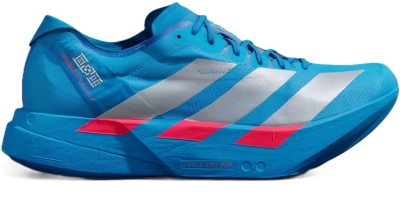
Marathon decision card: Pace behavior: Best when effort stays even and the rocker can repeat; less rewarding during constant surges.
Course match: Flat to rolling road marathons where rhythm matters more than tight-corner agility.
Fit failure to screen: Tapered forefoot and a lacing-sensitive LIGHTLOCK upper; do not solve width with extra length.
Mile-20 tradeoff: The roll stays coherent, though forefoot protection feels shallower than Alphafly 3.
The Adios Pro 4 is my first alternative to Alphafly because it rewards disciplined pacing. Lightstrike Pro and ENERGYRODS 2.0 create a smooth, continuous transition rather than a dramatic forefoot event. That calmer rhythm is useful when the goal is to hold effort for hours, not win a 200-meter showroom test.
I have 137 logged miles in this version. It feels most convincing once I stop surging and let the rocker repeat. The shoe is less protective-feeling than Alphafly under my forefoot, but easier to settle into than the low-volume Metaspeed. Its personality is marathon cruise, not maximum bounce.
The LIGHTLOCK upper needs deliberate lacing. I leave the toes modestly loose, secure the midfoot, then use the top eyelets for heel control. Pulling every row hard creates dorsal pressure without necessarily improving rearfoot hold. Test with your exact race socks after the foot has warmed.
Lighttraxion reduces outsole mass, while Continental rubber covers the toe-off area. My damp-road testing was secure, although the exposed areas still deserve inspection before a wet race. The tapered forefoot is the bigger limitation for me than grip.
Choose it if even splits produce your best marathons. Skip it if you have a square forefoot, need a roomy upper, or prefer a sharp cadence-driven snap. This is the shoe I would compare directly with Alphafly for a flat, fast course.
Related testing context: best carbon-plated running shoes.
What I like
- Excellent rhythm at marathon pace
- Smooth ENERGYRODS transition
- Confident toe-off rubber
- Less mechanically unusual than Alphafly
What I do not like
- Tapered forefoot
- Lacing takes patience
- Less protective than Alphafly
- Not the sharpest short-race feel
Ken’s marathon ranking rule: This is the better pick when your fastest marathon is likely to come from even effort rather than repeated surges. Forefoot squeeze or heel movement moves it behind Alphafly, regardless of how smooth the rocker feels in a short test.
3. ASICS Metaspeed Sky Tokyo – Best lightweight marathon racer
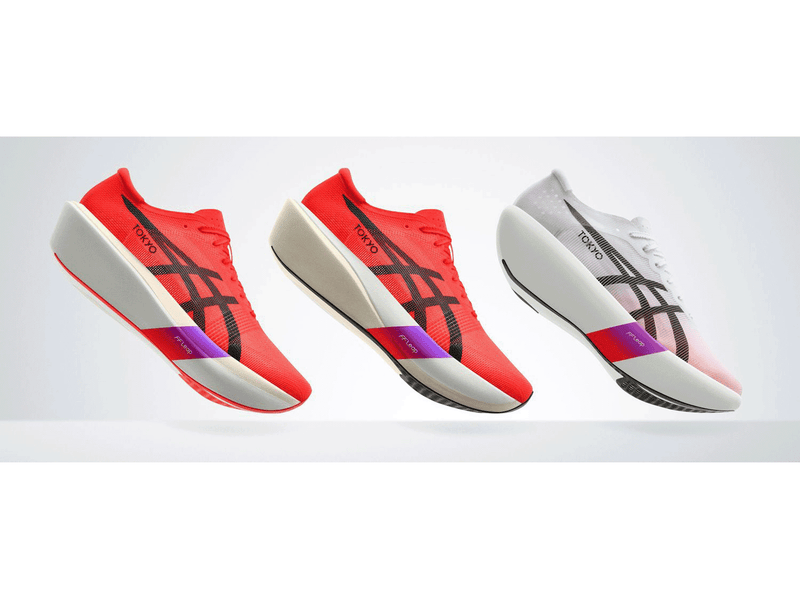
Best for: Stride-style runners who gain speed mainly by lengthening stride
Manufacturer weight: 6.0 oz / 170 g (men’s US 9)
Drop: 5 mm
Plate: Full-length carbon plate
Ken’s logged mileage: 197 miles
Marathon decision card: Pace behavior: Works best when speed comes from a forceful, lengthening stride rather than shorter cadence steps.
Course match: Straight, fast road courses; narrow rear geometry is less forgiving on camber and sharp corners.
Fit failure to screen: Low-volume unisex fit with limited instep and forefoot space despite excellent heel hold.
Mile-20 tradeoff: Very low mass helps turnover, but a tired off-center landing becomes obvious immediately. For how rearfoot, midfoot, and forefoot landings redistribute load, read my heel, midfoot, and forefoot strike comparison.
Metaspeed Sky Tokyo is the lightest marathon racer in this tested group and the most specific. ASICS positions the plate high and flat for runners who increase speed mainly through stride length. In practice, it rewards a forceful forefoot compression and feels less cooperative when I shorten up and spin.
My log has 197 miles, enough to get past the novelty of its weight. At marathon effort, FF LEAP under the plate provides the soft landing while FF TURBO PLUS above it keeps the platform from feeling shapeless. That layered response is quick without the Alphafly’s separate Air-unit stage.
The Motion Wrap upper is thin and low-volume. My usual US 10.5 works, but runners with high insteps or broad forefeet should not assume the unisex label means generous space. The heel hold is excellent when the midfoot fit is right and unforgiving when it is not.
A narrow rear platform makes off-center landings obvious. Straight road and boardwalk sections are where the shoe feels cleanest. Sharp corners, cambered roads, and a tired heel strike expose more movement than the 170-gram spec suggests.
Buy it if low mass and a stride-driven ride already make sense in a long race-pace test. Skip it if you need broad rearfoot support or an adaptable upper. Do not choose Sky instead of Edge from a questionnaire alone; compare both at the same pace.
Related testing context: my Metaspeed Sky Tokyo review.
What I like
- Exceptionally low weight
- Fast stride-driven transition
- Secure thin upper
- Layered FF LEAP and FF TURBO PLUS ride
What I do not like
- Low-volume fit
- Narrow rear platform
- Unforgiving off-center
- Needs Sky-versus-Edge testing
Ken’s marathon ranking rule: Choose Sky Tokyo for low mass only after it stays centered under a lengthening stride late in a workout. If you speed up mainly through cadence, or start landing beside the narrow rear platform, compare Metaspeed Edge before committing.
4. Nike Vaporfly 4 – Best for marathon plus shorter races
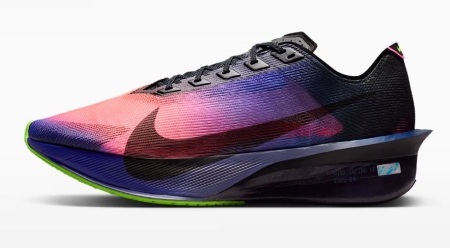
Best for: Runners who want one racer from 10K through 26.2
Manufacturer weight: 6.7 oz / 190 g (men’s US 10)
Drop: 6 mm
Plate: Carbon Flyplate
Ken’s logged mileage: 299 miles
Marathon decision card: Pace behavior: The broadest race-pace range here, from 10K turnover to controlled marathon running.
Course match: Crowded or technical road courses where precise placement and quick direction changes matter.
Fit failure to screen: Narrow race shape and spare upper; added length can create heel movement without adding width.
Mile-20 tradeoff: Still precise when tired, but offers less underfoot depth than the marathon specialists.
Vaporfly 4 ranks fourth only because this article is about the marathon. It is the better all-distance racer. The lower 6 mm drop, reduced mass, and higher plate angle create a compact transition that works from 10K effort through controlled marathon pace.
My pair has 299 logged miles on asphalt and boardwalk. At pace, the sequence is immediate: load ZoomX, roll over the Flyplate, leave the ground. It has less underfoot depth than Alphafly but gives me more precise foot placement when the road turns or the pack becomes crowded.
The upper is deliberately spare. I secure the heel first and leave the forefoot one notch looser for swelling. Wide-footed runners should resist solving the taper with extra length; that can add heel movement without creating room at the first and fifth metatarsals.
For a faster runner with efficient mechanics, the low mass can remain valuable over 26.2. For a first-time marathoner expecting long walk breaks, the narrow, low-structure platform may become less friendly as pace drops. Test both race pace and projected late-race pace.
Buy it when one shoe must cover several race distances. Skip it when marathon protection, a wide toe box, or tired-form stability matters more than weight. My mileage is unusually high for a race shoe; it does not create a universal lifespan guarantee.
Related testing context: Alphafly versus Vaporfly comparison.
What I like
- Light and precise
- Works across several race distances
- Quick on turns
- Mature 299-mile test
What I do not like
- Less depth for slower marathoners
- Narrow race shape
- Minimal upper
- Outsole coverage is limited
Ken’s marathon ranking rule: Vaporfly earns its place when one racer must cover 10K through marathon and precise foot placement matters more than maximum underfoot depth. I move it down for runners whose projected final 10K includes a major pace drop.
5. Saucony Endorphin Pro 5 – Best first carbon marathon shoe
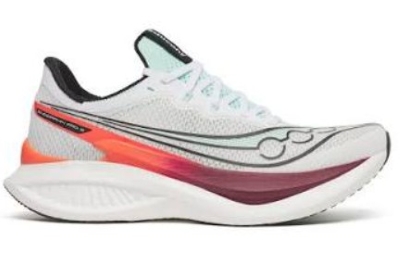
Best for: Runners who want a familiar fit and progressive transition
Manufacturer weight: 7.3 oz / 206 g (manufacturer sample)
Drop: 8 mm
Plate: Slotted carbon plate
Ken’s logged mileage: 142 miles
Marathon decision card: Pace behavior: Progressive rather than abrupt from steady running into marathon pace.
Course match: A dependable all-around road option for moderate turns, rolling terrain, and pace changes.
Fit failure to screen: Familiar performance fit with less instep pressure than the thinnest unisex racers.
Mile-20 tradeoff: SpeedRoll remains understandable when cadence falls, which is why it suits a first carbon marathon.
Endorphin Pro 5 is the easiest carbon marathon racer to recommend to someone leaving conventional trainers. Its slotted carbon plate and SpeedRoll geometry build the transition progressively. The shoe does not require the runner to understand an Air pod or a stride-style category before it starts feeling coherent.
I have 142 logged miles in my US 10.5. The step-in feel is less theatrical than Alphafly or Sky Tokyo. At marathon pace, PWRRUN PB compresses evenly and the rocker carries the foot forward without a hard plate edge. That predictability is the point.
Saucony’s heel and midfoot hold feel familiar if you train in the Endorphin line. The forefoot is still performance-shaped, but the upper gives me less pressure across the instep than the thinnest racers. Swelling room remains something to test, not assume.
The platform feels more guided than Vaporfly and less prescriptive than Rocket X 3. It handles moderate turns well and remains understandable when pace drops. That makes it a practical first-marathon racer even if it is not the lightest or most explosive option.
Buy it if you want a carbon shoe you can learn in two or three race-specific workouts. Skip it if the lowest mass is your only priority or if SpeedRoll geometry has bothered your calves before. Familiarity is an advantage only when the fit is genuinely secure.
Related testing context: long-distance running shoe guide.
What I like
- Accessible carbon ride
- Familiar fit
- Progressive rocker
- Good late-race control
What I do not like
- Not the lightest racer
- Less explosive than top specialists
- Performance forefoot shape
- Rocker still needs adaptation
Ken’s marathon ranking rule: For a first carbon marathon shoe, predictability beats showroom bounce. Pro 5 stays ahead when the transition feels natural at easy, goal, and late-race pace; calf tension or forefoot pressure after the second test is a clear rejection.
6. HOKA Rocket X 3 – Best stable-feeling rocker
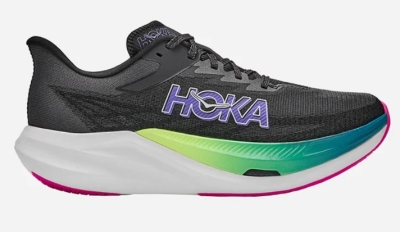
Best for: Runners who prefer a guided roll and more planted platform
Manufacturer weight: 8.0 oz / 227 g (manufacturer sample)
Drop: 7 mm
Plate: Carbon plate with winglets
Ken’s logged mileage: 150 miles
Marathon decision card: Pace behavior: Strongest during long steady blocks once the foot settles onto the rocker.
Course match: Long straights and gentle bends; the guided transition feels prescribed on abrupt turns.
Fit failure to screen: Secure standard-width hold with a performance-snug forefoot.
Mile-20 tradeoff: The plate winglets and rocker help organize lateral movement, at the cost of flexibility.
Rocket X 3 is the most guided carbon racer in the ranking. HOKA combines dual-density PEBA, a carbon plate with winglets, and a pronounced rocker. Once the shoe reaches its tipping point, the transition feels directed rather than soft and free-moving.
My pair has 150 logged miles. I notice the assistance most during long steady blocks, where I can settle onto the rocker and let it repeat. Abrupt changes of direction feel more prescribed than in Vaporfly, but straight-line control is better than in the narrowest supershoes.
The engineered mesh and streamlined collar hold securely in my usual US 10.5. The last remains performance-snug, and the forefoot will not suit every wide foot. The collar is comfortable, but no collar design can compensate for buying the wrong width.
Sticky rubber gives the outsole more authority on damp pavement than the exposed-foam racers. The 227-gram listed weight is higher than the lightest options, yet the extra structure becomes useful when form starts moving laterally late in a race.
Buy it if you already know you like a strong HOKA rocker and want a more planted marathon platform. Skip it if you prefer flexible toes, a broad anatomical forefoot, or a transition that disappears underfoot.
Related testing context: heel-drop guide.
What I like
- Guided transition
- Stable-feeling platform
- Reliable damp-road grip
- Secure collar
What I do not like
- Heavier than leading racers
- Strong rocker is polarizing
- Snug forefoot
- Less agile on sharp turns
Ken’s marathon ranking rule: The strong rocker is an advantage only when you can settle onto it without changing your natural foot placement. Pick Rocket X 3 for guided straight-line control, but pass if the transition feels forced on turns or at slower late-race pace.
7. New Balance FuelCell SuperComp Elite v5 – Best tested wide option (prior generation; SC Elite v6 current)
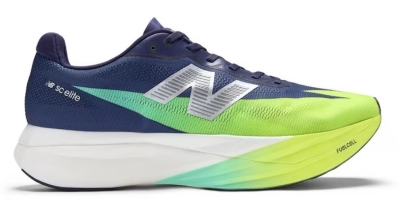
Best for: Wide-footed runners who prefer a softer marathon ride
Lifecycle: Tested prior-generation SC Elite v5; SC Elite v6 is current and untested here—no experience transfer
Manufacturer weight: 7.6 oz / 215 g (men’s)
Drop: 8 mm
Plate: Carbon Energy Arc plate
Ken’s logged mileage: 202 miles
Marathon decision card: Pace behavior: Soft marathon roll rather than short-interval urgency; best for runners who compress the foam cleanly.
Course match: Flat road marathons where wide-fit comfort matters more than razor-sharp cornering.
Fit failure to screen: Men’s 2E availability is valuable, but the foot still has to remain centered over the midsole waist.
Mile-20 tradeoff: Softness can stay protective or become vague, depending on body mass and tired mechanics.
SC Elite v5 remains here as the best fully tested wide option, even though v6 is current. The men’s v5 was offered in 2E, which solves a real problem: adding length to a standard supershoe is not the same as adding width where the forefoot expands.
I have 202 logged miles in v5. Its PEBA FuelCell midsole and Energy Arc plate produce a soft, continuous roll rather than a hard snap. That ride is easier for me to manage late in a long effort than during short repetitions, where it can feel less urgent than Vaporfly.
The upper is more accommodating than the Nike and ASICS race fits. A 2E upper does not automatically make the midsole platform broad or stable, so runners should still check whether the foot sits centered over the waist and heel when cornering.
At marathon pace the soft compression can feel protective. At slower pace or under a runner who compresses the foam heavily, it can also feel less organized. This is why body mass and preferred firmness belong in the decision alongside width. For platform and foam behavior beyond race-only models, compare my running shoes for heavier runners.
Buy v5 only when the fit and softer ride are the reason. New Balance now sells v6 with revised geometry and 2E availability; it deserves a fresh test, not an inherited verdict. Skip old stock with poor returns or uncertain sizing.
Related testing context: running shoes for wide feet.
What I like
- 2E availability
- Soft continuous roll
- Comfortable upper
- Full PEBA FuelCell midsole
What I do not like
- Last generation
- Softness can feel vague
- Upper width does not widen the waist
- Availability varies
Ken’s marathon ranking rule: Width is the reason to consider v5, not a reason to ignore platform control. The 2E must hold the heel and keep the forefoot centered over the midsole after swelling; otherwise a wider upper has solved only half the fit problem.
8. PUMA Deviate NITRO Elite 4 – Best grip
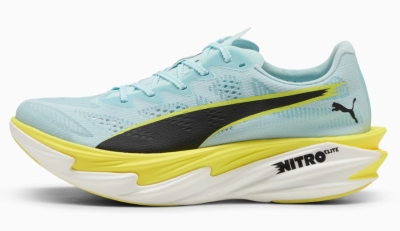
Best for: Wet-road races and runners who value outsole confidence
Manufacturer weight: 6.0 oz / 170 g (UK 8)
Drop: 8 mm
Plate: Carbon PWRPLATE
Ken’s logged mileage: 178 miles
Marathon decision card: Pace behavior: Changes gears well from workouts into marathon rhythm without an extreme rocker threshold.
Course match: The first choice here for wet roads, painted turns, and aid stations where grip affects confidence.
Fit failure to screen: Secure regular-width midfoot with a tapered front and little spare swelling room.
Mile-20 tradeoff: Outsole security reduces unnecessary braking, while cushioning depth trails Alphafly 3.
Deviate NITRO Elite 4 earns the wet-road award because PUMAGRIP changes race confidence, not because grip looks good on a spec sheet. Painted lines, aid-station pavement, and sharp turns are where a secure outsole can protect pacing from unnecessary braking.
My pair has 178 logged miles. The ride sits between the direct Vaporfly and the deep Alphafly. NITROFOAM Elite changes gears cleanly for workouts, then settles into a stable rhythm without feeling overbuilt for the marathon.
The regular-width Ultraweave upper is secure through the midfoot. My usual US 10.5 works, but the front tapers enough that broad feet may notice pressure after swelling. Check the fifth toe and the outside ball of the foot after a sustained run.
The outsole is the strongest reason to choose it over another close racer. More rubber does not make a wet surface safe, and wooden boardwalk can still be slick, but the shoe gives me more usable traction than exposed-foam designs.
Buy it for mixed weather, a conventional 8 mm drop, and one shoe that can handle workouts before race day. Skip it if you need a wide fit or the deepest marathon cushioning. I do not use brand efficiency percentages as a personal prediction. For how absolute sole height differs from heel-to-toe drop, read my running shoe stack-height guide.
Related testing context: running in the rain guide.
What I like
- Excellent outsole grip
- Versatile pace range
- Secure midfoot
- Balanced plated ride
What I do not like
- Narrow-standard forefoot
- Less marathon depth than Alphafly
- Little spare room after swelling
- Brand percentages do not predict individuals
Ken’s marathon ranking rule: Grip breaks close decisions for a wet marathon, but only after the forefoot fit survives a long run. I rank the PUMA above a slightly lighter racer when secure cornering saves braking; I drop it immediately if swelling meets the tapered front.
9. ASICS Superblast 3 – Best non-plated first-marathon shoe
Best for: Runners prioritizing comfort, versatility, and late-race control
Manufacturer weight: 8.4 oz / 239 g
Drop: 8 mm
Plate: No plate
Ken’s logged mileage: 75 miles

Marathon decision card: Pace behavior: Accepts goal pace, slower running, and planned walk breaks without requiring plate engagement.
Course match: Road marathons where versatility and predictable control outrank minimum weight.
Fit failure to screen: Roomier than the racers above, with usable toe and instep volume in Ken’s normal size.
Mile-20 tradeoff: Broad-platform behavior remains familiar as pace changes, but the shoe carries more mass.
Superblast 3 is the non-plated pick for a first marathoner who values a familiar, forgiving shoe above maximum race-day efficiency. FF LEAP cushioning supplies a lively ride, while the broad platform and conventional upper make it easier to control across pace changes.
I have 75 verified miles in this version. It handles steady running, marathon-pace blocks, and long progressions without forcing a rigid transition. The absence of a plate is not a flaw for a runner who expects pace to vary or wants one shoe for most of the training cycle.
The fit is true to size for me, with more toe and instep room than the racing shoes above. The 239-gram listed weight is higher, but the shoe does not feel cumbersome once the pace rises. At very slow recovery pace, the stack can feel like more shoe than necessary.
Its late-run advantage is predictability. When cadence drops, the platform still behaves like a trainer rather than waiting for a rocker threshold. That can be worth more than a laboratory average for a first marathoner whose priority is a calm final 10K.
Buy it if the same pair must cover long runs, marathon workouts, and race day. Skip it if you have already validated a carbon racer and are chasing every available performance margin. Amazon had no verified direct Superblast 3 product page when this guide was checked, so its retailer button opens product-specific results.
Related testing context: full ASICS Superblast 3 review.
What I like
- No plate required
- Broad usable pace range
- Roomier fit
- Works for training and race day
What I do not like
- Heavier than race shoes
- No carbon plate; individual performance response still requires a direct comparison
- Tall at recovery pace
- Less agile than pure racers
Ken’s marathon ranking rule: For a first marathon, choose the shoe that remains understandable when the plan changes. Superblast 3 wins this slot when comfort and control survive both marathon pace and slower running; a proven carbon racer still has the higher performance ceiling.
10. Saucony Endorphin Speed 5 – Best training-to-race option
Best for: Runners who want one fast shoe for workouts and marathon day
Manufacturer weight: 8.3 oz / 237 g (men’s)
Drop: 8 mm
Plate: Semi-rigid nylon plate
Ken’s logged mileage: 230 miles
Specs checked: official manufacturer page
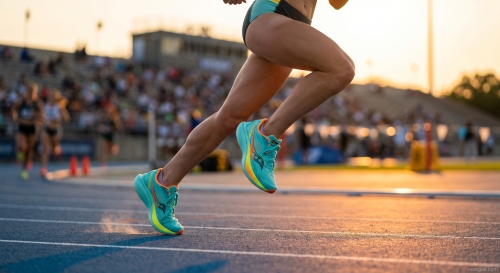
Marathon decision card: Pace behavior: Best from steady running through threshold, with enough tolerance for easier late-race pace.
Course match: Mixed road courses and marathon builds where one shoe must handle workouts and race day.
Fit failure to screen: Secure performance fit with a separate wide version, a rare practical advantage in this group.
Mile-20 tradeoff: The flexible nylon plate remains manageable, though a proven carbon racer can be more efficient.
Endorphin Speed 5 is the best training-to-race compromise. Its semi-rigid nylon plate is more flexible than the carbon Pro, while PWRRUN PB and SpeedRoll keep the transition quick enough for marathon-pace work. One shoe can take the key sessions and still appear on the start line. For a workout-first comparison beyond these two models, see my best running shoes for speedwork.
My log shows 230 miles, making this one of the most mature tests in the ranking. The shoe feels best from steady running through threshold. At deliberately slow pace, the rocker can feel eager, but it is less unstable than a stripped-down carbon racer.
The performance fit is snug through the midfoot with a secure heel and adequate toe room in my usual US 10.5. Saucony also offers a wide version, a practical advantage for runners who cannot make narrow unisex racers work.
Outsole coverage and the less fragile upper make it a better high-mileage investment than a pure race shoe. That durability does not mean it should replace an easy trainer for every run. Save its character by using it for long workouts, tempos, and selected races.
Buy it when budget or simplicity favors one fast shoe for the whole build. Skip it if a validated carbon racer produces better comfort at goal pace, or if the rocker feels awkward after two progressive tests. Nylon is not automatically safer or slower; the complete match matters.
Related testing context: Endorphin Speed 5 review.
What I like
- Training and racing versatility
- Wide version available
- Mature 230-mile test
- More durable than pure racers
What I do not like
- Rocker feels awkward very slow
- Heavier than carbon racers
- Not as efficient for every runner
- Still too specialized as an only easy shoe
Ken’s marathon ranking rule: Speed 5 makes sense when one pair must absorb workouts and start the race. It is the practical winner only if the nylon-plated rocker stays comfortable across the whole pace range, not simply because it costs less than building a rotation.
New marathon shoes I have not ranked yet
New Balance SC Elite v6: New Balance lists a full carbon plate, Infinion foam, an 8 mm drop, a 7 oz men’s weight, and 2E availability. Those changes make it a priority test, not an automatic continuation of v5.
Brooks Hyperion Elite 6: Brooks lists a 7 mm drop, 6.8 oz weight, revised DNA GOLD cushioning, and SpeedVault+ plate. I will not copy the v5 verdict onto a changed platform.
On Cloudboom Strike 2: On lists a 191 g standard version with 5 mm drop and a 158 g LightSpray version with 5 mm drop. It stays on the watchlist until repeat miles replace launch impressions.
ASICS Megablast: ASICS lists a 230 g weight, 8 mm drop, full-length FF TURBO SQUARED cushioning, and no plate. It is a serious one-shoe marathon candidate, but competitor praise cannot substitute for Ken’s own long-run and late-pace test.
PUMA Fast-R NITRO Elite 3: PUMA lists an 8 mm drop, extended PWRPLATE, and NITROFOAM Elite. PUMA also publishes a brand-funded economy claim. I will evaluate the complete shoe at my pace rather than convert that group result into a promised marathon time.
HOKA Cielo X1 3.0: HOKA lists a 7 mm drop and a lighter race-focused redesign. Its current status earns attention, not an inherited verdict from Rocket X 3 or an earlier Cielo.
ASICS Metaspeed Edge Tokyo: ASICS lists the same 170 g weight and 5 mm drop as Sky Tokyo, but changes the foam order and plate geometry for cadence-style runners. It belongs in a direct Sky-versus-Edge test, not as a questionnaire-based substitute.
Freshness policy: A new release can be more relevant without being more proven. Watchlist models show current market awareness while keeping untested claims out of the ranked reviews.
How I tested and ranked marathon shoes
The ten pairs total 1,705 logged miles, ranging from 75 miles in Superblast 3 to 299 miles in Vaporfly 4. Mileage establishes test maturity and wear context. It does not prove that a shoe caused a pace, heart-rate, or race result.
Each serious marathon candidate gets an easy fit run, faster intervals or hills, sustained tempo, marathon-pace work inside a longer run, slow-pace contrast, cornering, and damp-pavement testing when weather allows. The late-run block carries the most weight because a shoe that works fresh can become unstable, tight, or harsh after swelling and fatigue.
I verify materials, claimed weight, drop, and model status on official manufacturer pages. I separate those facts from field observations. I do not turn kitchen-scale measurements or one fast workout into laboratory conclusions.
The core question is specific: would I trust this shoe when the race changes around mile 20? That requires more than the speed criteria used in the running training guide. I score fit security, goal-pace transition, tired-form control, grip, and test maturity before excitement. My marathon-wall decision framework covers the pacing, fueling, and fatigue problem behind that mile-20 test.
The test runner matters. At 182 pounds I may compress a soft PEBA platform differently from a lighter runner. My mild overpronation also makes rear-platform control more visible. Readers should use those details to interpret the ranking, not to copy it blindly.
Marathon running shoe comparison
Specifications are constraints, not the marathon ranking. Weight samples differ by size and sex, and listed drop cannot describe swelling room, arch pressure, late-race control or pace retention. Those facts remain in the detailed verdicts; the mile-20 sequence above performs the selection.
Do not sort these shoes by weight and stop. Manufacturer samples differ by size and sex. A few ounces matter less than a heel that slips, an arch that burns, or a forefoot that loses circulation after swelling.
Choose the marathon shoe for your goal
For a personal record
Start with Alphafly 3, Adios Pro 4, Metaspeed Sky Tokyo, and Vaporfly 4. Test all candidates at the same marathon effort rather than chasing the fastest isolated split. The winner should make the target pace feel repeatable and still hold the foot when cadence drops.
For a first marathon
Start with Superblast 3 if completion and predictable comfort outrank maximum efficiency. Endorphin Speed 5 is the more performance-oriented compromise. Pair the choice with a realistic beginner marathon training plan; no foam can replace durable weekly volume.
For wide feet
Start with SC Elite v5 in 2E or Endorphin Speed 5 Wide. Width availability is only the first screen. Confirm that the foot sits centered over the midsole waist, the heel stays located, and the first and fifth metatarsals do not overhang the platform.
For wet or technical courses
Start with PUMA Deviate NITRO Elite 4 for outsole grip or Rocket X 3 for a more guided platform. A technical course can erase the value of a lighter shoe if every turn requires braking. Test painted road markings, camber, and tight turns before race week.
For one training and racing shoe
Start with Endorphin Speed 5 or Superblast 3. Both tolerate more training use and slower pace than a minimal racer. The tradeoff is higher mass and, in Superblast, no carbon system. That can still be the better total decision when budget or simplicity limits the rotation.
Choose by projected finish profile, not a pace cutoff
A finish-time label does not determine whether you benefit from a supershoe. It changes the test you should run. The longer you expect to be on course, the more weight I place on swelling room, slow-pace control, aid-station transitions, and how the platform behaves after cadence falls. Set current-fitness workout ranges with the running training pace calculator before judging a shoe against an aspirational pace.
The four mile-20 routes above replace a fixed finish-profile table. Goal time does not grant or remove eligibility for a shoe; use the exact rehearsal, fit and fatigue-state checks instead.
What research says about marathon supershoes
A 2026 meta-analysis of advanced footwear technology included 17 randomized crossover trials and 281 participants. It found significant improvements in oxygen consumption, energy cost, cost of transport, and time-trial performance compared with conventional shoes. That supports a real average effect, not a guaranteed personal result.
A second 2026 systematic review and meta-analysis reported roughly 2 to 3 percent lower pooled metabolic demand in carbon-plated footwear. The authors warned that the effect cannot be assigned to the plate alone because foam, stack, mass, rocker, and outsole operate as one system.
Individual response varies. A study and meta-analysis of runner response found meaningful between-runner differences. That is the scientific reason I prefer a controlled shoe comparison over claims that one model is automatically fastest for everyone.
Comfort also has components. The RUN-CAT research identified heel cushioning, stability, forefoot cushioning, and forefoot flexibility as useful dimensions. Those are more actionable than asking whether a shoe feels soft during a standing try-on.
Higher stack changes biomechanics, but evidence does not justify injury guarantees. A 2026 systematic review of sole thickness found effects on running biomechanics and economy while noting ongoing questions. A Cochrane review found low or very low certainty for most shoe-type injury comparisons.
The defensible conclusion is narrow: advanced race shoes can improve economy on average, the complete design matters, and response is individual. The research does not supply a personal time guarantee, a universal pace cutoff, or proof that carbon prevents injury.
Fit and sizing for 26.2 miles
Try marathon shoes late in the day or after an easy run, when feet are warmer and slightly larger. Wear race socks. You need enough front length to avoid toe contact on downhills without letting the heel slide or the foot move across the plate.
Use the wide-foot fit principles referenced in review number seven: width should appear where the foot is broad, not only as extra upper fabric. A wide upper over a narrow midsole can still feel unstable.
If you use an orthotic or aftermarket insole, bring it to the fitting. Added thickness can reduce internal volume, lift the heel above the collar, increase instep pressure, and change where the foot sits over a plate or rocker. Do not assume a setup is compatible because it fits during a standing try-on.
Drop is only one geometry variable. Stack, rocker, foam compression, and plate position complicate the simple millimeter number. Transition gradually when race shoes differ sharply from daily trainers.
Reject the shoe if a pressure point becomes sharper during the run, toes go numb, the heel lifts on turns, or the foot consistently lands beside the intended platform. Do not label those problems a break-in period. Modern race foams may settle slightly, but wrong geometry rarely becomes right at mile 20.
My three-run marathon shoe test
Run 1 – fit screen: Run 4 to 6 easy miles with six short goal-pace pickups. Check heel hold, arch pressure, toe contact, and cornering. Stop for sharp pain, numbness, or a hot spot that grows rather than settles.
Run 2 – pace control: Use a familiar session from the interval training guide. Compare perceived effort, split consistency, and how naturally the shoe changes gears. Keep route, recovery, and weather as similar as practical.
Run 3 – tired-leg test: Put marathon pace late in a long run or use a controlled progression based on the tempo-run guide. Score only the final third: upper hold, calf response, forefoot comfort, grip, and platform control.
Use your projected late-race pace too. A shoe that feels excellent at fresh goal pace can become awkward during a slower final 10K or planned walk break. First marathoners should test both running and aid-station transitions.
Training, rotation, and replacement
Keep most easy mileage in a familiar trainer. Use the marathon shoe for selected pace sessions and enough long work to verify it. A two-shoe rotation preserves the race platform, gives the lower leg varied input, and creates a baseline for detecting when the racer changes. Use the recovery and rest-day guide to place those easier days around the key sessions.
Use the checkpoints in when to replace running shoes: outsole traction, uneven foam compression, upper hold, and changes in the original transition. Cosmetic creases alone do not retire a shoe; a consistent loss of control can.
For easy and recovery volume, compare the best cushioned running shoes. The marathon racer should not have to be the softest shoe in the rotation. Its job is to make goal pace efficient and controllable. For the day after a workout or long run, compare my recovery running shoes.
Plan the final serious shoe test two to three weeks before race day, then use only a short confirmation run during taper. Do not respond to race-week nerves by changing size, socks, lacing, insole, or model without a real run.
The shoe is only one part of marathon execution
A good shoe cannot rescue aggressive pacing or underfueling. Build the race plan around the runner’s nutrition guide, then rehearse carbohydrate and fluid timing during the same long runs used to test the shoe. Use the carb-loading calculator to turn body mass and race timing into a practical starting range.
Use familiar options from the long-run snack guide rather than trying a new product on race morning. Swelling, wet socks, and gastrointestinal stress can make a well-fitting shoe feel wrong even when the shoe itself has not changed.
The broader running gear guide covers socks, anti-chafe, weather layers, and carry systems. The best race-day setup is the one that creates the fewest decisions after the gun.
Are marathon race shoes legal?
World Athletics C2.1A Athletic Shoe Regulations effective April 20, 2026 set a 40 mm maximum sole thickness for road running events. A listed stack or family name does not establish eligibility for a particular colorway, customized pair, development version or different event.
Most recreational marathoners will not face inspection, but athletes chasing records, prize money, rankings, or qualification standards should verify the exact model and event. Do not assume a development prototype, special athlete version, and retail colorway share the same status.
Frequently asked questions
What are the best marathon running shoes overall?
Nike Alphafly 3 is Ken’s best marathon racer after a 95-mile test because its deep cushioning and forefoot system make the most sense at sustained marathon pace. Adios Pro 4 is better for steady rhythm, while Superblast 3 is the more predictable non-plated first-marathon choice for Ken after the stated rehearsal.
Do I need carbon-plated shoes for a marathon?
No. Carbon-plated shoes can improve running economy on average, but they are optional. A comfortable, tested trainer such as Superblast 3 can be a better marathon shoe when a plated racer feels unstable, narrow, or awkward at the runner’s actual pace.
What is the best marathon shoe for beginners?
ASICS Superblast 3 is the best non-plated beginner option in this ranking because it can cover long runs, marathon-pace workouts, and race day with a predictable platform. Endorphin Speed 5 is the faster training-to-race alternative.
What is the best marathon shoe for wide feet?
New Balance SC Elite v5 is the best fully tested wide option because the men’s model was offered in 2E. Endorphin Speed 5 also has a wide version. New Balance SC Elite v6 is current and offered in 2E, but Ken has not completed the same test protocol in it.
How should marathon running shoes fit?
Use the race socks you will wear and leave enough front length for swelling without allowing heel movement. Check pressure at the fifth toe, instep, arch, and heel after at least 30 minutes at marathon pace. Extra length does not solve the wrong width.
How many miles should I run in marathon shoes before race day?
There is no magic mileage. Complete at least one easy fit run, one quality workout, and one longer run containing marathon pace. The goal is to verify fit, grip, lower-leg response, and late-run control, not to wear down a race shoe unnecessarily.
Can slower runners benefit from supershoes?
Possibly. Group research shows an average running-economy benefit, but individual response varies with pace, body mass, mechanics, comfort, foam, stiffness, and geometry. Test the shoe at your own goal pace and projected late-race pace.
Are marathon race shoes good for daily training?
Usually not as the only shoe. Pure racers trade outsole, upper structure, and easy-pace stability for low weight and speed. Use a daily trainer for most easy miles and reserve the racer for selected marathon-pace workouts and races. For the shoe that handles the rest of the week, compare my best daily trainer running shoes.
Should I wear the same shoes for marathon training and race day?
You can, especially in a versatile option such as Superblast 3 or Endorphin Speed 5. A separate carbon racer may provide a performance advantage, but only after it passes race-specific fit and comfort tests.
What heel drop is best for marathon running shoes?
There is no universal best drop. This list ranges from 5 to 8 mm. Choose a drop and rocker that remain comfortable at goal pace and under fatigue, and transition gradually when the new shoe differs substantially from your normal trainer.
Are cushioned shoes always better for a marathon?
No. Cushioning must be balanced with control, fit, weight, and transition. A very soft or tall shoe can feel unstable, while a light racer can become harsh late. Choose the shoe that remains predictable in the final third of a long test.
How long do marathon racing shoes last?
There is no universal cutoff. Track changes in outsole traction, upper hold, foam compression, and the original transition. Retire a shoe from racing when it consistently feels less controlled or protective compared with a fresher pair.
Are marathon supershoes safe?
Research supports performance effects but does not prove that supershoes prevent injury. Tall stacks and stiff structures can change mechanics and loading. Introduce them gradually and seek qualified care for persistent pain.
Can heel strikers wear marathon supershoes?
Yes. Heel striking alone does not rule out a supershoe. Prioritize secure rearfoot geometry, a transition that does not feel abrupt at goal pace, and enough platform control when tired. Endorphin Pro 5 and Rocket X 3 feel more guided than the narrowest racers in this ranking.
Can I use orthotics in marathon racing shoes?
Sometimes, but verify the exact shoe. A thicker orthotic can reduce internal depth, raise the heel, change upper pressure, and alter how the foot sits over the plate or rocker. Use the complete race setup for an easy run, a workout, and a longer marathon-pace test before race day.
Are these shoes suitable for a trail marathon?
No. This ranking is for road marathons. A trail marathon may require deeper lugs, rock protection, a more durable upper, and control on uneven terrain. Choose a trail-specific model based on surface, elevation, weather, and technical difficulty.
Are carbon-plated marathon shoes legal?
World Athletics C2.1A regulations effective April 20, 2026 set a 40 mm maximum sole thickness for road running events. Exact model approval, availability, athlete customization, certification status, and event rules still require a current check; road eligibility does not establish track eligibility.
Final verdict
Nike Alphafly 3 is my best marathon running shoe for an experienced racer who has already passed the fit and long-run test. Adios Pro 4 is the steadier rhythm shoe, Metaspeed Sky Tokyo is the lightweight stride specialist, and Vaporfly 4 is the most versatile racer across distances.
For a first carbon shoe, start with Endorphin Pro 5. For a more guided rocker, use Rocket X 3. Wide-footed runners should compare SC Elite v5 or the newer v6. First marathoners who do not need carbon should put Superblast 3 beside Endorphin Speed 5 and let late-run comfort decide.
The fastest credible choice is the shoe that survives your own marathon-pace test. Build that test inside a half-marathon progression when you are still developing endurance, then carry the winner into the full build.
New race-shoe field reviews: Continue with Nike Vaporfly 4 review; Saucony Endorphin Pro 5 review.

Written by Ken – 12 years of running, 12,500+ miles, 63 shoes tested, and 36 races from 5Ks to a 50K ultra. I run 30-40 miles a week on the Atlantic City Boardwalk and review shoes with repeated training miles, not one-run demos. More about Ken