
The best lightweight running shoes remove unnecessary mass without removing the support, cushioning, grip, or structure required for their job. I rank the New Balance FuelCell Rebel v5 first overall, the adidas Adizero EVO SL for premium-foam versatility, and the HOKA Mach 7 for non-plated tempo work.
After 12 years of running, I no longer treat the scale as the verdict. I ask what each shoe bought with its grams and what it gave up to get lighter. A 206-gram flexible trainer, a 230-gram high-stack shoe, and a 190-gram carbon racer can all be excellent—but never for the same reason.
For the larger market, see my overall running-shoe guide. If the intended job is not clear yet, my shoe-selection framework should come before a weight comparison.
Quick Picks: 3 Lightweight Running Shoes I Would Compare First
These three cover the most useful non-racing decisions: one light daily trainer, one premium-foam all-rounder, and one controlled tempo shoe. I compare the trade-off column before the ounce figure, then open the exact width and seller return terms.
| Shoe | Why it makes my shortlist | The weight trade-off | Check price |
|---|---|---|---|
| New Balance FuelCell Rebel v5 | Best overall: low mass, daily comfort, pace range, and a Wide option | Soft foam and lighter outsole sacrifice some guidance and wet-surface confidence | Check Rebel v5 price |
| adidas Adizero EVO SL | Best superfoam trainer: Lightstrike Pro without a full carbon plate | High compliant foam and performance fit are less settled on tight turns | Check EVO SL price |
| HOKA Mach 7 | Best non-plated tempo option: quick, controlled, and workout-specific | Five-millimeter drop and firmer ride give up plush recovery comfort | Check Mach 7 price |
10 Best Lightweight Running Shoes: In-Depth Reviews
I use a gram-budget form for every shoe: intended job, verified reference weight, what the saved mass improves, and what the design removes or compromises. That keeps a race shoe from winning simply because it is the lightest object in the table.
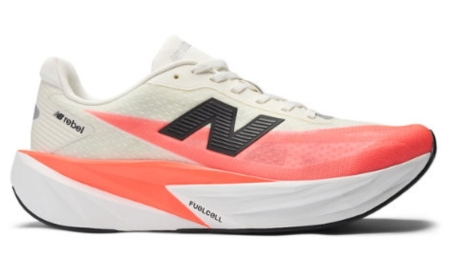
1. New Balance FuelCell Rebel v5 — Best lightweight running shoe overall
| Weight-to-purpose decision | What I found |
|---|---|
| Reference weight | 7.9 oz/223 g men’s reference |
| Best job | Daily miles, fartleks, steady runs, and one-shoe lightweight versatility |
| Trade-off | Soft foam and lighter outsole sacrifice some guidance and wet-surface confidence |
I rank Rebel v5 first because it spends its weight budget on range rather than one spectacular trick. The 7.9-ounce men’s reference is genuinely light, but the broader v5 platform and PEBA/EVA FuelCell blend still give me enough substance for ordinary daily mileage. I can run easy, add fartlek surges, and finish steady without changing shoes.
My direct work in this model is why I trust its boundary. At easy pace the foam compresses readily; when pace rises, the low mass becomes more noticeable than the softness. It does not lock me into the timing of a plate or aggressive rocker. That makes it easier to recommend than a faster, narrower-use racer.
The trade is control and rubber. Soft foam can move under a runner who needs firm guidance late in a run, and this is not my first outsole for slick painted lines or wet wood. The close upper also needs a real width decision: I use Wide for forefoot spill instead of hiding the issue with extra length.
I choose Rebel v5 for a neutral runner who wants one light non-plated shoe for most training. I skip it when firm stability, maximum wet grip, or a durable concrete workhorse matters more than turnover.
My gram-budget verdict: Best overall. The low mass earns its place only for daily miles, fartleks, steady runs, and one-shoe lightweight versatility.
My Rebel v5 review contains the full direct-test record.
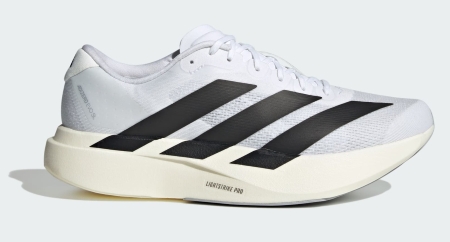
2. adidas Adizero EVO SL — Best lightweight superfoam trainer
| Weight-to-purpose decision | What I found |
|---|---|
| Reference weight | About 7.9 oz/224 g reference |
| Best job | Daily runs, tempos, and long progression efforts without a full carbon plate |
| Trade-off | High compliant foam and performance fit are less settled on tight turns |
I rank EVO SL second because full-length Lightstrike Pro delivers the most super-shoe-like foam here without a full carbon plate. That absence matters: the platform can rebound during normal daily running without forcing every step into a stiff race rhythm.
Its weight-to-purpose ratio is excellent. Around 224 grams, it carries enough cushioning for aerobic miles, enough response for tempo work, and enough depth for a progression run. The small midfoot stiffening element adds some structure, but this is still a compliant high platform rather than a low, planted flat.
My limitation is fit and long-term evidence in this exact model. I do not turn specification work into a fictional mileage log. I judge the design and short-run behavior, then keep the recommendation conditional on heel security, midfoot volume, and corner control. A heel that lifts in a lunge will not become stable at tempo pace.
I choose EVO SL for a neutral runner with a secure adidas fit who wants one modern foam for many paces. I skip it for wide forefeet, strong guidance needs, or frequent tight-track turns.
My gram-budget verdict: Best superfoam trainer. The low mass earns its place only for daily runs, tempos, and long progression efforts without a full carbon plate.
My EVO SL review explains its fit and daily-to-tempo range.
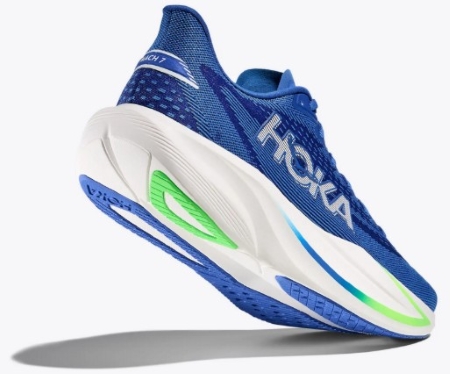
3. HOKA Mach 7 — Best lightweight tempo shoe without a plate
| Weight-to-purpose decision | What I found |
|---|---|
| Reference weight | 8.37 oz/237 g men’s size 10 reference |
| Best job | Tempo runs, intervals, progression runs, and runners wanting controlled turnover |
| Trade-off | Five-millimeter drop and firmer ride give up plush recovery comfort |
Mach 7 is my non-plated tempo winner because it feels light through clean mechanics rather than deep softness. In my long-term testing, the supercritical-EVA platform returns to shape quickly and the rocker moves through toe-off without a plate dictating the timing.
That combination works across a full workout. The warm-up is manageable, threshold blocks feel controlled, and the cool-down does not become as awkward as it can in a stiff racer. Purposeful forefoot and heel rubber also make the outsole map feel less compromised than many weight-first shoes.
The trade is plushness and drop. The 5 mm geometry asks more from the calf and ankle than an 8–10 mm trainer, even when the rocker smooths the sensation. The standard forefoot is also performance-oriented; I move to Wide for spill rather than tightening a narrow shape.
I choose Mach 7 for tempo, intervals, and progression work when natural flex matters. I skip it as the primary recovery shoe or when a low drop has repeatedly irritated the lower leg.
My gram-budget verdict: Best non-plated tempo shoe. The low mass earns its place only for tempo runs, intervals, progression runs, and runners wanting controlled turnover.
My HOKA Mach review provides the long-term test details.
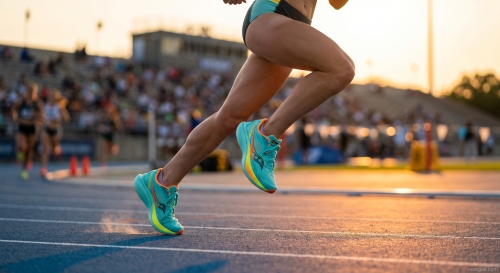
4. Saucony Endorphin Speed 5 — Best lightweight plated trainer
| Weight-to-purpose decision | What I found |
|---|---|
| Reference weight | 8.3 oz/237 g men’s reference |
| Best job | Threshold work, long intervals, race-pace long runs, and 10K-to-half racing |
| Trade-off | Nylon plate and rocker reduce natural flex and are unnecessary for easy-only weeks |
Endorphin Speed 5 is my plated training pick because its semi-rigid nylon plate bends more naturally than a carbon racing plate. PWRRUN PB surrounds that plate, while SPEEDROLL maintains rhythm during threshold work and long intervals.
I have direct miles in this model and find its strongest lane is sustained pace. The plate stabilizes soft foam and removes the dead spot between landing and toe-off. For drills or all-out 200s, I still prefer a lower flexible shoe; for a race-pace long run, Speed makes more sense.
I do not buy it simply because a plate sounds fast. Some runners load the rocker naturally; others feel pushed forward too early. I test easy pace and goal pace, because a shoe that works only while fast is a poor daily purchase. Wide availability improves access, but the plate remains the defining fit experience.
I choose Speed 5 for a runner who already owns an easy-day shoe and wants one workout tool. I skip it for recovery-only weeks, plate-sensitive feet, or runners who prefer free forefoot flex.
My gram-budget verdict: Best plated trainer. The low mass earns its place only for threshold work, long intervals, race-pace long runs, and 10k-to-half racing.
My Endorphin Speed review covers the plate and rocker boundary.
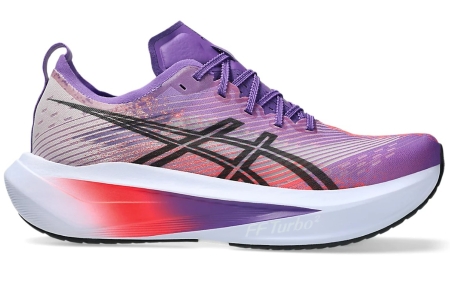
5. ASICS MEGABLAST — Best lightweight high-stack long-run shoe
| Weight-to-purpose decision | What I found |
|---|---|
| Reference weight | 8.1 oz/230 g unisex reference |
| Best job | Long runs with pace changes and marathon workouts requiring cushion without bulk |
| Trade-off | Very tall geometry, standard width, and premium price |
MEGABLAST earns the high-stack slot because it delivers a remarkable amount of foam at 230 grams without a plate. FF TURBO SQUARED creates the rebound and ASICSGRIP handles contact, so the shoe uses low mass to reduce long-run bulk rather than to imitate a minimalist flat.
That distinction is the whole recommendation. The 46.5/38.5 mm technical stack provides a very tall cushion-to-weight result for long progression efforts. A runner who searches lightweight because his long-run trainer feels heavy after ninety minutes may value this more than a 200-gram low-stack shoe.
I have not logged a long-term test in this exact model, so I keep the claim inside the verified design and the run role I can assess. Height is the risk: off-camber pavement, tight turns, and uneven shoulders create more leverage under the ankle. Standard-only unisex fit also deserves careful conversion and heel testing.
I choose MEGABLAST for a runner already comfortable in tall neutral platforms who wants lower mass on long runs. I skip it for low cost, broad widths, ground feel, or strong lateral control.
My gram-budget verdict: Best high-stack long-run shoe. The low mass earns its place only for long runs with pace changes and marathon workouts requiring cushion without bulk.
I compare lower and more stable long-run platforms before paying for its extreme cushion-to-weight ratio.
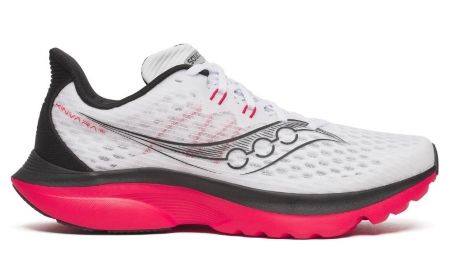
6. Saucony Kinvara 16 — Best traditional lightweight trainer
| Weight-to-purpose decision | What I found |
|---|---|
| Reference weight | 7.3 oz/206 g men’s reference |
| Best job | Strides, short tempos, treadmill sessions, and gym-to-run use |
| Trade-off | Lower stack, exposed foam, limited widths, and a 4 mm transition cost |
Kinvara 16 is the traditional lightweight choice because its 206-gram reference comes from less shoe, not from a huge slab of exotic foam. The 28/24 mm geometry bends with the foot and gives me a direct platform for strides, drills, treadmill running, and short tempos.
My direct testing shows why this simplicity still matters. The shoe lets ankle and toes contribute rather than replacing their motion with a plate and rocker. Ground timing is clear, and the shoe transitions between running and gym work better than a tall unstable trainer.
The same economy creates the cost. There is less material for long-run protection, the 4 mm drop requires adaptation, and exposed foam makes wear more dependent on landing pattern and surface. Regular-only fit is also a real constraint for broad forefeet.
I choose Kinvara 16 for short fast running, flexible mechanics, and mixed sessions. I skip it as a first low-drop experiment during high mileage or as the only marathon long-run shoe for a runner accustomed to deep cushioning.
My gram-budget verdict: Best traditional lightweight trainer. The low mass earns its place only for strides, short tempos, treadmill sessions, and gym-to-run use.
My Kinvara review explains its natural-flex role.
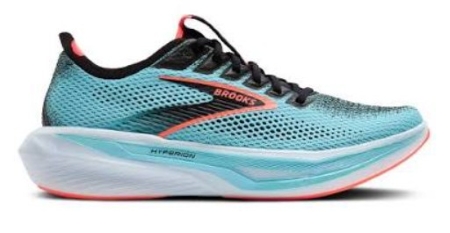
7. Brooks Hyperion 3 — Best stable lightweight workout shoe
| Weight-to-purpose decision | What I found |
|---|---|
| Reference weight | 8.2 oz/232.5 g men’s reference |
| Best job | Intervals, track turns, steady runs, and runners wanting a predictable fast platform |
| Trade-off | Moderate cushioning and medium-only fit reduce easy-day and wide-foot appeal |
Hyperion 3 is my stable lightweight workout shoe because it spends fewer grams on drama and more on a predictable platform. DNA FLASH v2 is responsive but controlled, the heel is secure, and the 8 mm drop integrates easily with mainstream daily trainers.
On a track or measured road loop, that quiet geometry helps me judge pace rather than balance on a soft heel. It is a useful alternative for runners who dislike the movement of tall neutral superfoam. Brooks added cushioning, but I still treat this as workout-first rather than plush daily mileage.
My evidence boundary is clear: I have not built a long-term log in this exact generation. I verify its configuration and assess the role without inventing durability. Medium-only width also limits the recommendation; a stable platform cannot compensate for a forefoot squeezed by the upper.
I choose Hyperion 3 for intervals, track turns, and steady runs where control matters. I skip it for wide feet, soft long runs, or runners seeking maximum rebound.
My gram-budget verdict: Best stable workout shoe. The low mass earns its place only for intervals, track turns, steady runs, and runners wanting a predictable fast platform.
I program its role with my interval training guide.
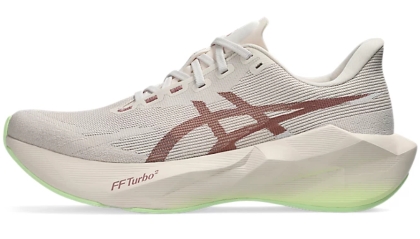
8. ASICS Novablast 6 — Best cushioned lightweight daily trainer
| Weight-to-purpose decision | What I found |
|---|---|
| Reference weight | 8.9 oz/253 g men’s; 7.6 oz/215 g women’s reference |
| Best job | Easy-to-steady daily runs and moderate long runs with a lively forefoot |
| Trade-off | Men’s model sits just above my strict cutoff and high foam reduces precision |
Novablast 6 is the cushioned lightweight daily trainer, with one honest qualification: the men’s 8.9-ounce reference misses my strict 8.8-ounce line by 0.1 ounce, while the women’s 7.6-ounce reference is clearly light. I keep it because the real question is whether a high-cushion daily shoe feels cumbersome, and this one does not.
FF BLAST MAX plus an FF TURBO SQUARED forefoot pod concentrates the livelier material where toe-off loads. That lets the shoe move from easy pace toward steady running without paying the mass and price of a full superfoam slab.
My direct long-term baseline is Novablast 5, not a fictional v6 mileage total. I use that history to interpret the family, then verify the v6 geometry and judge its current run behavior separately. The high neutral platform still reduces precision on track turns and can feel mobile to a runner needing guidance.
I choose Novablast 6 for daily running when cushion and bounce matter more than road feel. I skip it for a strict men’s weight cutoff, firm stability, or dedicated racing.
My gram-budget verdict: Best cushioned daily trainer. The low mass earns its place only for easy-to-steady daily runs and moderate long runs with a lively forefoot.
My Novablast review provides the tested version-to-version baseline.
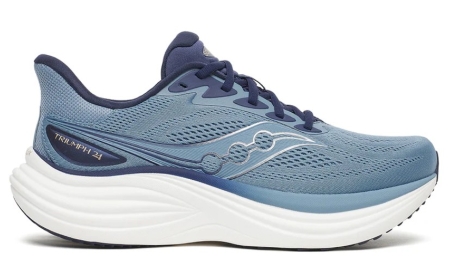
9. Saucony Triumph 24 — Best lightweight premium easy-day shoe
| Weight-to-purpose decision | What I found |
|---|---|
| Reference weight | 8.8 oz/about 250 g men’s reference |
| Best job | Easy runs and long aerobic mileage for runners wanting a 10 mm drop |
| Trade-off | Tall plush build is light for its job but not genuinely workout-oriented |
Triumph 24 is lightweight for its job, not a tempo shoe dressed in a comfort upper. At roughly 250 grams, it sits on my cutoff while carrying a 43/33 mm platform, a plush upper, and a 10 mm drop. That makes it unusual among easy-day shoes.
My direct 200-plus-mile work shows the value: incrediLUX foam lets tired legs cruise without making the shoe feel as heavy as many premium max-cushion trainers. The high offset also gives runners who prefer a more traditional heel relationship a light option outside the low-drop trend.
The ounce number can mislead. Soft step-in, high stack, and comfort construction prioritize aerobic running rather than fast turnover. Selective rubber also means I inspect wear rather than assuming premium price equals unlimited durability.
I choose Triumph 24 as the easy-day half of a two-shoe rotation. I skip it when track speed, low stack, or precise road feel is the reason for buying light.
My gram-budget verdict: Best premium easy-day shoe. The low mass earns its place only for easy runs and long aerobic mileage for runners wanting a 10 mm drop.
My Triumph 24 review includes the long-term record.
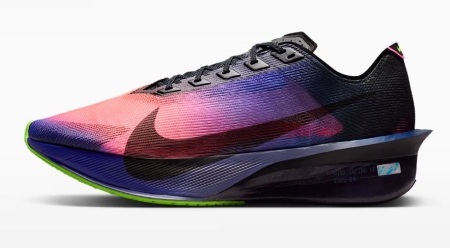
10. Nike Vaporfly 4 — Best lightweight road racing shoe
| Weight-to-purpose decision | What I found |
|---|---|
| Reference weight | 6.7 oz/190 g men’s US 10; 5.4 oz/152 g women’s US 8 |
| Best job | Road races from 10K through marathon plus limited race-specific workouts |
| Trade-off | Narrow specialized fit, cost, outsole economy, and poor daily-training value |
Vaporfly 4 is the lightest shoe here and the least appropriate for daily training. Nike’s 190-gram men’s US 10 reference comes from an explicit race budget: reduced upper, midsole, and outsole material around ZoomX and a full carbon Flyplate.
That budget makes sense at goal pace. The plate angle, narrow waist, and 6 mm geometry are designed for road-race efficiency from 10K through marathon. None of that makes recovery running better. I save it for a small number of race-specific sessions and clean race pavement.
I do not have a long-term durability log in this exact generation, and a racing outsole makes that less useful than fit-at-pace evidence anyway. I test after swelling, on corners, and late in a goal-pace block. Thin rubber and exposed foam are design choices, but peeling edges, traction loss, or asymmetric compression are meaningful failures.
I choose Vaporfly 4 for an experienced runner with a proven daily trainer and a race-day job. I skip it for wide sizing, durability per dollar, or any attempt to make a carbon racer the everyday shoe.
My gram-budget verdict: Best race shoe. The low mass earns its place only for road races from 10k through marathon plus limited race-specific workouts.
My Vaporfly review explains race fit and use limits.
How I Tested and Verified These Shoes
I use a weight-to-purpose protocol. First I identify whether the exact model is in my long-term log, a shorter direct assessment, or a specification-led current-generation recommendation. Then I test or evaluate the same six demands: fit, easy pace, intended fast or long-run role, corner control, fatigue, and material economy.
| Audit | My question | Reason a light shoe fails |
|---|---|---|
| Evidence boundary | What have I run in this exact generation? | A specification is presented as personal mileage |
| Fit under motion | Does the reduced upper still hold heel, midfoot, and toes? | Heel lift, toe pressure, or forefoot spill |
| Job test | Does low mass improve the intended session? | Light on paper but awkward at target pace |
| Control | Can I corner and land imperfectly without bracing? | Soft heel movement or narrow-platform leverage |
| Fatigue | Does the shoe remain protective late in the run? | Bottoming out, calf overload, or plate pressure |
| Material economy | What rubber, upper, or foam was removed? | Early wear, poor grip, or fragile lockdown |
I label my experience boundary first
Rebel v5, Mach 7, Endorphin Speed 5, Kinvara 16, and Triumph 24 have direct model-specific test records in my work. Other current models are ranked from a shorter direct assessment plus exact configuration and role analysis. I state the limitation instead of manufacturing a mileage story.
I verify the reference size behind the weight
A published ounce figure is meaningless without gender and sample size. I preserve the stated basis where available and flag the Novablast 6 men’s model for missing my cutoff by 0.1 ounce. I never compare a women’s size 8 directly with a men’s size 10 and call the result a ranking.
I test lockdown with less upper material
Weight often leaves the upper first. I run, corner, accelerate, and use a walking lunge to expose heel movement. Toe clearance, instep pressure, and forefoot spill must remain quiet after the foot warms. A reduced upper does not earn permission to squeeze or slide.
I make every shoe perform its actual job
Daily shoes get easy and steady miles. Tempo shoes get threshold work and intervals. Long-run shoes go beyond the fresh opening miles. Vaporfly gets goal pace, not praise for jogging slowly. I use my speedwork shoe guide when the training role is the first filter.
I challenge corner and fatigue control
Low mass is not stability. I check tight turns, road camber, late-run heel control, and whether soft foam makes the ankle brace. A light shoe that becomes work to balance has failed its purpose for that runner.
I inspect what was removed
Thin rubber, exposed foam, reduced padding, and minimalist heel structure save weight. I inspect peeling edges, traction, upper stretch, foam asymmetry, and ride change. My replacement guide uses those signals instead of a universal mileage number.
My testing rule: I reward useful grams, not merely fewer grams. A lightweight shoe earns its ranking only when the fit, target pace, control, and durability trade remain acceptable for the role.
How to Choose the Best Lightweight Running Shoes
I choose from the session backward. The right lightweight shoe is the least massive design that still provides enough platform, flex or stiffness, grip, and fit for the actual run. I never begin by sorting a retailer from lightest to heaviest.
1. Name the job before the weight target
For daily range I begin with Rebel or EVO SL. For tempo I compare Mach and Hyperion. For sustained plated work I use Speed. For long runs I compare MEGABLAST, Novablast, or Triumph. For racing I consider Vaporfly. My daily-trainer guide helps when ordinary mileage remains the main job.
2. Decide whether you want natural flex, rocker, or plate
Kinvara flexes with the foot; Mach and MEGABLAST use geometry without a plate; Speed adds nylon; Vaporfly adds carbon. Each changes timing. I choose the least structural intervention that produces the intended pace comfortably.
3. Match cushioning depth to duration
A 30-minute tempo and a two-hour progression run do not need the same stack. Kinvara or Hyperion can feel clear and quick for shorter work; MEGABLAST or Triumph preserves more depth for long aerobic running. My long-distance guide covers that branch.
4. Treat low drop as a load change
Kinvara’s 4 mm and Mach’s 5 mm geometry can increase calf and ankle demand relative to 8–10 mm shoes. I start with short easy exposure, not a hard workout. My heel-drop guide explains the transition without declaring one number best.
5. Choose width before extra length
Rebel, Mach, and Speed provide Wide options; several others do not. I solve side pressure with the correct width or last, then protect heel hold and toe clearance. A long narrow shoe is still narrow where the foot is widest.
6. Balance body mass with platform behavior
A heavier runner can use a light shoe, but foam must remain controlled and sufficiently deep. Triumph or MEGABLAST may offer more late-run material; Hyperion may offer more firmness. My guide for heavier runners puts platform control ahead of shoe mass.
7. Budget outsole and upper durability honestly
Race rubber and exposed foam are intentional weight choices. I do not expect Vaporfly to provide the daily value of Rebel, and I do not judge Kinvara like a fully rubbered workhorse. I buy for cost per useful session rather than price divided by an imaginary universal lifespan.
8. Test easy pace and target pace
A tempo shoe must remain tolerable in the warm-up; a race shoe must remain comfortable at goal pace after swelling. I test both ends. A shoe that feels exciting for thirty seconds can still create pressure or instability at forty minutes.
9. Build a rotation only when the second shoe has a job
I start with Rebel, EVO SL, Novablast, or another daily option. I add Mach, Speed, or Hyperion for workouts and Vaporfly only for racing. The 5K training plan and marathon shoe guide show how those roles change with distance.
- Name daily, workout, long-run, or race use.
- Choose natural flex, rocker, nylon, or carbon.
- Match cushioning depth to duration.
- Transition gradually when drop changes.
- Use width instead of excess length.
- Check foam control under your load.
- Accept the outsole and upper trade honestly.
- Test easy pace and target pace.
- Add a second shoe only for a distinct job.
My buying rule: I buy the lightest shoe that still feels secure, controlled, and adequately protective for the intended session. If saving grams creates heel movement, instability, or the wrong ride, those grams were not worth saving.
Frequently Asked Questions
What is the best lightweight running shoe overall?
I rank the New Balance FuelCell Rebel v5 first because it is genuinely light, non-plated, available in Wide, and useful from easy running through controlled workouts. EVO SL offers more premium-foam energy; Mach 7 offers more workout control; Vaporfly 4 is the race specialist.
What weight counts as a lightweight running shoe?
For this guide I use roughly 8.8 ounces or 250 grams as a practical men’s reference, then consider the shoe’s job and stated sample size. Women’s reference weights are normally lower. I disclose borderline models instead of pretending one cutoff applies to every size and category.
Do lighter running shoes make you faster?
Lower mass can reduce what the leg must move, but a shoe only helps if its fit, geometry, foam, grip, and stability work at the intended pace. A very light shoe that makes the runner brace or changes comfortable mechanics can be slower in practice.
What is the best lightweight shoe for daily training?
Rebel v5 is my broadest daily recommendation. EVO SL suits runners who want premium rebound, Novablast 6 adds more cushion, and Triumph 24 serves easy mileage. I choose by the dominant run rather than the lowest weight.
What is the best lightweight shoe for tempo runs?
I choose HOKA Mach 7 for a controlled non-plated ride, Endorphin Speed 5 for sustained plated rhythm, and EVO SL for superfoam without a full carbon plate. The correct choice depends on desired flex and rocker timing.
What is the best lightweight running shoe for wide feet?
Rebel v5, Mach 7, and Endorphin Speed 5 offer useful Wide versions in selected colors. I still check heel and instep volume because wider forefoot space does not guarantee the whole last fits.
Can beginners run in lightweight shoes?
Yes. Rebel v5 can work for a neutral beginner who feels controlled in it. I avoid beginning with Vaporfly or another specialized racer. Fit, stability, and enough protection for the current run-walk volume matter more than chasing grams.
Can lightweight running shoes handle long runs?
Yes when the cushioning and geometry match. MEGABLAST, EVO SL, Novablast 6, and Triumph 24 are built to keep mass low without becoming thin flats. Kinvara 16 may feel under-protective for runners accustomed to high stacks.
Are carbon-plated shoes always lighter and faster?
No. A plate adds structure and changes timing; it does not guarantee low weight or a better result. EVO SL, Mach 7, Rebel v5, and MEGABLAST are light without a full carbon plate. I use carbon only when the race role and fit justify it.
How long do lightweight running shoes last?
There is no universal mileage. Lower rubber coverage and exposed foam can trade durability for mass, but landing pattern and surface matter. I inspect rubber edges, foam compression, upper security, grip, and ride change instead of retiring every shoe at the same number.
Should I size up in a lightweight running shoe?
Only when the moving fit requires it. Performance uppers often feel close, but excess length can create heel slip. I try the correct width first, test after swelling, and follow model-specific advice when the brand says a shoe runs small.
Can I use a lightweight road shoe on trails?
Only on smooth, dry, nontechnical paths when grip and protection are adequate. Thin uppers, limited rubber, and road geometry are poor substitutes for trail traction and underfoot protection. I do not take Vaporfly or another road racer onto technical terrain.
What is the best affordable lightweight running shoe?
Kinvara 16 is my simplest value choice when low drop and moderate cushion fit the runner. Rebel v5 offers more daily range. EVO SL can be strong value for premium foam, but availability and retailer pricing change.
Can heavier runners use lightweight running shoes?
Yes. Body mass does not automatically require a heavy shoe. I prioritize platform control, fit, foam behavior under load, and enough outsole. Triumph 24 or MEGABLAST may provide more depth; Hyperion 3 may provide more control.
Is a lightweight shoe better for cadence?
A lighter shoe can feel easier to turn over, but I do not use it to force an arbitrary cadence. Stride rhythm should respond naturally to pace, terrain, and the runner. Comfort and controlled mechanics remain the filter.
When should I stop testing a lightweight shoe?
I stop for increasing or focal pain, gait change, persistent calf or Achilles response, numbness, toe pressure, or instability. I do not treat discomfort as proof that the body needs to adapt to less shoe.