
My best running shoes for heel strikers in 2026 start with the Brooks Ghost 18. After 12 years of running and thousands of miles comparing rearfoot landings, I rank it first because its heel hold, balanced cushioning, 10 mm drop, rubber coverage, and uncomplicated transition work for the widest range of daily runners.
I am a habitual rearfoot striker, although my contact moves forward as pace rises. That experience taught me that a soft heel is not automatically a good heel. I judge where the foot lands, how the foam compresses, whether the rear platform stays centered, how smoothly the shoe moves forward, and what happens after fatigue makes my placement less exact.
I deliberately limit this list to ten shoes with clearly different jobs. Together they give me distinct answers for daily mileage, durability, maximum cushioning, support, recovery, speedwork, and racing without filling the ranking with near-duplicate roles.
My shortest recommendation: I start with Ghost 18 for a neutral daily trainer, Gel-Nimbus 28 for maximum neutral cushioning, Adrenaline GTS 25 for familiar support, Gel-Kayano 32 for cushioned guidance, Endorphin Speed 5 for workouts, and PUMA Deviate NITRO Elite 4 for racing. I let warm-foot fit and the final third of the run overrule every ranking.
Quick Picks: 10 Best Running Shoes for Heel Strikers
I use this table to choose a starting point, not to make the final purchase. I match the shoe to the run first, then I check rearfoot control, fit, and the way the transition behaves when I am tired.
| Shoe | My pick | Best use |
|---|---|---|
| Brooks Ghost 18 | Best overall | Daily road mileage |
| Mizuno Wave Rider 29 | Best durable heel platform | Steady miles and hard heel wear |
| ASICS Gel-Nimbus 28 | Best max-cushion neutral shoe | Recovery and easy long runs |
| Nike Vomero 18 | Best soft high-drop ride | Plush easy and relaxed long runs |
| Brooks Adrenaline GTS 25 | Best traditional stability shoe | Supported daily mileage |
| ASICS Gel-Kayano 32 | Best max-cushion stability shoe | Long supported mileage |
| Saucony Triumph 24 | Best lightweight cushioned option | Easy, long, and steady runs |
| HOKA Bondi 9 | Best rockered recovery shoe | Recovery and run-walk sessions |
| Saucony Endorphin Speed 5 | Best for speedwork | Intervals, tempo, and fast long runs |
| PUMA Deviate NITRO Elite 4 | Best race-day option | Road racing |
If I need a wider market comparison before narrowing the list, I use my best running shoes guide. For deep cushioning specifically, I compare the models again in my cushioned running shoe guide.
10 Best Running Shoes for Heel Strikers: My Reviews
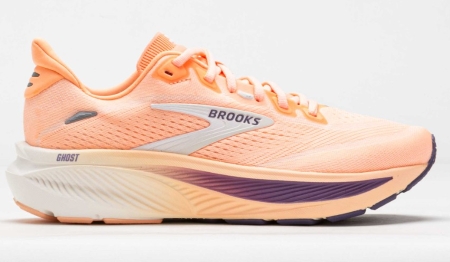
1. Brooks Ghost 18 — Best overall
| What I checked | My test note |
|---|---|
| Best for | Daily road mileage |
| Reference weight | 10.2 oz / 289 g |
| Advertised drop | 10 mm |
| Logged mileage | 380 miles |
| Fit | True to size for me; secure heel, medium-volume forefoot, multiple widths |
I put Ghost 18 first because it solves the ordinary heel-striker problems without creating a specialist ride. Its DNA LOFT v3 midsole softens contact, but the heel never feels like a deep bucket. The rearfoot lands, compresses in a controlled path, and joins the forefoot without asking me to wait for a dramatic rocker.
Across my 380 miles, I kept noticing how little management the shoe required. I could use it for easy road miles, steady running, or an unplanned progression without changing my mechanics. When fatigue moved my contact toward the outer rear corner, the full rubber and broad-enough platform still gave me a clean path toward the center.
The secure collar matters as much as the foam. My heel stays seated without aggressive lace pressure, and I do not feel the foot sliding before toe-off. That quiet fit is why I rank Ghost above softer shoes: movement inside the shoe can turn a smooth geometry into friction, delay, and repeated toe gripping.
I choose Ghost when I want one neutral daily trainer or when I do not yet know which cushioning extreme suits the runner. I skip it for runners who want a very light workout shoe, a pronounced rocker, or formal guidance. Its main weakness is also its strength: it feels conventional rather than exciting.
- I like the secure, non-fussy heel hold.
- I like the predictable transition and complete rearfoot contact patch.
- I like the mature 380-mile test window and multiple widths.
- I do not choose it for sharp tempo work or runners who dislike a higher offset.
My full mileage notes are in the Brooks Ghost review. I also compare its role with other workhorse options in my daily trainer guide.
2. Mizuno Wave Rider 29 — Best durable heel platform
| What I checked | My test note |
|---|---|
| Best for | Steady miles and hard heel wear |
| Reference weight | About 9.7 oz / 275 g |
| Advertised drop | 10 mm |
| Logged mileage | 90 miles |
| Fit | True to size for me; snug rearfoot, normal forefoot, wide option |
I choose Wave Rider 29 when a runner dislikes soft rearfoot collapse or repeatedly wears through the outer heel. Mizuno’s Wave geometry spreads the landing and gives the foam a defined compression path. It feels firmer than Nimbus or Vomero, but that firmness makes the rearfoot easier for me to place consistently.
My current log is 90 miles, so I separate a strong ride verdict from an unfinished lifespan verdict. On straight road miles, the filled-in heel rolls forward more cleanly than the segmented Riders I remember. At slow pace I feel the heel distinctly, then I feel the Wave structure direct the transition rather than letting the shoe sag.
The 10 mm drop suits runners already comfortable in traditional trainers, but I never sell the number as an overstriding fix. A high rear platform can change the sensation underfoot; it cannot move a landing that is too far ahead of the body. I use my running form guide when timing, posture, or braking is the real question.
I choose Wave Rider for a durable heel, a secure fit, and a firmer controlled ride. I skip it for runners who want a deep plush landing or an almost invisible transition. I also listen for increasing heel slap at easy pace; if it grows louder as I slow, Ghost or Nimbus usually feels smoother.
- I like the structured rearfoot and durable X10 rubber coverage.
- I like the clear heel-to-toe path and available wide fit.
- I do not call 90 miles a complete durability test.
- I do not recommend it to runners who interpret firmness as harshness.
I document the developing test in my Mizuno Wave Rider review. Runners who are especially hard on midsoles can also use my shoe guide for heavier runners to compare platform resilience.
3. ASICS Gel-Nimbus 28 — Best max-cushion neutral shoe
| What I checked | My test note |
|---|---|
| Best for | Recovery and easy long runs |
| Reference weight | 9.9 oz / 281 g |
| Advertised drop | 8 mm |
| Logged mileage | 260 miles |
| Fit | True to size for me; secure knitted heel; standard, wide, and extra-wide options |
I rank Gel-Nimbus 28 first among neutral max-cushion shoes because its softness stays organized. FF BLAST PLUS and PureGEL damp the initial contact, while the broad base prevents the heel from behaving like a tall narrow column. I feel protection without the sideways uncertainty that can make a softer shoe tiring.
At 260 logged miles, the heel remains the best part of the ride. It lands quietly, loads gradually, and releases into the forefoot without a sharp hinge. I like that muted behavior on recovery days and long easy runs. I do not like it as much when I want fast turnover; the same damping can feel late when pace rises.
The advertised 8 mm drop is only the beginning of the story. I care more about the bevel, base width, and direction of compression. When my heel settles straight down, Nimbus feels composed. If a runner drops hard toward one edge, I do not add more softness; I compare a firmer or guided platform.
I choose Nimbus for hard pavement, recovery mileage, and long runs where impact comfort leads the decision. I skip it for runners who want a brisk daily trainer or who dislike thick, warm uppers. I recheck sizing after the foot warms because the plush collar can change the fit impression.
- I like the deep but controlled rearfoot cushioning.
- I like the broad base and excellent width range.
- I like the mature 260-mile record.
- I do not use it for quick sessions or off-center edge loading.
My complete notes are in the ASICS Gel-Nimbus review. I compare the same use case in my recovery running shoe guide and concrete running shoe guide.
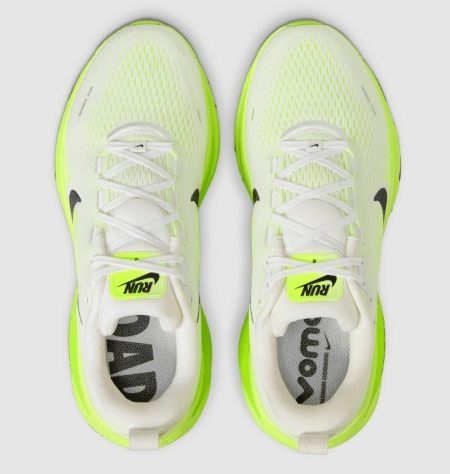
4. Nike Vomero 18 — Best soft high-drop ride
| What I checked | My test note |
|---|---|
| Best for | Plush easy and relaxed long runs |
| Reference weight | 11.5 oz / 325 g (men’s US 10) |
| Advertised drop | 10 mm |
| Logged mileage | 175 miles |
| Fit | True to size for me; secure heel and midfoot; standard Nike forefoot shape |
I choose Vomero 18 when a heel striker wants a very soft landing but still wants energy on the way forward. Nike layers ZoomX above ReactX, giving me a plush first compression with more structure beneath it. The 10 mm offset feels familiar to runners coming from classic daily trainers, although the total shoe is much larger.
During my 175 miles, the Vomero felt best on relaxed roads where I could let the foam absorb contact and return some energy. It never became a nimble shoe. Tight turns and uneven placement reveal the height and 11.5-ounce reference weight, so I run cleaner lines than I do in Ghost.
My heel and midfoot are secure in my normal size. The fit question is farther forward: a broad foot may find the standard Nike toe shape restrictive after swelling. I do not add length just to gain width because that can let the heel move and shift the transition away from the intended place.
I choose Vomero when comfort, depth, and familiar offset matter more than low weight. I skip it for frequent sharp turns, track work, or runners whose ankles dislike soft tall platforms. It is a luxurious easy-day option, not my one-shoe answer.
- I like the combination of softness and rebound.
- I like the secure padded rearfoot.
- I like the consistent feel across my 175-mile test.
- I do not like its weight or precision on tight turns.
I explain the ride in more detail in my Nike Vomero review. For longer easy assignments, I also compare it with the shoes in my long-distance running shoe guide.
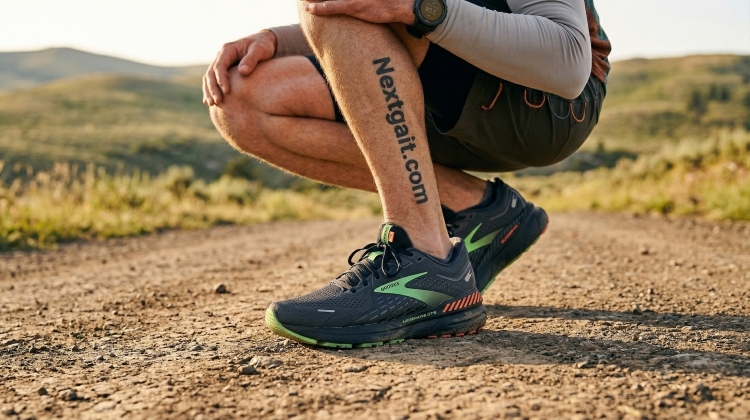
5. Brooks Adrenaline GTS 25 — Best traditional stability shoe
| What I checked | My test note |
|---|---|
| Best for | Supported daily mileage |
| Reference weight | 10.6 oz / 301 g |
| Advertised drop | 10 mm |
| Logged mileage | 340 miles |
| Fit | True to size for me; secure heel; narrow through extra-wide sizing |
I choose Adrenaline GTS 25 for runners who already know that a traditional guided trainer makes them feel more comfortable and controlled. Brooks places GuideRails around a familiar 10 mm daily platform, so I can move normally until I approach the shoe’s boundaries. That feels less abrupt to me than a hard medial post.
Across 340 miles, the rearfoot stayed secure and predictable when fatigue increased side-to-side motion. The transition remains easy to understand at daily pace, but the shoe does not reward tempo work. When I accelerate, I notice the mass and guidance before I notice rebound.
I never prescribe Adrenaline because someone lands on the heel. I compare it with a neutral shoe and ask whether the rails disappear beneath the stride. Persistent arch, knee, or lateral pressure tells me the geometry is mismatched; it does not tell me the shoe is correcting the runner.
I choose Adrenaline for an established GuideRails preference, secure rearfoot control, and broad width availability. I skip it when neutral shoes already feel centered or when speed is the main assignment. My decision follows the runner’s response, not a pronation label.
- I like the secure conventional heel and broad size range.
- I like guidance that is less abrupt than a hard post.
- I trust the mature 340-mile record.
- I do not choose it for neutral runners who can feel the rails.
My longer test is in the Brooks Adrenaline review. My stability versus neutral guide explains the comparison I use before selecting a support category.
6. ASICS Gel-Kayano 32 — Best max-cushion stability shoe

| What I checked | My test note |
|---|---|
| Best for | Long supported mileage |
| Reference weight | About 10.6 oz / 300 g |
| Advertised drop | 8 mm |
| Logged mileage | 280 miles |
| Fit | True to size for me; reinforced midfoot and broad width range |
I rank Gel-Kayano 32 as the cushioned support choice because its broad heel and 4D Guidance System organize a deep platform without relying on one hard post. FF BLAST PLUS and PureGEL provide protection, while geometry and material behavior resist the off-center collapse I sometimes see in tall neutral shoes.
My 280-mile pair stays centered on long easy runs even when my landing grows heavier. The transition is smoother than the old Kayanos I remember, yet the shoe still feels substantial. I accept that mass when the job is long controlled mileage; I reject it for short intervals.
The reinforced midfoot helps align my foot with the platform, but it must match the arch. I recheck for pressure after ten minutes rather than trusting the first step-in sensation. If the guidance remains obvious or creates a ridge, I compare the neutral Nimbus rather than waiting for discomfort to become normal.
I choose Kayano when later-run rearfoot drift and deep cushioning are both priorities. I skip it for a centered neutral stride, low-mass preference, or a runner who wants flexibility. It is more adaptive than old motion-control shoes, but it is still a stronger intervention than Ghost.
- I like the broad heel beneath deep cushioning.
- I like the smooth adaptive guidance and long-run control.
- I like the mature 280-mile test.
- I do not choose it when the midfoot structure calls attention to itself.
I keep the full record in my ASICS Gel-Kayano review. For other supportive choices, I use my overpronation shoe guide.
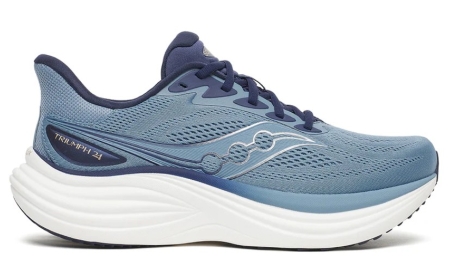
7. Saucony Triumph 24 — Best lightweight cushioned option
| What I checked | My test note |
|---|---|
| Best for | Easy, long, and steady runs |
| Reference weight | 8.8 oz / 250 g |
| Advertised drop | 10 mm |
| Logged mileage | 205 miles |
| Fit | True to size for me; secure heel, useful toe room, wide option |
I choose Triumph 24 when a runner wants deep heel protection without the usual max-cushion weight. Its incrediLUX midsole gives me a forgiving landing and a quicker release than Nimbus, while the 10 mm geometry remains familiar to runners coming from Ghost, Vomero, or Adrenaline.
At 205 miles, Triumph handles easy running and can finish a long run at steady effort without feeling delayed. The 8.8-ounce reference weight changes the experience: I can keep the heel protected without feeling that the entire shoe is waiting behind me during toe-off.
My reservation is grip on wet, smooth boardwalk planks. Wet asphalt is a different surface, but that experience matters because heel contact is my first traction event. When conditions are slick, I prefer more dependable rear rubber and I consult my running-in-the-rain guide.
I choose Triumph for easy, long, and controlled progression runs. I skip it when formal guidance, maximum wet confidence, or a completely muted recovery ride leads the decision. A tall light shoe still needs a centered landing, especially on turns.
- I like the exceptional weight-to-cushion ratio.
- I like the secure heel and versatile transition.
- I like its range from easy to steady running.
- I do not rank its slick-surface grip with the best in this group.
I document those tradeoffs in my Saucony Triumph review. I compare its faster long-run role in my marathon running shoe guide.
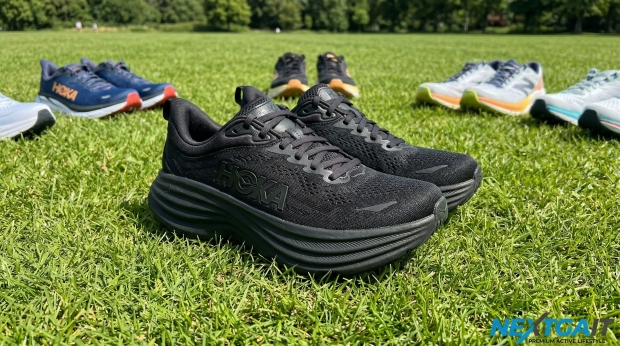
8. HOKA Bondi 9 — Best rockered recovery shoe
| What I checked | My test note |
|---|---|
| Best for | Recovery and run-walk sessions |
| Reference weight | 10.5 oz / 297 g |
| Advertised drop | 5 mm |
| Logged mileage | 310 miles |
| Fit | True to size for me; secure heel, tapered standard forefoot, wide option |
I keep Bondi 9 in this list because it proves that heel striking and high drop are not the same requirement. Its 5 mm offset is low here, yet the broad rear landing zone, sidewalls, and early MetaRocker accept my heel contact and move it forward without asking the forefoot to flex much.
Across 310 miles, the shoe has been best at recovery pace and during run-walk sessions. The rocker makes each slow transition predictable. It feels heavy and delayed when I push, but I do not punish a recovery shoe for refusing to become a speed shoe.
I introduce Bondi gradually when I come from 10 or 12 mm trainers. The rocker can make the first run feel easy while the calf and Achilles still experience a different ankle position. I change the shoe before I change the training load so I can interpret the response.
I choose Bondi for slow protected mileage, walking crossover, and runners who prefer structure under deep cushioning. I skip it for speed, ground feel, or a broad forefoot that still feels tapered in the standard upper. I use the wide version instead of adding length.
- I like the broad structured heel and early rocker.
- I like the predictable run-walk transition.
- I trust the mature 310-mile test.
- I do not use it for fast running or abrupt changes from a high-drop rotation.
My detailed fit and mileage notes are in the HOKA Bondi review. Beginners building a rotation can use my beginner running shoe guide.
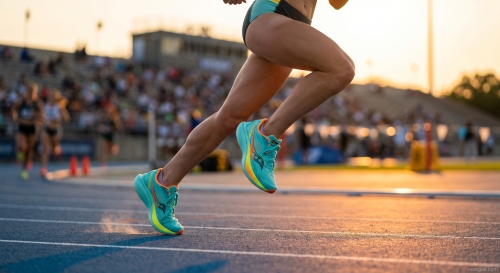
9. Saucony Endorphin Speed 5 — Best for speedwork
| What I checked | My test note |
|---|---|
| Best for | Intervals, tempo, and fast long runs |
| Reference weight | 8.3 oz / 237 g |
| Advertised drop | 8 mm |
| Logged mileage | 230 miles |
| Fit | True to size for me; performance midfoot; wide version available |
I rank Endorphin Speed 5 as the workout pick because its rearfoot is more usable than most plated shoes. The broad heel, winged nylon plate, PWRRUN PB foam, and SPEEDROLL geometry accept contact behind the midfoot, then direct the stride forward without the immediate wobble I feel in narrow racers.
During my 230 miles, it has been most convincing at threshold pace and during long intervals. The heel is not as plush as Nimbus, but it remains organized under faster loading. During a slow shuffle, the rocker feels mechanical, which is why I keep a calmer daily shoe beside it.
I test both the fast repetition and the jog recovery. If the shoe works only while I am driving it hard, I consider it too narrow a training tool. I also check the fifth toe after the foot warms and choose the wide version instead of adding length when the standard performance fit pinches.
I choose Speed 5 for tempo runs, intervals, and mixed-pace long sessions. I skip it when the runner dislikes rockers, wants a fully flexible trainer, or needs a slow-day shoe. My speedwork shoe guide provides the wider performance comparison.
- I like the more stable rearfoot and adaptable nylon plate.
- I like the mature 230-mile test and wide option.
- I like its range across several fast paces.
- I do not choose it for very easy running or runners who fight the rocker.
My model-specific notes are in the Saucony Endorphin Speed review. I use my running cadence guide when the real issue is rhythm rather than footwear.
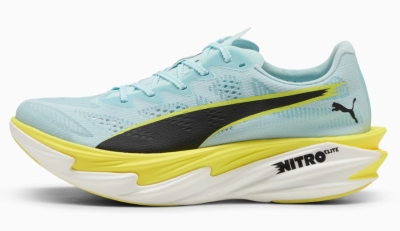
10. PUMA Deviate NITRO Elite 4 — Best race-day option
| What I checked | My test note |
|---|---|
| Best for | Road racing |
| Reference weight | About 6.0 oz / 170 g (manufacturer UK 8) |
| Advertised drop | 8 mm |
| Logged mileage | 178 miles |
| Fit | True to size for me; race-snug heel and midfoot; regular width only |
I choose PUMA Deviate NITRO Elite 4 for racing because it gives a heel striker more usable rear outsole than many featherweight super shoes. NITROFOAM ELITE, a full-length carbon PWRPLATE, an 8 mm drop, and PUMAGRIP combine a light ride with a real contact patch behind the midfoot.
Across 178 miles, the plate and foam have moved quickly whenever my landing stayed centered at race pace. At recovery pace, the same geometry feels twitchy and unnecessary. I do not use this shoe to learn a new strike pattern or to absorb routine weekly mileage.
The race-light upper is regular width only, and the narrow platform offers less margin for an off-center landing than Ghost, Speed 5, or Kayano. I test corners, downhills, and the final part of a hard run. Fresh straight-line speed cannot tell me how the shoe will behave when fatigue reduces accuracy.
I race it only after it passes a race-pace workout and a longer rehearsal. I skip it for runners who need width, slow-pace stability, or one durable trainer. A carbon plate does not require a forefoot strike, but a narrow racer does demand precise placement from every strike pattern.
- I like the PUMAGRIP rearfoot coverage and low race weight.
- I like the fast carbon transition from a centered landing.
- I trust the mature 178-mile record.
- I do not recommend it for wide feet, easy mileage, or uncertain cornering.
I compare it with other super shoes in my carbon-plated running shoe guide. When a runner needs a controlled indoor alternative for pace work, I use my treadmill running shoe guide.
Buying Guide: How I Choose Running Shoes for Heel Strikers
I do not choose a shoe from the strike label alone. I treat rearfoot contact as one input, then I match the platform to the runner, the run, and the failure mode I am trying to avoid. These are the decisions I make in order.
1. I choose the job before the cushioning
I first decide whether the shoe is for daily mileage, recovery, long runs, support, workouts, or racing. A calm Nimbus and a quick Speed 5 can both work for my heel strike, but they solve different problems. I use my running training guide to keep the shoe assignment tied to the session rather than marketing.
2. I judge the rear landing zone, not just stack height
I inspect the heel bevel, width, rubber placement, sidewalls, and where my actual contact mark appears. More foam can soften contact, but a narrow or asymmetrical compression path can make a tall shoe less stable. I want enough platform under the part of the heel I truly use.
3. I treat drop as a transition variable
A higher drop often feels familiar to habitual heel strikers, but I never assume it is mandatory. The heel can compress several millimeters, and a rocker can change the timing of the ride. I compare the new offset with the runner’s current rotation and introduce a meaningful change gradually.
4. I separate heel strike from overstriding
I can contact the heel close to my body without obvious braking. I can also land far ahead of my body in almost any shoe. When I see a long reaching stride, I address cadence, speed, posture, and load management before pretending that a softer heel will fix the timing.
5. I choose neutral or stability by response
I compare the options on similar runs. A guided shoe stays only when I feel more comfortable and controlled without new pressure. I do not use heel contact as proof that the runner needs support, and I do not make visible pronation the only decision.
6. I fit the warm foot
I want a secure heel, quiet midfoot, and enough forefoot space after heat and swelling arrive. I never solve width only by adding length. I test the shoe with the intended sock and insert, then I use gentle turns and descents to expose movement that a straight treadmill can hide.
7. I check the outsole at my real contact point
Heel strikers often concentrate wear at the lateral rear edge. I want rubber where I land, not just an impressive outsole elsewhere. I inspect both shoes separately because route camber and asymmetry can alter one side first, then I use my running shoe replacement guide when function begins to change.
8. I buy for the acceptable tradeoff
Every shoe here has a failure mode. Ghost can feel ordinary, Wave Rider firm, Nimbus muted, Vomero heavy, Adrenaline intrusive, Kayano overbuilt, Triumph less convincing on slick wood, Bondi slow, Speed impatient, and PUMA unforgiving. I choose the compromise I can live with on the intended run.
My buying rule: I keep the shoe only when the heel lands where the platform expects, the foot stays secure without excessive lacing, the transition feels natural, and the same qualities remain present in the final third of the run. If one of those gates fails, more cushioning or a higher price does not rescue the match.
The Three-Run Heel-Striker Fit Test
I never decide from a store jog alone. I use three controlled runs, changing only the demand while keeping the shoe, sock, and insert consistent. If return policies allow only indoor use, I adapt the same sequence to a clean treadmill and preserve the shoe’s condition.
Run 1: Easy baseline — 20 to 30 minutes
I run a familiar flat route at conversational effort. I check heel slip, collar pressure, arch sensation, toe room, side-to-side motion, and whether contact moves forward without a slap. I stop for numbness, sharp pain, or a pressure point that is escalating.
Run 2: Intended job — 30 to 50 minutes
I test the shoe at its real assignment. A daily trainer gets ordinary mileage, a recovery shoe stays easy, and a workout shoe gets controlled faster segments. I include several gentle turns and a short incline or decline so I can judge the rearfoot outside a perfect straight line.
Run 3: Final-third test — long enough to create normal fatigue
I extend duration without making an abrupt training jump. In the final third I watch for edge collapse, increased heel slap, sliding, toe gripping, hot spots, or a transition that becomes harder to complete. I also record the immediate and next-morning response.
- I keep the same socks and inserts across all three runs.
- I record surface, pace, duration, weather, and any fit adjustment.
- I reject the shoe if pain changes my gait or a pressure point keeps escalating.
- I keep it only when the final-third behavior matches the fresh-run promise.
I do not use the test to run through persistent symptoms. My running injury prevention guide explains the broader load decisions I use when footwear is only one part of the problem.
Frequently Asked Questions
What are the best running shoes for heel strikers overall?
I choose the Brooks Ghost 18 for most heel strikers because its secure rearfoot, balanced cushioning, 10 mm drop, complete contact patch, and conventional transition create the fewest surprises. I choose Gel-Nimbus 28 for maximum neutral cushioning, Adrenaline GTS 25 for traditional support, Endorphin Speed 5 for workouts, and PUMA Deviate NITRO Elite 4 for racing.
Is heel striking bad for runners?
No. I treat heel striking as a contact pattern, not a diagnosis. I become more interested when the foot lands far ahead of the body, braking is obvious, symptoms are developing, or the runner cannot control the landing late in a run. I do not ask a comfortable, uninjured runner to change foot strike just to look different.
Do heel strikers need high-drop running shoes?
No. I often find 8 to 10 mm comfortable for habitual heel strikers, but drop is only one part of the ride. Heel bevel, rocker, foam compression, platform width, speed, and ankle motion also matter. The 5 mm Bondi 9 can work well when its rocker fits and I introduce the lower offset gradually.
How much heel cushioning does a heel striker need?
I want enough cushioning to keep contact comfortable and controlled for the intended run. I do not chase maximum stack automatically. A soft narrow heel can wobble more than a moderately cushioned broad heel, so I judge compression direction and late-run control before I judge depth.
What is the difference between heel striking and overstriding?
Heel striking tells me which part of the foot contacts first. Overstriding describes a landing that is too far ahead of the runner’s center of mass for that pace and body. I can land on my heel close to my body without an obvious overstride, so I never use the terms as synonyms.
Do heel strikers need stability shoes?
Only when the stability geometry improves the runner’s comfort and control. Heel contact does not prove overpronation or a need for guidance. I compare a neutral and guided shoe on the same kind of run, then keep the option that feels quiet underfoot and remains controlled as fatigue builds.
What is the best running shoe for a heavy heel striker?
I start with a broad, resilient platform such as Ghost 18, Wave Rider 29, Gel-Nimbus 28, or Gel-Kayano 32, depending on support preference. I then check whether the heel stays centered and the foam keeps its behavior in the final third of the run. Body weight alone does not select the shoe.
What is the best shoe for heel strikers who overpronate?
I start with ASICS Gel-Kayano 32 when the runner wants deep cushioning and adaptive support, or Brooks Adrenaline GTS 25 for a more traditional daily-trainer feel. I reject either model if its guidance creates arch pressure, lateral loading, or a less comfortable stride.
Can heel strikers wear carbon-plated running shoes?
Yes. I do not require a forefoot strike to use a carbon plate. I do require enough rearfoot rubber, a stable landing at race pace, predictable cornering, and control when tired. I race a plated shoe only after it passes a fast workout and a longer final-third test.
How should running shoes for heel strikers fit?
I want the heel and midfoot secure without crushing the instep, normal space beyond the longest toe, and enough forefoot width after the foot warms. Heel lift, numbness, toe contact, persistent arch pressure, or hard gripping with the toes are fit failures, not problems I expect to run through.
How long do running shoes last for heel strikers?
I do not use one universal mileage. I compare left and right rear rubber, look for a compressed outer heel, test grip, and notice whether the transition or heel hold has changed. I replace the shoe when its function changes materially, even if the upper still looks clean.
Can the right shoe prevent knee pain or running injuries?
I never promise that a shoe will prevent injury or treat persistent pain. A better match can improve comfort and alter how load is distributed, but training load, recovery, tissue capacity, prior injury, and health still matter. I seek qualified care when pain is persistent, worsening, or changing my gait.