
Tested for 197 miles. Updated August 2026.
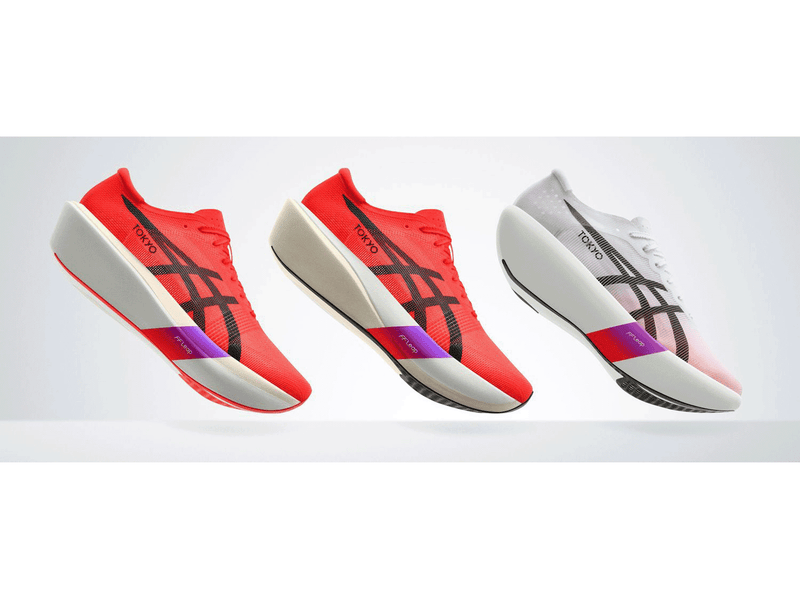
Bottom line: The ASICS Metaspeed Sky Tokyo is an exceptionally light, high-rebound racer that works best when I am running fast enough to load its plate and lengthen my stride. After 197 miles, I rate it 7.3/10—not because it is slow, but because its narrow race fit, soft lower foam, low-drop geometry, and limited slow-pace manners make it more specialized than the hype suggests.
My first mile in the Metaspeed Sky Tokyo was 12 seconds faster than planned.
It was 5:00 a.m. in January, with frost on the railings along the Galloway Township bike path and a stiff northwest wind coming off the ocean. The workout was supposed to open around 7:30 per mile. I checked my watch at the first marker and saw 7:18.
I did not feel as if I had surged. The shoe had simply made my normal stride longer and more forceful. That was my introduction to the Sky Tokyo: it does not politely wait for instructions. Once the FF LEAP foam and high carbon plate are loaded, it pulls the run toward race effort.
That first run explains both sides of this Metaspeed Sky Tokyo review. The shoe is fast enough to make pace judgment difficult. It is also demanding enough that I regretted using it for an easy run four days later.
I have now logged 197 miles in my US men’s 10.5. The testing includes mile repeats, threshold running, a 13.1-mile race-effort test, wet pavement, asphalt, wooden boardwalk, and one deliberately slow run that taught me more than the fast sessions did.
Jump to a sectionOpen
- My quick verdict
- How I tested the Sky Tokyo
- Specs and lab data
- Ride and speed
- FF LEAP and carbon plate
- Fit, sizing, and upper
- Best race distances and paces
- How I would prepare it for race day
- Stability, grip, and cornering
- Durability after 197 miles
- Sky Tokyo vs Edge Tokyo
- Sky Tokyo vs Sky Paris
- Best alternatives
- FAQ
Metaspeed Sky Tokyo Review: My Quick Verdict
The Sky Tokyo is a race-day weapon for efficient runners who create speed through stride length, but it is not the safest blind buy in the supershoe category.
At 7:00–7:45 per mile, it feels light, elastic, and almost impatient. The forefoot rebounds quickly. The upper disappears. The plate gives me a long lever to push against without the bulky sensation I get from some max-stack marathon shoes.
At 9:00-plus pace, the same geometry feels awkward. I land without enough force to compress the lower FF LEAP layer consistently, so the shoe becomes stiff in one step and wobbly in the next. By mile four of my slow-run test, my calves and Achilles felt more loaded than they do in a normal daily trainer.
That observation is not an injury claim. It is a reminder that a 5 mm plated racer can shift demand toward the ankle and lower leg, especially when the rocker and plate are not being used at the pace they were built for.
| My rating | Score | What decided it |
|---|---|---|
| Speed at race effort | 9.5/10 | Very light, strong forefoot rebound, long-stride propulsion |
| Transition | 8.8/10 | Fast and direct once the plate is loaded |
| Fit | 7.7/10 | Secure for my standard-width foot, restrictive for broad feet |
| Stability | 6.2/10 | Soft lower foam can move laterally on corners and tired landings |
| Grip | 8.0/10 | Strong forefoot bite; wet grip is good rather than invincible |
| Versatility | 6.8/10 | Excellent fast, poor as a daily or recovery shoe |
| Overall | 7.3/10 | Elite speed, narrow use case |
How I Tested the ASICS Metaspeed Sky Tokyo
I tested the Sky Tokyo for 197 verified running miles, not a launch-day jog and a spec-sheet recap.
I am 5’10”, 182 pounds, and usually land between the heel and midfoot. My gait is neutral with mild inward movement when fatigue sets in. I run 30–40 miles most weeks, primarily on roads and the Atlantic City Boardwalk.
My Bright Crimson/Obsidian pair is a US 10.5 and weighed 7.0 ounces per shoe on my kitchen scale. That number should not be compared directly with a men’s size 9 lab sample, but it shows how little shoe I was carrying for a near-legal-limit stack.
| Test session | What I learned |
|---|---|
| First six-mile workout | The geometry pulled me under planned pace immediately |
| 4 × 1 mile at 7:55/mi, 90-second jog | The shoe made repeat pace feel sustainable without losing snap |
| 13.1 miles at race effort | Forefoot protection held; rebound softened slightly after mile 10 |
| Slow run above 9:00/mi | Plate felt intrusive and lower-leg demand increased by mile four |
| Wet-road and boardwalk running | ASICSGRIP was dependable, but the narrow platform still required attention |
| 197-mile inspection | Heel wear is visible; midsole rebound remains usable |
I have not raced a full marathon in this pair. My longest single test was 13.1 miles at race effort. When I discuss marathon use below, I separate what I directly experienced from what I infer based on the half-marathon test, construction, and independent lab data.
Metaspeed Sky Tokyo Specs: Official Numbers vs Lab Measurements
ASICS lists a 5 mm drop; independent measurements place the shoe just under 40 mm at the heel and roughly 33–35 mm at the forefoot.
| Specification | Published or measured result |
|---|---|
| Category | Neutral, carbon-plated road racer |
| Official drop | 5 mm |
| Ken’s US 10.5 weight | 7.0 oz |
| Midsole | FF TURBO PLUS above FF LEAP |
| Plate | Full-length carbon plate, positioned high |
| Upper | MOTION WRAP 3.0 |
| Outsole | ASICSGRIP with exposed midsole areas |
Measurement differences are normal. Stack readings vary with shoe size, measurement point, and lab protocol. The useful conclusion is not whether the true drop is exactly 4.7, 5, or 6 mm. It is that the Sky Tokyo is a low-drop, high-stack racer with a large amount of foam under the forefoot.
ASICS describes the Sky Tokyo as its stride-style racer and places FF LEAP below FF TURBO PLUS.
Ride Feel: Fast, Elastic, and Pace-Dependent
The Sky Tokyo feels best when I land firmly, load the forefoot, and let my stride open; it feels least coherent when I shuffle.
Step-in feel is deceptive. Standing still, the shoe feels soft below the plate but not plush beneath the foot. Walking feels slightly wobbly at the heel. None of that predicts the ride at race pace.
Once moving fast, the forefoot produces a deep compression followed by a quick return. The sensation is less like rolling over a rocker and more like landing on a loaded springboard. The shoe rewards force. My best results came when I stopped trying to increase cadence and instead let the stride travel farther behind me.
During the 4 × mile workout, the first repeat felt almost too easy. The second confirmed the pace was real. By the fourth, I was working, but the shoe still returned cleanly instead of becoming a soft platform I had to push through.
The 13.1-mile effort revealed the limit. Through mile 10, the ride stayed sharp and my calves and shins felt better protected than I expected at that effort. Over the final 5K, the foam felt slightly less lively. It did not collapse, but the explosive first-hour sensation became more muted.
That is why I hesitate to call this an automatic marathon pick for every runner. A lighter, more efficient runner may preserve the rebound longer. At 182 pounds, I would want one 16–20-mile marathon-pace rehearsal before trusting it for 26.2.
How FF LEAP and the High Carbon Plate Change the Ride
The unusual part is not simply that the Sky Tokyo uses two foams; it is where ASICS places them relative to the plate.
FF TURBO PLUS sits closer to the foot. FF LEAP—the softer, lighter, more energetic compound—forms the lower layer. A full-length carbon plate runs high between them.
In practical terms, my foot lands on the firmer, more controlled layer while the softer lower layer deforms against the road. The plate spreads that deformation forward. At speed, this creates a large rebound without letting my foot sink directly into the softest foam.
The trade-off happens side to side. Soft foam at the bottom can conform unevenly during cornering or a tired off-center landing. The high plate adds stiffness, but it cannot make a narrow platform broad. That is why the Sky Tokyo can feel stable in a straight line and nervous through a turn within the same mile.
Biomechanics note: A carbon plate does not create energy. It changes how the shoe bends and how the foam deforms. Whether that improves your running economy depends on your mechanics, speed, fatigue, and how well the geometry matches you.
The Sky Tokyo is also extremely stiff. That stiffness is useful when my ankle is already moving quickly through stance. At easy pace, it asks my calf and ankle to manage a lever I do not need. I use the ASICS Superblast 3 or a normal daily trainer for long aerobic work and save the Sky for sessions with a clear pace target.
Metaspeed Sky Tokyo Fit and Sizing
The Sky Tokyo fit true to size for my standard-width foot, but its race last is measurably narrow through the forefoot and arch.
My usual US 10.5 gave me enough length and enough vertical toe room for 13.1 miles. The MOTION WRAP 3.0 upper has almost no wasted structure. It breathes exceptionally well, and the textured laces stayed tied without crushing the top of my foot.
Heel lockdown improved as pace increased. Walking to the start, the minimal collar felt loose. At race effort, the upper tensioned around my foot and the heel stayed put. I did not need a runner’s knot.
My fit experience does not make this a wide shoe. RunRepeat measured the internal width well below its lab average, and RTINGS also found the forefoot and arch narrower than true-to-size norms. My foot is standard width and relatively low volume, so the thin mesh had room to adapt. For a fuller framework covering arch, width, volume, flexibility, and asymmetry, use my running foot types guide.
If your forefoot regularly needs 2E, if your arch spills over narrow waist platforms, or if your toes swell substantially in a marathon, I would not buy this shoe without trying it on. Our wide-foot running shoe guide explains why simply sizing up can create a heel-lockdown problem instead of solving width.
Best Race Distances and Paces
For me, the Sky Tokyo is strongest from 10K through half marathon and most convincing below roughly 8:00 per mile.
| Use | My verdict | Reason |
|---|---|---|
| 5K | Very good | Light and aggressive, though some runners may prefer a lower, quicker racer |
| 10K | Excellent | Enough time to exploit the rebound without late-race stability becoming dominant |
| Half marathon | Excellent | My best balance of protection, weight, and plate response |
| Marathon | Conditional | Potentially fast, but fit, calf load, and late-race stability must be tested first |
| Intervals | Very good | Strong for longer reps; more shoe than I want for short track work |
| Tempo / threshold | Excellent | The plate and foam stay coherent at sustained effort |
| Easy or recovery running | Poor | Awkward transition and unnecessary lower-leg demand |
The key is not whether you are “fast enough” by an arbitrary internet standard. It is whether you apply enough force, at your race pace, to compress the midsole consistently and move through the stiff forefoot without fighting it.
A 9:00-per-mile marathoner with a powerful stride may activate the shoe better than a 7:00-per-mile runner who uses a short, quick cadence. Pace is a useful clue, not a qualification test.
For a half marathon, I would use one short race-pace workout and one 10-12-mile run before race day. For a marathon, I would want at least one long run with 8-12 miles at goal pace.
If the shoe leaves your calves unusually sore or feels unstable late, believe that evidence. A race shoe should reduce problems, not create a negotiation at mile 20. See my guide to the marathon wall for the fueling and pacing factors that no supershoe can fix.
How I Would Prepare the Sky Tokyo for Race Day
I would put 15–25 purposeful miles into the Sky Tokyo before a goal race—enough to verify the setup, not enough to waste the best part of the ride.
The shoe does not need a traditional foam break-in. What needs breaking in is the runner-shoe relationship. I want to know where the tongue sits, how tightly the laces can be pulled before creating pressure, and whether my calves tolerate the 5 mm geometry after sustained race pace.
My sequence would be simple. First, run 4–6 miles with several short goal-pace blocks. Second, complete a longer race-specific session in the same socks planned for race day. Third, inspect the outsole and laces after both runs. I would not introduce a new insole unless it had already been tested; changing the foot’s height can weaken the minimal heel hold. If you run with an insert, use my running with orthotics guide for sockliner removal, volume, heel hold, and break-in.
Before a 5K or 10K, I would warm up in a trainer and change into the Sky Tokyo shortly before strides. Before a half or full marathon, I would wear it for the easy warm-up because I want the calf and ankle to experience the actual race geometry before the gun.
My race-day rule: if a supershoe creates a new hot spot, calf ache, or stability problem during rehearsal, I do not assume adrenaline will fix it. I choose the shoe that lets me race the course instead of managing my feet.
Stability, Cornering, and Wet Grip
The Sky Tokyo is secure in a straight line and less trustworthy when the road tilts, the corner tightens, or my form fades.
My mild late-run pronation is useful for exposing unstable race shoes. On flat asphalt, the plate keeps the transition moving forward before I can linger on the medial side. On cambered roads, the soft lower FF LEAP layer compresses toward the slope, and I have to manage the landing.
The same issue appears on tight turns. The upper holds my foot, but the platform underneath can move. I shorten my stride slightly and enter corners under control rather than trying to preserve full straight-line pace.
ASICSGRIP is the stronger part of the equation. Dry forefoot grip is excellent. On wet pavement and damp boardwalk, I did not experience a slip, though I could feel less confidence from the platform itself. Grip and stability are not the same thing: the outsole can hold the road while the foam above it still shifts.
Runners who need a broad, guided base should not treat the carbon plate as a stability feature. If stability determines whether you can hold form, a slightly heavier but more planted racer may be faster over the whole race.
Durability After 197 Miles
My pair remains race-usable at 197 miles, but the exposed lateral heel shows why landing pattern matters more than a universal lifespan estimate.
The most visible wear is at the outer heel, where I first contact the ground. The thin rubber and exposed foam have smoothed more than the forefoot. The ASICSGRIP under the main toe-off area remains intact.
The upper has no tearing. The laces still hold. The plate has not developed any obvious asymmetry. I can see minor midsole compression around the heel, but the shoe still rebounds when I run fast.
What has changed is the first-run violence. The shoe no longer feels as startlingly explosive as it did at mile one. Some of that is adaptation; some may be foam aging. I cannot separate those effects without controlled equipment.
I would still use my pair for workouts and lower-priority races. For an A-race, I would compare it side by side with a fresher pair before deciding. Race shoes do not suddenly expire at 100 or 200 miles. Replace them when outsole damage, asymmetrical compression, or a meaningful loss of ride changes your mechanics or confidence. My broader running-shoe replacement guide covers those signs.
Metaspeed Sky Tokyo vs Edge Tokyo
Choose the Sky for a longer, more forceful stride and bigger rebound; choose the Edge for quicker turnover and a more guided roll—but test both if possible.
ASICS defines the Sky for stride-style runners and the Edge for cadence-style runners. That is a design explanation, not a diagnosis from your watch.
| Difference | Sky Tokyo | Edge Tokyo |
|---|---|---|
| Plate | Higher and flatter | Lower and more curved |
| Foam orientation | FF TURBO PLUS above FF LEAP | FF LEAP above FF TURBO PLUS |
| Primary sensation | Large forefoot rebound and stride extension | Faster roll and cadence support |
| My stability impression | More lateral movement | More controlled through transition |
| Best match | Runner who pushes hard and opens stride | Runner who turns over quickly and likes a curved plate |
I have 113 miles in the Edge Tokyo. Side by side, the Sky gives me more energy return when I am fresh and running aggressively. The Edge is easier to control as fatigue changes my landing. If I could keep only one, I would choose the Edge for durability and predictability, but I would miss the Sky’s bigger top-end sensation.
Do not choose from cadence alone. Record a race-pace video or test both on a treadmill. Watch what changes when you accelerate: Do you mainly add steps, or does each step cover more ground? More importantly, which shoe feels natural after 20 minutes, not just during a 30-second store sprint?
Metaspeed Sky Tokyo vs Sky Paris
The Tokyo is lighter and more elastic; the Paris is firmer, more planted, and may suit runners who value control over maximum rebound.
The Sky Paris used FF TURBO PLUS throughout the midsole. It delivered a taut, direct ride with less compression. The Tokyo keeps that foam near the foot but adds a large FF LEAP layer underneath.
I feel the upgrade most at the forefoot. The Tokyo has more depth and returns with more force. It is also less predictable during an off-center landing. The Paris feels flatter by comparison, but its firmer base is easier to place.
If the Sky Paris felt harsh or underpowered, the Tokyo is a meaningful improvement. If you loved the Paris because it was stable and direct, the Tokyo is not an automatic upgrade. The new foam changes the personality, not merely the softness score.
Best Metaspeed Sky Tokyo Alternatives
The best alternative is the shoe that solves the Sky Tokyo’s specific compromise for your stride.
| Shoe | Choose it when… | Trade-off versus Sky Tokyo |
|---|---|---|
| ASICS Metaspeed Edge Tokyo | You want a quicker, more guided transition | Less dramatic stride-length rebound |
| Nike Alphafly 3 | You want more platform and marathon-focused protection | Heavier and more mechanically noticeable |
| adidas Adizero Adios Pro 4 | You want a more versatile racer across pace ranges | Does not feel as explosive to me at top speed |
| PUMA Fast-R NITRO Elite 3 | You want aggressive propulsion with a more radical geometry | Even less natural for runners who dislike forced mechanics |
| Saucony Endorphin Speed 5 | You need one plated shoe for workouts and occasional racing | Less race-day energy and less weight savings |
The Adios Pro 4 is the alternative I would give a runner who wants one race shoe to behave reasonably across more paces. The Sky Tokyo is the choice when the goal is maximum response at a narrow target pace and the fit works.
For runners still building race-specific durability, a super trainer may be the smarter first step. My lists of the best lightweight running shoes and long-distance running shoes include options that are easier to train in week after week.
Who Should Buy—and Skip—the Sky Tokyo?
Buy it if
- You race 10K through marathon on roads
- Your speed increases mainly through stride length
- You like a low-drop, stiff, high-stack racer
- Your foot is standard or narrow width
- You can test it at race pace before your goal event
- You prioritize low weight and forefoot rebound
Skip it if
- You need a wide forefoot or broad midfoot
- You want a race shoe that doubles as a daily trainer
- You depend on a stable platform late in races
- Low-drop plated shoes aggravate your calves
- You prefer a soft feel directly beneath the foot
- You are buying your first supershoe without trying alternatives
Metaspeed Sky Tokyo FAQ
Is the Metaspeed Sky Tokyo true to size?
It fit true to size in my normal US men’s 10.5. Length and vertical toe room were adequate through a 13.1-mile effort, but the forefoot and arch are narrow relative to many trainers.
Should I choose the Metaspeed Sky Tokyo or Edge Tokyo?
Start with the Sky if you increase speed mainly by lengthening your stride and prefer a large forefoot rebound. Start with the Edge if you rely more on cadence and like a curved, guided transition. Treat that as a starting point and test both at race pace when possible.
Is the Metaspeed Sky Tokyo good for a marathon?
It can be an excellent marathon racer for an efficient stride-style runner who has tested the fit, calf load, and stability during long goal-pace sessions. My longest test was 13.1 miles, so I would complete a 16–20-mile rehearsal before choosing it for 26.2.
Can I use the Sky Tokyo for 5K and 10K races?
Yes. Its low weight and aggressive rebound work very well at 5K and 10K effort. I prefer it most for 10K through half marathon because those distances make better use of its deep forefoot cushioning.
Is the Metaspeed Sky Tokyo suitable for wide feet?
Probably not for most 2E or 4E feet. Independent measurements show a narrow forefoot and arch. The thin upper can adapt slightly, but sizing up may trade forefoot space for poor heel lockdown.
Can heel strikers use the Metaspeed Sky Tokyo?
Yes, if the landing is controlled and transitions quickly. I land between the heel and midfoot and can race comfortably in it. Heavy braking or late-race overstriding may expose the narrow heel and soft lower foam. For a pace-specific retraining process, follow my step-by-step overstriding guide.
Can I use it as a daily trainer?
I would not. At easy pace, the stiff plate and low-drop geometry felt awkward and increased lower-leg demand. A daily trainer or super trainer is more comfortable, stable, and practical for routine mileage.
How many miles does the Metaspeed Sky Tokyo last?
My pair remains usable at 197 miles, with visible lateral-heel wear and a less dramatic first-run sensation. Lifespan will vary with landing pattern, body weight, surface, and how much performance loss you accept for an A-race.
Is the Metaspeed Sky Tokyo legal for road races?
The Sky Tokyo is built within the road-racing stack framework, but athletes competing under formal rules should verify the exact model in the current World Athletics shoe-check resources before racing. Track-event limits are different from road rules.
Metaspeed Sky Tokyo Review: Final Verdict
The ASICS Metaspeed Sky Tokyo is one of the fastest shoes I have tested, but “fast” and “right for you” are not the same verdict.
I love it during long intervals and race-pace work. The 4 × mile session remains one of the best workouts I have run in any shoe. The Sky Tokyo lets me open my stride, keeps substantial foam beneath the forefoot, and weighs almost nothing for the amount of protection provided.
I do not love it slowly. I do not trust it automatically for broad feet, unstable runners, or a first marathon without long-run testing. At 197 miles, the outsole also reminds me that the weight savings come from using less material.
My 7.3/10 rating is intentionally strict. This is not a versatile shoe with no weaknesses. It is a specialized tool with an unusually high ceiling. If your mechanics, fit, and race pace match it, the Sky Tokyo can feel unfair. If they do not, a more conventional supershoe will be faster because you can control it for the entire race.
Race-shoe navigation: Continue with carbon-plated shoe rankings; best marathon running shoes; Alphafly vs Vaporfly comparison; best running shoes.

Written by Ken – 12 years of running, 12,500+ miles, 63 shoes tested, and 36 races from 5Ks to a 50K ultra. I run 30-40 miles a week on the Atlantic City Boardwalk and review shoes with repeated training miles, not one-run demos. More about Ken