
This ASICS Gel-Nimbus 28 review comes after 260 verified miles in my own pair, and it changed the way I judge a max-cushion shoe. I no longer ask only whether the first mile feels soft. I ask whether the shoe still feels controlled when my legs are tired, whether the upper stays comfortable after my feet swell, and whether the cushioning remains useful after months of training. The Nimbus 28 passes those tests. I give it 9/10.
I have spent 12 years running and testing shoes, and few models combine this much softness with this much composure. The Nimbus 28 is plush without turning vague under my 182-pound frame. It rolls forward more naturally than its size suggests, holds my heel securely, and remains one of my first choices for recovery mileage and long, easy road runs.
It is not my shoe for tempo sessions, loose terrain, or runners who want a light connection to the ground. If you are comparing the entire category, start with my guide to the best cushioned running shoes. If you want to know exactly where the Nimbus earns its weight, keep reading.
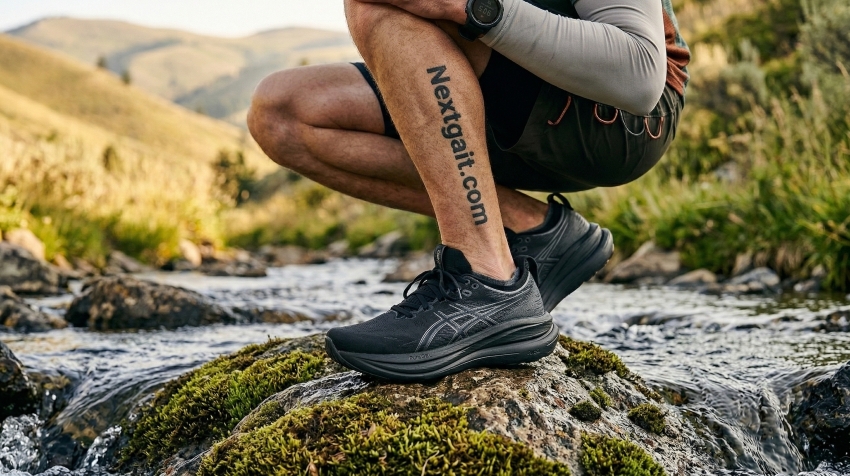
My decision in 20 seconds: Buy the Nimbus 28 if recovery, easy long runs, and durable underfoot comfort matter more than low weight. My men’s US 10.5 fits true to size, gives my slightly wide forefoot room to expand, and stays stable late in a run. Skip it if you want a firm ride, speed-shoe turnover, or a low platform for uneven ground. I would buy it again.
Updated September 2026 after reconciling this review with my 260-mile training and wear record.
My Verdict: The Soft Shoe That Does Not Lose Its Shape
My ASICS Gel-Nimbus 28 review lands at 9/10 because the cushioning stays organized. Many soft shoes feel wonderful while I am standing still, then spread or wobble once I load them at running pace. The Nimbus compresses deeply, but its broad geometry and secure rearfoot keep the landing centered.
On tired-leg recovery runs along the Atlantic City Boardwalk, I notice the cushioning before I notice the weight. The landing is muted, the rocker begins the transition without forcing it, and the forefoot rolls away cleanly. I am not fighting a thick slab of foam; I am letting a large shoe do the job it was built to do.
That job is specific. I use the Nimbus when the training decision is “protect the easy effort and arrive with enough patience to run again.” It belongs near the top of my recovery running shoe rankings. I do not use it when the session depends on quick changes of pace.
| Decision | My Answer After 260 Miles |
|---|---|
| Best role | Recovery runs and long, easy road mileage |
| Ride | Plush, protective, rockered, and surprisingly stable |
| Best pace range for me | About 8:15–10:00 per mile |
| Fit | True to size with accommodating forefoot volume |
| Main strength | Softness that remains controlled as fatigue builds |
| Main weakness | Weight and stack become obvious off-road or at fast pace |
| My score | 9/10 |
| Would I buy it again? | Yes |
How I Tested the ASICS Gel-Nimbus 28
I logged 260 verified running miles in a men’s US 10.5 Nimbus 28, mainly across South Jersey roads and boardwalk corridors. My long-run notes reach 17 miles. I watched the shoe through recovery efforts, routine easy mileage, and late-run fatigue, then recorded outsole loss, midsole change, upper integrity, fit after swelling, and whether the platform stayed centered under load.
My context matters. I weigh 182 pounds, run 30–40 miles most weeks, have a medium arch and slightly wide forefoot, and mildly overpronate when tired. My pace range in this shoe generally sits between 8:15 and 10:00 per mile. A lighter runner may find the foam less compressed; a fast forefoot runner may notice the mass sooner.
| Test Detail | My Record | What I Evaluated |
|---|---|---|
| Total distance | 260 verified miles | Ride change, wear, upper integrity |
| Long-run coverage | Up to 17 miles | Late-run stability and forefoot comfort |
| Primary surfaces | Road and wooden boardwalk | Impact feel, transition, grip |
| Runner profile | 182 lb, men’s US 10.5, slightly wide forefoot | Foam compression, swelling room, lockdown |
| Pair | French Blue/Electric Lime | Material and wear visibility |
I excluded conditions missing from the structured log. The conclusions here come from the training and wear history I can support. That boundary matters because a max-cushion shoe can feel convincing in one easy run long before it proves durable or stable.
The Comfort-Under-Fatigue Audit
I judge the Nimbus at four checkpoints, because “comfortable” means something different at each one. This is the test that separates a convincing store try-on from a useful recovery shoe.
Checkpoint 1: the first ten minutes
The step-in is immediately plush. FF BLAST PLUS ECO and PureGEL create a deep, damped landing, while the padded collar closes softly around my heel. What matters is the absence of a mushy pause. Once I start running, the rocker moves the shoe forward instead of leaving my foot buried in foam.
Checkpoint 2: settled easy rhythm
At true recovery effort, the Nimbus becomes quiet. The outsole lands with a muted thud on boardwalk planks, and the platform rolls without an awkward slap. I use breathing and conversation to hold the effort where it belongs; my Zone 2 training guide explains that control better than chasing a universal pace.
Checkpoint 3: beyond 90 minutes
This is where the shoe earns its rating. On long runs, the cushioning maintained its protective character past 90 minutes instead of flattening into a dead platform. As my form became less precise, the broad base stayed calm under my weight. The accommodating forefoot also gave my foot room to expand without creating a blister hotspot.
I still keep the entire run easy. For a progression long run or a finish that requires tempo pace, I want less mass and more immediate rebound. My long-distance running shoe guide separates protective cruisers from faster long-run options.
Checkpoint 4: the next easy day
A recovery shoe only earns rotation space if I want to use it repeatedly. The Nimbus did. Its cushioning remained predictable from run to run, and the upper did not require a special lacing ritual. That consistency—not a dramatic single outing—is why I would buy it again.
Ride and Stability: High Stack Without the Wallow
My pair measured about 41 mm at the heel and 31 mm at the forefoot, with an actual drop close to 10 mm. The shoe feels tall, but not unstable on flat pavement. I sit inside a shaped platform rather than balancing on top of a narrow tower.
The foam is genuinely soft. Under my weight, it compresses enough to filter the repetitive vibration of boardwalk and asphalt. The rocker then carries that compression into a smooth toe-off. I get more response than I expect from a 10.82-ounce shoe, though I would describe it as efficient momentum rather than speed-shoe snap.
The Nimbus is neutral, not a formal stability model. Its support comes from width, sidewalls, rearfoot structure, and a controlled transition. That natural stability works well with my mild late-run overpronation. A runner who needs more guidance should compare it with my ASICS Gel-Kayano review rather than assuming more cushion equals more correction.
The trade-off is ground feel. The shoe tells me enough about flat road placement, but it does not give the precise feedback I want on irregular surfaces. That is the cost of so much protection.
Fit and Upper: The Luxury Is in the Lockdown
I wear my normal men’s US 10.5 D in the Nimbus 28. Length is true to size, and the engineered stretch-knit upper wraps my instep without creating lace pressure. The gusseted tongue stays centered, and the memory-foam collar gives me one of the most secure rub-free heel holds in my current rotation.
The forefoot is more accommodating than the silhouette suggests. My slightly wide foot had enough room to spread, even late in long runs. That does not make the standard width universal. Runners with very wide or high-volume feet should still compare the available widths and use my wide-foot running shoe guide before adding length.
| Fit Area | My Experience | Buying Decision |
|---|---|---|
| Length | True to size | Start with your normal running-shoe size |
| Forefoot | Accommodating after foot swelling | Standard worked for my slightly wide foot |
| Instep | Smooth wrap with little lace pressure | Good for medium-volume feet |
| Heel | Plush and securely locked | No runner’s knot needed for me |
| Tongue | Gusseted and stable | No drift or midfoot bite in my use |
The Run That Taught Me What Not to Ask of It
An accidental detour onto loose sugar sand exposed the Nimbus immediately. The same tall, soft platform that felt calm on the road began moving underneath me. My lateral ankles had to manage the unstable surface, and the shoe felt more like a stack than a system.
That poor experience did not lower my road-running verdict; it clarified the boundary. The Nimbus 28 is a pavement specialist. I will use a short compacted connector if necessary, but I would not choose it for loose sand, technical trail, or a route dominated by uneven cambers.
My boundary: I trust the Nimbus for flat road and boardwalk mileage. I do not trust its high, soft geometry to make loose terrain easier.
What 260 Miles Changed—and What Survived
At 260 verified miles, my Nimbus 28 was softer than it was early in the test, but it remained fully usable. The midsole showed deep structural creasing and noticeable compression under my weight. The change made the ride feel more settled; it did not turn the platform unstable or flat.
I measured roughly 1.2 mm of rubber smoothing through the main landing zone and forefoot drive area. The wear was visible and coherent with my stride. The engineered mesh remained structurally sound, with no blowouts or separation, and the heel hold had not deteriorated.
I will retire this pair by behavior, not by a universal mileage promise. I look for a flat or uneven ride, new discomfort, loss of tracking, or material failure. My running-shoe replacement checklist covers the same signs. At 260 miles, my pair had softened but had not crossed that line.
Nimbus 28 vs the Shoes I Would Actually Cross-Shop
I choose among premium cushioned trainers by deciding whether I want softness, response, or guidance. That decision shaped this ASICS Gel-Nimbus 28 review. No single shoe wins all three priorities.
| Alternative | Choose Nimbus 28 When | Choose the Alternative When | My Decision |
|---|---|---|---|
| HOKA Bondi 9 | You want plushness with a livelier transition | You want the calmest pure-comfort platform | Nimbus overall; Bondi for dedicated recovery |
| Brooks Glycerin GTS 23 | You want softer cushioning in a neutral platform | You want mild guided support | Choose by support need |
| Saucony Triumph 24 | You want more softness and luxury | You want more response at tempo-adjacent pace | Nimbus for comfort; Triumph for energy |
| ASICS Gel-Cumulus 28 | You want the premium foam and upper experience | You want a simpler, less substantial daily trainer | Nimbus when comfort is the priority |
Nimbus 28 vs HOKA Bondi 9
The Bondi feels like a platform built around pure protection. The Nimbus is plusher yet more willing to roll, so I find it easier to use across recovery and long easy mileage. My HOKA Bondi review is the better route if you want the more specialized recovery shoe. I choose the Nimbus overall.
Nimbus 28 vs Brooks Glycerin GTS 23
The Nimbus feels plusher to me. The Glycerin GTS adds mild guidance, which changes the decision more than a small difference in softness. Read my Brooks Glycerin GTS review if support is part of the brief; stay with the Nimbus for a neutral, luxurious ride.
Nimbus 28 vs Saucony Triumph 24
The Triumph gives me more bounce and behaves better when I raise the pace. The Nimbus feels softer and more refined when the goal is comfort. My Saucony Triumph review is where I would send a runner who dislikes a muted recovery pace.
Nimbus 28 vs ASICS Gel-Cumulus 28
The Cumulus is the simpler choice. The Nimbus gives me better cushioning, upper quality, and long-run comfort, and I can feel the difference. Use my ASICS Gel-Cumulus review if you want less shoe; choose Nimbus when the premium experience is the point.
Who Should Buy the Nimbus 28—and Who Should Skip It
Buy the Nimbus 28 when your training plan has a clear need for softness that remains stable under fatigue. Do not buy it just because the first step feels luxurious.
Buy it if you:
- Want a dedicated recovery or easy-day shoe
- Run relaxed long miles on flat hard surfaces
- Prefer plush cushioning without a sloppy landing
- Need secure heel hold and forefoot swelling room
- Are a heavier neutral runner who compresses soft foam deeply
Skip it if you:
- Want one light shoe for easy runs and hard workouts
- Prefer firm foam or strong ground feel
- Frequently run loose or uneven terrain
- Need structured guidance beyond stable neutral geometry
- Judge a trainer mainly by fast turnover
My final answer is an emphatic yes for the right role. The ASICS Gel-Nimbus 28 is one of the best recovery and easy-long-run shoes I have tested because its softness survives fatigue without losing control. After 260 verified miles, I still trust the fit, the platform, and the way it rolls. I would buy it again, but I would pair it with a lighter shoe for workouts.
ASICS Gel-Nimbus 28 FAQ
Does the ASICS Gel-Nimbus 28 run true to size?
Yes for me. My normal men’s US 10.5 D gave me the right length, a secure heel, and enough forefoot room after swelling. Runners with very wide or high-volume feet should compare the available widths rather than automatically adding length.
Is the ASICS Gel-Nimbus 28 good for long runs?
Yes, especially when the long run stays easy. I used it up to 17 miles, and the cushioning remained protective beyond 90 minutes while the platform stayed stable as my form tired. I prefer a lighter, more responsive shoe for a progression finish.
Is the Nimbus 28 soft or firm?
It is genuinely soft, but the ride is controlled rather than mushy. The broad geometry, shaped platform, and rocker keep the deep compression moving forward. It became softer over 260 miles without becoming unstable in my use.
Can the ASICS Gel-Nimbus 28 handle tempo runs?
It can complete short faster segments, but I would not choose it for a tempo-focused session. The 10.82-ounce weight and deep cushioning favor relaxed rhythm over quick turnover. I use a lighter, more responsive shoe for workouts.
Is the ASICS Gel-Nimbus 28 a stability shoe?
No. It is a neutral shoe with stable geometry. The broad base and structured rearfoot worked well with my mild late-run overpronation, but runners who need more guidance should compare a dedicated stability model such as the Gel-Kayano.
How durable is the ASICS Gel-Nimbus 28?
My pair remained runnable at 260 verified miles. I measured roughly 1.2 mm of smoothing through the main outsole wear zones; the foam had softened and creased, but the mesh remained structurally sound and the heel still locked securely.
Is the ASICS Gel-Nimbus 28 good for heavier runners?
It worked very well under my 182-pound frame. The foam compressed deeply without creating an unstable wallow, and the broad platform remained centered late in long runs. Fit, stride, and preferred softness still matter more than weight alone.

Written by Ken – 12 years of running, 12,500+ miles, 63 shoes tested, and races from 5K to 50K. I test shoes in real training blocks on road, treadmill, boardwalk, gravel, and tired-leg long runs so the review reflects what happens after the first comfortable mile. More about me.