
Morton’s neuroma changes the shoe-shopping order. Cushioning matters, but it comes after fit. If the upper squeezes the ball of the foot or the shoe lets your foot slide forward, a thick midsole cannot rescue it.
The best running shoes for Morton’s neuroma give the metatarsals room to spread, hold the heel and midfoot securely, protect the forefoot, and move through toe-off without a sharp bend under the irritated area.
I rebuilt this guide after auditing the old version line by line. The previous article leaned on unsupported pressure-map numbers, a 1,500-mile testing claim, and self-diagnosis language that did not belong in a shoe guide. This version stays in the useful lane: shoe geometry, manufacturer-verified specifications, practical fit checks, honest tradeoffs, and conservative-care evidence.
Quick answer: The Topo Athletic Phantom 4 is my best overall pick because its anatomical toe box creates forefoot room while the secure midfoot and heel prevent sliding. The Brooks Ghost Max 3 is better when you want a stronger rocker or orthotic room. The Altra Torin 8 gives the most natural toe splay if you already tolerate zero drop. The New Balance 1080v15 offers the most precise width range. For length, width, vertical volume, swelling, and toe splay, use my running shoe toe-box fit guide.
Quick Picks: Best Running Shoes for Morton’s Neuroma
The best starting shoe is the one that removes pressure from your specific forefoot without making the rest of the fit sloppy. The shoe names below use affiliate links. The rankings do not.
| Shoe | Best for | Ken’s verdict |
|---|---|---|
| Topo Athletic Phantom 4 | Best overall | It gives the forefoot room to spread without leaving the heel and midfoot loose, then adds enough cushion and stiffness to keep toe-off controlled. |
| Brooks Ghost Max 3 | Best rocker and orthotic platform | Its broad platform, 6mm drop, rocker, and multiple widths reduce forefoot bending while leaving practical room for an insert. |
| Altra Torin 8 | Best zero-drop toe-splay option | The FootShape front gives toes more room to spread, while the 30mm forefoot stack avoids the harsh ground feel of minimalist zero-drop shoes. |
| New Balance Fresh Foam X 1080v15 | Best width range | It offers the most useful width ladder in this list, which makes it easier to fit a broad forefoot, swelling, or an orthotic without oversizing the shoe. |
| Topo Athletic Atmos 2 | Best max cushion with a foot-shaped toe box | It pairs Topo’s roomy forefoot shape with 35mm of forefoot cushion, making it the strongest option for runners who want both toe splay and ground isolation. |
| HOKA Bondi 9 Wide | Best aggressive rocker | The tall forefoot and pronounced rocker reduce ground feel and can shorten the amount of bending required at toe-off. |
| ASICS Gel-Nimbus 28 Wide | Best plush conventional trainer | It combines a soft forefoot, an 8mm drop, and US Wide or Extra Wide choices for runners who want familiar geometry rather than a low-drop or strongly rockered shoe. |
| New Balance Fresh Foam X More v6 | Best extra-wide max cushion | Its broad base, 4E availability, and deep forefoot cushion make it a practical choice for large-volume feet and runners who bottom out lighter trainers. |
| Brooks Glycerin GTS 23 Wide | Best for neuroma plus overpronation | It adds structured GuideRails support to a plush forefoot, which helps runners whose foot motion and shoe slippage worsen symptoms late in a run. |
| Saucony Triumph 24 Wide | Best high-drop lightweight cushion | It supplies 33mm of forefoot cushion in a relatively light, 10mm-drop package for runners who do poorly in low-drop shoes. |
How I Ranked Running Shoes for Morton’s Neuroma
I ranked forefoot shape and volume first, then secure fit, forefoot protection, rocker or bending behavior, orthotic room, and stability. A softer shoe did not automatically score higher. Neither did a wider label.
Ken’s ranking rule: No shoe makes the top five if it solves width by making the entire foot loose. The toes need room, but the heel and midfoot still have to hold the foot back from the front of the shoe. After that, I want enough forefoot cushion and stiffness to make toe-off calm rather than sharp.
| Ranking factor | What passes | What fails |
|---|---|---|
| Toe-box shape | The toes lie flat and are not pushed toward the center | A tapered front that compresses the third and fourth interspace |
| Forefoot volume | No pressure from above after standing and jogging | The upper leaves a visible ridge or numbness over the ball of the foot |
| Heel and midfoot hold | The foot stays back without tight forefoot lacing | Heel slip or forward sliding on a mild downhill |
| Forefoot protection | Enough stack and foam to mute pavement | Thin, packed-out, or highly flexible foam under the metatarsal heads |
| Transition | A rocker or controlled bend that matches the foot | A crease that folds sharply through the painful area |
| Insert compatibility | Removable sockliner plus sufficient depth | An orthotic that crowds the toes or lifts the heel out of the shoe |
| Stability | The foot stays centered at easy-run fatigue | The foot rolls or slides across very soft foam |
For context beyond this condition, use my best running shoes guide. The overall winner there is not automatically the right neuroma shoe because performance fit and nerve-friendly fit are different jobs.
What Actually Matters in a Morton’s Neuroma Running Shoe
Room at the ball of the foot is the non-negotiable feature. Morton’s neuroma is a painful compressive neuropathy, usually involving a common plantar digital nerve in the third webspace. Symptoms can include burning forefoot pain, tingling, numbness, or the feeling of a pebble under the foot.
| Shoe feature | Why it can help | Important limitation |
|---|---|---|
| Anatomical toe box | Allows toes and metatarsals to spread instead of being squeezed together | A roomy toe tip is useless if the shoe narrows at the ball of the foot |
| Wide or extra-wide sizing | Adds forefoot width and often more upper volume | Some wide shoes are wide at the heel but still tapered at the toes |
| Cushioned forefoot | Reduces harsh ground feel under the irritated area | Very soft foam may increase motion inside the shoe |
| Rocker or stiff forefoot | Can reduce the amount or speed of bending at push-off | The rocker must align with your foot and should not force an awkward gait |
| Secure rearfoot | Prevents forward sliding and repeated contact with the front of the shoe | Do not create security by cinching laces over the painful area |
| Removable insole | Creates room for a clinician-prescribed orthotic or met pad | A thick insert can steal toe-box height |
Morton’s neuroma is not the same problem as general ball-of-foot overload. Compare the symptom and fit logic in my running shoes for metatarsalgia guide. If the big toe joint or bunion is the dominant issue, the bunion shoe guide uses a different ranking lens.
Medical boundary: A shoe can reduce compression and make activity more tolerable. It cannot confirm the diagnosis, shrink a neuroma, or guarantee pain-free running. Persistent numbness, worsening pain, night pain, swelling, or pain during normal walking deserves assessment by a qualified clinician.
10 Best Running Shoes for Morton’s Neuroma: Detailed Reviews
These ten shoes solve different versions of the same problem. The ranking favors neuroma-specific fit logic, not brand popularity. Read the fit and skip notes before treating the number as a buying order.
1. Topo Athletic Phantom 4 – Best overall
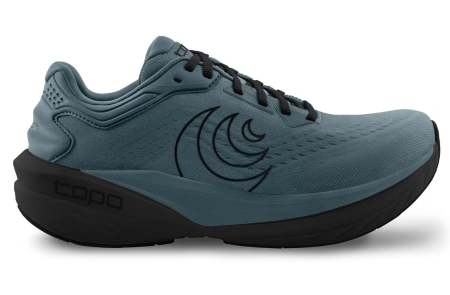
Topo Athletic Phantom 4 is best overall because it gives the forefoot room to spread without leaving the heel and midfoot loose, then adds enough cushion and stiffness to keep toe-off controlled.
| Review metric | Ken’s assessment |
|---|---|
| Neuroma score | 9.5/10 |
| Manufacturer drop | 5mm |
| Cushion / stack | 35mm heel / 30mm forefoot |
| Manufacturer weight | 9.3 oz (men’s US 9) |
| Widths and shape | Standard and Wide; anatomical toe box |
| Transition | Moderately stiff, balanced transition |
The Phantom 4 is my first try-on because it solves the fit problem at both ends of the shoe. The front is shaped for toe splay, but the middle and heel do not feel like a loose box. That matters more than a generic Wide label.
A shoe can be wide from heel to toe and still let the foot slide forward, which recreates pressure at the ball of the foot. The Phantom’s secure midfoot keeps that from happening. Underfoot, the 35/30mm platform feels protected without becoming unstable. The forefoot is cushioned, but the shoe does not fold sharply through the metatarsal heads.
The 5mm drop is also a useful middle ground for runners who do not want Altra’s zero-drop loading but dislike a steep heel. My reservation is that the upper is not bottomless. A high-volume forefoot or a thick orthotic may still need the Wide version.
Start there if the top of your foot already feels compressed in standard trainers.
Fit note: Try true to size first. Move to Wide for forefoot volume; do not automatically add a half size unless your longest toe lacks clearance.
| What I like | What I do not like |
|---|---|
| Best combination of toe splay and heel security | Standard width can still be low-volume for swollen feet |
| Enough forefoot cushion without a mushy platform | Not as rockered as Ghost Max 3 or Bondi 9 |
| 5mm drop is easier to adapt to than zero drop | ZipFoam feels more controlled than plush |
| Wide version is genuinely useful | Price is high for a conventional daily trainer |
Buy it if: It gives the forefoot room to spread without leaving the heel and midfoot loose, then adds enough cushion and stiffness to keep toe-off controlled.
Skip it if: Skip it if you need a dramatic rocker or the softest possible forefoot landing.
Read my Topo Athletic Phantom review.
2. Brooks Ghost Max 3 – Best rocker and orthotic platform
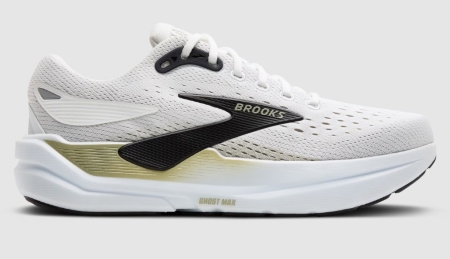
Brooks Ghost Max 3 is best rocker and orthotic platform because its broad platform, 6mm drop, rocker, and multiple widths reduce forefoot bending while leaving practical room for an insert.
| Review metric | Ken’s assessment |
|---|---|
| Neuroma score | 9.2/10 |
| Manufacturer drop | 6mm |
| Cushion / stack | High-stack DNA LOFT v3 |
| Manufacturer weight | 11.2 oz (men’s US 9) |
| Widths and shape | D, 2E, and 4E for men |
| Transition | GlideRoll rocker; broad, stable base |
The Ghost Max 3 is the shoe I would try when push-off is the trigger. Its GlideRoll shape moves the foot forward with less bending through the forefoot than a flexible traditional trainer. That does not guarantee symptom relief, but it is a sensible mechanical match when the nerve complains late in stance.
Brooks also built the shoe on a broad base. The result is calmer than many tall neutral shoes, especially once fatigue makes the foot drift side to side. The insole comes out cleanly, and the 2E and 4E choices make this one of the easier platforms for a metatarsal-support insert or orthotic. The catch is weight and fit. If you run with an insert, use my running with orthotics guide for sockliner removal, volume, heel hold, and break-in.
2 ounces in the men’s reference size, it never feels light. The standard toe box is accommodating, not anatomical, so a runner whose toes already press together should start with 2E instead of hoping the mesh stretches.
I also prefer its controlled cushioning to a very soft foam for neuroma-prone feet because excessive sinking can increase foot motion inside the shoe.
Fit note: True to size for length. Choose width from ball-of-foot pressure, not from how roomy the heel feels.
| What I like | What I do not like |
|---|---|
| Rocker limits abrupt forefoot flexion | Heavy for faster daily running |
| Broad base stays stable on tired legs | Standard toe box is not foot-shaped |
| 2E and 4E options suit inserts | Cushioning feels protective rather than lively |
| Removable sockliner and secure heel | Bulky on tight turns |
Buy it if: Its broad platform, 6mm drop, rocker, and multiple widths reduce forefoot bending while leaving practical room for an insert. Skip it if: Skip it if you dislike heavy rockered shoes or need an anatomical toe shape in standard width.
Read my Brooks Ghost family review.
3. Altra Torin 8 – Best zero-drop toe-splay option
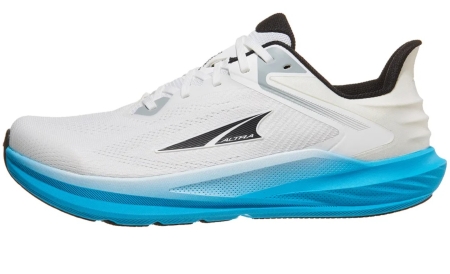
Altra Torin 8 is best zero-drop toe-splay option because the FootShape front gives toes more room to spread, while the 30mm forefoot stack avoids the harsh ground feel of minimalist zero-drop shoes.
| Review metric | Ken’s assessment |
|---|---|
| Neuroma score | 9.0/10 |
| Manufacturer drop | 0mm |
| Cushion / stack | 30mm heel / 30mm forefoot |
| Manufacturer weight | 10.15 oz (men’s reference size) |
| Widths and shape | Standard FootShape plus Wide |
| Transition | Level platform with a relatively stiff forefoot |
The Torin 8 is the obvious candidate when side-to-side toe compression is the main irritant. Its front follows the outline of the foot better than most conventional trainers, and the platform stays level from heel to forefoot. That combination can feel immediately freeing if a tapered upper has been squeezing the third and fourth metatarsal region.
But zero drop is not a treatment, and I do not rank the Torin first for that reason. Moving from a 10mm shoe to zero changes ankle and calf demand. A runner who abruptly swaps every mile into the Torin may trade forefoot comfort for calf or Achilles soreness.
The Torin also uses Altra’s Standard FootShape, not the brand’s roomiest Original shape. Some genuinely wide feet still need the Wide version. What I like is the amount of cushion under the ball of the foot: 30mm is enough for road running without turning the shoe into a flexible barefoot model.
Use it when the shape is right and you can transition gradually, not because an internet rule says zero drop is always better.
Fit note: Try the Standard and Wide side by side. The right size should let all toes lie flat without the midfoot swimming.
| What I like | What I do not like |
|---|---|
| Toe box follows the foot better than tapered shoes | Zero drop needs a gradual transition |
| 30mm forefoot cushion protects from pavement | Standard FootShape is not Altra’s roomiest last |
| Level platform feels natural to experienced zero-drop runners | Heavier than it looks |
| Wide option adds useful volume | Can irritate calves or Achilles if adopted abruptly |
Buy it if: The FootShape front gives toes more room to spread, while the 30mm forefoot stack avoids the harsh ground feel of minimalist zero-drop shoes. Skip it if: Skip it during an Achilles flare or if you cannot transition away from a higher-drop shoe gradually.
Read my Altra Torin review.
4. New Balance Fresh Foam X 1080v15 – Best width range
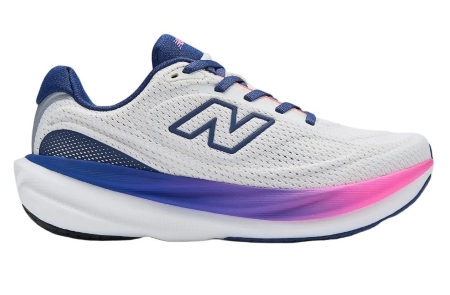
New Balance Fresh Foam X 1080v15 is best width range because it offers the most useful width ladder in this list, which makes it easier to fit a broad forefoot, swelling, or an orthotic without oversizing the shoe.
| Review metric | Ken’s assessment |
|---|---|
| Neuroma score | 8.8/10 |
| Manufacturer drop | 6mm |
| Cushion / stack | High-stack Infinion cushioning |
| Manufacturer weight | 9.2 oz (men’s reference size) |
| Widths and shape | B, D, 2E, and 4E for men; 2A through 2E for women |
| Transition | Flexible-to-smooth neutral transition |
The 1080v15 earns this ranking through options. A runner can choose a narrower heel and still move up in forefoot width instead of buying a shoe that is simply too long. That is the fitting advantage I want for Morton’s neuroma.
New Balance offers men’s widths from B to 4E and women’s widths from 2A to 2E, so a specialty running store can solve the fit more precisely than a brand with one generic Wide. The 6mm drop is moderate, and the Infinion midsole gives enough protection for daily and long runs without the bulk of the More v6.
I would not call its toe box anatomical; the shape still tapers more than Topo or Altra. A 4E label also does not guarantee that the upper volume will match every foot. The insole test matters: stand on the removed sockliner and check whether the ball of the foot spills over the edges.
If it does, the shoe is too narrow regardless of how soft the upper feels. The 1080 is best for runners who need a precise width choice and a lighter, less rockered ride.
Fit note: Use the removable insole as a width template. Keep the correct length and change width before sizing up.
| What I like | What I do not like |
|---|---|
| Best width ladder in the roundup | Toe box still tapers more than Topo or Altra |
| Lighter than most max-cushion shoes | Soft foam may feel vague for unstable feet |
| 6mm drop is broadly adaptable | Width labels do not solve low toe-box height |
| Easy to fit with many orthotics | Not a strong rocker |
Buy it if: It offers the most useful width ladder in this list, which makes it easier to fit a broad forefoot, swelling, or an orthotic without oversizing the shoe. Skip it if: Skip it if you need a stiff rocker or structured pronation support.
Read my running shoes for wide feet guide.
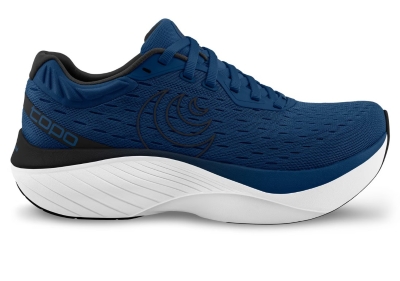
5. Topo Athletic Atmos 2 – Best max cushion with a foot-shaped toe box
Topo Athletic Atmos 2 is best max cushion with a foot-shaped toe box because it pairs Topo’s roomy forefoot shape with 35mm of forefoot cushion, making it the strongest option for runners who want both toe splay and ground isolation.
| Review metric | Ken’s assessment |
|---|---|
| Neuroma score | 8.7/10 |
| Manufacturer drop | 5mm |
| Cushion / stack | 40mm heel / 35mm forefoot |
| Manufacturer weight | 9.9 oz (men’s US 9) |
| Widths and shape | Standard and Wide; anatomical toe box |
| Transition | Max-cushion platform with a gentle transition |
The Atmos 2 is what I would hand to the runner who likes the Phantom shape but wants substantially more foam. The 40/35mm platform is tall, yet Topo keeps the heel and midfoot fitted enough that the foot does not surge forward on every downhill. That secure rear section is easy to overlook.
A huge toe box is not helpful if the foot slides inside it and the metatarsals repeatedly load the front of the shoe. The Atmos gives the toes room while the upper holds the rest of the foot. It is softer and plusher than the Phantom, and the Wide version can accommodate more forefoot volume.
I rank it below the 1080 because a 40mm stack is more shoe than many runners need, and the taller platform can feel disconnected on uneven pavement. It also bends less naturally than a lower trainer.
For easy miles, recovery runs, and runners who feel every pebble through the ball of the foot, though, this is one of the most logically designed shoes in the category.
Fit note: True to size for most feet. Use Wide when adding a metatarsal-support insert or when the standard upper presses from above.
| What I like | What I do not like |
|---|---|
| 35mm of forefoot cushion | Tall platform can feel detached from the ground |
| Anatomical toe box with secure heel | Too much shoe for speed sessions |
| Wide option available | More expensive than Phantom 4 |
| Lighter than its stack suggests | Soft ride will not suit every stable-foot preference |
Buy it if: It pairs Topo’s roomy forefoot shape with 35mm of forefoot cushion, making it the strongest option for runners who want both toe splay and ground isolation. Skip it if: Skip it if tall shoes make you feel unstable or you need a flexible forefoot.
Read my best cushioned running shoes guide.
6. HOKA Bondi 9 Wide – Best aggressive rocker
HOKA Bondi 9 Wide is best aggressive rocker because the tall forefoot and pronounced rocker reduce ground feel and can shorten the amount of bending required at toe-off.

| Review metric | Ken’s assessment |
|---|---|
| Neuroma score | 8.5/10 |
| Manufacturer drop | 5mm |
| Cushion / stack | Max-cushion supercritical EVA |
| Manufacturer weight | About 10.5 oz (men’s reference size) |
| Widths and shape | Standard, Wide, and Extra Wide in selected men’s versions |
| Transition | Pronounced MetaRocker and broad base |
The Bondi 9 belongs in the conversation because its rocker is obvious. If the painful moment is the final roll over the ball of the foot, the shoe can make that transition feel less abrupt. The broad platform also prevents the tall stack from behaving like a soft balance board.
I am specific about the Wide version because standard HOKA fit can taper too early for a neuroma-prone forefoot. Even Wide is not the same shape as Topo or Altra, so this is a shoe to try, not blindly order from a max-cushion list. Press the upper over the third and fourth metatarsal area while standing.
Any pressure there is a reason to move on. The Bondi is also heavy and slow at quicker paces, but that is not the main issue. The main issue is whether the rocker lines up with your foot. If the bend point sits behind or ahead of your metatarsal joints, the ride can feel awkward.
When fit and rocker alignment are right, it is one of the best options for easy road miles during a sensitive period.
Fit note: Start with Wide if forefoot compression is your trigger. Confirm the rocker bends under your natural toe-off point.
| What I like | What I do not like |
|---|---|
| Strong rocker reduces abrupt toe-off | Standard fit can taper too early |
| Deep pavement protection | Heavy and slow |
| Broad base feels stable | Rocker does not align with every foot |
| Multiple width choices | Wide is not as anatomical as Topo Wide |
Buy it if: The tall forefoot and pronounced rocker reduce ground feel and can shorten the amount of bending required at toe-off. Skip it if: Skip it if the upper touches the painful interspace or the rocker feels as if it tips you too early.
Read my HOKA Bondi review.
7. ASICS Gel-Nimbus 28 Wide – Best plush conventional trainer
ASICS Gel-Nimbus 28 Wide is best plush conventional trainer because it combines a soft forefoot, an 8mm drop, and US Wide or Extra Wide choices for runners who want familiar geometry rather than a low-drop or strongly rockered shoe.
| Review metric | Ken’s assessment |
|---|---|
| Neuroma score | 8.3/10 |
| Manufacturer drop | 8mm |
| Cushion / stack | High-stack FF BLAST PLUS with PureGEL |
| Manufacturer weight | Approximately 20g lighter than Nimbus 27 |
| Widths and shape | Standard, Wide, and Extra Wide for men in the US |
| Transition | Plush neutral platform with a mild rocker |
The Nimbus 28 is the conventional comfort pick. It gives you a plush landing and a higher drop than the Topo, Altra, HOKA, or Ghost Max options without jumping all the way to an old-school 12mm trainer. That can be useful if low-drop shoes make your calves work too hard.
The platform is broad and reasonably stable for a neutral shoe, and ASICS sells men’s Wide and Extra Wide versions in the US. The limitation is toe-box shape. The Nimbus is spacious by traditional ASICS standards, but it is still a tapered running shoe.
Runners with a square forefoot may feel the lateral toes pushed inward even in the correct width. The engineered knit is forgiving, yet stretch is not a substitute for space at the sole. I like the Nimbus when the foot is average-shaped but needs more width or volume, and when the runner wants soft long-run protection.
I move away from it when the neuroma is highly sensitive to lateral compression or when soft foam lets an unstable foot drift too much.
Fit note: Keep a full thumb-width in front of the longest toe and verify that no toe is pushed inward while standing.
| What I like | What I do not like |
|---|---|
| Plush forefoot cushioning | Still tapered compared with foot-shaped shoes |
| 8mm drop suits runners leaving high-drop shoes | Soft ride can feel imprecise |
| Wide and Extra Wide options | Warm knit upper |
| Stable for a tall neutral trainer | Premium price |
Buy it if: It combines a soft forefoot, an 8mm drop, and US Wide or Extra Wide choices for runners who want familiar geometry rather than a low-drop or strongly rockered shoe. Skip it if: Skip it if your forefoot is square-shaped or you need a stiff, obvious rocker.
Read my ASICS Gel-Nimbus review.
8. New Balance Fresh Foam X More v6 – Best extra-wide max cushion
New Balance Fresh Foam X More v6 is best extra-wide max cushion because its broad base, 4E availability, and deep forefoot cushion make it a practical choice for large-volume feet and runners who bottom out lighter trainers.
| Review metric | Ken’s assessment |
|---|---|
| Neuroma score | 8.1/10 |
| Manufacturer drop | 4mm |
| Cushion / stack | Max-cushion Fresh Foam X |
| Manufacturer weight | 10.8 oz (men’s reference size) |
| Widths and shape | D, 2E, and 4E for men |
| Transition | Broad, low-drop max-cushion platform |
The More v6 is the big platform choice. It has enough width options to fit a broad forefoot without making the shoe excessively long, and the max-cushion midsole protects the ball of the foot on concrete. The 4mm drop keeps the forefoot stack substantial, but it also asks more from the calf than a Nimbus or Triumph.
That tradeoff needs to be clear. A runner coming from 10 or 12mm should not move every weekly mile into this shoe on day one. The More is also soft. For a heavier runner that softness may feel protective; for a runner who pronates hard, it may feel unstable unless the base and upper hold the foot well.
I check downhill fit carefully because a high-volume shoe can allow the foot to slide forward. Use a runner’s loop only if it secures the heel without pulling the laces tight across the forefoot. The More v6 is not elegant, but it is useful when width, volume, and underfoot depth are the non-negotiables.
Fit note: Choose the width that contains the ball of the foot on the insole. Lock the heel without tightening the forefoot eyelets.
| What I like | What I do not like |
|---|---|
| 4E option for large-volume feet | Heavy and bulky |
| Deep forefoot protection | 4mm drop needs transition for high-drop runners |
| Broad, inherently stable base | Soft foam can allow extra motion |
| Removable insole suits many orthotics | Not shaped as naturally as Topo or Altra |
Buy it if: Its broad base, 4E availability, and deep forefoot cushion make it a practical choice for large-volume feet and runners who bottom out lighter trainers. Skip it if: Skip it if you need a high drop, a firm platform, or a lightweight daily trainer.
Read my running shoes for heavy runners guide.
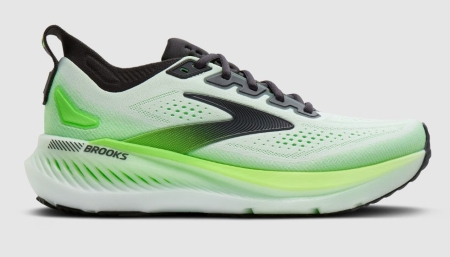
9. Brooks Glycerin GTS 23 Wide – Best for neuroma plus overpronation
Brooks Glycerin GTS 23 Wide is best for neuroma plus overpronation because it adds structured GuideRails support to a plush forefoot, which helps runners whose foot motion and shoe slippage worsen symptoms late in a run.
| Review metric | Ken’s assessment |
|---|---|
| Neuroma score | 8.0/10 |
| Manufacturer drop | 8mm |
| Cushion / stack | Plush DNA TUNED cushioning |
| Manufacturer weight | 11.0 oz (men’s reference size) |
| Widths and shape | Standard and Wide |
| Transition | GuideRails support on a wide platform |
The Glycerin GTS 23 is here for a narrower use case: the runner who needs width and support. Morton’s neuroma is not caused by pronation alone, and I would not put every sore forefoot into a stability shoe. But excess motion can matter when the foot repeatedly slides and twists inside the upper.
The Glycerin’s GuideRails system keeps the ride more centered without a hard medial post, while DNA TUNED cushioning softens the forefoot. Brooks also added more forefoot foam than the prior version. The Wide fit is accommodating, though it remains a conventional shape rather than an anatomical toe box.
If lateral compression is the main trigger, Phantom Wide or Torin Wide still makes more sense. If the runner also collapses inward, wears the medial outsole rapidly, or has already done well in supportive Brooks shoes, Glycerin GTS becomes more compelling. It is heavy, and the structured upper may feel like too much shoe for neutral feet.
Buy it for a specific stability need, not because support sounds medically safer.
Fit note: Use the Wide version when the ball of the foot touches either side. The heel should stay secure without forefoot lace pressure.
| What I like | What I do not like |
|---|---|
| Plush forefoot plus structured support | Conventional toe-box taper |
| GuideRails feel less intrusive than a medial post | Heavy at 11 ounces |
| Secure heel limits sliding | Too much structure for some neutral runners |
| Wide option available | Only one wider tier |
Buy it if: It adds structured GuideRails support to a plush forefoot, which helps runners whose foot motion and shoe slippage worsen symptoms late in a run. Skip it if: Skip it if you are neutral and lateral toe compression is the only problem.
Read my Brooks Glycerin GTS review.
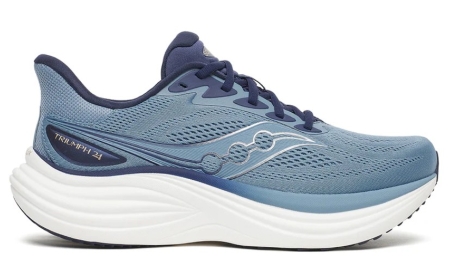
10. Saucony Triumph 24 Wide – Best high-drop lightweight cushion
Saucony Triumph 24 Wide is best high-drop lightweight cushion because it supplies 33mm of forefoot cushion in a relatively light, 10mm-drop package for runners who do poorly in low-drop shoes.
| Review metric | Ken’s assessment |
|---|---|
| Neuroma score | 7.8/10 |
| Manufacturer drop | 10mm |
| Cushion / stack | 43mm heel / 33mm forefoot |
| Manufacturer weight | 8.8 oz (men’s reference size) |
| Widths and shape | Standard and Wide |
| Transition | High-stack, smooth neutral transition |
The Triumph 24 is the outlier here: high drop, tall stack, low weight. 8 ounces. That makes it easier to run normally than many heavy max-cushion shoes. The Wide version and the brand’s roomier updated toe box give it a place in this guide, but I rank it tenth because shape still matters more than statistics.
The front is not as square or anatomical as Topo and Altra, and 10mm of drop can shift the ride in a way that some forefoot-sensitive runners like while others do not. I prefer it for a runner who already tolerates traditional high-drop trainers and wants more cushion without carrying an 11-ounce shoe.
The incrediLUX foam is soft and energetic, so check stability late in the run. If the foot drifts outward or inward inside the shoe, a less lively platform may be better. This is a good specialist choice, not the default neuroma shoe.
Fit note: Try Wide before sizing up. Check that the high stack does not let your foot move sideways during a short jog.
| What I like | What I do not like |
|---|---|
| 33mm of forefoot cushion | Toe box remains conventionally shaped |
| Very light for a 43mm heel stack | Soft energetic foam may feel unstable |
| 10mm drop suits high-drop loyalists | High drop does not suit everyone |
| Wide version available | New foam has less long-term field history |
Buy it if: It supplies 33mm of forefoot cushion in a relatively light, 10mm-drop package for runners who do poorly in low-drop shoes. Skip it if: Skip it if you need anatomical toe splay or dislike high-drop shoes.
Read my Saucony Triumph review.
Morton’s Neuroma Shoe Comparison
Phantom 4 is the best-balanced starting point, but the right shoe changes with forefoot shape, current drop, and whether you use an insert. This table compresses the full reviews into a fitting shortlist.
| Shoe | Toe-box strategy | Drop | Rocker / bend | Best use | Main risk |
|---|---|---|---|---|---|
| Topo Athletic Phantom 4 | Standard and Wide; anatomical toe box | 5mm | Moderately stiff, balanced transition | Best overall | Skip it if you need a dramatic rocker or the softest possible forefoot landing. |
| Brooks Ghost Max 3 | D, 2E, and 4E for men | 6mm | GlideRoll rocker; broad, stable base | Best rocker and orthotic platform | Skip it if you dislike heavy rockered shoes or need an anatomical toe shape in standard width. |
| Altra Torin 8 | Standard FootShape plus Wide | 0mm | Level platform with a relatively stiff forefoot | Best zero-drop toe-splay option | Skip it during an Achilles flare or if you cannot transition away from a higher-drop shoe gradually. |
| New Balance Fresh Foam X 1080v15 | B, D, 2E, and 4E for men; 2A through 2E for women | 6mm | Flexible-to-smooth neutral transition | Best width range | Skip it if you need a stiff rocker or structured pronation support. |
| Topo Athletic Atmos 2 | Standard and Wide; anatomical toe box | 5mm | Max-cushion platform with a gentle transition | Best max cushion with a foot-shaped toe box | Skip it if tall shoes make you feel unstable or you need a flexible forefoot. |
| HOKA Bondi 9 Wide | Standard, Wide, and Extra Wide in selected men’s versions | 5mm | Pronounced MetaRocker and broad base | Best aggressive rocker | Skip it if the upper touches the painful interspace or the rocker feels as if it tips you too early. |
| ASICS Gel-Nimbus 28 Wide | Standard, Wide, and Extra Wide for men in the US | 8mm | Plush neutral platform with a mild rocker | Best plush conventional trainer | Skip it if your forefoot is square-shaped or you need a stiff, obvious rocker. |
| New Balance Fresh Foam X More v6 | D, 2E, and 4E for men | 4mm | Broad, low-drop max-cushion platform | Best extra-wide max cushion | Skip it if you need a high drop, a firm platform, or a lightweight daily trainer. |
| Brooks Glycerin GTS 23 Wide | Standard and Wide | 8mm | GuideRails support on a wide platform | Best for neuroma plus overpronation | Skip it if you are neutral and lateral toe compression is the only problem. |
| Saucony Triumph 24 Wide | Standard and Wide | 10mm | High-stack, smooth neutral transition | Best high-drop lightweight cushion | Skip it if you need anatomical toe splay or dislike high-drop shoes. |
Runners who need more structure should cross-check my best stability running shoes and overpronation shoe guide. Stability can control excess motion, but it does not compensate for a toe box that squeezes the forefoot.
Match the Shoe to Your Pain and Fit Pattern
Use the trigger, not the diagnosis label alone, to build your try-on list. Two runners with the same diagnosis can need different shoes because one is compressed from the sides and the other slides forward inside a high-volume upper.
| What you notice | Start with | Why |
|---|---|---|
| Toes are pushed together in standard shoes | Topo Phantom 4 Wide or Altra Torin 8 Wide | Both prioritize forefoot shape instead of only adding general width |
| Pain spikes during push-off | Brooks Ghost Max 3 or HOKA Bondi 9 Wide | Their rockers reduce abrupt forefoot bending |
| You need B, 2E, or 4E rather than a foot-shaped last | New Balance 1080v15 | The width ladder gives the fitter more control |
| You want maximum cushion and anatomical toe room | Topo Atmos 2 Wide | It combines a 35mm forefoot with Topo’s roomy shape |
| You overpronate and slide inside neutral shoes | Brooks Glycerin GTS 23 Wide | GuideRails and a secure heel add motion control |
| You already run comfortably in 10mm-drop trainers | Saucony Triumph 24 Wide | It keeps a familiar drop while adding deep forefoot cushion |
| You use a thick orthotic or metatarsal-support insert | Ghost Max 3, 1080v15, or More v6 | Removable insoles and multiple widths make depth easier to manage |
Arch shape can change the fit problem. Use the separate guides for flat feet, high arches, and supination when those mechanics are part of the picture. For a fuller framework covering arch, width, volume, flexibility, and asymmetry, use my running foot types guide.
The 7-Minute Store Fit Test
Do not judge a neuroma shoe from seated step-in softness. Feet spread under load and often swell later in the day. Bring the socks and insert you actually use, then spend a few minutes testing pressure and movement.
- Measure both feet: fit the longer and wider foot, preferably late in the day.
- Check length while standing: leave roughly a thumb-width beyond the longest toe, but do not add length to solve width.
- Check the insole: remove it, stand on it, and look for the ball of the foot spilling over either edge.
- Check toe posture: every toe should lie flat rather than being pushed inward or upward.
- Check pressure from above: flex and extend the toes; the upper should not press on the painful interspace.
- Walk downhill or on a ramp: the foot should not slide into the front of the shoe.
- Jog for two minutes: reject any burning, tingling, numbness, hot spot, or need to loosen the shoe immediately.
A correct width should feel secure, not tight. A half size larger changes length and rocker alignment; it is not the first fix for a cramped forefoot. Move from standard to Wide or Extra Wide before making the shoe longer.
If your usual shoe suddenly starts triggering symptoms, inspect the midsole and outsole before changing categories. My guide to when to replace running shoes explains the wear signs that matter more than a generic mileage number. For long-run swelling and fit, see the long-distance shoe guide.
Metatarsal Pads, Orthotics, and Lacing
A metatarsal pad should sit behind the metatarsal heads, not directly under the painful spot. Its job is to redistribute load and encourage space between the metatarsals. Poor placement can create a new pressure point, so clinician or pedorthist guidance is worth having.
A double-blind randomized trial of 72 people found that a customized insole with metatarsal and arch support improved walking pain and patient-reported function compared with a flat insole. That supports orthotic use as an option, but it does not prove that one retail insert works for everyone.
| Adjustment | Correct use | Common mistake |
|---|---|---|
| Metatarsal pad | Place just proximal to the metatarsal heads after professional guidance | Putting the pad directly under the sore nerve |
| Orthotic | Use a shoe with removable insole and enough depth | Forcing an insert into a shoe that now crowds the toes |
| Forefoot window lacing | Skip or loosen an eyelet over the sensitive area | Cranking the lower laces tight to stop heel slip |
| Runner’s loop | Use the top eyelet to secure the heel independently | Overtightening until the ankle or instep is uncomfortable |
| Sock choice | Use smooth, non-bunching socks with enough shoe volume | Adding thick socks that steal forefoot room |
For insert selection, use my running insole guide as a starting point, then confirm the device is appropriate for your diagnosis. Sock thickness also changes fit; compare my running sock guide before assuming more padding is always better.
Running During a Morton’s Neuroma Flare
Reduce the activity that reproduces the symptoms before asking a shoe to solve the entire load problem. Mayo Clinic advises taking a break from high-impact activities such as running and jumping for a few weeks when needed. That does not prescribe an identical timeline for every runner, but it does put symptom control ahead of maintaining a streak.
- Use walking as the gate: if normal walking causes burning or numbness, running is not the next test.
- Remove speed first: hills, intervals, and hard toe-off usually load the forefoot more aggressively than easy running.
- Shorten the run: stop before symptoms build instead of waiting for pain to change your gait.
- Avoid cambered roads: side slope can make the foot slide and load one side of the forefoot repeatedly.
- Reintroduce one variable: change distance, speed, surface, or shoe, not all four in the same week.
- Track the next morning: tingling or numbness that lasts longer after each run is a reason to back off and seek care.
Keep the return boring. My easy-run pace guide and recovery and rest-day guide help control intensity and frequency. For broader load decisions, use the running injury prevention guide.
Forefoot pain can also coexist with plantar or posterior chain issues. Compare the fit advice in my guides to plantar fasciitis shoes and Achilles tendonitis shoes before making a large drop change. If pavement impact is the dominant trigger, see the running shoes for concrete guide.
Frequently Asked Questions
The short answers below separate shoe decisions from medical claims. Footwear can reduce compression and improve comfort, but diagnosis and treatment still belong with a qualified clinician.
What are the best running shoes for Morton’s neuroma?
The Topo Athletic Phantom 4 is the best overall running shoe for Morton’s neuroma because it combines an anatomical toe box, secure midfoot and heel, 30mm of forefoot cushion, and a moderate 5mm drop. Brooks Ghost Max 3 is the better rocker option, while Altra Torin 8 gives more natural toe splay for runners adapted to zero drop.
Should running shoes for Morton’s neuroma be wide?
They should be wide enough at the ball of the foot that the toes are not pushed together. A Wide label alone is not enough; toe-box shape, height, and heel security also matter.
Are zero-drop shoes good for Morton’s neuroma?
Zero-drop shoes can work when their toe-box shape and forefoot cushion reduce compression, but zero drop is not inherently therapeutic. Transition gradually because it increases calf and Achilles demand compared with higher-drop shoes.
Are rocker-bottom running shoes good for Morton’s neuroma?
A well-matched rocker can reduce abrupt forefoot bending during push-off. It should align with your foot and should not cause sliding, instability, or an unnatural tipping sensation.
Is HOKA Bondi 9 good for Morton’s neuroma?
HOKA Bondi 9 Wide can be a good option when a strong rocker and deep forefoot cushioning help. The standard fit may taper too early for some feet, so the toe box must be checked under full weight bearing.
Is Altra Torin 8 wide enough for Morton’s neuroma?
Torin 8 has a more natural FootShape toe box than most conventional trainers, but it uses Altra’s Standard FootShape and will not fit every wide foot. A separate Wide version is available and should be tried when the standard upper presses from the sides or above.
Can I use a metatarsal pad in running shoes?
Yes, a metatarsal pad may be used when appropriately placed behind the metatarsal heads. Placement is easy to get wrong, so professional fitting is safer than putting the pad directly under the painful spot.
Should I size up for Morton’s neuroma?
Do not size up only to solve width. Keep enough toe length, then choose a wider or more anatomical last. Excess length can move the rocker and bend point away from the foot and allow forward sliding.
Can running shoes cure Morton’s neuroma?
No. Shoes can reduce forefoot compression and make activity more tolerable, but they do not guarantee healing or replace diagnosis and treatment.
Can I keep running with Morton’s neuroma?
Some runners can continue with modified volume and intensity when symptoms are mild and gait remains normal. Stop and seek medical advice if running causes persistent numbness, worsening pain, weakness, or pain during normal walking.
Final Verdict
The Topo Athletic Phantom 4 is my best overall running shoe for Morton’s neuroma because it creates forefoot room without giving up heel and midfoot security. That balance is harder to find than cushioning. The 5mm drop, 30mm forefoot stack, and controlled bend make it a sensible first try for the widest range of runners.
Choose the Brooks Ghost Max 3 when a stronger rocker or orthotic room matters more than anatomical shape. Choose the Altra Torin 8 when toe splay is the priority and zero drop is already familiar. Choose the New Balance 1080v15 when you need a precise width rather than a one-size Wide option.
Whatever you buy, reject forefoot pressure in the store. A shoe that starts by squeezing the nerve will not become a better shoe at mile eight.

Written by Ken — 12 years of running, 12,500+ miles, 63 shoes tested, 36 races from 5Ks to a 50K ultra. I run 30–40 miles a week on the Atlantic City Boardwalk and review every shoe with real training miles, not one-run demos. More about me →