Altra Torin 8 review, after 65 logged miles: I like the space around my toes and the secure heel for easy road runs. I do not like the extra work its zero-drop platform asks of my calves, and I reach for other shoes more often. If you already enjoy zero-drop and want a cushioned daily trainer, it deserves a try. If you want your first forgiving everyday shoe, I would start elsewhere.
I have run for 12 years and tested shoes across a wide range of training days. My Torin 8 judgment comes from my own size US 10.5 pair on South Jersey roads and boardwalks. This is a developing wear test: 65 miles support a fit and ride verdict, but they do not support a long-term durability promise.
My verdict in one minute
| Decision | My take |
|---|---|
| Best use | Easy and steady road miles for a runner already comfortable in zero-drop. |
| What wins me over | Room at the toes, secure padded heel, and a steady, grounded platform. |
| What holds it back | I prefer more help from the shoe when I pick up the pace; the flat geometry is less comfortable for my calves than a 5 mm-drop alternative. |
| Would I buy it again? | No. It works, but the Topo Phantom 4 suits my calves better and I reach for the Brooks Ghost 18 more often. |
That verdict is personal. My medium-arched, mildly pronating foot and 182 lb build give me a useful reference point, not a universal fit rule. Someone who has run happily in Altra for years may rank this shoe much higher than I do.
What I actually tested
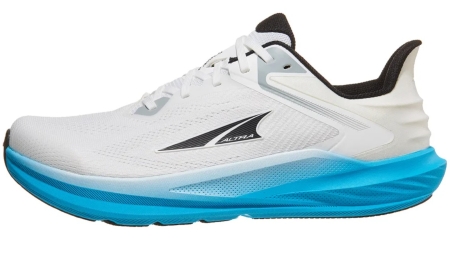
My record for this pair is 65 verified running miles, size US 10.5. I used it on road and boardwalk routes around South Jersey and kept notes on fit, underfoot feel, and early wear. I do not have a structured wet-grip test, a controlled comparison run against Torin 7, or a long-term outsole test for this pair. Those gaps matter when deciding how much weight to give each conclusion.
The most repeatable observation was simple: my forefoot had room to spread without pressure along the outside edge, while the padded collar held my heel without obvious lift. At 65 miles, the outsole had only light scuffing, the upper showed no fraying, and I could see fine compression lines in the midsole. That is a good early condition report, not an end-of-life estimate.
I also pay attention to what the test has not shown. I cannot turn a single good run or a cold-weather impression into a broad performance rule. That is why my recommendation centers on fit, easy-run feel, and the choices I make in my own rotation.
| What I checked | What happened in my pair | What it means for the decision |
|---|---|---|
| Road and boardwalk running | The platform felt level and predictable at easy effort. | This is the run for which I would consider it. |
| Fit over repeated outings | Useful toe space with a secure padded heel in my US 10.5. | Check midfoot volume and heel hold on your own foot. |
| Calf response | The flat geometry asked more of my calves than my 5 mm-drop Topo Phantom 4. | Do not judge the purchase by toe room alone. |
| Early wear at 65 miles | Light outsole scuffing, fine midsole lines, no upper fraying. | Encouraging condition, with no reliable lifespan estimate. |
Fit: room where I need it, without a loose heel
The Torin 8 felt true to my usual US 10.5 length. Altra calls this its Standard FootShape fit: the front is shaped to leave room for toes to fan out, while the midfoot feels more contained than the outline of the toe box might suggest. On my foot, the fifth toe was free of the side pressure I notice in narrower daily trainers. That is the fit reason I would put the Torin on a shortlist.
The heel collar is padded and held my calcaneus securely with ordinary lacing. I did not need to cinch the forefoot to fix heel lift. If you have a narrow heel, though, do your own short run before committing; my secure fit cannot tell you how your heel will sit. If you have a broad midfoot as well as broad toes, try the Wide version rather than assuming the roomy front means the whole shoe is wide.
There is a small trade-off: the tongue is plush but not gusseted. Check whether it stays centered when you lace the shoe. I would not buy a running shoe on toe-box shape alone if the midfoot or heel needs constant adjustment.
My fitting order is heel, midfoot, then toes. First I jog enough to see whether the heel lifts. Next I check whether the laces need so much tension that the middle of my foot feels compressed. Only then do I decide whether the extra room at the front is useful. The Torin passes that sequence on my foot, but the Standard FootShape label cannot settle it for yours.
If the front feels right but the middle pinches, I would test the Wide option before adding length. If the heel slips while the forefoot feels comfortable, I would try a different lacing pattern during a short run and walk away if I still have to overtighten. A roomy toe box is valuable only when the rest of the shoe stays quiet.
How the ride feels on an easy day
The Torin 8 gives me a level, planted feeling rather than the rolling, pillowy sensation I get from a high-stack rocker. Its EGO MAX midsole puts enough material between my foot and the pavement for normal easy runs, yet I can still tell where I land. The ride is steady and predictable. I would call it cushioned, but not lively.
At my easy effort, that restraint is useful. I can settle into a rhythm on the boardwalk without the shoe asking me to run faster. When I want a quicker turnover, I notice its weight and would rather take a lighter, more responsive pair. I am not claiming a pace cutoff: the point where a shoe starts to feel cumbersome depends on the runner, workout, and fatigue.
Zero-drop means the heel and forefoot sit at the same nominal height. It does not mean no cushioning, and it does not force everyone onto the forefoot. The Torin 8’s broad forefoot contributes to its planted feel, but it is still a neutral shoe. If you need a specific kind of support, do not read its stable feel as a prescription.
| Session | How I would use the Torin 8 | My limit |
|---|---|---|
| Easy road run | A natural match when I want a steady, level platform. | I still check next-day calf response. |
| Steady outing | Usable, especially if the pace stays conversational. | I do not get much help when I increase turnover. |
| Recovery after hard training | Conditional rather than automatic. | If my calves are already loaded, I choose a familiar drop. |
| Intervals or fast turns | I leave it out of that slot. | Its feel is steady, not quick or especially nimble. |
I would make the first two runs in this shoe deliberately ordinary. A try-on can tell me whether my toes have space and my heel stays put; it cannot tell me whether I like the flat platform after a tired week. That longer decision is why the Torin earns a role in my rotation only after the calf check, not immediately after a comfortable first step.
The calf question matters more than the foam question
My main hesitation is the load change when I move from a shoe with heel-to-toe drop to this flat platform. I have spent time in zero-drop footwear, yet the Topo Phantom 4’s 5 mm drop is more comfortable for my calves while still giving my toes space. That comparison is why I would not automatically choose Torin 8 just because its fit feels good in the shop.
If zero-drop is new to you, begin with a short, easy outing in the Torin and keep a familiar shoe in rotation. See how your calves and Achilles feel during the run and the next morning before adding time. There is no reliable calendar or percentage that fits everyone.
Persistent pain, worsening stiffness, or a changed gait are reasons to stop the experiment and seek qualified advice, especially if you already have an Achilles problem. My pain monitoring rules help with the stop-or-adjust decision; the broader running injury prevention guide covers changing training without stacking several new stresses at once.
Stability, traction, and early wear
On my road and boardwalk runs, the shoe felt centered under the forefoot and the heel stayed put. I would not sell it as a stability model for overpronation or flat feet. Its platform and fit may feel reassuring to one runner, while another may want more guidance or a different arch feel. If that is your decision, my flat-feet shoe guide has the broader comparison.
My early outsole and upper notes are encouraging, but 65 miles are too few to promise a lifespan. I look for new asymmetrical wear, a foam feel that changes on my usual run, and upper damage before I retire a pair. I would apply the same checks here instead of setting a fixed mileage target; the shoe replacement checklist walks through them.
I have no controlled wet-road result for this pair. Its rubber outsole is built for roads, but I would take a cautious first run on slick paint, wet boards, or loose gravel rather than borrow someone else’s grip score as my own observation.
What Changed from the Altra Torin 7?
I did not run a controlled same-day Torin 7 versus Torin 8 test. I can still separate the design update from my own Torin 8 experience. The Torin 7 already had a 30 mm, zero-drop platform and EGO MAX cushioning, so version 8 is not a new geometry. The meaningful refresh is the foam formulation and the way the upper and heel feel when I put the shoe on.
| Area | Torin 7 | Torin 8 | My buying implication |
|---|---|---|---|
| Platform | 30 mm stack and 0 mm drop | 30 mm stack and 0 mm drop | Do not expect the same calf load question to disappear. |
| Midsole | EGO MAX cushioning | Updated, lighter-feeling EGO MAX formulation | Judge softness and weight by a run, not the update label. |
| Upper | Engineered mesh | Jacquard mesh | Fit and breathability deserve a new try-on. |
| Heel | Molded heel collar | Reworked molded collar | My Torin 8 heel hold is good; I cannot promise an improvement for every heel. |
If your Torin 7 still fits and runs well, I would not replace it for the number on the box. I would consider the 8 when you want the updated step-in feel or the older upper never quite worked for you. I would still spend the first fitting minute on midfoot pressure and heel hold, because neither change alters the basic zero-drop decision.
Torin 8 versus the shoes I would actually choose
A useful comparison asks what would change my decision, not which spec table has the biggest numbers. These are the alternatives from my own rotation and testing history.
| If your priority is… | What I would choose | Why |
|---|---|---|
| Zero-drop with toe room | Torin 8 | The roomy front and secure heel make sense when flat geometry already feels normal to you. |
| Toe room with less calf demand | Topo Phantom 4 | Its 5 mm drop is more comfortable for my calves. This is my personal pick over the Torin. |
| A conventional, dependable daily ride | Brooks Ghost 18 | I reach for the Ghost more often; it suits days when I do not want to think about adapting to zero-drop. |
| A softer recovery feel | HOKA Bondi 9 | Different fit and ride: more rocker and cushion sensation, less of the Torin’s flat, grounded character. |
Who Should Buy the Altra Torin 8?
I would put the Torin 8 on the try-on list for a runner who already knows that a level platform works and wants comfortable room at the front without giving up heel security. Its best case is specific: easy and steady road mileage, with fit as the reason to choose it.
- Established zero-drop runners: you can judge the Torin on its ride and fit without making every run a transition experiment.
- Runners whose toes feel boxed in: my fifth toe had useful space, while the rest of the shoe stayed secure. Check the Standard and Wide fits rather than assuming every width feels alike.
- Easy-mile runners who like a level platform: I can settle into a predictable rhythm on roads and boardwalks without a pronounced rocker steering the stride.
- Runners who value a secure padded heel: my heel stayed put with ordinary lacing. A short jog is still the deciding test for your foot.
If your main issue is forefoot room but you do not enjoy zero-drop, I would compare the Topo Phantom 4 before buying. That is the distinction that changes my own purchase.
Who Should Skip the Altra Torin 8?
I would skip the Torin 8 when you need an immediate all-purpose trainer and have not learned how your calves respond to zero-drop. Toe room is attractive, but the geometry is still part of the product you are buying.
- New runners seeking one uncomplicated first shoe: start with the wider options in my beginner shoe guide, then test zero-drop when you have a stable running routine.
- Runners with current calf or Achilles symptoms: I would not use a shoe change as treatment. Discuss persistent or worsening symptoms with a qualified clinician.
- Speed-session shoppers: I find the Torin steady at easy pace and less eager when I ask for fast turnover. My daily trainer comparison helps separate everyday and workout roles.
- Runners who require corrective guidance: the Torin is neutral, despite the planted feeling I had on the road.
- Anyone buying solely to fix heel pain: fit may improve comfort, but I would not promise a remedy. My plantar fasciitis shoe guide puts the footwear decision in broader context.
How I Use the Torin 8 in My Shoe Rotation
I do not make the Torin 8 my default for every day simply because it is cushioned. I use it when I want the toe room and level, quiet platform on a normal road run. The shoes I choose instead show where its role ends.
| Run on my calendar | What I reach for | Why |
|---|---|---|
| Easy road or boardwalk miles | Torin 8, when my calves feel ready | The fit is comfortable and the ride is steady. |
| Easy day after calf-heavy training | Brooks Ghost 18 | I prefer the familiar geometry when I want less adaptation. |
| Toe-room day with a little heel lift | Topo Phantom 4 | The 5 mm drop feels better to my calves while keeping front room. |
| Faster workout | A lighter workout shoe | I do not ask the Torin to provide speed it does not offer me. |
This is a decision order, not a prescribed weekly schedule. I first ask whether the run is easy, then whether my calves feel normal, then whether I need the Torin’s toe space. If all three line up, it has a clear job. If the next morning brings unusual stiffness, I return to a familiar shoe and reassess rather than forcing the transition.
Torin 8 specifications that affect the decision
| Specification | Torin 8 |
|---|---|
| Category | Neutral road daily trainer |
| Heel-to-toe drop | 0 mm (brand specification) |
| Stack height | 30 mm heel / 30 mm forefoot (brand specification) |
| Midsole | Altra EGO MAX |
| Upper | Jacquard mesh with molded heel collar |
| FootShape | Standard fit; a Wide option is also sold |
| Listed men’s weight | 10.15 oz / 287.7 g; size and pair may vary |
Those are product specifications, not measurements I made on my own pair. In particular, my review should not turn someone else’s bench measurement into a claim about my test procedure.
My Final Verdict on the Torin 8
I respect the Torin 8 more than I reach for it. Across 65 logged miles, it gave me the toe space and heel hold I wanted, and its level ride stayed predictable on South Jersey roads and boardwalks. The reason I would not buy it again is equally concrete: my calves prefer the Topo Phantom 4’s 5 mm drop, while the Brooks Ghost 18 is the daily shoe I pick more often.
My buying advice is to decide on geometry first. If you already know zero-drop agrees with you, the Torin 8 gives you a comfortable, secure way to log easy miles with room up front. If you are hoping the shoe itself will change your stride or solve pain, I would pause and test the fit and load change before buying.
FAQ
Is the Altra Torin 8 good for beginners?
It can work for a beginner who is willing to adapt gradually to zero-drop, but it would not be my automatic first recommendation. I would prioritize a comfortable fit and an easy return policy, then start with short runs and watch next-day calf or Achilles symptoms.
How does the Altra Torin 8 fit?
My US 10.5 pair fit true to my usual length. The toe area gave me useful splay room and the padded heel held securely. Try it on if your midfoot is broad or your heel is narrow; those parts of the fit may matter more than the toe-box label.
Is the Torin 8 a stability shoe?
No. It is a neutral trainer. I felt steady on road and boardwalk surfaces, but that personal feel does not make it a substitute for a shoe or clinical plan chosen for a specific support need.
How long will the Torin 8 last?
I can report only early wear at 65 logged miles: light outsole scuffing, fine midsole creases, and no upper fraying. I cannot give a reliable final mileage from that. Watch ride feel and wear patterns on your own pair.
Can the Torin 8 help plantar fasciitis?
I would not treat it as a remedy. Its toe room may improve fit for some feet, but zero-drop can also change calf and Achilles loading. Persistent heel pain deserves an individual assessment rather than a shoe-based cure claim.
Would I buy the Torin 8 again?
No. I appreciate its toe room and heel hold, but I prefer the 5 mm-drop Topo Phantom 4 for my calves and reach for the Brooks Ghost 18 more often. A committed zero-drop runner may make a different choice.

Written by Ken — 12 years of running, 12,500+ miles, 63 shoes tested, 36 races from 5Ks to a 50K ultra. I run 30–40 miles a week on the Atlantic City Boardwalk and review every shoe with real training miles, not one-run demos. More about me →