
The best running shoes for men are the shoes that fit your foot, match your main training job, and remain predictable after fatigue changes your stride. After nearly 2,000 logged miles across these ten models, I rank the ASICS Novablast 5 first overall, the Brooks Ghost 18 for dependable daily mileage, and the adidas Adizero EVO SL for speedwork.
I am 182 pounds, usually wear a men’s US 10.5, and have spent 12 years learning that a great shoe can still be wrong for the runner in front of me. I therefore rank by decision: who the shoe fits, what run it solves, what it feels like after the honeymoon miles, and why I would not choose it.
If you want the widest market view, begin with my overall running-shoe ranking. If you do not yet know which category belongs on your shortlist, use my running-shoe finder before comparing prices.
Quick Picks: 3 Men’s Running Shoes I Would Compare First
I chose three different jobs instead of three nearly identical daily trainers. Start with the row that resembles your training week, then read the skip condition before opening the retailer. I also confirm the exact men’s width and return policy because color listings often hide width differences.
| Shoe | Why it earns my shortlist | When I would not choose it | Check price |
|---|---|---|---|
| ASICS Novablast 5 | Best overall: energetic enough for progression work, controlled enough for daily mileage | You dislike bounce or feel unstable on tall neutral foam | Check Novablast 5 price |
| Brooks Ghost 18 | Safest daily choice: predictable ride, durable build, and the broadest useful width range | You want a lightweight workout-first shoe | Check Ghost 18 price |
| adidas Adizero EVO SL | Best fast trainer: low weight and Lightstrike Pro response without a carbon plate | You need plush recovery comfort or a first beginner shoe | Check EVO SL price |
10 Best Running Shoes for Men: In-Depth Reviews
I use a runner-match format here: the first line identifies the job, the review explains how the shoe behaves, and the final bullets expose the reason to skip it. My mileage describes my pairs and surfaces; it is not a durability warranty for every runner.
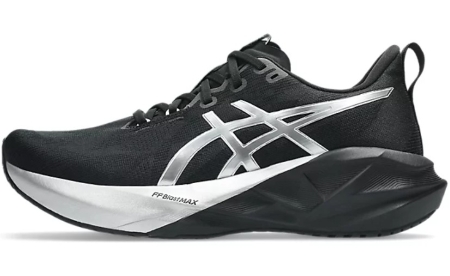
1. ASICS Novablast 5 — Best overall running shoe for men
| Runner match | My test record |
|---|---|
| A neutral runner who wants one lively shoe for easy, steady, and faster daily miles | 250+ miles |
| Men’s configuration | About 9.0 oz/255 g; 8 mm drop; neutral; standard and wide |
The Novablast 5 wins my overall spot because it covers more of a normal training week than any other shoe here. I logged more than 250 miles across asphalt, boardwalk, and treadmill running. At easy pace the foam feels protective; at steady pace it compresses and releases quickly enough that I do not feel as though I am dragging an easy-day shoe into faster work.
I am careful with the word versatile. Novablast does not replace a carbon racer, and it is not as calm as Ghost 18 for a runner who dislikes bounce. What it does well is move from conversational running into progression work without a sudden mismatch. That makes it a rational one-shoe rotation for a neutral runner who already knows a lively platform feels natural.
My fit priority is the midfoot. The platform is broad enough to feel controlled, but the upper and toe shape are not a universal match. I use Wide when the forefoot presses outward rather than buying excess length. I also corner in it before committing, because a high energetic platform can expose a poor lockdown faster than a store walk.
I choose Novablast 5 for the man who wants one daily trainer with real pace range. I steer a runner toward Ghost or Glycerin GTS when predictability and guidance matter more, and toward Nimbus when every run is intentionally easy.
My decision: Choose it for one-shoe versatility and an energetic neutral ride. Skip it if a tall lively platform makes you brace or wander.
- Expect more bounce than Ghost, Ride, or Pegasus.
- Use Wide for genuine forefoot pressure instead of sizing long.
My ASICS Novablast review breaks down the ride beyond this ranking.
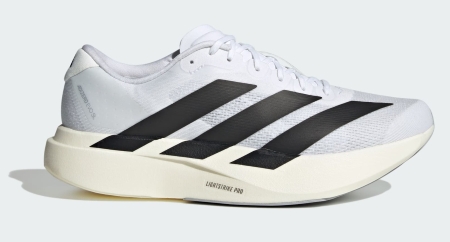
2. Adidas Adizero EVO SL — Best lightweight speed trainer
| Runner match | My test record |
|---|---|
| A runner who wants race-foam energy for tempo runs, intervals, and fast finishes | 180+ miles |
| Men’s configuration | About 7.9 oz/224 g; 6 mm drop; neutral; standard and wide |
I use the EVO SL when a workout needs speed but I do not want the stiffness or cost of a carbon racer. After more than 180 miles, Lightstrike Pro still gives me the quick compression and release I want for tempo efforts, intervals, and fast finishes. The shoe feels far closer to a race-day product than its non-plated category suggests.
The same trait creates its limit. On a slow recovery jog, the platform asks for more rhythm than Ghost, Nimbus, or Bondi. I can run easy in it, but I do not buy it primarily for easy running. Its 6 mm drop also deserves a short transition if every current shoe sits at 10–12 mm.
Fit is the decisive risk. The upper is performance-oriented and the midfoot can feel narrow or low-volume. I test it with workout socks, run corners, and make sure the heel stays planted without cranking the laces. Wide availability helps some feet, but width does not automatically solve a high instep.
I choose EVO SL for a runner with a dependable easy-day shoe who wants a light second pair. I skip it as the first purchase for a new runner or as the only shoe for high-volume recovery weeks.
My decision: Choose it for tempo, intervals, strides, and fast long-run segments. Skip it when softness at slow pace is the first priority.
- Lightstrike Pro provides the most race-like feel in this top ten.
- The 6 mm drop and fitted upper require an honest try-on.
I compare the complete role in my adidas Adizero EVO SL review.
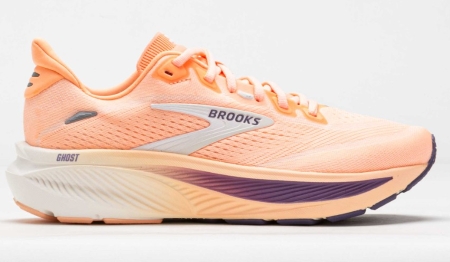
3. Brooks Ghost 18 — Best dependable daily trainer
| Runner match | My test record |
|---|---|
| A runner who values a secure fit, predictable ride, durability, and multiple widths | 230+ miles |
| Men’s configuration | About 10.1 oz/286 g; 10 mm drop; neutral; narrow through extra-wide |
Ghost 18 is the shoe I recommend when a runner is tired of gambling on novelty. I put more than 230 miles into it. DNA LOFT v3 delivers a medium-soft landing, the platform stays quiet when my stride becomes less precise, and the RoadTack outsole has handled ordinary road mileage without an early change in character.
It is not the lightest or most exciting shoe here. That is part of the point. Ghost moves predictably from heel to toe and does not force me onto a pronounced rocker. At a steady pace it works; at true speed it feels heavy beside Novablast or EVO SL. I would rather state that boundary than pretend a dependable trainer is a race shoe.
The men’s width range is a major advantage. A narrow-heel runner, a standard D foot, and a 4E forefoot should not be forced into the same upper. I still check volume and heel hold within the chosen width because a wider size changes more than the fabric around the toes.
I choose Ghost 18 for daily mileage, first rotations, heel strikers who like a 10 mm drop, and runners who value fit options. I skip it when the goal is the lightest possible tempo trainer or a deeply soft recovery ride.
My decision: Choose it for predictable daily mileage and width precision. Skip it if speed and low weight dominate the decision.
- The ride remains controlled when fatigue makes landings less tidy.
- Ten-millimeter drop feels familiar to many heel strikers.
My Brooks Ghost review explains why consistency is its real advantage.
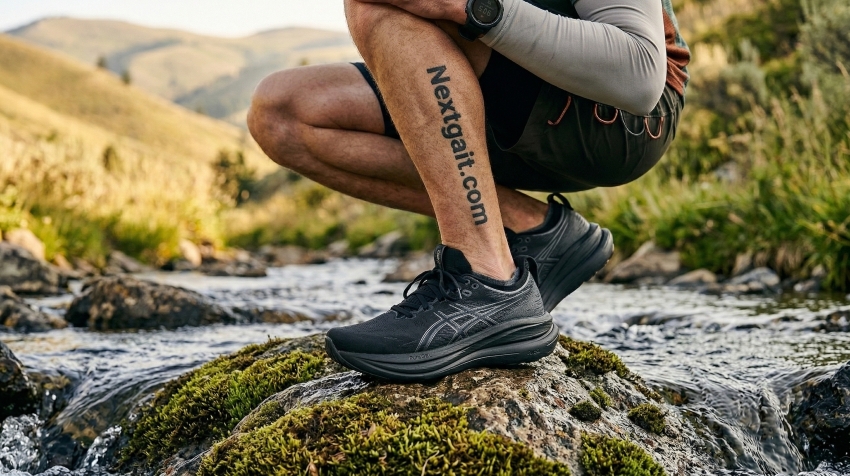
4. ASICS Gel-Nimbus 28 — Best max-cushion daily trainer
| Runner match | My test record |
|---|---|
| A neutral runner who wants protected easy and long miles without a stability system | 180+ miles |
| Men’s configuration | About 9.9 oz/281 g; 8 mm drop; neutral; standard, wide, and extra-wide |
Nimbus 28 is my max-cushion choice for neutral runners. I used it for more than 180 miles of recovery and long easy running. FF BLAST PLUS and rearfoot PureGEL take the edge off repetitive road impact, while the broad base keeps the softness from feeling as directionless as some high-stack shoes.
I like the 28 because the shoe feels less bottom-heavy than older Nimbus versions. It remains an easy-day product, not a hidden speed trainer. When pace rises, Novablast transitions faster and EVO SL feels far lighter. When the goal is an unhurried long run, Nimbus makes more sense than both.
Men can choose standard, wide, or extra-wide in the US, subject to color inventory. I check heel security and whether the foot stays centered on the platform. A soft tall shoe that lets the heel drift is not protective; it simply asks the lower leg to manage more movement.
I choose Nimbus 28 for neutral easy mileage, long runs, and runners who prioritize cushioning without a dedicated stability system. I skip it for gym work, sharp speed sessions, or anyone who feels unstable on soft tall foam.
My decision: Choose it for neutral high-cushion daily and long-run use. Skip it if ground feel or fast turnover is central.
- Broad geometry controls the soft platform better than its height suggests.
- Multiple men’s widths improve fit options.
Read my Gel-Nimbus review for the full fit and ride analysis.
5. HOKA Clifton 10 — Best lightweight cushioned rocker

| Runner match | My test record |
|---|---|
| A runner who likes a smooth rocker and wants high cushioning without Bondi-level bulk | 200+ miles |
| Men’s configuration | About 9.8 oz/278 g; 8 mm drop; neutral; standard, wide, and extra-wide |
Clifton 10 earns its place by making a high-cushion rocker feel less cumbersome than Bondi. I logged more than 200 miles in it, using it for easy runs, moderate long runs, and travel. The early-stage MetaRocker helps the shoe move forward without asking the forefoot to flex as much as a traditional trainer.
The 8 mm drop makes this Clifton easier to enter from conventional daily trainers than the lower-drop Bondi. It still feels unmistakably like HOKA: high sidewalls, a guided transition, and less ground articulation. Runners who like to control every phase of toe-off may prefer Ride or Pegasus.
I fit the rocker, not just the upper. The transition point has to agree with my foot length and stride. I jog uphill and at a moderate pace to see whether the shoe rolls with me or tips me forward too early. Standard, Wide, and Extra Wide help, but the arch contour can still decide comfort.
I choose Clifton 10 when a runner wants a smooth high-stack daily trainer without Bondi’s mass. I skip it when a flexible forefoot, flat geometry, or maximum outsole life is the priority.
My decision: Choose it for a lighter-feeling cushioned rocker. Skip it if you dislike guided forward transitions.
- Eight-millimeter drop eases the move from conventional trainers.
- Fit the rocker timing and arch shape, not only toe width.
My HOKA Clifton review shows where its rocker helps and where it can feel prescriptive.
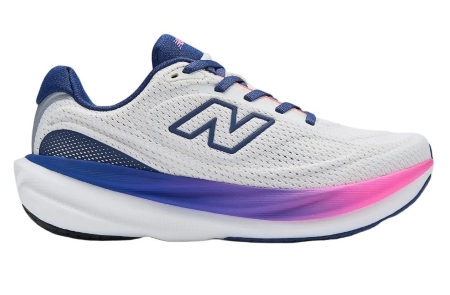
6. New Balance Fresh Foam X 1080v15 — Best for long runs
| Runner match | My test record |
|---|---|
| A runner who needs soft-but-controlled cushioning and unusually broad width choice | 250+ miles |
| Men’s configuration | About 9.2 oz/261 g; 6 mm drop; neutral; narrow through extra-wide |
The 1080v15 is my long-run winner because its cushioning stays coherent after the first hour. I recorded more than 250 miles and used it repeatedly beyond ten miles. Fresh Foam X Infinion feels soft at landing but gives enough shape back that I am not sinking deeper as fatigue builds.
Compared with Nimbus, 1080 feels a little less plush and a little more willing to progress. Compared with Novablast, it prioritizes comfort over bounce. That places it in a useful middle: protective enough for easy long miles, but not so sleepy that the final steady segment feels misplaced.
New Balance’s men’s width range is the best reason to include it in a serious shortlist. Narrow through Extra Wide creates more fit paths than a vague roomy claim. I still confirm midfoot volume and heel hold because a 4E label cannot rescue a last that disagrees with the whole foot.
I choose 1080v15 for long runs, higher-volume weeks, and runners who struggle to find width. I introduce its 6 mm drop gradually when the current rotation sits much higher.
My decision: Choose it for long-run cushioning that stays controlled. Skip it if you want a firm, low-profile road feel.
- The width range covers more feet than most premium trainers.
- Six-millimeter drop needs a transition from high-drop shoes.
I cover its long-run strengths in my New Balance 1080 review.
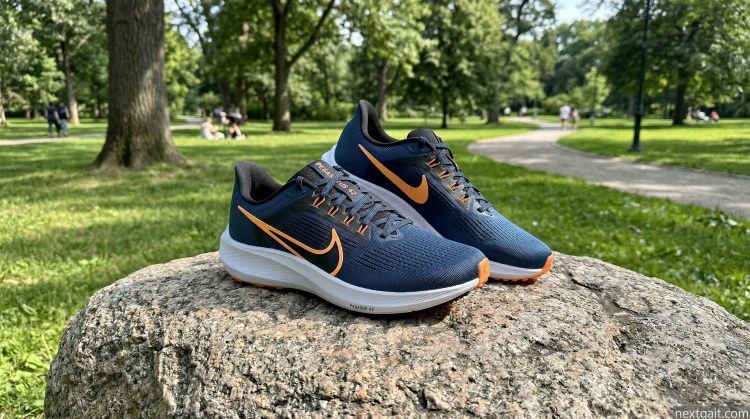
7. Nike Pegasus 42 — Best familiar all-rounder
| Runner match | My test record |
|---|---|
| A runner who prefers a traditional, responsive trainer for daily runs and occasional pickups | 200+ miles |
| Men’s configuration | About 10.4 oz/296 g; 10 mm drop; neutral; regular and wide |
Pegasus 42 is my familiar all-rounder: a shoe for the runner who wants a traditional 10 mm platform with enough response for short pickups. I passed 200 miles using it for weekday runs, strides, travel, and occasional progression work. ReactX plus full-length Air Zoom feels firmer and more direct than today’s plush trainers.
The platform has more front-foot stability than the previous generation, yet the core character remains recognizable. It bends and responds instead of rolling aggressively. At fast pace it is competent, not as effortless as EVO SL. At slow pace it is less soft than Nimbus or 1080.
Nike sizing deserves its own test. I have needed a half size up in recent Pegasus builds, but I do not turn my size into a rule for every man. I compare regular and Wide, check the taper around the small toes, and run downhill to expose forward slide.
I choose Pegasus 42 for a runner who trusts a firmer, flexible trainer and needs one travel-friendly pair. I skip it when a very wide forefoot, deep cushioning, or structured guidance leads the decision.
My decision: Choose it for a traditional responsive all-round ride. Skip it if softness or extra-wide sizing is essential.
- Works from daily runs into strides and light tempo work.
- Nike length and taper deserve an actual run test.
My Nike Pegasus review covers sizing and ride changes in depth.
8. Saucony Ride 19 — Best for beginners

| Runner match | My test record |
|---|---|
| A new runner who wants a light, uncomplicated daily shoe without extreme geometry | 150+ miles |
| Men’s configuration | About 9.0 oz/255 g; 8 mm drop; neutral; standard and wide |
Ride 19 is my beginner pick because it avoids forcing a new runner to learn an extreme shoe while also learning to run. After more than 150 miles, I found the PWRRUN+ midsole forgiving, stable enough for ordinary road use, and light enough that short strides did not feel awkward.
Its 8 mm drop, neutral geometry, and moderate rocker sit near the center of the market. That is valuable for a first shoe. The runner can discover whether he later wants softer foam, more guidance, a lower drop, or a faster platform from a reasonable baseline rather than from the most specialized design in the store.
Standard and Wide cover many feet, but I still protect toe length and heel hold. Beginners often buy a shoe that fits like casual footwear, then discover swelling and forward motion on the first long run. I leave functional space without accepting a loose heel.
I choose Ride 19 for Couch-to-5K plans, first continuous runs, and a simple one-shoe rotation. I skip it for runners who already know they need extra-wide sizing or maximum cushioning.
My decision: Choose it as a clean baseline for a first training block. Skip it when a specialized support or race role is already clear.
- PWRRUN+ balances protection and road feel.
- Standard and Wide are useful but not exhaustive.
I place it among other simple options in my beginner running-shoe guide.
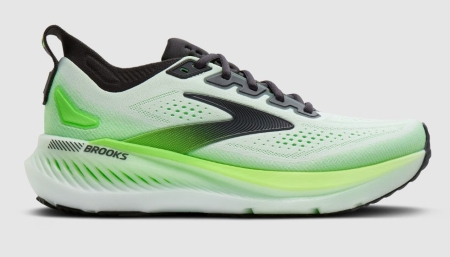
9. Brooks Glycerin GTS 23 — Best cushioned stability shoe
| Runner match | My test record |
|---|---|
| A runner who feels better with gentle guidance but still wants a plush daily ride | 160+ miles |
| Men’s configuration | About 10.8 oz/306 g; 8 mm drop; GuideRails support; standard, wide, and extra-wide |
Glycerin GTS 23 is my cushioned stability choice because GuideRails add boundaries without the hard medial block I remember from older stability shoes. I logged more than 160 miles, including a stretch when my left ankle felt less controlled after trail running. The shoe helped me stay centered without making every step feel corrected.
I describe that as my experience, not treatment. The broad platform, sidewall geometry, and GuideRails can improve confidence for a runner who benefits from them. They cannot diagnose overpronation or solve a training-load problem. Compared with Nimbus, this shoe feels more guided; compared with Kayano, the support feels less dominant.
The upper is comfortable and comes in Standard, Wide, and Extra Wide. I make sure the heel sits inside the guidance system rather than above it and check that the arch does not press upward late in the run. More shoe around the foot is only useful when the shape matches.
I choose Glycerin GTS 23 for easy and long mileage when neutral soft shoes feel vague. I skip it for runners who are already controlled and comfortable in neutral shoes or who need a lightweight workout shoe.
My decision: Choose it for plush cushioning plus unobtrusive guidance. Skip it when neutral shoes already feel stable and natural.
- GuideRails create boundaries rather than a hard medial post.
- Multiple widths make the support easier to fit correctly.
My Glycerin GTS review explains how I judge guidance under fatigue.
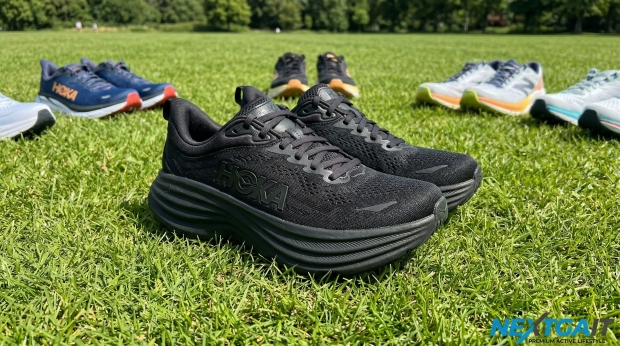
10. HOKA Bondi 9 — Best for recovery runs and walking
| Runner match | My test record |
|---|---|
| A runner who wants a broad, highly cushioned platform for slow runs and long walking days | 190+ miles |
| Men’s configuration | About 10.5 oz/297 g; 5 mm drop; neutral; standard, wide, and extra-wide |
Bondi 9 is the recovery and walking specialist. Across more than 190 miles, I used its broad 43 mm-class platform after demanding sessions and on days that combined running with long periods on my feet. Supercritical EVA gives this Bondi more life than older versions, but it remains a large, deliberately slow-feeling shoe.
The 5 mm drop and strong rocker separate it from Nimbus. Bondi rolls forward from a lower offset; Nimbus provides a softer conventional 8 mm relationship. I do not call either safer. I choose the geometry that the runner can use without calf tightness, forefoot pressure, or instability.
Men have Standard, Wide, and Extra Wide choices. I check whether the foot sits fully on the platform and whether the rocker hinge matches the forefoot. A wider Bondi is not automatically more comfortable if the arch contour or heel volume is wrong.
I choose Bondi 9 for easy recovery running, run-walk sessions, and walking-heavy workdays. I skip it for tempo sessions, technical cornering, or a runner who wants flexibility and ground feel.
My decision: Choose it for slow running and walking on a broad platform. Skip it for speed, lateral work, or a flexible ride.
- Supercritical EVA is livelier than older Bondi foam.
- Transition to the 5 mm drop instead of changing overnight.
My HOKA Bondi review explains the recovery role without turning softness into a medical claim.
How I Tested and Verified These Shoes
I use a six-gate test instead of a generic score. A shoe moves forward only when it clears fit, easy pace, its claimed specialty, fatigue, ordinary conditions, and mileage review. This form lets a heavy Ghost and a light EVO SL succeed at different jobs without pretending one number makes them directly interchangeable.
| Gate | The question I answer | What fails the shoe |
|---|---|---|
| 1. Fit | Does my larger foot sit centered with toe clearance, secure heel hold, and no pressure? | Numbness, toe contact, arch pressure, or heel movement |
| 2. Baseline | Does the shoe feel natural at my ordinary easy pace? | Bracing, unstable landings, forced transition, or lace compensation |
| 3. Claimed job | Does the shoe actually perform its advertised role? | A speed shoe that fights pace or a recovery shoe that feels harsh |
| 4. Fatigue | Does control remain when form becomes less precise? | Late-run wobble, bottoming out, or intrusive guidance |
| 5. Conditions | Can I trust the outsole and upper on normal routes? | Poor wet grip, overheated fit, insecure cornering, or debris exposure |
| 6. Mileage | Does the ride remain coherent beyond first impressions? | Early outsole loss, foam change, upper failure, or new asymmetry |
Gate 1: I make fit non-negotiable
I fit both feet late in the day with the socks I run in. I check length, width, instep volume, heel security, and whether the foot sits completely on the platform. I reject pressure that is supposed to disappear after break-in.
Gate 2: I establish an easy-pace baseline
Every shoe starts at conversational pace. I listen for slap, heel slip, arch contact, lateral movement, and an unnatural transition. A specialized fast shoe can feel less exciting here, but it still must remain controlled and comfortable enough to reach its intended workout.
Gate 3: I test the job, not the marketing label
Novablast, Ghost, and Ride cover ordinary daily miles. EVO SL gets tempo work and intervals. Nimbus, 1080, and Bondi get longer or easier efforts. Glycerin GTS gets fatigue tests where guidance can be evaluated. I do not award a recovery shoe bonus points for sprinting.
Gate 4: I wait for fatigue
A fresh stride can hide an unstable platform or intrusive support. Late in a run, I check whether the foam compresses unevenly, the heel moves, the foot crosses the platform edge, or the guidance becomes noticeable. Control under fatigue matters more to me than showroom softness.
Gate 5: I use ordinary routes and weather
I run asphalt, boardwalk, mild hills, corners, and damp pavement when conditions allow. I use the treadmill where it adds repeatability, while remembering that belt behavior differs from outdoor ground; my treadmill versus outdoor comparison explains the boundary.
Gate 6: I inspect the shoe after the honeymoon period
I log mileage, photograph wear, press for uneven foam change, inspect the upper and heel counter, and repeat the same familiar route. I use my replacement checklist instead of retiring every shoe at an arbitrary number.
My verification rule: My feet establish the ride and fit experience; exact men’s specifications establish what the product is. Neither manufacturer language nor one tester’s mileage overrides the runner’s moving fit, comfort, and after-run response.
How to Find the Best Running Shoes for Men
I do not begin with pronation or price. I move through four decisions: training job, foot space, platform behavior, and transition cost. This is faster than comparing every foam name and more reliable than buying the shoe with the highest stack.
Decision 1: Name the run that occupies most of your week
Most men need a daily trainer first. I shortlist Novablast, Ghost, Pegasus, Ride, or Clifton. I move to Nimbus, 1080, or Bondi when easy and long mileage dominates; EVO SL when faster work is already established; Glycerin GTS when guidance improves the actual run. My daily-trainer guide expands the first branch.
Decision 2: Map the whole foot, not just length
I note the larger foot, forefoot width, instep height, heel volume, longest toe, and any bunion or toe sensitivity. Then I choose the last and width. A 2E is not simply a longer D, and a larger size is not a clean solution for a forefoot-width problem.
Decision 3: Choose how much platform you want to feel
For ground feedback and flexibility, I lean toward Pegasus or Ride. For bounce, Novablast or EVO SL. For soft protection, Nimbus or 1080. For a rocker, Clifton or Bondi. For guided boundaries, Glycerin GTS. I choose the least complicated design that produces the desired comfort and control.
Decision 4: Treat support as an outcome
I do not assign stability from flat feet, body mass, or outsole wear alone. I compare the neutral and guided shoe during the same easy run and under fatigue. When guidance helps, my stability-shoe guide supplies alternatives; when it presses or redirects unnecessarily, I stay neutral.
Decision 5: Match cushioning to control
A heavier runner does not automatically need the softest shoe. He may prefer a broader, firmer platform that compresses evenly. I discuss those trade-offs in my shoe guide for heavier runners. Softness is a sensation; protection is the entire fit-and-platform result.
Decision 6: Account for drop before changing it
Moving from Ghost at 10 mm to Bondi at 5 mm changes ankle and lower-leg demands. I introduce the new shoe on short easy runs and keep the proven pair available. My heel-drop guide explains why no single number is universally correct.
Decision 7: Build a rotation only when a second job exists
I start with one daily trainer. I add EVO SL for workouts, a race shoe for goal events, or a recovery shoe when high-volume training justifies it. Every additional pair must have a training purpose that the first shoe does not already cover.
Decision 8: Test the shoe at the edge of its intended use
I take a daily trainer through strides, a long-run shoe past an hour, and a workout shoe through a complete session. I corner, climb, descend, and check the next-day response. The best shoe is not the pair that wins a two-minute jog; it is the pair that stays coherent where I need it most.
Decision 9: Buy a return path, not only a discount
I confirm the exact generation, men’s width, seller, and return conditions. I avoid final-sale experiments with an unfamiliar last. A small discount cannot recover the cost of a shoe that compresses the toes or destabilizes the heel.
- Name the dominant run in your week.
- Map length, width, instep, and heel volume.
- Choose flexible, bouncy, soft, rockered, or guided behavior.
- Use support only when it improves the run.
- Balance cushioning with platform control.
- Transition when drop changes.
- Add a second shoe only for a second job.
- Test at the edge of the intended use.
- Confirm the exact width and return path.
My final filter: I buy the least complicated shoe that fits without negotiation, stays controlled at the intended pace, and causes no worsening response during or after the run. Awards, foam names, and discounts come after that test.
Frequently Asked Questions
What is the best running shoe for men right now?
I rank the ASICS Novablast 5 first for most neutral runners because it covers easy, steady, and faster daily running with less compromise than the other shoes here. Ghost 18 is my safer pick for predictable fit and multiple widths; Glycerin GTS 23 is my choice when guidance genuinely improves comfort.
What are the best men’s running shoes for beginners?
I start with Saucony Ride 19, Brooks Ghost 18, or ASICS Novablast 5. Ride is the least complicated baseline, Ghost offers the broadest fit path, and Novablast suits a beginner who feels controlled on a lively high platform. I do not start with a race shoe.
How should men’s running shoes fit?
I fit the larger foot late in the day, leave functional room ahead of the longest toe, hold the heel without slipping, and avoid pressure at the forefoot or instep. I jog, corner, and run downhill before accepting the fit. A break-in period should not be required to remove numbness or toe pressure.
Should men buy running shoes a half size larger?
Many runners finish around a half size above casual footwear, but I do not make that a rule. Brand length, last shape, sock thickness, swelling, and downhill running all matter. I buy the size that passes the moving fit test rather than the number I expected.
What is the best men’s running shoe for wide feet?
Ghost 18, Nimbus 28, Clifton 10, 1080v15, Glycerin GTS 23, and Bondi 9 offer broad men’s width ranges in the US. The 1080 is the most complete starting point because it spans narrow through extra-wide, but heel and instep volume must still match.
What running shoes are best for heavy men?
I prioritize platform control, correct width, and foam that does not collapse unevenly. Ghost 18, Nimbus 28, 1080v15, Glycerin GTS 23, and Bondi 9 are strong starting points. Body weight alone does not dictate support category or cushioning softness.
What is the best men’s running shoe for flat feet?
Flat feet do not automatically require a stability shoe. I compare a well-fitted neutral option with Glycerin GTS 23 and keep the one that feels more comfortable and controlled during a fatigued run. Arch shape, symptoms, strength, and load matter more than the footprint label.
Do men need stability running shoes for overpronation?
Not automatically. Pronation is normal motion. I use guidance when it improves comfort and control, especially under fatigue, and reject it when it presses the arch or changes the stride. Persistent pain deserves a qualified clinical assessment, not a shoe-category guess.
What heel-to-toe drop is best for men?
There is no universal best drop. I treat 8–10 mm as familiar territory for many runners, while 5–6 mm changes load and ankle motion enough to deserve a gradual transition. Comfort during and after the run is more useful than chasing a theoretically perfect number.
Can I use the same running shoes for daily runs and speedwork?
Yes, especially with Novablast 5, Pegasus 42, or Ride 19. When workouts become frequent, I add EVO SL as a faster second shoe. I keep easy running genuinely easy instead of forcing every shoe to prove it can go fast.
How many running shoes should a man own?
One correct daily trainer is enough for a beginner. I add a second pair only when it solves a distinct job such as speedwork, racing, trails, or recovery. A rotation should clarify training roles, not turn buying shoes into the training plan.
How long do men’s running shoes last?
I commonly see useful life around 300–500 miles, but I replace by evidence: uneven outsole wear, compressed foam, new instability, upper failure, or a repeatable change in comfort. Runner mass, surface, gait, storage, and rotation can move that number in either direction.
Are expensive running shoes worth it?
Only when the extra cost buys a fit, ride, or role I will use. A discounted shoe that does not fit is poor value, and a premium race shoe is wasteful for easy-only training. I compare cost per useful mile after the shoe passes the fit test.
Can I wear running shoes for walking and standing?
Yes. Bondi 9, Ghost 18, Nimbus 28, and Glycerin GTS 23 work especially well for running-plus-walking use. I still avoid tall soft road shoes for lateral gym movements and choose the fit for the activity that occupies the most time.
When should pain stop a shoe test?
I stop when pain increases, becomes focal, changes my gait, persists after the run, or appears at night. I do not keep running to break in pain. I compare a proven shoe, reduce the aggravating load, and seek a qualified clinician when symptoms are persistent or concerning.
Is a gait analysis required before buying running shoes?
No. A short video can describe motion, but it does not automatically choose the correct shoe. I begin with comfort, fit, intended use, and control under fatigue. I use analysis as one input when a recurring problem needs a deeper look, not as a sales label.

Written by Ken — 12 years of running, 12,500+ miles, 63 shoes tested, 36 races from 5Ks to a 50K ultra. I run 30–40 miles a week on the Atlantic City Boardwalk and review every shoe with real training miles, not one-run demos. If a premium shoe rides like a budget shoe, I’ll say so. More about me →