
This HOKA Arahi 8 review is based on 200+ real training miles, not a launch-week try-on. I am a mild overpronator, 182 lbs, a mostly heel-to-midfoot striker when tired, and I have run in the Arahi line since version 6. That matters because the Arahi 8 is not a normal yearly update. It changes the stability geometry, the drop, the heel feel, and the way the shoe sits under the arch.
My short answer: the Arahi 8 is the first Arahi I would recommend to runners who hate traditional stability shoes. It still gives me the centered, knee-calming feel I want on tired easy days, but it no longer has that obvious medial wedge sensation that made older stability trainers feel like corrective equipment. If you are comparing it with the ASICS Gel-Kayano 32, ASICS GT-2000 14, Saucony Guide 19, or Brooks Adrenaline GTS 25, the Arahi 8 is the lighter, less bossy option.
I would not call it a max-cushion cruiser, and I would not use it as a pure speed shoe. I would call it a high-mileage stability daily trainer for runners who want guidance without feeling managed. That is a narrow target, but HOKA hits it unusually well here.
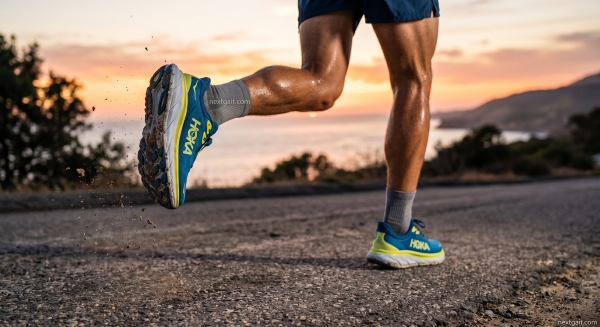
Jump to Section Click to expand
Quick Verdict
The HOKA Arahi 8 is the best Arahi yet and one of the easiest stability shoes to live with in 2026. It is best for mild-to-moderate overpronators who want a daily trainer that feels closer to a neutral HOKA than an old-school posted shoe.
| Category | Ken’s Take |
|---|---|
| Best use | Easy runs, recovery runs, steady daily mileage, long runs up to 18 miles |
| Best runner | Mild-to-moderate overpronator who dislikes heavy stability shoes |
| Ride feel | Stable, smooth, slightly firm-soft, more guided than bouncy |
| Support feel | Noticeable in outcome, subtle underfoot |
| Fit | True to size for me; roomier than Arahi 7 through forefoot and midfoot |
| Biggest upgrade | H-Frame stability feels less intrusive than the old J-Frame |
| Biggest drawback | Upper can run warm, and the ride is not exciting at faster paces |
| Overall score | 9.1/10 for the right runner |
Bottom line: If you need some pronation control but do not want the bulk of a Kayano or Adrenaline, the Arahi 8 belongs near the top of your list. If you need maximum correction, look at my best running shoes for overpronation guide instead.
How I Tested the HOKA Arahi 8
I tested the Arahi 8 the way I actually use stability shoes: on boring, repetitive miles where small problems get loud. My testing block covered 200+ miles over 8 weeks, mostly on roads, sidewalks, boardwalk planks, and treadmill runs. I used the same sock rotation, the same lacing pattern after run three, and I compared it directly against my Arahi 7, Kayano 32, GT-2000 14, Saucony Guide 19, and Brooks Adrenaline GTS 25.
| Test Parameter | Details |
|---|---|
| Mileage | 200+ miles |
| Test period | 8 weeks |
| Runner profile | 182 lbs, mild overpronator, US men’s 10, heel-to-midfoot strike |
| Surfaces | Roads 65%, boardwalk 20%, sidewalks 10%, treadmill 5% |
| Run types | Recovery runs, easy runs, steady long runs, short strides |
| Pace range | Roughly 8:10/mi to 10:40/mi depending on workout |
| Comparison shoes | Arahi 7, Kayano 32, GT-2000 14, Guide 19, Adrenaline GTS 25 |
| What I tracked | Knee feel, arch pressure, heel stability, outsole wear, upper heat, late-run form |
My main test route was the Atlantic City Boardwalk because it exposes a shoe quickly. The surface is flat, repetitive, and unforgiving enough that a midsole that feels fine for three miles can feel dull at mile 12. I also used Brigantine Beach road loops because cambered pavement tells me whether a stability shoe is guiding or overcorrecting.
I did not do lab durometer testing for this review. I am deliberately separating real experience from lab claims. When I say the foam feels softer than Arahi 7, I mean it from back-to-back training runs, not from a shore A reading.
HOKA Arahi 8 Specs
The key spec story is simple: HOKA made the Arahi softer and more stable-feeling without turning it into a heavy motion-control shoe. Multiple retailer and editorial listings put the Arahi 8 around 9.8 oz for men and 7.7 oz for women, with an 8mm drop. The weight is competitive for a stability daily trainer, especially when you compare it with heavier premium models.
| Spec | HOKA Arahi 8 | What It Means on the Run |
|---|---|---|
| Weight | Approx. 9.8 oz men / 7.7 oz women | Light for a stability trainer; not a speed shoe |
| Drop | 8mm | More familiar for heel strikers than the lower-drop Arahi 7 |
| Midsole | Compression-molded EVA | Stable, predictable, not super-bouncy |
| Stability | H-Frame guidance system | Centers the foot from both sides instead of pushing only medially |
| Upper | Jacquard mesh | Soft, secure, roomier than Arahi 7, slightly warm |
| Outsole | Zonal rubber with exposed foam | Good road durability, cautious on slick painted lines |
| Widths | Regular, wide, and extra-wide depending on gender/market | Better accommodation than older narrow-feeling Arahis |
| Best category | Light stability daily trainer | For guided mileage, not aggressive workouts |
The Arahi 8 also keeps the APMA Seal of Acceptance, which is useful context but not a guarantee that it will work for every foot. I treat that seal as a positive baseline, then judge the shoe by what happens after the first hour, the first long run, and the first tired week.
Ride Feel: Stable, Smooth, and More Forgiving Than Arahi 7
The Arahi 8 feels like a guided daily trainer first and a stability shoe second. That is the biggest compliment I can give it. Older stability shoes announce themselves under the arch. This one mostly disappears until you notice your foot is landing more centered late in the run.
The first 20 miles felt slightly firm under the forefoot and more cushioned under the heel. By mile 35, the midsole settled into a predictable rhythm: not plush like the HOKA Bondi 9, not lively like the HOKA Mach 7, but easy to trust. For my easy miles, that matters more than bounce.
At 9:30 to 10:15 pace, the Arahi 8 is in its comfort zone. The rocker helps me roll forward without a slap, and the platform keeps my ankle from wandering inward when I get lazy. At 8:00 pace, it can move, but it does not feel eager. The shoe will tolerate strides; it will not make you want to do 12 x 400 meters. For workouts, I still prefer the Saucony Endorphin Speed 5.
Ken’s road note: The Arahi 8 feels best when I stop asking it to be exciting. It is a mileage shoe. The magic is not pop; it is how little I think about my right knee after 70 minutes.
H-Frame Stability: The Real Upgrade
The H-Frame is the reason this shoe deserves attention. HOKA moved away from the older J-Frame feel, which used firmer medial-side guidance, and built a more balanced support frame that cradles the rearfoot and midfoot from both sides. In plain English: the Arahi 8 guides instead of shoving.
In the Arahi 7, I could feel the stability most clearly when I was tired. The medial side felt like it was telling my foot where to go. It worked, but it was not subtle. In the Arahi 8, the correction is quieter. My foot sits into the platform, and the H-Frame catches the inward roll before it becomes a collapse.
This matters if you are a runner with mild overpronation who has been told to buy stability shoes but hates how they feel. The Arahi 8 gives you a middle lane between neutral daily trainers and stronger support shoes. It is more guided than the HOKA Clifton 10, but less controlling than a Kayano.
| Stability Situation | How the Arahi 8 Felt |
|---|---|
| Fresh easy run | Almost neutral; support stays quiet |
| Long run after mile 10 | Heel and arch stay more centered than in neutral shoes |
| Cambered road | Stable, but not as locked-down as Kayano 32 |
| Treadmill | Smooth and controlled; rocker feels more obvious |
| Fast strides | Stable but slightly bulky compared with lightweight trainers |
| Walking/standing | Very comfortable if you like a guided base |
Upper, Fit, and Lockdown
The Arahi 8 fits more generously than the Arahi 7, especially through the forefoot and midfoot. I wore my normal US men’s 10 and did not need to size up. The toe box is not Altra-wide, but it no longer has that narrow, tapered HOKA stability-shoe feel that used to bother my pinky toe after longer runs.
The heel hold is excellent. I did not need a runner’s knot after I found the right lace tension, and the tongue stayed centered. The upper has enough padding to feel secure, but the trade-off is heat. On humid runs above 80F, my socks came back wetter than they do in more breathable neutral trainers. If you run hot, pair this shoe with good moisture-wicking socks; my anti-blister running sock picks matter here.
For wide feet, this is one of the better Arahis. If your issue is bunion pressure, read my best running shoes for bunions guide, but the Arahi 8 is more forgiving than I expected. For truly wide, high-volume feet, I would still test the wide or extra-wide version rather than forcing standard width.
| Fit Area | My Notes |
|---|---|
| Length | True to size |
| Toe box | Moderate, roomier than Arahi 7 |
| Midfoot | Secure but not pinchy |
| Heel | Excellent hold |
| Tongue | Stays centered, enough padding |
| Upper heat | Warm in summer humidity |
| Orthotic room | Moderate; test with your insole before committing |
Outsole Durability and Traction
After 200+ miles, the outsole is wearing better than the exposed-foam layout first made me expect. The rubber is placed where I actually scuff: lateral heel, forefoot, and key toe-off zones. The exposed midfoot foam shows cosmetic compression but not performance failure.
Dry road traction is good. Boardwalk traction is fine. Treadmill traction is uneventful, which is what I want. The weak spot is wet painted surfaces. Crosswalk stripes, glossy boardwalk paint, and slick curb ramps deserve attention. I never slipped badly, but I adjusted my stride on wet mornings.
I would expect most runners to get roughly 350 to 450 miles from the Arahi 8 depending on body weight, rotation, surface, and gait. If you chew through medial heels quickly, your number may be lower. If you rotate shoes and run mostly smooth pavement, you may do better. My broader replacement framework is in when to replace running shoes.
Pace and Surface Notes
The Arahi 8 changes character less by pace than by surface. On smooth asphalt, it feels controlled and easy. On boardwalk planks, the rocker becomes more obvious because the surface gives back almost nothing. On treadmill runs, the shoe feels softer than it does outside because the belt adds a little forgiveness.
| Run Situation | How It Felt | My Use Case |
|---|---|---|
| Recovery jog | Very comfortable, stable, low mental load | One of its best uses |
| Easy run | Smooth and predictable | Best daily mileage zone |
| Long run | Support becomes more valuable after mile 10 | Good for half-marathon builds |
| Steady progression | Can handle it, but not lively | Fine if pace stays controlled |
| Short strides | Stable but not snappy | Acceptable, not ideal |
| Intervals | Too much shoe for me | I switch to a faster trainer |
| Walking | Excellent if you like a guided platform | Useful for travel and long days |
The surface detail matters because a lot of stability reviews talk as if support is the same everywhere. It is not. On cambered roads, the Arahi 8 kept me centered better than neutral trainers, but I could still feel the slope tugging at my ankles. On flat road loops, the support disappeared into the background. On wet boardwalk mornings, the shoe stayed stable under the heel but asked for a little caution at toe-off.
For newer runners, I would use the Arahi 8 mostly on easy days while building consistency. If you are just starting out, pair the shoe with conservative mileage from my best running shoes for beginners guide and avoid turning every run into a test. A stable shoe can help, but the real win is stacking months without your knees, shins, or Achilles becoming the loudest part of training.
My practical rule: If the run is supposed to be boring, the Arahi 8 is a good choice. If the run is supposed to feel fast, I leave it at home.
HOKA Arahi 7 vs Arahi 8: What Changed?
The Arahi 8 is not a small upper refresh; it changes the personality of the shoe. The Arahi 7 felt like a lighter stability shoe with a firmer corrective edge. The Arahi 8 feels like a smoother daily trainer that happens to have real guidance.
| Feature | Arahi 7 | Arahi 8 | Ken’s Winner |
|---|---|---|---|
| Stability system | J-Frame | H-Frame | Arahi 8 – smoother guidance |
| Drop | Lower-drop feel | 8mm | Arahi 8 for heel strikers |
| Cushion feel | Firmer, more utilitarian | Softer heel, more forgiving | Arahi 8 |
| Fit | More snug | Roomier forefoot/midfoot | Arahi 8 |
| Support sensation | More obvious medial correction | More centered cradle | Arahi 8 |
| Speed feel | Slightly lighter-feeling | Smoother but not faster | Tie |
If you loved the sharper, firmer Arahi 7, the Arahi 8 may feel less direct. If you wanted the Arahi 7 to be softer, smoother, and less intrusive, this is the upgrade you were waiting for. I adapted to the higher drop quickly, and as a heel striker, I prefer it.
How the HOKA Arahi 8 Compares to Kayano, GT-2000, Guide, and Adrenaline
The Arahi 8 wins on light, quiet stability; it loses when you need maximum control or plush luxury. That is the comparison in one sentence.
| Shoe | Support Feel | Ride Feel | Best For |
|---|---|---|---|
| HOKA Arahi 8 | Subtle-to-moderate, centered | Smooth, stable, not springy | Mild-to-moderate overpronators who want light support |
| ASICS Gel-Kayano 32 | Stronger and more structured | More protective, heavier | Runners needing premium support and comfort |
| ASICS GT-2000 14 | Moderate, traditional daily stability | Balanced, less bulky than Kayano | Reliable stability without max cushioning |
| Saucony Guide 19 | Very subtle CenterPath guidance | Neutral-leaning and smooth | Runners who barely want to feel support |
| Brooks Adrenaline GTS 25 | GuideRails, broad and dependable | Classic daily trainer feel | Runners who want familiar support and many widths |
Versus Kayano 32: The Kayano is the safer choice for heavier runners, wider feet, and anyone who needs stronger correction. The Arahi 8 feels faster and less bulky. For my mild overpronation, I reach for the Arahi more often. For a tired marathon build week when my legs are beat up, I respect the Kayano.
Versus GT-2000 14: The GT-2000 is the more traditional daily stability shoe. It feels less HOKA-rockered and more grounded. If you want a stable shoe that behaves like a normal trainer, the ASICS makes sense. If you want a smoother rocker and softer heel, Arahi wins.
Versus Saucony Guide 19: The Guide is closer to neutral. It is a great pick for runners who want geometry-based guidance and dislike any sensation of posting. I prefer the Arahi when my knee is grumpy; I prefer the Guide when I want the least intrusive support possible.
Versus Adrenaline GTS 25: The Adrenaline is the dependable old friend. It has more traditional trainer DNA and a wider fit ecosystem. The Arahi is lighter-feeling, rockered, and more modern. If you want the widest stability roundup, start with my best stability running shoes page.
Who Should Buy the HOKA Arahi 8?
Buy the Arahi 8 if you need light-to-moderate support but still want a shoe that feels easy and modern. This is where the shoe is excellent.
- Mild-to-moderate overpronators who want guidance without a hard medial post.
- Heel strikers who prefer an 8mm drop and a stable landing platform.
- Runners with flat feet who need support but dislike stiff motion-control shoes. See also my flat feet running shoe picks.
- Runners with recurring knee irritation who feel better in guided shoes. My broader list is here: best running shoes for knee pain.
- Walk-run athletes who want one shoe for walking, easy running, and gym warmups.
- HOKA fans who like the Clifton shape but need more stability than a neutral shoe provides.
- Runners building distance who want a stable daily trainer for long-distance running.
Who Should Skip the HOKA Arahi 8?
Skip the Arahi 8 if you need either maximum control or maximum energy return. It is a very good guided daily trainer, not a miracle shoe.
- Severe overpronators who need stronger correction should look at more structured options than the Arahi 8.
- Neutral runners with no pain or instability may find the guidance unnecessary. Try the Clifton, Mach, or another neutral trainer instead.
- Speed-focused runners should not expect super-trainer bounce. Use something lighter for intervals; my interval training guide explains when shoe choice matters.
- Hot-footed runners in humid climates may dislike the upper warmth.
- Runners who want a very soft ride should consider max-cushion shoes in my best cushioned running shoes roundup.
- Forefoot strikers who hate rockered geometry may prefer a flatter, more flexible trainer.
How Stability Shoes Actually Work
The best modern stability shoes do not simply block pronation; they guide timing and alignment. A little inward roll is normal. Problems usually start when the roll is excessive, late, or paired with fatigue, weak hips, poor cadence, or a shoe that collapses too quickly under your arch.
The Arahi 8 helps by giving the foot a broader, guided platform. It does not fix your form by itself. If your cadence is very low, your stride is overreaching, or your hips collapse inward, a stability shoe can reduce symptoms without solving the cause. That is why I pair shoes like the Arahi with strength work, easy-run discipline, and occasional form checks. My guide to easy run pace matters here because tired, too-fast easy runs are where my form usually falls apart.
If you are dealing with plantar fascia irritation or shin discomfort, shoes are only one piece. The Arahi 8 may help some runners because it supports the arch and keeps the foot centered, but persistent pain deserves a clinician. For shoe-specific help, see my guides to plantar fasciitis shoes, shin splints shoes, and Achilles-friendly shoes.
HOKA Arahi 8 Pros and Cons
| What I Like | What I Do Not Like |
|---|---|
| H-Frame guidance is subtle but effective | Upper runs warm in humid weather |
| Much smoother than Arahi 7 | Not lively enough for workouts |
| Roomier fit than older Arahis | Wet painted surfaces require caution |
| Light for a stability daily trainer | Not enough support for severe overpronation |
| Heel feels more forgiving on long runs | Exposed foam will look worn before the shoe is dead |
| Works well for easy, recovery, and long runs | Neutral runners may not need the guidance |
How I Use the Arahi 8 in My Shoe Rotation
The Arahi 8 has become my default controlled-mileage shoe. I use it when I want to finish a run feeling aligned rather than entertained. That sounds unromantic, but it is exactly what I want from a stability daily trainer.
| Day | Workout | Shoe Choice |
|---|---|---|
| Monday | Recovery run 4-5 miles | HOKA Arahi 8 |
| Tuesday | Intervals or fartlek | Saucony Endorphin Speed 5 |
| Wednesday | Easy run 6 miles | HOKA Arahi 8 |
| Thursday | Strength or cross-training | No running shoe priority |
| Friday | Steady 7-8 miles | Arahi 8 or GT-2000 14 |
| Saturday | Long run 12-18 miles | HOKA Arahi 8 when I want support |
| Sunday | Rest or walk | Arahi 8 if I am on my feet |
I would not make the Arahi 8 my only shoe if I were training seriously. I like rotating it with a lighter tempo shoe and a neutral cushioned shoe. But if I had to pick one stability trainer for 70% of my weekly miles, this would be on the short list. For runners shopping across categories, my best running shoes hub is the broader starting point.
Final Verdict
The HOKA Arahi 8 is a top-tier lightweight stability trainer for runners who want guidance without the old stability-shoe baggage. It is smoother than the Arahi 7, less bulky than the Kayano, more supportive than many neutral trainers, and more modern-feeling than the classic stability shoes I grew up tolerating.
My personal score is 9.1/10. That score is not because the Arahi 8 is perfect. It is not. The upper could breathe better, wet traction could be more confident, and the ride is steady rather than fun. But for its intended runner – mild-to-moderate overpronator, daily miles, long-run support, neutral-ish feel – it is one of the cleanest executions of stability I have tested.
The highest praise I can give it is this: I stopped thinking about stability. I just ran. On a 14-mile boardwalk run, my right knee stayed quiet, my arch never felt shoved, and my cadence stayed consistent when I was tired. That is the point of the Arahi 8. It does its job without turning the run into a conversation about the shoe.
| Score Category | Rating |
|---|---|
| Stability | 9.5/10 |
| Cushioning | 8.6/10 |
| Fit | 9.0/10 |
| Breathability | 7.4/10 |
| Durability | 8.5/10 |
| Versatility | 8.7/10 |
| Overall | 9.1/10 |
FAQ
Is the HOKA Arahi 8 good for daily training?
Yes. The Arahi 8 is best as a daily trainer for easy runs, recovery runs, steady mileage, walking, and long runs. It is stable enough for mild-to-moderate overpronation but light enough that it does not feel like a traditional motion-control shoe.
Is the HOKA Arahi 8 good for flat feet?
Yes, for many flat-footed runners who need gentle-to-moderate support. The H-Frame gives a centered platform without the harsh medial-post feel. Severe overpronators may need stronger support.
How does the HOKA Arahi 8 compare to the Arahi 7?
The Arahi 8 feels smoother, roomier, and less intrusive. The biggest change is the H-Frame stability system, which feels more balanced than the old J-Frame. The Arahi 7 feels firmer and more obviously corrective.
Does the HOKA Arahi 8 run true to size?
It ran true to size for me in a US men’s 10. The fit is roomier than the Arahi 7 through the forefoot and midfoot, but I would still choose wide or extra-wide if you usually need more volume.
Can neutral runners use the HOKA Arahi 8?
Some neutral runners can use it comfortably, especially for walking or easy mileage, but I would not buy it for running unless you actually want guidance. Neutral runners may prefer the Clifton, Mach, or another non-stability trainer.
Is the HOKA Arahi 8 good for plantar fasciitis?
It can be a good option for runners who benefit from arch support, heel stability, and a guided platform. It is not a medical treatment, but it is one of the more comfortable stability shoes I have used for controlled daily mileage.
How many miles will the HOKA Arahi 8 last?
Based on my 200+ mile test, I expect many runners to land around 350 to 450 miles. Heavier runners, rough pavement, and strong medial heel wear can shorten that range.
Is the HOKA Arahi 8 good for half marathon training?
Yes. I like it for half marathon training runs, especially long runs and recovery days. For race day, faster runners may want a lighter tempo or racing shoe, but the Arahi 8 is dependable for the training block.
What is the biggest downside of the HOKA Arahi 8?
The upper runs warm, and the shoe is not very exciting at faster paces. It is built for stable mileage, not speedwork.
Who should choose the Kayano over the Arahi 8?
Choose the ASICS Gel-Kayano if you need stronger support, more plush protection, or wider fitting options. Choose the Arahi 8 if you want lighter, quieter stability.

Written by Ken – 12 years of running, 12,500+ miles, 63 shoes tested, and 36 races from 5Ks to a 50K ultra. I run 30-40 miles a week on the Atlantic City Boardwalk and review every shoe with real training miles, not one-run demos. More about me