
After 211 running miles, I rate the neutral Brooks Glycerin 23 a 7.4/10. It is a protective, broad, dependable shoe for recovery runs, easy mileage, walking, and comfort-first long runs. It is not light, quick, or especially versatile. For me, its best pace begins above roughly 9:00 per mile, and its appeal drops sharply when the session asks for sustained speed. For the rest of my easy-day shortlist, compare these recovery running shoes.
My first run started at 5:00 AM in March, with the air unnaturally calm before a nor’easter reached the Jersey Shore. I covered seven miles along the Ventnor-Margate promenade and concrete seawall at about 10:00 per mile. The shoe settled immediately under the heel, stayed centered, and made the day feel less costly than my legs expected.
That first run also showed what the Glycerin 23 is not. There was no urge to push the pace and no sharp rebound waiting under the forefoot. It felt like a shoe built to absorb an ordinary morning, not turn that morning into a workout. After 211 miles, that remains the most accurate one-sentence description I can give.
Article contents
- Quick verdict
- Which model this review covers
- How I tested it
- Ken’s ranking rule
- Specs and construction
- Ride feel
- Best pace and workouts
- Long-run performance
- Fit and sizing
- Upper and lockdown
- Stability
- Grip and weather
- Durability after 211 miles
- Key comparisons
- Rotation advice
- Who should buy or skip
- Pros and cons
- Sources and corrections
- FAQ
- Final verdict
Brooks Glycerin 23 Review: Quick Verdict
Buy the Glycerin 23 if your priority is a calm, neutral, max-cushion trainer for easy days. Skip it if you want one shoe to handle recovery runs, tempo work, intervals, and racing. DNA TUNED gives the heel deep protection and the forefoot a firmer response, but the 10.6-ounce reference weight prevents the shoe from disappearing when pace increases.
| Question | My answer after 211 miles |
|---|---|
| Best use | Recovery runs, easy daily miles, walking, and relaxed long runs |
| Best pace for me | Mostly slower than 9:00/mi; least convincing below about 8:15/mi |
| Ride | Plush in the heel, firmer in the forefoot, steady, quiet, and not very energetic |
| Fit | True to size in men’s US 10.5; secure heel, useful forefoot volume, close-feeling arch |
| Stability | Stable for a neutral shoe because of the broad base; no GuideRails |
| Long-run limit | Comfortable through 14 miles; slight heel compression noticed after mile 12 |
| Durability | Expected outer-heel wear and minor compression at 211 miles; still usable |
| Ken’s score | 7.4/10 |
Within my max-cushion running shoe framework, Glycerin 23 ranks high for predictable comfort and lower for pace range. That distinction matters. A recovery shoe does not need to feel fast, but a premium daily trainer loses points when it becomes awkward as soon as a relaxed run turns steady.
Which Brooks Glycerin Does This Review Cover?
This review covers the neutral Brooks Glycerin 23, model 110476. It does not cover Glycerin GTS 23, Glycerin Max 2, or Glycerin Flex. Those names sit close together on a product page but describe materially different support and ride decisions.
Glycerin GTS 23 adds GuideRails, which place more structure around the rear and midfoot. Glycerin Max 2 uses a taller, more rockered platform. Glycerin Flex is designed around flexibility. A color thumbnail is not enough to identify the model, especially on a marketplace listing where titles can be shortened.
The distinction is not SEO housekeeping. A runner who needs guidance can find the neutral model broad but insufficient, while a runner who dislikes support rails can find the GTS intrusive. My separate Glycerin GTS 23 review covers that decision. Do not transfer its stability verdict to this shoe.
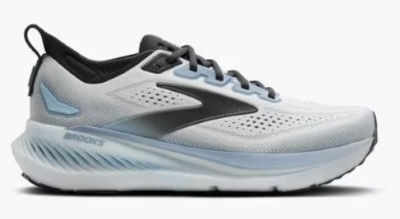
The official Brooks Glycerin 23 page identifies the neutral model and code 110476. Use that number when comparing retailer listings. The official image in this article shows the neutral model but not the color of my test pair.
How I Tested the Brooks Glycerin 23
My test covers 211 verified running miles in a men’s US 10.5, with eight structured sessions preserved in the current log. I used the shoe mainly for easy and long running on asphalt, concrete, and the Atlantic City-area Boardwalk. The coverage includes a 14-mile long run and a completed wet test.
| Test variable | Ken’s test |
|---|---|
| Runner | Ken, 12 years running; about 182 lb during this test |
| Shoe | Neutral Brooks Glycerin 23, men’s US 10.5 |
| Mileage | 211 verified running miles |
| Surfaces | Asphalt, concrete seawall, and Boardwalk |
| First key run | 7 miles at about 10:00/mi before a nor’easter |
| Best recorded run | 8-mile cold Brigantine loop at easy effort |
| Longest run | 14 miles; slight heel compression after mile 12 |
| Evidence maturity | Mature mileage, medium confidence; several sessions were backfilled |
I did not run a controlled economy study, measure stack with a calibrated lab fixture, or test every width. I therefore separate what I felt from what Brooks lists and what independent labs measured. Exact percentages and universal injury claims do not belong in this review.
The test assignment also matters. I did not force the Glycerin into repeated track sessions merely to fill a table. Its role was evident early, so I spent the mileage where buyers are most likely to use it: recovery, easy road volume, and longer aerobic running. The broader running shoe guide explains why role coverage is more useful than treating every model as a race candidate.
Ken’s Ranking Rule
Ken’s ranking rule: A premium daily trainer earns a high rank only if it protects the runner at easy pace, stays orderly late in a run, and tolerates an unplanned pace change. Glycerin 23 clears the first two tests for me. Its weight and disconnected faster ride keep it from clearing the third.
This rule does not punish a recovery shoe for failing to race. It prevents category drift. Brooks markets the Glycerin for everyday running and long runs, so some pace flexibility is a reasonable expectation. The shoe feels outstanding when the day stays easy. Once I move under about 8:15 per mile, the upper, mass, and forefoot stop working as one clean unit.
That is why the score is 7.4 rather than a number in the nines. It is a very competent specialist with a premium daily-trainer label. Runners who intentionally own separate workout shoes may value it more than the score suggests. Runners seeking a single pair may value it less.
Brooks Glycerin 23 Specs and Construction
Glycerin 23 uses dual-cell DNA TUNED foam, an engineered knit upper, a broad neutral platform, and extensive road rubber. Brooks added 2 mm of cushioning at the forefoot compared with Glycerin 22. The geometry remains conventional enough to feel familiar rather than aggressively rockered.
| Specification | Verified reference | What it means on the run |
|---|---|---|
| Weight | 10.6 oz / 300.5 g, men’s reference size | Substantial mass; calm at easy pace, noticeable when accelerating |
| Listed drop | 8 mm | Heel-protective transition without a flat-shoe feel |
| Listed stack | Approximately 38 mm heel / 30 mm forefoot | Deep heel cushion with a less extreme forefoot |
| Midsole | Dual-cell DNA TUNED | Larger, softer heel cells and smaller, firmer forefoot cells |
| Upper | Engineered knit | Padded and secure, but warmer than thin performance mesh |
| Support | Neutral, broad platform | Inherent steadiness without GuideRails |
| Outsole | Extensive road-rubber coverage | Workhorse grip and durability with added mass |
DNA TUNED is not one uniform slab. Brooks changes cell size by zone. Larger cells in the heel are intended to deform more easily, while smaller cells in the forefoot resist compression and return more quickly. The idea is sensible, but the marketing phrase “responsive toe-off” should not be read as race-shoe rebound.
Under my body mass, the heel feels distinctly softer than the front. The forefoot does not feel harsh, but it feels denser and more ordinary. That split explains why a heel striker can describe the Glycerin as deeply cushioned while a forefoot striker can call the same shoe only moderately protective.
Brooks lists an 8 mm drop. One independent sample can measure differently because foam compresses, reference points vary, and manufacturing tolerances exist. My heel-drop guide explains why the printed number cannot predict calf, Achilles, or knee response on its own.
Ride Feel: Plush Heel, Firmer Forefoot
The Glycerin 23 ride is softest at heel contact, stable through the middle, and firmer as pressure reaches the toes. It does not sink endlessly. The broad base and smaller forefoot cells keep the platform from feeling loose, which is a good match for slow running on tired legs.
At recovery pace
At roughly 9:45 to 10:30 per mile, the shoe makes sense immediately for me. The heel rounds into contact without a slap, the platform stays level, and the upper prevents unnecessary foot movement. When my stride gets lazy late in a week, the shoe does not demand precise placement.
The ride is not weightless. I always know I am wearing a substantial shoe. On recovery days that can feel reassuring rather than annoying because the motion stays quiet. The important question is whether a heavy shoe reduces strain for you or merely adds work. My recovery-run guide starts with effort control, not foam softness.
At easy daily pace
Between roughly 9:00 and 9:45 per mile, the transition remains coherent. The heel bevel helps the shoe roll rather than land as a square block. The forefoot flexes enough to avoid a rigid sensation, but the shoe does not snap forward. It is a steady metronome, not a propulsive device.
This range is where Glycerin 23 can serve as a daily trainer for a runner with separate workout shoes. The platform has enough rubber and structure for repeat use, and the knit feels more durable than a minimal upper. It belongs in the comfort side of my daily trainer comparison, not the lightweight side.
At steady and faster pace
The problem arrives as pressure and cadence rise. Below about 8:15 per mile, the shoe felt wobbly and disconnected in my log. That does not mean the platform suddenly became unstable in a clinical sense. It means the heavy upper and heel lagged behind the quicker transition I wanted from the front.
A faster runner may reach that sensation at a different number. An 8:15 mile is not a universal boundary. The repeatable clue is effort: when the shoe starts to feel like two zones rather than one continuous platform, it has left its best assignment. My easy-pace guide explains why breathing and control travel better than copied pace charts.
I would not select Glycerin 23 for threshold sessions, short intervals, or a race personal best. It can physically complete those runs, but the mass and low energy return make the work feel more expensive than it needs to. That is a role mismatch, not a quality failure.
Best Pace and Workouts for Glycerin 23
My best use is recovery and easy running above roughly 9:00 per mile. The shoe can cover steady mileage when the effort remains controlled, but it is not the pair I reach for when the plan includes sustained tempo, short repetitions, or a fast finish.
| Run type | My verdict | Why |
|---|---|---|
| Recovery run | Excellent | Deep heel cushion, broad base, and quiet transition |
| Easy daily run | Very good | Predictable comfort and durable build; weight remains noticeable |
| Steady aerobic run | Acceptable | Works until cadence and pressure expose the low-energy forefoot |
| Long easy run | Good with a forefoot check | Completed 14 miles; slight compression after mile 12 |
| Tempo run | Poor for me | Felt disconnected below about 8:15/mi |
| Intervals | Poor assignment | High mass and no sharp lever for quick turnover |
| Recovery marathon | Possible after testing | Comfort may outweigh speed for some runners |
| PR-focused race | Skip | Modern workout and race shoes are lighter and more efficient |
A beginner may use Glycerin 23 for almost every run because most early training should remain controlled. That can be a sensible choice if the fit is correct. My beginner running shoe guide explains why comfort and repeatability matter more than buying a race-day sensation too early.
On a treadmill, the substantial rubber and warm knit can feel different from outdoor asphalt. The belt already removes some surface variation, so the shoe can feel even calmer, but heat may build faster. It remains a credible comfort option in my treadmill shoe guide if ventilation and width work for you.
Long-Run Performance: The Heel-Forefoot Split
I completed 14 miles in Glycerin 23, and the shoe remained comfortable, but I noticed slight heel compression after mile 12. That was not a sudden collapse or a reason to stop. It was a change from the fresh, deeply settled sensation of the opening hour to a flatter feeling late in the run.
My best run was an eight-mile loop in Brigantine during cold early-autumn conditions. The cushion stayed consistent and my legs felt less beaten up afterward than they often do in a lower-cushion trainer. I treat that as a useful personal observation, not proof that the shoe prevents soreness or injury.
The long-run answer depends on strike. A heel striker can keep loading the shoe’s strongest zone. A midfoot or forefoot striker places more repeated stress on the firmer, shallower-feeling front. RTINGS reached a cautious conclusion about long-duration forefoot comfort, while other reviewers found the shoe marathon-capable. Both can be honest outcomes.
My 14-mile test sits between those views: good protection, limited excitement, and a late-run change worth testing for yourself.
For a half marathon completed at comfortable effort, I can see the appeal. For a marathon, I would require at least one long run that reproduces race socks, fueling, and intended pace. Do not choose it for 26.2 miles solely because the heel feels plush during a store jog.
Brooks Glycerin 23 Fit and Sizing
My normal men’s US 10.5 fit true to size. The heel was secure, the midfoot stayed controlled, and the forefoot had enough volume for swelling during the 14-mile run. I did not need a runner’s knot to prevent lift.
The fit is not uniformly broad. The ball of the foot and toe-box platform feel accommodating, but the arch can feel close. A high-volume foot may therefore experience pressure through the middle even when the toes have space. That is why the label “wide” cannot replace an actual running fit test.
Sizing checklist
- Start with your normal running-shoe size rather than sizing down for a plush upper.
- Check one thumb-width of front clearance while standing, then jog to confirm rocker placement.
- Wait until the foot is warm before judging arch pressure and lateral toe contact.
- Use the dedicated Wide or Extra Wide version when needed; do not rely on knit stretch alone.
- Compare both feet because one foot is commonly longer or higher-volume than the other.
- Return the shoe if numbness, persistent arch pressure, heel lift, or toe contact appears indoors.
Brooks offers width choices that make Glycerin more practical than many max-cushion rivals. My wide-foot running shoe guide explains how platform width, last width, and upper volume can point in different directions.
Upper, Tongue, and Lockdown
The engineered-knit upper is plush, secure, and more concerned with comfort than ventilation. Padding around the heel and tongue spreads lace pressure well. The structure helped my foot stay centered when the lower leg was tired, and I did not log blistering or heel slip.
The tradeoff is warmth. Knit and padding hold more heat than a stripped-back mesh, especially on an indoor treadmill or a humid summer run. I would choose a thin technical sock and avoid using extra-thick cushioning to solve a fit that is already snug.
The tongue is padded enough that I can secure the midfoot without lace bite. The heel counter is substantial, which supports hold but may irritate a runner sensitive around the Achilles insertion. Persistent rubbing is a fit mismatch, not something I recommend breaking in through pain.
Stability: Neutral, Broad, and Not GTS
Glycerin 23 is stable for a neutral max-cushion shoe because the base is broad and the foam is not uniformly soft. The shoe resists the vague, side-to-side drift that can occur when a tall stack is narrow or overly compliant. At easy pace, my foot stayed centered without conscious correction.
That is inherent stability, not active guidance. There is no medial post and no GuideRails system in the neutral model. A runner who visibly collapses inward or outward may still move through the broad platform in an uncomfortable way. Shoe width cannot diagnose support need.
The GTS version adds structure around the heel and midfoot. My Brooks Adrenaline GTS 25 review shows a firmer, more traditional way Brooks delivers guidance. Glycerin GTS keeps more cushion. The right choice depends on how much intervention feels useful, not which model name sounds more advanced.
For heavier neutral runners, the broad base is a meaningful advantage because the platform deforms without immediately feeling narrow. I tested around 182 lb, not across every body mass. The heavy-runner shoe guide considers platform control, fit, and forefoot depth alongside softness.
No running shoe can guarantee injury prevention. If support needs follow pain, weakness, or a sudden gait change, a clinician who evaluates the runner is more useful than buying the most structured product page.
Grip, Rain, and Cold Weather
The extensive rubber gave me dependable road contact, and my logged wet test did not record a traction failure. That is enough for ordinary rain confidence on familiar pavement. It is not permission to ignore painted crosswalks, metal covers, wet leaves, algae, or ice.
Standardized data supports the road-grip impression, but one machine test cannot cover every urban surface. My rain-running guide explains why route choice and shortened stride matter as much as outsole branding.
Cold behavior requires more caution. My cold eight-mile loop felt comfortable, but that is not a controlled freezer test. RunRepeat measured a 33 percent change in midsole softness after cold exposure versus a 22 percent lab average. In plain language, the foam may firm more than typical when temperature drops substantially.
Those observations are not contradictory. A cushioned shoe can still feel comfortable on one cold outdoor run while its material changes measurably in a chamber. I would warm the pair indoors, expect a firmer first mile, and judge traction separately from cushioning.
Durability After 211 Miles
At 211 running miles, my Glycerin 23 remains serviceable. The outer heel shows expected wear from my landing pattern, and the midsole has minor compression. Rebound is lower than at the beginning but has not disappeared. The upper and lockdown remain functional.
The outsole is a workhorse design. Rubber covers the areas most likely to contact the road, which adds weight but protects the foam. RunRepeat’s standardized abrasion test removed 0.7 mm from its sample compared with a 1.1 mm lab average, another useful sign that the outsole is not merely decorative.
I do not promise 300, 400, or 500 miles. A scuffing heel striker on rough chipseal can wear rubber faster than a light midfoot runner on smooth asphalt. Rotation, moisture, heat, storage, and using the shoe for walking all affect the timeline.
I replace or reassign a shoe when grip, alignment, fit, or ride changes enough to alter the intended run. Cosmetic creasing alone is not the test. My running-shoe replacement checklist uses side-to-side comparison and actual behavior rather than one universal odometer number.
For concrete-heavy routes, Glycerin’s heel protection and broad base make sense, but the warm upper and weight remain part of the deal. It is one of the comfort-first options considered in my running shoes for concrete guide.
Brooks Glycerin 23 Comparisons
Glycerin 23 wins on traditional plushness and broad predictability; competitors win when you need less weight, more rocker, or more speed range. The comparisons below use the neutral Glycerin, not the GTS version.
| Comparison | Choose Glycerin 23 when | Choose the alternative when |
|---|---|---|
| Glycerin 23 vs Ghost 18 | You want deeper heel comfort and a more premium upper | You want a lighter, simpler daily trainer with less bulk |
| Glycerin 23 vs Nimbus 28 | You prefer a traditional transition and firmer forefoot | You want a softer, more enveloping max-cushion ride |
| Glycerin 23 vs Bondi 9 | You want more natural flex and less rocker | You want a stronger rolling sensation and tall HOKA geometry |
| Glycerin 23 vs Vomero 18 | You want a broader, steadier, more traditional platform | You want a livelier dual-foam ride and more pace flexibility |
| Glycerin 23 vs Triumph 24 | Heel protection and planted feel matter most | You want lower weight and a more energetic daily transition |
| Glycerin 23 vs Ride 19 | Maximum easy-day comfort is the assignment | You want one lighter shoe for a wider range of daily paces |
Glycerin 23 vs Brooks Ghost 18
Ghost 18 is the more ordinary daily trainer. It carries less cushion and usually feels easier to move when pace changes. Glycerin 23 has the more substantial heel, plusher upper, and calmer recovery personality. I choose Ghost for one-shoe simplicity and Glycerin for easy-day specialization.
Glycerin 23 vs ASICS Gel-Nimbus 28
Nimbus 28 feels softer and more enveloping, with a max-cushion identity that extends through the upper. Glycerin feels firmer in front and more traditional through toe-off. The Brooks is my choice when too much softness creates work; ASICS wins when the entire purpose is a deeply cushioned cruise.
Glycerin 23 vs HOKA Bondi 9
Bondi 9 uses a more obvious rocker and taller visual profile. Glycerin bends more naturally and feels less prescriptive. Heel strikers who like being rolled forward may prefer HOKA. Runners who want deep cushioning without a dominant rocker may settle more easily into Brooks.
Glycerin 23 vs Nike Vomero 18
Vomero 18 has more pace range and a livelier sensation, but its softer dual-foam movement can feel less planted. Glycerin is broader and calmer. I choose Nike when a long run may finish faster and Brooks when the point is keeping the entire run controlled.
Glycerin 23 vs Saucony Triumph 24
Triumph 24 is lighter and more responsive, which makes it easier to use as the only cushioned daily trainer. Glycerin protects my heel more convincingly and feels steadier at very easy pace. Saucony wins versatility; Brooks wins deliberate recovery duty.
Glycerin 23 vs Saucony Ride 19
Ride 19 gives up some plushness for lower mass and a more adaptable transition. It is the practical one-shoe option. Glycerin is the better second shoe when workouts already have a faster pair and the rotation needs a true easy-day anchor.
How Glycerin 23 Fits a Shoe Rotation
I would use Glycerin 23 as the recovery and easy-mileage shoe in a two- or three-pair rotation. Pair it with a lighter daily trainer or unplated workout shoe for progression and tempo runs. Add a race shoe only if racing performance matters.
That division lets the Brooks do what it does well without asking it to fake speed. It also keeps the faster shoe from absorbing every slow mile. The practical weekly pattern is simple: Glycerin after a hard day, the lighter trainer for ordinary aerobic work, and the workout shoe for structured quality.
I would not build a rotation from three heavy max-cushion shoes with similar geometry. Different assignments should produce meaningful differences in mass, stiffness, and support. Rotation is not automatically injury protection, but it can make each run easier to match with the right tool.
Who Should Buy the Brooks Glycerin 23?
Buy Glycerin 23 if you are a neutral runner who wants substantial heel cushioning, a broad road platform, and a secure upper for controlled mileage. It makes the most sense when recovery and easy runs are a clear assignment rather than the warmup before an accidental tempo.
- Neutral heel strikers who value deep, predictable impact protection
- Runners with a separate shoe for tempo sessions and racing
- Beginners who expect most training to remain easy and controlled
- Heavier neutral runners who prefer a broad base over a narrow soft stack
- Walkers and run-walk athletes who value padding and durable road rubber
- Runners who need actual Wide or Extra Wide options
- Long-run athletes willing to validate forefoot comfort beyond two hours
Who should skip it
- Runners seeking one lightweight shoe for easy runs, workouts, and races
- Anyone who dislikes warm, padded knit uppers
- Forefoot strikers who need equally deep protection from heel to toe
- Runners who want an aggressive rocker or a sharp, propulsive toe-off
- Athletes who need GuideRails or another active stability system
- Fast daily runners who routinely move below the shoe’s calm pace range
- Buyers assuming every Glycerin 23 listing is the neutral model
Pain, numbness, persistent arch pressure, or the feeling that the foot is escaping the platform is not a normal break-in requirement. Stop the test and choose a different size, width, or geometry.
Pros and Cons
| What I like | What I would change |
|---|---|
| Deep, controlled heel cushioning | Reduce weight without stripping away durability |
| Broad neutral platform at recovery pace | Give the forefoot more long-run protection and energy |
| True-to-size fit in my US 10.5 | Open the arch volume slightly |
| Secure, comfortable upper | Improve warm-weather ventilation |
| Useful outsole life at 211 miles | Create a cleaner transition at steady pace |
Fact Checks, and Corrections
Personal ride, fit, pace, long-run, and durability conclusions come from my 211-mile log. Brooks supplies product construction and reference specifications. Independent sources help check fit, geometry, traction, cold response, and differences between heel and forefoot behavior.
I rejected several archive notes before writing. Glycerin 23 uses DNA TUNED, not DNA LOFT v3. I removed an untraceable measured drop, unverified foam-hardness numbers, and universal joint-protection claims. I also rejected the idea that one cold run proves excellent cold performance because standardized testing found a larger-than-average change after cold exposure.
Specifications can change by sex, size, width, color, and production tolerance. Lab measurements are evidence about one sample, not a more official replacement for the manufacturer listing. If Brooks makes a mid-cycle construction change while keeping the same name, version identity should be checked again.
Frequently Asked Questions
Is the Brooks Glycerin 23 a neutral running shoe?
Yes. This review covers the neutral Glycerin 23. Its broad base supplies inherent steadiness, but it does not use the GuideRails support system found in the Glycerin GTS 23. Runners who need active guidance should test the GTS rather than assuming the neutral shoe is equivalent.
What is the Brooks Glycerin 23 best for?
It is best for recovery runs, easy daily mileage, walking, and relaxed long runs. In my 211-mile test, it was strongest above roughly 9:00 per mile. It protected the heel well but did not feel connected enough for regular tempo or interval work.
Does the Brooks Glycerin 23 fit true to size?
My normal men’s US 10.5 fit true to size. Length and heel hold were secure, while the forefoot had more usable volume than older narrow-feeling Brooks fits. The arch can still feel relatively close, so wide or high-volume feet should use a warm-foot try-on.
Is the Brooks Glycerin 23 good for wide feet?
It can work for many wide feet because Brooks offers multiple widths and the forefoot platform is broad. That does not make every part of the last wide. Choose the actual Wide or Extra Wide option when needed, and check arch pressure and toe clearance after ten to fifteen minutes of movement.
What is the heel-to-toe drop of the Brooks Glycerin 23?
Brooks lists an 8 mm heel-to-toe drop. Independent measurements can differ by sample and method. The practical ride feels heel-cushioned with a traditional transition rather than flat or aggressively rockered.
Is the Brooks Glycerin 23 good for long runs?
It can be, especially for heel strikers and runners who prioritize comfort over speed. I completed 14 miles comfortably, with slight heel compression after mile 12. Forefoot-dominant runners may reach the shoe’s limit earlier because the front feels firmer and less energetic than the heel.
Can I race in the Brooks Glycerin 23?
You can finish a race in it, but racing is not its strongest assignment. The shoe is heavy and calm compared with modern tempo trainers and racers. I would use it for a comfort-first event only after a long test, not for chasing a personal best.
Is the Brooks Glycerin 23 good for heavy runners?
Its broad platform, substantial heel cushion, and full-rubber workhorse build make it a credible option for heavier neutral runners. I tested it around 182 lb. Body mass alone does not determine fit or stability, so evaluate arch pressure, lateral control, and forefoot protection during a longer run.
Is the Brooks Glycerin 23 stable?
It is stable for a neutral max-cushion shoe because the base is broad and the sidewalls are not excessively soft. It is not a clinical stability shoe and provides no active medial correction. The Glycerin GTS 23 is the closer match for runners who benefit from GuideRails.
How durable is the Brooks Glycerin 23?
At 211 running miles, my pair had expected outer-heel wear and minor compression, but the ride remained usable. The outsole is built like a daily workhorse. I do not assign a universal lifespan because gait, surface, rotation, and storage can change wear substantially.
Is the Brooks Glycerin 23 good in rain?
My logged wet test did not produce a traction failure, and independent standardized testing found strong road grip. Smooth paint, metal, wet leaves, and ice remain separate hazards. The engineered-knit upper can also hold more warmth and moisture than a thin performance mesh.
What changed from the Brooks Glycerin 22 to the Glycerin 23?
Brooks kept DNA TUNED and added 2 mm of forefoot cushioning, while refining the transition and engineered-knit upper. The 23 still behaves like a comfort-first trainer, not a speed-oriented redesign. Runners happy with the 22 should expect evolution rather than a different category of shoe.
What is the difference between Glycerin 23 and Glycerin GTS 23?
The Glycerin 23 is neutral. The Glycerin GTS 23 adds Brooks GuideRails for more structured guidance. Cushioning lineage is similar, but the support geometry can change how the foot and knee move, so choose by actual support need rather than assuming GTS is automatically better.
Is the Brooks Glycerin 23 worth buying?
It is worth buying for a neutral runner who wants a durable, plush, predictable easy-day shoe and accepts its weight and limited speed range. It is poor value for someone seeking one light trainer for easy runs, workouts, and racing. My final score is 7.4/10.
Final Verdict
My Brooks Glycerin 23 review ends at 7.4/10 after 211 miles. The shoe is excellent at making slow road mileage feel protected and orderly. The heel is its strongest asset, the broad neutral base keeps the ride composed, and the outsole still has useful life. The forefoot, weight, warm upper, and limited pace range prevent a higher score.
I would buy it for a rotation that already has speed covered. I would not rebuy it as my only daily trainer because the move below about 8:15 per mile felt disconnected and because other cushioned shoes offer more pace range. That is a personal assignment decision, not a claim that the shoe lacks quality.
Choose it when tomorrow is supposed to remain easy. Skip it when tomorrow may become a progression, tempo, or race effort. Glycerin 23 succeeds by being calm and dependable, and the best buyer is the runner who values exactly that.

Written by Ken – 12 years of running, 12,500+ miles, 63 shoes tested, and 36 races from 5Ks to a 50K ultra. I run 30-40 miles a week on the Atlantic City Boardwalk and review shoes with repeated training miles, not one-run demos. More about Ken