
Short answer: The CURREX RUNPRO is the best insole for running for most runners who want more support without making the shoe feel rigid. Choose Superfeet Run Cushion Medium Arch for softer comfort, Tread Labs Pace Thin for firm support, or PowerStep PULSE Thin for low-volume footwear. The best insert is still the one that preserves heel lock, toe room, and a natural stride in your exact shoe. If you run with an insert, use my running with orthotics guide for sockliner removal, volume, heel hold, and break-in.
I am going to make one point early because it prevents expensive mistakes: aftermarket insoles are optional. A comfortable running shoe with a secure stock sockliner does not need to be upgraded. Replace the liner only when you can name the problem you are solving – arch contact, forefoot pressure distribution, excess internal volume, a clinician recommendation, or a worn liner in an otherwise healthy shoe.
I ranked ten current products for US runners, but I did not invent personal test miles or medical outcomes for inserts that NextGait has not studied under a controlled protocol. This best insoles for running guide combines verified product geometry, how that geometry changes running-shoe fit, current manufacturer instructions, primary research, and the practical rejection tests I use when evaluating shoe setups.
Quick Picks: Best Insoles for Running
These are decision shortcuts, not ten interchangeable upgrades. Use the award to choose two candidates, then use the fit protocol below before running long. Product names in this table go to affiliate search results; each detailed review has a separate manufacturer link and one relevant NextGait guide.
| Insole | Best for | Best match |
|---|---|---|
| CURREX RUNPRO | Best overall running insole | Road and trail runners who want a running-specific insert without a rigid orthotic feel |
| Superfeet Run Cushion Medium Arch | Best flexible cushioned insole | Neutral runners who want soft cushioning and a flexible arch shape in roomy daily trainers |
| Tread Labs Pace Thin | Best firm support with replaceable top covers | Runners who already know they prefer firm arch contact and want replaceable foam rather than replacing the shell |
| PowerStep PULSE Thin | Best for low-volume shoes and spikes | Snug trainers, cleats, and some spikes that can accept a removable full-length insert |
| SOLE Active Medium | Best heat-moldable insole | Average-volume trainers when a customizable shape feels better than a fixed profile |
| Sidas Run 3Feet Protect | Best arch-specific cushioned system | Runners who want distinct arch profiles plus heel and forefoot cushioning in a protective daily-run package |
| Cadence EX+MP | Best with an integrated metatarsal pad | Runners who already know a correctly placed metatarsal pad improves forefoot comfort and have a roomy shoe |
| Spenco Total Support Run | Best adaptive thin support | Runners who want more structure than a soft liner but less arch-height commitment than a fixed high-profile shell |
| PowerStep PULSE Maxx | Best posted support for roomy trainers | Runners who have already found mild medial posting comfortable and have enough shoe volume |
| Dr. Scholl’s Run Active Comfort | Best budget running insole | Budget-minded runners seeking a cushioned replacement liner for roomy athletic shoes |
The 10 Best Insoles for Running: Detailed Reviews
Each review explains the design, the shoe it suits, the reason it ranks, what I like, what I do not like, and the failure condition that should stop the purchase. Start with your best match from Quick Picks, then use the orange button after that review to check current availability.
#1. CURREX RUNPRO – Best overall running insole
| Fit variable | What matters |
|---|---|
| Support | Low, Medium, or High; flexible dynamic support |
| Shoe volume | Low-to-medium; about 4mm per CURREX support guidance |
| Fit method | Trim-to-fit forefoot |
| Best for | Road and trail runners who want a running-specific insert without a rigid orthotic feel |
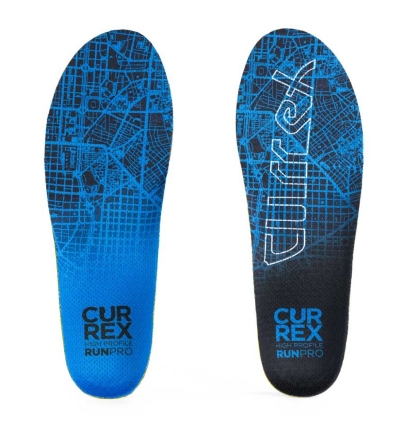
Why it made the list: It offers three arch profiles, a decoupled heel, a flexible midfoot bridge, targeted heel and forefoot cushioning, and little enough bulk to preserve the character of most trainers.
RUNPRO is my first comparison for a healthy runner who likes the shoe but dislikes the disposable sockliner. It is not the strongest insert here. That is the point. The flexible bridge adds contact under the arch without turning a neutral daily trainer into a homemade motion-control system.
The useful design detail is the three-profile range. Low, Medium, and High are not medical diagnoses; they are different contact shapes. I would choose the lowest profile that makes broad, quiet contact from the back of the arch toward the midfoot. A small hard spot under one edge is a rejection, even if an arch quiz says the profile is correct.
CURREX uses a fully decoupled heel and calls the platform zero drop. In practice, the replacement still has to be compared with the sockliner it removes. Check collar depth and lace pressure after installation. A few millimeters of extra internal height can matter more than the zero-drop label.
Its strongest use case is keeping the original shoe’s ride recognizable. The forefoot remains flexible enough for daily mileage, and the heel and forefoot pads add localized cushioning rather than a thick slab. That makes RUNPRO easier to pair with modern rockered shoes than a tall, hard shell.
What I like most is that the product is built around running motion instead of all-day standing. What I do not like is the single standard-width shape. Wide-footed runners should place a bare foot over the untrimmed insert before cutting; side overhang at the first or fifth metatarsal is a fit failure, not something socks will solve.
Manufacturer details: Check the current specifications and fitting instructions on the CURREX RUNPRO product page. For the shoe side of this setup, see my current running-shoe guide.
What I like
- Three profile choices
- Flexible running-specific support
- Low bulk
- Targeted heel and forefoot cushioning
What I do not like
- No dedicated wide version
- Profile quiz cannot replace an in-shoe run
- Costs about as much as many firmer orthotic-style inserts
Who should skip it: Skip it if the narrow forefoot platform leaves your foot hanging over the edge or if you need a clinician-specified post.
#2. Superfeet Run Cushion Medium Arch – Best flexible cushioned insole
| Fit variable | What matters |
|---|---|
| Support | Medium arch; lightly structured and adaptive |
| Shoe volume | Maximum thickness; needs roomy-to-moderate footwear |
| Fit method | Trim-to-fit forefoot |
| Best for | Neutral runners who want soft cushioning and a flexible arch shape in roomy daily trainers |
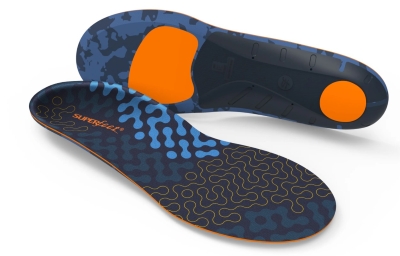
Why it made the list: Its adaptive structure and soft full-length foam make it a better match for runners seeking comfort than classic hard-shell Superfeet models, provided the shoe has enough internal room.
Run Cushion Medium Arch is the option I would put beside RUNPRO when the request is more comfort, not more control. Superfeet lists it as soft, maximum thickness, and best in roomy-to-moderate running shoes. Those three facts belong in the buying decision before any discussion of injury labels.
The Adaptive Comfort structure flexes with the foot rather than locking the rearfoot onto a hard cap. That gives the insert a less intrusive transition under a neutral stride. It is still shaped, but the shape feels distributed through the foam instead of concentrated at one rigid arch edge.
The tradeoff is volume. Maximum thickness can lift the heel, narrow the toe box vertically, and increase pressure over a high instep. Remove the factory sockliner first. Then lace the shoe, stand on an incline if available, and confirm that the heel does not ride above the stable part of the counter.
This is a sensible long-run or recovery-run choice when the original sockliner feels flat and the shoe still has generous space. It is less convincing in a race shoe, a snug upper, or a model whose removable liner is paper-thin. An insert should not make a well-fitting shoe feel one-half size smaller.
I like the smooth forefoot and the absence of an aggressive post. I do not like how easily the word Cushion can distract from fit. More foam inside a shoe does not create more midsole stack under the outsole; it changes where the foot sits inside the upper, which can improve comfort or ruin lockdown.
Manufacturer details: Check the current specifications and fitting instructions on the Superfeet Run Cushion Medium Arch product page. For the shoe side of this setup, see my cushioned running-shoe rankings.
What I like
- Soft adaptive feel
- Smooth forefoot transition
- Running-specific shape
- Low, medium, and high family options exist
What I do not like
- Maximum thickness
- Can lift the heel in shallow collars
- Not the choice for firm guidance
Who should skip it: Skip it if your heel already sits high, the shoe is low-volume, or you want a firm corrective shell.
#3. Tread Labs Pace Thin – Best firm support with replaceable top covers
| Fit variable | What matters |
|---|---|
| Support | Low, Medium, High, or Extra High; extra-firm molded support |
| Shoe volume | Thin forefoot with a deep structured heel cup |
| Fit method | Sized and trim-to-fit system |
| Best for | Runners who already know they prefer firm arch contact and want replaceable foam rather than replacing the shell |
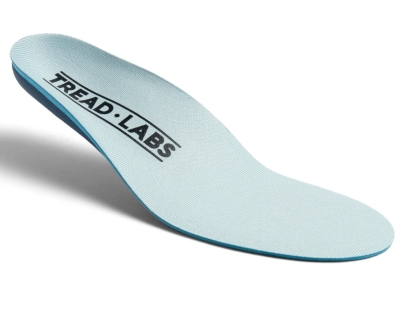
Why it made the list: Four arch heights, a low-volume top cover, replaceable foam, and a durable molded shell make it the most configurable firm-support option in this list.
Pace Thin ranks third because it solves a different problem than the top two. This is a firm support device with four arch heights, not a cushioned sockliner upgrade. If you have previously run comfortably in a firm orthotic shape, that precision can be useful. If you have not, it is a more demanding first experiment.
The two-part construction is the real value. The molded support stays in service while the thin top cover can be replaced. That reduces waste and makes long-term ownership more rational than discarding a functioning shell when the foam or fabric wears. Tread Labs also separates low, medium, high, and extra-high profiles.
Do not translate low arch into severe overpronation or high arch into supination. Those are different observations. Choose by where the support meets your foot while standing and jogging, then verify that the pressure remains broad after the foot warms and swells. For the distinction between normal pronation, overpronation, and supination, see my overpronation versus supination guide.
The deep heel cup demands attention. It can stabilize a foot that feels loose in a roomy trainer, but it can also move the heel toward the collar edge. I would avoid testing it for the first time in a low-cut race upper or a shoe that already rubs the Achilles insertion.
I like the replaceable cover and unusually complete arch-height ladder. I do not like the product page’s broad pain language or the temptation to treat firmness as proof of effectiveness. Buy Pace Thin because the geometry fits and feels calm in motion, not because a hard insert appears more medical.
Manufacturer details: Check the current specifications and fitting instructions on the Tread Labs Pace Thin product page. For the shoe side of this setup, see my flat-feet running-shoe guide.
What I like
- Four arch heights
- Replaceable top covers
- Firm stable platform
- Thin version fits more shoes than standard Pace
What I do not like
- Firm feel is polarizing
- Deep heel cup can alter collar fit
- Wet-footprint matching is only a starting clue
Who should skip it: Skip it if firm support feels intrusive, if the heel cup raises you out of the collar, or if you are guessing at arch height from a wet footprint alone.
#4. PowerStep PULSE Thin – Best for low-volume shoes and spikes

| Fit variable | What matters |
|---|---|
| Support | Standard neutral arch; firm flexible external shell |
| Shoe volume | Low profile with a flat heel cradle |
| Fit method | Sized; no trimming required |
| Best for | Snug trainers, cleats, and some spikes that can accept a removable full-length insert |
Why it made the list: Its low, flat heel cradle and thin full-length build preserve space better than high-volume orthotic inserts while retaining a structured arch shell.
PULSE Thin is the structured insert for the shoe that has almost no room to spare. PowerStep uses a low, flat heel cradle, dual-layer cushioning, and an external polypropylene shell. It is substantially less bulky than PULSE Maxx, which appears later for a different use case.
The size-specific format means less trimming, but it also means arch location must match. Your shoe size is not a guarantee that the support peak lands under the right part of your foot. Stand in the insert outside the shoe first, then test it inside with the laces set exactly as they are for running.
I see the best logic in conventional lightweight trainers, cross-country spikes with removable liners, and close-fitting shoes where a deep heel cup would cause lift. It is not automatically suitable for every carbon-plated racer. Many race-shoe sockliners are glued, and adding a structured insert can distort upper fit or plate interaction.
The arch is firmer than RUNPRO and less adaptable than Superfeet Run Cushion. That can feel secure to a runner who likes clear contact. It can also create a hot spot that grows after twenty minutes. A new pressure point is not a productive break-in signal.
I like the practical low-volume design and no-trim sizing. I do not like the lack of a wide option or multiple arch profiles. This is a precise match when it works and an easy rejection when it does not; do not force it because the product category sounds right.
Manufacturer details: Check the current specifications and fitting instructions on the PowerStep PULSE Thin product page. For the shoe side of this setup, see my lightweight running-shoe guide.
What I like
- Low-profile heel
- Works in tighter footwear
- No trimming
- Structured without PULSE Maxx bulk
What I do not like
- Single arch shape
- No wide platform
- Not appropriate for many glued-sockliner race shoes
Who should skip it: Skip it if the fixed arch lands in the wrong place, you need a wide forefoot platform, or the shoe’s liner is glued beneath a plate-sensitive upper.
#5. SOLE Active Medium – Best heat-moldable insole
| Fit variable | What matters |
|---|---|
| Support | Heat- or wear-moldable supportive arch |
| Shoe volume | Medium; 1.6mm cushioning over molded EVA base |
| Fit method | Trim-to-fit |
| Best for | Average-volume trainers when a customizable shape feels better than a fixed profile |
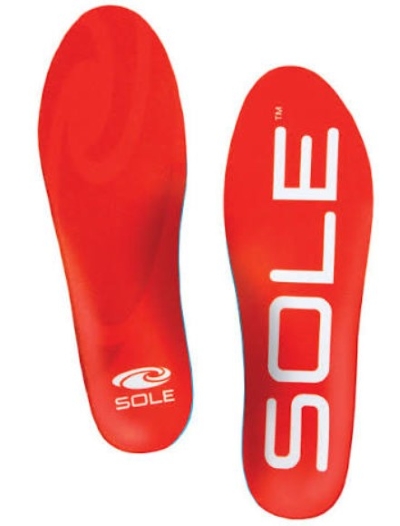
Why it made the list: The moldable EVA base can adapt its contact shape, and the Medium thickness is designed around typical running shoes rather than boots or very slim footwear.
SOLE Active Medium is the best moldable option, but the word custom needs restraint. Heating or wearing the EVA changes the contact shape. It does not reproduce an examination, prescription, posting decision, or the materials of a custom device made by a clinician.
Medium is the sensible starting thickness for an average-volume running shoe. SOLE lists 1.6mm of cushioning and positions this version for shoes with a standard removable liner. Active Thin belongs in snug footwear; Active Thick requires genuine spare room. Choosing thickness by shoe volume is more useful than choosing by body weight.
The initial arch can feel high before molding. Follow the manufacturer temperature and timing instructions exactly, and never heat the running shoe itself. After molding, inspect the insole on a flat surface. It must lie flat without curling the toe or rocking inside the shoe.
I would use a short walk and easy run to judge whether molding spread pressure or merely made an uncomfortable shape more tolerable. The standard remains the same: no focal arch pain, no numb toes, no heel lift, and no change that makes the shoe unstable on corners.
I like the choice of Thin, Medium, Thick, Wide, and met-pad variants across the SOLE family. I do not like the way moldable products are sometimes described as a substitute for clinical assessment. This is a fit tool, not a diagnosis delivered by an oven.
Manufacturer details: Check the current specifications and fitting instructions on the SOLE Active Medium product page. For the shoe side of this setup, see my high-arch running-shoe guide.
What I like
- Heat- or wear-moldable
- Multiple thickness and width families
- Medium version suits typical trainers
- Durable EVA base
What I do not like
- Initial arch can feel aggressive
- Molding requires careful execution
- Not equivalent to a prescribed custom orthosis
Who should skip it: Skip it if the initial arch is sharply uncomfortable, the shoe is low-volume, or you expect home molding to equal a clinician-prescribed custom orthosis.
#6. Sidas Run 3Feet Protect – Best arch-specific cushioned system
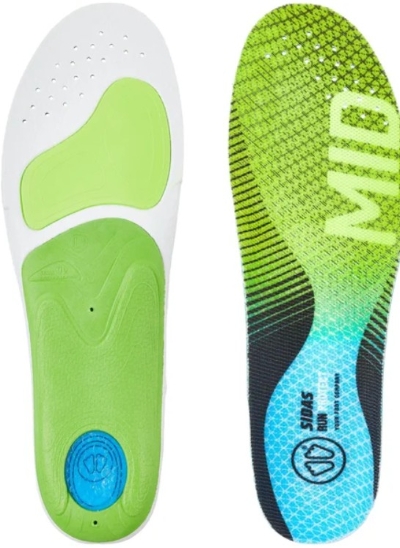
| Fit variable | What matters |
|---|---|
| Support | Low, Mid, or High model; reinforced midfoot |
| Shoe volume | Medium with heel gel and forefoot EVA rubber |
| Fit method | Trim-to-fit |
| Best for | Runners who want distinct arch profiles plus heel and forefoot cushioning in a protective daily-run package |
Why it made the list: Sidas combines separate low, mid, and high profiles with non-slip fabric, midfoot reinforcement, a heel gel pad, and a cushioned forefoot structure.
Run 3Feet Protect is the most protection-oriented multi-profile insert here. The Mid version uses a reinforced EVA midfoot, heel gel pad, forefoot EVA rubber, perforations, and non-slip top cover. Low and High versions change the geometry for different foot shapes.
That package gives more underfoot presence than RUNPRO. A runner who finds stock liners insubstantial may appreciate it on easy road miles or moderate trails. A runner who bought a light, lively trainer for ground feel may think the insert muffles the shoe.
Profile selection is only the first screen. The heel pad must sit flat, the arch reinforcement must meet the foot without pushing it sideways, and the forefoot edge must not curl after trimming. Because three materials meet under the foot, any seam-like sensation during jogging is a reason to recheck placement.
I would be especially careful in a shoe with a narrow waist. The insole can look correct at the toe and heel while the midfoot edges ride up the sidewall. Pull it out after the first run and inspect for folded edges or polished rub marks.
I like the clear Low, Mid, and High choices and the non-slip top cover. I do not like the added complexity for a runner who only needs a plain liner replacement. This is a good pick when the complete cushioning layout solves a real comfort problem, not because more components must be better.
Manufacturer details: Check the current specifications and fitting instructions on the Sidas Run 3Feet Protect product page. For the shoe side of this setup, see my guide to running shoes for supination.
What I like
- Three profile-specific models
- Heel and forefoot cushioning
- Non-slip cover
- Protective daily-run feel
What I do not like
- More underfoot presence
- Can crowd narrow-waisted shoes
- Mixed materials may feel busy to sensitive feet
Who should skip it: Skip it if the gel heel lifts you in the collar, the midfoot reinforcement feels controlling, or your shoe is already snug.
#7. Cadence EX+MP – Best with an integrated metatarsal pad

| Fit variable | What matters |
|---|---|
| Support | 31mm arch; semi-rigid shell with metatarsal pad |
| Shoe volume | High: 7mm heel and ball, tapering to 5mm toe |
| Fit method | Sized full-length insert |
| Best for | Runners who already know a correctly placed metatarsal pad improves forefoot comfort and have a roomy shoe |
Why it made the list: It combines substantial heel and forefoot cushioning with a semi-rigid shell and a built-in pad positioned to redistribute pressure behind the metatarsal heads.
Cadence EX+MP earns a narrow, useful award. The metatarsal pad is intended to sit behind the metatarsal heads and redistribute forefoot load. If it sits directly beneath a sore spot, it can feel like a stone. This is one product where in-store fitting is a feature, not an inconvenience.
Cadence lists 7mm of foam under the heel and ball, tapering to 5mm at the toes, plus a 31mm arch and stiffer shell than its Original Orange and Low Volume models. That is a high-volume package. Start with a roomy trainer and remove the original liner.
The insole should place the met pad just behind the ball of the foot. Mark the location of the first and fifth metatarsal heads on the side of the shoe with removable tape, then compare the pad position. Numbness, burning, toe tingling, or increased focal pain means stop.
This is not my generic recommendation for every runner with forefoot pain. Metatarsalgia describes a symptom region, not one cause, and Morton’s neuroma, stress injury, joint irritation, and shoe compression need different reasoning. Persistent pain deserves diagnosis before a thicker insert consumes more toe-box space.
I like the purposeful forefoot design and retail fitting model. I do not like the bulk or the way symptom labels can encourage self-treatment without locating the pad correctly. EX+MP is excellent for a specific match and easy to misuse as a random comfort upgrade.
Manufacturer details: Check the current specifications and fitting instructions on the Cadence EX+MP product page. For the shoe side of this setup, see my metatarsalgia running-shoe guide.
What I like
- Integrated metatarsal pad
- Substantial heel and forefoot cushioning
- Semi-rigid support
- In-store fitting can improve placement
What I do not like
- High volume
- Pad position is unforgiving
- Not sold directly online by Cadence
Who should skip it: Skip it if you have not been fitted for the met pad, the pad sits under the painful metatarsal heads, or your shoe is low-volume.
#8. Spenco Total Support Run – Best adaptive thin support

| Fit variable | What matters |
|---|---|
| Support | Adaptive flexible arch plate |
| Shoe volume | Thin running-specific profile |
| Fit method | Precision-sized options |
| Best for | Runners who want more structure than a soft liner but less arch-height commitment than a fixed high-profile shell |
Why it made the list: A flexible arch plate, multi-density pods, deep heel cup, ventilation channels, and a relatively thin profile make it a balanced structured option.
Spenco Total Support Run sits between flexible cushioning and a firm orthotic-style shell. The arch plate adapts, while the multi-density layout and deep heel cup add more structure than a stock liner. That makes it a reasonable comparison for runners who find RUNPRO too flexible and Pace Thin too rigid.
The thin profile is useful, but thin at the forefoot does not mean shallow everywhere. The heel cup still changes how the rearfoot sits. Confirm that the collar contacts the heel below the Achilles insertion and that the shoe remains stable during a slow single-leg calf raise.
Spenco describes the arch as suitable across arch types. I would treat that as range, not universality. Foot length, heel width, arch length, and arch stiffness vary independently. An adaptive plate can still peak too far forward or back for a particular foot.
The current model is also relatively new and has a small review base on the manufacturer’s US page. I am ranking the verified construction and use case, not pretending that three customer reviews establish broad durability or injury outcomes.
I like the middle-ground support level, breathable channels, and running-specific profile. I do not like the limited independent history or the large size ranges reported by some buyers. Check actual length against the factory liner before running and preserve the return option.
Manufacturer details: Check the current specifications and fitting instructions on the Spenco Total Support Run product page. For the shoe side of this setup, see my overpronation running-shoe guide.
What I like
- Adaptive arch plate
- Thin forefoot profile
- Ventilation channels
- Balanced support level
What I do not like
- Deep heel cup still affects collar fit
- Limited current-model review history
- No dedicated wide version
Who should skip it: Skip it if sizing leaves the insert too long, the adaptive arch still creates a pressure point, or you need a wide-specific platform.
#9. PowerStep PULSE Maxx – Best posted support for roomy trainers
| Fit variable | What matters |
|---|---|
| Support | Standard arch with firm flexible shell and 2-degree medial heel post |
| Shoe volume | Full length, deep heel cradle, dual-layer cushioning |
| Fit method | Sized; no trimming required |
| Best for | Runners who have already found mild medial posting comfortable and have enough shoe volume |
Why it made the list: The 2-degree medial heel post, deep cradle, and firm shell provide the clearest directional support in this ranking for runners who specifically tolerate that geometry.
PULSE Maxx is not a stronger version of the best overall pick. It is a different tool. PowerStep builds in a 2-degree medial heel post, firm flexible shell, deep heel cradle, and dual-layer cushioning. That creates more directional influence than PULSE Thin or RUNPRO.
The right runner is someone who has already compared posted and neutral support and prefers the posted option. The wrong approach is to see a worn medial outsole or flat footprint and prescribe motion control to yourself. Wear patterns mix gait, terrain, rotation, and foam geometry; they do not identify a treatment.
Pairing matters. A mild post inside a broad neutral trainer can feel composed. The same insert inside a high-guidance stability shoe can create too much medial pressure or shift loading toward the lateral forefoot. There is no universal rule against combining them, but the combination needs a direct treadmill comparison.
Because the heel cradle is deep, use the original sockliner as a thickness reference. After installation, jog downhill gently and make two controlled turns in each direction. Heel slip, edge pressure, or a sensation of being tipped outward disqualifies the setup.
I like the transparency of the 2-degree post and the no-trim sizing. I do not like broad claims that alignment prevents the long list of conditions attached to overpronation. This insert belongs in a comfort-and-control experiment, not an injury guarantee.
Manufacturer details: Check the current specifications and fitting instructions on the PowerStep PULSE Maxx product page. For the shoe side of this setup, see my stability running-shoe guide.
What I like
- Clearly specified 2-degree post
- Deep secure cradle
- No trimming
- Substantial cushioning
What I do not like
- High volume
- Can overcorrect when paired poorly
- Single standard arch shape
Who should skip it: Skip it if you are pairing it blindly with a high-guidance shoe, the post pushes you laterally, or the deep cradle lifts your heel.
#10. Dr. Scholl’s Run Active Comfort – Best budget running insole
| Fit variable | What matters |
|---|---|
| Support | Reinforced arch with three-zone cushioning |
| Shoe volume | Medium-to-high cushioned profile |
| Fit method | Trim-to-fit using printed guide |
| Best for | Budget-minded runners seeking a cushioned replacement liner for roomy athletic shoes |
Why it made the list: At a fraction of the premium options’ price, it offers a deep heel cup, reinforced arch, and forefoot cushioning in a running-specific layout.
Run Active Comfort is the budget pick, not a disguised prescription device. The layout uses a deep heel cup, reinforced arch, and cushioning under the ball of the foot. It is a more relevant running option than Dr. Scholl’s Heavy Duty insert, which is built around work and standing rather than running motion.
Its accessible, widely available design makes it useful for learning whether a cushioned full-length insert improves the feel of a roomy trainer. It does not offer the arch-height choices, shell precision, or replaceable components of the more specialized picks. That limitation should be visible, not hidden behind value language.
The trim guide covers broad men’s and women’s size ranges, so trace the original liner rather than relying only on printed lines. Cut conservatively, reinstall, then inspect the toe. A curled front edge can create hot spots and make the insole slide backward.
Dr. Scholl’s says to replace it at six months or the first signs of wear. I would use function instead of the calendar alone: compressed heel foam, a permanent forefoot dent, edge curling, fabric delamination, odor that survives cleaning, or the return of a comfort problem are better signals.
I like the accessible design and sensible three-zone layout. I do not like the coarse sizing or sweeping injury-prevention wording on the product page. Use it as a basic comfort trial in a compatible shoe, and stop if symptoms increase.
Manufacturer details: Check the current specifications and fitting instructions on the Dr. Scholl’s Run Active Comfort product page. For the shoe side of this setup, see my running-shoe guide for heavier runners.
What I like
- Accessible budget option
- Running-specific three-zone layout
- Widely available
- Easy entry point for a comfort trial
What I do not like
- Broad size ranges
- Less precise arch fit
- Bulky for snug performance shoes
Who should skip it: Skip it if you need precise arch placement, wide-specific coverage, low-volume fit, or a clinician-directed orthosis.
Ken’s Ranking Rule
Ken’s ranking rule: An insole must disappear under the foot while the shoe keeps its heel lock, toe-box height, lateral stability, and normal transition. I rank broad, pressure-free contact above aggressive arch height, and I reject any insert that creates numbness, a focal hot spot, heel lift, edge overhang, or a forced change in stride.
Standing comfort is only the first screen. Foam that feels luxurious for thirty seconds can become unstable at running speed, while a firm contour that seems supportive in the store can become a concentrated pressure point after the foot warms. The ranking therefore rewards compatible geometry more than maximum softness or maximum correction.
I also separate a running insole from a medical orthosis. The products below are retail devices. Some can influence pressure, comfort, or movement, but none can diagnose the cause of pain. If an insert is being used to manage a specific injury, the diagnosis and loading plan matter more than its place in a shopping list.
How I Ranked These Running Insoles
1. Fit inside a real running shoe. I prioritized products that replace a removable sockliner without stealing excessive toe height or lifting the heel above the stable collar. Volume is a first-order performance variable, not a footnote.
2. Arch contact, not arch theater. The best contour meets the foot over a broad area. The tallest or hardest support does not win by default. Multiple profiles and moldable shapes score well only when they improve the chance of broad contact.
3. Running-specific transition. A useful insert bends, posts, or cushions in a way that works with repeated heel-to-toe or midfoot loading. I downgraded work-boot inserts, thick memory foam, and products whose main appeal is soft standing comfort.
4. Heel and forefoot consequences. Deep heel cups can improve seating, but they can also lift the foot. Metatarsal pads can redistribute pressure, but only when they sit behind the metatarsal heads. Every feature has a failure mode, and those failure modes are included in each review.
5. Verifiable current details. Model names, thickness language, profile options, and fitting instructions were checked against manufacturer pages on August 5, 2026. Marketing health claims were not treated as independent clinical evidence.
6. Honest evidence boundary. I did not award injury-prevention scores, fabricate miles, or convert customer ratings into efficacy. Research is summarized at the category level, then the products are ranked for fit and design logic.
What Research Actually Says About Running Insoles
A 2017 systematic review and meta-analysis pooled 11 foot-orthosis trials and seven shock-absorbing-insole trials. Foot orthoses reduced overall injury risk in those populations (risk ratio 0.72) and stress-fracture risk (0.59), but not soft-tissue injuries. Shock-absorbing insoles did not significantly reduce overall, stress-fracture, or soft-tissue injuries. That is why I will not equate gel or softness with protection.
A 2024 systematic review of running kinetics and kinematics found some biomechanical effects and a small increase in perceived comfort with custom orthoses, but concluded that optimization and more generalizable evidence are still needed for performance and prevention claims. An insert can change a measured variable without guaranteeing a better outcome for every runner.
For plantar heel pain, the 2023 clinical practice guideline advises against using orthoses as an isolated short-term treatment. Clinicians may combine orthoses with other treatments to reduce pain and improve function. This distinction matters: an insole may be one part of care, not the entire plan.
Custom is not automatically superior for uncomplicated heel pain. A randomized trial of prefabricated and customized EVA orthoses found similar effectiveness after eight weeks, and an earlier multicenter randomized trial favored a prefabricated insert plus stretching over a custom polypropylene device in initial treatment. Those findings do not eliminate the need for custom work in complex cases.
Evidence verdict: Retail insoles can be reasonable tools for comfort and load management, and orthoses help in some selected populations. The evidence does not justify saying that one commercial insole heals plantar fascia tissue, normalizes every runner’s mechanics, makes everyone faster, or eliminates injury risk.
Best Running Insoles Compared
| Insole | Award | Support feel | Shoe volume | Fit method |
|---|---|---|---|---|
| #1 CURREX RUNPRO | Best overall running insole | Low, Medium, or High; flexible dynamic support | Low-to-medium; about 4mm per CURREX support guidance | Trim-to-fit forefoot |
| #2 Superfeet Run Cushion Medium Arch | Best flexible cushioned insole | Medium arch; lightly structured and adaptive | Maximum thickness; needs roomy-to-moderate footwear | Trim-to-fit forefoot |
| #3 Tread Labs Pace Thin | Best firm support with replaceable top covers | Low, Medium, High, or Extra High; extra-firm molded support | Thin forefoot with a deep structured heel cup | Sized and trim-to-fit system |
| #4 PowerStep PULSE Thin | Best for low-volume shoes and spikes | Standard neutral arch; firm flexible external shell | Low profile with a flat heel cradle | Sized; no trimming required |
| #5 SOLE Active Medium | Best heat-moldable insole | Heat- or wear-moldable supportive arch | Medium; 1.6mm cushioning over molded EVA base | Trim-to-fit |
| #6 Sidas Run 3Feet Protect | Best arch-specific cushioned system | Low, Mid, or High model; reinforced midfoot | Medium with heel gel and forefoot EVA rubber | Trim-to-fit |
| #7 Cadence EX+MP | Best with an integrated metatarsal pad | 31mm arch; semi-rigid shell with metatarsal pad | High: 7mm heel and ball, tapering to 5mm toe | Sized full-length insert |
| #8 Spenco Total Support Run | Best adaptive thin support | Adaptive flexible arch plate | Thin running-specific profile | Precision-sized options |
| #9 PowerStep PULSE Maxx | Best posted support for roomy trainers | Standard arch with firm flexible shell and 2-degree medial heel post | Full length, deep heel cradle, dual-layer cushioning | Sized; no trimming required |
| #10 Dr. Scholl’s Run Active Comfort | Best budget running insole | Reinforced arch with three-zone cushioning | Medium-to-high cushioned profile | Trim-to-fit using printed guide |
Do not assume the firmest or most specialized insert is the most capable. An insole that destabilizes a well-fitting shoe is not an upgrade. Start with the support family and volume that match the shoe, then compare running comfort.
How to Choose Running Insoles
Start with the problem, not your footprint
Write one sentence before shopping: “My heel moves because the shoe has excess internal volume,” or “the factory liner creates a forefoot pressure ridge,” or “my clinician asked me to trial a mild posted insert.” A vague goal such as more support makes it easy to buy the most aggressive product and create a new problem.
A runner with a low arch may be comfortable in a neutral shoe, while a runner with a visually high arch may still prefer modest contact. Foot shape describes structure; it does not prescribe a support level or prove how the foot moves while running.
Match insole volume to shoe volume
Pull out the factory sockliner and compare heel thickness, forefoot thickness, width, and cup depth side by side. A thicker replacement can reduce vertical toe room even when length and width are unchanged. A deeper cup can lift the heel because its walls occupy space.
Low-volume shoes usually need RUNPRO, PULSE Thin, or another slim insert. Roomy daily trainers can accept Run Cushion Medium, SOLE Active Medium, or PULSE Maxx. Wide shoes need forefoot platform width, not merely a longer insert trimmed shorter.
Place the arch peak correctly
Arch height and arch length are different. Two runners wearing a men’s size 10 can have the support peak in different places. If the peak sits too far forward, it may press toward the navicular or ball of the foot; too far back, and it can feel like a hard lump near the heel.
Treat metatarsal pads as positional tools
A met pad belongs just behind the metatarsal heads, not directly beneath the painful spot. For persistent burning, tingling, or toe numbness, do not keep experimenting with thicker inserts; review my Morton’s neuroma shoe guide and seek a diagnosis.
Keep the shoe’s geometry in the decision
An insert does not change the outsole stack measurements, but a different heel-to-forefoot thickness changes the foot’s internal position. My heel-drop guide explains why even a small geometry change can redistribute work between the knee, calf, Achilles, and foot.
The 10-Minute Insole Fit Protocol
| Time | Action | Pass condition |
|---|---|---|
| 0:00-1:00 | Remove factory liner | Confirm the replacement lies flat; never stack full-length insoles. |
| 1:00-3:00 | Trace and trim | Cut only the forefoot, outside the trace, then refine. Do not cut the shell, post, heel cup, or met pad. |
| 3:00-5:00 | Lace and stand | Check toe height, instep pressure, heel depth, and broad arch contact. |
| 5:00-7:00 | Walk and calf raise | Look for heel lift, edge rocking, numbness, or a hard arch point. |
| 7:00-10:00 | Easy jog and turns | Jog straight, turn both ways, and use a gentle incline. The shoe should still feel predictable. |
After the indoor test, run ten to twenty easy minutes. Do not introduce the insert on a long run, workout, or race. Check the feet immediately afterward and again the next morning. A little awareness of a new surface can be normal; pain, numbness, blistering, or a new gait is not.
Return rule: Do not trim until the retailer’s return policy is clear. Some brands accept trimmed returns; others do not. When possible, compare two profiles in a store or on a treadmill before cutting.
Pairing Insoles With Running Shoes
Neutral daily trainers
Neutral trainers offer the cleanest comparison because the insert is less likely to interact with a strong guidance system. RUNPRO, Run Cushion Medium, SOLE Active Medium, and Spenco Total Support Run are reasonable starting families when volume allows.
Stability shoes
A stability shoe can accept an insole, but support does not simply add in a predictable way. Sidewalls, medial geometry, rockers, and posts can interact. If a posted insert makes the lateral forefoot feel loaded or the shoe feels tipped on turns, return to the stock liner or a less directional device. For how rocker location, curvature, and stiffness change transition, read my running shoe rocker-geometry guide.
When comparing guided platforms, keep the insert constant between shoes and change one variable at a time. The stability-shoe rankings linked in the PULSE Maxx review provide the shoe-side context.
Wide and foot-shaped shoes
Check the insole platform at the first and fifth metatarsal heads. A standard insert can narrow an otherwise wide shoe by allowing the foot to spill over its edges. The same issue appears in the wide-feet shoe guide; wide upper fabric does not compensate for a narrow underfoot platform.
Trail shoes
Trail setups add side slope, debris, water, and torsion. The insert must stay flat when wet and must not reduce heel security. Start on smooth terrain before technical descents. New trail runners should establish shoe fit first using my beginner trail-shoe guide and only then isolate an insole change.
Race shoes and spikes
Do not rip out a glued sockliner just to install an aftermarket insert in an expensive racer. The upper, plate, and insole were packaged around a tight internal volume. When a removable liner exists, use the thinnest compatible option and repeat race-pace testing before competition.
Insoles, Pain, and Custom Orthotics
Pain changes the decision from retail fit to clinical reasoning. Heel pain is not always plantar fasciitis. Forefoot pain is not always metatarsalgia. Shin pain can include bone stress injury, and numbness can reflect nerve irritation or shoe compression. A shopping list cannot separate those causes.
For plantar heel symptoms, start with the red flags and return-to-running logic in the plantar fasciitis shoe guide. For focal heel pain, use the separate heel-spur guide as context, not as a substitute for assessment.
For anterior knee symptoms or medial shin pain, an insert may be one experiment, but load management remains central. See the knee-pain shoe guide and shin-splints shoe guide for symptom-specific screening.
If you are changing insoles because the calf or Achilles is irritated, pay attention to internal heel height and rocker interaction. The Achilles shoe guide explains why a temporary heel-related comfort change is not the same as tendon recovery.
See a clinician promptly: Stop self-testing for inability to bear weight, visible swelling or bruising, warmth or redness, progressive numbness or weakness, night pain, focal bone tenderness, fever, a wound, symptoms after trauma, or pain that changes your gait. Diabetes, impaired circulation, or loss of sensation lowers the threshold for professional care.
Cleaning, Rotation, and Replacement
Remove insoles after wet runs and let them air-dry away from direct heat. Do not put molded foam, gel, carbon blends, or glued top covers on a radiator or in a clothes dryer. Follow brand instructions for hand cleaning; soaking can separate layers or deform shells.
Inspect the pair together. Look for asymmetric compression, a permanent heel crater, a met pad that has migrated, shell cracking, curled edges, a top cover that slides, or a new polished wear spot. Compare the right and left on a flat surface and replace the pair if the support geometry has changed.
Do not use an insole to extend the life of a collapsed running shoe. The insert sits above the midsole and cannot restore fatigued foam or outsole geometry. Use the five-minute shoe replacement test when the complete setup starts feeling different.
Manufacturer limits vary from six months to roughly 500 miles or one year, but those are upper guidance, not guarantees. Sweat, heat, water, body mass, gait, and shoe rotation change wear. Functional inspection beats one universal mileage number.
Seven Insole Mistakes That Create New Problems
- Stacking a full-length aftermarket insole on top of the factory sockliner.
- Choosing the tallest arch because more support sounds more effective.
- Using a flat footprint or worn outsole as a diagnosis of overpronation.
- Testing a new insert for the first time on a long run, workout, or race.
- Ignoring heel lift, reduced toe height, or lateral edge overhang.
- Placing a metatarsal pad directly beneath the painful metatarsal heads.
- Using an insert to mask increasing pain while training load stays unchanged.
The last mistake matters most. Equipment is only one training variable. The broader running-injury prevention guide covers progression, recovery, strength, and warning signals that an insole cannot solve.
Frequently Asked Questions
What are the best insoles for running?
CURREX RUNPRO is the best general starting point because it adds flexible, running-specific support in three profiles without excessive bulk. Superfeet Run Cushion Medium is better for soft comfort, while Tread Labs Pace Thin suits runners who already prefer firm support.
Do runners actually need insoles?
Most runners do not automatically need aftermarket insoles. Keep the factory sockliner when the shoe fits securely, feels comfortable through the full run, and causes no recurring pressure point. Change it only to solve a defined fit or comfort problem.
Can running insoles prevent injuries?
Evidence does not support promising that a retail insole will prevent every running injury. Foot orthoses have reduced overall injury risk in some pooled prevention trials, while shock-absorbing insoles alone did not. Training load, recovery, strength, surface, and shoe fit still matter.
Should running insoles be soft or firm?
Neither is universally better. Soft inserts can improve step-in comfort but consume shoe volume. Firm inserts can spread contact and limit deformation but may create pressure points. The correct choice feels comfortable during running and preserves heel and forefoot fit.
How do I choose insole arch height?
Use foot shape only as a starting clue. The support should meet the arch broadly without a hard ridge, and its peak should not sit too far forward or back. Compare profiles in the same shoe and reject any one that causes focal pressure, numbness, or lateral tipping.
Should I remove the original insole first?
Yes, for almost every full-length aftermarket running insole. Stacking inserts usually reduces toe-box height, lifts the heel, changes lace pressure, and can destabilize the shoe. Do not rip out a glued liner unless the shoe and insert manufacturers allow it.
Can I put insoles in carbon-plated running shoes?
Sometimes, but many plated racers use glued sockliners and very tight uppers. A replacement can alter foot position, plate feel, and heel security. Use only a compatible low-profile insert, preserve the original liner when possible, and test well before race day.
Do insoles change running-shoe heel drop?
They do not change the outsole’s measured geometry, but they can change the foot’s internal position if the replacement is thicker under the heel or forefoot than the original liner. Compare the complete shoe-insole combination rather than relying on a zero-drop marketing label.
Are custom orthotics better than prefabricated insoles?
Not automatically. Trials in uncomplicated plantar heel pain have found prefabricated and custom orthoses can produce similar pain outcomes, although individual diagnoses may require customization. A clinician should decide when prescription geometry is necessary.
Can insoles cure plantar fasciitis?
No retail insole should be sold as a cure. The 2023 plantar heel pain guideline says orthoses should not be used as an isolated short-term treatment, though they may be combined with other care to reduce pain and improve function.
Can I use the same insoles in every running shoe?
Only if the fit remains correct. Different shoes have different widths, heel cups, rockers, sockliner thicknesses, and internal volumes. Moving one insert between shoes can produce a good setup in one pair and heel lift or edge pressure in another.
How long do running insoles last?
There is no universal mileage. Replace or refurbish when foam stays compressed, the shell cracks or twists, the top cover delaminates, the edges curl, or comfort changes. Follow the manufacturer’s limit when it is shorter and inspect more often in wet or high-heat use.
How should I break in new running insoles?
Wear them around the house, then walk, then complete a short easy run. Increase only if the feet and lower legs feel normal during the session and the next morning. Sharp arch pain, numbness, blistering, or a new gait change means stop rather than push through.
Can insoles help flat feet or overpronation?
They may improve comfort for some runners, but flat foot shape and overpronation are not the same thing. A low arch does not automatically require firm posting. Compare comfort and motion in the full shoe, and seek clinical assessment for persistent pain or major asymmetry.
What insoles are best for high arches?
Start with a profile that contacts the arch broadly, such as CURREX RUNPRO High, Tread Labs Pace in the correct height, or a moldable SOLE model. High arch shape does not automatically mean the tallest insert; excessive pressure can shift load toward the outside forefoot.
Are gel insoles good for running?
Gel can cushion a local area, but gel alone is not proof of injury protection or stability. The 2017 prevention meta-analysis did not find shock-absorbing insoles effective for overall injury prevention. Judge the complete shape, fit, and running comfort.
Can I trim running insoles with scissors?
Yes, when the manufacturer marks them trim-to-fit. Trace the original sockliner, cut a little outside the line, and refine slowly. Never cut the heel, arch shell, post, or metatarsal pad unless the manufacturer specifically instructs you to do so.
When should foot pain be checked by a clinician?
Seek assessment for inability to bear weight, marked swelling, bruising, warmth or redness, numbness, progressive weakness, night pain, focal bone tenderness, pain that changes gait, or symptoms that persist despite reducing load. Insoles should not delay diagnosis.
Related Posts: Best Running Insoles for Heavy Runners
Final Verdict
CURREX RUNPRO is the best insole for running for most healthy runners because it balances three profile choices, flexible support, targeted cushioning, and relatively low volume. It has the best chance of improving underfoot contact without erasing the ride of the shoe.
Choose Superfeet Run Cushion Medium Arch when soft adaptive comfort matters more than firm control. Choose Tread Labs Pace Thin only when firm support is already your preference. Choose PULSE Thin for tight footwear, SOLE Active Medium for a moldable shape, Cadence EX+MP for a correctly fitted met pad, and Dr. Scholl’s Run Active Comfort for a basic comfort trial.
Do not buy an insole because a scanner, footprint, or product page says you need correction. Buy it to solve a defined problem, test it in the exact shoe, and keep it only when the complete setup feels more comfortable and equally predictable after running.
Pingback: 10 Best Running Insoles for Heavy Runners (2026)