
Short answer: ASICS Gel-Nimbus 28 is the best running shoe for high arches for most runners because it combines deep cushioning, a stable neutral base, an 8mm transition, secure heel fit, and useful widths. Brooks Glycerin 23 is the plush stable-neutral alternative. New Balance 1080v15 is the first pick when high instep or width is the real problem.
A high arch is not a shoe prescription. It does not prove that you supinate, need maximum cushioning, require custom orthotics, or must avoid every stability shoe. Those shortcuts made the old version of this guide sound certain while making it less useful. For why static arch shape does not describe the whole moving foot, read my guide to running gait mechanics.
The best running shoes for high arches are the models that fit the complete foot, keep the landing predictable, and match the runner’s existing geometry. This guide ranks ten different tools rather than ten versions of the same soft neutral shoe.
Quick Picks: Best Running Shoes for High Arches
Last rechecked August 5, 2026: I verified model names and specifications against current manufacturer pages, removed outdated models, and replaced unsupported medical and mileage claims from the previous draft.
| Shoe | My pick | Best use case |
|---|---|---|
| ASICS Gel-Nimbus 28 | Best overall | Most high-arched runners who want deep cushion, a secure heel, and a conventional 8mm transition |
| Brooks Glycerin 23 | Best plush stable-neutral | Runners who want plush cushioning with a wide, steady platform and less rocker than the Bondi |
| New Balance 1080v15 | Best for high-volume feet | High arches paired with a high instep, wide forefoot, narrow heel, or hard-to-fit foot volume |
| HOKA Bondi 9 | Best max-cushion rocker | Easy running and walking when a firm-plush platform and obvious rocker feel better than a flexible trainer |
| Brooks Ghost Max 4 | Best for orthotics | Runners using a prescribed orthotic or needing a roomy, broad, rockered platform |
| HOKA Clifton 11 | Best lighter rocker | Runners who like HOKA’s rocker but find Bondi too heavy or too low in drop |
| Saucony Triumph 24 | Best plush 10mm option | Runners already comfortable in higher-drop shoes who want plush cushioning without excessive weight |
| Brooks Ghost 18 | Best traditional daily trainer | Runners who prefer a familiar flexible forefoot, secure upper, and less softness than premium max-cushion shoes |
| adidas Supernova Rise 3 | Best value stable-neutral | Runners who want a balanced, moderately cushioned daily trainer at a lower list price than premium models |
| Saucony Echelon 10 | Best roomy no-nonsense option | Wide or orthotic-using feet that need a broad, secure, relatively conventional platform |
The Direct Answer
Start with two shoes, not one. For most runners, compare Gel-Nimbus 28 with Glycerin 23. Both are neutral, cushioned, and stable enough to expose a fit preference without adding aggressive correction. Nimbus feels more wrapped and softly rockered; Glycerin feels broader and more traditional.
If lace pressure is the complaint, compare 1080v15 widths before shopping for more arch support. If a stiff forefoot prefers a rolling transition, compare Bondi 9 with Clifton 11. If you use a prescribed orthotic, Ghost Max 4 and Echelon 10 move to the front.
If you have been comfortable for years in a 10mm shoe, Ghost 18 and Triumph 24 protect that history. Do not move to a 5mm shoe during a painful week simply because an article calls low drop natural. Familiar geometry is evidence about your own foot.
Ken’s one-sentence rule: Choose the least complicated shoe that fits the whole foot, feels quiet at easy pace, and produces no worse response later that day or the next morning.
High Arch, High Instep, Supination, and Cavus Are Not Synonyms
A high arch describes the shape under the midfoot. A high instep describes vertical foot volume under the laces. Supination describes a position or movement pattern. Pes cavus or cavovarus can describe a more complex structural deformity involving the heel, forefoot, toes, and ankle stability.
Those categories can overlap, but they do not travel as a set. A high-arched runner may pronate normally. A low-arched runner may load the lateral edge. A high instep may exist over a medium arch. A visibly high arch may be flexible and symptom free rather than rigid or pathological.
| Term | What it describes | Useful footwear question | Common wrong shortcut |
|---|---|---|---|
| High arch | Shape beneath the midfoot | Does the underfoot contour feel neutral, absent, or like a ridge? | High arch always means underpronation |
| High instep | Vertical volume under the laces | Can the upper close securely without top-of-foot pressure? | Buy a longer shoe |
| Supination | Motion or a laterally loaded position | Does the platform remain stable without forcing the foot? | Read it from outsole wear alone |
| Cavus/cavovarus | A spectrum of structural foot alignment | Does this runner need clinical assessment or orthotic volume? | Treat it as ordinary arch height |
This distinction also prevents the mirror-image mistake made in many flat-feet shoe guides: arch shape alone does not tell us whether the runner needs guidance.
When Shoes Are Not the Answer
A stable, lifelong, pain-free high arch is different from a foot that is changing. Cavus feet as a spectrum and notes that treatment depends on deformity and the problems it causes.
- Arrange an assessment when the arch is becoming higher, especially on one side.
- Get checked for weakness, numbness, foot drop, progressive clawing of the toes, or balance changes.
- Repeated ankle sprains or a heel that persistently rolls outward deserve more than another soft shoe.
- Focal bone pain, swelling, pain at rest, or pain that worsens with hopping can signal a stress injury.
- A strong family history plus progressive foot shape or gait change should be discussed with a clinician.
- Stop a run when pain becomes sharp, escalates, or changes the way you land or walk.
High arches are one recognized risk factor for plantar heel symptoms, but they do not establish a diagnosis. My plantar-fasciitis shoe guide explains the footwear variables while keeping persistent heel pain in clinical context.
Forefoot burning or numbness is also not an arch-support shopping cue. See the distinctions in my bunion running-shoe guide before assuming that a wider shoe will solve every front-of-foot symptom.
Practical evidence takeaway: Use cushioning, drop, width, rocker, and guidance as comparison variables. Do not present any one of them as a treatment dose for a high arch.
How I Ranked the Shoes
Ken’s ranking rule
A shoe moves up when it fits a clearly defined high-arch use case with fewer tradeoffs: neutral underfoot contour, enough instep volume, secure heel hold, predictable platform edges, useful widths, removable sockliner, and current verifiable specifications.
A shoe moves down when the recommendation depends on a medical promise, an intrusive arch bump, very soft lateral instability, a sudden drop change, a discontinued model, or a fit that requires sizing longer to create width or volume.
What ‘personal’ means in this guide
NextGait’s experience records support direct observations for Nimbus 28, Bondi 9, Glycerin 23, 1080v15, Triumph 24, Ghost 18, Supernova Rise 3, and Echelon 10. I use those records for ride, fit, and use-case observations. I do not convert them into invented injury outcomes or pretend that my foot is a clinical stand-in for yours.
Ghost Max 4 and Clifton 11 are included through a current-spec and geometry assessment, and the review labels that limitation. That is more honest than manufacturing a test history for a new model.
- Fit: heel hold, instep pressure, forefoot perimeter, toe height, and width choices.
- Ride: cushion depth, foam control, rocker timing, flexibility, and pace range.
- Stability: platform width and edge behavior rather than a neutral-versus-stability label alone.
- Transition: distance from the runner’s current drop, stack, support, and rocker.
- Orthotic use: removable sockliner, internal depth, collar security, and base geometry.
- Evidence language: personal observation, manufacturer specification, and clinical evidence stay separate.
- Freshness: current models outrank discounted old versions when the fit cannot be assumed identical.
For the engineering behind broad bases, rails, sidewalls, and posts, read my stability running-shoe guide. It also explains why a stability label is not a diagnosis.
Foot and Symptom Decision Matrix
| What you notice | First comparison | Fit checkpoint | Reason to stop shopping |
|---|---|---|---|
| High arch, no pain, ordinary instep | Nimbus 28 vs Glycerin 23 | Underfoot contour should disappear | No need to change a shoe that already works |
| Lace pressure or top-of-foot numbness | 1080v15 widths vs Echelon 10 | Volume over the midfoot, then heel hold | Persistent numbness or weakness |
| Rigid-feeling forefoot | Bondi 9 vs Clifton 11 | Rocker timing and arch pressure | Focal pain or loss of motion after injury |
| Uses a prescribed orthotic | Ghost Max 4 vs Echelon 10 | Heel depth, toe height, removable liner | Orthotic changes symptoms or gait unexpectedly |
| Loads the outside edge | Nimbus 28 vs Supernova Rise 3 | No lateral tipping or toe gripping | Frequent ankle sprains or progressive cavovarus |
| Comfortable history in 10mm shoes | Triumph 24 vs Ghost 18 | Keep geometry familiar while changing cushion | New focal bone or tendon pain |
If outer-edge loading is your main concern, use the more specific framework in my overpronation guide as a countercheck: neither inward nor outward motion should be diagnosed from arch shape alone.
Comparison Table
| Rank | Shoe | Best for | Drop | Support | Widths |
|---|---|---|---|---|---|
| 1 | ASICS Gel-Nimbus 28 | Best overall | 8mm | Neutral, broad-based | Men: Standard, Wide, Extra Wide; women: Standard, Wide |
| 2 | Brooks Glycerin 23 | Best plush stable-neutral | 8mm | Balanced neutral support | Multiple men’s and women’s widths in selected US colors |
| 3 | New Balance 1080v15 | Best for high-volume feet | 6mm | Neutral | Men: B, D, 2E, 4E; women: 2A, B, D, 2E |
| 4 | HOKA Bondi 9 | Best max-cushion rocker | 5mm | Stable neutral | Regular, Wide, and Extra Wide in selected US versions |
| 5 | Brooks Ghost Max 4 | Best for orthotics | 6mm | Broad neutral platform with assisted transition | Current US listings vary by gender and color |
| 6 | HOKA Clifton 11 | Best lighter rocker | 8mm | Neutral rocker | Regular and Wide in selected markets |
| 7 | Saucony Triumph 24 | Best plush 10mm option | 10mm (43/33mm) | Neutral | Regular and Wide |
| 8 | Brooks Ghost 18 | Best traditional daily trainer | 10mm | Balanced neutral support | Multiple widths in selected US versions |
| 9 | adidas Supernova Rise 3 | Best value stable-neutral | About 7mm from current US stack figures | Stable neutral | Regular and Wide |
| 10 | Saucony Echelon 10 | Best roomy no-nonsense option | 8mm (35/27mm) | Neutral with broad stable base | Regular, Wide, and Extra Wide in selected US versions |
Weights are manufacturer reference values and vary by size, gender, and production. Brand and independent stack measurements may differ. Treat the numbers as comparison context, not as exact properties of your pair.
The 10 Best Running Shoes for High Arches
1. ASICS Gel-Nimbus 28 – Best overall
Why it ranks here: Nimbus 28 combines verified current specs, useful widths, a contained rearfoot, and deep but controlled cushioning without assuming that a high arch needs corrective support.
| Best for | Drop | Weight reference | Support |
|---|---|---|---|
| Most high-arched runners who want deep cushion, a secure heel, and a conventional 8mm transition | 8mm | 9.9 oz / 281g men’s; 8.5 oz / 242g women’s reference | Neutral, broad-based |
The Nimbus 28 is my best overall pick because it gets the basics right before it tries to solve anything. The platform is neutral, the heel is well contained, and the cushioning is substantial without feeling as directionally strong as a hard rocker or guidance shoe. For a runner who only knows that the arch is high, that is the cleanest first comparison.
ASICS lists an 8mm drop, 281g men’s reference weight, and maximum cushioning. FF BLAST PLUS and PureGEL create a soft landing, but the shoe does not collapse into a narrow channel. That distinction matters. A soft shoe that tips laterally can be a poor match for someone who already loads the outside edge; Nimbus feels more composed than its comfort-first description suggests.
In my rotation, Nimbus works best when the pace is easy and the run is long enough for upper comfort to matter. The knit wraps the midfoot smoothly, and the heel padding settles the foot without requiring aggressive lacing. I do not reach for it for track repeats. The same volume that feels protective at easy pace becomes unnecessary mass when the work gets sharp.
The arch contour is present but not a medical device. A runner with a very high instep can still feel lace pressure even in a Wide, because width and vertical volume are different measurements. Try the standard and Wide in the same length; do not add half a size just to create room over the top of the foot.
Nimbus is not ranked because it will prevent plantar fasciitis, ankle sprains, or stress injuries. No shoe can make that promise. It ranks because the complete package gives many high-arched feet a comfortable, predictable starting point, and the width range lets the fit be adjusted without changing the ride category.
For deeper context, read my full Gel-Nimbus 28 review.
- What I like: Deep cushioning without a loose heel; Predictable 8mm transition; Useful US width range; Comfortable long-run upper.
- What I do not like: Too much shoe for fast sessions; Knit volume can press a very high instep; Premium price.
- Who should skip it: Skip it if very soft cushioning makes your landing feel vague or if the knit creates pressure across the top of the foot.
2. Brooks Glycerin 23 – Best plush stable-neutral
Why it ranks here: Glycerin 23 pairs plush DNA TUNED cushioning with a broad platform and secure upper, making it a better high-arch choice than softer shoes that feel unstable at the edges.
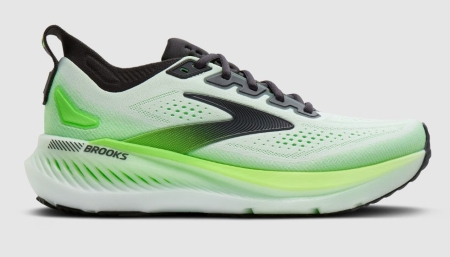
| Best for | Drop | Weight reference | Support |
|---|---|---|---|
| Runners who want plush cushioning with a wide, steady platform and less rocker than the Bondi | 8mm | Men’s and women’s references vary by listing; women’s current US page lists 9.5 oz / 269.3g | Balanced neutral support |
Glycerin 23 is the shoe I put beside Nimbus when the runner wants softness but dislikes an obvious rocker. Its transition is more traditional, and the wide platform gives the foot room to find its own path. Brooks calls the support balanced; I would describe the neutral model as inherently stable rather than corrective.
The current Glycerin uses DNA TUNED foam, with larger cells under the heel and smaller cells toward the forefoot. Marketing language aside, the useful result is a soft rearfoot with a firmer, more coherent toe-off. That can work well for a rigid-feeling foot that wants cushioning but still needs a platform it can trust on corners.
My easy-run notes are consistent: the shoe is comfortable, steady, and happiest when the pace stays controlled. It does not reward a hard acceleration the way a lighter supercritical trainer does. For this guide, that is acceptable. High-arch comfort is usually won through fit and predictable loading, not through an exciting five-minute test jog.
The upper is accommodating through the forefoot, but the midfoot hold is more structured than Nimbus. That can be excellent for a narrow heel and medium forefoot. It can also crowd a tall instep. Loosen the middle two crossings before changing size, then check whether heel hold remains secure.
Choose the neutral Glycerin first. The GTS version adds GuideRails and is not automatically better for a high arch. If a direct jog shows that the GTS feels calmer without rail pressure, it remains a valid option; high arch is not a reason to ban stability, and it is not a reason to prescribe it.
For deeper context, read my cushioned running-shoe guide.
- What I like: Plush but laterally composed; Secure upper; Smooth traditional transition; Multiple width choices.
- What I do not like: Heavy for uptempo work; Midfoot can feel snug on a high instep; Neutral and GTS names are easy to confuse.
- Who should skip it: Skip it if you want a light, flexible trainer or if the upper presses the instep after the laces are adjusted.
3. New Balance 1080v15 – Best for high-volume feet
Why it ranks here: The 1080v15 offers the most useful width ladder here, and New Balance separates arch height from foot height in its fit guidance – exactly the distinction this category needs.
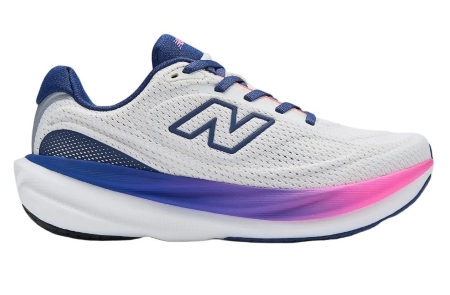
| Best for | Drop | Weight reference | Support |
|---|---|---|---|
| High arches paired with a high instep, wide forefoot, narrow heel, or hard-to-fit foot volume | 6mm | 9.2 oz / 261g men’s; 7.3 oz / 208g women’s reference | Neutral |
Many runners searching for high-arch shoes actually have a high instep problem. The laces bite, the tongue leaves a pressure mark, or the foot falls asleep even though there is space beside the forefoot. The 1080v15 ranks third because New Balance gives you more ways to solve that fit than most brands.
The men’s listing runs from narrow B through 4E, while the women’s listing runs from 2A through 2E. More important, the brand’s fit language distinguishes arch height from foot height. The 1080 is not automatically high-volume in every width, but this range makes a careful size-and-width comparison possible. For a fuller framework covering arch, width, volume, flexibility, and asymmetry, use my running foot types guide.
The current model uses Infinion cushioning, a 6mm drop, and a neutral platform. In my runs, it feels soft and smooth but less planted than Nimbus or Glycerin when the road is strongly cambered. That is why width alone cannot win the ranking. A shoe has to fit and remain predictable under motion.
Use the heel as the deciding point. If a Wide or Extra Wide removes midfoot pressure but allows heel lift, try the narrower width with window lacing before adding length. A runner with a tall midfoot and narrow heel often needs more lace volume, not a bigger shoe everywhere.
The 6mm offset is moderate, but it is still a change for someone coming from a 10mm or 12mm trainer. Introduce it on short easy runs and keep other training variables steady. Drop is not an arch-support score; it simply changes how the complete shoe meets your stride.
For deeper context, read my running-shoe guide for wide feet.
- What I like: Exceptional width range; Good option for high foot volume; Soft smooth ride; Relatively light reference weights.
- What I do not like: Soft platform can feel less secure on cambered roads; Wide does not guarantee more instep height; Six-millimeter drop may require transition.
- Who should skip it: Skip it if the heel slips in the width that clears your instep or if you feel the platform lean toward the outer edge.
4. HOKA Bondi 9 – Best max-cushion rocker
Why it ranks here: Bondi 9 gives high-arched runners a broad base, deep cushion, rearfoot seating, and a strong rocker, but it stays below the top three because its arch and geometry are more polarizing.
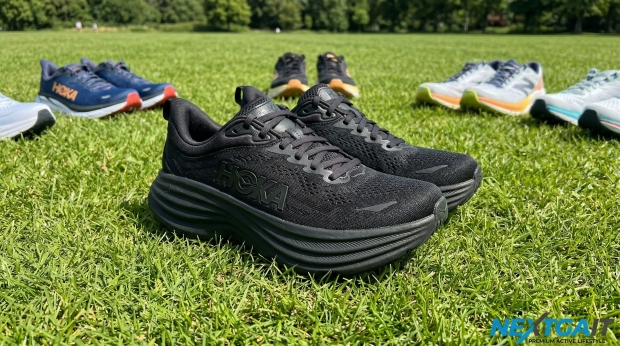
| Best for | Drop | Weight reference | Support |
|---|---|---|---|
| Easy running and walking when a firm-plush platform and obvious rocker feel better than a flexible trainer | 5mm | 10.5 oz / 297.7g men’s reference | Stable neutral |
Bondi 9 is not a marshmallow. The current supercritical EVA has depth and protection, but the ride under my foot is firmer and more deliberate than the product silhouette suggests. That can be useful for a high-arched runner who dislikes the lateral drift of very soft foam.
The Smooth MetaRocker is the defining feature. At easy pace, the shoe rolls forward with less forefoot flex than Ghost or Glycerin. Some runners with a stiff forefoot love that sensation. Others feel pushed off the toes before they are ready. You cannot settle that question from arch height or a product spec.
The rearfoot-focused Active Foot Frame seats the heel inside the platform, and the base is broad. Those details make Bondi more stable than its stack suggests. In my experience, it is dependable on straight easy routes but too bulky when the pace rises or the route has frequent sharp turns.
HOKA’s internal arch shape is the veto. If you feel a ridge under the medial arch while standing, do not assume it will break in. Pressure often becomes more obvious once the foot swells. The correct Bondi should feel supportive in the everyday sense of the word, not like a molded insert pressing one spot.
The 5mm drop also moves more work toward the lower leg compared with a 10mm shoe. That does not make it bad for high arches. It means a runner should transition gradually, especially with a history of Achilles or calf symptoms.
For deeper context, read my full HOKA Bondi 9 review.
- What I like: Broad stable platform; Strong smooth rocker; Deep controlled cushion; Several width options.
- What I do not like: Heavy; Arch contour is polarizing; Five-millimeter drop is a meaningful change for some runners.
- Who should skip it: Skip it if the arch feels like a ridge, the rocker pulls you forward, or the platform feels cumbersome on turns.
5. Brooks Ghost Max 4 – Best for orthotics
Why it ranks here: Brooks explicitly designs Ghost Max 4 with extra orthotic room, a broad base, 6mm drop, and GlideRoll Rocker – a more relevant package than generic built-in arch pressure.

| Best for | Drop | Weight reference | Support |
|---|---|---|---|
| Runners using a prescribed orthotic or needing a roomy, broad, rockered platform | 6mm | 10.3 oz / 292g men’s; 9.2 oz / 260.8g women’s reference | Broad neutral platform with assisted transition |
Ghost Max 4 is the newest shoe in this ranking, and I am treating it accordingly. Brooks lists an August 1, 2026 release, 6mm drop, broad base, GlideRoll Rocker, and extra room for orthotics. Those are current manufacturer facts. It does not yet have the same mature NextGait run history as Nimbus, Bondi, or Ghost 18.
It ranks because orthotic compatibility is a real high-arch use case. A custom or prefabricated device changes underfoot volume, heel position, and how the upper closes. A shoe with a removable sockliner and deliberately accommodating geometry is usually a better starting point than a soft shoe with a tall built-in arch bump.
The DNA LOFT v3 stack is high, but the footprint is wide and the sidewalls create a contained ride. The rocker reduces how much the shoe must bend at the forefoot. That may feel smoother for a rigid foot, but it is a comfort test rather than proof of pressure reduction.
Fit the shoe with the exact orthotic and socks you will run in. Confirm the heel is not lifted high enough to slip, the collar does not cut below the ankle, and the toes still have vertical room. An orthotic-ready label cannot guarantee compatibility with every shell thickness or heel cup.
Because normal retail availability is still new, preserve the return option and begin with a short easy run. This ranking is based on an unusually strong feature match, not invented long-term wear data.
For deeper context, read my complete running-shoe guide.
- What I like: Explicit extra room for orthotics; Broad base; GlideRoll transition; Current verified manufacturer specs.
- What I do not like: Very new release; Heavy; Rocker will not suit every stride.
- Who should skip it: Skip it if your orthotic lifts the heel out of the collar or if you want a flexible, ground-connected daily trainer.
6. HOKA Clifton 11 – Best lighter rocker
Why it ranks here: Clifton 11 keeps a Smooth MetaRocker but moves to an 8mm drop and a lighter package than Bondi, offering a useful middle ground for runners who fit HOKA well.

| Best for | Drop | Weight reference | Support |
|---|---|---|---|
| Runners who like HOKA’s rocker but find Bondi too heavy or too low in drop | 8mm | About 10.0 oz / 283g men’s reference on the current regional listing | Neutral rocker |
Clifton 11 is the HOKA for the runner who likes the rolling transition but does not want Bondi’s mass. The current regional page lists an 8mm drop and roughly 283g men’s reference weight. The higher offset also makes it less abrupt for runners arriving from conventional 8mm to 10mm trainers.
The ride is easier to turn over than Bondi and less protective at the edges. That can be a benefit for a lighter runner with a compact stride. It can be a drawback for someone who wants a very broad, settled platform because the Clifton feels narrower and more agile under motion.
I would not buy it simply because online lists call HOKA good for high arches. The arch contour remains noticeable, and the standard last is not generous for every forefoot. A Wide can solve side pressure, but it should not leave the heel swimming.
This model is also a reminder to check version numbers. The older Clifton 10 is still sold and linked across search results, but its geometry and fit are not identical. A current 2026 ranking should name the shoe it actually evaluates rather than carry an old review forward under a new heading.
Compare Clifton directly with Nimbus. If the HOKA rocker feels natural and the arch disappears underfoot, it is the lighter choice. If you notice the shoe managing your timing, Nimbus is the safer neutral baseline.
For deeper context, read my running-shoe guide for heavier runners.
- What I like: Lighter than Bondi; Smooth rocker; Eight-millimeter transition; Good easy-run versatility.
- What I do not like: Arch shape is still polarizing; Less broad than Bondi; Current US specification visibility is inconsistent.
- Who should skip it: Skip it if the arch contour remains noticeable after a short jog or if the standard and Wide both compromise heel hold.
7. Saucony Triumph 24 – Best plush 10mm option
Why it ranks here: Triumph 24 supplies a familiar 10mm offset, deep forefoot cushion, Wide availability, and a lighter reference weight than most premium comfort trainers.
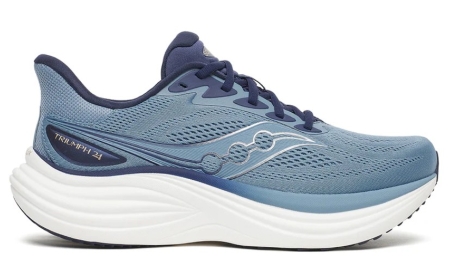
| Best for | Drop | Weight reference | Support |
|---|---|---|---|
| Runners already comfortable in higher-drop shoes who want plush cushioning without excessive weight | 10mm (43/33mm) | 8.8 oz / 250g men’s; 7.6 oz / 216g women’s reference | Neutral |
Triumph 24 fills a gap that generic high-arch guides miss. Not every runner should move toward a low drop. If you have years of comfortable running in 10mm shoes, changing that geometry while solving an upper-fit problem adds an unnecessary variable.
Saucony lists a 43mm heel, 33mm forefoot, 10mm drop, 250g men’s reference weight, and Wide availability. The new incrediLUX foam is soft but more energetic than Bondi at easy-to-steady pace. It feels like a premium daily trainer rather than a recovery shoe that resists acceleration.
My experience with Triumph 24 is strongest on long runs that begin easy and finish a little quicker. It carries pace changes more willingly than Nimbus or Bondi. The platform is tall, though, and runners who load the far lateral edge should test it on turns before committing.
The forefoot has enough cushioning for runners who report pressure under the ball of the foot, but footwear cannot diagnose metatarsalgia or a stress injury. New focal pain, swelling, or pain with walking needs assessment, not a softer midsole and more miles.
The upper is secure and the toe box is reasonable, but the Wide should be selected for actual width rather than assumed arch support. A high arch can exist in a narrow foot. Fit the perimeter of the foot first, then judge what the sockliner feels like under the arch. For length, width, vertical volume, swelling, and toe splay, use my running shoe toe-box fit guide.
For deeper context, read my full Saucony Triumph 24 review.
- What I like: Light for its stack; Familiar 10mm drop; Lively plush foam; Wide option.
- What I do not like: Tall platform; Wet grip has not been its strongest trait in my rotation; Too much bounce for runners who prefer firm shoes.
- Who should skip it: Skip it if you feel lateral wobble, want ground feel, or are deliberately seeking a lower-drop transition.
8. Brooks Ghost 18 – Best traditional daily trainer
Why it ranks here: Ghost 18 is predictable, stable for a neutral shoe, and easy to fit; it belongs here for runners who do not want a max stack or a strong rocker.
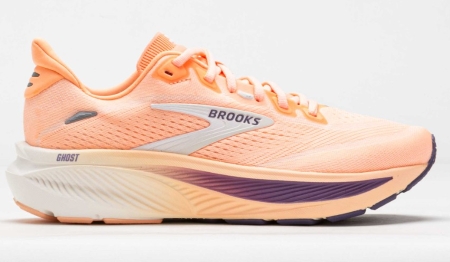
| Best for | Drop | Weight reference | Support |
|---|---|---|---|
| Runners who prefer a familiar flexible forefoot, secure upper, and less softness than premium max-cushion shoes | 10mm | 10.2 oz / 289.2g men’s; 9.2 oz / 260.8g women’s reference | Balanced neutral support |
Ghost 18 is the least dramatic shoe in the top ten, which is exactly why it remains useful. It has a conventional 10mm drop, balanced cushioning, a flexible transition, and a heel that locks down without much negotiation. A high arch does not create a requirement for maximum cushioning.
In my rotation, Ghost is the baseline shoe. It does not have Triumph’s rebound or Bondi’s roll, but it stays out of the way. That lets a runner judge whether a problem is truly underfoot cushioning or simply a poor-fitting upper in the previous shoe.
The DNA LOFT v3 midsole is firmer than Glycerin’s DNA TUNED platform. That makes Ghost feel more stable and connected, but it gives up some forefoot depth. Runners with pronounced ball-of-foot sensitivity may prefer Triumph, Nimbus, or an assessment if the pain is focal.
Brooks offers several width configurations across the Ghost line, though color availability varies. The upper works well for a narrow-to-average heel. For a high instep, window lacing can remove pressure without sacrificing the top eyelets used for heel hold.
Ghost ranks eighth because its ride is ordinary and its weight is no longer competitive with the best 2026 daily trainers. It still earns a place because ordinary can be exactly right when the foot wants predictability instead of more technology.
For deeper context, read my full Brooks Ghost 18 review.
- What I like: Predictable ride; Secure heel; Traditional transition; Useful width availability.
- What I do not like: Heavy for a standard daily trainer; Less forefoot cushion than the leaders; Ride can feel flat at faster pace.
- Who should skip it: Skip it if you need a pronounced rocker, very deep forefoot cushioning, or a lightweight speed-day feel.
9. adidas Supernova Rise 3 – Best value stable-neutral
Why it ranks here: Supernova Rise 3 offers soft-but-stable Dreamstrike+ cushioning, a Wide version, and a balanced geometry without the price or bulk of most max-cushion shoes.
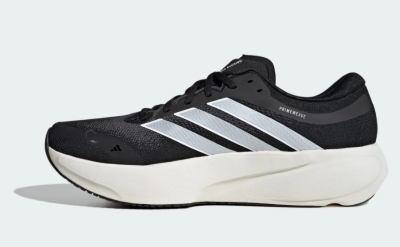
| Best for | Drop | Weight reference | Support |
|---|---|---|---|
| Runners who want a balanced, moderately cushioned daily trainer at a lower list price than premium models | About 7mm from current US stack figures | Not stated on the current adidas US product page | Stable neutral |
Supernova Rise 3 is the value pick because it behaves like a sensible daily trainer rather than a budget compromise. The Dreamstrike+ foam is softer than the prior version, but the platform remains coherent. For runners who dislike both hard stability shoes and deep max-cushion sink, that middle ground is valuable.
adidas uses a Primeweave upper and Lighttraxion outsole. The US page describes the fit as true to size and sells a Wide version. In my runs, the shoe transitions smoothly and can handle easy mileage plus a controlled uptempo finish better than Bondi or Glycerin.
The weakness is rearfoot security. Some feet settle perfectly; narrow heels may need the final eyelet, and cranking every lace crossing is the wrong fix. A high instep needs selective pressure relief through the middle while preserving a secure collar.
I also do not call this a supination shoe. It is a stable-neutral option that may suit some runners who load laterally. The foot still needs to be observed while running, and comfort remains more useful than a wear pattern on an old outsole.
The manufacturer does not provide a reference weight on the current US page, so I leave that field blank rather than importing a number from another size or market. Missing data is less harmful than false precision.
For deeper context, read my running-shoe guide for supination.
- What I like: Balanced stable-neutral ride; Good current value; Wide option; More versatile than most max-cushion picks.
- What I do not like: Heel hold is not universal; Official US page omits reference weight; Less plush than Nimbus or Glycerin.
- Who should skip it: Skip it if the heel lifts in the correct size or if you specifically need a strong rocker or orthotic-focused volume.
10. Saucony Echelon 10 – Best roomy no-nonsense option
Why it ranks here: Echelon 10 prioritizes room, a stable base, and orthotic compatibility over fashionable softness, making it a practical fit tool for difficult high-arch feet.

| Best for | Drop | Weight reference | Support |
|---|---|---|---|
| Wide or orthotic-using feet that need a broad, secure, relatively conventional platform | 8mm (35/27mm) | About 10.1 oz men’s reference in Saucony’s current guide | Neutral with broad stable base |
Echelon 10 is not here because it has the tallest stack or most exciting foam. It is here because some high-arched feet are difficult to package inside modern sculpted uppers. Echelon offers a broad base, generous fit, removable sockliner, and Extra Wide availability in selected versions.
Saucony positions the shoe for runners and walkers who prioritize comfort and protection. The 8mm geometry is conventional, and the platform feels steadier than highly sculpted neutral shoes. In my runs it is straightforward at easy pace, with enough forefoot flexibility to avoid feeling like a walking platform.
The tradeoff is weight and energy return. Echelon does not disappear at faster pace, and it will not please a runner who wants a lively daily trainer. It works better as a fit-first shoe for easy running, walking, or an orthotic setup.
Take the factory sockliner out before inserting an orthotic unless the prescribing clinician has specified otherwise. Stacking inserts can reduce toe volume, lift the heel, and create pressure that did not exist during the original fitting. If you run with an insert, use my running with orthotics guide for sockliner removal, volume, heel hold, and break-in.
Echelon also illustrates why the words arch support are too vague. Its value comes from stable geometry and available space, not from a hard bump under the medial arch. For many high-arched runners, removing unwanted pressure is more useful than adding more of it.
For deeper context, read my shoe guide for metatarsalgia.
- What I like: Roomy fit; Broad stable base; Orthotic-friendly design; Wide and Extra Wide options.
- What I do not like: Heavy; Low energy return; Looks and feels utilitarian.
- Who should skip it: Skip it if you want a light, fast, highly responsive daily trainer or if the broad last leaves your heel unsecured.
Popular Choices I Did Not Rank
Exclusions are part of the audit. These are not necessarily bad shoes; they are weaker current recommendations for this specific query or need more individual caution than a top-ten label communicates.
| Shoe or category | Why it is not ranked | Who may still consider it |
|---|---|---|
| HOKA Clifton 10 | Clifton 11 is the current model. Carrying the older version forward would make specs and affiliate availability inconsistent. | Runners replacing an identical pair they already know |
| Saucony Triumph 23 | Triumph 24 now uses different foam and geometry, so the old model no longer represents the current recommendation. | Runners who know the 23 fits and find legitimate clearance stock |
| ASICS Novablast 5 | Novablast 6 is current, and the line is more performance-oriented and less fit-specific than the top choices here. | Neutral runners who prioritize rebound over high-arch fit features |
| Very soft narrow max-cushion shoes | Softness without a stable footprint can increase perceived lateral wobble or toe gripping. | Runners who test them and remain completely stable |
| Aggressive medial posts | A hard under-arch edge is a poor default for a high arch, although mild modern guidance can still be appropriate. | Runners whose clinician or direct comparison supports that exact shoe |
| Zero-drop shoes as a quick fix | They are not inherently wrong, but abrupt transition can increase lower-leg and foot demand. | Experienced zero-drop runners with an established history |
The complete relationship between offset, stack, rocker, and tissue demand is covered in my heel-drop guide. The important point is that no single drop number belongs to one arch type.
The Two-Shoe Fit Test
Try two meaningfully different shoes in the same session. Use the same socks and orthotic, if prescribed. Fit late enough in the day that the foot is not at its smallest, and size to the larger foot.
- Keep roughly a thumb’s width ahead of the longest toe without using extra length to solve width.
- Check vertical toe room as well as side-to-side room.
- The heel should stay seated while the Achilles and ankle bones remain free of collar pressure.
- The arch contour should fade from awareness; a distinct ridge is a rejection signal.
- Jog at easy pace, because standing softness does not reveal rocker timing or lateral edge stability.
- Run a gentle figure eight and notice whether the toes grip the sockliner for balance.
- Use a short first run and preserve the return policy.
- Compare the response later that day and the next morning before increasing duration.
A runner with a high arch and high body mass may compress the same foam differently from a lighter runner. My running-shoe guide for knee pain applies the same caution to upstream symptoms: comfort and platform behavior matter, but a shoe is not a diagnosis.
Fit veto: Arch pressure, top-of-foot numbness, heel slip, toe gripping, lateral tipping, or a worse next-morning response overrules every award in this list.
High-Instep Lacing Without Losing Heel Hold
First loosen every lace, seat the heel, and retighten from the toe upward. Many runners tighten only the top two rows and unknowingly drag pressure toward the instep. The goal is even tension, not maximum tension.
For a single pressure point, create a window: route the laces vertically past the irritated eyelet pair instead of crossing over it, then resume the normal pattern above. Keep the top eyelets available for heel hold.
Do not use numbness as feedback that the foot is secure. If window lacing leaves the shoe unstable, the upper volume is wrong. Move to a higher-volume last or width rather than strangling one section and leaving another loose.
Forefoot symptoms require their own fit check. My heel-spur shoe guide explains why heel comfort, forefoot room, and clinical diagnosis should remain separate decisions.
Insoles and Orthotics
An insole can redistribute contact and alter fit. It cannot tell you why the arch is high. For symptom-free feet, there is no reason to add a rigid device only because the footprint looks narrow.
For painful cavus feet, the orthoses trial cited above supports individualized custom devices in an appropriate symptomatic population. It does not establish that every custom device is superior, that every retail insole is equivalent, or that the highest arch shape is best.
Fit the device inside the shoe with the factory sockliner removed unless instructed otherwise. Check heel depth, collar contact, toe height, and where the device ends under the forefoot. A device that works in a walking shoe may not remain comfortable under running load.
A clinician should review an orthotic that creates new numbness, blistering, focal pressure, altered gait, or worsening pain. Do not keep adding arch pads on top of one another to chase the feeling of support.
Ball-of-foot pain is a common reason runners experiment with inserts. The load and red-flag framework in my shin-splints shoe guide applies the same principle elsewhere: change one footwear variable at a time and assess focal or escalating pain.
What Shoes Cannot Replace
A shoe cannot compensate indefinitely for a sudden jump in long-run distance, hills, speed, frequency, or total time on feet. When symptoms appear, compare the two to four weeks before them rather than blaming one arch shape.
My running-injury prevention guide explains how load, recovery, prior injury, strength, sleep, and footwear interact. No one factor deserves every ounce of blame or credit.
Calf and foot strength may be useful within an individualized program, but a generic high-arch exercise list is not a diagnosis or rehab plan. Progressive weakness, repeated sprains, neurologic signs, or structural change should be assessed before self-prescribing more load.
Shoe replacement is also individual. Use my running-shoe replacement checklist to evaluate uneven wear, lost structure, upper breakdown, traction, and changed ride instead of treating 300 or 400 miles as an expiration date.
If Achilles symptoms appear during a drop change, step back rather than assuming the lower shoe is strengthening you. The transition cautions in my Achilles running-shoe guide are especially relevant when moving from Ghost or Triumph to Bondi.
Frequently Asked Questions
What are the best running shoes for high arches?
ASICS Gel-Nimbus 28 is my best overall starting point because it combines deep cushioning, a stable neutral base, an 8mm drop, secure rearfoot fit, and multiple widths. The right shoe still depends on instep volume, heel hold, gait, comfort, previous drop, and whether an orthotic is used.
Do high arches need neutral running shoes?
Often, but not always. High arch describes shape, not the complete motion of the foot. Start with a comfortable neutral or stable-neutral shoe, then compare a mild guidance model only if it clearly improves control without arch pressure or steering the stride.
Are high arches the same as supination?
No. A high arch is a structural shape observed at rest or under load. Supination describes motion or a position during gait. Some high-arched runners load laterally, while others pronate normally or even substantially.
Is a high instep the same as a high arch?
No. The arch is under the foot; the instep is the height of the midfoot under the laces. A runner can have either one without the other. Instep pressure is usually addressed through shoe volume, width, tongue design, or lacing rather than more underfoot arch contour.
Do high arches need maximum cushioning?
No. Cushioning may improve comfort, but maximum stack and maximum softness are not automatically better. The platform must remain stable, fit the foot, and match the runner’s preferred transition. Some high-arched runners do better in a moderate, firmer daily trainer.
Should runners with high arches avoid stability shoes?
No blanket rule is defensible. A high arch does not automatically require stability, but it also does not prohibit it. Use a direct comfort comparison and reject any shoe whose rail, post, sidewall, or arch shape creates pressure or redirects the foot.
What heel drop is best for high arches?
There is no universal best drop. A familiar drop is usually the lowest-risk starting point. Change gradually because lower-drop shoes may increase demand on the calf, Achilles, ankle, and foot, while higher-drop shoes change loading elsewhere.
Can running shoes fix high arches?
No. Shoes can improve fit, comfort, cushioning, and perceived stability, but they do not remodel a structural cavus foot. Progressive deformity, weakness, numbness, frequent ankle sprains, or one-sided change should be assessed clinically.
Do I need custom orthotics for high arches?
Not solely because the arch looks high. Custom orthoses have evidence for some people with painful cavus feet, but many symptom-free runners do not need them. Assessment, symptoms, shoe volume, and response to simpler options should guide the decision.
Can insoles help runners with high arches?
A comfortable prefabricated insole may change pressure distribution or fill unwanted space, but more arch height is not always more comfortable. Test it in a shoe with adequate volume and stop if it creates focal pressure, numbness, heel slip, or worse symptoms.
How should a high-arch running shoe fit?
The heel should stay seated, the midfoot should feel held without top-of-foot pressure, and the toes should have both width and vertical room. The arch contour should fade into the background rather than feel like a ridge.
Should I size up for a high instep?
Usually not as the first fix. Extra length can create heel slip and poor flex alignment. Try a more accommodating upper, another width, or window lacing while keeping the correct length.
What is window lacing for a high instep?
Window lacing skips the crossing directly over the pressure point, creating a small open window while keeping the lower and upper laces secure. It can relieve dorsal pressure without sacrificing heel hold.
Are rocker shoes good for high arches?
They can be, especially when a runner prefers less forefoot flex, but rocker timing is personal. The shoe should roll naturally without pulling the body forward or concentrating pressure at the arch or toes.
Can high arches cause plantar fasciitis?
High arches are one recognized risk factor, but they do not prove the diagnosis or cause. Heel pain has several possibilities. Persistent, severe, focal, or worsening pain should be assessed rather than self-treated from arch shape alone.
How often should high-arched runners replace shoes?
Use changes in ride, fit, traction, symmetry, and symptom response rather than a universal mileage. Replace a shoe when the platform has become uneven, the upper no longer holds the foot, traction is unsafe, or the ride has clearly changed.
Can I run with cavus feet?
Many people with mild, stable high arches run comfortably. Cavus deformity varies widely. A clinician should assess progressive change, repeated ankle instability, calluses with focal pain, weakness, numbness, claw toes, foot drop, or a strong family history of similar problems.
When should a high arch be checked by a professional?
Arrange an assessment for progressive or one-sided change, weakness, numbness, foot drop, recurrent sprains, worsening deformity, focal swelling, persistent pain, night pain, or pain that changes walking or running gait.
Final Verdict
ASICS Gel-Nimbus 28 is my best overall running shoe for high arches because it starts from the right assumptions: neutral geometry, deep but controlled cushioning, a secure heel, an 8mm transition, and useful widths. Brooks Glycerin 23 is the broader plush alternative. New Balance 1080v15 wins when foot volume is the real fitting challenge.
Choose Bondi 9 or Clifton 11 only when the rocker feels natural. Move Ghost Max 4 or Echelon 10 upward when an orthotic needs space. Keep Triumph 24 or Ghost 18 in the conversation when a familiar 10mm geometry has already served you well.
A shoe ranking cannot diagnose the foot. The strongest choice is the model that fits current foot volume, stays predictable at running pace, and solves a defined use case without making a medical promise.
Medical note: This guide compares footwear. It does not diagnose cavus feet, nerve conditions, plantar fasciitis, stress injury, or any other cause of foot pain.
My final three-shoe shortlist
Still deciding? Return to the fit path that matches your actual problem, not the highest rank alone.
Links open Amazon so you can compare current sizes, colors, and sellers. Availability can change.