
The Nike Vaporfly 4 is the best carbon-plated running shoe for most racers. It combines low weight, quick turnover, and more predictable control than the tallest, most aggressive supershoes. Choose Alphafly 3 for deeper marathon cushioning, Adios Pro 4 for steady rhythm, or Metaspeed Sky Tokyo if you gain speed mainly by lengthening your stride.
This ranking draws on 1,968 miles recorded across the ten test pairs. I am 5’10”, 182 pounds, wear a men’s US 10.5 in most brands, mildly overpronate, and run 30-40 miles per week on New Jersey asphalt and the Atlantic City Boardwalk. My body mass, foot shape, and pace range affect these results; they are context, not a universal template. For load handling in daily footwear, use my separate guide to running shoes for heavier runners.
Short answer: Vaporfly 4 is the safest one-shoe race recommendation from 10K through marathon. Endorphin Pro 5 is the easiest first carbon racer. Rocket X 3 feels most guided. PUMA Deviate NITRO Elite 4 has the strongest wet-road grip. New Balance SC Elite v5 remains the tested wide pick, but v6 is now current.
Last updated: August 9, 2026. Brooks Hyperion Elite 6 and New Balance SC Elite v6 are now available. I list them in the new-model watch section rather than replacing mature verdicts with launch-week impressions.
Best carbon-plated running shoes: quick picks
| Shoe | Best for | Primary use | Review |
|---|---|---|---|
| Nike Vaporfly 4 | Best overall | 10K to marathon racing | Full review |
| ASICS Metaspeed Sky Tokyo | Best for stride-style runners | Half marathon and marathon | Full review |
| adidas Adizero Adios Pro 4 | Best marathon cruiser | Steady marathon pacing | Full review |
| Nike Alphafly 3 | Best for maximum marathon cushioning | Marathon racing | Full review |
| Saucony Endorphin Pro 5 | Best first carbon race shoe | First-time supershoe buyers | Full review |
| HOKA Rocket X 3 | Best stable-feeling rocker | Runners who want a guided rocker | Full review |
| New Balance FuelCell SuperComp Elite v5 | Best tested wide option (last generation) | Wide feet and softer marathon comfort | Full review |
| PUMA Deviate NITRO Elite 4 | Best grip | Wet roads and mixed race distances | Full review |
| Brooks Hyperion Elite 5 | Best firm 5K/10K option (last generation) | Runners who dislike soft supershoes | Full review |
| ASICS Magic Speed 4 | Best carbon-plated training shoe | Tempo training and first plated workouts | Full review |
Ken’s overall ranking rule: A shoe cannot win on weight or bounce alone. Fit security comes first, then ride at goal pace, late-run control, grip, and test maturity. When two shoes are close, the model that works for more identifiable runners ranks higher.
The 10 best carbon-plated running shoes
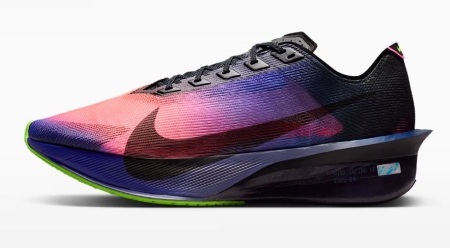
1. Nike Vaporfly 4 – Best overall
Best for: 10K to marathon racing
Manufacturer weight: 6.7 oz / 190 g (men’s US 10)
Drop: 6 mm
Ken’s log: 299 miles
Fit: True to size; race-snug through the midfoot
Why it ranks here: The Vaporfly 4 is my best all-around recommendation because it does the hard part better than the rest: it feels quick at 10K effort without becoming too abrupt for a marathon. Nike reduced weight, lowered the drop to 6 mm, and increased the Flyplate angle. The result is a lower, more precise Vaporfly than version 3, with less of the tall-shoe hesitation when I turn or change pace.
My pair has 299 logged miles across asphalt and boardwalk running. At tempo pace, the transition is immediate: land, load the ZoomX, roll off the plate. It is less spectacular underfoot than the Alphafly 3, but I can place it more accurately when tired. That control is why I would choose it for a crowded 10K, a technical half, or a marathon with frequent turns.
At 5K pace, the Vaporfly 4 asks for quick contact and rewards a compact stride. At marathon effort, it becomes quieter rather than softer. That range is why it wins overall: it does not force me to choose between short-race turnover and a controlled long-race roll.
The upper is deliberately spare. I get the best hold by securing the heel first and leaving the forefoot one notch looser for swelling. Runners with broad forefeet should not assume sizing up fixes the shape; extra length can create heel movement without adding width where it matters.
The tradeoff is the stripped-back build. The engineered mesh gives little comfort theater, the rear platform is not friendly to pronounced overpronation, and exposed foam plus thin rubber should be inspected often. My outsole showed meaningful lateral-heel and forefoot wear before the midsole felt completely finished. Buy this for race efficiency, not cost per mile.
I would buy it for a race calendar that includes more than one distance. I would skip it if easy-pace stability, outsole coverage, or a roomy toe box matters more than low weight. It is a race tool, and it feels least convincing when used like a recovery shoe. Related: best running shoes guide.
What I like
- Light, direct, and easy to turn over
- Works across more race distances than most supershoes
- More controlled than the Alphafly 3
What I do not like
- Narrow race fit for some feet
- Thin outsole is not built for daily mileage
- Can feel unstable at recovery pace
Ken’s ranking rule: Nike Vaporfly 4 keeps this position only for the runner and use case named above. A lighter spec does not outrank secure fit, predictable cornering, or late-run control.
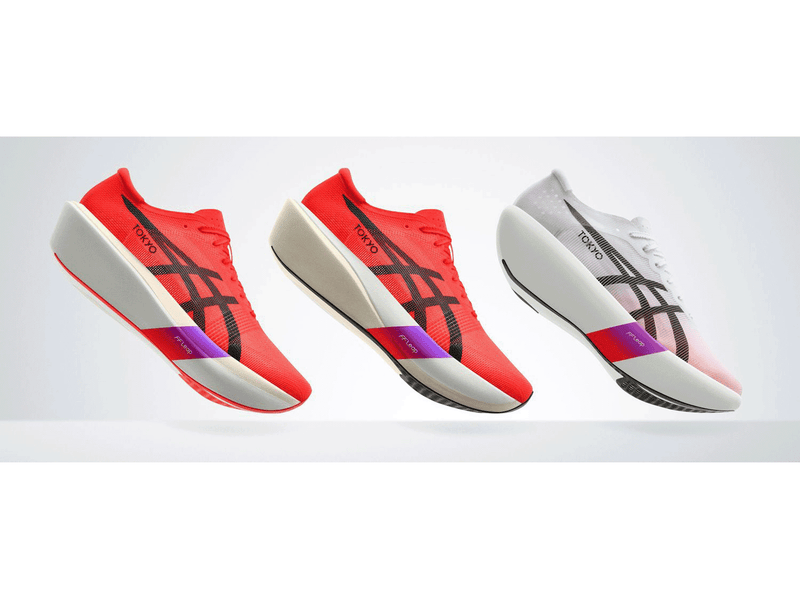
2. ASICS Metaspeed Sky Tokyo – Best for stride-style runners
Best for: Half marathon and marathon
Manufacturer weight: about 6.0 oz / 170 g (27.0 cm)
Drop: 5 mm
Ken’s log: 197 miles
Fit: True to size; low-volume performance fit
Why it ranks here: The Metaspeed Sky Tokyo is the shoe I would put under a runner who gains speed mainly by opening stride length. ASICS places the carbon plate higher and leaves more foam beneath the forefoot than in the Edge Tokyo. That geometry gives the front of the shoe room to compress before the plate redirects the load forward.
I have 197 logged miles in the Sky Tokyo. The useful sensation is not a sharp toe spring; it is a long, light compression through the forefoot. FF LEAP sits below FF TURBO PLUS, so the landing feels softer than the visual profile suggests while the top layer keeps it from collapsing sideways. At sustained half-marathon effort, it is one of the least distracting shoes here.
The Sky works best when my speed comes from a longer, more forceful stride. It feels less natural when I shorten up and spin. That does not make stride and cadence labels a diagnosis; it makes them a useful hypothesis to test against the Edge at the same pace.
The thin upper locks the midfoot well, but the rear platform is narrow enough that off-center landings are obvious. On straight road and boardwalk sections it settles beautifully. Tight turns and tired heel strikes expose more movement than the weight figure suggests.
It is not an automatic choice just because it is light. Cadence-dominant runners may get a cleaner roll from the Edge Tokyo, and heel strikers who land far behind their center of mass may find the narrow rear platform unsettled. I would test Sky and Edge back-to-back at goal pace, not decide from a gait label or a jog around the store.
Choose it if low mass and a long forefoot compression match your mechanics. Skip it if you need a broad heel, substantial upper structure, or a shoe that also behaves calmly at easy pace. This is one of the least forgiving fit experiments in the group. Related: best lightweight running shoes.
What I like
- Exceptionally low weight
- Long, smooth forefoot compression
- Strong marathon cushioning-to-weight ratio
What I do not like
- Narrow rear platform
- Expensive to buy as an experiment
- Sky-versus-Edge choice requires a real pace test
Ken’s ranking rule: ASICS Metaspeed Sky Tokyo keeps this position only for the runner and use case named above. A lighter spec does not outrank secure fit, predictable cornering, or late-run control.
3. adidas Adizero Adios Pro 4 – Best marathon cruiser
Best for: Steady marathon pacing
Manufacturer weight: about 7.1 oz (manufacturer sample)
Drop: 6 mm
Ken’s log: 137 miles
Fit: True to size; secure midfoot, tapered toe
Why it ranks here: The Adios Pro 4 is technically built around carbon-infused ENERGYRODS 2.0 rather than one solid plate. It belongs in this guide because the purchase decision and function are the same: a stiff, lightweight race chassis inside high-rebound foam. Of the shoes here, it gives me the clearest set-and-hold rhythm at marathon effort.
After 137 logged miles, the defining trait is still the rocker. Lightstrike Pro compresses, then the rods guide the toe-off without the sudden tipping point I feel in the HOKA. That makes the adidas less thrilling in the first 400 meters and more convincing after an hour. Continental rubber at the toe also gives me more confidence on damp painted lines than the sparsest Nike outsoles.
The Adios Pro 4 is at its best when the pace is even. The rocker and ENERGYRODS do not demand a hard snap from every step; they keep directing the stride forward. That makes the shoe feel more valuable after 60 minutes than during a short showroom jog.
The LIGHTLOCK upper requires patient lacing. I start with modest tension over the toes, secure the midfoot, then use the final eyelets to control the heel. Pulling every row hard creates pressure across the top of the foot and still leaves the rearfoot less secure.
The upper needs care. Lock the heel first, then tighten the midfoot gradually; yanking every eyelet equally can create lace pressure without improving hold. The toe box tapers, and the platform is not a stability shoe. For a runner who wants a calm marathon rhythm rather than maximal bounce, though, this is the safest blind recommendation behind the Vaporfly.
Buy it if your best marathon strategy is to lock into rhythm and protect it. Skip it if your forefoot is square or wide, or if you want a sharply explosive 5K sensation. The toe tapers, and the platform prefers steady forward motion over lateral corrections. Related: long-distance running shoe guide.
What I like
- Smooth at sustained race pace
- Reliable toe-area grip
- Rods allow a natural-feeling transition
What I do not like
- Upper can be fiddly to lace
- Tapered forefoot
- Less exciting at short, sharp efforts
Ken’s ranking rule: adidas Adizero Adios Pro 4 keeps this position only for the runner and use case named above. A lighter spec does not outrank secure fit, predictable cornering, or late-run control.
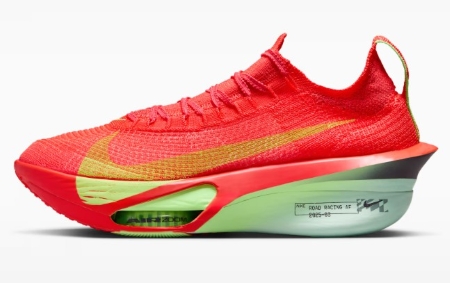
4. Nike Alphafly 3 – Best for maximum marathon cushioning
Best for: Marathon racing
Manufacturer weight: 7.7 oz / 218 g (men’s US 10)
Drop: 8 mm
Ken’s log: 95 miles
Fit: Race-tight; I wear a half size above my usual Nike fit
Why it ranks here: Nothing here feels like the Alphafly 3. The combination of a full-length Flyplate, two forefoot Air Zoom units, and a continuous ZoomX midsole creates a distinct two-stage ride: soft load, then a firmer release as you move onto the pods. The third version is smoother and less awkward than the earlier disconnected design.
My 95-mile test is less mature than the Vaporfly data, so I rank it fourth rather than declaring it universally fastest. In a boardwalk race simulation, the first few minutes felt tall and unfamiliar; once I settled at race effort, the forefoot system made holding pace feel less mechanically costly. That is an observation, not proof the shoe caused a particular split.
At marathon pace, the Air Zoom units add a distinct forefoot stage that no other shoe here copies. At slower pace, the same system can feel tall and disconnected. The Alphafly does not gradually reveal itself; it crosses a pace threshold and starts making more sense.
The fit is more decisive than the spec sheet. I need extra length in Nike race uppers, and the arch contour is immediately noticeable. A half size up solved toe pressure for me, but it would not solve an arch mismatch or put the Air units under the right part of another runner’s foot.
Fit and stability decide this purchase. The Atomknit upper has limited structure, the arch shape is noticeable, and the platform still asks more of ankles than a normal trainer. I would not debut it on marathon morning. Use two quality sessions and one long race-pace block to check arch pressure, calf response, cornering, and whether the Air units align with your forefoot. Read my full Nike Alphafly 3 review before choosing it over Vaporfly.
Buy it for a marathon after a successful race-pace long run. Skip it if you dislike high stack, noticeable arch geometry, or demanding cornering. I rank it below Vaporfly because its upside is specialized and its fit failure modes are harder to ignore. Related: full Nike Alphafly 3 review.
What I like
- Deepest protective ride in this ranking
- Powerful forefoot system at race pace
- Smoother than earlier Alphaflys
What I do not like
- Polarizing arch and fit
- Tall platform needs adaptation
- Poor value as an everyday shoe
Ken’s ranking rule: Nike Alphafly 3 keeps this position only for the runner and use case named above. A lighter spec does not outrank secure fit, predictable cornering, or late-run control.
5. Saucony Endorphin Pro 5 – Best first carbon race shoe
Best for: First-time supershoe buyers
Manufacturer weight: 7.3 oz / 206 g (manufacturer sample)
Drop: 8 mm
Ken’s log: 142 miles
Fit: True to size; conventional heel and midfoot hold
Why it ranks here: The Endorphin Pro 5 is the least complicated race shoe in this group. Its slotted carbon plate works with SpeedRoll geometry, while PWRRUN PB and a layer of supercritical PWRRUN HG supply rebound. You feel the rocker, but it does not demand the exact landing location that makes some supershoes brilliant for one runner and awkward for another.
I have 142 miles in my pair, including long race-effort work. The Pro 5 feels controlled under my 182-pound frame: enough forefoot stiffness to keep the transition moving, enough heel structure that I do not fight the shoe when fatigue pulls my contact point backward. It is not the lightest or the softest; that middle ground is the point.
The Pro 5 gives the least dramatic step-in sensation among the premium racers, and I mean that as a compliment. The slotted plate and SpeedRoll geometry come together progressively. It is easier to find a stable rhythm before asking the shoe for faster turnover.
Saucony’s heel and midfoot hold feel familiar if you already train in the Endorphin line. The forefoot is still performance-shaped, but the upper does not make the shoe feel like a prototype. That familiarity reduces the adjustment cost for a first plated race shoe.
I would start here if you are moving from a nylon-plated Endorphin Speed. The Pro is stiffer and less forgiving on easy days, but the fit language and rolling transition are familiar. If most of your training is still easy mileage, keep the Pro for workouts and races and use the Saucony Endorphin Speed review to decide whether the nylon model is the smarter primary shoe.
Choose it when you want one carbon racer for 10K through marathon without the Alphafly’s unusual mechanics. Skip it if the lowest possible weight or the most explosive toe-off is your priority. Its strength is accessibility, not a single headline-grabbing trait. Related: Saucony Endorphin Speed review.
What I like
- Approachable geometry
- Secure, familiar fit
- Good choice from 10K through marathon
What I do not like
- Not class-leading in weight
- Less explosive than Alphafly
- Still too rigid for recovery running
Ken’s ranking rule: Saucony Endorphin Pro 5 keeps this position only for the runner and use case named above. A lighter spec does not outrank secure fit, predictable cornering, or late-run control.
6. HOKA Rocket X 3 – Best stable-feeling rocker
Best for: Runners who want a guided rocker
Manufacturer weight: 8.0 oz / 227 g (manufacturer sample)
Drop: 7 mm
Ken’s log: 150 miles
Fit: True to size; snug performance volume
Why it ranks here: The Rocket X 3 is the HOKA racer I trust most when a runner wants propulsion without the medial cutout and extreme softness of the Cielo X1 2.0. A dual-density PEBA midsole surrounds a carbon plate with a lateral winglet. That wing does not turn it into a support shoe, but it gives the forefoot transition a more guided edge.
Across 150 logged miles, the Rocket has been most convincing at controlled threshold and half-marathon effort. The rocker arrives early and rolls decisively, so the transition feels less ankle-driven to me than a flatter racing shoe. Unlike the Vaporfly, it never disappears on foot; the payoff is a broader, more predictable base when my form gets untidy.
The Rocket X 3 has the clearest guided rocker in this list. Once the shoe reaches its tipping point, the forefoot rolls quickly. I notice that assistance most during steady and marathon-paced work; abrupt changes of direction feel more prescribed than in the Vaporfly.
HOKA pairs dual-density PEBA with plate winglets and a stickier outsole. The combination gives me a more composed landing than many narrow supershoes. The tradeoff is mass and fit volume: it is not the lightest option, and the upper remains snug through the performance last.
The penalty is weight and specificity. Quick 200-meter changes feel easier in the Vaporfly or Metaspeed, and runners who prefer ground feel may find the HOKA overbuilt. My standard-width pair is snug rather than generous. If the rocker catches your stride naturally, however, the Rocket X 3 is a strong long-race tool for runners who find softer supershoes vague.
Buy it if you already know you like a pronounced HOKA rocker and want more guidance than a soft, narrow racer provides. Skip it if you prefer flexible toes, a broad forefoot, or a neutral transition that disappears underfoot. Related: heel-drop guide for runners.
What I like
- Guided, predictable rocker
- More composed than very soft supershoes
- Good outsole confidence
What I do not like
- Heavier than leading racers
- Snug performance fit
- Rocker can feel prescriptive
Ken’s ranking rule: HOKA Rocket X 3 keeps this position only for the runner and use case named above. A lighter spec does not outrank secure fit, predictable cornering, or late-run control.
7. New Balance FuelCell SuperComp Elite v5 – Best tested wide option (last generation)
Best for: Wide feet and softer marathon comfort
Manufacturer weight: 7.6 oz / 215 g (men’s)
Drop: 8 mm
Ken’s log: 202 miles
Fit: True to size; standard and 2E options
Why it ranks here: The SC Elite v5 earns this slot because it is one of the few serious race shoes offered in a men’s 2E, not because every wide-footed runner should buy it. Its 100% PEBA FuelCell midsole is soft, the Energy Arc plate is stiffer toward the forefoot, and the transition feels more gradual than the narrow waist suggests.
My standard-width pair has 202 logged miles. The upper holds without the hard medial pressure I get from some race shells, and the softer rear half is friendly when my foot strike drifts back late in a long run. At 182 pounds I can compress it deeply, so it feels less precise than Vaporfly at 5K pace but more accommodating over steady miles.
The SC Elite v5 uses a full PEBA FuelCell midsole and Energy Arc geometry, but the ride is less aggressive than its race-day label implies. It favors a soft, continuous roll. I find that easier to manage late in a long effort than during short repetitions.
Its practical advantage is fit availability. The men’s model was sold in 2E, which matters because adding length to a standard supershoe is not the same as adding width. The midsole waist still narrows, so a wide upper does not automatically make the platform stable for every foot.
The caution is that a 2E upper does not widen every part of the platform. The midsole waist remains relatively narrow, and the soft rearfoot can move when form deteriorates. I would test it late in a longer effort, not judge width from standing comfort alone.
Buy it if a true 2E upper and a softer marathon roll are more important than short-race precision. Skip it if you need a broad midsole waist or a highly aggressive toe-off. Compare fit in the current generation before deciding. Related: running shoes for wide feet.
What I like
- Available in a real wide fitting
- Soft, forgiving marathon ride
- Comfortable transition from trainer to racer
What I do not like
- Less precise at short-race pace
- Narrow midsole waist despite wider upper
- v6 has now succeeded it
Ken’s ranking rule: New Balance FuelCell SuperComp Elite v5 keeps this position only for the runner and use case named above. A lighter spec does not outrank secure fit, predictable cornering, or late-run control.
8. PUMA Deviate NITRO Elite 4 – Best grip
Best for: Wet roads and mixed race distances
Manufacturer weight: 6.0 oz / 170 g (UK 8)
Drop: 8 mm
Ken’s log: 178 miles
Fit: True to size; narrow-to-standard forefoot
Why it ranks here: PUMA’s advantage is under the shoe. PUMAGRIP gives the Deviate NITRO Elite 4 a secure rubber bite without turning it into a heavy trainer. That matters on wet boardwalk planks, painted turns, and crowded aid stations where a theoretically faster outsole is useless if I shorten my stride to protect the landing.
I have 178 logged miles in the Elite 4. NITROFOAM Elite and the reengineered carbon PWRPLATE make it smoother than the split, highly aggressive Fast-R 3. The forefoot release is quick but not violent, and the shoe handles pace changes well enough for 800-meter repeats, threshold blocks, and road races in one rotation.
The Elite 4 is unusually easy to place when the road is damp. PUMAGRIP adds real confidence on painted lines and tight corners, while the lighter NITROFOAM Elite package still turns over quickly. Grip is not a side note when a fast course is wet.
The ride sits between the direct Brooks and the deeper Alphafly. It changes gears cleanly for intervals, then holds a steady roll without feeling overbuilt. The regular-width upper is secure, though wider forefeet may feel the taper once the foot swells.
The upper runs performance-snug, especially around the forefoot, and the ride does not have Alphafly’s depth. I also would not use PUMA’s percentage claims to predict your race result; brand lab comparisons are model-specific. Choose the Elite 4 when traction and versatility matter more than owning the most radical silhouette.
Buy it for mixed race distances, wet-road reliability, and a conventional transition. Skip it if you want maximum marathon depth or a broad fit. Its advantage is practical traction and clean pace changes, not the most dramatic sensation in the group. Related: 5K training plan.
What I like
- Best wet-road grip here
- Handles pace changes cleanly
- More conventional than FAST-R 3
What I do not like
- Forefoot can feel narrow
- Less cushioned than maximal marathon shoes
- Brand efficiency claims do not predict individual gains
Ken’s ranking rule: PUMA Deviate NITRO Elite 4 keeps this position only for the runner and use case named above. A lighter spec does not outrank secure fit, predictable cornering, or late-run control.
9. Brooks Hyperion Elite 5 – Best firm 5K/10K option (last generation)
Best for: Runners who dislike soft supershoes
Manufacturer weight: 6.9 oz / 195.6 g
Drop: 8 mm
Ken’s log: 345 miles
Fit: True to size; close race upper
Why it ranks here: The Hyperion Elite 5 is for the runner who steps into a soft supershoe and immediately wants less movement. Brooks uses DNA GOLD, a 100% PEBA foam, with a size-tuned Arris SpeedVault+ carbon plate. The result is light and responsive, but the platform settles faster and feels more direct than the Alphafly or SC Elite.
This is the most mature test in the ranking at 345 logged miles. The useful lesson is not that every pair will last that long; it is that the plate-foam relationship stayed coherent well after the outsole began showing meaningful wear. I prefer it for 5K and 10K work, where fast contact and clean cadence matter more than deep marathon cushioning.
The Elite 5 is firm only in comparison with today’s softest supershoes. DNA GOLD PEBA still has rebound, but the size-tuned SpeedVault+ plate keeps the forefoot organized. The sensation is quick contact and clean release rather than deep compression.
That character suits 5K and 10K work, especially for runners who feel lost in tall, soft platforms. The close upper and direct ride become less forgiving as the distance grows. I would choose another shoe for a marathon unless firmness is a known preference.
The close upper and direct ride define the limit. I like it for shorter road races, but I would choose more forefoot depth for a marathon unless firmness is already a proven preference. The mature mileage shows durability in my pair, not a guaranteed lifespan for every runner.
Buy it if you prefer quick contact and a firmer race platform for 5K or 10K. Skip it if you want deep marathon cushioning or a roomy upper. Because version 6 changes the core geometry, this verdict applies only to Elite 5. Related: running shoes for men.
What I like
- Direct and quick underfoot
- Very light for a Brooks racer
- Good choice for runners who dislike squish
What I do not like
- Firm for a full marathon
- Close-fitting upper
- Successor is now available
Ken’s ranking rule: Brooks Hyperion Elite 5 keeps this position only for the runner and use case named above. A lighter spec does not outrank secure fit, predictable cornering, or late-run control.
10. ASICS Magic Speed 4 – Best carbon-plated training shoe
Best for: Tempo training and first plated workouts
Manufacturer weight: 8.6 oz / 242 g
Drop: 8 mm
Ken’s log: 223 miles
Fit: True to size; standard and wide versions
Why it ranks here: Magic Speed 4 is not the fastest shoe in this ranking. It is the one I would use to learn plated mechanics without burning through a premium racer. ASICS combines a sculpted carbon plate with FF BLAST PLUS and a forefoot insert of FF TURBO. The platform is heavier and firmer, which makes it predictable during tempo work.
My pair has 223 logged miles. It works best when the session has structure: cruise intervals, mile repeats, or a sustained tempo near lactate threshold. The shoe resists flex and rolls forward, but it does not give much back during a 9:30 recovery shuffle. That clear pace boundary makes it easier to keep hard days hard and easy days in a normal trainer.
The Magic Speed 4 is a training-first plated shoe. Its sculpted carbon plate, FF BLAST PLUS, and FF TURBO insert produce a firmer, more repeatable transition than the premium racers. That predictability works well for threshold sessions and long cruise intervals. For workout-first selection across both plated and unplated options, compare my best speedwork running shoes.
At recovery pace, the shoe feels heavy and resistant. Near threshold, the rocker becomes useful and the extra structure stops being a burden. This sharp pace boundary is valuable in a rotation because it discourages turning every easy run into a moderate one.
The tradeoff is specialization. It is too firm and heavy for my recovery running, and it lacks the low-mass feel of a premium racer. If you already own a comfortable trainer and need a structured workout companion, it makes sense. As a one-shoe rotation, it does not.
Buy it to learn how your calves, forefoot, and cadence respond to plated workouts before using a fragile racer. Skip it as a one-shoe solution or if you want premium-racer weight. Version availability varies, so confirm the exact model before ordering. Related: best daily trainers.
What I like
- Durable enough for regular workouts
- Wide version exists
- Predictable way to learn plated geometry
What I do not like
- Heaviest shoe in this top 10
- Firm at slow pace
- Not the latest generation everywhere
Ken’s ranking rule: ASICS Magic Speed 4 keeps this position only for the runner and use case named above. A lighter spec does not outrank secure fit, predictable cornering, or late-run control.
New carbon shoes I have not ranked yet
Brooks Hyperion Elite 6: Brooks released it on August 1, 2026 with a 7 mm drop, 6.8 oz listed weight, revised RapidRoll geometry, updated DNA GOLD PEBA, and a new SpeedVault+ plate. Those are meaningful changes. See the official Hyperion Elite 6 page. I will not inherit version 5’s ranking without a complete test.
New Balance SC Elite v6: New Balance now lists the v6 with Infinion foam, a revised Energy Arc plate, an 8 mm drop, and a 7 oz listed men’s weight. It is also sold in 2E. See the official SC Elite v6 page. That makes it a high-priority wide-fit test, not an automatic replacement verdict.
On Cloudboom Strike 2: On lists standard and LightSpray versions with different weights and drops, which is exactly why model names must be precise. The official LightSpray Cloudboom Strike 2 page describes a 5 mm drop and 158 g listed weight. It stays outside the ranking until I have repeat miles.
Freshness policy: New does not mean best, and an older tested shoe is not automatically the better purchase. The watchlist separates current market awareness from first-person evidence so readers can see exactly what is known and what is still pending.
How I tested and ranked these shoes
The internal shoe log records mileage by pair. The ten totals range from 95 miles in Alphafly 3 to 345 miles in Hyperion Elite 5. I use those totals to judge test maturity and durability signals. They are field records, not laboratory endpoints, and they do not prove that one shoe caused a faster split or lower physiological cost.
A complete race-shoe field test includes short race-pace pickups, interval or hill work, a sustained tempo, a longer race-pace effort, an easy-pace contrast run, cornering, and dry versus damp pavement when conditions allow. The contrast run matters because some shoes feel excellent only after the rocker reaches its intended speed.
Ranking order follows use, not novelty. I start with secure fit, then judge transition at realistic race pace, late-run platform behavior, grip, and durability. I use official pages for materials, stated weight, and drop. The ASICS Superblast review provides a useful non-plated control for deciding whether stiffness is actually desirable.
This is field testing, not a metabolic laboratory. I can report which shoe feels smoother, which fit holds when wet, and where the platform becomes unstable for me. I cannot convert those observations into a personal oxygen-cost percentage. Research claims and manufacturer claims are labeled separately from my experience.
Women should also account for last, sample size, and swelling rather than copying a men’s weight table. The guide to running shoes for women explains the broader fit variables that a unisex label can hide.
Carbon-plated running shoe comparison
| Shoe | Claimed weight | Drop | Ride | Relative stability | Fit note |
|---|---|---|---|---|---|
| Nike Vaporfly 4 | 6.7 oz / 190 g (men’s US 10) | 6 mm | Quick, precise | Medium | Narrow race fit |
| ASICS Metaspeed Sky Tokyo | about 6.0 oz / 170 g (27.0 cm) | 5 mm | Long forefoot compression | Low-medium | Low-volume |
| adidas Adizero Adios Pro 4 | about 7.1 oz (manufacturer sample) | 6 mm | Smooth rocker | Medium | Tapered toe |
| Nike Alphafly 3 | 7.7 oz / 218 g (men’s US 10) | 8 mm | Deep, two-stage | Low-medium | Polarizing arch |
| Saucony Endorphin Pro 5 | 7.3 oz / 206 g (manufacturer sample) | 8 mm | Progressive roll | Medium-high | Most familiar |
| HOKA Rocket X 3 | 8.0 oz / 227 g (manufacturer sample) | 7 mm | Guided rocker | High | Snug |
| New Balance FuelCell SuperComp Elite v5 | 7.6 oz / 215 g (men’s) | 8 mm | Soft, continuous | Medium | 2E available |
| PUMA Deviate NITRO Elite 4 | 6.0 oz / 170 g (UK 8) | 8 mm | Quick, grippy | Medium | Narrow-standard |
| Brooks Hyperion Elite 5 | 6.9 oz / 195.6 g | 8 mm | Direct, firm | Medium | Close upper |
| ASICS Magic Speed 4 | 8.6 oz / 242 g | 8 mm | Firm training roll | High | Wide available |
Do not sort this table by weight and stop. Manufacturer samples differ by size and sex, and a few ounces matter less than a heel that slips or a forefoot that goes numb. Ride character and relative stability are the columns most likely to explain why two runners reverse the same ranking.
Read the supporting race-shoe reviews
These rankings summarize the head-to-head decision. Use the completed long-form tests for fit, pace limits, durability, and version-specific evidence:
- full Nike Vaporfly 4 review
- full Saucony Endorphin Pro 5 review
- full ASICS Metaspeed Sky Tokyo review
Head-to-head decisions
Vaporfly 4 vs. Alphafly 3
Choose Vaporfly 4 for lower mass, quicker cadence changes, and more confidence on turns. Choose Alphafly 3 for a deeper forefoot system and a more protective marathon sensation. Vaporfly is the versatile race calendar shoe; Alphafly is the specialist that needs a better fit match and a longer adaptation test.
Metaspeed Sky Tokyo vs. Adios Pro 4
Sky Tokyo is lighter and feels most coherent when I lengthen my stride. Adios Pro 4 is easier to settle into at a fixed marathon rhythm. If your race plan includes frequent surges, start with ASICS. If your best performances come from metronomic pacing, start with adidas.
Endorphin Pro 5 vs. Rocket X 3
Endorphin Pro 5 has the more familiar fit and progressive transition. Rocket X 3 supplies a stronger rocker and more guided platform. Saucony is the easier first-carbon recommendation. HOKA suits a runner who already knows that a pronounced rocker agrees with their calves, feet, and stride.
Carbon racer vs. super trainer
A racer removes structure and rubber to reduce mass at race pace. A super trainer accepts more weight for durability, easier running, and a wider workout range. If a plated racer feels awkward at your goal pace, a responsive non-racer can be the smarter option. Carbon is a feature, not an admission ticket to fast running.
What carbon plates actually do
A 2026 systematic review and meta-analysis included 14 crossover studies and 271 runners. Across pooled outcomes, carbon-plated footwear was associated with about a 2% to 3% reduction in metabolic demand. Certainty was moderate for running economy, metabolic cost, and oxygen consumption, and low for energetic cost of transport.
That result does not mean the plate alone saves 2% to 3%. The authors could not fully separate plate stiffness from resilient foam, stack, mass, rocker, and outsole. The useful unit is the entire shoe system. A stiff carbon component inside ordinary foam is not equivalent to a well-tuned supershoe.
Average benefit also hides individual response. An experimental study and meta-analysis on response variability reported substantial differences among runners and cited prior responses ranging from no improvement to 6.4%. That spread supports testing models against each other instead of asking whether carbon works in the abstract.
A 2026 randomized crossover study at slower speeds also found that shoe preference related to both oxygen cost and comfort. One study cannot define every recreational runner, but it reinforces a practical rule: test at your pace, because elite pace and another runner’s favorite shoe are weak substitutes.
A separate 2026 biomechanics systematic review synthesized 16 studies and found changes centered on ankle and foot mechanics. It also called for larger, standardized, longitudinal work. Current evidence supports performance effects; it does not establish that plated shoes prevent injury.
How to choose the right carbon-plated shoe
Choose by race distance
For 5K and 10K, prioritize low mass, secure cornering, and quick transition. For a first half marathon, balance speed with enough forefoot protection and test the shoe inside a first half-marathon plan. For the marathon, late-run fit and stability outrank the shoe that feels most exciting for 400 meters. If 10K is the target, put the shoe inside a structured beginner 10K training plan before race day.
A first-time marathoner should introduce the racer only after long-run volume is stable. The beginner marathon plan gives the training context: a shoe can support race execution, but it cannot replace fueling, pacing, recovery, or durable weekly mileage.
Choose by ride, not footstrike label
A heel striker can use a supershoe, and a forefoot striker can dislike one. What matters is where you land relative to the platform, whether the rocker transition matches your stride, and how the shoe behaves when form gets tired. Test Sky versus Edge, or Vaporfly versus Alphafly, rather than diagnosing yourself from one label.
Choose for your body mass and stiffness tolerance
Plate stiffness is not universally better when it increases. A shoe that feels springy under one runner can feel like rigid leverage under another. I weigh 182 pounds, so I may compress a foam and engage a rocker differently from a lighter runner. Your best evidence is a controlled comparison at equal pace and similar conditions.
Choose the fit before the technology
Leave enough length for race swelling, but do not use extra length to disguise the wrong width. Check heel movement during fast turns, pressure over the instep, toe contact on descents, and arch sensation after 30 minutes. A secure upper lets the plate and foam work under the foot instead of beside it.
Choose enough stability for tired form
Supershoes are neutral race shoes, not medical stability devices. Still, platform width, sidewalls, plate winglets, and rocker direction change how controlled they feel. Runners who dislike narrow rear platforms should start with Rocket X 3 or Endorphin Pro 5 rather than the most minimal ASICS or Nike option. Runners who need everyday guidance should compare the best stability running shoes separately from this race category.
My three-run race-shoe test
Run 1: fit and transition. Use 4 to 6 easy miles with six short goal-pace pickups. Check heel slip, toe contact, arch pressure, and cornering. This is not a fitness test. Stop early if the fit creates numbness, a hot spot, or a sharp change in lower-leg comfort.
Run 2: pace control. Use a familiar session from the interval training guide. Compare rep pace, perceived effort, and how easily the shoe changes gears. Keep the route and recovery close to a session you have already completed in another shoe.
Run 3: late-run behavior. Add a sustained block based on the tempo-run guide or place race-pace miles late in a long run. Judge the final third: upper hold, calf response, forefoot comfort, grip, and whether the rocker still feels natural when cadence drops.
Do not A/B test two shoes on different weather days and call the result precise. If possible, alternate short blocks in the same session, use the same socks, and record comfort before looking at pace. A fast split can come from wind, fatigue, motivation, or route error as easily as footwear.
Durability, rotation, and replacement
Carbon plates rarely snap under normal road use. More often, the foam changes, exposed areas abrade, outsole traction fades, or the upper stops locating the foot over the platform. The original transition can disappear gradually, which is why a training log is more useful than waiting for visible failure.
Use the inspection points in when to replace running shoes: compare left and right compression, test traction on damp pavement, look for upper separation, and note whether the same pace now feels less controlled. Cosmetic creases alone are not a retirement test.
Keep most easy mileage in one of the best cushioned running shoes or another comfortable daily option. Use the carbon racer for selected quality sessions and races. That rotation preserves the race feel and gives your body a familiar baseline when the plated shoe behaves differently.
A last-generation shoe can still be a sound purchase if the exact fit is available and the replacement is not yet tested. It can also be a dead end if return options are poor or the platform never suited you. I value fit certainty and repeat evidence above owning the newest model name.
Common buying mistakes
- Choosing the shoe worn by a race winner without testing fit or mechanics.
- Treating the lightest listed weight as a complete performance ranking.
- Using a half size longer to solve a width problem.
- Running the first serious session in a new shoe during race week.
- Training every easy mile in a race platform because carbon sounds faster.
- Assuming a successor inherits the ride and fit of the previous version.
- Predicting a personal time gain from a group-average laboratory result.
Are carbon-plated shoes race legal?
World Athletics Athletic Shoe Regulations effective April 20, 2026 set a 40 mm maximum sole thickness for road running events. The rules also address rigid structures and shoe availability. Track-event limits differ, so a road-legal supershoe is not automatically legal for every track race.
Most recreational road racers will never face a shoe inspection, but athletes chasing records, rankings, prize money, or qualification standards should verify the exact model and event rules. Do not rely on a retailer title or assume that every colorway and development version has the same status.
Frequently asked questions
Do carbon-plated running shoes really make you faster?
They can improve running economy on average, but no shoe guarantees a faster result. A 2026 meta-analysis found about a 2% to 3% reduction in metabolic demand across pooled outcomes. Individual response varies, and the benefit comes from the complete shoe system, not the carbon plate alone.
What is the best carbon-plated running shoe overall?
Nike Vaporfly 4 is my best overall pick because it combines low weight, quick turnover, and enough control for races from 10K through the marathon. Runners who want deeper cushioning may prefer Alphafly 3, while steady marathon pacers may prefer Adios Pro 4.
What is the best carbon-plated shoe for a marathon?
Vaporfly 4 is the most versatile marathon choice in this tested group. Alphafly 3 provides the deepest forefoot system, Adios Pro 4 is the smoothest rhythm shoe, and Metaspeed Sky Tokyo suits runners whose speed comes mainly from longer strides.
What is the best carbon-plated shoe for a 5K or 10K?
Vaporfly 4 is the best all-around short-road-race pick here. PUMA Deviate NITRO Elite 4 adds excellent wet-road grip, while Brooks Hyperion Elite 5 suits runners who prefer a direct, firmer ride. Hyperion Elite 6 is not ranked until it completes the same test protocol.
Can beginners wear carbon-plated running shoes?
Yes, but carbon is optional. A beginner should first establish consistent training in a comfortable daily shoe. Before racing in a plated shoe, complete at least two quality workouts and one longer race-pace test without fit problems or unusual lower-leg discomfort.
Do carbon-plated shoes work for slower runners?
They may, but pace alone does not determine response. Comfort, body mass, shoe stiffness, foam behavior, and mechanics all matter. Test the shoe at your actual goal pace instead of assuming that a model designed around elite speed will automatically work for you. The running training pace calculator gives you current-fitness ranges for that test.
What is the best carbon-plated shoe for wide feet?
New Balance SC Elite v5 is the best fully tested wide option in this ranking because the men’s model was offered in 2E. New Balance now sells the v6, so compare the current fit before buying. ASICS Magic Speed 4 also has wide availability in some markets but is training-oriented.
Can heel strikers use carbon-plated shoes?
Yes. Heel striking does not automatically rule out a supershoe. Look for secure rearfoot geometry, a transition that does not feel abrupt, and enough platform width when tired. HOKA Rocket X 3 and Saucony Endorphin Pro 5 feel more guided than the narrowest racers in this list.
Should I train every day in carbon-plated shoes?
Usually not. A normal trainer is more stable and durable for easy mileage, while a plated racer is best saved for selected race-pace workouts and races. Rotation also gives you a useful comparison for comfort, calf response, and changes in mechanics.
How long do carbon-plated running shoes last?
There is no universal mileage cutoff. Inspect outsole traction, uneven foam compression, upper hold, and changes in the original transition. A shoe can still look acceptable after its race feel has faded, while another can show cosmetic creases and remain mechanically consistent.
Do carbon-plated shoes need a break-in period?
The materials do not need a traditional break-in, but the runner often needs an adaptation period. Use a short pace test first, then a workout, then a longer race-pace run. That sequence reveals fit, arch pressure, cornering, and lower-leg response before race day.
Are carbon-plated running shoes safe?
Research supports performance benefits but does not prove that plated shoes prevent injury. Tall stacks and stiff structures can change mechanics and loading. Introduce a new model gradually, stop if pain develops, and consult a qualified clinician for persistent symptoms.
Are carbon-plated shoes legal for road races?
World Athletics regulations effective April 20, 2026 set a 40 mm maximum sole thickness for road running events and include rules for rigid structures and availability. Track limits differ. Athletes subject to technical rules should verify the exact model and event requirements.
Are adidas ENERGYRODS the same as a carbon plate?
No. ENERGYRODS are carbon-infused rods rather than one continuous plate. They serve a similar purchase category by stiffening and organizing the high-rebound midsole, so Adios Pro 4 belongs in this comparison even though its internal structure is different.
Final verdict
Nike Vaporfly 4 remains my best carbon-plated running shoe overall because it solves the broadest race-day problem: low weight and fast transition without forcing the deepest, tallest ride. ASICS Metaspeed Sky Tokyo is the lightweight stride-driven specialist, while adidas Adios Pro 4 is the calm marathon-rhythm choice.
The right answer can still be Endorphin Pro 5 for a first supershoe, Rocket X 3 for a guided rocker, PUMA Deviate NITRO Elite 4 for wet roads, or SC Elite v5 for a tested 2E option. A category winner is useful only when its fit and mechanics match the runner standing in it.
Use a structured running training guide to build the engine, then use the running gear guide to make the rest of race day boring and reliable. The carbon shoe is a final tool, not the training plan.
Race-day decision guides: Continue with Alphafly vs Vaporfly comparison; best marathon running shoes.

Written by Ken – 12 years of running, 12,500+ miles, 63 shoes tested, and 36 races from 5Ks to a 50K ultra. I run 30-40 miles a week on the Atlantic City Boardwalk and review shoes with repeated training miles, not one-run demos. More about Ken