
The best running shoe for shin splints is not automatically the softest shoe. It is the shoe that feels stable, fits securely, transitions predictably, and stays close enough to the runner’s familiar geometry that it does not add a second load change.
Saucony Ride 19 is my best overall starting point. Mizuno Wave Rider 29 is better for runners preserving a traditional 10mm setup, Brooks Ghost Max 3 adds a broad neutral rocker, and Brooks Adrenaline GTS 25 is the guided option when support genuinely improves control.
Updated July 15, 2026. US model availability, listed weights, drops, width options, and support technologies were rechecked against current manufacturer pages. Men’s reference weights are used consistently unless noted; women’s specifications can differ.
Important: ‘Shin splints’ usually refers to medial tibial stress syndrome, but shin pain can also come from a tibial bone stress injury, chronic exertional compartment syndrome, nerve involvement, tendon problems, or another condition. A shoe guide cannot diagnose the source.
What is in this guideClick to expand
Quick Picks: Best Running Shoes for Shin Splints
Shortlist by the job the shoe must do, then run-test it. Product names below use affiliate links. The ranking does not, and Quick Picks contains no internal links.
| Rank | Shoe | Best for |
|---|---|---|
| 1 | Saucony Ride 19 | Best overall |
| 2 | Mizuno Wave Rider 29 | Best controlled 10mm trainer |
| 3 | Brooks Ghost Max 3 | Best stable rocker |
| 4 | Saucony Triumph 24 | Best light high-cushion trainer |
| 5 | Brooks Adrenaline GTS 25 | Best for useful overpronation support |
| 6 | ASICS Gel Kayano 33 | Best premium adaptive stability |
| 7 | ASICS Gel Nimbus 28 | Best neutral heel cushioning |
| 8 | Saucony Guide 19 | Best mild natural guidance |
| 9 | HOKA Bondi 9 | Best firm max-cushion rocker |
| 10 | HOKA Clifton 10 | Best lighter rocker |
How I Ranked Running Shoes for Shin Splints
I ranked familiar geometry first, then platform stability, full-load fit, rearfoot security, transition, useful guidance, width choice, orthotic compatibility, and whether the shoe remains useful after symptoms settle. Cushion depth alone received no points.
Ken’s ranking rule: The shoe must reduce surprises, not merely feel soft. If the platform wobbles after warming, the drop is a major unplanned change, the heel slips, the arch presses, or support steers a neutral stride, the shoe moves down regardless of its stack height.
| Ranking factor | Pass | Failure sign |
|---|---|---|
| Geometry continuity | Similar enough to the current shoe to transition | A large unplanned drop, rocker, or flexibility change |
| Platform stability | Landing remains centered after foam warms | Delayed wobble or repeated ankle correction |
| Fit | Heel and midfoot secure; forefoot stays on the insole | Slip, arch hotspot, edge spill, or crushed toes |
| Guidance | Quieter movement without pressure | Forced path, lateral push, or medial ridge |
| Transition | Rolls where the stride expects | Rocker tips early or blocks toe-off |
| Use after return | Still works as a normal daily trainer | Recovery-only bulk or geometry the runner will abandon |
How to Read the Claims in This Guide
Specifications, research, and editorial judgment are different kinds of information. Keeping them separate prevents manufacturer language from becoming a medical claim.
| Claim type | Meaning | Source |
|---|---|---|
| Manufacturer fact | Weight, drop, stack, widths, foam, rocker, or support system | Current US product page |
| Research finding | Risk factors, prevention evidence, diagnostic boundaries, or rehabilitation principles | Primary research, systematic reviews, or clinical guidance |
| Ken’s judgment | Ranking, ride interpretation, fit tradeoffs, and who should start with each shoe | Shoe geometry, full-load behavior, fit and wear observations, and comparison with the runner’s current shoe |
| Not claimed | That one model treats, cures, or prevents MTSS in every runner | No clinical guideline endorses a specific running-shoe model |
Evidence at a Glance
No study proves that one current running-shoe model treats medial tibial stress syndrome. Shoes can change the runner-shoe system, but diagnosis, load management, tissue capacity, and an individualized return remain the larger decisions.
| Question | Evidence-based answer | What it does not mean |
|---|---|---|
| Can a specific shoe cure MTSS? | No model-specific clinical evidence establishes a cure | A comfortable run proves the tibia has recovered |
| Is overpronation the only cause? | No; risk is multifactorial and navicular drop is only one associated factor | Every runner with shin pain needs stability shoes |
| Does maximum cushion mean minimum tibial load? | No; step-in softness and stack height are not direct measurements of bone strain | The tallest shoe is automatically safest |
| Is the 10% rule proven? | No universal weekly percentage fits every runner and every load variable | Progression can ignore symptoms if mileage stays under 10% |
| Can orthoses play a role? | A 2025 prevention review found support for overpronation insoles in studied populations | Every current case needs an insert or custom device |
Evidence limit: Risk-factor associations do not identify the cause in one runner. A prevention study does not automatically establish treatment for active symptoms. Manufacturer cushioning and support names describe construction, not a clinical outcome.
Before Comparing Shoes: Keep the Diagnosis Boundary Clear
Medial tibial stress syndrome usually presents as exercise-related pain and tenderness along a broader section of the inner border of the tibia. The term should not become a catch-all label for every pain on the front or inside of the lower leg.
A commonly used clinical distinction is diffuse tenderness spanning more than about 5 centimeters for MTSS versus a more focal area of bone tenderness for possible stress injury. That is a screening clue, not a home diagnosis. Symptoms, examination, training history, and sometimes imaging determine the next step.
| Pattern | Possible interpretation | Action |
|---|---|---|
| Broad ache along the inner tibial border during or after running | Common MTSS pattern | Modify load and seek assessment when persistent or recurrent |
| One small, sharply tender bone spot; pain at rest or night; swelling | Bone stress injury concern | Stop impact and obtain clinical assessment |
| Tightness, cramping, burning, numbness, or weakness that predictably rises with exercise | Compartment or nerve concern | Sports-medicine assessment |
| Pain at the front of the ankle or along a tendon | May not be MTSS | Examination should identify the involved structure |
| Sudden pain after trauma or inability to bear weight normally | Acute injury concern | Prompt medical evaluation |
If pain is already present, start with the shin-splint symptoms, treatment, and return-to-running guide. If you are currently pain-free and managing training exposure, use the shin-splint prevention and load-management guide. Compare knee or Achilles shoe pages only after the pain location and likely structure are clear.
Six Shoe Features That Matter Most
The useful shoe is familiar enough to transition, stable enough to control, and comfortable enough that it does not create compensations. No single foam, drop, rocker, or support technology is mandatory.
- Familiar drop: compare with the current trainer before changing lower-leg demand; there is no universal 8–10mm prescription.
- Stable cushioning: foam should remain centered after it warms; softness is not a proxy for tibial strain.
- Full-load fit: heel and midfoot should stay secure while the forefoot remains fully on the insole.
- Appropriate guidance: use support when it improves that runner’s control, not because MTSS proves overpronation.
- Predictable flex and rocker: the shoe should transition where the runner expects without forcing an early roll.
- Manageable mass: a heavy shoe is not automatically harmful, but it should not change form as the runner tires.
Learn what heel-to-toe offset actually changes in Heel Drop Explained for Runners. New runners should also separate footwear from training progression in the beginner running-shoe guide.
Flat feet and visible pronation are not automatic prescriptions. Compare the flat-feet guide with the overpronation guide only when those characteristics are part of the actual fit and movement problem.
10 Best Running Shoes for Shin Splints: In-Depth Reviews
These are ranked as try-on starting points, not treatment devices. The skip note matters as much as the praise because it identifies the geometry most likely to make each shoe wrong.
1. Saucony Ride 19 – Best overall
Saucony Ride 19 ranks 1 because it balances protective depth, a broad heel-strike platform, moderate 8mm geometry, and normal daily-trainer versatility without forcing maximum softness or stability correction.
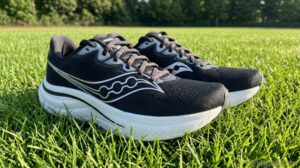
| Drop | Weight | Platform | Widths | Ride |
|---|---|---|---|---|
| 8mm | 8.9 oz / 255g (men’s reference) | 36mm heel / 28mm forefoot; PWRRUN+ | Standard and Wide | Balanced, stable, and moderately rockered |
Ride 19 is my first try-on because it changes fewer variables than most shoes on this list. The PWRRUN+ midsole has enough depth for easy mileage, but the platform does not ask the ankle to stabilize a marshmallow. The heel lands centered, the transition is unforced, and the shoe remains useful after symptoms settle.
The 8mm offset sits between low-drop rockers and traditional 10mm trainers. That does not make 8mm medically superior. It makes Ride 19 a manageable comparison point for many runners who have been training in a conventional daily shoe and do not want a dramatic calf, ankle, or cadence change during a sensitive period.
Its limitation is personality. Ride 19 is not the softest, lightest, or most guided option here. Runners who need a deep 4E fit, a strong rocker, or clear medial support have better matches below. I rank it first because it solves the broadest footwear problem with the fewest new ones.
Fit check: The heel should stay centered with ordinary lacing, and the forefoot should sit fully on the insole. Use Wide for edge spill, not simply extra upper volume.
Skip it when: Skip it if your current shoe is very soft and rockered and a firmer, more conventional transition makes the lower leg work harder.
What I like: Balanced cushioning; Broad stable geometry; 8mm continuity; Useful beyond recovery.
What I do not like: Not especially plush; Wide is the broadest option; Added stack makes it less nimble than older Rides.
Read my Saucony Ride review.
2. Mizuno Wave Rider 29 – Best controlled 10mm trainer
Mizuno Wave Rider 29 ranks 2 because its 10mm geometry, stable Wave construction, secure rearfoot, and predictable flex make it the strongest option for runners coming from traditional higher-drop trainers.
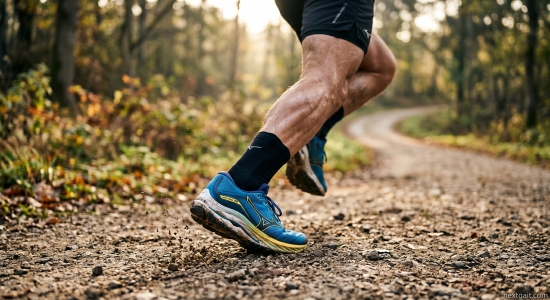
| Drop | Weight | Platform | Widths | Ride |
|---|---|---|---|---|
| 10mm | 9.3 oz / about 264g (men’s US 9) | 39mm heel / 29mm forefoot; Enerzy NXT and Wave plate | Standard and Wide | Structured through the rearfoot, smooth, and controlled |
Wave Rider 29 earns second place by keeping the rear half of the shoe organized. The Wave structure spreads through the heel and midfoot, so the shoe resists sloppy twisting while still bending at the forefoot. That is useful when a runner dislikes the delayed wobble of a very soft max-cushion trainer.
The 10mm drop is best treated as continuity, not therapy. If your normal trainer is 8–12mm and comfortable, the Wave Rider lets you add modern cushioning without abruptly increasing lower-leg demand. If you normally run in 0–5mm shoes, the same geometry may feel intrusive and change where you load.
Mizuno’s fit is secure rather than expansive. The counter holds well without aggressive lace tension, but Wide does not equal Brooks 4E. The plate-like rearfoot can also feel too prescriptive to runners who want a flexible midsole or land farther forward.
Fit check: Check that the Wave structure feels centered under the heel and that the medial edge does not press into the arch after ten minutes.
Skip it when: Skip it if rigid rearfoot shoes make your shin or ankle feel busier, or if you require Extra Wide volume.
What I like: Predictable rearfoot; Familiar 10mm drop; Secure heel; Controlled cushioning.
What I do not like: Structured feel is obvious; Only two width tiers; Less forgiving than plush neutral options.
Read my Mizuno Wave Rider review.
3. Brooks Ghost Max 3 – Best stable rocker
Brooks Ghost Max 3 ranks 3 because it combines a wide neutral base, controlled high cushioning, a usable rocker, orthotic room, and 4E availability without assuming every runner needs guidance.
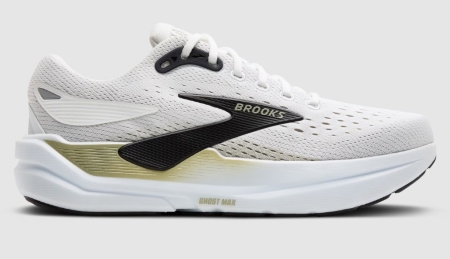
| Drop | Weight | Platform | Widths | Ride |
|---|---|---|---|---|
| 6mm | 11.2 oz / 317.5g | Broad DNA LOFT v3 platform with GlideRoll geometry | D, 2E, and 4E for men | Protective, broad, and assisted through toe-off |
Ghost Max 3 is the choice when a normal trainer feels too direct but a soft max-cushion shoe feels unstable. The broad footprint keeps the landing centered, DNA LOFT v3 feels protective without excessive sink, and GlideRoll moves the shoe forward without an aggressive plate sensation.
The 6mm offset is a meaningful transition from a 10–12mm trainer. Some runners accept that easily because the rocker shortens the perceived roll. Others notice more calf and lower-leg work. Test it against your current shoe on the same short route instead of assuming more foam cancels the drop change.
Weight is the tradeoff. Ghost Max 3 feels substantial, especially when pace rises or cadence drops late in a run. I prefer it for easy running, run-walk sessions, and orthotic use rather than speedwork. The 4E option is valuable, but width must still hold the heel and midfoot.
Fit check: Use the narrowest width that keeps the forefoot on the platform. The heel should remain seated without a runner’s knot.
Skip it when: Skip it if the 6mm change aggravates the calf or the shoe’s mass changes your stride as you tire.
What I like: Broad neutral base; Controlled rocker; 4E option; Orthotic-friendly volume.
What I do not like: Heavy; 6mm may be a transition; Too much shoe for faster running.
Read my Brooks Ghost review.
4. Saucony Triumph 24 – Best light high-cushion trainer
Saucony Triumph 24 ranks 4 because it pairs a 43mm heel and 10mm drop with low weight, making high cushioning less laborious than the heaviest recovery shoes.
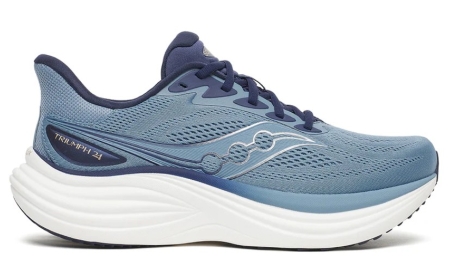
| Drop | Weight | Platform | Widths | Ride |
|---|---|---|---|---|
| 10mm | 8.8 oz / 250g (men’s US 9) | 43mm heel / 33mm forefoot; incrediLUX foam | Standard and Wide | Deep, smooth, and unusually light |
Triumph 24 makes sense for the runner who wants substantial cushioning but does not want Bondi or Ghost Max mass. The tall incrediLUX stack feels smooth under easy mileage, while the 10mm offset remains familiar to runners coming from traditional road trainers.
Softness still needs a stability check. Pressing into fresh foam in a store tells you little about how the platform behaves after ten minutes of running. I rank Triumph below the first three because some runners stay centered in it and others keep correcting as the foam warms.
The upper is accommodating and Wide helps foot spread, but there is no Extra Wide tier. Triumph is best for easy and long road running once daily walking and short runs are tolerable. A pleasant ride does not prove that tibial loading capacity has recovered.
Fit check: Run until the foam warms. Reject lateral drift, medial ankle work, or lace tension needed to keep the foot over the platform.
Skip it when: Skip it if very soft or tall shoes make your ankles work continuously, or if you need stronger guidance.
What I like: Excellent cushion-to-weight ratio; 10mm offset; Smooth transition; Secure upper.
What I do not like: Tall soft platform is not for everyone; No Extra Wide; Premium price.
Read my Saucony Triumph review.
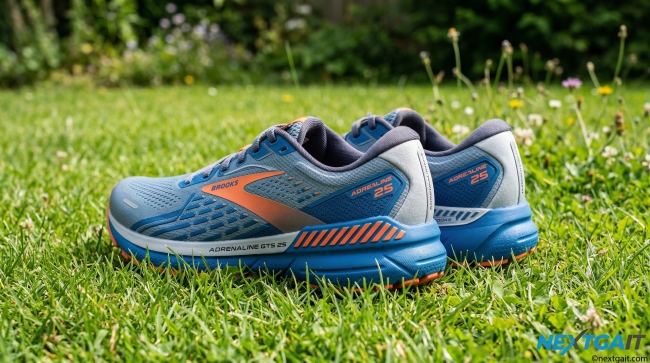
5. Brooks Adrenaline GTS 25 – Best for useful overpronation support
Brooks Adrenaline GTS 25 ranks 5 because it provides familiar 10mm geometry, excellent width choice, secure fit, and support boundaries when excess movement is actually part of the runner’s problem.
| Drop | Weight | Platform | Widths | Ride |
|---|---|---|---|---|
| 10mm | 10.6 oz / 300.5g | DNA LOFT v3 with GuideRails | B, D, 2E, and 4E for men | Conventional, guided, and predictable |
Adrenaline GTS 25 is not here because shin pain automatically means overpronation. It ranks because some runners feel noticeably quieter when the platform limits late inward drift. GuideRails work as boundaries rather than a hard medial post, and the shoe stays predictable at easy pace.
The 10mm offset is a sensible continuation for runners already comfortable in higher-drop daily trainers. DNA LOFT v3 is balanced rather than maximal, so the shoe does not hide poor stability beneath a soft first impression. The rearfoot and upper hold are reliable without being harsh. If you want footwear selected specifically for rearfoot landings, compare my best running shoes for heel strikers.
Width choice is a major advantage: men can move from narrow B through 4E. Do not size wider than needed, because lateral movement inside a 4E shoe can create more lower-leg work. Neutral runners who feel constrained by GuideRails should choose Ride, Glycerin, or Nimbus instead.
Fit check: Compare it directly with a neutral trainer. Keep the guided version only if comfort and control improve without arch pressure or a forced path.
Skip it when: Skip it if guidance pushes you laterally, presses the arch, or changes a neutral stride that already feels controlled.
What I like: Predictable guidance; 10mm continuity; B-to-4E widths; Secure rearfoot.
What I do not like: Heavier than neutral daily trainers; Guidance can be unnecessary; Not especially lively.
Read my Brooks Adrenaline GTS review.
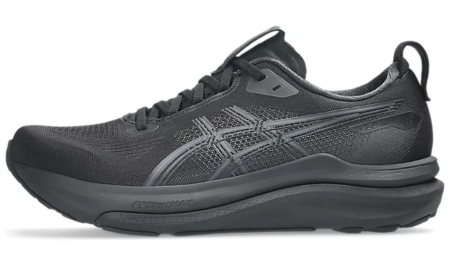
6. ASICS GEL-KAYANO 33 – Best premium adaptive stability
ASICS GEL-KAYANO 33 ranks 6 because its broad base, adaptive medial construction, secure heel, 8mm offset, and Extra Wide option cover runners who need both cushioning and guidance.
| Drop | Weight | Platform | Widths | Ride |
|---|---|---|---|---|
| 8mm | 10.5 oz / 298g | FF BLAST PLUS/MAX with FLUIDSUPPORT | Standard, Wide, and Extra Wide | Plush, broad, and adaptively guided |
Kayano 33 is the plush stability alternative to Adrenaline. FLUIDSUPPORT changes how the medial side responds through the stride instead of delivering one fixed block of correction. The broad base and dual-foam construction feel protective, while the heel remains secure enough to control the platform.
I rank it below Adrenaline because more system is not always better. Kayano has a softer, more complex ride, and neutral runners may feel the guidance or simply carry extra shoe. The 8mm offset is moderate, but it still needs comparison with the runner’s existing drop.
Standard, Wide, and Extra Wide options make Kayano useful with broader feet and some orthoses. Fit the shoe and insert as one unit. An orthotic that lifts the heel or combines with FLUIDSUPPORT too aggressively can turn a stable package into the wrong correction. If you run with an insert, use my running with orthotics guide for sockliner removal, volume, heel hold, and break-in.
Fit check: Check the medial side after the foam warms and run broad turns. Guidance should feel quiet, not like a wedge steering the foot.
Skip it when: Skip it if neutral shoes already feel centered or if adaptive guidance and an orthotic create too much correction together.
What I like: Adaptive support; Plush stable base; Extra Wide option; Secure heel.
What I do not like: Complex ride; Premium price; More shoe than many neutral runners need.
Read my ASICS GEL-KAYANO review.
7. ASICS GEL-NIMBUS 28 – Best neutral heel cushioning
ASICS GEL-NIMBUS 28 ranks 7 because it offers neutral runners deep heel cushioning, an 8mm offset, three width tiers, and less weight than many max-cushion competitors.
| Drop | Weight | Platform | Widths | Ride |
|---|---|---|---|---|
| 8mm | 9.9 oz / 281g | FF BLAST PLUS with PureGEL | Standard, Wide, and Extra Wide | Soft, neutral, and centered |
Nimbus 28 is the neutral choice for runners who want a softer heel without a strong rocker or guidance system. FF BLAST PLUS and PureGEL create a deep landing, while the platform remains calmer than its cloud-like marketing language suggests.
Cushioning changes contact feel; it does not prove lower tibial bone strain. That distinction matters here. I use Nimbus as a comfort option for easy road running, not as a prescription for MTSS. The 8mm offset is familiar to many daily-trainer users and still deserves a transition check.
ASICS offers Standard, Wide, and Extra Wide, which helps runners fitting an insert or needing more forefoot room. Choose the narrowest width that holds the rearfoot. A loose high-cushion shoe can create the exact side-to-side correction work you were trying to avoid.
Fit check: Run for ten minutes and watch whether the heel remains centered as the foam warms. The knit should wrap without lace bite.
Skip it when: Skip it if soft neutral shoes feel unstable or if you need clear guidance under late-run fatigue.
What I like: Deep neutral cushioning; 8mm offset; Three width tiers; Reasonable weight for the stack.
What I do not like: Softness can feel vague; Upper volume varies by foot; Not a stability shoe.
Read my ASICS GEL-NIMBUS review.
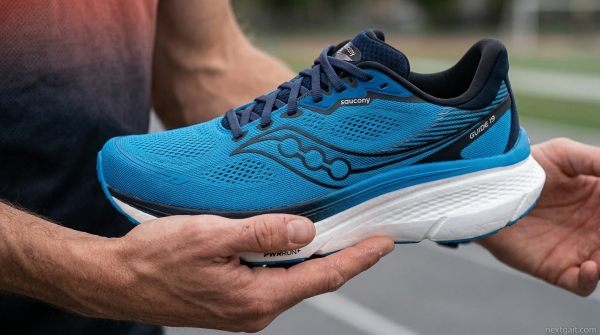
8. Saucony Guide 19 – Best mild natural guidance
Saucony Guide 19 ranks 8 because CenterPath uses a broad footprint and sidewalls instead of a hard post, giving mild guidance and stable midfoot behavior at a moderate weight.
| Drop | Weight | Platform | Widths | Ride |
|---|---|---|---|---|
| 6mm | 9.7 oz / 275g (men’s reference) | 35mm heel / 29mm forefoot; PWRRUN and CenterPath | Standard and Wide | Broad, contained, and mildly guided |
Guide 19 suits the runner who wants boundaries without feeling corrected. CenterPath combines a broad base, raised sidewalls, and a guided transition. The shoe resists sloppy movement through the middle, but the support sensation is milder than Adrenaline or Kayano.
The 6mm offset makes Guide less automatic for someone leaving a 10–12mm shoe. More cushioning does not erase that geometry change. Use short alternating runs with the current trainer and watch calf, Achilles, shin, and next-morning response rather than focusing only on in-run comfort.
PWRRUN feels protective but not luxurious. That is useful for runners who dislike soft foam, though it will disappoint buyers expecting Nimbus-like plushness. Standard and Wide cover many feet; Extra Wide users should look to Brooks or ASICS.
Fit check: The sidewalls should contain movement without touching the arch as a distinct ridge. Check heel hold on turns and slight downhill grades.
Skip it when: Skip it if the 6mm drop increases lower-leg demand or if you want a deeply soft ride.
What I like: Mild integrated guidance; Broad platform; Moderate weight; No hard medial post.
What I do not like: 6mm transition; Only two width tiers; Ride is not plush.
Read my Saucony Guide review.
9. HOKA Bondi 9 – Best firm max-cushion rocker
HOKA Bondi 9 ranks 9 because its broad max-cushion platform and clear rocker suit runners who want a firm protective ride and tolerate a move to 5mm geometry.

| Drop | Weight | Platform | Widths | Ride |
|---|---|---|---|---|
| 5mm | 10.5 oz (men’s reference) | 43mm heel / 38mm forefoot; supercritical EVA | Regular, Wide, and X-Wide | Firm-protective, broad, and strongly rockered |
Bondi 9 is not first because maximum stack does not equal maximum MTSS protection. It earns a place because the broad base, firm-protective foam, and pronounced rocker can make slow easy running and walking feel organized for the right runner.
The 5mm drop is the decision point. A runner coming from 10–12mm may feel more calf and lower-leg demand even though the shoe looks enormous. The rocker can offset some perceived transition, but it cannot make the geometry identical. Compare rather than assume.
HOKA offers three widths, yet the internal midfoot shape remains specific. A larger exterior does not guarantee the arch sits comfortably inside. Reject medial pressure, a rocker that tips too early, or a heel that slips when the laces are relaxed.
Fit check: Walk and run until the rocker timing becomes obvious. It should roll with your stride rather than pulling you forward or blocking toe-off. For how rocker location, curvature, and stiffness change transition, read my running shoe rocker-geometry guide.
Skip it when: Skip it if lower-drop shoes increase symptoms, the HOKA arch presses, or the mass changes your stride late in the run.
What I like: Broad max-cushion base; Strong rocker; Three width tiers; Firm protective feel.
What I do not like: 5mm transition; Heavy; Midfoot shape is divisive.
Read my HOKA Bondi review.
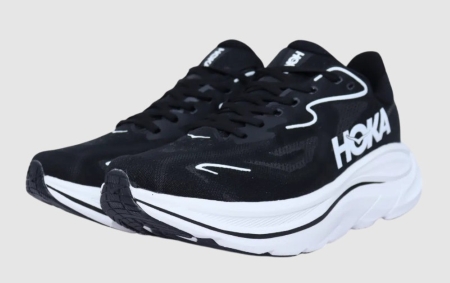
10. HOKA Clifton 10 – Best lighter rocker
HOKA Clifton 10 ranks 10 because it provides a lighter rockered alternative to Bondi, an 8mm offset, and three width tiers without becoming a plated performance shoe.
| Drop | Weight | Platform | Widths | Ride |
|---|---|---|---|---|
| 8mm | 9.8 oz (men’s reference) | High cushion with smooth MetaRocker | Regular, Wide, and X-Wide | Light for its stack, smooth, and moderately soft |
Clifton 10 works when Bondi feels cumbersome but a conventional trainer feels too flat. HOKA raised the offset to 8mm in this generation, creating a more familiar relationship for many road-shoe users while retaining a smooth rocker and high-cushion platform.
The lighter package is helpful when heavy shoes change swing or cadence under fatigue. That does not make Clifton a treatment. Its value is practical: it can handle easy miles and normal daily training after the return progresses, so the purchase is not limited to a short recovery window.
The midfoot remains a HOKA fit test. Three widths help the forefoot, but width does not move the arch contour. I rank it tenth because the platform is less inherently broad than Ghost Max or Bondi and because some runners experience the foam as too soft under late-run load.
Fit check: The arch should disappear from awareness after ten minutes, and the heel should stay down without tight lacing. Check platform stability on broad turns.
Skip it when: Skip it if the HOKA midfoot presses, the rocker timing feels early, or soft high stacks make the ankle work harder.
What I like: Lighter rockered option; 8mm offset; Three width tiers; Versatile easy-day ride.
What I do not like: Divisive midfoot; Can feel soft under fatigue; Less stable than broader options.
Read my HOKA Clifton review.
Full Comparison Table
Compare the change from your current shoe, not just the numbers in isolation. A 5mm Bondi and a 10mm Wave Rider can both feel protective while placing the runner in meaningfully different systems.
| Rank | Shoe | Best use | Drop | Weight | US widths |
|---|---|---|---|---|---|
| 1 | Saucony Ride 19 | Best overall | 8mm | 8.9 oz / 255g (men’s reference) | Standard and Wide |
| 2 | Mizuno Wave Rider 29 | Best controlled 10mm trainer | 10mm | 9.3 oz / about 264g (men’s US 9) | Standard and Wide |
| 3 | Brooks Ghost Max 3 | Best stable rocker | 6mm | 11.2 oz / 317.5g | D, 2E, and 4E for men |
| 4 | Saucony Triumph 24 | Best light high-cushion trainer | 10mm | 8.8 oz / 250g (men’s US 9) | Standard and Wide |
| 5 | Brooks Adrenaline GTS 25 | Best for useful overpronation support | 10mm | 10.6 oz / 300.5g | B, D, 2E, and 4E for men |
| 6 | ASICS GEL-KAYANO 33 | Best premium adaptive stability | 8mm | 10.5 oz / 298g | Standard, Wide, and Extra Wide |
| 7 | ASICS GEL-NIMBUS 28 | Best neutral heel cushioning | 8mm | 9.9 oz / 281g | Standard, Wide, and Extra Wide |
| 8 | Saucony Guide 19 | Best mild natural guidance | 6mm | 9.7 oz / 275g (men’s reference) | Standard and Wide |
| 9 | HOKA Bondi 9 | Best firm max-cushion rocker | 5mm | 10.5 oz (men’s reference) | Regular, Wide, and X-Wide |
| 10 | HOKA Clifton 10 | Best lighter rocker | 8mm | 9.8 oz (men’s reference) | Regular, Wide, and X-Wide |
For category-level alternatives, compare the best cushioned running shoes. Runners who need more room should use the wide-shoe guide rather than sizing long.
Choose the Right Shoe Type for Your Current Setup
Start with the shoe you already tolerate and change one variable at a time. Replacing drop, softness, rocker, support, width, and training load together makes it impossible to identify what helped or hurt.
| Current situation | Start with | Reason |
|---|---|---|
| Comfortable in an 8mm neutral daily trainer | Ride 19 or Nimbus 28 | Preserves moderate offset while changing cushioning and stability |
| Comfortable in a 10–12mm traditional trainer | Wave Rider 29 or Triumph 24 | Avoids a large immediate drop change |
| Neutral shoe feels unstable after several miles | Ghost Max 3 | Broad neutral base before adding guidance |
| Guidance has previously improved comfort | Adrenaline GTS 25 or Kayano 33 | Choose conventional or plush adaptive support |
| Wants mild boundaries, not strong correction | Guide 19 | CenterPath uses broad geometry and sidewalls |
| Prefers a firm max-cushion rocker | Bondi 9 | Broad platform and obvious roll; transition to 5mm carefully |
| Wants a lighter rocker near 8mm | Clifton 10 | Less mass than Bondi with a more familiar offset |
| Heavier runner who compresses soft foam quickly | Ride 19, Wave Rider 29, or Ghost Max 3 | Controlled platforms matter more than chasing the tallest stack |
Body mass can change how a foam behaves, but it does not dictate one brand. The heavy-runner shoe guide focuses on platform behavior, fit, and durability rather than treating weight as a diagnosis.
The 10-Minute Run Test and Next-Day Check
A shin-splint shoe must pass after the foam warms and again the next day. Standing comfort is only the first part of the decision.
- Compare: bring the current trainer and alternate shoes under the same store or treadmill conditions.
- Stand loaded: reject arch pressure, heel edges, toe compression, or forefoot spill over the insole.
- Walk: the heel should stay seated without crushing lace tension.
- Jog five minutes: notice calf, shin, arch, Achilles, and whether the platform begins to move.
- Run broad turns: the upper should keep the foot centered without guidance pushing it sideways.
- Change pace briefly: the shoe should remain predictable when cadence rises.
- Recheck after stopping: record location and quality of symptoms before they fade.
- Check the next day: increased walking pain, focal tenderness, or morning symptoms is a load signal, not a challenge to ignore.
Do not use a painful break-in period to justify a poor match. Uppers can relax slightly, but misplaced support, unstable foam, an intrusive rocker, or a major drop mismatch is not a character-building exercise.
Returning to Running With Shin Splints
Return to running by function and soreness response, not by a promised three-, six-, or eight-week calendar. The correct starting point depends on diagnosis, irritability, walking tolerance, symptom duration, prior load, health, and clinical findings.
| Signal | Interpretation | Action |
|---|---|---|
| Pain with normal walking or daily tasks | Impact tolerance is not ready | Do not start a running test; seek guidance |
| Focal bone tenderness, rest/night pain, swelling, or painful hopping | Bone stress injury concern | Stop impact and obtain clinical assessment |
| Short run-walk stays quiet and gait remains normal | Starting dose may be tolerable | Hold the dose and check later that day and next morning |
| Pain rises during the session or changes gait | Current dose exceeds tolerance | Stop; do not complete planned mileage |
| Soreness persists or is worse the next day | Prior load was too high | Reduce one variable and allow recovery |
| Several stable sessions and normal daily function | Capacity may be improving | Progress one variable: duration, frequency, terrain, or intensity |
A clinician may use walking, hopping, strength, range of motion, tenderness, and graded running response to decide readiness. Do not turn one self-test into clearance when bone stress injury has not been excluded.
Organize training around response with the recovery and rest-day guide and the running injury-prevention guide.
Prevention and Recovery Beyond Shoes
Shoes are one adjustable input; the larger job is matching bone and muscle capacity to total load. Running mileage is only part of that load. Pace, hills, surface, frequency, work, other sports, sleep, nutrition, and recovery all contribute.
- Load modification: reduce the variables that provoke symptoms rather than applying a universal percentage.
- Progressive strengthening: address calf, foot, ankle, hip, and single-leg capacity according to assessed deficits.
- Neuromuscular work: balance, landing control, and coordinated lower-limb training have preventive evidence in studied populations.
- Mobility: treat a relevant restriction, not an assumed need to stretch every painful structure.
- Recovery: sleep, adequate energy intake, and health factors matter when bone adaptation is part of the concern.
- Training progression: add duration, frequency, intensity, or terrain one at a time; the 10% rule is not a guarantee.
Surface can change comfort but is not a universal treatment. Compare shoes for concrete, treadmill shoes, and the treadmill-versus-outdoor guide without assigning a fixed impact-reduction percentage.
No magic 10% rule: Ten percent of mileage says nothing about added speedwork, hills, harder surfaces, strength sessions, or the runner’s current symptoms. Progression must respond to the whole load picture.
Orthotics and Insoles
An insole can be useful for a selected runner, but it should not be added automatically or evaluated outside the shoe. The device changes heel height, arch contact, volume, flex, and the effect of built-in guidance.
- Remove the stock insole unless the device is designed to sit on top of it.
- Confirm that the heel remains below the counter and does not slip.
- Check arch location under full load; pressure should be broad rather than a sharp ridge.
- Run in the exact shoe-device combination because standing cannot reveal movement or edge pressure.
- Avoid stacking an aggressive insert with maximum guidance without assessing the combined effect.
- Reassess the training load even when an insert improves comfort.
Foot posture can inform the trial without dictating it. Use the running-insole guide for fit and volume questions, then involve a clinician when symptoms are chronic, recurrent, or diagnostically unclear.
When Shin Pain Needs a Clinician
Seek assessment for focal, persistent, traumatic, neurologic, or rest-related shin pain. A shoe purchase should never delay evaluation of a tibial stress injury, compartment syndrome, nerve problem, vascular problem, or acute injury.
- One sharply tender spot on the tibia rather than a broader sore area
- Pain at rest or night, visible swelling, or symptoms that keep worsening
- Painful hopping, limping, or inability to bear weight normally
- Burning, numbness, tingling, weakness, foot slap, or loss of control
- Predictable tightness or cramping that escalates during exercise
- A sudden traumatic onset, pop, or bruising
- Recurrent symptoms despite sensible load modification
- Concern about low energy availability, bone health, menstrual changes, or prior stress injury
A sports-medicine physician or physical therapist can examine tenderness, strength, motion, neurovascular signs, gait, training history, and whether imaging is appropriate. Normal early X-rays do not always exclude bone stress injury, so clinical reasoning matters.
Durability and When to Replace the Shoe
There is no MTSS-specific 300-, 400-, or 500-mile replacement law. Useful life depends on the runner, shoe, surface, rotation, fit, wear pattern, and whether the platform still behaves as intended.
| Check | Still serviceable | Replacement warning |
|---|---|---|
| Midsole | Both shoes sit level and recover normally | One side remains compressed or the shoe leans |
| Platform | Old pair feels like a fresh comparison pair | New wobble, bottoming, or changed flex |
| Outsole | Rubber protects the landing path | Wear changes the landing angle or exposes foam |
| Upper | Heel and midfoot remain secure | Stretch permits repeated movement |
| Symptoms | Normal response pattern | Shin symptoms repeatedly differ from a fresh pair under the same load |
Compare the old pair with a fresh version before visible destruction. My guide to when to replace running shoes provides the complete inspection sequence.
Frequently Asked Questions
These answers keep footwear in the correct role: an adjustable part of the runner-shoe-load system, not diagnosis or treatment by itself.
What are the best running shoes for shin splints?
Saucony Ride 19 is the best overall starting point because it combines stable cushioning, an 8mm offset, a broad platform, and normal daily-trainer versatility. Wave Rider 29 better suits runners staying near 10mm, while Adrenaline GTS 25 is for runners who actually benefit from guidance.
Can running shoes cure shin splints?
No. A shoe can change comfort, fit, transition, and how the foot moves on the platform. It cannot diagnose medial tibial stress syndrome, restore bone capacity by itself, or correct a training-load problem.
Does more cushioning help shin splints?
Sometimes, but softness is not a direct measure of tibial load. Cushioning must remain stable under the runner, and a comfortable landing does not prove that the tibia is ready for more volume.
What heel drop is best for shin splints?
There is no universal best drop. The safest comparison usually begins near the drop the runner already tolerates, because an abrupt change can shift work among the foot, calf, ankle, knee, and hip.
Are stability shoes better for shin splints?
Only when guidance improves that runner’s comfort and control. MTSS does not prove overpronation, and pronation is not automatically harmful. Compare a neutral stable shoe and a guided shoe under the same conditions.
Should I buy new running shoes before returning after shin splints?
No shoe determines whether you are ready to run. Use the condition guide for symptom and return-to-running decisions; compare footwear only after the diagnosis and loading limits are clear.
When should shin pain stop a shoe comparison?
Stop comparing shoes and seek assessment when pain is focal, present at rest or night, associated with swelling, or worsening. The condition guide explains the limits of self-screening; a shoe page cannot distinguish MTSS from bone stress injury.
Are HOKA shoes good for shin splints?
They can be good options when the rocker, midfoot shape, drop, and platform match the runner. Bondi 9 is broad and firm-protective but has a 5mm drop; Clifton 10 is lighter with an 8mm drop. Neither is universally protective.
Should I avoid zero-drop shoes with shin splints?
Zero-drop shoes are not permanently forbidden, but an abrupt move from a higher-drop trainer can increase foot and calf demand. Do not make a major geometry change during an irritable period without a gradual plan.
Do orthotics help shin splints?
They may help selected runners, particularly when excessive pronation is relevant, but they are not a universal treatment. Test the shoe and device together because the combined geometry can overcorrect or reduce heel security.
When should I test a new shoe after shin pain?
Do not use a new shoe as the first test of recovery. Resume only within the loading limits set by symptoms or a clinician, then introduce one footwear change on a short easy run. The prevention guide explains the one-change rule.
When should I replace running shoes if I get shin splints?
Do not use one mileage number for every runner. Replace or demote a shoe when the platform leans, midsole behavior changes, outsole wear alters the landing, the upper loses hold, or symptoms repeatedly differ from a fresh pair.
Final Verdict
Saucony Ride 19 is my best overall running shoe for shin splints because it balances stable cushioning, an 8mm offset, a broad platform, and everyday versatility without relying on maximum softness or forced guidance.
Choose Wave Rider 29 to preserve a traditional 10mm setup, Ghost Max 3 for a broad neutral rocker, Triumph 24 for lighter high cushioning, Adrenaline GTS 25 for conventional guidance, or Kayano 33 for a plusher adaptive stability system.
The shoe gets one vote. Diagnosis, training history, full-load fit, short-run response, next-day symptoms, and the return plan get the rest. A quieter first mile is useful information; it is not proof that the tibia is ready for normal training.