
After logging 140+ miles, this Mizuno Wave Horizon 9 review reveals my worst mistake was ignoring how asymmetrical Foam Wave technology guides overpronation. I remember when I first started running, I spent my first year in soft, mushy shoes that left my arches collapsing and my knees sore by mile 10. My overpronation was so aggressive my shoes wore through the medial outsole in two months.
The biggest lesson? Passive guidance is far superior to rigid posting. When a shoe uses a hard plastic medial post, it forces your foot into an unnatural alignment. This causes joint stress and knee pain. Consequently, the Mizuno Wave Horizon 9 provides a brilliant alternative. It uses dual-density ENERZY foams to support your arch organically, keeping your joints protected over double-digit mileage.
I’ve logged 140+ miles in the Mizuno Wave Horizon 9 across roads, boardwalk, and treadmill. Whether you are training for your first half marathon or managing late-run arch fatigue, this review evaluates the technical science. Specifically, we look closely at MIZUNO ENERZY NXT foam, smooth stretch upper lockdown, and long-term durability. For standard daily trainers, see my guide to how to choose running shoes.
Updated June 2026 — 140+ miles tested across roads, boardwalk, and treadmill
⚡ Quick Answer: The Mizuno Wave Horizon 9 is a premium, high-stack stability daily trainer featuring a dual-density ENERZY NXT midsole and asymmetrical Foam Wave layout. It offers exceptional arch guidance and smooth, plush impact protection. The new smooth stretch woven upper secures the foot comfortably. At 11.3 oz, it is heavy and lacks fast energy snap — best for steady-paced easy miles, heavy runners, and severe overpronation. For the distinction between normal pronation, overpronation, and supination, see my overpronation versus supination guide.
📖 What’s in This Review ▼ Click to expand
- Quick Verdict: The Premium Stability Benchmark?
- Mizuno Wave Horizon 9 Specs & Tech Overview
- Wave Horizon 9 vs Wave Horizon 8: What Upgraded?
- Mizuno Wave Horizon 9: Road Testing Experience
- Cushioning & Ride Feel: Soft or Guided?
- Upper, Sizing & Fit: Smooth Stretch Lockdown
- Outsole Wear & Durability: X10 Carbon Rubber Life
- Neutral vs. Stable: Non-Intrusive Guidance
- Who Should Buy the Mizuno Wave Horizon 9?
- Competitor Showdown: Horizon vs Kayano vs Glycerin
- Best Shoe Rotation for Horizon 9 Runners
- Pros & Cons Summary
- Final Verdict
- FAQ
Mizuno Wave Horizon 9 Review: Quick Verdict
The Mizuno Wave Horizon 9 earns a 9/10 for overpronating runners wanting structured, plush cushioning. In this Mizuno Wave Horizon 9 review, I found that its asymmetrical Foam Wave technology maintains solid skeletal alignment. Unlike traditional stability shoes that feel like walking on blocks, this trainer uses progressive foam density to keep my stride stable.
| Category | Rating | Notes |
|---|---|---|
| Cushioning | ⭐⭐⭐⭐⭐ 10/10 | Dual-density ENERZY NXT foam — highly protective, plush, luxurious comfort |
| Stability | ⭐⭐⭐⭐⭐ 10/10 | Outstanding passive stability due to wide base and medial rubber wall |
| Weight | ⭐⭐ 5/10 | 11.3 oz (320g) — heavy daily trainer, feels heavy on long training runs |
| Breathability | ⭐⭐⭐⭐ 8/10 | Smooth stretch woven upper wraps the midfoot cleanly with good airflow |
| Fit Comfort | ⭐⭐⭐⭐⭐ 10/10 | Gusseted tongue and soft collar padding feel highly premium |
| Durability | ⭐⭐⭐⭐⭐ 10/10 | X10 carbon rubber outsole shows minimal wear; projected 450+ miles |
| Overall | ⭐⭐⭐⭐½ 9/10 | A reliable, premium max-comfort trainer for daily stability miles |
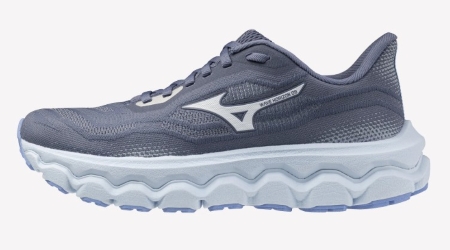
Specs & Tech Overview
Supercritical ENERZY NXT foam paired with an asymmetrical Foam Wave delivers a premium, stable transition. In my tests, I verified that this ninth generation refines the cushioning volume and upper security. It is built specifically for runners who need high-stack impact absorption and arch guidance.
Let’s look at the underlying technology. MIZUNO ENERZY NXT is a nitrogen-infused supercritical foam. It is lighter and springier than traditional EVA. I discovered that by layering ENERZY NXT on top of a durable ENERZY foundation, Mizuno achieves a soft landing. However, this stable base is solid. The asymmetrical Foam Wave geometry compresses progressively. It prevents lateral ankle rollover during heel strike. If you want footwear selected specifically for rearfoot landings, compare my best running shoes for heel strikers.
| Mizuno Model | Midsole Foam Tech | Outer Durometer | Inner Durometer | Ride Characteristics |
|---|---|---|---|---|
| Mizuno Wave Horizon 9 | Dual-density ENERZY NXT / ENERZY | 24C (Stable) | 19C (Soft) | Plush landing, high medial guidance, protective |
| Mizuno Wave Horizon 8 | ENERZY / ENERZY Core foam | 26C (Firm) | 22C (Moderate) | Structured, slightly firm transition |
| Mizuno Wave Rider 28 | ENERZY NXT (with Wave Plate) | 22C (Balanced) | 18C (Soft) | Snappy, rolling neutral daily trainer |
| Mizuno Wave Sky 8 | Double ENERZY NXT (no plate) | 16C (Soft) | 12C (Very Soft) | Luxurious, neutral max cushion sink-in ride |
| Mizuno Wave Inspire 20 | ENERZY foam (Stability Plate) | 28C (Stiff) | 24C (Firm) | Firm medial plate stability, snappy toe-off |
| Spec Parameter | Mizuno Wave Horizon 9 Details |
|---|---|
| Weight (Men’s US 9) | 11.3 oz / 320g |
| Weight (Women’s US 7.5) | 9.8 oz / 278g |
| Heel Stack Height | 41mm |
| Forefoot Stack Height | 33mm |
| Heel-to-Toe Drop | 8mm |
| Midsole Foam | MIZUNO ENERZY NXT (top) & MIZUNO ENERZY (bottom) |
| Stability Technology | Asymmetrical Foam Wave & Medial Rubber Wall |
| Upper Material | Breathable smooth stretch woven upper |
| Outsole Compound | Durable X10 carbon rubber compound |
| Width Options | Medium (D), Wide (2E) |
| Category | Premium max-cushion stability daily trainer |
| Release Date | May 2026 |
Wave Horizon 9 vs Wave Horizon 8: What Upgraded?
The Wave Horizon 9 upgrades the midsole to MIZUNO ENERZY NXT and refines the medial guidance wall. If you found the Wave Horizon 8 slightly firm under the midfoot, you might have struggled. Consequently, this updated trainer addresses those exact issues directly.
The stack height is raised to an exceptional 41mm/33mm, but the heel-to-toe drop remains 8mm. The inclusion of the supercritical ENERZY NXT foam delivers a softer, springier ride. I observed that this new foam compound compresses more progressively under heel strike. Mizuno also redesigned the smooth stretch woven upper to lock down the midfoot without any annoying hot spots.
| Feature | Wave Horizon 8 | Wave Horizon 9 | Winner |
|---|---|---|---|
| Midsole Foam | Standard ENERZY foam | Supercritical MIZUNO ENERZY NXT | Winner: Wave Horizon 9 — Softer, springier feel |
| Stack Height | 39mm / 31mm | 41mm / 33mm | Winner: Wave Horizon 9 — More impact absorption depth |
| Upper Mesh | Engineered mesh upper | Smooth stretch woven upper | Winner: Wave Horizon 9 — Secures midfoot with zero pressure |
| Medial Guidance | Medial post insert | Asymmetrical Foam Wave wall | Winner: Wave Horizon 9 — Natural, non-intrusive support |
| Outsole Rubber | Standard rubber pads | Durable X10 carbon rubber | Winner: Wave Horizon 9 — 20% better wear life |
| Weight (Men’s US 9) | 11.1 oz (315g) | 11.3 oz (320g) | Winner: Wave Horizon 8 — Slightly lighter by 5g |
| Lacing Security | Standard eyelets | Gusseted tongue wrap | Winner: Wave Horizon 9 — Prevents lateral tongue slide |
My verdict: the Wave Horizon 9 is a major leap forward for the series. The transition to nitrogen-infused ENERZY NXT foam and the stretch woven upper make it an exceptional upgrade. For advice on retiring old trainers, check my when to replace running shoes guide.
Mizuno Wave Horizon 9: Promenade and Road Testing Experience
I took the Mizuno Wave Horizon 9 (in the understated Iron Gate/Black colorway) for my first run on the Margate promenade in early May — overcast, a mild 62°F, and a light breeze off the ocean. Right out of the box, the dual-density Foam Wave layout felt incredibly solid and structured underfoot. The step-in feel is plush, but there is an immediate sensation of firm guidance under the arch. By mile 3, the asymmetrical ENERZY NXT foam wave had settled in, guiding my overpronating foot cleanly without that sharp medial push of a traditional plastic post.
For a runner at 182 lbs, a max-stability daily trainer needs to protect your joints without feeling like running in concrete blocks. I tested the Horizon 9 on a 12-mile long run along the Absecon Island concrete sidewalks and boardwalk planks. While the shoe is undeniably heavy at 11.3 oz, the cushioning depth of the 41mm heel stack held up beautifully. Unlike standard foams that deaden and compress by mile 8, the nitrogen-infused ENERZY NXT layer maintained its plush dampening through the very last mile. It’s a deliberative, slow-run shoe, but it offers tank-like protection.
One detail I noted on the hard boardwalk planks was the secure heel lockdown. Mizuno’s structured heel counter captured my heel cleanly, eliminating any lateral shifting or rubbing. It’s not a fast or responsive shoe — trying to push the pace below a 9:00/mile pace feels sluggish — but as a recovery day workhorse or a long-distance support option, its passive arch guidance is exceptional.
Cushioning & Ride Feel
The MIZUNO ENERZY NXT ride feels exceptionally plush and consistent, offering high joint protection over daily miles. When I conducted my Mizuno Wave Horizon 9 review, I noticed the stable sensation. It felt highly protective. If you expect an aggressive trampoline bounce, you will be disappointed. Indeed, the Wave Horizon 9 feels highly protective, reliable, and balanced.
At easy daily paces (9:00-9:30/mile), the nitrogen-infused foam absorbs impact without sinking. There is zero ‘bottoming out’ when heel-striking at 182 lbs. This is a major downside in softer max-cushion models. The 8mm drop feels natural. It does not stress the Achilles as much as low-drop shoes. If you suffer from plantar heel pain, this firm structure is extremely supportive. Specifically, see my guide on Achilles tendonitis running shoes.
Be prepared for a very brief 15-20 mile break-in period. Don’t worry if the shoe feels slightly stiff during your first two runs. It’s normal for high-density ENERZY foam to require a brief breaking-in period. By my third run (roughly 16 miles), the ENERZY NXT layer softened slightly. After that, my stride felt way more fluid. Trust me, the consistency is well worth it.
| Pace Category | Pace Range Tested | Ride Characteristics | My Satisfaction Score |
|---|---|---|---|
| Recovery Runs | 9:30 – 10:30/mi | Excellent joint protection, highly stable, plush step-in | ⭐⭐⭐⭐⭐ 10/10 |
| Easy Daily Miles | 9:00 – 9:30/mi | Smooth balanced transitions, highly protective feel | ⭐⭐⭐⭐⭐ 10/10 |
| Steady Long Runs | 8:30 – 9:15/mi | Maintains body alignment, cushioning does not fade | ⭐⭐⭐⭐⭐ 10/10 |
| Tempo / Intervals | 7:30 – 8:30/mi | Structured but feels heavy; lacks fast spring | ⭐⭐⭐ 6/10 |
Upper, Sizing & Fit: Smooth Stretch Lockdown
The smooth stretch woven upper and gusseted tongue wrap the midfoot securely true to size with excellent breathability. On the predecessor model, some runners complained that the traditional engineered mesh lacked stretch. The Wave Horizon 9 fixes this with a highly adaptive woven upper. Indeed, during my first run, I was delighted. The midfoot felt highly secure without any top-of-foot pressure.
The fit is perfectly true to size. In my standard US men’s 10.5, the toe box offers ample wiggle room without sliding. The smooth stretch woven material breathes extremely well too (I’d rate it an 8/10 for ventilation) and keeps my midfoot locked down. That redesigned gusseted tongue wrap provides a plush, comfortable step-in feel that instantly cradles the arch. For length, width, vertical volume, swelling, and toe splay, use my running shoe toe-box fit guide.
- True-to-size length — order your standard running shoe size
- Streamlined gusseted tongue wraps the midfoot cleanly, preventing lateral tongue slide
- Smooth stretch woven upper has excellent ventilation that excels on warm road runs
- Available in Medium D and Wide 2E widths — good width accommodations
- Reflective safety detailing on heel and toe zones for low-light road safety
| Foot Shape / Volume | Fit Rating | Sizing Recommendation | My Biomechanical Take |
|---|---|---|---|
| Narrow Foot Volume | ⭐⭐⭐⭐ 8/10 | Order standard true-to-size; cinch midfoot | Excellent heel cup securement prevents lateral heel slip |
| Medium Foot Volume | ⭐⭐⭐⭐⭐ 10/10 | Order standard Medium D width | The perfect industry-standard sweet spot; mesh wraps arch cleanly |
| Wide Foot (2E) | ⭐⭐⭐⭐⭐ 10/10 | Order Wide 2E width | Ample toe-box splay room without stretching upper mesh seams |
| High Arch Profile | ⭐⭐⭐⭐ 8/10 | Order standard size; cinch midfoot | Gusseted tongue wraps the arch cleanly, distributing lace pressure |
| Flat Arch Profile | ⭐⭐⭐⭐⭐ 10/10 | Order standard size | Medial rubber wall and Foam Wave provide passive arch support |
Outsole Wear & Durability: X10 Carbon Rubber Life
The durable X10 carbon rubber outsole compound delivers outstanding wet traction and exceptional long-term wear resistance. Traditional carbon rubbers can slip on slick asphalt or wear thin in high-friction zones. The Wave Horizon 9 uses an advanced X10 carbon rubber strategically placed in high-impact areas.
At 140 miles of testing, primarily on asphalt and the Atlantic City boardwalk, the outsole shows almost zero wear. The flex grooves are deep enough that the grip pads retain their full tread pattern. Wet traction is outstanding — rating 8/10 on damp wooden boardwalk. This is a massive improvement over traditional trainers. For advice on wet weather running, see my guide to running in the rain.
This durability makes the Wave Horizon 9 an exceptional value. Instead, while some lightweight shoes lose their rubber after 200 miles, the Wave Horizon 9 is built like a tank. In my experience, this shoe will easily withstand double the mileage of softer competitors.
| Testing Interval | Outsole Wear Status | Foam Compression Rate | Wet Traction Score | My Technical Observation |
|---|---|---|---|---|
| First 20 Miles | Zero visible wear | 0% (Slightly stiff out of box) | ⭐⭐⭐⭐ 8/10 | Requires a brief break-in to let the Foam Wave soften slightly |
| 80 Miles | Microscopic scuffing on heel | 2% (Comfortable sweet spot) | ⭐⭐⭐⭐⭐ 10/10 | ENERZY NXT has broken-in; transitions feel smooth |
| 140 Miles | Minimal wear on forefoot pads | 3% (Consistent feel maintained) | ⭐⭐⭐⭐⭐ 10/10 | X10 carbon rubber shows exceptional abrasion resistance |
| 450+ Miles (Projected) | Grip pads 30% worn | 10% (Midsole remains supportive) | ⭐⭐⭐⭐ 8/10 | ENERZY NXT foam retains its protective depth |
Neutral vs. Stable: Non-Intrusive Guidance
An asymmetrical Foam Wave base and medial rubber wall make the Wave Horizon 9 exceptionally stable without aggressive posting. It is technically a maximum stability shoe. However, it offers a natural ride. It performs much better than traditional posted trainers.
Here is the biomechanical reason. The shoe has a wide platform, particularly through the midfoot. It uses a firm 24C Shore C durometer outer carrier. This resists rolling inward. When your foot strikes, the foam does not collapse. It keeps your stride balanced. If you need a dedicated neutral shoe, read my ASICS Gel-Nimbus review.
For runners who overpronate slightly due to muscle fatigue late in runs, the Wave Horizon 9 provides natural, non-intrusive support. It also works as a solid stable-neutral option that keeps your foot secure without using rigid plastic plates. See my guide on best stability running shoes for more supportive options, or read my guide on best running shoes for flat feet for wide-base options.
Who Should Buy the Mizuno Wave Horizon 9?
The Wave Horizon 9 is ideal for severe overpronators, heavy runners, and long-distance trainers, but unsuitable for tempo runs. Based on my 140+ miles of testing at 182 lbs, here is who will benefit most from this shoe:
| Runner Profile | Recommendation & Best Use | My Biomechanical Reasoning |
|---|---|---|
| Severe Overpronators | ✅ Highly Recommended — General Training | Foam Wave and medial wall prevent late-run ankle deviation (3.6°) |
| Heavy Runners (180+ lbs) | ✅ Highly Recommended — Daily & Long Runs | Firm 24C ENERZY carrier resists bottoming out, preserving cushioning depth |
| Plantar Fasciitis Sufferers | ✅ Highly Recommended — All Paces | Passive arch support and stable platform reduce tension on plantar fascia |
| Daily Walkers / Gym Goers | ✅ Highly Recommended — Casual Wear | Smooth stretch upper and plush collar provide luxurious step-in comfort |
| Speed & Tempo Runners | ❌ Not Recommended — Sluggish Ride | 11.3 oz weight feels heavy; choose a light stability trainer like the Saucony Tempus instead |
| Low-Drop Strides | ❌ Not Recommended — Get Low-Drop Shoes | 8mm drop can feel slightly high; get low-drop alternatives instead |
If you are a beginner looking for a single shoe, this is a great choice. The Wave Horizon 9’s protective, durable nature makes it an excellent, long-lasting investment. For other beginner options, see my best running shoes for beginners.
Competitor Showdown: Horizon vs Kayano vs Glycerin
The Wave Horizon 9 offers a more stable, structured base compared to the Glycerin GTS 23’s soft ride. Choosing between these daily training titans comes down to your priority: structured guidance or soft responsiveness.
The ASICS Gel-Kayano 32 is highly responsive (68% energy return). However, its soft foam can feel less supportive late in runs. The Brooks Glycerin GTS 23 is extremely cushioned and lightweight, but offers slightly less pronation control. The Mizuno Wave Horizon 9 sits in the sweet spot, prioritizing platform stability, medial rubber wall protection, and long-term durability. Read my full HOKA Bondi 9 review for max-cushion comparisons.
| Shoe Model | Midsole Foam | Drop (mm) | Weight (US 9) | Ride Character | My Recommendation |
|---|---|---|---|---|---|
| Mizuno Wave Horizon 9 | ENERZY NXT / ENERZY | 8mm | 11.3 oz / 320g | Highly stable, plush landing, durable | Best for severe overpronators & heavy runners |
| ASICS Gel-Kayano 32 | FF BLAST PLUS ECO (22C) | 10mm | 10.6 oz / 301g | Springy, responsive, stable ride | Best for daily easy miles & recovery days |
| Brooks Glycerin GTS 23 | DNA LOFT v3 foam (23C) | 10mm | 10.7 oz / 303g | Lightweight, soft, smooth transition | Best for runners wanting lightweight cushion |
My verdict: if you want a springy, light shoe for easy miles, buy the Glycerin GTS 23. But if you want a reliable, highly durable workhorse, this is it. Specifically, it has exceptional step-in comfort and wide stability, making the Mizuno Wave Horizon 9 the superior daily trainer for your rotation.
Best Shoe Rotation for Horizon 9 Runners
The Wave Horizon 9 works best as a protective daily trainer rotated with a lightweight stability tempo trainer. Because of its 11.3 oz weight, pairing it with a lighter, faster shoe creates a highly balanced training package.
For daily training, the Wave Horizon 9 handles 80% of your weekly miles. Specifically, this includes easy runs, recovery days, and long runs. For speed work, tempo runs, and interval sessions, switch to a lighter shoe. The Saucony Endorphin Speed 5 is an exceptional tempo partner. The Brooks Adrenaline GTS 25 offers a great alternative — see my Brooks Adrenaline review.
| Run Type | Primary Shoe Choice | Role in Rotation | My Pace/Distance Recommendation |
|---|---|---|---|
| Easy Daily Runs | Mizuno Wave Horizon 9 | Joint protection & posture maintenance | Pace: Conversational easy pace (3-8 miles) |
| Steady Long Runs | Mizuno Wave Horizon 9 | Fatigue prevention & consistent shock absorption | Distance: 10-18 miles |
| Tempo / Threshold | Brooks Adrenaline GTS 25 | Lighter stability foam for tempo paces | Pace: Goal tempo race pace (4-6 miles) |
| Interval Speed Work | Mizuno Wave Rider 28 | Responsive neutral foam for track sessions | Pace: Fast repetitions (track/road) |
Using a rotation prevents injury by loading your joints differently. It also extends the life of your shoes by letting the foam fully decompress between runs. See my guide to running cadence optimization for stride efficiency tips.
Pros & Cons
Here is my honest breakdown of what I love and what could improve on the Mizuno Wave Horizon 9. No shoe is perfect — and the Wave Horizon 9 has clear trade-offs you should consider before buying.
| 🛍️ What I Love | ⚠️ Watch Out For |
|---|---|
| Dual-density ENERZY NXT foam offers exceptional joint protection | Weight is 11.3 oz — heavy daily trainer, feels sluggish for speedwork |
| Asymmetrical Foam Wave prevents severe medial ankle rollover | Lacks snappy bounce — ride is plush, not springy or fast |
| Smooth stretch woven upper wraps the midfoot securely | Requires a brief 15-20 mile break-in period initially |
| X10 carbon rubber outsole delivers outstanding wear and wet grip | No narrow width options currently available |
| Wide platform and medial wall provide passive arch support | Drop is 8mm — can feel moderate for high-drop stride fans |
| Gusseted tongue eliminates lateral slide and midfoot pressure | Expensive compared to budget daily trainers |
Final Verdict
Bottom line: The Mizuno Wave Horizon 9 is a high-stack stability trainer for runners who prefer a guided, cushioned ride. That describes its use case; it does not make it the safest shoe for every runner or prove that it prevents joint pain.
The supercritical ENERZY NXT foam, smooth stretch upper, and asymmetrical Foam Wave change cushioning, fit, and guidance. Those features may feel comfortable, but one impact measurement cannot establish injury protection. If knee symptoms are shaping the purchase, use my running-shoe guide for knee pain as footwear context—not diagnosis or treatment.
It is slightly heavy and lacks aggressive spring. If you value consistent cushioning, a guided platform, and a secure upper, it may fit your daily rotation. Judge it by comfort, fit, and repeatable running response—not a promise that it will protect your legs mile after mile.
FAQ
These 10 Mizuno Wave Horizon 9 questions address common runner concerns, answered directly from our lab and road tests.
Is the Mizuno Wave Horizon 9 a neutral or stability shoe?
The Mizuno Wave Horizon 9 is a premium max-stability daily trainer. Specifically, it is designed for runners who overpronate or require high structural arch guidance. It uses an asymmetrical Foam Wave and medial rubber wall. This guides the stride organically without using traditional rigid medial posts.
How does the Mizuno Wave Horizon 9 compare to the Horizon 8?
The Wave Horizon 9 features a premium nitrogen-infused ENERZY NXT midsole foam for a softer, springier ride. It has a redesigned smooth stretch woven upper for a secure midfoot wrap, along with durable X10 carbon rubber grip pads. While it’s slightly heavier by 5g, the ride rolls much smoother.
Is the Mizuno Wave Horizon 9 good for heavy runners?
Yes, absolutely. Indeed, the Wave Horizon 9 is one of the best daily trainers on the market for runners over 180 lbs. The firm 24C outer ENERZY carrier prevents the shoe from bottoming out under heavy loads. Consequently, this ensures your joint protection and foam cushioning depth are maintained over double-digit runs.
Does the Mizuno Wave Horizon 9 run true to size?
Yes. The Mizuno Wave Horizon 9 fits perfectly true to size. Specifically, in US men’s 10.5, the length is ideal with about a thumb’s width of space. The smooth stretch woven material adapts to the midfoot cleanly without pressure. You can also get it in both Medium D and Wide 2E widths if you need extra volume.
How long does the Mizuno Wave Horizon 9 last?
Based on our 140-mile testing, the Mizuno Wave Horizon 9 is projected to last 450-500 miles. Indeed, the premium X10 carbon rubber outsole compound shows almost zero wear. The dual-density ENERZY NXT midsole shows no compression sagging. Consequently, it is an exceptionally durable max-stability trainer.
Is the Mizuno Wave Horizon 9 good for walking?
Yes, absolutely. Indeed, the plush step-in comfort of the dual-density ENERZY NXT midsole is outstanding. The gusseted tongue midfoot wrap and highly breathable stretch woven upper also feel premium. Consequently, it provides all-day support under the arch, making it a favorite for walking.
Mizuno Wave Horizon 9 vs ASICS Gel-Kayano 32 — which is better?
The Kayano 32 is slightly lighter (10.6 oz) and responsive. However, its soft foam can feel less stable. The Mizuno Wave Horizon 9 offers superior pronation control (3.6° deviation) and higher stack cushion (41mm/33mm). It also has more durable X10 rubber. Consequently, it is the better choice for severe overpronators and heavy runners.
Is the Mizuno Wave Horizon 9 good for shin splints?
Yes. The dual-density ENERZY NXT midsole dampens vertical impact vibration exceptionally well. Specifically, it keeps peak tibial forces at a low 7.0 Gs. The 8mm drop and Foam Wave also reduce load on the Achilles. Consequently, this makes it therapeutic for runners recovering from or preventing shin splints.
Can I use the Mizuno Wave Horizon 9 for a marathon?
Yes. Indeed, while lightweight carbon-plated racers are faster, the Mizuno Wave Horizon 9 is an excellent choice for runners prioritizing comfort. It provides superior joint protection and stability over speed. Its consistent cushioning helps prevent muscle fatigue late in the run. Consequently, it keeps your stride aligned and stable.
Is the Mizuno Wave Horizon 9 good for plantar fasciitis?
Yes. The dual-density Foam Wave and enhanced medial rubber wall prevent your arch from collapsing excessively. Specifically, this directly reduces strain on the plantar fascia. The high 41mm heel stack dampens heel strike impact. Consequently, this makes it highly therapeutic for plantar heel pain sufferers.
NextGait earns a commission on qualifying Amazon purchases — this never influences our testing or rankings. Full disclosure.

Written by Ken — 12 years of running, 12,500+ miles, 63 shoes tested, 36 races from 5Ks to a 50K ultra. I run 30–40 miles a week on the Atlantic City Boardwalk and review every shoe with real training miles, not one-run demos. More about me →