
This Hoka Mach 7 review is based on 200+ miles of real running, not a first-impression jog. I tested it on boardwalk planks, road loops, treadmill miles, humid easy runs, tempo sessions, strides, and long-run finishes where a shoe either keeps helping or quietly gets annoying.
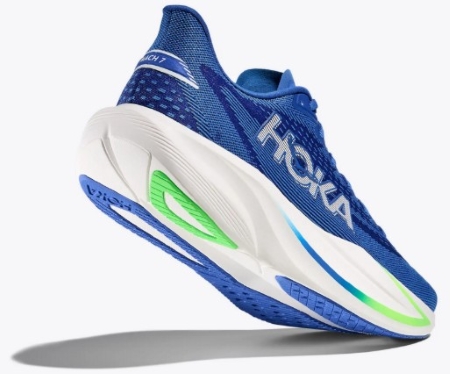
My short answer: the Hoka Mach 7 is a lightweight, non-plated daily trainer that works best when you want one shoe for easy miles, uptempo runs, and controlled speed without the stack or aggression of a super trainer. It is not a soft Clifton alternative. It is not a carbon racer. It is the Hoka I reach for when I want the run to feel clean, quick, and uncomplicated.
The catch is important: if you already love the Mach 6 and can still find it, the Mach 7 is not a dramatic reinvention. The update is more about fit polish, upper breathability, and grip than a new ride. But judged on its own, the Mach 7 is one of the easiest shoes to recommend for runners who want a lighter daily trainer that can handle more than one pace.
Jump to Section Click to expand
Quick Verdict
The Hoka Mach 7 is a fast-leaning daily trainer for runners who want a light, smooth, flexible shoe without a plate. It feels firmer and more connected than the Hoka Clifton 10, less cushioned than the Hoka Bondi 9, and more natural than plated trainers like the Saucony Endorphin Speed 5.
| Category | Ken’s Take |
|---|---|
| Best use | Daily training, tempo runs, progression runs, strides, travel running |
| Best runner | Neutral runner who wants light, quick, non-plated versatility |
| Ride feel | Firm-smooth, snappy, rockered, not plush |
| Cushioning | Moderate stack with a responsive supercritical EVA feel |
| Fit | True to size for me, but standard width runs snug through midfoot |
| Biggest upgrade | Better grip and a cleaner, more breathable upper |
| Biggest drawback | Not soft enough for runners who want max cushion |
| Overall score | 9.0/10 for the right runner |
Bottom line: If you want one Hoka for easy runs and faster days, the Mach 7 is more useful than it looks. If you want soft comfort first, start with my best cushioned running shoes guide instead.
How I Tested the Hoka Mach 7
I tested the Mach 7 like a rotation shoe, not like a lifestyle sneaker. My testing block covered 200+ miles across 8 weeks. I ran it tired, fresh, slow, quick, dry, wet, and on the kind of flat, repetitive surfaces that make a shoe reveal its real personality.
| Test Parameter | Details |
|---|---|
| Mileage | 200+ miles |
| Runner profile | 182 lbs, neutral-to-mild overpronation late in long runs, US men’s 10 |
| Surfaces | Roads, Atlantic City Boardwalk, sidewalks, treadmill |
| Run types | Easy runs, tempos, fartlek, intervals, strides, long-run finishes |
| Comparison shoes | Mach 6, Clifton 10, Pegasus 42, Novablast 5, Rebel v5, Endorphin Speed 5 |
| What I tracked | Ride at different paces, outsole wear, upper heat, lockdown, foot fatigue |
My key test route was a 6.2-mile boardwalk loop because it makes soft shoes feel mushy and firm shoes feel honest. I also used a rolling road loop for tempos because the Mach line has always lived in that in-between space: daily trainer weight with workout-shoe ambition.
I did not pretend this shoe is something it is not. I did not race a marathon in it, and I did not judge it against carbon-plated shoes. I judged it against what runners actually ask from the Mach: Can it do daily miles, feel good at tempo pace, survive wet roads, and stay comfortable enough that I keep choosing it?
Hoka Mach 7 Specs and Technology
The Mach 7 keeps the formula that made the Mach 6 work: light build, 5mm drop, supercritical EVA midsole, and a rockered geometry that rewards quick turnover. Runner’s World lists the men’s sample at 8.4 oz with a 37mm heel and 32mm forefoot; Tom’s Guide measured a lighter size 9.5 sample and also reported the 37/32mm men’s stack. The exact weight will vary by size, but the category is clear: this is light for a daily trainer.
| Spec | Mach 7 | What It Means |
|---|---|---|
| Weight | Approx. low-8 oz range for men, low-7 oz range for women | Light enough for uptempo work |
| Drop | 5mm | Encourages a smoother midfoot roll but may load calves more than high-drop shoes |
| Stack | Around 37mm heel / 32mm forefoot for men’s model | Enough cushion for daily miles without max-shoe bulk |
| Midsole | Supercritical EVA foam | Firm-resilient rather than marshmallow soft |
| Geometry | Rockered profile | Smooth transitions at moderate and faster paces |
| Upper | Creel jacquard mesh with internal gusset | Breathable, secure, somewhat snug |
| Outsole | Rubber placement improved from Mach 6 | Better wet grip and durability confidence |
| Widths | Standard and wide in key markets | Wide option matters because standard fit is not roomy |
Ride Feel: Light, Smooth, and Better When You Pick Up the Pace
The Mach 7 feels best when your cadence is awake. At very slow recovery pace, it is fine, but not special. Once I move into steady or tempo rhythm, the shoe starts making sense. The midsole is not pillowy; it is firm enough to push against and resilient enough that it does not feel dead.
The first 15 miles felt a little flatter than I expected because I had been rotating through softer shoes. By mile 30, I stopped asking it to be plush and started appreciating the way it turns over. That is the Mach personality: not luxurious, not explosive, just efficient.
Compared with the Nike Pegasus 42, the Mach 7 feels lighter and more rockered. Compared with the ASICS Novablast 5, it is less bouncy but more controlled. Compared with the New Balance Rebel v5, it is less squishy and more stable under the midfoot.
Ken’s ride note: The Mach 7 is not the shoe I choose when my legs want comfort. It is the shoe I choose when my legs want rhythm. That difference matters.
Pace and Workout Notes
The Mach 7 is a daily trainer that can do workouts, not a pure workout shoe disguised as a daily trainer. That distinction keeps expectations realistic. It handles fast running because it is light and smooth, but it does not snap like a plated shoe.
| Run Type | How It Felt | My Verdict |
|---|---|---|
| Recovery run | Acceptable but slightly firm | Use it if you like ground feel |
| Easy run | Smooth once cadence settles | Good daily use |
| Progression run | One of its best jobs | Excellent |
| Tempo run | Light, controlled, efficient | Very good |
| Fartlek | Quick enough for changes of pace | Very good |
| Intervals | Fine for 400s to 1K repeats | Good, but plated shoes are faster |
| Long run | Works if you like firmer cushioning | Good up to moderate distance |
| Race day | Fine for casual 5K/10K | Not my pick for PR attempts |
For structured workouts, I liked it most for controlled tempo and fartlek sessions. If you are building those workouts, pair the shoe with my guides to tempo runs, fartlek training, and interval training. The Mach 7 will not do the work for you, but it will stay out of the way. For the footwear side of those sessions, compare these tempo and interval shoes.
Long Run Comfort: Where the Mach 7 Has Limits
The Mach 7 can handle long runs, but it is not a lazy long-run shoe. I mean that in a very specific way: it rewards decent mechanics and a quick enough cadence, but it does not hide sloppy late-run form the way a softer, higher-stack trainer can. When my stride stayed compact, the shoe felt smooth through 12 to 14 miles. When I got lazy and started reaching, the forefoot felt firmer. For what a gait assessment can measure—and what it cannot diagnose—see my running gait analysis guide.
That is why I do not put the Mach 7 in the same comfort bucket as the Clifton, Bondi, Superblast, or Triumph. It has enough foam for distance, but the foam is tuned for response more than sink-in protection. If your long runs are mostly easy and relaxed, a softer trainer may leave your legs fresher. If your long runs often finish steady or include marathon-pace miles, the Mach 7 starts making more sense.
| Long-Run Scenario | Mach 7 Fit |
|---|---|
| Easy 8-10 miles | Very good if you like a firmer ride |
| Steady 12-14 miles | Good, especially with compact form |
| Long run with tempo finish | One of its best use cases |
| Very slow recovery long run | Not my first choice |
| Marathon training peak week | Useful as part of a rotation, not my only shoe |
| Heavy-leg day | I would choose more cushioning |
My late-run note after a 14-mile test was blunt: “Still smooth, but not forgiving.” That is the Mach 7 in one line. It gives you efficiency, not pampering. Runners who like ground feel will read that as praise. Runners who want the shoe to absorb everything may call it firm. Both can be true.
Biomechanics: 5mm Drop, Rocker, and Calf Load
The 5mm drop is part of why the Mach 7 feels quick, but it also changes what your lower legs have to do. Compared with a 10mm daily trainer, the Mach asks a little more from your calves and Achilles. I felt that most clearly after workouts, not during them. The shoe never felt harsh, but my calves knew I had been running in something lower and firmer.
The rocker helps offset that by making the transition from landing to toe-off smoother. This is not an aggressive rocker that throws you forward. It is more like a quiet nudge. If your cadence is decent, the shoe feels efficient. If you overstride and slam your heel out front, the Mach 7 does not feel as magical because you are fighting the geometry instead of using it. For a pace-specific retraining process, follow my step-by-step overstriding guide.
This is also why the Mach 7 pairs well with cadence work. A slightly quicker turnover lets the shoe roll naturally, especially during steady runs. If you are trying to clean up your mechanics, my running cadence guide is a useful companion. If your calves are sensitive, rotate the Mach with a higher-drop or softer trainer instead of using it every day immediately.
Adaptation note: If you are coming from a high-drop, soft trainer, give the Mach 7 two or three shorter runs before judging it. My first run felt firmer than my tenth.
Upper, Fit, and Lockdown
The Mach 7 upper is breathable and secure, but the standard width is not generous. I wore my normal US men’s 10. Length was right. Heel hold was strong. Midfoot lockdown was better than expected. The forefoot is where some runners will split: narrow-to-average feet should be fine, while wider feet should seriously consider the wide option.
Runner’s World noted the close, racing-flat-like feel and some compression near the bunion area. That tracks with my experience. I do not have a major bunion issue, but after longer runs I could feel the upper holding the front of my foot more firmly than the Clifton. If you already fight forefoot pressure, read my best running shoes for wide feet guide before committing to standard width.
One small fit detail matters more than it looks: the tongue is short and thin, so sloppy lacing shows up quickly. I had the best result with a normal heel lock and even tension through the midfoot, not by cranking the top eyelets. When I over-tightened the shoe, the upper felt harsher than it needed to. When I backed off slightly, the heel still held and the forefoot felt less compressed.
| Fit Area | Ken’s Notes |
|---|---|
| Length | True to size |
| Toe box | Medium-narrow in standard width |
| Midfoot | Secure, performance-oriented |
| Heel | Excellent hold |
| Tongue | Thin and short, but did not ruin lockdown for me |
| Breathability | Better than many Hoka daily trainers |
| Best sock pairing | Thin-to-medium performance socks |
Outsole, Grip, and Durability
The outsole is the most practical reason to pick the Mach 7 over a discounted Mach 6. The Mach line has not always inspired total confidence on wet pavement. The Mach 7 feels better there. I noticed the improvement most on damp boardwalk turns, painted road markings, and early morning sidewalks.
After 200+ miles, my forefoot rubber shows normal smoothing but no early failure. The midsole still feels lively enough for faster daily runs. I would expect many runners to land around 300 to 450 miles depending on body weight, surface, and whether the shoe is used for workouts or daily walking too. My broader replacement framework is here: when to replace running shoes.
This is still a road shoe. It can handle packed dirt and groomed park paths, but it is not a trail shoe. If you want Hoka grip for dirt, look at my HOKA Speedgoat 7 review.
What Changed After 200 Miles?
The Mach 7 did not transform after break-in; it settled. That is different. Some shoes feel sharp for 30 miles and then collapse into ordinary trainers. Some feel stiff for 50 miles and only become good later. The Mach 7 was more consistent than that. The first few runs felt firm because the platform is firm, not because it needed a dramatic break-in. By the second week, the upper relaxed slightly over the forefoot and the midsole felt a touch smoother, but the core ride stayed the same.
| Mileage Point | What I Noticed |
|---|---|
| 0-20 miles | Firm-responsive ride, secure upper, slightly snug forefoot |
| 20-75 miles | Upper relaxed a little, rocker felt more natural at steady pace |
| 75-150 miles | Best window for tempo and progression runs |
| 150-200+ miles | Forefoot rubber smoothing, midsole still useful, no sloppy heel feel |
The part I watched most closely was the exposed midsole and rubber placement under the forefoot. On older lightweight trainers, I often see the shoe lose its personality before the outsole looks truly worn out. Here, the outsole wear matched the ride wear. The shoe looked used, but it did not feel cooked. That matters if you are buying the Mach 7 as a weekly workhorse instead of a once-a-week tempo shoe.
My practical retirement signal would not be the outsole alone. I would retire the Mach 7 when the forefoot starts feeling flat during strides or when the rocker no longer helps me roll through tired miles. For me, that is usually the honest test: not whether the shoe can survive another easy run, but whether it still performs the job that made me buy it. If the Mach 7 becomes only an average easy-day shoe, I would rather move it to walking duty and keep a fresher pair for workouts.
Hoka Mach 6 vs Mach 7: What Changed?
The Mach 7 is a refinement, not a reinvention. If you wanted Hoka to radically change the Mach 6, this is not that shoe. If you wanted the same basic ride with a cleaner upper and more reliable outsole, the Mach 7 makes sense.
| Feature | Mach 6 | Mach 7 | Winner |
|---|---|---|---|
| Ride | Light, smooth, versatile | Very similar | Tie |
| Upper | Breathable but simpler | More structured, better lockdown | Mach 7 |
| Outsole | Good but less confidence in wet | Improved grip placement | Mach 7 |
| Fit | Secure, slightly roomier feel for some | Snugger performance feel | Preference |
| Value | Often discounted | Current model | Mach 6 if available |
| Daily versatility | Excellent | Excellent | Tie |
My honest buying advice: if the Mach 6 fits you perfectly and is still available in your size, it remains a strong buy. If you run in rain, want the newer upper, or missed the Mach 6, the Mach 7 is the safer long-term pick.
How the Hoka Mach 7 Compares to Competitors
The Mach 7 sits in the lightweight daily trainer lane, not the max-cushion lane and not the plated super-trainer lane. That makes comparisons tricky but useful.
| Shoe | Ride Personality | Choose It If |
|---|---|---|
| Hoka Mach 7 | Light, smooth, firm-responsive | You want one shoe for daily miles and uptempo work |
| Hoka Clifton 10 | Softer, more cushioned | You prioritize comfort over speed |
| Nike Pegasus 42 | Traditional, durable, versatile | You want a classic daily trainer feel |
| ASICS Novablast 5 | Bouncier and softer | You want more rebound underfoot |
| New Balance Rebel v5 | Soft, light, flexible | You like a more playful foam feel |
| Saucony Endorphin Speed 5 | Plated, faster, more propulsive | You want a workout shoe more than a daily trainer |
| ASICS Superblast 3 | High-stack, premium, long-run fast | You want a super trainer for big mileage |
If you are building a two-shoe rotation, I would pair the Mach 7 with a softer easy-day shoe. If you want one shoe only, the Mach 7 works better for runners who enjoy a firmer, lighter platform. For a broader category list, start with my best lightweight running shoes guide.
Who Should Buy the Hoka Mach 7?
Buy the Mach 7 if you want a light neutral trainer that can handle more pace variety than a traditional daily shoe. It is best for runners who do not need stability support and do not want max-cushion softness.
- Neutral runners who want one shoe for easy runs and faster workouts.
- Runners who find the Brooks Ghost or similar trainers too bulky. My Brooks Ghost 18 review is the contrast point.
- Mach 6 fans who want better outsole grip and a cleaner upper.
- 5K and 10K runners who want a non-plated tempo trainer. Pair it with my 5K training plan if you are building speed.
- Travel runners who want one light shoe for hotel treadmill miles and road runs.
- Beginners who prefer a light, responsive trainer and do not need extra support. My beginner shoe guide has softer options too.
- Runners who care about cadence and quick turnover.
| Runner Type | My Recommendation |
|---|---|
| New neutral runner | Good if you like light shoes; consider Clifton if you want softer landings |
| Experienced daily runner | Excellent as a do-most-things trainer |
| Tempo-focused runner | Strong choice if you do not want a plate |
| Marathon builder | Useful for tempo and steady days, but rotate with more cushion |
| Heavy runner | Try carefully; some will want more protection |
| Wide-footed runner | Choose wide or test in-store |
| Overpronator | Choose Arahi or another stability shoe instead |
The Mach 7 is especially good for runners who dislike the “too much shoe” feeling. If you have ever laced up a max-stack trainer and felt detached from the road, the Mach brings you back down without going minimalist. That middle ground is why it works so well for travel, treadmill sessions, and workouts where you want one shoe that does not overcomplicate the run.
Who Should Skip the Hoka Mach 7?
Skip the Mach 7 if your first priority is softness, stability, or race-day propulsion. It is versatile, but it is not universal.
- Overpronators who need guidance should look at the HOKA Arahi 8 or my best stability running shoes guide.
- Heavy runners who prefer more underfoot protection may do better with shoes from my heavy runner shoe guide.
- Long-run comfort seekers should consider the Clifton, Bondi, Superblast, or my long-distance running shoe picks.
- Wide-footed runners should not force the standard width.
- Runners who want a plated workout shoe should look at the Endorphin Speed or Mach X line instead.
- Trail runners should skip it for technical terrain.
How I Use the Mach 7 in My Shoe Rotation
The Mach 7 is my “I might run faster than planned” shoe. I do not reserve it only for workouts because that wastes its best quality. It is useful on days when the run starts easy but might turn into a progression if the legs wake up.
| Day | Workout | Shoe Choice |
|---|---|---|
| Monday | Recovery 4-5 miles | Clifton 10 or cushioned trainer |
| Tuesday | Tempo or fartlek | Hoka Mach 7 |
| Wednesday | Easy 6 miles | Mach 7 if legs feel good |
| Thursday | Intervals | Endorphin Speed 5 or Mach 7 |
| Friday | Rest or strength | No running shoe priority |
| Saturday | Long run | Mach 7 for steady finish, cushioned trainer for comfort |
| Sunday | Shakeout | Mach 7 if traveling light |
For half marathon training, I would use the Mach 7 for tempo runs and some long runs, but not every easy run. A softer partner helps keep lower legs happier, especially because the 5mm drop can ask more of calves and Achilles than higher-drop trainers. If you are building toward 13.1, my half marathon training plan is a better place to structure the week.
Final Verdict
The Hoka Mach 7 is one of the best lightweight daily trainers of 2026 for runners who like a firm-responsive ride. It does not need a plate to feel fast, and it does not need a giant stack to feel protective. It works because it is light, smooth, breathable, grippy enough, and easy to slot into real training.
My score is 9.0/10. I would score it higher if the standard fit were more forgiving and the ride had a little more softness for recovery days. But for the runner it is built for – neutral, cadence-friendly, pace-curious, and tired of bulky trainers – the Mach 7 is a sharp tool.
The line I kept coming back to in my notes was simple: “This shoe makes steady running feel tidy.” That is not flashy, but it is valuable. The Mach 7 will not make every run magical. It will make a lot of normal runs smoother, quicker, and less complicated. For a daily trainer, that is enough to matter.
| Score Category | Rating |
|---|---|
| Ride | 9.1/10 |
| Fit | 8.4/10 |
| Breathability | 9.0/10 |
| Grip | 8.8/10 |
| Durability | 8.5/10 |
| Versatility | 9.3/10 |
| Overall | 9.0/10 |
FAQ
Is the Hoka Mach 7 good for daily training?
Yes. The Mach 7 is a strong daily trainer for neutral runners who like a light, responsive, firmer ride. It can handle easy runs, steady runs, tempo work, and some long runs.
Is the Hoka Mach 7 better than the Mach 6?
It is better in grip and upper refinement, but the ride is very similar. If the Mach 6 fits you perfectly and is heavily discounted, it is still a smart option. If you want the current model with better wet-road confidence, choose the Mach 7.
Does the Hoka Mach 7 run true to size?
It ran true to size for me in length, but the standard width is snug through the midfoot and forefoot. Wide-footed runners should consider the wide version.
Can I use the Hoka Mach 7 for long runs?
Yes, if you like firmer cushioning. I like it for moderate long runs and steady finishes, but runners who want plush protection may prefer the Clifton, Bondi, Superblast, or another cushioned trainer.
Is the Hoka Mach 7 good for tempo runs?
Yes. Tempo runs are one of the Mach 7’s best uses because the shoe is light, smooth, and stable without feeling overbuilt.
Is the Hoka Mach 7 a stability shoe?
No. The Mach 7 is a neutral running shoe. It has a stable platform for a light trainer, but runners who need pronation support should look at the HOKA Arahi 8 or another stability model. For the distinction between normal pronation, overpronation, and supination, see my overpronation versus supination guide.
Is the Hoka Mach 7 good for beginners?
It can be good for beginners who prefer a lighter, firmer shoe and have a neutral gait. Beginners who want softness or extra support may prefer the Clifton, Ghost, or a stability trainer.
How many miles will the Hoka Mach 7 last?
Based on my 200+ mile test, I expect many runners to get roughly 300 to 450 miles depending on weight, gait, surfaces, and how often they use it for workouts.
Is the Hoka Mach 7 good for walking?
Yes, it works well for walking if you like a light, rockered shoe. For all-day standing, some runners may prefer softer models like the Clifton or Bondi.
Who should not buy the Hoka Mach 7?
Skip it if you want max cushioning, strong stability support, a roomy standard-width toe box, or plated race-day propulsion.

Written by Ken – 12 years of running, 12,500+ miles, 63 shoes tested, and 36 races from 5Ks to a 50K ultra. I run 30-40 miles a week on the Atlantic City Boardwalk and review every shoe with real training miles, not one-run demos. More about me