
PUMA Velocity NITRO 5 is my best stable neutral running shoe overall because it gives me secure fit, reliable grip, controlled cushioning, and enough pace range for real daily training. Brooks Glycerin 23 is my plush pick, while Topo Athletic Atmos 2 is the better starting point when toe-box shape drives the decision.
I use “stable neutral” for shoes that feel controlled through geometry and fit without becoming traditional stability shoes. I ranked these ten after more than 2,200 combined miles, with the final decision based on warm-foot fit, turns, camber, slow tired cadence, and whether the platform stays predictable late in the run.
Quick Picks: My Top 3 Stable Neutral Shoes
| Shoe | Best for | Why I picked it | Amazon |
|---|---|---|---|
| PUMA Velocity NITRO 5 | Best overall | Secure upper, planted heel, controlled foam, and dependable outsole contact. My evidence: 324 running miles. | Check price |
| Brooks Glycerin 23 | Best plush daily trainer | Broad heel, gradual sidewall support, and an upper that centers the foot. My evidence: 211 running miles. | Check price |
| Topo Athletic Atmos 2 | Best anatomical fit | Broad forefoot, fitted waist and heel, and a controlled high-cushion platform. My evidence: 192 running miles. | Check price |
Affiliate note: I may earn a commission from qualifying purchases at no extra cost to you. I rank the shoes by test performance and fit, not commission.
10 Best Stable Neutral Running Shoes: In-Depth Reviews
A high rank does not mean “more support.” It means the shoe performed its assigned job with fewer stability compromises on my foot. If you are deciding between categories, read my stability versus neutral running shoe guide before treating this list as a prescription.
1. PUMA Velocity NITRO 5 — Best overall
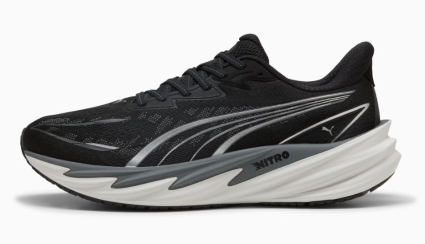
| Control source | My fit | Best use | Test depth |
|---|---|---|---|
| Secure upper, planted heel, controlled foam, and dependable outsole contact | Secure through my US 10.5 D midfoot; runner’s loop useful at pace | Daily miles, wet pavement, strides, and controlled uptempo running | 324 running miles |
This is the shoe I reach for when I want neutral freedom without spending the run correcting the platform. The heel settles quickly, the midfoot hold stays quiet, and the rubber gives me a repeatable landing on damp boardwalk sections. That combination matters more to me than a single width measurement.
At easy pace it feels composed rather than sleepy. When I add strides, it does not suddenly become narrow or twitchy under the rearfoot. I can move from a short recovery shuffle to a steady finish without learning a second transition pattern, which is why it wins the overall spot.
My pair has 324 miles. The outsole has outlasted the freshest phase of the midsole, but the platform still gives me a clear, centered path. I judge that aging by comparing late-run steering and forefoot response with earlier notes, not by counting cosmetic creases.
I would skip it if a runner wants a very soft landing, needs generous vertical volume, or regularly runs gravel that wedges into outsole channels. A stable neutral shoe should reduce management; it should not ask the runner to tolerate pressure just because the base looks controlled.
My decision: Choose PUMA Velocity NITRO 5 for daily miles, wet pavement, strides, and controlled uptempo running. Skip it when: its outsole grooves can collect sharp gravel, and the ride is less relaxed than a plush cruiser.
I place this shoe in the broader daily-training context in my best daily trainer running shoes guide.
2. Brooks Glycerin 23 — Best plush daily trainer
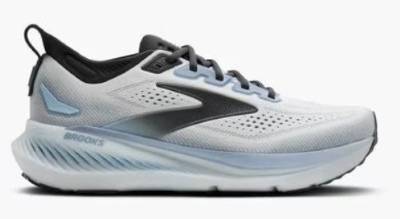
| Control source | My fit | Best use | Test depth |
|---|---|---|---|
| Broad heel, gradual sidewall support, and an upper that centers the foot | True to size for me with comfortable forefoot room and padded rearfoot hold | Easy aerobic runs, recovery days, walking, and relaxed long runs | 211 running miles |
Glycerin 23 is the calm choice in this ranking. I do not feel an obvious stability device; I feel a wide landing, a predictable compression pattern, and an upper that keeps my foot from moving independently of the platform. That is the kind of invisible control I want from this category.
The ride works best when the pace stays conversational. The heel absorbs the first contact without collapsing to one edge, then the forefoot rolls forward without a sudden soft spot. On broad turns, I can keep my normal line instead of bracing through my toes.
After 211 miles, my upper remains sound and the ride has changed progressively rather than falling off a cliff. That maturity matters for a daily trainer: I want to recognize decline early enough to compare it with a fresher pair, not discover it through a bad long run.
This is not my pick for intervals or runners who equate stability with a low, direct platform. It is also important to distinguish the neutral Glycerin 23 here from the more guided Glycerin GTS version.
My decision: Choose Brooks Glycerin 23 for easy aerobic runs, recovery days, walking, and relaxed long runs. Skip it when: more shoe than runners seeking ground feel or fast turnover need.
For the complete wear record, fit notes, and comparisons, read my full Brooks Glycerin 23 review.
3. Topo Athletic Atmos 2 — Best anatomical fit
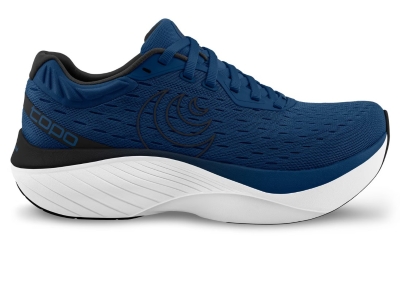
| Control source | My fit | Best use | Test depth |
|---|---|---|---|
| Broad forefoot, fitted waist and heel, and a controlled high-cushion platform | True in length for me; spacious toe box with a securely held midfoot and heel | Easy runs, steady miles, walking, and runners who need toe-splay room | 192 running miles |
Atmos 2 solves a problem that wide shoes often create: it gives my toes room without turning the entire upper into an open room. My heel stays located, the waist is fitted, and the forefoot can spread. That separation between toe space and overall looseness is central to its stability.
Underfoot, it feels protective but not vague. The broad contact patch gives me time to organize the next step when cadence slows, while the geometry carries me forward without a harsh rocker edge. It is especially useful late in easy runs, when I am more likely to notice toe gripping or lateral drift.
I have 192 miles in my pair across pavement, boardwalk, and mixed walking days. The shoe has kept its role because fit security has remained consistent; the roomy front has not turned into sloppy cornering as the upper softened.
I would not use it as a blind recommendation for anyone moving from a high-drop shoe. The lower offset changes where the system asks for work. I would introduce it gradually and reject it if the calf-Achilles response or rocker timing feels wrong.
My decision: Choose Topo Athletic Atmos 2 for easy runs, steady miles, walking, and runners who need toe-splay room. Skip it when: the lower offset and anatomical shape are not automatic matches for every runner.
For the complete wear record, fit notes, and comparisons, read my full Topo Athletic Atmos 2 review.
4. PUMA Magnify NITRO 3 — Best broad cushioned platform
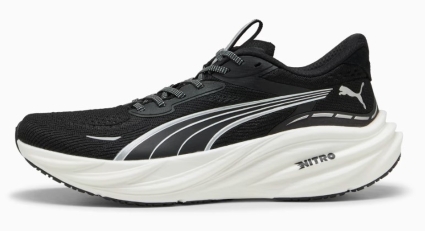
| Control source | My fit | Best use | Test depth |
|---|---|---|---|
| Wide planted base, contained midfoot, and full-contact rubber | True to size for me with a contained middle and comfortable front | Easy road mileage and recovery runs where planted cushioning matters | 135 running miles |
Magnify NITRO 3 feels stable because there is enough platform around the foot, not because the shoe pushes against my arch. I notice that distinction most on slow days: the landing has room to settle, yet the midfoot does not feel free to wander.
The cushioning is deeper and more relaxed than Velocity NITRO 5. I use it when the objective is easy mileage rather than pace range. The outsole contact also makes the transition feel continuous, which is useful on damp streets and painted crossings.
My 135-mile log is enough to trust its current behavior but not to declare a universal lifespan. So far, the rubber is functional and the upper still contains the foot. I keep watching whether softness begins to arrive sooner on one side than the other.
Runners who want crisp ground feedback may call this shoe dull. I also would not choose it simply because a broad base appears safe in a product photo; the actual test is whether the foot remains centered after it warms and the pace slows.
My decision: Choose PUMA Magnify NITRO 3 for easy road mileage and recovery runs where planted cushioning matters. Skip it when: too soft and substantial for runners who want a direct timing cue.
I place this shoe in the broader daily-training context in my best daily trainer running shoes guide.
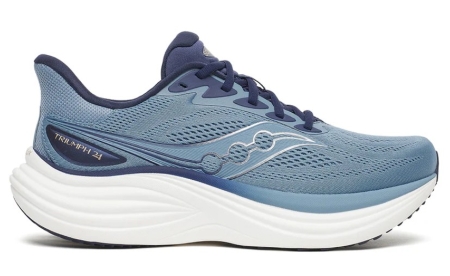
5. Saucony Triumph 24 — Best stable-neutral long-run shoe
| Control source | My fit | Best use | Test depth |
|---|---|---|---|
| Protective foam, reliable heel hold, useful forefoot width, and smooth roll | True to size for me with useful front room and a secure heel | Long easy runs, steady finishes, and high-volume road weeks | 205 running miles |
I rank Triumph 24 by what happens in the final third of a long run. Early softness is easy to sell; late control is harder. This shoe continues to hold my heel and lets the forefoot roll when my stride shortens, so I do not have to force a cleaner landing as fatigue builds.
It has more energy than the calmest shoes here, but the rebound does not feel random. The platform accepts heel or midfoot contact without a sharp edge, and broad turns remain predictable. That makes it a better long-run option than a soft shoe that feels wonderful for twenty minutes and unruly after ninety.
At 205 miles, I see localized outsole wear while the upper remains secure. The important signal is not the visible rubber alone. I compare the same boardwalk section and ask whether toe-off, cornering, or next-day response has changed.
I would pass if the intended job is short intervals, gym work, or maximum flexibility. Triumph 24 earns its place through protection over time, not through disappearing underfoot.
My decision: Choose Saucony Triumph 24 for long easy runs, steady finishes, and high-volume road weeks. Skip it when: more cushioning than short fast sessions or direct-foot runners need.
For the complete wear record, fit notes, and comparisons, read my full Saucony Triumph 24 review.
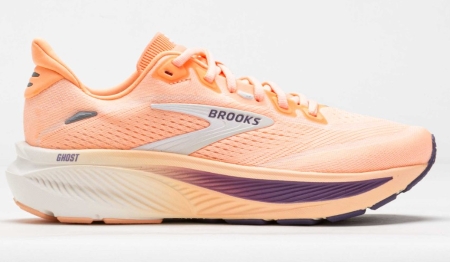
6. Brooks Ghost 18 — Best traditional stable-neutral ride
| Control source | My fit | Best use | Test depth |
|---|---|---|---|
| Balanced foam, natural flex, a secure heel, and predictable full-length contact | True to size for me with a secure rearfoot and multiple width paths | Daily miles, treadmill running, first rotations, and uncomplicated steady work | 380 running miles |
Ghost 18 is the control shoe I use as a reference point. It does not rely on a dramatic rocker, a very soft midsole, or a rigid element. Instead, the heel, midfoot, forefoot flex, and upper agree with one another. That coherence makes small form changes easier to read.
For a runner unsure what stable neutral should feel like, this is a useful baseline. At easy and steady pace, the transition is familiar and the base does not disappear beneath the foot. On a treadmill, the same predictability keeps the belt from exaggerating a loose rearfoot.
My 380-mile record gives me more confidence in its aging pattern than I have for newer entries. The ride became less fresh before the structure became unusable, which is exactly why replacement should depend on role and response rather than one universal mileage number.
Its weakness is ambition. When I want a lively progression or hard repetitions, Ghost 18 feels workmanlike. I keep it for days when reliable placement matters more than excitement.
My decision: Choose Brooks Ghost 18 for daily miles, treadmill running, first rotations, and uncomplicated steady work. Skip it when: dependable rather than exciting when the workout turns genuinely fast.
For the complete wear record, fit notes, and comparisons, read my full Brooks Ghost 18 review.
7. ASICS Gel-Nimbus 28 — Best plush stable-neutral cruiser
| Control source | My fit | Best use | Test depth |
|---|---|---|---|
| Deep cradle, broad geometry, held heel, and a measured rocker | True to size for me with an accommodating forefoot and secure rearfoot | Recovery running, long easy miles, walking, and hard pavement | 260 running miles |
Nimbus 28 shows why stack height and instability are not synonyms. The foot sits within the platform rather than balancing entirely above it, and the heel shape gives the landing a defined center. I feel protected, but I do not feel as though I am chasing the foam sideways.
The rocker is most useful after the legs are tired. Instead of demanding extra forefoot flex, it helps maintain a smooth roll at recovery pace. I test that benefit on mild camber because a rocker that works only on a perfectly flat path is not enough for real roads.
My 260-mile log includes a 17-mile outing plus routine easy work. The shoe has remained composed under those jobs, though it never becomes nimble. The mass and height are the price of its protective personality.
I would choose something lower and quicker for intervals, tight corners, or runners who feel disconnected in deep cushioning. Stable neutral is still personal: a platform can be objectively broad and subjectively awkward.
My decision: Choose ASICS Gel-Nimbus 28 for recovery running, long easy miles, walking, and hard pavement. Skip it when: too tall and substantial for fast changes of direction or minimal-shoe preferences.
For the complete wear record, fit notes, and comparisons, read my full ASICS Gel-Nimbus 28 review.
8. HOKA Bondi 9 — Best rockered maximum cushion

| Control source | My fit | Best use | Test depth |
|---|---|---|---|
| Wide base, bucket-seat geometry, tall sidewalls, and a deliberate rocker | True to size for me with a deep cradle; wide options are available | Recovery runs, walking-heavy days, slow long runs, and hard surfaces | 310 running miles |
Bondi 9 guides through shape rather than a post. My foot sits down inside the midsole walls, the rearfoot has a wide footprint, and the rocker moves the shoe through toe-off. When that timing matches my stride, the result is unusually calm for such a tall platform.
I use it at the slow end of training. The shoe is at its best when impact comfort and straight-line consistency matter more than quick changes of pace. It also crosses into long walking days better than most running-first options on this list.
After 310 miles, I can separate normal foam aging from a genuine loss of control because I have repeated the same recovery routes. The platform remains useful, but its size has never disappeared on tight corners or uneven curb transitions.
Skip Bondi 9 if the rocker makes you brake, the sidewall presses the arch, or you prefer to flex through the forefoot yourself. A cradle is helpful only when the foot actually fits inside it.
My decision: Choose HOKA Bondi 9 for recovery runs, walking-heavy days, slow long runs, and hard surfaces. Skip it when: bulky on tight turns, with rocker timing that some runners will resist.
For the complete wear record, fit notes, and comparisons, read my full HOKA Bondi 9 review.
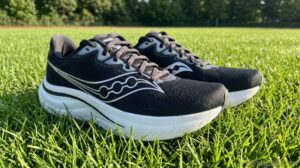
9. Saucony Ride 19 — Best simple one-shoe option
| Control source | My fit | Best use | Test depth |
|---|---|---|---|
| Broad horizontal toe box, held heel, balanced foam, and uncomplicated geometry | True to size for me with useful forefoot room and a secure rearfoot | Easy-to-steady mileage, first rotations, travel, and one-shoe simplicity | 110 running miles |
Ride 19 does not try to manufacture stability through bulk. Its control comes from ordinary things executed together: a held heel, enough forefoot width, even foam behavior, and a base that stays understandable as pace changes.
That simplicity makes it useful for runners building a first rotation. I can run easy, move toward steady effort, and finish without the shoe dictating a dramatic rocker rhythm. The forefoot room also lets my toes work without the whole upper becoming loose.
I have 110 miles in this pair, so my fit and ride verdict is stronger than my long-term durability verdict. I will not turn a clean outsole at this stage into a 400-mile promise. What I can say is that its current behavior is consistent across familiar routes.
Choose a deeper cruiser if long-run protection is the priority, or a lighter performance trainer if workouts dominate. Ride 19 is best when the buyer wants fewer surprises, not more technology.
My decision: Choose Saucony Ride 19 for easy-to-steady mileage, first rotations, travel, and one-shoe simplicity. Skip it when: less protective than the max-cushion choices and less lively than a workout shoe.
For the complete wear record, fit notes, and comparisons, read my full Saucony Ride 19 review.
10. Nike Pegasus 42 — Best for stable-neutral pace range
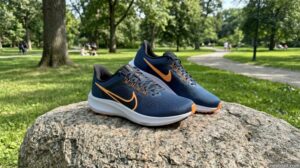
| Control source | My fit | Best use | Test depth |
|---|---|---|---|
| Moderately firm platform, secure heel, flexible forefoot, and reliable rubber | True to size for me; secure rearfoot, with a tapered forefoot best checked warm | Daily running, strides, brisk progression work, and mixed-surface city routes | 145 running miles |
Pegasus 42 is the quickest-feeling shoe in this ranking without becoming unstable at ordinary pace. The firmer platform gives me a clean edge to push from, while the forefoot still flexes enough that the ride does not feel mechanically locked.
Its stable-neutral behavior depends heavily on fit. When my heel is planted and the forefoot has enough room, the shoe tracks well through strides and broad turns. If the tapered front compresses the foot, that control advantage disappears because the toes begin managing pressure.
My 145 miles cover daily runs, pace changes, and repeated pavement. I trust the role verdict, though I continue to watch forefoot rubber and midsole response as the pair ages. The shoe earns range through consistency, not through maximum cushioning.
I would skip it for runners who want a plush recovery feel or need a spacious anatomical toe box. I would choose it when a stable neutral daily trainer still needs to feel alert during a faster finish.
My decision: Choose Nike Pegasus 42 for daily running, strides, brisk progression work, and mixed-surface city routes. Skip it when: the forefoot shape and firmer feel will not suit every wider or softness-first foot.
For the complete wear record, fit notes, and comparisons, read my full Nike Pegasus 42 review.
How I Rank Stable Neutral Running Shoes
I do not score stability by pressing the midsole with my thumb or looking at the footprint from above. I run the shoe through conditions that expose weak control: slow cadence, mild fatigue, cambered pavement, broad turns, downhill braking, and a short increase in pace.
My US men’s 10.5 D foot and 182-pound body are the test system, not a universal standard. The ranking becomes useful when I explain what I felt, when it appeared, and which runner or job makes that evidence transferable.
| Ranking gate | What I test | What fails the gate |
|---|---|---|
| Warm-foot fit | Heel hold, instep pressure, toe clearance, and midfoot containment after 30–45 minutes | Sliding, numbness, hot spots, toe gripping, or persistent sidewall contact |
| Landing control | Flat road, mild camber, different foot strikes, and slow cadence | A platform that tips, collapses asymmetrically, or requires constant steering |
| Transition | Easy pace, steady pace, short pickups, and downhill braking | A rocker or flex point that makes me brake or fight toe-off |
| Tired-form stability | Final third of an easy or long run | Control that disappears when cadence drops or stride shortens |
| Grip and durability | Wet paint, pavement, boardwalk, outsole wear, and upper hold | Loss of traction or structure before the assigned role is complete |
Category boundary: Stable neutral is not a diagnosis and it does not promise injury prevention. When a runner consistently feels calmer in a guided shoe, I compare the shortlist with my running shoes for overpronation guide instead of forcing a neutral label.
I also separate cushion from control. My midsole foam guide explains why softness alone cannot predict stability, while my rocker guide shows why a broad shoe can still feel awkward when its transition timing is wrong.
How to Choose a Stable Neutral Running Shoe
1. Decide whether you need neutral control or active guidance
I start with the least complicated shoe that feels comfortable and predictable. If a neutral platform stays centered without conscious correction, I do not add support for the sake of a label. If a guided model clearly reduces effort or unwanted motion without creating pressure, I keep it in the comparison.
2. Match the control mechanism to your stride
A broad base is only one tool. Sidewalls can cradle the foot, a rocker can shorten the unstable part of toe-off, firmer foam can resist uneven compression, and a secure upper can keep the foot aligned with the platform. I choose the system that works quietly rather than the feature that sounds strongest.
3. Fit the foot after it warms
I use the socks planned for training and check the shoe again after the foot has expanded. My running shoe fit guide covers heel and instep checks; the toe-box guide helps separate useful toe room from a shoe that is simply loose.
4. Give the shoe one primary job
I decide whether the shoe is for ordinary daily miles, long runs, recovery, walking crossover, or faster finishes. Velocity NITRO 5 and Pegasus 42 cover more pace range; Glycerin 23, Nimbus 28, and Bondi 9 make more sense when comfort and calm control lead. A specialist can rank lower overall and still be the right purchase.
5. Run my two-day control test
- Walk five minutes and reject immediate heel slip, arch pressure, numbness, or toe contact.
- Run easy on flat pavement, then include broad turns and a mild camber without changing your natural form.
- Add three short controlled pickups and one gentle descent to expose forefoot and rearfoot movement.
- Record when steering, toe gripping, sidewall pressure, or rocker resistance appears.
- Reassess later that day and the next morning before increasing distance or intensity.
If an orthotic is part of the setup, I repeat every step with the device installed. My running shoes for orthotics guide explains the extra volume and heel-hold checks. For a multi-shoe week, I use my running shoe rotation guide instead of asking one pair to do every pace.
Frequently Asked Questions
What is a stable neutral running shoe?
I use the term for a neutral shoe that creates a predictable platform through base width, sidewalls, foam behavior, rocker geometry, outsole contact, and upper hold—without relying on a traditional corrective post. It is a practical ride category, not a medical diagnosis.
What is the best stable neutral running shoe overall?
PUMA Velocity NITRO 5 is my best overall pick because it combines secure fit, reliable grip, controlled cushioning, and useful pace range. I would choose another model when fit, cushioning preference, or the primary training job points elsewhere.
Are stable neutral shoes the same as stability shoes?
No. A stable neutral shoe usually keeps neutral geometry while gaining control from its platform and fit. A stability shoe adds more intentional guidance. The boundary is not perfectly standardized, so I judge the actual ride rather than trusting the label.
Can overpronators wear stable neutral running shoes?
Some can, especially when the shoe feels comfortable and controlled during real running. Overpronation alone does not select a shoe. Repeated symptoms, weakness, numbness, or giving-way deserve individualized assessment rather than a stronger retail label.
Are wide running shoes automatically more stable?
No. Width can enlarge the landing base, but a loose heel, collapsing foam, poor sidewall match, or an upper that lets the foot slide can make a wide shoe feel less controlled. I judge the entire sequence from landing to toe-off.
Are max-cushion neutral shoes stable?
They can be. Bondi 9 and Nimbus 28 use broad geometry and cradle-like construction to control tall cushioning. A runner still has to match the rocker, sidewall, and fit; high stack is neither automatically stable nor automatically unstable.
How should stable neutral running shoes fit?
I want the heel planted without crushing the instep, the midfoot contained without sidewall pressure, and enough toe room for the warm foot. I reject repeated slipping, toe gripping, numbness, or pressure rather than expecting break-in to repair the fit.
How do I test stability in a neutral shoe?
I use a familiar route with easy running, broad turns, mild camber, a controlled descent, and short pickups. I note steering, heel movement, toe gripping, sidewall pressure, and whether control changes late in the run or the next morning.
Do heavier runners need stability shoes?
Not automatically. Body mass changes how much the foam compresses and how quickly a platform can feel vague, but it does not prescribe a category. I compare a stable-neutral shoe with a guided option and keep the one that remains comfortable and predictable.
Can I use orthotics in stable neutral shoes?
Often, if the liner is removable and the complete setup has enough volume and a secure heel. The orthotic changes how the foot sits inside the shoe, so I retest pressure, heel hold, flex, and platform interaction with the device installed.
How long should I test a stable neutral shoe?
A store try-on can reject poor fit but cannot prove late-run control. I use a short controlled run first, reassess later that day and the next morning, then repeat on a longer familiar route before assigning the shoe its full job.
How long do stable neutral running shoes last?
There is no universal mileage. I compare the aging pair with a fresher reference and replace or reassign it when ride, platform control, outsole security, or upper hold changes enough to affect its intended job.
Final: My Stable Neutral Recommendation
I would start with PUMA Velocity NITRO 5. It gives me the cleanest balance of fit security, grip, controlled cushioning, and pace range. It feels stable without turning every step into a correction, which is the entire point of this category.
I would choose Brooks Glycerin 23 when plush easy-mile comfort matters more than speed, and Topo Athletic Atmos 2 when toe-box shape is the deciding factor. For long runs, Triumph 24 is my stronger specialist. The final winner is the shoe that stays quiet on your warm foot and remains predictable when your form is least polished.
- Best overall: PUMA Velocity NITRO 5.
- Best plush option: Brooks Glycerin 23.
- Best anatomical fit: Topo Athletic Atmos 2.
- Best long-run option: Saucony Triumph 24.
- Best traditional ride: Brooks Ghost 18.

Written by Ken — 12 years of running, 12,500+ miles, 63 shoes tested, 36 races from 5Ks to a 50K ultra. I run 30–40 miles a week on the Atlantic City Boardwalk and review every shoe with real training miles, not one-run demos. More about me →