
Brooks Ghost vs Glycerin comes down to one practical choice: buy the Ghost 18 for a firmer, simpler daily trainer, or buy the Glycerin 23 for a softer, more protective ride on easy and long runs. For most runners who want one dependable shoe, I rank the Ghost first. For runners who put comfort ahead of pace range, I rank the Glycerin first.
I have run in the Ghost family for more than a decade, going back to the Ghost 7, and the Ghost 16 was the first shoe I reviewed for NextGait. I also test the current Glycerin GTS 23 in my regular rotation. That history matters because these two Brooks lines can look almost interchangeable on a store wall. They are not.
The Ghost feels more direct underfoot. It bends more naturally, holds a steady rhythm, and disappears on ordinary daily miles. The Glycerin feels deeper and more polished. Its DNA TUNED midsole takes the edge off concrete better, especially when my 182-pound frame and slightly inward-rolling left foot get tired.
Testing note: my personal Glycerin mileage is in the GTS 23, the structured-support version. The standard Glycerin 23 uses the same core DNA TUNED cushioning concept but does not add GuideRails. I separate those observations throughout this comparison so you know what I actually tested and what comes from Brooks’ published specifications.
Quick verdict: Choose the Brooks Ghost 18 if you want a neutral daily trainer with a 10mm drop, a secure upper, durable outsole coverage, and a more traditional road feel. Choose the Brooks Glycerin 23 if you want softer cushioning, smoother long-run transitions, an 8mm drop, and a more accommodating premium fit. Choose the Glycerin GTS 23 only if you also prefer structured guidance.
Brooks Ghost vs Glycerin at a Glance
The Ghost 18 wins versatility, outsole durability, and traditional daily-trainer feel. The Glycerin 23 wins cushioning, long-run comfort, and premium step-in feel. Neither is a speed shoe. Both are road trainers that work well for walking, but they solve comfort in different ways.
| Category | Brooks Ghost 18 | Brooks Glycerin 23 | My winner |
|---|---|---|---|
| Primary role | Balanced daily trainer | Plush daily and long-run trainer | Depends on use |
| Ride | Moderately soft, direct, flexible | Softer, smoother, more insulated | Glycerin for comfort |
| Fast running | Manageable for steady efforts | Best kept at easy to moderate effort | Ghost |
| Long runs | Reliable, but less protective late | More forgiving as fatigue builds | Glycerin |
| Walking and standing | Stable and less bulky | More padded and cushioned | Personal preference |
| Standard support | Balanced neutral support | Balanced neutral support | Tie |
| Structured option | No Ghost GTS equivalent | Glycerin GTS 23 adds GuideRails | Glycerin GTS |
| Best overall for most runners | Broad, predictable daily use | Comfort-first use | Ghost |
Ken’s ranking rule: I rank a daily trainer by the run it handles best, not by which shoe feels softest during a 30-second try-on. If one shoe can cover easy miles, steady runs, short long runs, walking, and travel without creating a reason to change shoes, it ranks higher for most runners. That rule puts the Ghost 18 first overall. If your priority list starts with recovery and long-run comfort, the Glycerin 23 moves to first.
Table of contents
- Quick comparison
- Specifications
- Brooks cushion family map
- How I tested and ranked them
- Cushioning and ride
- Pace and workout performance
- Value and shoe rotation
- Fit, upper, and sizing
- Neutral support vs GTS
- Long runs and recovery
- Walking and all-day wear
- Durability and traction
- Who should buy each shoe
- Alternatives
- FAQ
- Final verdict
Ghost 18 vs Glycerin 23 Specifications
The published specifications confirm the basic split: Ghost 18 is lighter and higher-drop, while Glycerin 23 carries more premium cushioning and uses a lower 8mm offset. Brooks lists both as balanced-support road shoes. GTS is a separate Glycerin version, not the default comparison.
| Specification | Brooks Ghost 18 | Brooks Glycerin 23 | Glycerin GTS 23 note |
|---|---|---|---|
| Men’s listed weight | 10.2 oz / 289.2 g | 10.6 oz / 300.5 g | 11.0 oz / 311.8 g |
| Women’s listed weight | 9.2 oz / 260.8 g | 9.5 oz / 269.3 g | Heavier than neutral version |
| Heel-to-toe drop | 10mm | 8mm | 8mm |
| Midsole | DNA LOFT v3 | Dual-cell DNA TUNED | DNA TUNED plus GuideRails |
| Cushion level | Balanced | Plush | Plush |
| Support category | Balanced support | Balanced support | Structured support |
| Best use | Daily running, walking | Daily running, long runs | Daily and long runs with guidance |
| Outsole | RoadTack rubber | Road rubber with broad coverage | Similar Glycerin platform |
I verified the core figures against the official Brooks Ghost 18, Brooks Glycerin 23, and Brooks Glycerin GTS 23 product pages on July 13, 2026. I deliberately omit retail prices because they change by color, width, and sale cycle.
Do not overread a 2mm drop difference. Drop is the height difference between heel and forefoot, not the total amount of cushioning. A 10mm shoe is not automatically more supportive, and an 8mm shoe is not automatically more natural. Your calf tolerance, strike pattern, and recent training load matter more.
Do Not Confuse Ghost, Ghost Max, Glycerin, GTS, Flex, and Max
Ghost 18 and Glycerin 23 are the direct comparison because both are conventional neutral daily trainers. Ghost Max, Glycerin GTS, Glycerin Flex, and Glycerin Max change the geometry or support system enough to answer a different question.
| Brooks model | What changes | Choose it when |
|---|---|---|
| Ghost 18 | Balanced cushion, 10mm drop, conventional flex | You want the safest one-shoe daily trainer |
| Ghost Max 4 | High-stack cushion, rocker, broader platform | You want more protection and an assisted roll |
| Glycerin 23 | Plush DNA TUNED cushion, 8mm drop | You want a softer neutral trainer for easy and long runs |
| Glycerin GTS 23 | Glycerin ride plus GuideRails | You prefer structured guidance as fatigue builds |
| Glycerin Flex | 6mm drop, lighter build, deep midfoot flex groove | You want plush cushioning without a stiff platform |
| Glycerin Max 2 | Stacked DNA TUNED cushion and GlideRoll rocker | You want the most cushioned, rockered Glycerin experience |
As of this July 13, 2026 update, Brooks lists the Ghost Max 4 with an August 1 release date. The Glycerin Flex and Glycerin Max 2 are already separate branches of the Glycerin line. I would not substitute any of them into a Ghost vs standard Glycerin comparison without saying so.
Previous-model shoppers can still use the main decision rule. Ghost remains the more traditional all-purpose line; Glycerin remains the comfort-first premium line. For the latest versions, Ghost 18 mainly refines the upper, tongue, and sockliner, while Glycerin 23 adds forefoot cushioning and retains DNA TUNED. That is why an older comparison using Glycerin 21 does not fully describe the current foam or drop.
How I Tested and Ranked These Brooks Shoes
I compare daily trainers on repeated real routes, not one treadmill session. My normal week is 30 to 40 miles around Atlantic City and Brigantine. I am 5 feet 10 inches, 182 pounds, a heel-to-midfoot striker, and a mild overpronator. My easy pace usually lands between 8:45 and 9:30 per mile.
The Ghost has been part of my running history since switching from worn-out Nike Free shoes to the Ghost 7 during a shin-splint comeback. The line taught me what a competent daily trainer should do: fit securely, absorb enough impact, and stay out of the way.
My current Glycerin experience is with the GTS 23. I use it for easy miles and longer outings where my stride gets less tidy near the end. The first thing I noticed was not the GuideRails. It was the quieter, deeper landing.
The guidance became apparent only after fatigue. That is exactly how I want a modern support shoe to behave.
For each shoe, I pay attention to five repeatable questions:
- Does the shoe still feel balanced after an hour?
- Can I change pace without fighting the midsole?
- Does the upper hold my heel without crushing my forefoot?
- Does the outsole grip damp boardwalk planks and painted road markings?
- Would I choose it again when my legs are already tired?
This is also why I removed the unsupported durometer, tibial-force, and pronation-angle numbers from the previous version of this article. Those values looked precise but were not tied to reproducible test files or a linked laboratory report. Precision without provenance is decoration, not evidence.
For context on how I judge support, read my guide to stability vs neutral running shoes. For the broader Brooks lineup, start with the running shoe guide and my full Brooks Ghost review.
Cushioning and Ride Feel
Ghost 18 feels balanced and familiar; Glycerin 23 feels softer, deeper, and more refined. The difference is easy to feel at landing and smaller at toe-off. Neither gives the trampoline sensation of a modern super-trainer.
Ghost 18: controlled cushioning
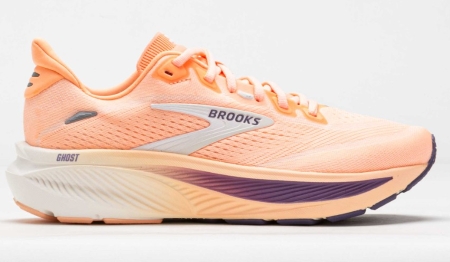
DNA LOFT v3 is a nitrogen-infused foam tuned for a middle ground. My heel sinks enough to take the sting out of pavement, then the shoe settles quickly. There is moderate ground feel and a soft thud on hard surfaces.
The Ghost does not ask me to adapt to a rocker or an exaggerated platform. I can land at the heel, roll through the midfoot, and bend at the toes. That ordinary transition is the line’s strongest feature.
The tradeoff is excitement. On a hilly steady run in Brigantine, the Ghost felt flat once I tried to push the climbs. It was not unstable or harsh. It simply gave me little back.
I use a faster shoe for workouts, usually something from my tempo-run rotation.
Glycerin 23: a more cushioned glide
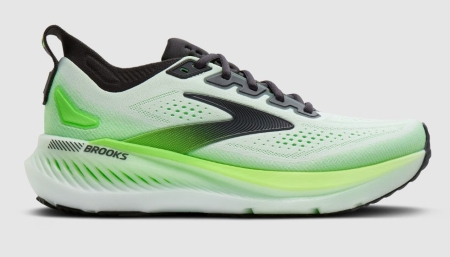
DNA TUNED uses different cell structures to make the heel land softer while keeping the forefoot from feeling completely sleepy. In practice, the Glycerin has less road texture and a smoother roll. It is more glide than pop.
At easy effort, that works. The Glycerin lets me stop thinking about the concrete. On days when my quads are carrying yesterday’s workout, I prefer that extra separation from the road.
But plush does not mean bottomless. The Glycerin 23 is not the Glycerin Max 2, and I would not call the regular Glycerin a true max-stack shoe. It is Brooks’ premium cushioned trainer. Runners who want a much taller, more rockered platform should compare it with the ASICS Gel-Nimbus or a dedicated max-cushion model.
Do not choose by finger-pressing the midsole. Foam that feels soft in a store can become unstable at mile eight, while a firmer shoe can feel better once your mechanics get sloppy. Run in both if possible, ideally after you have been on your feet for a while.
Easy Runs, Steady Runs, and Faster Work
Ghost 18 covers more paces, but neither shoe is a convincing choice for speedwork. The Ghost’s lighter build, 10mm drop, and more direct forefoot make pace changes less awkward. The Glycerin is happier when the goal is controlled aerobic mileage.
| Run type | Better choice | Why |
|---|---|---|
| Recovery run | Glycerin 23 | Softer landing and more isolation from hard pavement |
| Routine easy run | Ghost 18 | Balanced ride with less shoe underfoot |
| Steady aerobic run | Ghost 18 | Easier cadence changes and firmer toe-off |
| Tempo or intervals | Neither | Both feel heavy beside a dedicated workout shoe |
| Long easy run | Glycerin 23 | Better late-run comfort for most runners |
| One-shoe travel week | Ghost 18 | Running, walking, and gym use with fewer compromises |
At conversational pace, both work. The Glycerin feels more expensive underfoot, but that does not automatically make it better. I sometimes prefer the Ghost on a normal five-mile morning because its simplicity keeps my stride honest.
Below roughly 8:30 per mile, my Glycerin GTS 23 starts to feel like extra luggage. The Ghost handles that pace more willingly, yet it still lacks the snap I want for a real session. For a faster daily option, my Nike Pegasus review explains a livelier alternative.
New runners should not confuse versatility with a requirement to run fast. The Ghost simply leaves more room to explore pace. My best running shoes for beginners guide explains why predictable fit and comfort matter more than aggressive foam.
Value: Should You Buy One Pair or Rotate Both?
Ghost 18 is the better value when you need one pair; owning both makes sense only when the Glycerin has a separate recovery and long-run job. The Glycerin’s premium materials are worth paying for when you use the extra comfort, not simply because it sits higher in Brooks’ lineup.
For a one-shoe setup, I would buy the Ghost and use it for easy runs, steady miles, short long runs, walking, and travel. It has fewer role conflicts and leaves less reason to buy another conventional daily trainer.
For a two-shoe Brooks rotation, I would use the Ghost for routine daily mileage and the Glycerin for recovery days and long easy runs. There is enough contrast in ride depth and pace preference to justify both, but only if your training actually includes those separate sessions.
For a performance-focused rotation, I would buy one of these shoes, not both, then add a lighter workout or race shoe. Two comfortable trainers cannot cover the job of a shoe that turns over cleanly at interval pace.
My value rule: a premium shoe is only better value if its premium feature changes a run you do every week. If the Glycerin’s softer landing keeps you more comfortable on Sunday long runs, the upgrade has a job. If both pairs would cover the same five-mile easy loop, buy the Ghost and keep the rest of the money.
Fit, Upper, and Sizing
Both fit true to size for me in a men’s US 10.5, but the Glycerin feels more accommodating and padded. The Ghost has a medium-volume fit with a snug heel. The Glycerin gives my forefoot more breathing room and wraps the foot with a softer knit.
The Ghost 18 upper is the cleaner performance fit. Its flat-knit tongue has enough padding to prevent lace pressure without turning the top of the shoe into a pillow. Heel lockdown is secure, and I do not need a runner’s knot.
The Glycerin 23 feels richer at step-in. The collar, tongue, and interior are all softer. That is pleasant in cool weather and can feel warm during a humid New Jersey summer run. My feet swell on long runs, so the extra forefoot space helps.
High-volume feet may prefer the Glycerin. Narrow heels may prefer the Ghost’s more conventional hold. Runners with bunions should still choose by actual width and upper pressure, not the product family name; my running shoes for bunions guide covers the fitting process.
Both lines are offered in multiple widths, though availability varies by color and gender. Do not size up automatically to solve a width problem. A longer shoe can move the flex point away from your big-toe joint. Try the correct wide width first.
Stability: Ghost 18 vs Glycerin 23 vs Glycerin GTS 23
Standard Ghost 18 and standard Glycerin 23 are neutral, balanced-support shoes. Glycerin GTS 23 is the structured-support option. This distinction was blurred in the previous article and changes the buying advice.
The Ghost is naturally steady because the foam is not extremely soft and the base gives the heel a predictable landing. A neutral runner can use it without feeling corrected. Many mild overpronators can also run comfortably in a neutral shoe, depending on strength, comfort, injury history, and training load.
The standard Glycerin also has inherent stability from its broad platform and smooth geometry. It is softer than the Ghost, but it does not feel sloppy to me. The neutral model is the fair match for the Ghost in a general Brooks Ghost vs Glycerin comparison.
The Glycerin GTS adds Brooks GuideRails along the heel and midfoot. These raised sidewalls resist excess movement without using an old-fashioned hard medial post. On my left side, which rolls inward more when I tire, the GTS feels present late in a run and almost invisible early.
That does not mean every flat-footed runner needs GTS, or that GuideRails prevent knee pain. Foot shape and pronation are not diagnoses. If pain changes your gait or persists, see a sports medicine clinician or physical therapist instead of asking a shoe to do a clinician’s job. My guides to running shoes for overpronation, running shoes for flat feet, and running shoes for knee pain explain the limits more carefully.
My support rule: Buy the least intrusive shoe that remains comfortable and controlled when you are tired. More support is not a quality upgrade. It is a different tool.
Long Runs and Recovery Miles
Glycerin 23 is the better long-run and recovery shoe for most runners because its cushioning stays more protective as fatigue builds. Ghost 18 can handle long runs, but I prefer it when the run is shorter, steadier, or includes moderate pace changes.
The Glycerin’s value appears after the first hour. Early in a run, the extra softness can feel like a luxury. Later, when my landing gets louder and my stride loses precision, it feels functional. The heel absorbs more of the thud and the transition remains calm.
My best Glycerin runs are not dramatic. They are the ten-mile mornings where nothing hurts, the pace stays boring, and I finish without wanting to kick the shoes off. For a long-run trainer, boring can be a compliment.
The Ghost works for long mileage if you like a firmer ride or weigh less than I do. It also feels more stable through turns and uneven sidewalk seams because there is less soft foam to compress. But on concrete-heavy routes, I notice the Glycerin’s protection.
For planning recovery rather than buying it, see my recovery run guide and rest day guide for runners. A softer shoe cannot compensate for a training load your body is not ready to absorb.
Heavier runners may appreciate the Glycerin’s deeper cushion, but body weight alone does not select a shoe. Foam preference and stability matter too. My running shoes for heavier runners guide includes alternatives with broader bases and different foam densities.
Walking, Standing, and Travel
Ghost 18 is my better all-purpose walking and travel shoe; Glycerin 23 is better if cushioning is the priority. The Ghost feels lower-profile, bends naturally, and remains stable during slow heel-to-toe walking. The Glycerin feels softer during long standing shifts but carries more bulk.
Walking loads a shoe differently from running. You spend more time with the foot on the ground and move through a slower transition. Very soft, highly rockered shoes can feel odd at that pace. Both Brooks models avoid that problem better than many modern max-cushion shoes.
I would pack the Ghost for a trip that combines airport walking, hotel-gym miles, and casual wear. I would choose the Glycerin for a standing-heavy day when my feet already feel beaten up. The GTS version makes sense only if you already know you prefer its sidewall guidance.
Durability, Outsole, and Wet Grip
Ghost 18 gets my durability edge because its extensive RoadTack rubber and firmer ride resist the early packed-out feeling common in soft trainers. Glycerin 23 still has solid rubber coverage, but its premium feel depends more on the foam retaining its character.
Across previous Ghost generations, I commonly reach 450 to 500 miles before retirement. That is a history-based range, not a guarantee for every Ghost 18 pair. A lighter runner with smooth mechanics may go farther; a heavier runner who scuffs one edge may get less.
My Glycerin GTS outsole shows light lateral forefoot wear while the upper and cushioning remain healthy. The soft ride has not turned mushy. I would still inspect the foam by feel instead of waiting for the tread to disappear.
On damp boardwalk wood, both are adequate rather than exceptional. The Ghost’s broad rubber contact feels a little more predictable when turning. Neither is my choice for ice, mud, or technical trails.
Replace either shoe when the ride becomes uneven, pain appears that is specific to that pair, or the upper no longer holds the foot securely. Outsole color loss alone is not a retirement signal. My when to replace running shoes guide has a better checklist than a fixed mileage rule.
Who Should Buy the Ghost, Glycerin, or Glycerin GTS?
Buy by use case first, support preference second, and softness third. That order prevents a comfortable store try-on from steering you into the wrong training shoe.
Choose the Brooks Ghost 18 if:
- You want one neutral shoe for most daily running.
- You prefer a traditional 10mm drop and a direct transition.
- You value outsole durability and a secure upper.
- You mix easy runs with occasional steady efforts.
- You want a running shoe that also works for walking and travel.
Choose the Brooks Glycerin 23 if:
- You want the softer, more premium neutral Brooks trainer.
- Your week is built around easy miles and long runs.
- You like an 8mm drop and more cushioning under the forefoot.
- Your feet prefer a roomier, more padded interior.
- You care more about comfort than quick pace changes.
Choose the Brooks Glycerin GTS 23 if:
- You want Glycerin cushioning with structured guidance.
- You already know GuideRails feel comfortable under your stride.
- Your form becomes less controlled late in long runs.
- A neutral Glycerin feels too free-moving for your preference.
Skip both for dedicated speed sessions. Skip the Glycerin if you dislike soft, insulated rides. Skip the Ghost if forefoot protection and plushness are your first two requirements.
Runners sensitive to lower drops or recent Achilles trouble may prefer the Ghost’s 10mm geometry, but a shoe is not treatment. See my Achilles-friendly running shoe guide for the full context.
Best Alternatives to Brooks Ghost and Glycerin
The closest alternatives depend on whether you are replacing the Ghost’s balance or the Glycerin’s cushion. Do not compare every neutral trainer as if it serves the same runner.
- ASICS Gel-Nimbus: Choose it for a more pronounced premium-cushion experience. It is more isolated from the road than the Ghost and competes directly with the Glycerin for long-run comfort.
- Saucony Triumph: Choose it if the Glycerin sounds right but you want a livelier toe-off. Read my Saucony Triumph review.
- Nike Pegasus: Choose it if you want more pace flexibility than either Brooks model and can accept a narrower fit.
- Brooks Adrenaline GTS: Choose it if you want GuideRails in a firmer, more traditional package than the Glycerin GTS. My overpronation shoe guide compares the support options.
- ASICS Gel-Kayano: Choose it for a broader, geometry-led stability platform. See my ASICS Gel-Kayano review.
If you are rebuilding mileage after time off, footwear is only one piece. Use a gradual running base plan and review these running injury prevention basics before blaming every ache on the shoe.
Brooks Ghost vs Glycerin FAQ
Which is better, Brooks Ghost or Glycerin?
Brooks Ghost is better for runners who want a balanced, durable daily trainer that can cover more paces. Brooks Glycerin is better for runners who prioritize soft cushioning, easy miles, and long-run comfort. My overall pick for most runners is the Ghost; my comfort-first pick is the Glycerin.
Is the Brooks Glycerin more cushioned than the Ghost?
Yes. Brooks classifies the Glycerin 23 as plush and the Ghost 18 as balanced. The Glycerin’s DNA TUNED midsole feels softer at landing and more insulated from the road. The Ghost’s DNA LOFT v3 ride feels firmer and more direct.
What is the difference between Glycerin 23 and Glycerin GTS 23?
Glycerin 23 is the neutral, balanced-support version. Glycerin GTS 23 adds Brooks GuideRails for structured support and weighs more. The cushioning family and 8mm drop are shared, but the GTS sidewalls create a more guided ride.
Is Brooks Ghost or Glycerin better for walking?
Ghost is my better all-around walking and travel pick because it is lighter, flexible, and stable at slow transitions. Glycerin is better for walkers who want more padding underfoot or spend long hours standing. Fit should decide any close call.
Is Brooks Ghost or Glycerin better for plantar fasciitis?
Neither shoe treats plantar fasciitis. Some runners prefer the Ghost’s 10mm drop and firmer platform; others prefer the Glycerin’s softer cushioning. Persistent heel pain deserves an assessment because calf capacity, training load, and daily footwear can matter as much as running-shoe cushioning.
Is Brooks Ghost or Glycerin better for heavy runners?
Glycerin often suits heavier runners who want deeper cushioning for easy and long runs. Ghost can be the better choice for runners who prefer firmer support and less compression. Body weight is one factor, not a complete shoe prescription.
Can I run a half marathon in the Ghost or Glycerin?
Yes. Use the Ghost for a half marathon if you like a firmer, familiar trainer or plan to vary pace. Use the Glycerin if comfort and protection matter more than speed.
For an all-out personal record attempt, most runners will prefer a lighter race shoe.
How long do Brooks Ghost and Glycerin last?
Many runners get roughly 300 to 500 miles, but wear varies with body weight, gait, surface, rotation, and shoe care. I commonly get 450 to 500 miles from Ghost models. Replace either shoe when cushioning feels uneven or the upper stops holding the foot, not at an arbitrary odometer reading.
Final Verdict: Brooks Ghost vs Glycerin
Brooks Ghost 18 is my winner for most runners; Brooks Glycerin 23 is my winner for comfort-focused runners. The Ghost is easier to recommend as a first or only daily trainer because its ride is balanced, its upper is secure, and it handles more ordinary use cases without feeling overbuilt.
The Glycerin earns its place when easy mileage, long-run protection, and a softer interior matter more than pace flexibility. It is the shoe I would reach for after a hard training day or before a long stretch of pavement.
Need structure? Choose Glycerin GTS 23, but only because you prefer the guided feel. Do not treat GTS as the automatically superior Glycerin. The right Brooks shoe is the one whose behavior still matches your stride after an hour, not the one with the longest feature list.

About the Author: Ken
12,500+ miles63 shoes testedAtlantic City, NJ
I’m Ken, the runner behind NextGait. I review shoes from the point of view of a real mid-pack runner: what changes late in a long run, what the legs say the next morning, and whether a feature helps training or only helps sell the shoe.
For this comparison, I draw on more than a decade in the Ghost line and direct testing in the Glycerin GTS 23. Where the standard Glycerin 23 differs from my tested GTS pair, I use Brooks’ published specifications and label that distinction instead of presenting it as personal mileage.
My goal is practical running advice without brand theater or invented certainty. Read more about Ken and NextGait.
Affiliate disclosure: NextGait may earn a commission from qualifying purchases made through links in this article. It does not change the price you pay or the testing verdict.