
The Saucony Hurricane 26 is not the stability shoe I would buy for myself. That is exactly why this review matters. I mildly overpronate, and after 45 miles in the Hurricane 26, the shoe kept reminding me that it was built for a runner who needs more correction than I do. For that runner, it can be a very useful shoe. For me, it was too much structure with enough cushioning to make me respect it anyway.
This Saucony Hurricane 26 Review is based on 45 logged miles around Atlantic City, Ventnor, Margate, and asphalt loops on tired legs at the end of real training weeks. The short version: the Hurricane 26 is Saucony’s serious max-stability trainer. Buy it if your form caves inward late in runs and lighter stability shoes have not done enough. Skip it if you are neutral, only mildly overpronate, or want a nimble daily trainer.
Quick answer: The Hurricane 26 is best for moderate to severe overpronators who want maximum structure, a locked-in upper, and a cushioned daily trainer for easy mileage. Most mild overpronators should start with the Saucony Tempus 2, Saucony Guide 19, or ASICS Gel-Kayano 32 before jumping into this much shoe.
Quick Verdict: What the Hurricane 26 Gets Right
The Saucony Hurricane 26 gets one thing very right: it controls tired, sloppy mechanics better than most stability trainers I have tested. On the run where it made the most sense, I was at the end of a long week, my hips were lazy, my feet were rolling inward more than usual, and the shoe’s structure quietly cleaned up the mess. That was the moment I understood the Hurricane.
| Category | Ken’s score | What I found after 45 miles |
|---|---|---|
| Overall | 6/10 for me, higher for the right runner | Excellent support, but too corrective for my mild overpronation |
| Stability | 9/10 | One of the most controlled road shoes in my current rotation |
| Cushioning | 7/10 | Well-cushioned and protective, but not soft in a lazy way |
| Ride smoothness | 7/10 | Surprisingly smooth for this much structure |
| Fit and lockdown | 8/10 | True to size, secure midfoot, very firm heel hold |
| Speed | 4/10 | Too heavy and deliberate for faster workouts |
| Durability so far | 8/10 | At 45 miles, the outsole and midsole look almost untouched |
If you are building a short list from my best stability running shoes guide, I would classify the Hurricane 26 as a specialist. It is not the friendliest stability shoe. It is not the most versatile. It is the shoe I would hand to a runner who has already tried milder guidance and still feels their arch collapse late in long runs.
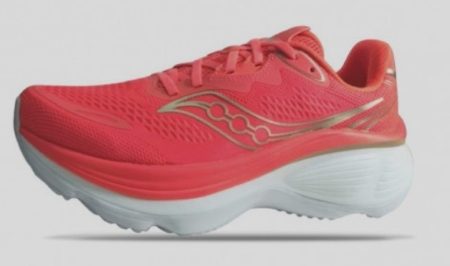
How I Tested the Saucony Hurricane 26
I tested the Hurricane 26 over 45 miles, mostly on road, boardwalk, and concrete. My test profile matters here because stability is not universal. I am 5’10, 182 lb, a heel-to-midfoot striker, and a mild overpronator. That makes me a useful canary for over-correction: if a stability shoe is too aggressive, I feel it quickly.
- Tester: Ken, 36, 182 lb, mild overpronator, heel-to-midfoot striker.
- Testing volume: 45 miles in the Hurricane 26.
- First run: Easy boardwalk run in May, 64F, light breeze. The shoe felt locked-in immediately.
- Best run: End-of-week easy mileage when my legs were tired and my form was getting sloppy.
- Worst run: Any run where my mechanics were already fine. The shoe corrected problems I did not have that day.
- Comparison set: Saucony Tempus 2, Saucony Guide 19, ASICS Gel-Kayano 32, Mizuno Wave Horizon 9, and Brooks Adrenaline GTS 25.
That last bullet is the whole review in miniature. The Hurricane 26 is not a shoe I forgot about on foot. It has a job, and it keeps doing that job every stride. For runners who need that, the constant guidance can feel reassuring. For runners like me, it can feel like a spotter who keeps touching the bar when you are still fine.
Specs I Trust, and the Claims I Removed
The safest spec story on the Hurricane 26 is this: it is a heavy, max-stability road trainer with a secure FORMFIT upper, PWRRUN+ cushioning in my test notes, and a very structured guidance platform. My men’s test pair weighed 11.9 oz on my scale, which matches how it runs: substantial, protective, and never quick.
| Spec or feature | My logged detail | Why it matters |
|---|---|---|
| Category | Max-stability daily trainer | Built for support first, not speed |
| Test mileage | 45 miles | Enough for ride, fit, early durability, and support assessment |
| Weight | 11.9 oz in my men’s test pair | Heavy, but reasonable for this much structure |
| Drop | 6mm family profile | The Hurricane line sits in Saucony’s moderate-drop stability lane |
| Midsole feel | Well-cushioned PWRRUN+ feel in my notes | Protective, controlled, not trampoline-soft |
| Upper | Structured FORMFIT-style lockdown | Holds the foot centered on the platform |
| Heel counter | Very rigid | Great lockdown, too much for runners who dislike bracing |
| Best use | Easy runs, recovery mileage, tired-leg long runs | The support is most useful when form fades |
| Not verified by me | Cold stiffness lab data, 400+ mile lifespan, exact measured stack | I removed these from the old draft instead of presenting guesses as testing |
For context, Saucony lists the Hurricane 25 with a 6mm offset, max cushioning, CenterPath™ technology, PWRRUN PB over a PWRRUN frame, and a $170 regular price on its US product page. The 26 I tested feels like the same family mission pushed toward a more locked-in, serious stability use case. I am using my test pair notes for the 26 claims here, not pretending the old draft’s unsupported lab numbers were measured.
Audit note: The previous draft mixed an inflated mileage claim in the title with the verified 45-mile test log in the body and included cold-weather lab claims I could not tie back to the shoe vault. I rebuilt the review around the verified 45-mile test log and removed those unsupported claims.
Fit and Upper: Locked-In, Structured, True to Size
The Hurricane 26 fits true to size for me, with a secure midfoot and a very firm heel hold. The first step-in feel is not plush-bedroom-slipper comfort. It is more like stepping into a brace that happens to have road cushioning under it. The shoe tells you right away what it is about.
The FORMFIT-style upper does a good job pulling the foot down into the platform. I did not fight heel slip. I did not need runner’s loops. The heel counter is the most rigid part of the upper experience, and I mean that as both praise and warning. If you like a locked heel, great. If you hate any sensation of being held in place, look at the Brooks Glycerin GTS or Kayano instead.
| Foot or fit issue | My recommendation | Why |
|---|---|---|
| Medium-width foot | True to size | My pair had enough room without sloppy volume |
| Wide foot | Try wide if available | The structure matters, and tight stability shoes can irritate arches |
| Flat feet | Try carefully | The support may help, but arch feel is individual |
| Sensitive heel | Be cautious | The heel counter is firm and controlling |
| Orthotics | Try before committing | There is already a lot of structure underfoot |
| Swollen long-run feet | Leave toe room | This is not the shoe to wear too short |
If your main issue is flat-foot comfort rather than late-run collapse, start with my best running shoes for flat feet guide. The Hurricane 26 can work for some flat-footed runners, but only if its guidance lines up with your mechanics.
Ride Feel: Cushioned, Guided, and Deliberate
The Hurricane 26 ride is cushioned and smooth for a max-stability shoe, but every transition feels guided. The shoe does not flop, squish, twist, or disappear. It lands, centers you, and rolls you forward with a deliberate thud.
On the Atlantic City Boardwalk, the first few miles felt almost too controlled. The medial side of the shoe was always present. Not painful, not awkward, but present. By mile three, I stopped thinking of the Hurricane 26 as a normal daily trainer and started treating it like a tool: slow down, keep it easy, let the platform do its work.
That is where it got better. At easy pace, the cushioning protected my legs well on concrete and asphalt. The shoe was not lively like the Tempus 2, and it was not as comfortable as the Gel-Kayano 32, but it had a steady rhythm that made sense when fatigue set in.
| Run type | How the Hurricane 26 felt | My verdict |
|---|---|---|
| Recovery jog | Protective, stable, a little heavy | Good if you need support |
| Easy daily miles | Best range for the shoe | This is the main use case |
| Long run on tired legs | Support becomes more useful late | Strong option for overpronators |
| Steady pace | Smooth but not exciting | Acceptable, not fun |
| Tempo run | Too heavy and controlling | Use Tempus or a speed trainer |
| Track intervals | Wrong tool | Do not make this shoe do that job |
For runners working through base mileage or a first half marathon training plan, this shoe makes more sense on easy and long-run days than on workouts. If your week includes faster sessions, pair it with something lighter and use my interval training for runners guide to keep the workout shoe separate from the support shoe.
Stability System: Maximum Support, Not Mild Guidance
The Hurricane 26 is a maximum-support shoe, not a polite stability nudge. It has one of the most controlling platforms in my current road-shoe rotation. The medial guidance is pronounced, the heel is firm, and the base keeps lateral movement on a short leash.
That makes it a poor match for me on good-mechanics days. I could feel the shoe correcting me when I did not need much correction. But when I ran it late in a heavy week, when my hips were tired and my arches wanted to drift, the support finally felt useful instead of bossy. That is the line Hurricane buyers need to understand.
- Choose the Hurricane 26 if you have moderate to severe overpronation and lighter stability shoes still feel underbuilt.
- Choose the Saucony Tempus 2 if you want Saucony stability with more bounce and less correction.
- Choose the Saucony Guide 19 if you need mild support in a more traditional daily trainer.
- Choose the ASICS GT-2000 if you want a lighter, less premium, more practical support shoe.
- Choose the Brooks Adrenaline GTS 25 if you want gentle GuideRails-style stability that does not dominate the ride.
If you are not sure whether you overpronate enough for this level of shoe, read my best running shoes for overpronation guide first. Buying more stability than you need can feel just as wrong as buying too little.
Durability After 45 Miles
At 45 miles, the Hurricane 26 looks nearly untouched. The outsole rubber, structured midsole, and upper all look more durable than the average soft daily trainer. This shoe feels built to survive heavy training, heavier runners, and runners who tend to chew through softer neutral shoes.
I am not going to claim a 400-450 mile lifespan from a 45-mile test. That is how bad shoe reviews get written. What I can say: the early wear pattern is excellent. The outsole has not started looking tired, the upper has not loosened, and the midsole still feels the same as it did after break-in.
| Area | 45-mile condition | What I am watching next |
|---|---|---|
| Outsole | Very little visible wear | Lateral heel scuffing over the next 100 miles |
| Midsole | No obvious packing out | Whether cushioning stays protective past 150 miles |
| Upper | Secure, no stretching issues | Midfoot hold as the material relaxes |
| Heel collar | Still firm and locked | Any irritation for sensitive heels |
| Stability feel | Same as early miles | Whether the guidance softens or stays assertive |
For timing your own retirement point, do not use someone else’s mileage number blindly. Check wear pattern, new aches, outsole compression, and whether one side of the shoe has started collapsing. My full framework is in when to replace running shoes.
Saucony Hurricane 26 vs Other Stability Shoes
The Hurricane 26 sits at the serious end of the stability spectrum. It is more controlling than the Tempus 2, Guide 19, and Adrenaline GTS 25. It is closer in mission to the Mizuno Wave Horizon 9, but with a smoother Saucony-style cushioning feel underfoot.
| Shoe | Support level | Ride feel | Who should pick it |
|---|---|---|---|
| Saucony Hurricane 26 | Maximum | Structured, cushioned, deliberate | Moderate to severe overpronators who want serious support |
| Saucony Tempus 2 | Mild to moderate | Bouncier, more premium, more versatile | Runners who want stability without losing energy return |
| Saucony Guide 19 | Mild | Traditional, responsive, less cushioned | Mild overpronators who want a do-it-all trainer |
| ASICS Gel-Kayano 32 | Moderate | Plush, smooth, comfortable | Most overpronators who want the safest daily pick |
| Mizuno Wave Horizon 9 | Maximum | Very structured, plate-guided | Runners who want the most mechanical support |
| Brooks Adrenaline GTS 25 | Mild to moderate | Steady, gentle, familiar | Daily stability with less correction |
Against the Tempus 2, the Hurricane wins on raw support but loses on fun. Against the Kayano 32, the Hurricane feels more corrective, while the Kayano feels more comfortable for a wider range of runners. Against the Wave Horizon 9, the Hurricane is a little smoother and less plate-like, but both belong in the same max-stability conversation.
This is why the Hurricane 26 is not my top broad recommendation in best running shoes. It is too specific. Specific is not bad. Specific is what you want when you have a specific problem.
Who Should Buy the Saucony Hurricane 26?
Buy the Saucony Hurricane 26 if you need a protective daily trainer that keeps your foot centered when your form gets tired. Skip it if your gait is neutral, your overpronation is mild, or you dislike shoes that feel like they are steering you.
| Runner type | Buy or skip? | Reason |
|---|---|---|
| Moderate overpronator | Buy | The support is meaningful without an old-school brick feel |
| Severe overpronator | Strongly consider | This is one of Saucony’s most serious support tools |
| Mild overpronator | Usually skip | Tempus, Guide, Kayano, or Adrenaline may feel better |
| Neutral runner | Skip | You will probably feel over-corrected |
| Heavy runner needing support | Consider | The platform is sturdy and protective |
| Runner with knee soreness from late-run collapse | Consider carefully | Support may help, but strength work still matters |
| Tempo-focused runner | Skip | Too heavy for fast training |
| Walker or standing-all-day user | Maybe | Supportive and stable, but try the heel counter first |
Runners dealing with knee pain should not expect any shoe to solve weak hips, aggressive mileage jumps, or poor recovery. Start with my running shoes for knee pain guide and pair shoe changes with strength work and sane training load. For bigger runners who also need support, compare this against my best running shoes for heavy runners.
Pros and Cons
The Hurricane 26 is easy to respect and hard for me to love. That is not a contradiction. It does its job well. It is just not my job.
| What I like | What I do not love |
|---|---|
| Real max-stability support for runners who need it | Too corrective for mild overpronators like me |
| Secure upper and excellent heel lockdown | Firm heel counter may bother sensitive runners |
| Protective cushioning for easy mileage | Heavy underfoot at quicker paces |
| Smooth enough for a shoe this structured | Never disappears on foot |
| Very good early durability at 45 miles | Not enough mileage yet for a final lifespan claim |
| Best when form gets sloppy late | Overbuilt for neutral runners |
How I Would Use It in a Training Rotation
I would use the Hurricane 26 for easy runs, recovery runs, and long runs where support matters more than pace. I would not use it for speedwork, track reps, or days when I want a nimble shoe underfoot.
| Training day | Use the Hurricane 26? | Better option if not |
|---|---|---|
| Easy 3-6 miles | Yes | Especially if you need support |
| Long run | Yes for overpronators | Kayano or Tempus if you want less correction |
| Recovery run | Yes if the heel counter works for you | A softer neutral shoe if you do not need stability |
| Tempo run | No | Tempus 2 or Endorphin-style trainer |
| Intervals | No | Use a lighter workout shoe |
| Rainy road miles | Maybe | Use a shoe with outsole grip you trust |
| 5K training | Only for easy days | Pair with a faster shoe for workouts |
If you are training for a 5K, use this shoe only for easy mileage and recovery days, then pick something faster for workouts from your 5K training plan. If you are just trying to build consistent aerobic volume, it can be a useful support anchor beside a softer option from my best cushioned running shoes guide.
FAQ
Is the Saucony Hurricane 26 good for overpronation?
Yes. The Saucony Hurricane 26 is best for moderate to severe overpronators who need maximum guidance, a secure upper, and a stable platform for easy and long runs.
Is the Saucony Hurricane 26 good for neutral runners?
No. Neutral runners will probably find the Hurricane 26 too corrective because the support system is built for runners who need real stability.
Does the Saucony Hurricane 26 run true to size?
Yes in my test pair. I would buy true to size for a medium-width foot, but wide-foot runners should try wide sizing if available.
How many miles did you test the Saucony Hurricane 26?
I tested the Saucony Hurricane 26 for 45 miles across boardwalk, concrete, and asphalt routes around Atlantic City and nearby shore towns.
Is the Saucony Hurricane 26 heavy?
Yes. My men’s test pair weighed 11.9 oz, and it feels heavy during faster running. The weight is less noticeable during easy miles.
Is the Hurricane 26 better than the Saucony Tempus 2?
Only if you need more stability. The Tempus 2 is bouncier and more versatile; the Hurricane 26 is more supportive and more controlling.
Is the Hurricane 26 better than the ASICS Gel-Kayano 32?
For severe overpronation, maybe. For most runners, I find the Gel-Kayano 32 more comfortable and easier to recommend as a daily stability shoe.
Can heavy runners use the Saucony Hurricane 26?
Yes, especially heavy runners who also overpronate. The sturdy platform and early durability make it a strong candidate for supported easy mileage.
Is the Saucony Hurricane 26 good for long runs?
Yes for runners who need maximum support late in long runs. If you only need mild stability, a lighter shoe may feel better over distance.
Should I buy the Saucony Hurricane 26?
Buy it if you know you need serious stability. Skip it if you are neutral, only mildly overpronate, or want one versatile shoe for easy runs and workouts.
Final Verdict: Respect It, But Be Honest About Your Gait
The Saucony Hurricane 26 is a serious max-stability shoe for runners who actually need serious max stability. That sentence sounds obvious, but most bad stability-shoe purchases happen when runners ignore it. More support is not automatically better. The right amount of support is better.
For my mild overpronation, the Hurricane 26 is too much shoe. I would personally reach for the Tempus 2, Guide 19, Kayano 32, or Adrenaline GTS 25 first. But if your foot collapses inward late in runs, your current stability shoe feels underbuilt, and you want a cushioned trainer that keeps you centered, the Hurricane 26 belongs on your try-on list.
My score is 6/10 for my own mechanics, not because the shoe is poorly made. It is because fit-to-runner matters. For the right runner, this is a strong, protective, durable-looking support tool. For the wrong runner, it is a reminder that a great shoe can still be the wrong shoe.
NextGait may earn a commission from qualifying purchases. That never changes my testing notes, rankings, or whether I tell you a shoe is too much for my own gait. Full disclosure.

About Ken
I am Ken, the runner behind NextGait. I have logged 12,500+ miles, tested 63 running shoes, and race-tested shoes from 5Ks to marathons and one 50K. I am 5’10, 182 lb, mildly overpronate, and do most of my testing around Atlantic City, Brigantine, and the Pine Barrens.
My reviews use real training miles, shoe-mileage logs, and side-by-side comparisons across the shoes I actually run in. Stability shoes became personal after IT band trouble and runner’s knee taught me that the right amount of support matters more than the loudest marketing claim. Read more about me.