
The best non plated racing shoes let me run fast without a carbon plate, nylon plate, rods, or another rigid propulsion device deciding the stride for me. After 12 years of running, I rank the adidas Adizero EVO SL first because it covers the widest race range while still feeling familiar, controllable, and energetic.
I do not use “non-plated” as shorthand for minimal or slow. Foam, rocker geometry, stack, traction, fit, and late-race control matter more than the label. I built this list around the job each shoe genuinely performs, then separated verified mileage from models where my exact test log is not yet reconciled.
If you are still deciding between categories, start with my running-shoe selection framework. My carbon-plated racing shoe guide is the direct comparison when maximum rigidity and race-specific propulsion are the priority.
Quick Picks: 3 Non-Plated Racing Shoes I Would Compare First
These are three distinct starting points: the versatile all-rounder, the direct traditional option, and the softer flexible option. I would compare them at target pace, not by squeezing the foam in a store.
| Best for | My pick | Why I would choose it | Check price |
|---|---|---|---|
| Best overall | adidas Adizero EVO SL | The widest useful range from 5K work to protected long racing | Check EVO SL price |
| Direct race feel | Brooks Hyperion 3 | Fast turnover, predictable flex, and clear road timing | Check Hyperion 3 price |
| Flexible comfort | New Balance FuelCell Rebel v5 | Soft FuelCell response with less forced toe-off and a Wide option | Check Rebel v5 price |
10 Best Non-Plated Racing Shoes: In-Depth Reviews
I gave every shoe a specific race-day job. The ranking rewards speed that remains usable after fatigue: secure loaded fit, controlled braking, predictable cornering, and enough protection for the assigned distance. For a broader speed rotation, see my speedwork shoe guide and lightweight running shoe guide.
1. adidas Adizero EVO SL — Best overall
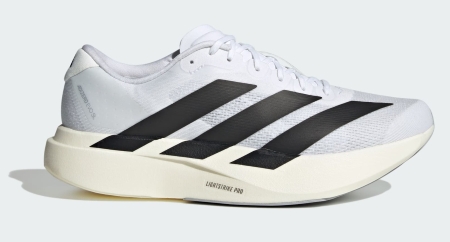
My race-day call: This is the non-plated racer I would recommend to the largest group of neutral runners.
Across 359 verified miles, I found the Lightstrike Pro ride lively without needing a rigid lever. It transitions smoothly from steady pace to hard efforts, protects my legs better than an old-school flat, and remains composed when I stop running perfectly late in a race.
The lockdown detail that decides it
My usual size gives me the right length. The thin performance upper needs deliberate lacing: I want the heel anchored without dragging the forefoot rearward. I test a hard turn and downhill braking before trusting it.
Why its range is unusually broad
I would use it from a fast 5K through a marathon when fit is secure. It is also the easiest shoe here to justify as both workout shoe and race shoe, which makes it a strong value in a small rotation.
When I would choose less shoe
I would leave it on the shelf if you want maximum ground feel, a roomy anatomical forefoot, or a firm traditional flat. The tall energetic platform can feel like too much shoe for runners who prefer low contact.
For the complete wear curve, lockdown notes, and late-run behavior, read my full adidas Adizero EVO SL review.
2. Brooks Hyperion 3 — Best direct feel
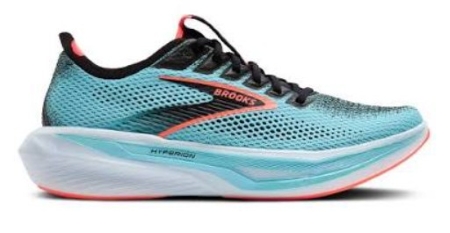
What keeps it at No. 2: I choose Hyperion 3 when I want my cadence and foot timing to create the speed.
After 304 verified miles, its appeal is still clarity. The platform is lighter, firmer, and more direct than the EVO SL. There is no dramatic bounce to manage; I can feel pace changes quickly and place the shoe accurately on corners.
A close fit with a purpose
The performance fit is secure and relatively low volume. I check toe clearance after warming up because the close upper is part of its precision. Heel hold is dependable without an aggressive lace lock on my foot.
The races where direct timing wins
It is strongest for track work, road 5Ks, and 10Ks. Efficient runners who dislike soft foam may stretch it farther, but I prefer more protection for a hard half marathon.
The firmness ceiling
The firm forefoot becomes the deal-breaker if you need a soft ride, a broad toe box, or deep late-race cushioning. Heavier runners may also find the forefoot too firm as form fades.
3. New Balance FuelCell Rebel v5 — Best flexible ride
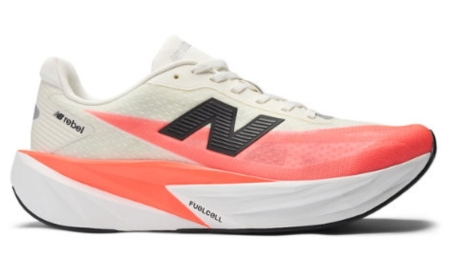
The reason it feels different: Rebel v5 is my pick when freedom and bounce matter more than rigid guidance.
My 60-mile record shows a soft PEBA/EVA FuelCell ride that bends with the foot and changes pace willingly. It feels playful rather than mechanical. That is valuable on rolling courses where I want to adjust stride length instead of staying on one rocker track.
Freedom comes with a control check
It fits true to size on my foot and comes in a true Wide option. The tradeoff is structure: I pay attention to heel hold and lateral movement, especially on wet turns and late in a workout.
Where the playful ride works best
I like it for 5K through half-marathon racing and for runners who want one light shoe for easy mileage, strides, and workouts. It is the most relaxed all-round fit among my top three.
When softness becomes imprecision
The limit appears when you need a firm edge, strong medial control, or a locked-down platform for sharp cornering. Its softness can feel less precise under a powerful or fatigued stride.
I document the softer ride, width choice, and full 60-mile record in my New Balance FuelCell Rebel v5 review.
4. HOKA Mach 7 — Best controlled tempo racer
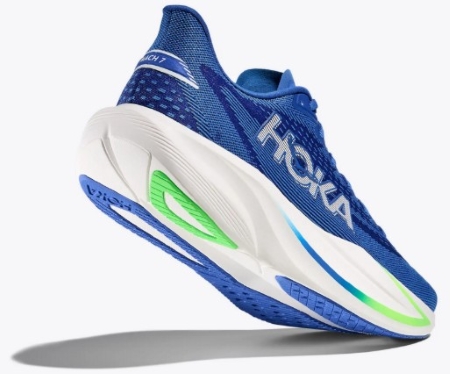
The controlled-speed case: Mach 7 is the composed option when I want speed without a loose or dramatic rebound.
At 120 verified miles, the supercritical EVA still gives me a resilient push while the rocker keeps turnover smooth. It is not a featherweight flat, but I can hold rhythm on long tempo runs without fighting the platform.
Why width matters in this upper
Length is true on my foot. The standard forefoot is not generous, so wider runners should compare the Wide rather than sizing long. The heel sits securely inside the sidewalls and stays controlled on bridges and cambered roads.
The tempo-to-half-marathon sweet spot
I would race it for 10K and half-marathon distances, or use it for a first non-plated marathon when stable familiarity matters more than the lightest possible setup.
Who will want a livelier or roomier shoe
Mach 7 loses its argument if you want very soft bounce, high ground feel, or an anatomical toe box. A runner between widths should resolve fit before judging its ride.
My HOKA Mach 7 review follows that controlled ride across the complete exact-model test record.
5. Topo Athletic Cyclone 3 — Best roomy toe box
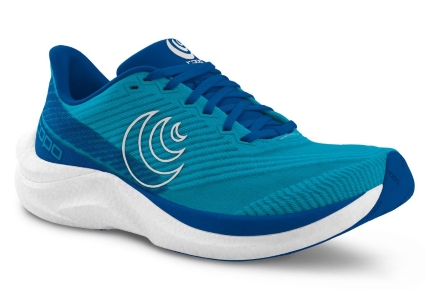
The fit-first advantage: Cyclone 3 is my first comparison for runners who need race-shoe speed without a tapered forefoot.
Across 226 verified miles, the full Pebax Powered midsole has stayed lively and the 28/23 mm platform feels meaningfully lower than today’s super trainers. The shoe rolls smoothly but still lets me work through the forefoot.
How Topo separates toe room from looseness
The signature Topo shape gives my toes room while the midfoot and heel stay snug. That separation is why it works: extra forefoot space does not become uncontrolled sliding. I still confirm the taper and volume under load.
My distance limit for the Cyclone
I would use it from 5K through a half marathon. It suits quick cadence, interval sessions, and runners who want a low-to-moderate stack without returning to a harsh racing flat.
The low-drop tradeoff
I move to another shoe when deep marathon cushioning, a high drop, or a conventional pointed race fit. The 5 mm geometry also deserves a gradual transition if your rotation is mostly high-drop shoes.
6. Saucony Kinvara 16 — Best natural flex
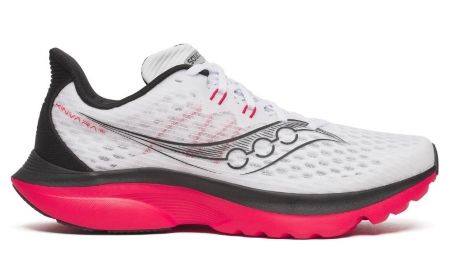
The honest-speed appeal: Kinvara 16 gives me the most natural flex in this ranking at a relatively accessible price.
My 359-mile test history shows a light PWRRUN platform that rewards active mechanics rather than creating a large spring effect. The 4 mm drop and flexible forefoot make fast cadence feel honest and predictable.
What the flexible platform asks from me
My size fits with secure heel hold and useful horizontal toe room. Because the platform is low and flexible, I pay closer attention to calf and foot response than I would in a rockered high-stack shoe.
Short-course racing is its best lane
I would race it from the mile through 10K and use it for strides, hill repetitions, or short tempos. Experienced low-drop runners may take it farther, but I do not assign that job by default.
When natural flex stops being helpful
This is not my choice when maximal protection, strong guidance, or a stiff rocker. Transition gradually if your current shoe has a much higher drop.
The long-term outsole, foam, and lower-leg observations live in my full Saucony Kinvara 16 review.
7. ASICS NOOSA TRI 16 — Best for triathlon transitions
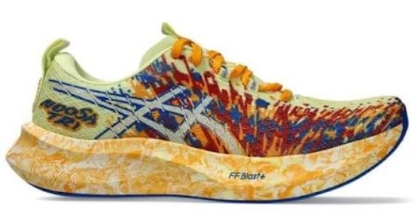
The transition specialist: NOOSA TRI 16 is the purpose-built transition pick, not just the colorful option.
Its appeal is a quick, uncomplicated roll and an upper designed for fast entry and breathable use around triathlon. I treat my evidence here as ride-and-fit evaluation rather than a long-term mileage verdict because I do not have a reconciled exact-model log.
I test the actual triathlon setup
The upper is snug and performance-oriented. I test it both with my intended race sock and, for triathlon use, the exact sockless or low-sock setup planned for the event. Any seam pressure ends the experiment.
Where seconds in transition matter
It makes the most sense for sprint and Olympic-distance triathlon, brick sessions, and road 5K to 10K racing where rapid transitions and a secure quick-dry upper matter.
Why the triathlon label is not enough
The transition features do not rescue a poor fit: if you need a wide forefoot, a plush long-distance ride, or evidence from my long-term durability log. A triathlon label does not automatically make it the right road racer.
8. PUMA Liberate NITRO 2 — Best traction
The wet-road argument: Liberate NITRO 2 is the traction-first choice for short, fast road work.
The lightweight NITRO foam keeps the ride snappy while PUMAGRIP gives me more confidence on painted lines and damp pavement than many stripped-back flats. I have evaluated the fit and ride, but I am not presenting an exact long-term mileage owner for this model.
A secure fit, with one width warning
The fit runs narrow-to-average and holds the midfoot firmly. Broad forefeet should try it under load rather than adding length. The 8 mm drop makes it the easiest traditional transition for runners coming from higher-drop trainers.
Grip earns the race-day job
I would use it for 5K racing, intervals, and wet-road workouts. Its low mass and grip are more persuasive to me than claims of maximal cushioning.
The availability and protection limits
I would not chase this shoe if you need a wide option, substantial forefoot protection, or a shoe for long racing. Availability can also be inconsistent, so I would not compromise size just to secure a pair.
9. adidas Adizero Adios 9 — Best traditional racing-flat feel
The racing-flat choice: Adios 9 is my traditional racing-flat choice for runners who want a close, decisive platform.
The ride is leaner and more connected than EVO SL. I can change cadence immediately and feel the road clearly. My evidence is a fit-and-ride evaluation, not a reconciled long-term log, so I keep durability claims conservative.
Ten warm minutes decide the fit
The upper is a close race fit. I verify forefoot width after ten minutes of running and make sure the heel stays seated without crushing the instep. This is not the model I would size long to solve width.
Where low mass beats deep foam
I would use it for the mile, 5K, and 10K, particularly on courses where low mass and accurate cornering beat deep protection.
Why I would not stretch it to longer races
The classic-flat feel becomes a mismatch if you want a soft high-stack ride, a forgiving long-distance platform, or generous toe-box volume. It asks more from the lower leg than my top three.
10. ASICS Superblast 3 — Best long-distance protection

The protected outlier: Superblast 3 is the protective outlier—and the shoe whose race eligibility I check first.
My 75 verified miles show a tall, energetic, non-plated platform that keeps impact from dominating long efforts. It is stable for its height and far less harsh late in a run than a traditional flat.
How I manage a platform this tall
The fit is true to size on my foot, with a secure heel and enough upper accommodation for long-run swelling. I still rehearse turns because height changes how quickly the shoe settles after lateral movement.
Distance potential comes with a rules check
I would consider it for a half marathon or marathon when comfort and control outweigh minimal weight, but only after checking the current rules for the specific event. Its stack can make it ineligible in rule-governed competition.
When the Superblast is the wrong tool
The conversation ends early if you need guaranteed race legality, low stack, strong ground feel, or the lightest short-course tool. It is best understood as a long-effort super trainer that can sometimes fill a race role.
For the high-stack stability and wear evidence behind that caveat, see my full ASICS Superblast 3 review.
Non-Plated Racing Shoes: Ride, Use, Fit, and Test Mileage
This table is my decision layer, not a second ranking. I use it to remove distance, fit, and evidence mismatches before comparing excitement. Exact mileage belongs only to the named model; an evaluated shoe without a reconciled log stays labeled that way.
| Shoe | Best race use | Ride | Fit cue | Test mileage / evidence |
|---|---|---|---|---|
| adidas Adizero EVO SL | 5K to marathon; workouts and racing | Tall, energetic, smooth rocker | True length; performance hold | 359 verified miles |
| Brooks Hyperion 3 | 5K to 10K; track and road | Firm, quick, flexible and direct | Secure, lower-volume performance fit | 304 verified miles |
| New Balance FuelCell Rebel v5 | 5K to half marathon; mixed-pace racing | Soft, bouncy and flexible | True to size; Standard and Wide | 60 verified miles |
| HOKA Mach 7 | 10K to half marathon; steady-fast efforts | Smooth rocker, resilient and controlled | True length; consider Wide for broad feet | 120 verified miles |
| Topo Athletic Cyclone 3 | 5K to half marathon | Light full-Pebax response; 5 mm drop | Anatomical forefoot; snug midfoot | 226 verified miles |
| Saucony Kinvara 16 | 5K to 10K; short-course racing | Low, flexible and lightly cushioned | Secure heel; accommodating forefoot | 359 verified miles |
| ASICS NOOSA TRI 16 | Sprint/olympic triathlon; 5K to 10K | Quick rocker with moderate protection | Snug performance upper; sockless-friendly design | Fit and ride evaluated; exact log not reconciled |
| PUMA Liberate NITRO 2 | 5K racing; intervals and wet roads | Low, light and snappy | Narrow-to-average performance fit | Fit and ride evaluated; exact log not reconciled |
| adidas Adizero Adios 9 | Mile to 10K | Lean, responsive and ground-connected | Close race fit; verify forefoot width | Fit and ride evaluated; exact log not reconciled |
| ASICS Superblast 3 | Half marathon to marathon where permitted | Tall, protective and energetic | True to size; stable for its height | 75 verified miles |
My comparison rule: I never let a soft step-in feel or a low listed weight overrule loaded fit, cornering control, late-run form, and the evidence maturity of the exact model.
How to Choose Non-Plated Racing Shoes
I start with race job and mechanics, then work inward toward fit. Buying by the absence of a plate is too vague: EVO SL, Hyperion 3, Rebel v5, and Cyclone 3 are all plate-free, yet they ask the body to run in very different ways.
1. Assign one race distance first
For a mile or 5K, I prioritize turnover, traction, and precision. For a half marathon, I add protection and fatigue control. For 26.2, I require long-run proof. My marathon shoe guide shows how that decision changes when plated models re-enter the pool.
2. Decide how much flex you actually want
Hyperion 3, Kinvara 16, Liberate NITRO 2, and Adios 9 feel more direct. EVO SL and Mach 7 use more foam and geometry. Superblast 3 is the protective extreme. I do not call one approach natural for every runner; I choose the one I can control at target pace.
3. Fit after the foot is warm
I check thumb-width length, ball-of-foot placement, heel hold, instep pressure, and toe posture after an easy warm-up. A “race fit” means secure, not cramped. Runners needing more room should also use my wide running shoe guide.
4. Match drop to the current rotation
Moving from 8–10 mm daily trainers into a 4–5 mm racer changes lower-leg demand. I introduce the shoe through strides and short workouts. My heel-drop guide explains what the number changes and what it does not.
5. Run my five-part race permission test
| Stage | What I do | Pass condition |
|---|---|---|
| Loaded fit | Stand, jog, brake, and turn after a warm-up | No pressure point, heel slip, or forefoot spill |
| Pace transition | Move from easy running to target pace | The shoe speeds up without forcing cadence or stride length |
| Corner control | Run a firm bend and downhill braking | The foot stays centered and the platform settles quickly |
| Late-run control | Repeat race pace after fatigue | No collapsing, slapping, or new lateral movement |
| Next-day signal | Compare calves, feet, and focal soreness | Response is familiar and proportionate to the workout |
6. Separate race legality from construction
Non-plated does not automatically mean legal for every sanctioned event. Stack limits and model rules can still matter. I check the current governing-body list and the organizer’s rules, especially before using Superblast 3.
7. Buy a new job, not a duplicate
If the candidate feels almost identical to my daily trainer, it needs a clear reason to exist. A compact rotation can pair a durable daily trainer with one race shoe that materially changes weight, response, traction, or race-day confidence.
8. Retire it by function, not one mileage number
I track outsole loss, new asymmetry, forefoot deadness, upper stretch, and whether target pace costs more at the same effort. My replacement guide turns those signals into a repeatable check.
Frequently Asked Questions
What is the best non-plated racing shoe overall?
My best overall pick is the adidas Adizero EVO SL. It gives me the broadest combination of speed, protection, stable rhythm, and race-distance range, backed by 359 verified miles. It is not the lightest or most flexible option, so fit and preferred ride still decide the purchase.
Are non-plated racing shoes slower than carbon-plated shoes?
Not automatically. A plate can change stiffness and leverage, but pace also depends on foam, geometry, mass, fit, traction, and how well the shoe matches my mechanics. I race better in the shoe I can control at target pace, especially on corners and late in the race.
Is a rocker the same thing as a plate?
No. A rocker is the curved shape of the platform. A plate or rod is a separate rigid structure inside the sole. A non-plated shoe can still feel stiff or strongly rockered because foam geometry and stack height also affect how it rolls.
Are non-plated racing shoes safer?
I do not treat plate-free construction as a safety guarantee. A flexible shoe can raise calf or foot demand, while a tall soft shoe can reduce control. I judge loaded fit, transition, cornering, fatigue behavior, and next-day response rather than the label alone.
Can I race a marathon in a non-plated shoe?
Yes. I would consider the EVO SL, Rebel v5, Mach 7, or Superblast 3 depending on fit, protection, and event rules. I require at least one long run with sustained marathon-pace work before giving any shoe the race-day job.
Which non-plated racer is best for a wide toe box?
Topo Athletic Cyclone 3 is my clearest starting point because its anatomical forefoot allows more natural toe spread while its midfoot remains secure. Rebel v5 is the better soft option when a true Wide size is needed.
Do these shoes need a break-in period?
I allow one or two short runs for lacing and upper familiarity, but I do not expect a wrong last or painful pressure point to fix itself. A race shoe should feel secure and mechanically understandable before I add fast work.
How many miles should I put on a racer before race day?
I want at least one easy run, one target-pace session, and one run long enough to expose fatigue-related movement. That usually means 15 to 30 miles for a short race and more for a marathon, without wasting the shoe’s best life on unrelated mileage.
Can I use a non-plated racer as a daily trainer?
Some can. EVO SL, Rebel v5, Mach 7, and Superblast 3 cross over well. Hyperion 3, Kinvara 16, Liberate NITRO 2, and Adios 9 make more sense when you actively want a lower, firmer, or more direct ride.
Is the ASICS Superblast 3 legal for every road race?
I would not assume so. Its tall platform may fall outside rules that apply in some sanctioned competitions. I check the current event and governing-body rules before using it as a race shoe; for ordinary local events, I still ask the organizer if eligibility matters.
My Final Recommendation
I would buy the adidas Adizero EVO SL first. It gives me the best balance of speed, protection, versatility, and evidence maturity, and it can cover both serious workouts and race day without a plate.
I would choose Brooks Hyperion 3 for the cleanest direct feel, Rebel v5 for flexible softness, Mach 7 for controlled tempo rhythm, and Cyclone 3 when forefoot shape is the limiting factor. Kinvara 16, NOOSA TRI 16, Liberate NITRO 2, and Adios 9 are more specialized short-course tools. Superblast 3 is the protected long-distance alternative only after I verify event legality.
The final choice happens at race pace. I keep the shoe that stays centered on corners, feels predictable after fatigue, and leaves no unusual next-day signal. If none of these solves your job, return to my best running shoes hub rather than forcing a plate-free purchase.
Ken’s final call: Start with EVO SL. Compare Hyperion 3 if you want firmer timing, Rebel v5 if you want flexible bounce, or Cyclone 3 if you need more natural forefoot space. Let target-pace control choose the winner.

Written by Ken — 12 years of running, 12,500+ miles, 63 shoes tested, 36 races from 5Ks to a 50K ultra. I run 30–40 miles a week on the Atlantic City Boardwalk and review every shoe with real training miles, not one-run demos. More about me →