
The best nylon plated running shoes give me speed-day structure without making every run feel like a carbon-racer rehearsal. My top pick is the Saucony Endorphin Speed 5 because it works across tempo sessions, long workouts, and race pace.
I include only confirmed nylon, reinforced-nylon, or nylon H-Wing systems. I rank the complete shoe—plate, foam, rocker, fit, pace range, and fatigue control—and label verified mileage separately from fit-and-ride or comparative experience.
Quick Picks: 3 Nylon-Plated Shoes I Would Compare First
These three show the category’s real range: versatile speed trainer, protective long-run super trainer, and race-oriented Mizuno geometry. I compare the job first and the plate second.
| Best for | My pick | Why it made my top three | Check price |
|---|---|---|---|
| Best overall | Saucony Endorphin Speed 5 | 230 verified miles and the broadest usable pace range | Check Speed 5 price |
| Long workouts | Mizuno Neo Vista 2 | High protection plus 236 verified miles of stable rolling | Check Neo Vista 2 price |
| Race-oriented training | Mizuno Wave Rebellion Flash 3 | More decisive geometry with 165 verified miles | Check Flash 3 price |
10 Best Nylon-Plated Running Shoes: In-Depth Reviews
I rank the complete system: plate material, foam, rocker, fit, pace window, and control after fatigue. Verified mileage belongs only to the exact model I logged; when my evidence is construction and comparative evaluation, I say so directly. For workouts where plate type matters less than the outcome, my speedwork shoe guide opens the comparison to plated and non-plated options.
1. Saucony Endorphin Speed 5 — Best overall
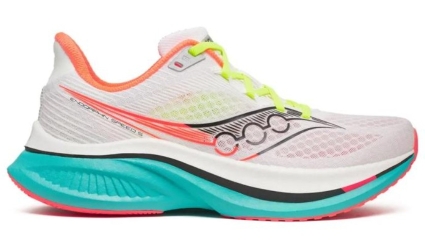
Why it wins: Speed 5 gives me the broadest useful pace range in this group, with enough structure for race-specific work and enough forgiveness for a mixed training week.
My 230 verified miles include fartlek surges, controlled tempos, marathon-effort blocks, and long runs up to 20 miles. At an easy pace, the PWRRUN PB foam feels compliant and the semi-rigid plate stays in the background. Once I increase cadence, the rocker and plate organize the transition, so I feel a smoother roll through toe-off rather than a hard lever pushing against the forefoot.
That behavior is the reason I rank the complete shoe, not the word nylon. Speed 5 changes gears cleanly without becoming nervous when I back off. It is not as soft and tall as Neo Vista 2 or as prescriptive as Flash 3, which makes it easier for me to use when a workout moves from warm-up to tempo to short repetitions in one run.
In my US 10.5 D, the heel stays settled, the midfoot closes securely, and the forefoot leaves enough working room after my feet warm up. I still check lace pressure over the instep because pulling this upper too tightly solves nothing. Standard and Wide availability also makes it a more realistic recommendation than many narrow performance shoes.
I would use it for tempo work, progression runs, long workouts, and 10K through marathon racing. I would choose something else for true recovery days, maximum lateral guidance, old-school ground feel, or the lightest possible 5K setup. My full Endorphin Speed review contains the exact-model fit, ride, wear, and mileage record.
2. Mizuno Neo Vista 2 — Best long-run trainer

What changes after 90 minutes: Neo Vista 2 is the shoe I trust when protection and a repeatable rolling rhythm matter more than low weight or sharp cornering.
Across 236 verified miles, the high MIZUNO ENERZY NXT platform has absorbed long stretches of boardwalk and road while the glass-fiber-reinforced nylon Wave plate keeps the tall midsole moving as one system. I do not get the abrupt snap of a rigid racer. I get a broad, rolling transition that reduces how much I have to manufacture late in a long run.
The payoff is most obvious when fatigue arrives. At steady or marathon effort, I can settle into the rocker and let the shoe preserve rhythm. When I try to force short, fast repetitions, the height and my 9.8-ounce test weight become more noticeable. It can run quickly, but quick direction changes are not where it feels most natural.
The fit is true to size on my foot with useful toe volume and a secure enough midfoot for straight-line work. Because the platform is tall, I pay extra attention to heel hold and side-to-side movement on turns. A soft upper sensation is not permission to accept sliding inside the shoe.
I assign Neo Vista 2 to long runs, steady progression days, and marathon-pace blocks. It is also the better choice than Speed 5 when impact protection is my first filter. I would avoid it for tight courses, short track intervals, runners who dislike high stacks, or anyone whose ankle control deteriorates on a tall platform.
3. Mizuno Wave Rebellion Flash 3 — Best race-oriented trainer
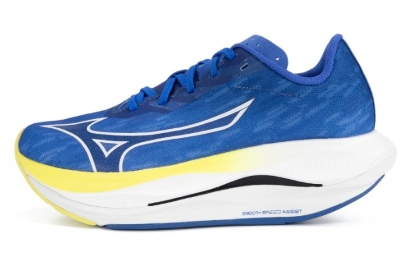
A shoe that rewards commitment: Flash 3 works best when I arrive with a clear pace target; its geometry gives more direction than comfort-first super trainers.
My 165-mile record covers tempo sessions, race-pace blocks, and faster steady running. The ENERZY XP top layer supplies rebound, the firmer base controls the landing, and the reinforced nylon Wave plate connects those layers to Mizuno’s Smooth Speed Assist geometry. The result feels purposeful: the shoe wants me to load, roll, and leave the ground in a consistent sequence.
At faster efforts, that direction is useful because I spend less time searching for the forefoot. At a passive shuffle, the same rocker can feel bossy. I rehearse it at easy pace before a hard session, but I do not mistake easy-pace tolerance for recovery-shoe comfort.
The deep heel cup and structured midfoot hold my US 10.5 D securely. The forefoot fit is more performance-oriented than Neo Vista 2, so I would not assume the same Mizuno size feels identical across both models. I also test downhill braking: a shoe that rolls beautifully on level ground still has to let me control deceleration.
Flash 3 is my race-oriented training pick for tempo runs, 10K-to-half-marathon work, and runners who enjoy a directed rocker. I would skip it for wide feet, genuinely easy mileage, frequent tight turns, or runners who resent a shoe influencing where the stride transitions.
4. Skechers AERO Razor — Best lightweight daily option
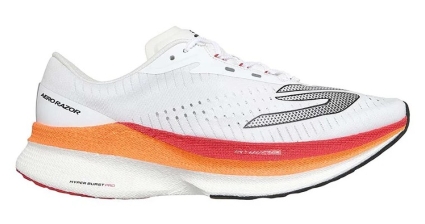
The quick-footed option: AERO Razor is the model I would examine when a runner wants nylon guidance without the mass and depth of a high-stack super trainer.
Its nylon H-Wing plate does not behave like one broad, rigid sheet. The winged structure is intended to stabilize and guide Hyper Burst Pro foam while leaving the shoe with a quicker, more traditional speed-day personality. That makes it easier to place the foot precisely during repetitions instead of waiting for a tall rocker to complete the transition.
My evidence level here is fit-and-ride evaluation rather than a reconciled exact mileage log. I can describe the shape, response, and intended use, but I will not borrow a durability number from another Skechers model. The outsole and foam need their own wear record before I call this a high-mileage workhorse.
The performance fit deserves a warm-foot test. I check the widest part of the forefoot, little-toe pressure, and whether heel lockdown requires excessive lace tension. If the upper feels merely snug while standing, it can become restrictive once the foot expands during intervals.
I would use AERO Razor for intervals, tempo runs, strides, and 5K or 10K racing. It makes less sense for runners shopping mainly for maximum cushioning, a broad fit, or their first marathon shoe. Compared with Hyperion Max 4, this is the lower and quicker choice; the Brooks is the more protective one.
5. On Cloudflow 5 — Best for tempo and intervals
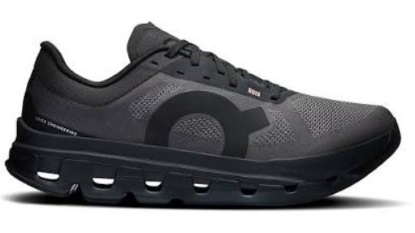
Fast training without carbon rigidity: Cloudflow 5 gives this list a current, widely available speed trainer built around a glass-fiber nylon-blend Speedboard rather than another generation of the Mizuno Flash.
On combines Helion HF hyper foam, CloudTec cushioning, an enhanced rocker, and a glass-fiber-infused nylon-blend Speedboard. The board is designed to flex at the forefoot, store energy, and release it through toe-off. I would expect a guided, responsive transition rather than the highly prescriptive roll of Flash 3.
At 278 g in the listed men’s model with a 6 mm drop, this is not a featherweight racing flat. Its value is repeatable speed training: enough structure for tempo work and intervals, with more protection and stability than a minimal shoe. The forefoot grip also gives it a practical treadmill and wet-road role.
My evidence level is verified construction and comparative evaluation, not a reconciled exact-model mileage log. I would check the updated toe box after the foot warms up, then test heel hold and the way the CloudTec elements behave on turns before assigning a race role.
I would shortlist Cloudflow 5 for tempo runs, intervals, treadmill speed sessions, and runners who want a firmer, more controlled alternative to a soft super trainer. I would choose Cloudmonster 2 for max cushioning, or Speed 5 when broader pace versatility and width availability matter more.
6. Mizuno Neo Vista — Best prior-generation value
A discount with conditions: The original Neo Vista remains useful only when the savings are meaningful and the older upper fits more securely than the price tag suggests.
This model established Mizuno’s training-first formula: a soft, high-stack ride paired with a reinforced nylon Wave plate that organizes the transition without turning the shoe into a pure racer. I see its natural pace window as easy-to-steady running that can finish faster, rather than short repetitions that demand immediate acceleration.
The sock-like upper is the deciding variable. It can feel smooth and accommodating, but it offers less local adjustment than a traditional tongue and eye-stay system. I test heel lift on an incline, then run a few turns at moderate pace. If the foot moves inside the upper, a discount does not make the fit acceptable.
I classify the original Neo Vista from fit-and-ride evaluation, not a reconciled exact-model mileage total. I also inspect old stock for storage age, glue condition, outsole hardening, and a return policy that allows an indoor fit check.
I would buy it for general plated training and long progression runs when it costs materially less than Neo Vista 2. If the price gap is small, I prefer the update for its clearer fit control and verified 236-mile record. Runners who want a nimble cornering shoe should look beyond both versions.
7. Xtep 260 2.0 — Best durable nylon workhorse
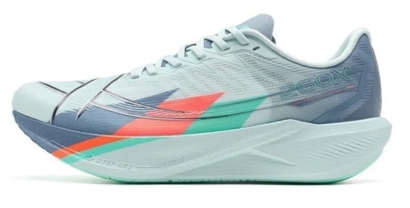
The outsole-first choice: I include the 260 2.0 for runners who prioritize repeatable training and rubber coverage over the lowest possible weight.
Xtep combines a full-length nylon-fiber plate, supercritical XTEP ACE cushioning, and a marathon-oriented CPU outsole. The design logic is straightforward: the plate guides the transition, the foam supplies rebound, and the extensive outsole protects the system during regular road mileage. That is a different job from the lighter, sharper BIOSPEED 4 PRO.
I would expect the ride to feel more controlled than explosive, especially beside Speed 5. For steady runs and long progressions, that can be an advantage because the shoe does not need to feel dramatic to keep the platform moving consistently. For short racing, the extra durability may be performance I am carrying rather than using.
My confidence comes from verified construction and comparative evaluation, not a reconciled exact-model mileage log. Availability is the practical obstacle for US readers. Before importing, I confirm the seller, US size conversion, total landed cost, and whether a return is realistically possible.
I would shortlist it for runners who wear through exposed foam quickly or want a nylon-plated workhorse for steady mileage. I would skip it when low weight, familiar local sizing, easy warranty support, or a highly aggressive race feel matters more than outsole life.
8. Brooks Hyperion Max 4 — Best high-stack workout shoe
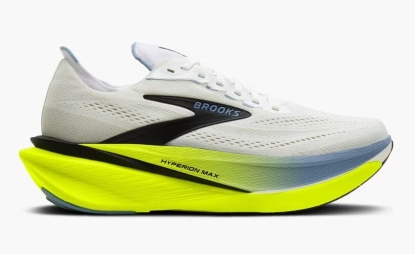
Protection without carbon stiffness: Hyperion Max 4 is the mainstream choice for runners who want a tall workout platform and nylon assistance rather than a stripped-down race shoe.
Brooks builds the shoe around a nylon SpeedVault plate, a 45 mm total stack, and two distinct foams: DNA GOLD for the premium responsive layer and DNA FLASH v2 for the supporting layer. The RapidRoll rocker is central to the experience because it shapes how that height moves from landing to toe-off.
The useful comparison is with Neo Vista 2. Both target protected faster training, but I expect the Brooks to emphasize a more deliberate rocker and workout identity, while the Mizuno leans into a broad, cushioned cruise. Neither is the shoe I choose solely because a spec sheet says nylon.
My evidence level is verified construction and comparative evaluation; I do not attach a fictional mileage total. Before committing it to a long session, I would test heel security, midfoot pressure, cornering, and whether the tall platform still feels predictable as cadence drops late in the run.
I would compare Hyperion Max 4 for long tempos, marathon-pace blocks, and faster long runs when protection outranks minimal weight. Runners who prefer low stacks, flexible forefeet, or a close-to-the-road interval feel should start with AERO Razor instead.
9. 361° BIOSPEED 4 PRO — Best value nylon racer
A calculated value bet: BIOSPEED 4 PRO adds a legitimate race-focused option without asking the list to recycle another generation of a familiar model.
Its Qu!kFLAMECQT midsole, nylon glass-fiber plate, and extensive RPU outsole create a clear brief: keep the shoe light and directed while preserving enough grip and rubber for repeated speed sessions. Reinforcing nylon with glass fiber can increase directional control, so I would not assume it feels soft merely because the plate is not carbon.
The attraction is price-to-speed potential, not a claim that it automatically matches every premium racer. I would first evaluate whether the rocker meets my stride at tempo pace, then repeat the test on turns and under mild fatigue. A fast first minute tells me much less than a controlled final repetition.
My confidence level is verified construction and comparative evaluation, not a reconciled exact mileage record. Sizing and returns require more attention than with a widely stocked US model. I want secure heel and midfoot hold without forcing the toes together, plus a seller who will accept a genuine fit return.
I see its clearest role in intervals, tempo runs, and shorter road races. If familiar sizing, multiple widths, or easy local exchanges matter more than value, Speed 5 is the safer all-round decision. If deep cushioning is the priority, Hyperion Max 4 makes more sense.
10. On Cloudmonster 2 — Best max-cushioned nylon trainer
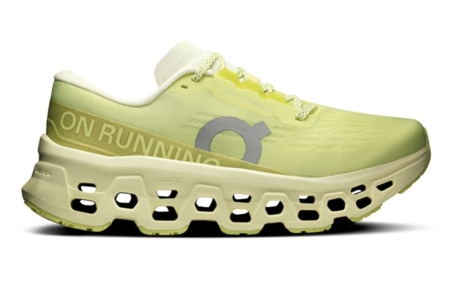
The high-cushion alternative: Cloudmonster 2 earns the final place by pairing a nylon-blend Speedboard with a genuinely different max-cushioned training platform.
The Speedboard sits between two densities of Helion superfoam and works with On’s largest CloudTec construction. That architecture prioritizes softer landings, impact absorption, and a forward-rolling transition. It is a useful contrast to AERO Razor and BIOSPEED 4 PRO, which make more sense when low weight and quick turnover lead the decision.
The listed men’s model weighs 300 g and uses a 6 mm drop, so I treat it as a protective trainer that can handle uptempo work—not a disguised race flat. The extra platform can make long steady running feel less demanding, but it also gives me more shoe to manage through sharp corners and rapid pace changes.
My confidence comes from verified construction and comparative evaluation rather than an invented mileage total. On recommends taking a half size down compared with the original Cloudmonster, which makes a return-friendly fit check essential. I want the heel fixed, the forefoot relaxed, and no sliding over the Speedboard.
I would use Cloudmonster 2 for long training runs, steady-to-uptempo progressions, and runners who want nylon guidance inside a deeply cushioned ride. I would skip it for short intervals, narrow turns, or anyone who equates a plated shoe with low mass and close ground feel.
Nylon-Plated Running Shoes: Ride, Use, Fit, and Test Mileage
I use this table to remove construction, fit, and evidence mismatches before comparing rank. Verified mileage belongs only to the exact named model; fit-and-ride evaluation and comparative experience stay labeled separately.
| Shoe | Best use | Ride | Fit cue | Plate / evidence |
|---|---|---|---|---|
| Saucony Endorphin Speed 5 | Tempo, long workouts, 10K to marathon | Smooth, resilient, semi-rigid nylon guidance | True to size; Standard and Wide | Full-length semi-rigid nylon plate; 230 verified miles |
| Mizuno Neo Vista 2 | Long runs, marathon-pace blocks, durable speed | Tall, protective, rolling transition | True to size; accommodating volume | Glass-fiber-reinforced nylon Wave plate; 236 verified miles |
| Mizuno Wave Rebellion Flash 3 | Tempo, 10K to half marathon | Aggressive roll with firmer direction | True to size; structured midfoot | Glass-fiber-reinforced nylon Wave plate; 165 verified miles |
| Skechers AERO Razor | Intervals, tempo, 5K and 10K | Light, quick and moderately guided | Performance fit; verify forefoot width | Nylon H-Wing plate; Fit and ride evaluated; no reconciled exact log |
| On Cloudflow 5 | Tempo, intervals and treadmill speed sessions | Responsive, controlled and rocker-assisted | Updated toe box; verify warm-foot fit | Glass-fiber nylon-blend Speedboard; construction verified, no reconciled exact log |
| Mizuno Neo Vista | Easy-to-tempo training and long progression runs | Soft high-stack roll with flexible structure | Sock-like upper; check heel security | Glass-fiber-reinforced nylon Wave plate; Fit and ride evaluated; no reconciled exact log |
| Xtep 260 2.0 | Steady mileage and long progression runs | Durability-first, guided training ride | Verify US size conversion and returns | Full-length nylon-fiber plate; construction verified, no reconciled exact log |
| Brooks Hyperion Max 4 | Long tempos, marathon pace, faster long runs | High-stack, protective and rocker-assisted | Secure performance fit; test cornering | Nylon SpeedVault plate; construction verified, no reconciled exact log |
| 361° BIOSPEED 4 PRO | Intervals, tempo and shorter road races | Light, directed and race-focused | Verify width, lockdown and return window | Nylon glass-fiber plate; construction verified, no reconciled exact log |
| On Cloudmonster 2 | Long runs and steady-to-uptempo progressions | Max-cushioned, rolling and protective | Check On’s half-size-down guidance | Nylon-blend Speedboard; construction verified, no reconciled exact log |
My evidence rule: I verify the plate material first, then rank the whole shoe. A confirmed nylon plate does not earn a high position when fit, foam, geometry, or late-run control fails.
How to Choose Nylon-Plated Running Shoes
I choose these shoes by system behavior, not by assuming nylon is a softer carbon substitute. The useful question is whether the plate, foam, rocker, and fit cooperate at the pace and distance I actually run.
I begin with construction, then I move to fit. I jog easily before I raise the pace, and I test corners before I trust straight-line speed. I note when the plate starts helping, when the foam starts moving, and whether I remain centered after fatigue. If I cannot explain the shoe’s useful job in one sentence, I do not add it to my rotation.
1. Verify the plate material
I look for an explicit manufacturer description: nylon, reinforced nylon, or nylon H-Wing. I do not convert “SpeedVault,” “composite,” rods, or a visible shank into nylon without material confirmation.
2. Assign the workout before choosing the shoe
Speed 5 covers the widest range. Neo Vista 2 favors long work. Flash 3 and AERO Razor shift toward speed. My lightweight shoe guide is useful when low mass matters more than having a plate.
3. Decide how much guidance you want
A semi-rigid plate can feel smooth in one geometry and forceful in another. I compare the pace at which the rocker starts helping, how the forefoot loads, and whether I can slow down without fighting the shoe.
4. Fit the shoe after a warm-up
I check heel hold, ball-of-foot placement, instep pressure, and toe posture with warm feet. A plated shoe cannot fix the wrong last. My wide-shoe guide provides better alternatives when width is the binding constraint.
5. Run my three-pace plate test
| Stage | Test | What I record |
|---|---|---|
| Easy | 15 minutes conversational | Whether the plate or rocker feels intrusive when pace is low |
| Steady | 20 minutes near marathon effort | Transition timing, stability, and forefoot pressure |
| Fast | 6 × 2 minutes near 10K effort | Snap, corner control, and whether form stays natural |
| Cooldown | 10 minutes easy | Whether the shoe releases tension when cadence drops |
| Next morning | Normal walking and easy movement | Calf, arch, Achilles, and metatarsal response |
6. Compare nylon with the non-plated alternative
If the plate adds no useful control or rhythm, I do not pay for it. A flexible option from my running-shoe hub may feel better, and my non-plated racing guide shows how foam and geometry can create speed without a plate.
7. Respect drop and rocker changes
Cloudflow 5 and Cloudmonster 2 both use a 6 mm drop, yet their rocker, stack, and intended pace create different loading patterns. I introduce any unfamiliar geometry through short workouts instead of a long race simulation. My heel-drop guide explains the load tradeoff.
8. Give every plated shoe a rotation role
I do not buy three shoes that all perform the same tempo job. One durable daily trainer plus one clearly faster plated shoe is enough for many runners. The nylon model must earn its space through pace range, protection, or control.
9. Judge old stock like old stock
For Neo Vista, Xtep 260 2.0, or last-season Cloudmonster 2 stock, I verify seller, production age, storage, glue, foam condition, return policy, and price. Nostalgia is not a performance feature.
10. Replace it when the system changes
I watch for new forefoot harshness, reduced rebound, outsole asymmetry, upper stretch, and a rocker that becomes harder to control. My replacement guide uses those functional signals rather than one universal mileage deadline.
Frequently Asked Questions
What is the best nylon-plated running shoe overall?
My best overall pick is the Saucony Endorphin Speed 5. Its semi-rigid nylon plate, PWRRUN PB foam, secure fit, and 230-mile record give me the broadest useful range from controlled tempo running to long race-specific workouts.
Is nylon always more flexible than carbon?
No. Material matters, but plate thickness, shape, reinforcement, foam, stack, and rocker determine the stiffness of the complete shoe. I compare the ride at the intended pace instead of predicting it from one material word.
Is the Endorphin Speed 5 carbon plated?
No. Saucony identifies it as using a full-length semi-rigid nylon plate between two layers of PWRRUN PB foam.
Can I race in a nylon-plated running shoe?
Yes. I would race in several shoes here after they pass my target-pace and fatigue tests. A nylon plate may feel easier to manage than an aggressive carbon system, but race suitability still depends on fit, geometry, distance, and control.
Are nylon-plated running shoes good for daily training?
Some are. Speed 5, Neo Vista 2, Hyperion Max 4, and Cloudmonster 2 can cover steady and moderate mileage for me, while Flash 3, Cloudflow 5, and BIOSPEED 4 PRO make more sense when the run has a defined faster purpose. I still keep genuinely easy days easy.
Are nylon-plated shoes good for beginners?
They can be, but nylon is not a beginner-safety label. I first want a stable fit, predictable easy pace, and no unusual calf, arch, or forefoot response. A simple daily trainer remains the better first shoe for many new runners.
How long do nylon-plated running shoes last?
I do not use one universal mileage number. I track outsole loss, foam deadness, upper stretch, new asymmetry, and whether the plate-and-rocker system feels harsher or harder to control at the same pace.
What is the difference between a nylon plate and a carbon plate?
Nylon systems are often designed for more flex and training versatility, while carbon systems often prioritize stiffness and race efficiency. Those are tendencies, not guarantees; the complete shoe matters more than the plate in isolation.
Why did I include only the latest Endorphin Speed?
I keep only the Speed 5 because multiple generations would repeat the same product family instead of helping you compare genuinely different options. My experience with earlier versions still informs the evaluation, but current availability, support, and the redesigned ride make Speed 5 the relevant recommendation.
How do I test a nylon-plated shoe before racing?
I use an easy run, a three-pace workout, turns and braking, then a longer session with target-pace work. I check next-day calves, arches, and forefoot before assigning race day.
My Final Recommendation
I would buy the Saucony Endorphin Speed 5 first. It has the strongest combination of verified construction, 230-mile evidence, fit control, pace range, and current availability. It is the nylon-plated shoe most likely to earn more than one serious job in my rotation.
I would choose Mizuno Neo Vista 2 when long-run protection matters more than nimble speed, and Wave Rebellion Flash 3 when I want a stronger race-oriented roll. AERO Razor is the lighter short-course alternative. The older models belong here as transparent value or lineage options—not as automatic recommendations over newer shoes.
If nylon itself is not improving the decision, I step back. I compare a straightforward daily trainer, a speedwork shoe, and a race-specific option, then keep the shoe that feels most controlled at the actual target pace.
Ken’s final call: Start with Speed 5. Move to Neo Vista 2 for long-run protection, Flash 3 for a stronger race geometry, or AERO Razor for lighter short-course speed. Let the three-pace test—not the plate label—choose the winner.

Written by Ken — 12 years of running, 12,500+ miles, 63 shoes tested, 36 races from 5Ks to a 50K ultra. I run 30–40 miles a week on the Atlantic City Boardwalk and review every shoe with real training miles, not one-run demos. More about me →