
This HOKA Bondi 9 review comes after 310 miles in my own pair, and my verdict is simple: it is an excellent recovery shoe but only an average all-round running shoe. I give it 7/10. The Bondi 9 protects tired legs, stays remarkably composed under my 182-pound frame, and makes hard pavement feel less punishing. It also feels heavy, muted, and reluctant when I ask it to run fast.
I have spent 12 years running and testing shoes, and the Bondi has taught me to separate “comfortable” from “versatile.” The Bondi 9 is one of the most comfortable shoes in my rotation. It is not the shoe I reach for most often. I use it when recovery is the assignment, not when I want one trainer to handle everything.
If you want a max-cushion shoe for easy miles, relaxed long runs, walking, or long days on your feet, keep reading. If you want one lively daily trainer, start with my best cushioned running shoes comparison instead.
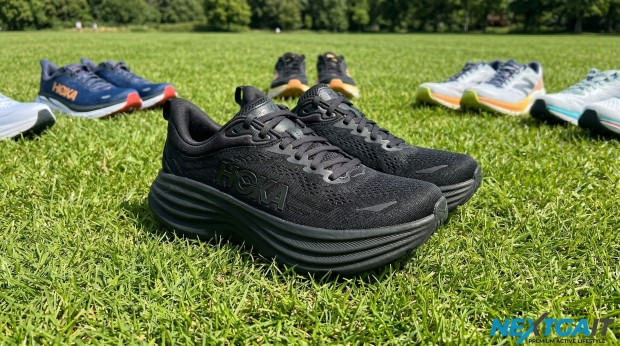
My decision in 20 seconds: Buy the Bondi 9 for recovery runs, easy long miles, walking, or maximum underfoot protection. Skip it for tempo work, sharp turns, natural ground feel, or a one-shoe rotation. My pair fits true to size in men’s US 10.5 D, with enough room for my slightly wide forefoot. I would buy it again for its specific recovery role.
Updated September 2026 after my mileage log reached 310 miles.
My Bondi 9 Verdict Starts With One Question
Do you want the Bondi 9 to protect an easy run, or do you want it to energize the run? My HOKA Bondi 9 review lands at 7/10 because it is very good at the first job and mediocre at the second.
On tired legs, the high stack and broad platform take the harsh edge off asphalt and boardwalk planks. The rocker helps me move through the stride without bending a thick forefoot. The shoe settles into a steady rhythm and asks very little attention from me. That is exactly what I want during recovery.
When I increase the pace, the same design becomes the limitation. The platform feels like a lot of shoe to pick up and reposition. The toe-off is smooth, not quick. I can run steady in it, but I do not get the playful response that makes me want to keep pressing.
| Decision | My Answer After 310 Miles |
|---|---|
| Best role | Recovery runs, easy miles, relaxed long runs, walking |
| Best effort | Easy enough to speak in complete sentences |
| Ride | Deeply cushioned, controlled, stable, and muted |
| Fit | True to size for me in men’s US 10.5 D |
| Main strength | Consistent protection when my legs are tired |
| Main weakness | Weight and low agility when pace or direction changes |
| My score | 7/10 |
| Would I buy it again? | Yes, but only as a dedicated recovery shoe |
I rank it highly in the narrow role it owns. That is why it belongs in my guide to the best recovery running shoes, even though it is not my favorite daily trainer.
How I Tested the HOKA Bondi 9
I logged 310 running miles in the Bondi 9 across South Jersey roads and boardwalk corridors, with long runs up to 15 miles. Across that block, I watched how the midsole softened, where the outsole wore, and whether the upper kept my heel secure. Most of those miles were easy or recovery work because that is the shoe’s natural assignment. I also pushed the pace enough to find the point where its protection stopped compensating for its mass.
My context matters. I weigh 182 pounds, wear men’s US 10.5, have a medium arch and slightly wide forefoot, and mildly overpronate more on my left side. I usually run 30–40 miles per week. A lighter runner with a narrow foot may experience the midsole and fit differently.
| What I Tested | My Context | What I Watched |
|---|---|---|
| Total distance | 310 running miles | Foam change, outsole wear, upper integrity |
| Long-run range | Up to 15 miles | Late-run stability, forefoot comfort, transition |
| Surfaces | Asphalt, concrete, wooden boardwalk | Impact filtering, grip, platform control |
| Primary use | Recovery and easy running | Whether the shoe stayed quiet and predictable |
| Runner profile | 182 lb, men’s US 10.5, slightly wide forefoot | Compression, fit after swelling, rearfoot hold |
I did not treat one fast run as proof that the Bondi 9 is a speed shoe, and I did not turn comfort into a sweeping promise. A shoe can feel protective without proving a broader outcome. My conclusions here are about fit, ride, use, and wear in my pair.
The Bondi 9 Feels Different at Three Points in a Run
The Bondi 9 makes the most sense once I stop judging the first step and pay attention to how it behaves as fatigue builds. Its value appears in stages.
Fresh legs: more structured than the stack suggests
The step-in is plush, but the ride is not a marshmallow. My foot sits inside the midsole sidewalls rather than floating on top of a soft slab. Under load, the foam compresses in a controlled way and the wide base keeps the landing centered. The sensation is protective and damped, with little ground feel.
Settled rhythm: the rocker does its best work
Once I find an easy rhythm, the Bondi 9 rolls smoothly from heel to toe. I do not get a springy rebound; I get a predictable transition. On flat roads, that can feel almost automatic. This is why I pair the shoe with the conversational effort described in my easy-run pace guide rather than chasing a number on the watch.
Tired form: the wide platform earns its weight
Late in an easy long run, my stride gets less tidy. This is where I appreciate the rearfoot cradle and broad geometry. The shoe remains calm under my weight instead of becoming mushy or wobbly. On unforgiving boardwalk planks, the midsole continued to soften the repeated impact well past 90 minutes.
The trade-off never disappears. A stable, high-volume platform takes more effort to turn over and change direction. For straight, relaxed miles, that is acceptable. For a progression finish or crowded route with sharp corners, it becomes frustrating.
The Three Workouts I Would Give the Bondi 9
I would keep the Bondi 9 to recovery runs, easy runs, and relaxed long runs. That sounds restrictive, but a shoe that owns three common jobs can still be useful.
- Post-workout recovery: This is its best assignment. The deep cushioning takes the edge off tired legs, while the stable platform does not demand precise foot placement.
- Routine easy mileage: It works when the route is flat and the goal is aerobic time, not pace. The ride stays smooth and unobtrusive once I settle in.
- Relaxed long runs: I trust it up to 15 miles when I plan to keep the entire run easy. The forefoot volume gave my toes enough room as my feet swelled, and the midsole did not bottom out under my frame.
For a long run with tempo sections, I want less shoe and more rebound. My long-distance running shoe guide separates protective cruisers from models that handle pace changes better.
I also like the Bondi 9 for walking. The rocker feels natural at a walking stride, the base is secure, and the cushioning remains comfortable during long periods on hard floors. That crossover use is real value if running is only part of your day.
Where I stop: I would not choose the Bondi 9 for intervals, short races, technical turns, or a workout that needs a fast finish. It will complete those sessions; it simply makes them harder than they need to be.
Fit, Upper, and Stability: What My Foot Actually Noticed
The Bondi 9 fit true to size, with a secure heel and enough space for my slightly wide forefoot. I wore my usual men’s US 10.5 D. I would not size up automatically. Extra length can create heel movement without solving a width problem; runners who need more lateral room should try the Wide version.
The jacquard mesh feels structured rather than stretchy. The gusseted tongue stayed centered and spread lace pressure evenly across my midfoot. I did not need a runner’s knot to hold the heel. The flared collar also stayed away from my Achilles instead of pressing into it.
HOKA lists a 43 mm heel stack, 38 mm forefoot stack, and 5 mm drop. My pair weighed 10.55 ounces in men’s US 10.5, which is respectable for this much shoe but still obvious beside a lighter daily trainer.
| Fit Area | My Experience | Decision |
|---|---|---|
| Length | True to size | Start with your normal running-shoe size |
| Forefoot | Enough clearance for my slightly wide foot | Try Wide if you need more lateral space |
| Midfoot | Secure without lace bite | Good for medium-volume feet |
| Heel | Locked down with no meaningful slip | No special lacing needed for me |
| Upper feel | Structured and protective | Less airy than a stripped-back performance upper |
The Bondi 9 is a neutral shoe, but it is naturally stable. Its width, sidewalls, and deep foot position control the tall stack without forcing my foot against a traditional medial post. That geometry works well for my mild overpronation, though it is not a substitute for an individually chosen stability shoe.
Heavier runners may appreciate that the foam does not collapse into a soft trough under load. I explain that body-weight trade-off in more detail in my running shoes for heavier runners guide.
What 310 Miles Did to My Bondi 9
At 310 miles, my Bondi 9 remained runnable, but the shoe no longer felt new. The outsole had about 1.4 mm of smoothing through my main landing zone and forefoot drive area. The upper remained intact with no blowouts, loose seams, or loss of heel hold.
The midsole showed deep creasing and had softened under my weight. It still protected me from hard surfaces and did not feel collapsed, but the ride had lost some of its early firmness. That gradual softening suited recovery runs; it did not add energy or broaden the shoe’s pace range.
Cold weather exposed another limitation. At 14°F, the thick midsole felt denser and clunkier on the boardwalk. That run was a reminder that foam behavior changes with temperature. I would not judge the shoe from one freezing morning, but I would expect a firmer ride through a cold winter.
I will retire this pair based on how it runs, not because it crossed an arbitrary mileage line. My running-shoe replacement test covers the symptoms I check: uneven wear, a flat-feeling midsole, new discomfort, or a change in how the shoe tracks.
On concrete, the Bondi 9’s protection is easy to appreciate. Runners who spend most of their week on sidewalks can compare it with other durable options in my guide to the best shoes for concrete.
Bondi 9 vs the Shoes I Would Actually Cross-Shop
I would compare the Bondi 9 with three shoes, but each alternative wins for a different reason. The right choice depends on what you are unwilling to sacrifice.
| Comparison | Choose Bondi 9 When | Choose the Alternative When | My Pick |
|---|---|---|---|
| HOKA Clifton 10 | You want more cushioning and a dedicated recovery role | You want lower weight and more daily versatility | Clifton for most runs; Bondi for recovery |
| ASICS Gel-Nimbus 28 | You prefer a simpler, more controlled platform | You want plushness with more response | Nimbus overall |
| New Balance 1080v13 | You value softness and a planted ride | You want better energy return | 1080 for liveliness; Bondi for calm protection |
Bondi 9 vs HOKA Clifton 10
The Clifton 10 is lighter and more versatile, so I reach for it more often. The Bondi 9 gives me more underfoot depth and feels better when my only goal is to recover. If you are choosing one HOKA for daily use, read my HOKA Clifton review. If you already own a daily trainer and need a second shoe for tired days, the Bondi has the clearer role.
Bondi 9 vs ASICS Gel-Nimbus 28
The Nimbus feels plusher and more responsive to me, which is a rare combination. The Bondi feels broader, calmer, and more specialized. I prefer the Nimbus overall because it covers more paces without giving up comfort. My ASICS Gel-Nimbus review explains that difference across long and easy runs.
Who Should Buy the Bondi 9—and Who Should Leave It
Buy the Bondi 9 if you can name the slow, protective job it will perform in your rotation. Skip it if you are hoping the biggest HOKA will also be the most versatile.
Buy it if you:
- Want a dedicated recovery or easy-day shoe
- Run long, steady miles on hard surfaces
- Prefer a broad, guided platform over a flexible ride
- Need a shoe that also works for walking or standing
- Are a heavier runner who dislikes foam that collapses under load
Skip it if you:
- Want one shoe for easy runs, tempo, and racing
- Like ground feel or a flexible forefoot
- Frequently run routes with sharp turns
- Judge a shoe by bounce and energy return
- Need a light trainer that disappears on foot
My final answer is a qualified yes. The HOKA Bondi 9 earns a place in my rotation because it is honest about what it does: it absorbs repetitive road impact, stays stable when I am tired, and turns recovery miles into low-drama miles. I would buy it again. I would not build my entire rotation around it.
HOKA Bondi 9 Frequently Asked Questions
Is the HOKA Bondi 9 true to size?
Yes for me. My usual men’s US 10.5 D gave me the right length, secure heel hold, and enough room for my slightly wide forefoot. Runners who need more width should try the Wide version before adding length.
Is the HOKA Bondi 9 good for long runs?
Yes, when the entire long run stays easy. I used it for runs up to 15 miles and liked its late-run stability and impact protection. I would choose a lighter, more responsive shoe for a progression long run.
Is the Bondi 9 soft or firm?
It is deeply cushioned but more controlled than marshmallow-soft. The stack provides protection while the foam and wide base keep the ride structured. It softened over my 310 miles without becoming unstable.
Can the HOKA Bondi 9 handle tempo runs?
It can, but I would not choose it for that job. The weight and broad platform make quick turnover harder, while the toe-off rolls rather than snaps. The Bondi 9 is best when pace stays relaxed.
Is the HOKA Bondi 9 a stability shoe?
No. It is a neutral shoe with naturally stable geometry. The wide platform, sidewalls, and deep foot position helped control the stack for me, but runners who need more support should choose based on their individual fit and gait needs.
How durable is the HOKA Bondi 9?
My pair remained runnable at 310 miles. The outsole had visible smoothing and the midsole had softened, but the upper and heel hold were intact. Your result will depend on surface, strike pattern, body weight, and shoe rotation.
Is the HOKA Bondi 9 good for walking?
Yes. The rocker, stable base, and deep cushioning worked well for walking and long periods on hard floors. It is one of the strongest secondary uses for the shoe.

Written and tested by Ken. I have been running since 2014 and test shoes through the training they are designed to handle. This HOKA Bondi 9 review reflects 310 running miles in my own pair. Read my testing philosophy and runner profile.