
Running for weight loss beginners — When I started running, I weighed 230 pounds. I couldn’t make it around the block without stopping to catch my breath. If you are in that same spot right now, don’t worry. I was convinced running was a sport only for skinny people, not for someone like me.
Eighteen months later, I’d lost 65 pounds in 78 weeks. I didn’t achieve this by running a marathon on day one. Instead, I found a simple method that works for a complete beginner: start embarrassingly slow, stay impossibly consistent, and let the science do the heavy lifting. However, I want to caution you upfront: running alone isn’t enough. You need the right nutrition strategy alongside your training.
This running for weight loss beginners guide isn’t another generic “just run more” article. This is the exact system I used — backed by exercise science — to lose weight through running for weight loss beginners guide. I’ll cover our core run walk method weight loss progression and Zone 2 training fat burning science. I’ll also share what to eat, when to rest, and every mistake I made so you don’t repeat them.
Whether you’re 20 or 60, carrying 20 extra pounds or 100, checking out my realistic guide for heavy runners will help you get started safely and sustainably.
Running for Weight Loss Beginners: The Science
Running burns two to three times more calories than walking, creating an efficient calorie deficit while boosting post-run metabolism. Before you lace up your shoes, let’s understand why running is one of the most efficient exercise tools for weight loss.
The Calorie Deficit Equation
Weight loss comes down to one principle: burning more calories than you consume. This is called a calorie deficit. Running helps create this deficit by increasing your Total Daily Energy Expenditure (TDEE).
| Activity (150 lb person) | Calories Burned / 30 min | Calories Burned / Hour |
|---|---|---|
| Walking (3.5 mph) | ~130 | ~260 |
| Easy jogging (5 mph) | ~290 | ~580 |
| Running (6.5 mph) | ~370 | ~740 |
| Cycling (moderate) | ~220 | ~440 |
| Swimming (moderate) | ~250 | ~500 |
Running burns 2-3x more calories than walking per minute — making it one of the most time-efficient exercises for weight loss. Learning how to run longer without getting tired will multiply this fat-burning potential over time.
The Afterburn Effect (EPOC)
Here’s what most articles miss: you don’t just burn calories while running. Your body continues to burn extra calories for six to twenty-four hours after your run thanks to Excess Post-Exercise Oxygen Consumption (EPOC).
After a 30-minute run, your body spends energy repairing muscle tissue, restoring glycogen, and returning to baseline. This “afterburn” can add 50-100+ extra calories to your daily burn — essentially getting free calorie burning while you sit on the couch.
💡 The Key Insight: You don’t need to run fast to lose weight. In fact, running slower (Zone 2 training) is actually better for fat burning than sprinting. More on that below.
Running for Weight Loss: 8-Week Run-Walk Plan
An interval-based run-walk plan helps beginners build cardiovascular endurance safely without injuring joints or experiencing severe muscle burnout. The biggest mistake beginners make is trying to run too far, too fast, too soon. A structured run walk plan for weight loss is the safest, most effective way to start running.
Here’s the principle: alternate between running and walking intervals, gradually increasing the running portions as your fitness improves.
The 8-Week Beginner Plan
This plan assumes you’re starting from zero, which is a common concern when figuring out how far a beginner should run. You’ll run 3 days per week with rest or walking days in between.
| Week | Run Interval | Walk Interval | Cycles | Total Time | Intensity |
|---|---|---|---|---|---|
| Week 1 | 1 min jog | 3 min walk | 5x | 25 min | 🌱 Very easy |
| Week 2 | 1.5 min jog | 2.5 min walk | 5x | 25 min | 🌱 Very easy |
| Week 3 | 2 min jog | 2 min walk | 6x | 30 min | 🌱 Easy |
| Week 4 | 3 min jog | 2 min walk | 6x | 30 min | 🌱 Easy |
| Week 5 | 4 min jog | 1.5 min walk | 5-6x | 30 min | ☀️ Moderate |
| Week 6 | 5 min jog | 1 min walk | 5x | 30 min | ☀️ Moderate |
| Week 7 | 8 min jog | 1 min walk | 3-4x | 30 min | ☀️ Moderate |
| Week 8 | 10 min jog | 1 min walk | 3x | 33 min | 🔥 Challenging |
Sample Weekly Schedule
| Day | Activity | Duration | Notes |
|---|---|---|---|
| Monday | Run-Walk Session | 25-30 min | Follow your current week’s intervals |
| Tuesday | Rest or Walk | 20-30 min | Light walking, stretching, or complete rest |
| Wednesday | Run-Walk Session | 25-30 min | Same intervals as Monday |
| Thursday | Strength Training | 20-30 min | Bodyweight exercises (see section below) |
| Friday | Run-Walk Session | 25-30 min | Same intervals |
| Saturday | Active Recovery | 30-45 min | Easy walk, yoga, or cycling. Check how to structure recovery runs. |
| Sunday | Full Rest | — | Recovery day — let your body rebuild |
✅ Week 8 Goal: By Week 8, you’ll be able to jog continuously for 10 minutes at a time. That may not sound like much, but if you’re starting from zero, it’s a massive accomplishment. Many beginners lose 8-12 pounds in these first 8 weeks, which builds a perfect bridge to transition into a structured Couch to 5K plan.
⚠️ Important: Never increase your running time by more than 10% per week. This is the most important injury prevention rule in all of running. If a week feels hard, repeat it before moving on.
Zone 2 Fat Burning
Training in Zone 2 keeps your heart rate low, maximizing fat oxidation and allowing you to recover quickly for consistency. If you take one thing from this guide, let it be this: running slower burns more fat. In fact, Zone 2 training is defined as training at 60-70% of your maximum heart rate, where your body primarily uses fat as its main fuel source.
Heart Rate Zones Explained
Your body uses different fuel sources at different exercise intensities:
| Zone | Heart Rate (% Max) | Effort Level | Primary Fuel | Fat Burning |
|---|---|---|---|---|
| Zone 1 | 50-60% | Very light (walking) | Fat | ⭐⭐ |
| Zone 2 | 60-70% | Light (easy jog, can talk) | Fat + some carbs | ⭐⭐⭐⭐⭐ |
| Zone 3 | 70-80% | Moderate (uncomfortable chat) | Carbs + fat | ⭐⭐⭐ |
| Zone 4 | 80-90% | Hard (few words only) | Mostly carbs | ⭐⭐ |
| Zone 5 | 90-100% | Max effort (sprinting) | Almost all carbs | ⭐ |
Zone 2 is the sweet spot. At this intensity, your body is maximally burning fat as fuel. You’re building mitochondrial density (your cells’ energy factories), improving your aerobic base, and — critically — you can train more frequently because it’s not exhausting your body.
How to Find Your Zone 2
- The Talk Test: If you can speak full sentences while running, you’re in Zone 2. If you’re gasping for air, slowing down and mastering how to breathe while running will help you regain aerobic control.
- Heart Rate Formula: Max HR = 220 — your age. Zone 2 = 60-70% of max. (Example: Age 35 → Max HR 185 → Zone 2 = 111-130 bpm)
- The “Nose Breathing” Test: If you can breathe only through your nose, you’re in Zone 2. Using this simple test helps you find your easy run pace without expensive heart rate monitors.
💡 Why Beginners Should Run Slow: Most beginners run too fast, burn out in 5 minutes, and think they’re “not made for running.” The truth? They’re running in Zone 4-5 instead of Zone 2. Slow down until it feels almost too easy. That’s where the magic happens.
Nutrition Guide
Sustained weight loss requires combining a moderate daily calorie deficit with nutrient-dense proteins and complex carbohydrates for muscle recovery. You cannot outrun a bad diet. A structured running diet plan creates a healthy calorie deficit, but what you eat determines whether that deficit is sustainable and healthy.
The 80/20 Rule
Weight loss is roughly 80% nutrition, 20% exercise. Running is the accelerator, but nutrition is the engine. Following a solid runner’s guide to nutrition ensures you build metabolic efficiency. Here’s how to fuel yourself:
Daily Calorie Target
To lose 1 pound per week, you need a deficit of ~500 calories/day. Here’s how running fits in:
| Strategy | Calorie Reduction (Diet) | Calorie Burn (Running) | Total Deficit |
|---|---|---|---|
| Diet Only | –500 cal/day | 0 | 500 cal/day ❌ |
| Running Only | 0 | –300 cal/run × 3 | 130 cal/day ❌ |
| Combined (recommended) | –300 cal/day | –300 cal/run × 3 | 430 cal/day ✅ |
The combined approach is more sustainable because you’re not starving yourself or over-exercising.
What to Eat: The Runner’s Plate
| Macronutrient | % of Plate | Best Sources | Why It Matters |
|---|---|---|---|
| Protein | 25-30% | Chicken, fish, eggs, Greek yogurt, tofu | Builds/repairs muscle, keeps you full longer |
| Complex Carbs | 40-45% | Oatmeal, sweet potatoes, brown rice, whole grain bread | Fuel for your runs — don’t cut carbs! |
| Healthy Fats | 20-25% | Avocado, nuts, olive oil, salmon | Hormone balance, joint health, satiety |
| Vegetables | Fill the rest | Leafy greens, broccoli, peppers, tomatoes | Micronutrients, fiber, volume for fullness |
⚠️ Don’t Cut Carbs: Runners need carbohydrates. Cutting carbs while running leads to fatigue, poor performance, and higher injury risk. A moderate reduction is fine, but don’t go below 40% of your daily calories from carbs.
Pre- and Post-Run Fueling
| Timing | What to Eat | Why |
|---|---|---|
| 1-2 hours before | Small snack: banana + peanut butter, toast + honey, or a small oatmeal bowl. Also, review my list of gastrointestinal-trigger foods to avoid before running. | Provides easily digestible energy |
| During runs <60 min | Nothing — just water | Your glycogen stores are sufficient |
| Within 30-60 min after | Protein + carb combo: Greek yogurt + berries, protein shake + banana, or a balanced meal. For more portable options, see my list of healthy running snacks. | Replenishes glycogen and repairs muscle |
For a complete nutrition deep-dive, check out my half marathon nutrition plan which covers fueling strategies in detail.
Strength Training for Runners Who Want to Lose Weight
Strength training twice per week protects your joints from repetitive impact while building calorie-burning muscle to prevent athletic plateaus. Strength training is the secret weapon most beginner runners skip — and it’s the reason many of them plateau, get injured, or lose muscle instead of fat.
Why Strength Training Matters
- Muscle burns calories at rest. Each pound of muscle burns ~6 calories/day. Over time, more muscle = higher resting metabolism.
- Injury prevention. Strong glutes, quads, and core protect your knees and ankles from the repetitive impact of running, which acts as a powerful runner’s knee prevention guide.
- Better running form. When your muscles are strong, you run more efficiently — which means faster fat burning.
The Beginner Runner’s Strength Routine (20 min, 2x/week)
| Exercise | Sets × Reps | Target | Why |
|---|---|---|---|
| Bodyweight Squats | 3 sets × 12 reps | Quads, glutes | Power for push-off, knee stability |
| Lunges | 3 sets × 10 reps/leg | Glutes, hamstrings | Single-leg balance, injury prevention |
| Glute Bridges | 3 sets × 15 reps | Glutes, core | Activates glutes (most runners have weak glutes) |
| Plank | 3 sets × 30 sec | Core | Stabilizes your torso while running |
| Calf Raises | 3 sets × 15 reps | Calves | Shock absorption, ankle strength |
| Dead Bug | 3 sets × 10 reps/side | Core, hip flexors | Prevents lower back pain during long runs |
💡 Schedule Placement: Do strength training on non-running days (like Tuesday and Thursday in the sample schedule above). This gives your legs time to recover between strength work and running.
8 Common Mistakes That Stall Weight Loss
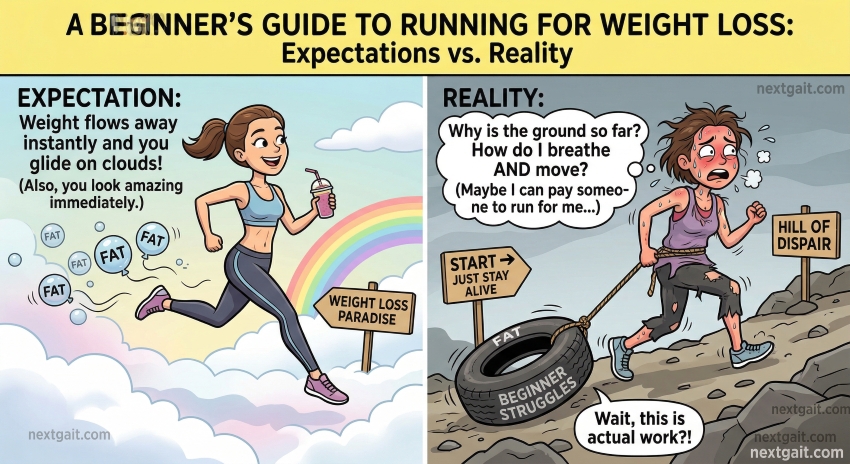
Avoiding common beginner errors like running too fast, skipping rest, or overeating preserves your physical progress and motivation. I made every one of these mistakes during my first year of running. Learn from my pain:
| Mistake | Why It Hurts | What to Do Instead |
|---|---|---|
| Running too fast | You burn carbs instead of fat, exhaust yourself, and can’t maintain consistency | Keep runs in Zone 2 — conversational pace |
| Skipping rest days | Elevated cortisol, overtraining, increased injury risk | Take at least 2 full rest days per week |
| “Rewarding” runs with food | A 30-min run burns ~300 cal. A muffin has 450 cal. Net negative. | Track calories in a food journal for the first month |
| Only running (no strength) | You lose muscle, metabolism drops, weight plateaus | Add 2 strength sessions per week |
| Doing too much too soon | Shin splints, knee pain, burnout | Follow the 10% rule — never increase mileage by more than 10%/week. This is a core pillar in preventing running injuries. |
| Weighing yourself daily | Weight fluctuates 2-5 lbs daily based on water and food | Weigh weekly, same time, same conditions |
| Cutting too many calories | Your body enters “starvation mode,” lowers metabolism, and holds onto fat | Maintain a moderate 300-500 cal/day deficit — no more |
| Ignoring sleep | Poor sleep raises ghrelin (hunger hormone) and cortisol (fat-storage hormone) | Target 7-9 hours per night |
⚠️ The #1 Mistake I See: Beginners who start running 5 days/week while eating 1,200 calories. This is a recipe for burnout, injury, and metabolic damage. Start with 3 runs/week and a moderate calorie deficit. Slow and steady wins this race.
Breaking Through Weight Loss Plateaus
Overcoming weight plateaus requires introducing running variety, adjusting calorie targets, lifting heavier weights, and prioritizing recovery and sleep. After 4-8 weeks of running, hitting a running weight loss plateau is normal. It doesn’t mean running isn’t working.
Why Plateaus Happen
- Metabolic adaptation: As you lose weight, your body needs fewer calories. Your original deficit shrinks.
- Muscle gain: You may be gaining muscle (heavier than fat) while losing fat. Your body composition improves even when the scale doesn’t move.
- Water retention: New exercise causes muscles to hold extra water for repair. This can mask 2-5 lbs of fat loss for weeks.
- Cortisol from overtraining: Too much stress (physical or mental) elevates cortisol, which signals your body to store belly fat. This is why prioritizing sleep and following a structured recovery and rest days guide is essential.
How to Break a Plateau
| Strategy | How | Why It Works |
|---|---|---|
| Add variety | Mix in hill runs, intervals, or different routes | Forces your body to adapt to new demands |
| Increase strength training | Go from 2x to 3x/week, or add weight | More muscle = higher resting metabolism |
| Recalculate calories | Adjust your TDEE for your new, lower weight | Your deficit may have closed without you realizing |
| Prioritize sleep | Target 8 hours, no screens 1hr before bed | Sleep regulates hunger hormones and cortisol |
| Take a deload week | Cut running volume by 50% for one week | Lets your body recover, reduces cortisol, resets adaptation |
✅ Patience Reminder: Weight loss is not linear. You will have weeks where you lose 3 lbs and weeks where you gain 1 lb. The trend over months is what matters, not any single week.
Non-Scale Victories That Actually Matter
Tracking body measurements, sleep quality, daily energy, and dropping resting heart rates reveals physical adaptation better than scales. The scale is a terrible measure of progress, especially in the first 3 months when your body is simultaneously losing fat, gaining muscle, and adapting to running.
Track these instead:
| Non-Scale Victory | How to Track | Why It Matters |
|---|---|---|
| Clothes fit better | Try on your “goal” jeans monthly | Fat loss changes your body shape before the scale moves |
| Run longer without stopping | Compare Week 1 vs Week 8 intervals | Cardiovascular fitness is improving rapidly |
| Better sleep | Rate sleep quality 1-10 each morning | Running regulates sleep hormones |
| More energy during the day | Notice afternoon slumps decreasing | Your aerobic base is fueling your daily life |
| Lower resting heart rate | Check your watch first thing in the morning | A dropping RHR = a more efficient heart |
| Improved mood | Notice anxiety/stress levels decreasing | Running releases endorphins and reduces cortisol |
| Running feels easier | Same pace, lower heart rate | Proof your body is adapting and getting fitter |
💡 My Favorite Metric: Track your resting heart rate every morning. Mine dropped from 78 bpm to 54 bpm in my first year of running. That’s a tangible sign of cardiovascular health improving — and it correlates directly with fat-burning efficiency.
Essential Gear for Beginner Runners
Lacing up proper running shoes tailored to your body weight prevents orthopedic injuries and makes your early runs comfortable. You don’t need expensive equipment to start running. But having the right shoes is non-negotiable — they prevent injuries and make running comfortable. Over time, you also need to know when to replace running shoes to avoid wearing down cushioning. If you’re unsure what to buy, check my complete guide on choosing running shoes.
Recommended Shoes by Body Weight
| Body Weight | Cushioning Need | Top Pick | Why |
|---|---|---|---|
| Under 180 lbs | Moderate | Brooks Ghost 16 See Price | My Pick: Reliable, neutral daily trainer. Fits all foot types. For extra cushion details, see my Brooks Ghost vs Glycerin GTS comparison. |
| 180-220 lbs | High | ASICS Gel-Nimbus 26 See Price | Best for: Excellent shock absorption and joint protection. Has 4E width option. Check how it matches up in my Hoka Bondi vs ASICS Gel-Nimbus comparison. |
| Over 220 lbs | Max cushion | Hoka Bondi 9 See Price | Best for: 43mm stack with a wide, ultra-stable base. Heavy runners can also check out our list of the best stability running shoes for extra arch and pronation guidance. |
Other Helpful Gear
| Gear | Why You Need It | Budget Option |
|---|---|---|
| Running socks | Prevent blisters — cotton socks cause friction | My Pick: Balega Hidden Comfort (highly durable, no blisters) |
| Running socks guide | Detailed breakdown of sock materials and fit | — |
| Sports watch | Track heart rate zones, pace, and distance | My Pick: COROS PACE 3 (premium tracking watch) |
| Blister prevention guide | How to prevent blisters on longer runs | — |
For runners who need extra support, see my guides for flat feet, wide feet, or knee pain.
The Bottom Line: Start Slow, Stay Consistent, Be Patient
Consistency, patient habit building, and starting embarrassingly slow are the true pillars of successful long-term weight loss. Running for weight loss works. It is not magic. Instead, it is a powerful, time-efficient tool that — combined with smart nutrition and adequate rest — creates a sustainable calorie deficit. At the same time, it builds cardiovascular fitness, improves mood, and transforms your relationship with your body.
Here’s your action plan:
- Get proper shoes — visit a running store or read my shoe guide
- Follow the 8-week run-walk plan — 3 runs per week, start embarrassingly slow
- Eat in a moderate calorie deficit — 300-500 cal/day, don’t starve yourself
- Add 2 strength sessions per week — protect your joints and boost your metabolism
- Track non-scale victories — clothes, energy, sleep, resting heart rate
- Be patient — the first 8 weeks are about building the habit. The results follow.
If you’re dealing with specific foot issues, check my guides for shin splints, plantar fasciitis, or supination.
I went from not being able to run around the block to completing my first half marathon. It didn’t happen overnight — it happened one slow, consistent run at a time.
Your first run starts today. Lace up. Walk out the door. Jog for one minute. Walk for three. Repeat.
That’s it. That’s the beginning.
Disclosure: NextGait is reader-supported. When you buy through links on this page, we may earn a small affiliate commission at no extra cost to you. See our full disclaimer.

Written by Ken — 12 years of running, 12,500+ miles, 63 shoes tested, 36 races from 5Ks to a 50K ultra. I run 30–40 miles a week on the Atlantic City Boardwalk and review every shoe with real training miles, not one-run demos. More about me →