
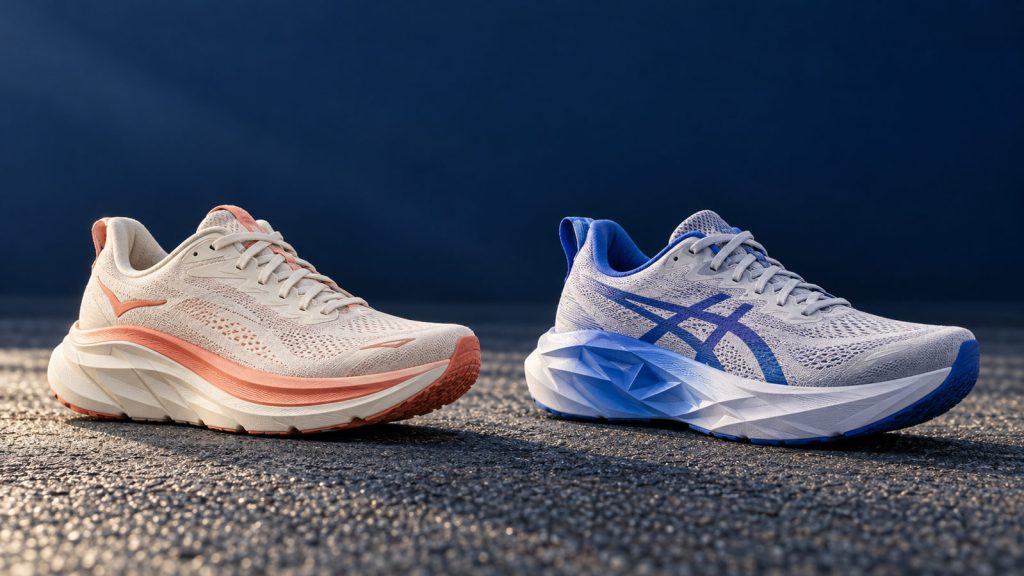
HOKA Clifton 10 vs ASICS Novablast 6: Which Daily Trainer Fits Your Runs?
My HOKA Clifton 10 vs ASICS Novablast 6 comparison: rocker versus bounce, fit, easy and faster runs, stability, grip, and how I would choose.
My HOKA Clifton 10 vs ASICS Novablast 6 comparison: rocker versus bounce, fit, easy and faster runs, stability, grip, and how I would choose.
My 10 best stable neutral running shoes, tested for platform control, warm-foot fit, cornering, tired-form stability, grip, and real training use.
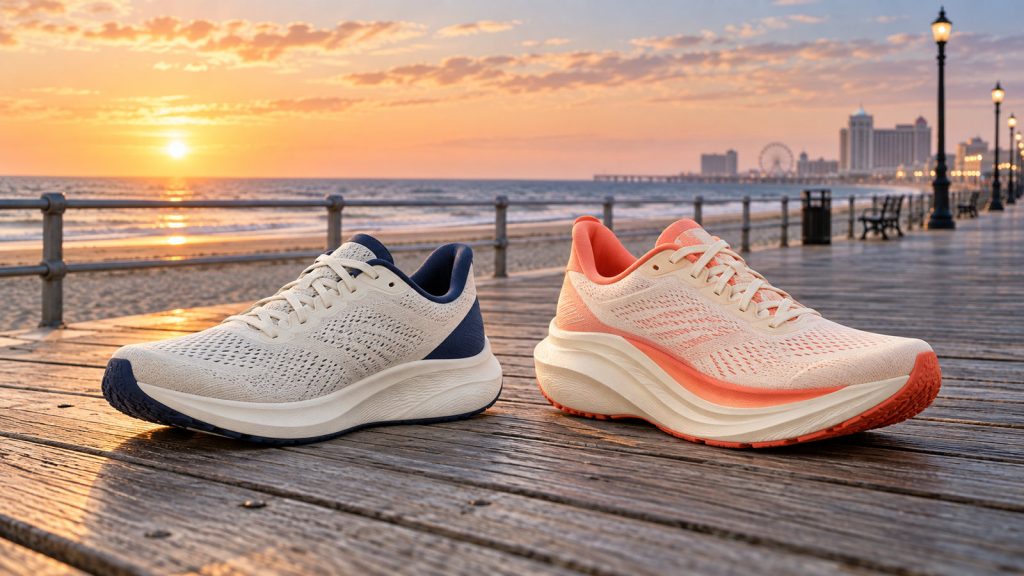
After 120 miles in Mach 7 and 230 in Endorphin Speed 5, Ken compares fit, tempo runs, fast long runs and wear to help you choose the right workout shoe.

My 10 best running shoes for gravel roads, ranked by grip, stability, protection, road comfort, and performance on hardpack and loose stone.
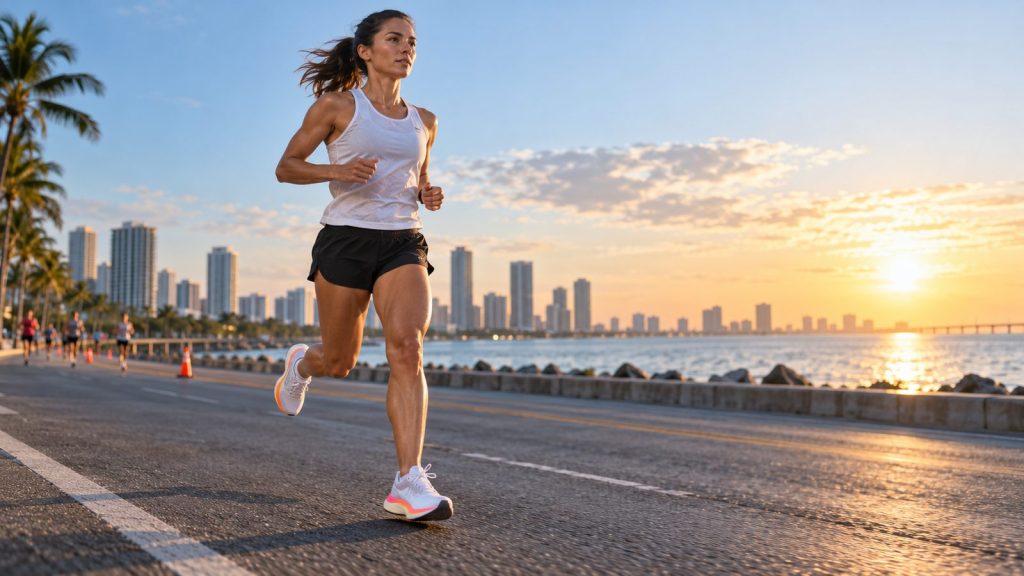
My 10 best half marathon running shoes, ranked by pace control, fit, stability, late-race comfort, and the job each model does best.
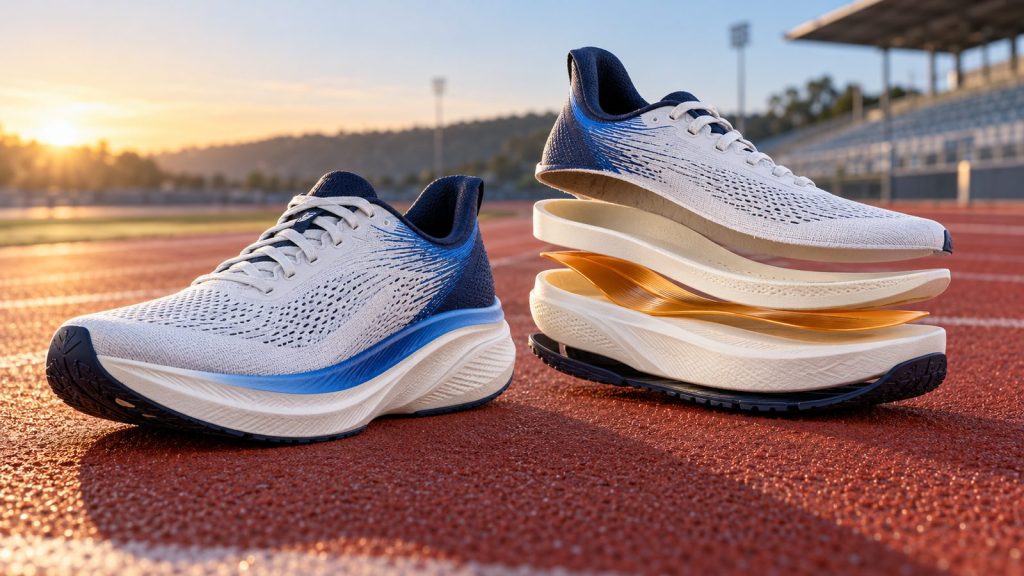
My 10 best nylon-plated running shoes, compared by plate construction, ride, workout role, fit, pace range, and exact-model test mileage.
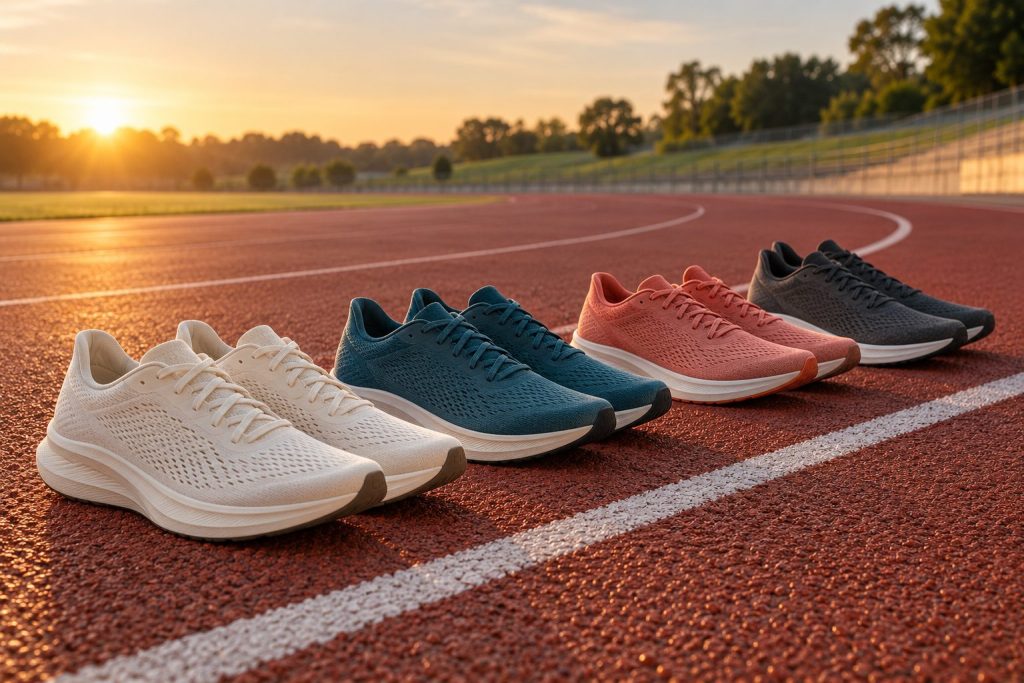
My 10 best non-plated racing shoes, compared by race distance, ride, fit, control, plate-free construction, and test mileage.
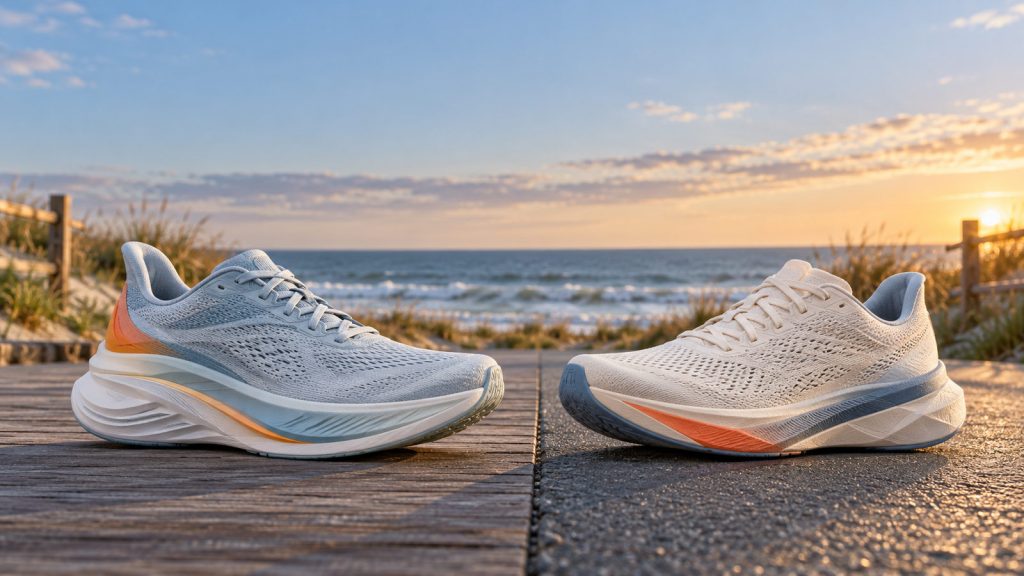
After 120 miles in Nike Mach 7 and 60 in New Balance Rebel v5, Ken compares fit, tempo runs, fartlek, long runs and durability to help you choose the right workout shoe.
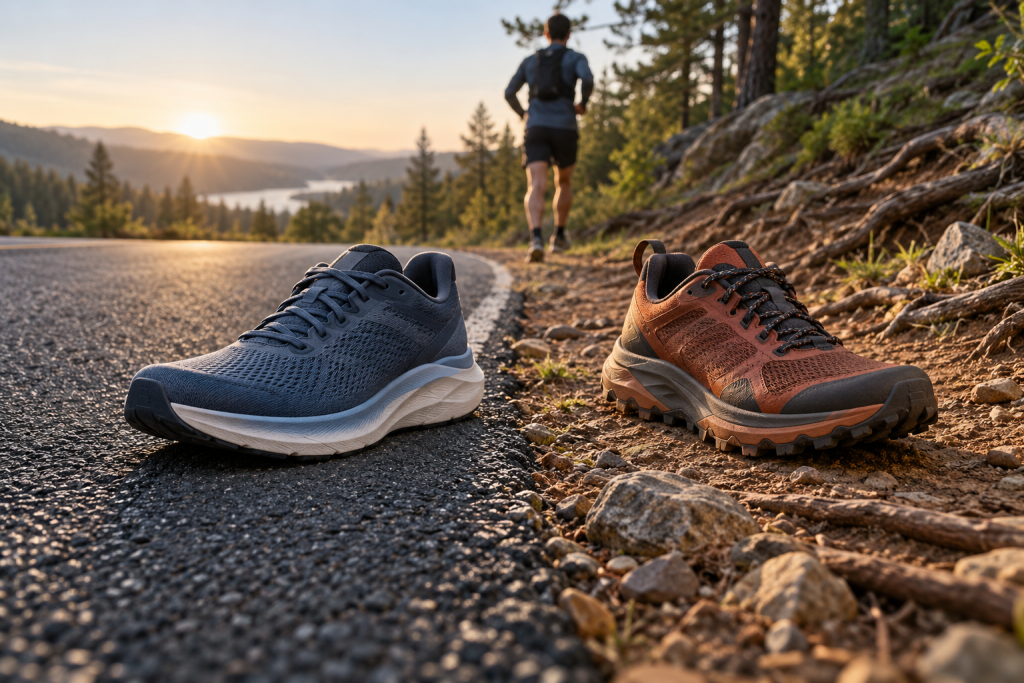
I choose road or trail shoes by the hardest recurring surface, the consequence of a mistake, and the smallest amount of grip and protection the route needs.
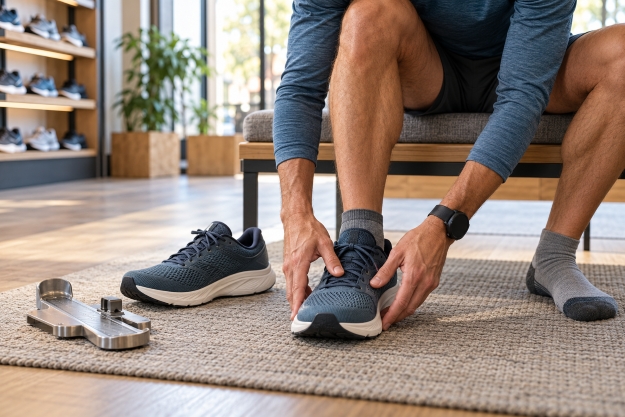
A width letter only starts the search. I fit five zones under load so the shoe gives my foot room where it needs room—and control everywhere else.
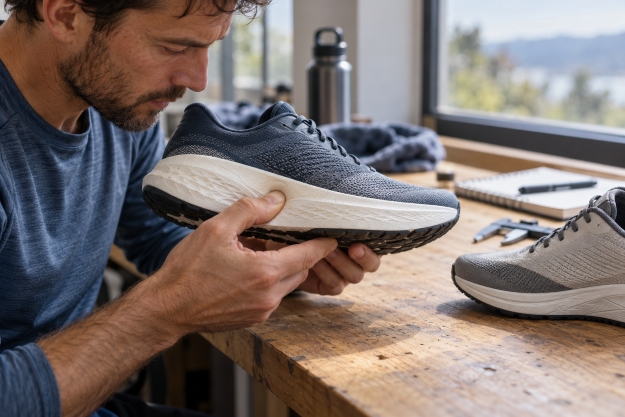
A foam acronym sets expectations, but it cannot predict the finished ride. I judge chemistry only through geometry, pace, temperature, wear and role.
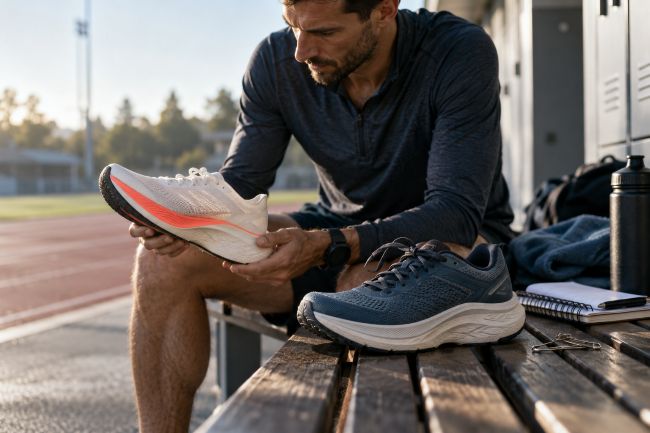
I buy the daily trainer first. A race shoe earns the specialist slot only after training is covered and its race-day advantage survives a complete rehearsal.
HOKA Bondi 9 vs New Balance 1080v15: Ken compares the rocker, fit, easy runs, steady pace and walking to help you choose the right cushioned shoe.
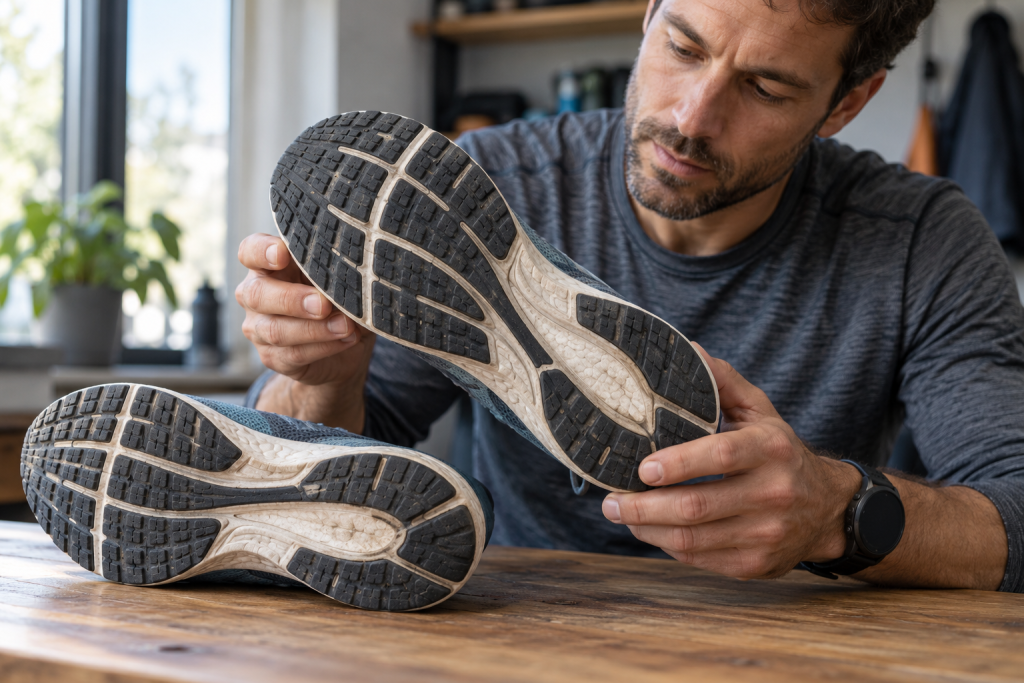
I read outsole rubber as a system: compound, coverage, tread, surface, moisture and wear. Here is how I inspect it before and after the run.
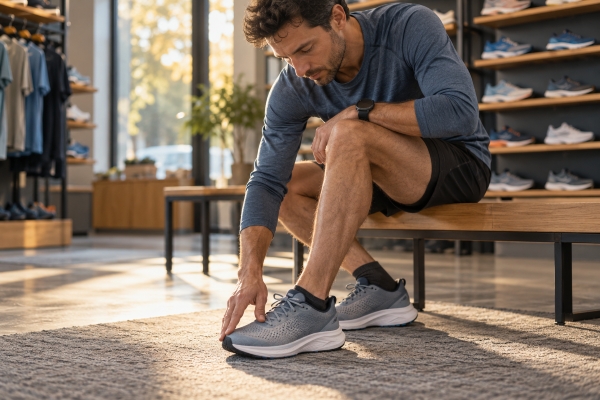
Running shoes should hold the heel and midfoot securely, support the forefoot, and leave the toes free. Here is the 12-minute fit test I use.
Ken’s practical system for building the smallest useful running-shoe rotation, assigning every pair a job, testing new shoes, and removing redundant roles.
Ken’s weekly role map for choosing a daily trainer, adding a tempo shoe, or using one versatile running shoe for both easy and faster sessions.
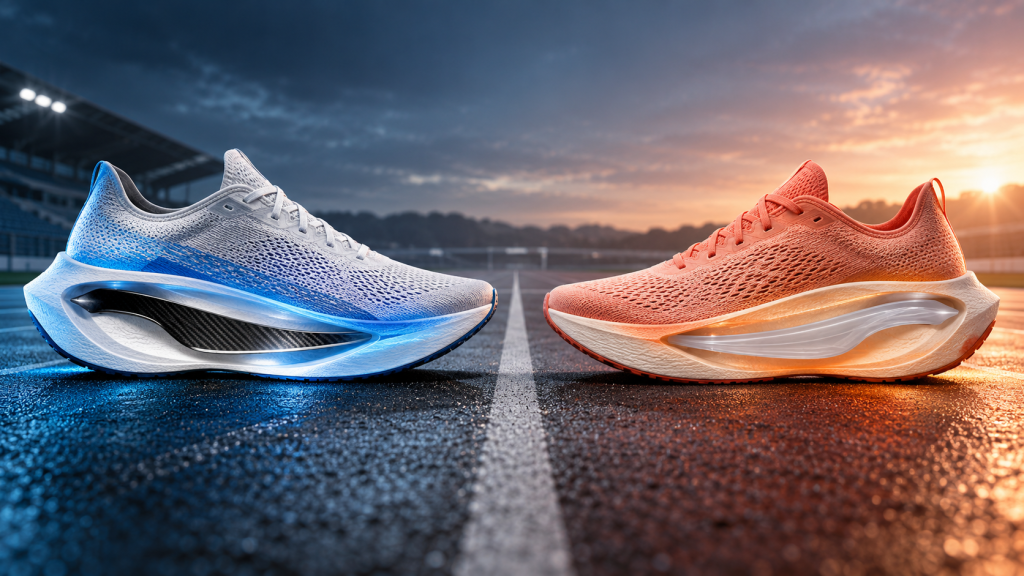
Ken’s flex-map comparison of carbon, nylon, and unplated running shoes—built around pace, fit, foam, rocker timing, fatigue, and the job the shoe must do.
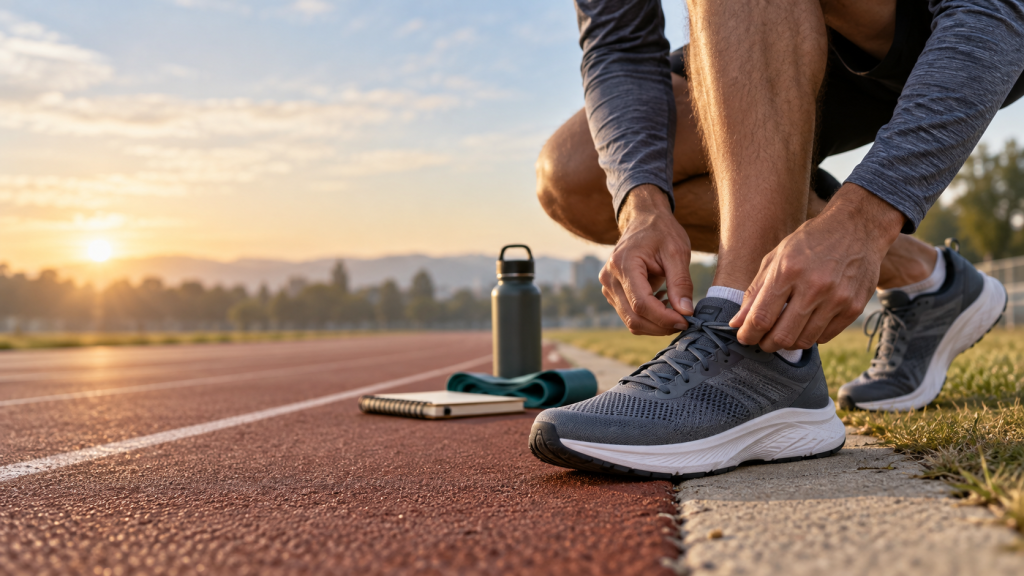
Ken’s honest answer to whether running shoes prevent injuries, with a four-dial risk panel, three-run shoe audit, and clear stop, modify, or continue signals.
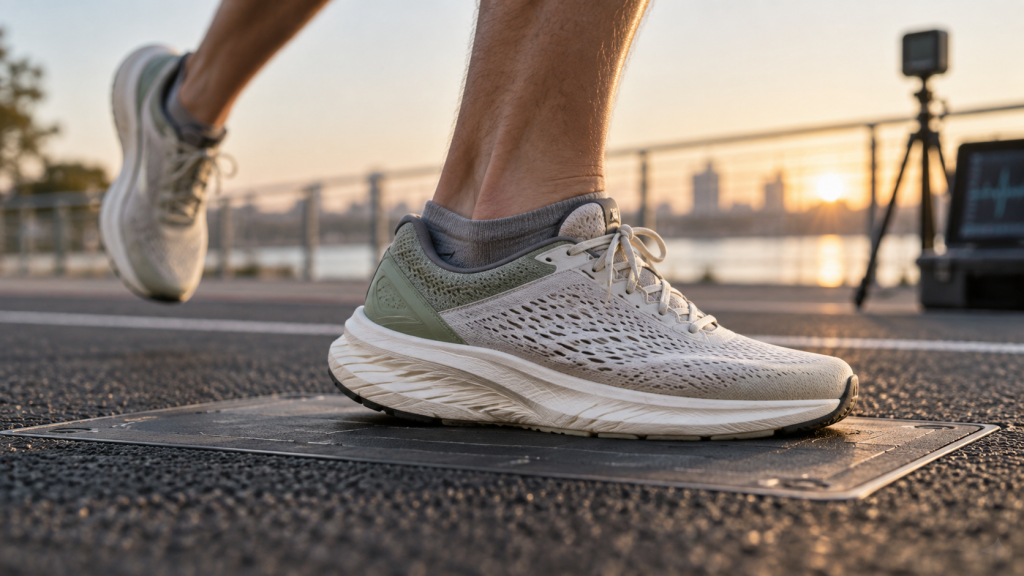
Ken’s runner-tested answer to whether cushioning reduces impact, including the five readings he uses to separate useful protection from unstable softness.
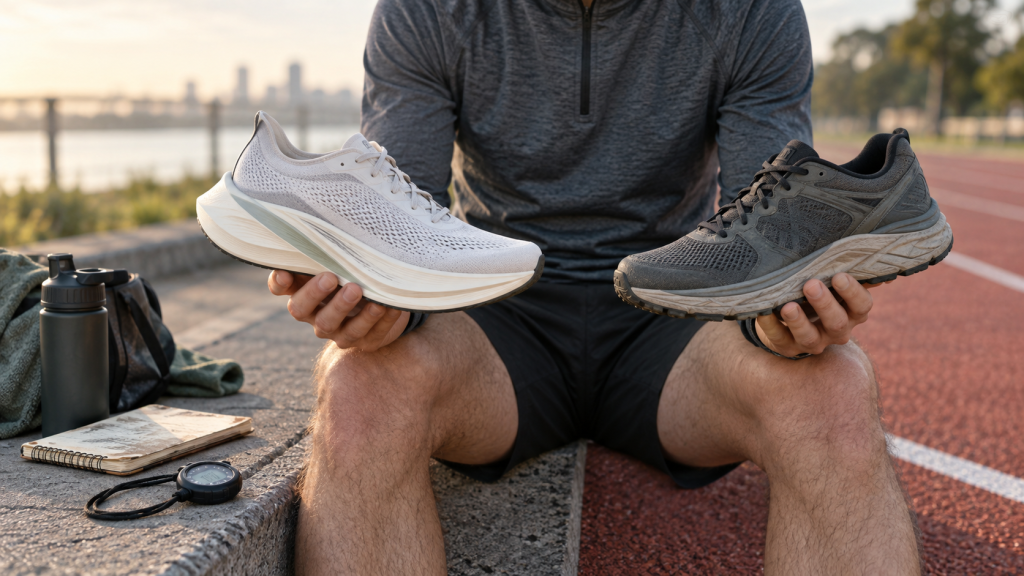
Ken’s practical value test for deciding when premium running shoes deserve the price—and when a simpler, less expensive pair is the smarter choice.