
HOKA Clifton 10 vs ASICS Novablast 6: I would start with the Clifton 10 if the job is controlled easy mileage, recovery running, and a familiar rocker. I would shortlist the Novablast 6 if I want a more energetic daily trainer that can make moderate pace changes feel inviting. My choice still depends on fit and late-run control; the more exciting first step does not win a training week by itself.
I have 350 logged running miles in the Clifton 10. I do not yet have a verified Novablast 6 running log, so I will not dress this up as a matched 350-mile head-to-head. I can tell you how the Clifton behaves on my South Jersey roads, what the Novablast 6 is built to do, and exactly which checks I would make before buying either one. That is a more useful decision than borrowing my Novablast 5 mileage and pretending the two generations are identical.
My short answer: Clifton 10 is my lower-uncertainty pick for quiet, rockered easy running. Novablast 6 is the more compelling candidate when I want a lively forefoot and a daily shoe with a wider pace range—provided its fit and stability pass my own run test.
The decision in one table
| What I need from the shoe | Clifton 10 | Novablast 6 |
|---|---|---|
| Easy and recovery miles | My first pick: smooth rocker and settled rhythm | Potentially comfortable, but I would test whether the bounce stays calm |
| Daily miles with moderate progressions | Capable, though not my preferred quick-change tool | My provisional pick if the forefoot response works in practice |
| A repeatable long aerobic run | Known quantity from my 350-mile log | Promising on paper; late-run control still needs a direct test |
| A foot that dislikes guided rockers | Could feel too prescriptive | More appealing geometry to try |
| A runner who dislikes tall, springy shoes | More predictable choice for me | Try on a turn and a tired-leg run before buying |
Both are neutral, high-cushion road trainers, but I do not assign them the same job. The Clifton organizes the stride through its rocker and sidewalls. The Novablast 6 is designed around a springier forefoot. I choose by the sensation that helps the intended session, then reject the shoe if it changes my effort or foot placement.
My ranking rule
I rank the shoe by the session that is hardest to replace in my week. If I need to arrive home from an easy run at the intended effort, Clifton 10 has a real advantage in my log. If I need a single pair that can move from easy to steady without feeling flat, I give Novablast 6 a fair audition. The winner is the pair that stays secure and predictable after 40 minutes, not the pair with the loudest bounce during a store try-on.

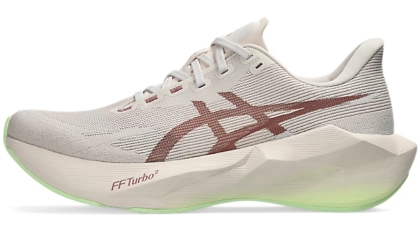
Clifton 10 and Novablast 6: the details that matter
| Detail | HOKA Clifton 10 | ASICS Novablast 6 |
|---|---|---|
| Official men’s listed weight | About 278 g on HOKA’s product listing | 253 g / 8.9 oz on ASICS US standard men’s listing |
| Heel-to-toe drop | 8 mm | 8 mm |
| Midsole and geometry | CMEVA foam, Smooth MetaRocker, rearfoot Active Foot Frame | FF BLAST MAX with an FF TURBO SQUARED forefoot pod |
| Upper and outsole | Jacquard knit, abrasion rubber | Engineered upper, ASICSGRIP at the forefoot |
| Evidence I personally hold | 350 logged running miles in my Clifton 10 | No verified Novablast 6 running miles yet |
| What the numbers cannot answer | Whether the rocker fits another stride | Whether the designed rebound stays controlled on a tired run |
I treat the weight difference as context, not a winner. A lighter shoe may feel less demanding during a progression, while a secure upper and a predictable platform can matter more at the end of a long run. Both list an 8 mm drop, yet matching drop numbers do not make their transitions feel the same.
Why two 8 mm shoes can run so differently
Drop is the static difference between heel and forefoot height. It says nothing about how far the heel compresses under my weight, where the rocker starts, how stiff the front of the shoe feels, or whether the upper keeps my foot centered. I can see the same 8 mm on two boxes and feel two different loading patterns within a minute of jogging.
In Clifton 10, the rocker is the dominant cue: I land, settle into the sidewalls, and roll forward. With Novablast 6, I would ask whether its softer main foam and energetic forefoot pod join into one smooth transition for my heel-to-midfoot landing. A lively push-off cannot rescue a landing that feels delayed or disconnected. Conversely, a runner who lands farther forward may enjoy that forefoot response more than I would. I let my stride answer rather than treating the shared drop as a tie.
Ride feel: guided roll or lively bounce?
What I know from Clifton 10
Clifton 10 gives me a smooth, organized roll when I settle into easy pace. My foot sits down in the platform rather than balancing on top of a loose slab of foam. That familiar HOKA shape helps me keep an even rhythm over boardwalk planks and ordinary road camber. I reach for it when I want the shoe to quiet the run down.
One run that explains my verdict was 10.5 miles past Steel Pier on the wooden Atlantic City boardwalk. I finished with energy left and no urge to fight the rocker for my next step. I have also taken this pair through long runs up to 20 miles on the Atlantic City and Ocean City coastal corridors. Those are observations from my own 350-mile Clifton log, not a promise that its shape will suit every stride.
The trade-off is real. Its rocker can feel directive, and it is not the shoe I choose when a workout asks for repeated sharp changes of pace. On a cold day the midsole can feel firmer than it does in mild weather; I do not let one January run define the shoe’s entire range. My full Clifton 10 review goes deeper into the pair I actually ran.
What I would test in Novablast 6
Novablast 6 pairs FF BLAST MAX with a distinct FF TURBO SQUARED forefoot pod. That construction gives me a clear reason to expect a more energetic toe-off than the Clifton’s smooth roll, but a materials list cannot tell me how my foot will feel at mile eight. I would first test whether the forefoot bounce helps a controlled progression without nudging an easy day into moderate effort.
I would then take it through broad turns, slight camber, and a late-run segment. A lively shoe earns its place only if the rebound stays usable when cadence drops and the legs are less tidy. My earlier Novablast 5 experience can inform what questions to ask, but it is not a Novablast 6 test result.
My second question is about continuity. The new forefoot element makes it tempting to call the whole shoe “bouncy,” but heel contact and toe-off are separate moments. I would pay attention to whether the heel feels quiet while the forefoot responds, whether the transition feels smooth at my easy cadence, and whether a moderate pickup improves that connection. Those are observable cues; a foam name alone is not an on-road verdict.
Easy days, long runs, and progressions
Easy and recovery running
I give Clifton 10 the edge here from experience. Its rocker makes the transition feel consistent without tempting me to keep pushing. If my plan says conversational effort, I want to finish at conversational effort. Novablast 6 could be pleasant at the same pace; I would check whether its springier response lets me relax or keeps asking for another gear.
Long aerobic runs
My Clifton log gives me a mature picture of long-run behavior. I trust its secure, predictable feel through ordinary aerobic mileage. For Novablast 6, I would hold back a strong long-run verdict until I have tested heel hold, forefoot room, and lateral control in the final third—not just judged the first soft mile.
Steady work and moderate progressions
This is where I would most seriously consider Novablast 6. Its lighter listed weight and energetic forefoot design point toward a daily trainer that can change cadence more willingly. I would still reserve a dedicated workout shoe for sharp intervals. The practical question is whether a normal progression feels smoother and more controlled in the ASICS than in the Clifton, on the same route and effort. My daily-trainer versus tempo-shoe guide explains where I draw that boundary.
The pace matrix I would actually use
| Session | Clifton 10 in my running | What I would demand from Novablast 6 | My decision today |
|---|---|---|---|
| Recovery jog | Easy to settle; the rocker helps me keep effort quiet | The heel must feel calm without pushing the pace | Clifton |
| Everyday easy run | Secure and familiar across my usual surfaces | Fit and platform must stay centered after warm-up | Clifton on current evidence |
| Long aerobic run | Known late-run behavior in my logged pair | No toe pressure, heel drift, or steering in the final third | Clifton until tested |
| Steady progression | Works, but I notice more structure | The forefoot pod must make the pickup smooth, not choppy | Novablast candidate |
| Tempo intervals | Neither is my preferred purpose-built tool | Rebound must not be confused with efficient fast turnover | Neither |
| Walking mixed with running | Rocker is familiar, though shape preference matters | Heel transition must feel natural at walking cadence | Try both |
I define those rows by effort, not a fixed minutes-per-mile cutoff. The same pace can be easy for one runner and threshold work for another. If a shoe only feels good when I run faster than the workout calls for, it loses that row even if the sensation is fun.
Fit is the first veto
My Clifton 10 fits a men’s US 10.5 D with enough forefoot clearance for my slightly wide foot. The heel stays secure and the sidewalls give a contained feel. That is my foot, not a universal size rule. I would try the ASICS in its own appropriate size and width rather than assuming a 10.5 D label creates the same interior shape.
I look for toe room after warm-up, no repeated arch or instep pressure, a heel that stays seated on a gentle downhill, and no foot slide across the platform on turns. If the Novablast needs an over-tight knot to control movement, or the Clifton’s cradle presses in the wrong place, I stop treating the ride comparison as the main issue. My running-shoe fit checklist is the next step when either pair feels close but not quite right.
Width and toe-box height are different problems
A broad forefoot can still be too low over the toes. I test both horizontal room and vertical clearance after the foot warms, especially with thicker socks or an insert. If the ASICS feels close over the nails, I would compare its Wide option where available rather than simply buying a longer shoe. If the HOKA sidewalls feel intrusive under the arch, more toe room will not fix that shape mismatch.
I use the correct width as the starting point, then check the rearfoot again. More width can solve forefoot pressure but introduce heel movement. A lacing adjustment is reasonable for a nearly right fit; it is not a reason to ignore repeated sliding or numbness.
Stability and wet-road grip
Clifton 10 feels centered to me on the imperfect roads I run. That is a useful observation, not proof that it will correct another runner’s motion. With Novablast 6, I would check the height and bounce on camber and corners before deciding whether it offers enough calm for everyday mileage. Neither neutral shoe should be bought as a substitute for a genuine support need.
ASICS uses ASICSGRIP rubber in the Novablast 6 forefoot. I would test it on ordinary damp asphalt while still treating wet paint, metal covers, and leaf-covered turns as separate hazards. Outsole compound matters, but so do coverage, wear, and how much of the foot is in contact during braking. My outsole-rubber guide explains why I never award a wet-grip win from a product name alone.
Why landing pattern and fatigue may change the winner
I land between heel and midfoot depending on pace. That matters here because the Clifton’s guided roll is available early in the stride, while the Novablast’s most distinctive foam sits under the forefoot. A runner who arrives firmly on the heel may notice more of the ASICS base foam before the lively toe-off. A runner who loads the forefoot sooner may get more from the pod. I would not hand both runners the same “bouncier shoe” verdict.
Fatigue is my second filter. Fresh legs can hide a loose heel, a shallow toe box, or a platform that requires small corrections. Late in a longer run, slower cadence and less exact placement expose those costs. Clifton has already shown me how it behaves in that state. For Novablast 6 I would postpone a firm stability ranking until the same late-run check. If either shoe makes me alter my stride to stay centered, that is a stop signal, not a training benefit.
Body mass changes foam compression too. At 182 pounds I can describe my own response, but I do not convert it into a rule for a 130-pound or 220-pound runner. The useful test is whether the shoe rebounds and settles at that person’s normal effort while keeping the foot on its intended path.
Durability: a mature log versus an open question
At 350 running miles, the Clifton 10 outsole in my pair is smoothing at my main landing and forefoot push-off zones. The midsole has visible creasing and feels softer than it did early on, while the upper is still intact. I would keep assessing its ride rather than declare a universal replacement mileage from that one pair. I cannot make the equivalent wear claim for Novablast 6 yet, and I will not turn ASICS’s rubber description into a longevity promise. Pair age, road texture, body mass, weather, and rotation all affect wear.
I would monitor the Novablast at the same landing and push-off zones, track whether the upper keeps my foot centered, and repeat one familiar route as the miles build. Until then, Clifton has the stronger evidence record for me; Novablast 6 has a design case, not an established longevity verdict.
Walking, treadmill, and a two-shoe rotation
On a predictable treadmill, I find it easier to isolate ride from road camber. I would start both at a relaxed jog, then check whether the Clifton’s rocker still feels natural against the moving belt and whether the Novablast’s heel-to-forefoot transition stays smooth. That is a comparison method, not a claim that one outsole automatically wins indoors.
For a day that alternates running and walking, I would pay close attention to the first steps after slowing down. A shoe that feels excellent at running cadence may feel awkward on a walking reset. For heavy lifting or lateral gym work, I would reach for a flatter training shoe; neither tall road-running platform is designed around side-to-side loading.
I would rarely buy both Clifton 10 and Novablast 6 for a small rotation. They overlap in easy and daily mileage. The pairing only earns space when Clifton clearly handles my calm days and Novablast clearly handles moderate pickups without displacing an existing workout shoe. My rotation guide helps me spot that duplication before buying.
How I would make the purchase decision
- Name the missing session. If my week needs a quiet easy-day anchor, Clifton leads. If it needs a lively daily shoe that can progress, I shortlist Novablast 6.
- Check fit after warm-up. I reject pressure, slipping, or toe contact before I compare foam. I will not size longer just to create width.
- Run the intended pace. I keep route and effort comparable. The better shoe lets me execute the session without negotiating with its geometry.
- Look at the last ten minutes. Late-run steering or pace drift costs more than a delightful first impression.
- Buy only a distinct role. If either shoe duplicates one already working in my rotation, I keep my money until a need becomes clear.
New numbness, focal pain, or a changed gait ends my trial. I do not run through those signals in the hope that a shoe will “break in.”
A seven-minute store check before the run test
- Stand in my usual running socks. I check length and vertical toe clearance with weight on both feet.
- Walk slowly. I notice whether either heel transition feels abrupt before judging running bounce.
- Turn both directions. My foot should not slide across the platform or press into a sidewall.
- Jog easily. I ignore the first plush impression and listen for repeatable heel movement or arch pressure.
- Lift cadence briefly. I want a clean transition, not an involuntary speed-up.
- Repeat after a short pause. A fit problem that returns is more informative than one odd step.
- Name the winner’s job. If I cannot identify the session where it is better, I do not buy on novelty.
Who gets my provisional recommendation?
- Choose Clifton 10 when you value a known, steady rocker for easy mileage and want the more mature evidence from my own log.
- Try Novablast 6 first when you want a springier forefoot and a broader daily-to-steady pace range, and you can verify its fit and control yourself.
- Skip Clifton 10 if its sidewalls or guided roll repeatedly interfere with your natural stride.
- Skip Novablast 6 if the rebound makes easy pace hard to settle or the tall platform asks constant corrections.
- Buy neither if both fail the fit test or your current shoes already cover these exact jobs.
When a third shoe is the better answer
If I want far more protection and a slower, more planted feel than either pair offers, I would compare the Bondi 9 and Clifton 10 instead of forcing the Clifton to become a maximal recovery shoe. If I want a sharper plateless workout partner, I would look beyond both of these daily trainers rather than calling a lively forefoot a racing setup.
If the main complaint is repeated loss of control, I would move toward a support-focused comparison. Neither Clifton nor Novablast 6 is a substitute for assessing a fit or stability need. I choose the adjacent guide only when it answers the next decision, not because two model names happen to share a category.
FAQ: Clifton 10 vs Novablast 6
Is HOKA Clifton 10 or ASICS Novablast 6 better for daily running?
I trust Clifton 10 more for quiet, repeatable easy miles because I have 350 logged miles in it. I would try Novablast 6 when one daily shoe must also handle moderate progressions, then judge its fit and late-run control before choosing.
Which feels softer or bouncier?
Clifton 10 gives me a smooth, guided roll. Novablast 6 is built with FF BLAST MAX and a FF TURBO SQUARED forefoot pod for a more energetic response. I have not logged Novablast 6 miles, so I treat the actual feel on my foot as a test still to do.
Are both shoes 8 mm drop?
Yes, the listed heel-to-toe drop is 8 mm for both current models. That shared number does not make their rocker, foam, forefoot response, or fit interchangeable.
Which would I pick for a long run?
With the evidence I have now, I pick Clifton 10 for a conventional long aerobic run. Novablast 6 may suit a long run with a faster finish, but I would first test its fit and control in the final third.
Is Novablast 6 the same as Novablast 5?
No. Novablast 6 adds a FF TURBO SQUARED forefoot pod and ASICSGRIP rubber at the forefoot. My Novablast 5 running log cannot be presented as a Novablast 6 test.
Which has better durability?
I can describe the Clifton 10 after 350 logged running miles. I do not have equivalent Novablast 6 mileage, so I cannot responsibly declare a durability winner or give a universal replacement distance.
My final verdict
Today I would buy Clifton 10 for the runner whose main need is calm, rockered easy running. I would give Novablast 6 the first try-on for a runner who wants a livelier daily trainer and expects to change pace within the week. That ASICS recommendation remains provisional until it passes the same fit, control, and late-run checks I already know the HOKA can pass on my roads.

Written by Ken — 12 years of running, 12,500+ miles, 63 shoes tested, 36 races from 5Ks to a 50K ultra. I run 30–40 miles a week on the Atlantic City Boardwalk and review every shoe with real training miles, not one-run demos. More about me →