
My best running shoe without a carbon plate is the adidas Adizero EVO SL for a fast, versatile road rotation. If I need more protection for long runs, I choose ASICS Superblast 3; for a more controlled workout feel, I compare HOKA Mach 7. The right answer depends on the run and the way the shoe fits me.
I separate three constructions before I rank anything: shoes with no propulsion plate, a shoe with a short midfoot stabilizer, and a nylon-plated shoe. All seven picks avoid carbon. If your rule is no plate at all, the distinction below will save you a wrong purchase.
Quick Picks: My Top 3 Carbon-Free Running Shoes
| My pick | Shoe | Why I chose it | Amazon |
|---|---|---|---|
| Best overall | adidas Adizero EVO SL | Fast daily-to-tempo range; short midfoot stabilizer | Check price → |
| Best long-run cushion | ASICS Superblast 3 | Energetic protection; no carbon plate | Check price → |
| Best workout control | HOKA Mach 7 | Light, guided turnover; no carbon plate | Check price → |
Explore this guide
No Carbon Plate, No Full-Length Plate, and No Plate: How I Separate Them
A shoe can be carbon-free and still contain another stiffening piece. The Endorphin Speed 6 has a full-length nylon plate; the EVO SL has a short midfoot stabilizer but no carbon plate or full-length propulsion plate. The Superblast 3, Mach 7, Rebel v5, Novablast 6, and Vomero Plus are my foam-and-geometry choices without a propulsion plate. I name the hardware because a search for “no carbon” can mean either avoiding carbon specifically or avoiding a directed plated ride.
If I want a fast shoe with no plate-driven propulsion, I start with the EVO SL or Mach 7. If I want no plate or stabilizer element at all, I leave the EVO SL off that stricter shortlist. My non-plated racing-shoe guide and nylon-plated running-shoe guide cover the two neighboring categories.
7 Best Running Shoes Without a Carbon Plate: In-Depth Reviews
I rank these by the job they solve and the compromises I would accept. I use current construction details to screen each model, then judge fit, ride, and use case. I do not attach an unverified mileage figure to a recommendation.
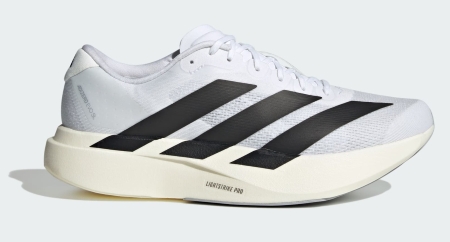
1. adidas Adizero EVO SL — Best versatile fast trainer
| Decision detail | My read |
|---|---|
| Construction | No carbon or full-length propulsion plate; short midfoot stabilizer |
| Best use | Daily miles, tempo, occasional races |
| Fit check | Lock the midfoot without overtightening |
| Main tradeoff | Loose lockdown or narrow heel may bother some runners |
I start with the EVO SL when someone wants one lively road shoe for more than workout day. Adidas confirms that this model has no carbon plate. Its Lightstrike Pro foam supplies the quick feel, while a small midfoot stabilizer adds some structure; I would not describe it as literally free of every stiffening component. That distinction matters if your real goal is the most natural, completely unstructured flex possible.
For my buying decision, the advantage is range. I would use it for ordinary runs that drift into tempo and for a race when I want familiar training-shoe feel. I test the laces and heel on corners before buying. The light upper can feel pleasant until the foot starts sliding; going shorter to fix that problem can cost toe room.
Why I chose it: Few carbon-free shoes combine an energetic foam ride with such a broad training role. What I do not like: It gives less guided support than a more structured daily trainer, and I would not choose it by foam excitement alone if the heel hold is wrong.
2. ASICS Superblast 3 — Best premium long-run shoe
| Decision detail | My read |
|---|---|
| Construction | No carbon plate; foam-led high-stack ride |
| Best use | Long runs and higher-volume training |
| Fit check | Check midfoot hold on a tall platform |
| Main tradeoff | Premium price and elevated ride |
The Superblast 3 is the shoe I would compare when a runner wants long-run protection without the levered sensation of a carbon racer. ASICS uses its current FF LEAP cushioning in this generation, so I judge the third version on its own construction. Its appeal is not a hidden plate; it is the combination of a large foam stack and a rolling, energetic transition.
I would try it on a longer straight stretch and then on turns or a cambered sidewalk. A tall, soft-feeling shoe can be wonderful when I am fresh and less reassuring when my form gets tired. I also pay attention to whether the upper anchors the foot over the midsole rather than letting it float above it.
Why I chose it: It gives the carbon-averse runner an ambitious long-run option without requiring a carbon propulsion system. What I do not like: The price and stack are a lot to buy if my weekly mileage is mostly short, easy runs.
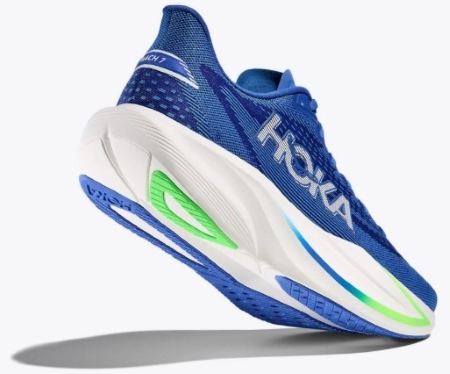
3. HOKA Mach 7 — Best controlled workout shoe
| Decision detail | My read |
|---|---|
| Construction | No carbon plate; rocker-led trainer |
| Best use | Progressions, repeats, tempo |
| Fit check | Check forefoot pressure after warm-up |
| Main tradeoff | Compact fit may feel close on longer runs |
I choose the Mach 7 when the EVO SL feels too free-moving and I want a tidier workout ride. The rocker guides the transition without a carbon plate doing the work. For me, that makes it a sensible bridge between a conventional trainer and a dedicated race shoe: quick enough for a progression, calm enough to use regularly.
The fit check decides whether it stays on my shortlist. I jog easily, add a few short pickups, and then feel for pressure at the outside of the forefoot. A compact upper that feels secure at the start can become restrictive later. If the standard shape is close, I would try the wide version before adding length that allows the heel to move.
Why I chose it: Its controlled turnover gives a clear reason to own it beside a softer daily shoe. What I do not like: It is less forgiving of a broad, swelling-prone forefoot than a roomier trainer.
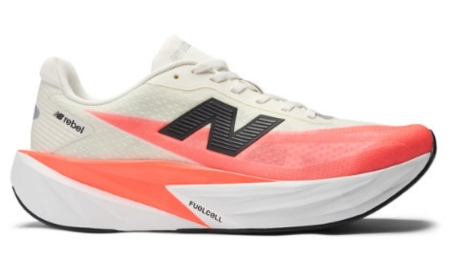
4. New Balance FuelCell Rebel v5 — Best flexible fast feel
| Decision detail | My read |
|---|---|
| Construction | No carbon plate; foam-led flex |
| Best use | Easy-to-fast mixed sessions |
| Fit check | Check tongue and heel at faster pace |
| Main tradeoff | Soft bounce may feel vague when fatigued |
The Rebel v5 earns a place because I do not always want the shoe to tell my foot exactly how to roll. Its FuelCell ride feels like the flexible, playful answer to a stiff super shoe. I would choose it for strides, short progressions, and the kind of run that starts easy and ends quicker.
I would compare it with the Mach 7 on a turn and with the EVO SL on a steady road stretch. The Rebel’s softer character can be delightful, but a runner who wants firm timing underfoot may find it less precise. I check that the tongue lies flat after lacing; extra movement in the upper can become a hot spot when pace rises.
Why I chose it: It gives me a different kind of speed without carbon or a full-length plate. What I do not like: I would not make it my only long-run shoe if I need a steadier platform late in the session.
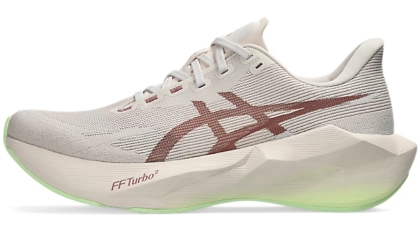
5. ASICS Novablast 6 — Best bouncy daily trainer
| Decision detail | My read |
|---|---|
| Construction | No carbon plate; FF BLAST MAX foam |
| Best use | Easy and steady daily mileage |
| Fit check | Check heel security and lateral control |
| Main tradeoff | Springy ride is not everyone’s idea of stable |
If I were replacing one ordinary training shoe, I would compare Novablast 6 before buying an expensive super trainer. ASICS builds its bounce from FF BLAST MAX cushioning and outsole geometry, not from carbon. That makes it a useful answer for a runner who wants energy on easy and steady days without committing to a plated feel.
I pay attention to the least glamorous part of the test: how the shoe feels when the legs are tired. A high, lively platform can feel exciting during a store jog and less predictable on a downhill or sharp corner. I would keep the fit snug through the midfoot while leaving normal toe clearance.
Why I chose it: It offers a current, foam-led daily ride with more cushioning than the lean workout options. What I do not like: A runner who wants a firm, grounded shoe may never enjoy its bounce.
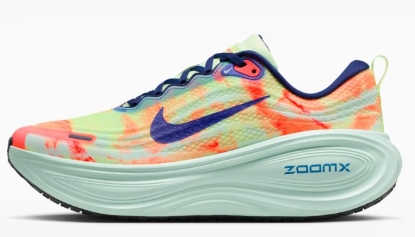
6. Nike Vomero Plus — Best soft recovery option
| Decision detail | My read |
|---|---|
| Construction | No carbon plate; full-length ZoomX foam |
| Best use | Easy and recovery miles on roads |
| Fit check | Check side-to-side security on sloped pavement |
| Main tradeoff | Bulk and height limit quick work |
I include the Vomero Plus because avoiding carbon is sometimes about comfort, not speed. Its full-length ZoomX foam gives a very different reason to buy from the EVO SL: I would place it on easy and recovery days when hard roads make the softer landing appealing.
I would try it on a sloped sidewalk and a few turns rather than deciding from a straight corridor. More foam underfoot can feel luxurious while asking for more control laterally. I also check heel and midfoot hold before deciding whether a wider size is necessary; extra length is not the same as usable width.
Why I chose it: It fills the protective easy-day role that faster carbon-free shoes do not. What I do not like: It is too much shoe if I need crisp, nimble interval work from the same pair.
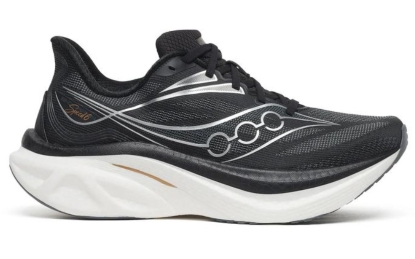
7. Saucony Endorphin Speed 6 — Best nylon-plated alternative
| Decision detail | My read |
|---|---|
| Construction | No carbon; redesigned nylon plate |
| Best use | Tempo sessions and faster racing |
| Fit check | Check fit and roll at both easy and fast pace |
| Main tradeoff | Not suitable if you want no plate of any kind |
I include the Endorphin Speed 6 for the reader who means no carbon, rather than no plate. Saucony has released this version with PWRRUN PBX foam and a reshaped nylon plate. I would shortlist it for threshold work and racing, where a more directed transition is useful. I would never group it with the genuinely unplated shoes above.
The purchase test is simple: I run a few minutes easy, then move to the pace I actually plan to use it for. If the nylon-assisted roll only feels good when I force the pace, it is a workout specialist in my rotation. I also check toe clearance after the warm-up because a plate cannot rescue a cramped fit.
Why I chose it: It is a current, clearly labeled option for speed without carbon. What I do not like: It costs more and feels more prescriptive than the Rebel or Mach; I would skip it immediately if my goal is to avoid every plate.
Full Comparison: Construction, Ride, and Main Use
| Shoe | What is inside | Best for | Watch for |
|---|---|---|---|
| adidas Adizero EVO SL | No carbon or full-length propulsion plate; short midfoot stabilizer | Daily miles, tempo, occasional races | Loose lockdown or narrow heel may bother some runners |
| ASICS Superblast 3 | No carbon plate; foam-led high-stack ride | Long runs and higher-volume training | Premium price and elevated ride |
| HOKA Mach 7 | No carbon plate; rocker-led trainer | Progressions, repeats, tempo | Compact fit may feel close on longer runs |
| New Balance FuelCell Rebel v5 | No carbon plate; foam-led flex | Easy-to-fast mixed sessions | Soft bounce may feel vague when fatigued |
| ASICS Novablast 6 | No carbon plate; FF BLAST MAX foam | Easy and steady daily mileage | Springy ride is not everyone’s idea of stable |
| Nike Vomero Plus | No carbon plate; full-length ZoomX foam | Easy and recovery miles on roads | Bulk and height limit quick work |
| Saucony Endorphin Speed 6 | No carbon; redesigned nylon plate | Tempo sessions and faster racing | Not suitable if you want no plate of any kind |
How I Rank Shoes Without a Carbon Plate
I verify the current model first, because a family name does not prove that two versions share the same foam or plate. Then I prioritize the main weekly job: easy mileage, long run, speedwork, or racing. I rank fit after the warm-up above an exciting first stride. Finally, I ask whether the platform still feels controlled on tired legs. This is why a soft, tall shoe and a lean workout trainer can both make the list without competing for the same runner.
For the same reason, I do not claim every shoe here was run for an equal number of miles. A construction check can establish that a shoe lacks carbon; it cannot establish whether its heel will hold your foot or whether its cushioning will suit your long run.
How I Choose the Right Carbon-Free Running Shoe
- If I want one versatile pair: I start with the EVO SL and compare its hold with the Rebel v5. My daily trainer guide gives me a conventional baseline.
- If I want long-run comfort: I compare Superblast 3, Novablast 6, and Vomero Plus by cost, cushioning, and control. My cushioned-shoe guide helps me narrow that role.
- If I want a workout shoe: I compare Mach 7 and Rebel v5 first; I include Speed 6 only if nylon is acceptable. My speedwork guide covers the wider category.
- If I want a race shoe: I decide whether I dislike carbon specifically or every plate. My carbon-plated comparison clarifies what I am giving up, and my lightweight-shoe guide gives other training options.
- Whatever the construction: I check toe room and heel hold using my running-shoe fit guide and toe-box fit guide.
In a store, I use the same socks I run in, jog easily, then add a few controlled pickups and turns. I would rather change models than buy extra length to solve a width or heel problem. My store testing routine gives the full sequence.
Frequently Asked Questions
What are the best running shoes without a carbon plate?
I start with adidas Adizero EVO SL for varied road training, ASICS Superblast 3 for protected long runs, and HOKA Mach 7 for controlled workouts. I choose among them by fit and the main job of the shoe.
Does no carbon plate mean no plate at all?
No. Saucony Endorphin Speed 6 uses a nylon plate. The adidas EVO SL has a short midfoot stabilizer rather than a full-length propulsion plate. I check construction before I treat a shoe as fully unplated.
Can I race without a carbon plate?
Yes. I would race in a familiar shoe that fits well at goal pace. The EVO SL, Mach 7, and Rebel v5 are carbon-free options; the Speed 6 adds nylon-assisted propulsion if I still want a plate.
Is a shoe without carbon always more flexible?
No. Stack height, rocker shape, outsole rubber, and other stabilizing pieces all affect how a shoe bends and rolls. I judge the actual ride alongside the construction.
Which carbon-free shoe is best for long runs?
I would begin with Superblast 3 for energetic protection. For a softer recovery-focused long run, I would compare Vomero Plus; for a less costly daily option, Novablast 6 deserves a fit test.
Is a nylon plate the same as a carbon plate?
No. Both can guide the stride, but material and geometry change stiffness and feel. The Speed 6 is nylon-plated, so I would not recommend it to someone trying to avoid all plates.
How do I test a new carbon-free running shoe?
I start easy, add a few short pickups, and then use it for the longest session I expect it to handle. I watch heel hold, toe clearance, pressure, and how stable it feels after fatigue arrives.
My Final Recommendation
I would buy the adidas Adizero EVO SL for varied road training if its lockdown works on my foot. I move to ASICS Superblast 3 when long-run cushioning is the priority, or HOKA Mach 7 when I want a more controlled workout ride. If the rule is only “no carbon,” Saucony Endorphin Speed 6 is the nylon-plated speed alternative. If the rule is “no plate or stiffener of any kind,” I exclude both Speed 6 and EVO SL.

Written by Ken — I use 12 years of running experience to decide which shoe belongs in a real training week. Here I separate carbon-free construction from the feel and purpose of each shoe. More about me →