
HOKA Clifton 10 vs Brooks Ghost 18: after 350 running miles in my Clifton and 380 in my Ghost, I reach for the Clifton when I want an easy run to roll along with little thought. I choose the Ghost when I want a familiar heel landing, a flexible forefoot, and one pair that also walks naturally. Neither wins by being universally softer. The right one lets me finish the session I planned without adjusting my stride to suit the shoe.
I have spent 12 years learning how a shoe changes a training week, not just how it feels for the first hundred yards. These are my exact men’s US 10.5 D pairs on Atlantic City roads, boardwalks, and ordinary long runs. I weigh 182 pounds; a lighter runner, a different foot shape, or a different pace can change the result. I will show you the point at which I switch my recommendation.
My decision in 30 seconds
| Your main job | My first choice | What could change my mind |
|---|---|---|
| Easy and recovery running | Clifton 10 | The rocker or sidewalls press against your stride |
| One shoe for running and walking | Ghost 18 | You prefer a guided roll more than forefoot flex |
| Long, steady road mileage | Clifton 10 | A higher-drop heel and familiar flex stay more comfortable late |
| Ordinary daily runs with a few pickups | Ghost 18 | The weight or conventional ride begins to feel dull |
| Fast intervals or race pace | Neither | Use a purpose-built workout shoe |
The key distinction is how the shoe moves me forward. Clifton uses a pronounced rocker and a seated platform. Ghost lets me move through a more conventional heel-to-forefoot transition and bend through the front. I choose the movement that requires fewer corrections at my intended effort.

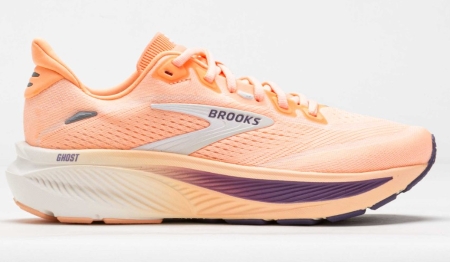
The two pairs I actually ran
| Detail | HOKA Clifton 10 | Brooks Ghost 18 |
|---|---|---|
| My logged mileage | 350 running miles | 380 running miles |
| My size | Men’s US 10.5 D | Men’s US 10.5 D |
| Listed drop | 8 mm | 10 mm |
| Midsole | Compression-molded EVA with Smooth MetaRocker | Nitrogen-infused DNA LOFT v3 |
| Ride cue | Seated, guided roll | Heel-led landing and flexible forefoot |
| My strongest use | Easy days and steady long runs | Daily mileage and run-walk days |
| My first fit concern | Sidewall or arch shape mismatch | Padded upper pressure after warming up |
Those 730 miles are two separate training logs, not a controlled 730-mile experiment. I ran both on familiar surfaces, but weather, fitness, fatigue, and pair age were never identical. I use the numbers to explain the maturity of my observations, not to promise your mileage or a faster pace.
Why the ride feels different
Clifton 10: the shoe sets the arc
In Clifton 10 my foot sits down inside the platform and the rocker carries the transition forward. When I settle into a conversational rhythm, that shape keeps my effort quiet. On long boardwalk stretches, I can land and roll without asking the forefoot to bend much. The 8 mm listed drop tells only part of that story; the rocker position, sidewalls, and way the EVA compresses matter more to my step. My full Clifton 10 review covers the individual shoe in more detail.
The run I think of here is 10.5 miles past Steel Pier on the wooden Atlantic City boardwalk. I finished with energy left and could let the shoe carry its usual roll rather than forcing the next step. That is why I trust Clifton for a steady aerobic outing; it is a specific result in my pair, not proof that the rocker will agree with another runner’s foot.
That guidance has a cost. A runner who likes to choose their own point of toe-off may feel directed by the Clifton. I notice that most when I ask it to change pace sharply or when my foot does not settle naturally inside the cradle. I do not call that a fault for everyone; I call it a reason to test the shoe at the pace it will actually serve.
Ghost 18: my stride sets more of the timing
Ghost 18 gives me a more familiar heel landing and a front end that yields as I move through it. Its DNA LOFT v3 is cushioned without asking me to ride a strong rocker. On normal daily miles, I can shorten or lengthen the stride without feeling the shoe impose a pronounced roll. That is why the Ghost is my safer first try for someone coming from a conventional daily trainer. My Ghost 18 review focuses on the pair itself.
On the Margate beach shoulder, cool asphalt and damp sea mist gave me a useful Ghost 18 run: my rhythm stayed unforced and the outsole felt secure on that ordinary damp surface. That experience informs my daily-trainer choice, while the hard-rain run below keeps me from calling the shoe a universal wet-weather winner.
It is not my choice for an exciting rebound. During a faster pickup, its dependable character can feel less eager than the best tempo trainers. I keep that limit in perspective: most of my weekly mileage is not a workout. If a shoe makes routine miles easy to repeat, it earns its place even when the first step is not dramatic.
Eight versus ten millimeters: what I can actually feel
Clifton 10 lists an 8 mm heel-to-toe drop; Ghost 18 lists 10 mm. I would never choose from those numbers alone. A high or low drop label does not account for heel compression, the first contact point, forefoot flex, or how far my foot sits inside the midsole. I feel the Clifton’s rocker sooner in the stride. I feel the Ghost’s heel and then its bending forefoot. Those are more useful shopping cues than treating two millimeters as a medical prescription.
When I switch between the pairs, I watch for a change in calf loading, heel timing, and the way my foot leaves the ground. If a runner notices a new hot spot or alters cadence to accommodate one shoe, I have them slow the transition and retest the fit. I do not promise that either geometry prevents an injury.
Where each shoe earns its place in my week
Recovery and easy runs
I choose Clifton on a day when the whole point is to run easily and come home with the same effort I planned. Its organized roll helps me keep moving over boardwalk joints without turning the outing into a pace test. Ghost is also capable here, especially when I want the shoe to feel familiar from the first step. I would pick Ghost if the Clifton rocker made the easy effort feel strangely timed on my foot.
Long aerobic runs
My Clifton log includes long runs up to 20 miles; my Ghost log reaches 19. I have confidence in both as long-run shoes, but I make a different choice when the legs tire. Clifton is my first pick when I want the roll to remain consistent late. Ghost is my pick when I need the rearfoot to feel anchored and want a more natural forefoot bend as my cadence changes. I check toe room and heel hold in the final third before declaring a winner for another runner.
Progressions and faster work
Ghost is the more adaptable of these two for a gentle change of rhythm because I can control the transition myself. Clifton can hold a steady pace, but its rocker is less satisfying to me for repeated surges. Neither is the shoe I would buy for sharp intervals or race pace. I explain that distinction in my daily trainer versus tempo shoe guide.
Walking and daily wear
Ghost gets my vote for a day that combines a run with a long walk. Its forefoot flex feels more natural as I slow to walking cadence. Clifton’s rocker can feel excellent while running and overly deliberate during errands. I would still walk both pairs for several minutes before buying, because a shoe that fits on a jog can rub when every step is slower.
Fit is the first veto
Both of my pairs are men’s US 10.5 D, and both stay secure on my slightly wide foot. In Clifton I notice the deep cradle and a contained rearfoot. In Ghost I notice a padded heel and a more conventional shape around the foot. Equal size labels do not make the interior volume equal; I judge length, width, instep height, and heel hold independently.
After the foot warms, I ask four questions: are my toes still clear of the front; is the little-toe side quiet; does the heel stay seated on a gentle downhill; and does my foot remain centered on a broad turn? If Clifton presses repeatedly into my arch, lacing cannot redesign its sidewall. If Ghost compresses my instep, a longer size may create heel slip. I start with the appropriate width and use my running-shoe fit checklist before accepting a close fit.
What I would do in a store
- Wear the socks I actually run in and check standing toe room in both shoes.
- Walk slowly to feel the Ghost’s forefoot bend and the Clifton’s rocker.
- Jog easily, then make two broad turns each way. I reject heel lift or sidewall pressure.
- Raise cadence briefly, then return to easy pace. The better pair settles without a forced stride.
- Repeat the fit check after the feet warm. I do not buy solely from a fresh, plush first step.
Control, grip, and fatigue
Both are neutral road shoes. On my coastal routes, Clifton keeps my foot centered through its surrounding platform, while Ghost gives me a secure heel and a more familiar ground contact. That does not make either a substitute for a support shoe when a runner has a specific control need. I judge the platform on camber and broad turns after the first easy mile, because fresh legs can hide small corrections.
Ghost’s broad rubber coverage has been dependable in my ordinary damp-road use, but I remember an 11-mile run when hard rain soaked its upper and made the last five miles unpleasantly heavy. The Clifton’s outsole has also served my dry roads and boardwalks. I do not turn either experience into a blanket wet-grip verdict: damp asphalt, wet paint, metal covers, and slimy boards behave differently. My outsole-rubber guide explains what I inspect before trusting a new surface.
I weigh 182 pounds. At the end of a long run, I pay attention to whether foam compression changes the timing and whether the upper still holds my foot. A lighter or heavier runner can load the same shoe differently. The useful late-run question is simple: do I keep landing where I intend, or am I managing the shoe?
Durability and value after real mileage
At 350 miles in my Clifton, the main landing and push-off zones show visible rubber smoothing, the EVA has creased and softened, and the upper remains sound. At 380 miles in my Ghost, I see a similarly mature rubber surface and foam creasing without an upper failure. Those are observations from my pairs. Road texture, body mass, weather, rotation, and gait make a universal replacement mileage irresponsible.
I evaluate value by how many planned sessions the shoe can cover without compromise. Ghost may be the better one-pair purchase if the same pair has to run, walk, and handle occasional controlled pickups. Clifton can be the better buy if easy mileage is the unresolved job and I already own a faster shoe. My rotation guide is where I check whether a second daily trainer actually adds a role.
My buying rule: choose the missing job
- Buy Clifton 10 if you want a cushioned, guided roll for easy days and long aerobic work, and its cradle fits without pressure.
- Buy Ghost 18 if you want a familiar daily trainer that walks naturally, flexes at the forefoot, and stays secure as pace changes modestly.
- Buy neither if both duplicate a shoe already doing the job or either fit requires you to ignore repeated rubbing, numbness, or heel movement.
- Try another category if you want a distinctly faster workout shoe or genuine support rather than hoping one of these neutral trainers becomes one.
If I want more planted, maximal easy-day cushioning than either provides, I would compare Bondi 9 and Clifton 10. If I want a livelier daily shoe, my Clifton 10 versus Novablast 6 comparison asks a different question. I would not buy a second pair until I can name the workout it improves.
FAQ: HOKA Clifton 10 vs Brooks Ghost 18
Is Clifton 10 or Ghost 18 better for everyday running?
I choose Ghost 18 if one pair must cover routine running, walking, and modest pace changes. I choose Clifton 10 when most of that pair’s work is easy or long aerobic running and the rocker fits my stride.
Which is softer underfoot?
My Clifton 10 feels more cushioned and guided during easy running. Ghost 18 feels more traditional, with a cushioned heel and a flexible front. I would judge softness while running, not by pressing the foam in a store.
Is the drop different?
Yes. Clifton 10 lists 8 mm and Ghost 18 lists 10 mm. I notice their transition and forefoot behavior more than the two-millimeter difference on a spec sheet.
Which would I wear for a long run?
Both have earned long-run confidence in my logs: up to 20 miles in Clifton 10 and 19 in Ghost 18. I start with Clifton for a steady, rockered roll and Ghost when I want a conventional heel-to-toe transition.
Which is better for walking?
I usually choose Ghost 18 because its forefoot flex feels natural at walking cadence. I would still walk in both before buying; Clifton’s rocker can suit some walkers and feel too directive to others.
Do I need both in a shoe rotation?
Usually not. They overlap as daily road trainers. I would own both only if Clifton clearly handles calm easy days and Ghost clearly handles mixed running and walking without displacing an existing pair.
My final verdict
I would keep Clifton 10 for the runner who asks a daily shoe to make easy and long aerobic runs feel smooth. I would keep Ghost 18 for the runner who wants a conventional, dependable shoe for daily mileage and walking. My own 350- and 380-mile logs support both roles. Fit after warm-up, ease of transition, and the final ten minutes of the intended run settle the choice more reliably than whichever shoe feels softer in the store.

Written by Ken — 12 years of running, 12,500+ miles, 63 shoes tested, 36 races from 5Ks to a 50K ultra. I run 30–40 miles a week on the Atlantic City Boardwalk and review every shoe with real training miles, not one-run demos. More about me →