
My best zero-drop running shoe for most road runners is the Altra Torin 9. It keeps heel and forefoot level while offering enough cushion for ordinary training. If I want maximum protection, I choose VIA Olympus 2; for a flexible, lower-to-the-road feel, I try Escalante 5.
Zero drop describes one measurement—not a promise of better form or fewer injuries. I first decide how much cushion, guidance and ground feel I want, then I fit the exact shoe and change my running exposure gradually.
Quick Picks: My Three Starting Points
| Pick | Best for | Why I would try it | Check price |
|---|---|---|---|
| Altra Torin 9 | Most daily road runs | 28 mm, 0 mm drop; balanced cushion | Check price → |
| Altra VIA Olympus 2 | Maximum cushion | 33 mm, 0 mm drop; roomy, rockered | Check price → |
| Altra Escalante 5 | Flexible daily feel | 24 mm, 0 mm drop; closer connection | Check price → |
Explore this guide
What Zero Drop Means—and What It Does Not
A zero-drop running shoe has a stated 0 mm difference between heel and forefoot stack heights. It can still have 22 mm, 28 mm or 33 mm of foam, a rocker, guidance, or a broad platform. It is not synonymous with barefoot or minimalist. For the vocabulary behind the number, I use my heel-drop explainer; for the broader tradeoff, see my low- versus high-drop comparison.
I never call zero drop inherently safer. Changing drop and stack can change how much work I notice at the calf, Achilles area, foot and forefoot; my response depends on the entire shoe, pace, surface and recent training. If a runner has current Achilles pain, focal foot pain or swelling, I do not present a shoe switch as treatment.
The 7 Best Zero Drop Running Shoes: In-Depth Reviews
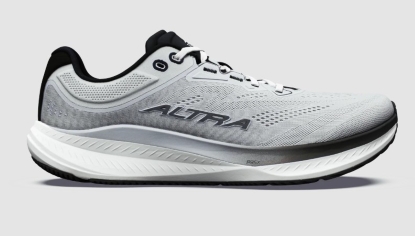
1. Altra Torin 9 — Best overall zero-drop daily trainer
| Spec or decision | My read |
|---|---|
| Stated heel-to-toe drop | 0 mm |
| Stack / cushion | 28 mm / Medium |
| Fit and support | Standard FootShape; neutral |
| Best role | Easy and steady road miles |
| What I do not like | New midsole and outsole deserve a fresh fit check |
If I were buying one zero-drop road shoe for ordinary training, I would start with the Torin 9. Its stated heel-to-toe drop is 0 mm, yet its 28 mm stack and dual-density P35X midsole make this a cushioned daily trainer, not a barefoot shoe. The Vibram XS DURA outsole is a meaningful update for pavement grip and wear. I like this category because it lets me evaluate a level platform without simultaneously jumping into a paper-thin sole.
For Torin 9, my deciding check is whether the updated P35X midsole feels controlled at easy pace and whether the new heel shape holds without lace pressure. I would try the current shoe in my usual socks, then compare the next-morning lower-leg response with my normal trainer. I will not assume the fit or feel of Torin 8 carries over just because the family name stayed the same. My beginner-shoe guide explains why I favor a manageable daily role over an exciting first impression.
I would buy it for a runner who wants one cushioned zero-drop road shoe, especially if a flexible minimalist model would be too large a second change. I would skip it if I specifically want a very wide Original FootShape forefoot or a highly flexible ground-feel ride; the Escalante or Magnifly may be a better comparison.
2. Altra VIA Olympus 2 — Best max-cushion zero-drop option
| Spec or decision | My read |
|---|---|
| Stated heel-to-toe drop | 0 mm |
| Stack / cushion | 33 mm / High |
| Fit and support | Original FootShape; neutral |
| Best role | Easy, recovery and longer paved runs |
| What I do not like | Tall, heavier and more rockered than a flexible shoe |
The VIA Olympus 2 answers the question I hear most often: can a zero-drop shoe still put a lot of foam underfoot? Yes. Its stated drop is 0 mm and its stack is 33 mm. The broad Original FootShape fit and rocker give it a very different job from the low, flexible Escalante Racer. A level heel-to-forefoot measurement does not mean the shoe must bend like a slipper.
I would use the VIA Olympus 2 for easy and recovery runs where underfoot protection matters more to me than speed. The 33 mm platform and rocker are exactly why I do not treat it as a minimalist shoe. On a store test I would check straight-line comfort, then make a few turns and step onto a cambered surface to see whether the tall stack still feels calm. For other protective road options, I compare my cushioned-shoe guide.
I would choose it for a runner already comfortable with zero drop who wants generous cushioning on long pavement days. The compromise is bulk and a directed rocker. If I want to feel the road and move my forefoot freely, I reach for Escalante 5 or a lighter option instead.
3. Altra Escalante 5 — Best flexible daily ride
| Spec or decision | My read |
|---|---|
| Stated heel-to-toe drop | 0 mm |
| Stack / cushion | 24 mm / Low |
| Fit and support | Original FootShape; neutral |
| Best role | Shorter daily runs, strides and walking |
| What I do not like | Less underfoot protection for long hard-road miles |
I choose the Escalante 5 when the appeal of zero drop is a connected, flexible road ride rather than a giant foam platform. Altra specifies 0 mm drop, 24 mm stack, EGO midsole and its roomier Original FootShape. The current version updates the knit upper and outsole from the Escalante 4. That makes it worth trying as its own shoe instead of assuming an identical feel.
I would test the Escalante 5 as its own shoe: the updated knit upper must hold my heel without squeezing the instep, and the 24 mm sole must give me enough protection for the pavement I actually use. I compare its flexible ride with a more cushioned trainer on the same short route rather than decide from a step-in feel. If I want less shoe for pace work, my lightweight-shoe guide gives me a broader comparison.
I would buy this for someone who already tolerates a level platform and wants a simpler, more flexible daily shoe. I would not put a zero-drop newcomer into a fast, low-cushion workout on day one. Nor would I prescribe it as a cure for foot or knee pain.
4. Topo Athletic Magnifly 6 — Best alternative to Altra
| Spec or decision | My read |
|---|---|
| Stated heel-to-toe drop | 0 mm |
| Stack / cushion | 26 mm / Medium |
| Fit and support | Roomy toes, more held midfoot |
| Best role | Balanced daily road running |
| What I do not like | Fit and ride differ from Altra even at the same drop |
The Magnifly 6 earns a place because a zero-drop shortlist should not be seven versions of Altra. Topo states a 0 mm drop and 26 mm stack, with a new ZipFoam midsole. Its fit philosophy gives the toes space while holding the midfoot and heel more deliberately. That combination is the first place I would look if an Altra forefoot works but its midfoot feels too loose.
I would compare Magnifly 6 against Torin 9 in the same socks and on the same easy route. The useful question is whether my toes lie flat while the midfoot and heel stay quiet. Topo’s roomier front is appealing, but a roomy toe box is only one part of width; my wide-foot shoe guide helps me check platform and upper volume too. I would keep the model that feels settled after twenty minutes, not the one with the more persuasive fit label.
I would buy it for everyday mileage when I want moderate cushion and a secure fit. I would skip it if the shoe’s heel or arch shape presses on my foot; a 0 mm number does not compensate for the wrong last.
5. Altra Paradigm 8 — Best zero-drop support
| Spec or decision | My read |
|---|---|
| Stated heel-to-toe drop | 0 mm |
| Stack / cushion | 30 mm / High |
| Fit and support | Standard FootShape; GuideRail support |
| Best role | Guided easy and steady miles |
| What I do not like | More structured and less nimble than neutral picks |
A runner can want zero drop without wanting a completely unstructured shoe. The Paradigm 8 combines a stated 0 mm drop with a 30 mm high-cushion platform and GuideRail support. That is why I include it: support and heel-to-toe offset are separate design choices. I would consider it for a runner who already likes guidance and wants to keep a level platform.
I would judge the GuideRail by feel, not by a pronation label. If it gently centers the ride on tired legs, useful. If it crowds my arch or steers my foot when I do not want it to, I would move to a neutral shoe. I also check that its Standard FootShape still gives my particular toes and forefoot enough room; ‘FootShape’ is not a universal width guarantee.
I would choose Paradigm 8 only if its guidance feels useful under my own stride. The GuideRail should feel quiet at easy pace and still comfortable when I tire; if it presses on my arch or steers me too strongly, I move to a neutral option. My stability-shoe guide explains why I judge support by the complete ride rather than by a pronation label. I would not use a shoe change as a diagnosis or treatment for pain.
6. Altra Escalante Racer 2 — Best low-stack speed shoe
| Spec or decision | My read |
|---|---|
| Stated heel-to-toe drop | 0 mm |
| Stack / cushion | 22 mm / Low |
| Fit and support | Original FootShape; performance upper |
| Best role | Road workouts and short races |
| What I do not like | Demanding for a new zero-drop runner |
For fast running without a raised heel, the Escalante Racer 2 gives me a closer-to-ground platform than every cushioned model above. Altra lists 0 mm drop, a 22 mm stack and a performance-focused knit upper. That combination makes sense for controlled speedwork and short racing, not as the automatic first purchase for someone coming from a tall 10 mm-drop trainer.
The Escalante Racer 2 is the one I would reserve for shorter fast sessions after I already know a 0 mm platform feels comfortable. Its 22 mm stack and more performance-focused upper make pace and fit especially important: I check the forefoot at speed, then check how my calves and Achilles area feel the next morning. I would not force a forefoot strike to match the shoe. For a broader workout comparison, I use my speedwork-shoe guide.
I would buy it after I have already built a comfortable base in lower-drop footwear and want a distinct quick-day role. I would skip it if the forefoot feels compressed at pace or if my lower legs complain after a short easy trial.
7. Xero Shoes HFS II — Best minimalist road feel
| Spec or decision | My read |
|---|---|
| Stated heel-to-toe drop | 0 mm |
| Stack / cushion | Not specified by maker / Very low |
| Fit and support | Foot-shaped toe area; flexible sole |
| Best role | Short, deliberate minimalist exposure |
| What I do not like | Least protection; biggest departure from cushioned shoes |
The HFS II belongs here to define the minimalist end of the zero-drop spectrum. Xero confirms a non-elevated heel and a flexible, low-to-ground road-friendly construction. I would not call it an interchangeable alternative to the 33 mm VIA Olympus merely because both have zero drop. Stack, stiffness and protection change the run just as much as the heel-to-forefoot difference.
I would use this as a specialty tool for a runner who intentionally wants more ground feedback and is willing to build exposure conservatively. On rough urban pavement, a thin flexible sole asks the foot to do much more work. A normal easy-run distance in a cushioned trainer is not an appropriate starting distance just because this shoe feels light in the store.
I would buy HFS II only when the minimalist sensation is the point of the purchase. I would begin with a short, easy exposure on familiar pavement, because its thin, flexible sole asks for a different level of foot work than the VIA Olympus 2. If I simply want a level heel-to-forefoot platform with conventional protection, Torin 9 or Magnifly 6 is the more logical first try. I would not turn a light step-in feel into a recommendation for my normal long-run distance.
How I Ranked the Shoes
I rank a zero-drop shoe by its real job before I judge its drop number. For daily use I want a stable, comfortable fit at easy pace; for speedwork I accept a lower stack only if my feet and lower legs already tolerate it. I verify the current model’s stated drop and stack, then check heel hold, toe clearance, rocker feel, and the response to a short easy trial. A thin shoe does not get extra points merely for looking more ‘natural.’
I first verify that the exact model is listed at 0 mm drop, then I compare its intended run, platform height, fit, and the compromise it asks of the runner. I treat a previous version as context, never as proof that a new upper or midsole behaves identically. I do not assign the same test mileage to every shoe or use a manufacturer specification as a substitute for a fit trial. That keeps my ranking useful without overstating what I know.
How I Choose a Zero-Drop Shoe
- Match stack to the job: I choose Torin or Magnifly for conventional daily use, VIA Olympus for max cushion, Escalante for flexibility, Racer for fast work, and HFS II only when minimalist feedback is the goal.
- Fit the whole foot: I need a secure heel and midfoot, a supported forefoot and toes that can lie flat. A broad toe shape does not excuse sliding or a platform too narrow under load.
- Separate support from drop: Paradigm’s GuideRail may suit me if I enjoy guidance; it is not a universal prescription for pronation or pain.
- Check the exact version: Torin 9, Torin 8, Escalante 5 and Escalante 4 are different shoes. I confirm the model in the cart and compare return policies.
- Keep the rest of training steady: a new drop, a harder surface and a speed block at the same time make it difficult to identify what caused a problem.
My running-shoe fit guide covers heel hold, forefoot support and toe clearance. The toe-box guide goes deeper on shape and volume. I also use my store test before I commit to a new model.
My Zero-Drop Transition Test
I start with a short, easy exposure on familiar flat ground rather than assign a new pair my usual long run. I keep my normal shoe available, note the duration, and pay attention to the calf, Achilles area, arch and forefoot during the run and the following morning. If the response stays comfortable, I repeat the same exposure before extending it. My shoe-rotation guide helps me make room for the new pair without changing every run at once.
If I develop sharp or worsening pain, swelling, weakness, a changed gait, or symptoms that persist outside the run, I stop the trial and seek an appropriate clinical assessment. I do not force a forefoot strike to make zero drop ‘work.’ For a closer look at the tradeoffs of changing drop, I use my low- versus high-drop comparison.
Full Comparison: Cushion, Fit and Best Use
| Shoe | Stack / drop | Feel and fit | Where I would use it |
|---|---|---|---|
| Altra Torin 9 | 28 mm / 0 mm | Medium; Standard FootShape; neutral | Easy and steady road miles |
| Altra VIA Olympus 2 | 33 mm / 0 mm | High; Original FootShape; neutral | Easy, recovery and longer paved runs |
| Altra Escalante 5 | 24 mm / 0 mm | Low; Original FootShape; neutral | Shorter daily runs, strides and walking |
| Topo Athletic Magnifly 6 | 26 mm / 0 mm | Medium; Roomy toes, more held midfoot | Balanced daily road running |
| Altra Paradigm 8 | 30 mm / 0 mm | High; Standard FootShape; GuideRail support | Guided easy and steady miles |
| Altra Escalante Racer 2 | 22 mm / 0 mm | Low; Original FootShape; performance upper | Road workouts and short races |
| Xero Shoes HFS II | Not specified by maker / 0 mm | Very low; Foot-shaped toe area; flexible sole | Short, deliberate minimalist exposure |
Frequently Asked Questions
What is the best zero-drop running shoe for beginners?
I would start with a cushioned daily model such as Torin 9 or Magnifly 6, then fit the exact shoe and trial it on short easy runs. I would not begin in a low-stack racer just because the drop number is the same.
Are zero-drop and barefoot shoes the same?
No. Zero drop only means the stated heel and forefoot heights match. VIA Olympus 2 has a 33 mm stack and a rocker; HFS II is minimalist and much more flexible. They place very different demands on my foot.
Will zero-drop shoes prevent knee pain or improve my form?
I cannot promise either. A different shoe can shift how a run feels, but drop alone does not determine injury risk, mechanics or comfort. I use fit and gradual exposure, and I get persistent pain assessed.
Can a heel striker wear zero-drop running shoes?
Yes, if the complete shoe fits and feels controlled at that runner’s pace. I do not ask a heel striker to force a forefoot landing. I watch the calf and Achilles response as exposure increases.
How long does a transition take?
I use response, not a universal deadline. The starting dose depends on recent shoe history, training volume, surface and symptoms. I extend only after repeated short exposures feel normal during the run and the following morning.
Is a wide toe box the same as a wide shoe?
No. Toe shape, platform width, instep volume and heel hold are different. I check whether the forefoot actually sits on the midsole, not merely whether the mesh stretches around it.
My Final Recommendation
I would buy the Altra Torin 9 first for a cushioned, everyday zero-drop road shoe. If I know I prefer deep protection, I would pick VIA Olympus 2; if I want more flex and ground connection, Escalante 5. But I would keep my current reliable shoe in the rotation until the new pair has passed several easy runs and next-morning checks. The best zero-drop shoe is the one that fits and earns its place in training—not the one that makes the strongest claim about ‘natural’ running.

Written by Ken — I have spent 12 years running and evaluating what makes a shoe useful for a particular training week. For zero drop, I choose by fit, cushion, intended run, and how my lower legs respond when I introduce a new pair. More about me →