
My short answer: The best super trainers are the ones that earn a specific place in my training week. I start with the ASICS Superblast 3 for broad, plateless long-run versatility; the Mizuno Neo Vista 2 for a softer guided ride; the Saucony Endorphin Speed 5 or HOKA Mach X 3 for faster sessions; the PUMA MagMax NITRO 2 for cushioned easy mileage; and the adidas Prime X3 Strung only when I deliberately want an extreme platform.
I have spent 12 years learning that the word super does not tell me whether a shoe will improve a Tuesday workout. My first question is the job: a long run with a fast finish, a controlled tempo, an easy hour on tired legs, or one pair that can handle much of the week. Then I ask what the shoe gives up to do that job. If I cannot name that job, I keep the daily trainer that already works.
This guide is my decision shortlist. I am not awarding medals for the tallest stack, the stiffest plate, or the loudest bounce on a shop floor. I want a secure fit, predictable landings, useful pace range, and a reason to spend more than I would on an ordinary trainer. Model availability and colorways change, so I rank the training role and tradeoff rather than a temporary sale price. I still make the final choice on the runner’s foot.
In this guideClick to expand
My six picks at a glance
If I can buy only one, I identify the run it must improve. The labels below describe that role. None is a universal prescription, and a failed fit check overrides the ranking.
| Shoe | Job I give it | Construction cue | My main reservation |
|---|---|---|---|
| ASICS Superblast 3 | Long runs, steady efforts, wide pace range | Tall FF LEAP and FF BLAST PLUS platform; no plate | High stack and premium price are unnecessary for short easy runs |
| Mizuno Neo Vista 2 | Soft, rolling long runs | Nitrogen-infused ENERZY NXT top foam with a Wave plate | Very soft, tall feel will not suit everyone on turns |
| Saucony Endorphin Speed 5 | Tempo, intervals, and faster long-run segments | PWRRUN PB with a semi-rigid nylon plate | Less relaxed than a dedicated easy-day shoe |
| HOKA Mach X 3 | Structured uptempo miles | PEBA top layer, Pebax plate, rocker | Distinct rocker and firmer guidance require an on-run fit test |
| PUMA MagMax NITRO 2 | Easy-to-steady high-cushion mileage | Tall NITROFOAM platform and PUMAGRIP outsole | Bulky for quick cadence changes and short reps |
| adidas Prime X3 Strung | Smooth-road specialty sessions | Three Lightstrike Pro layers, carbon plate and rods | Extreme stack and competition-rule limits |
I use my broader best running shoes guide when the category is still open. If the choice is specifically between a conventional training pair and a faster model, my daily trainer versus tempo shoe map narrows it further.
What I mean by a super trainer
For me, a super trainer borrows some race-shoe ideas for repeatable training: a modern resilient foam, a high or carefully shaped midsole, an energetic transition, and sometimes a plate. Its value comes from making a useful session feel more manageable while staying secure enough for regular use. There is no official super-trainer specification or minimum stack number that settles the question. I include both tempo-led shoes and one comfort-led max-cushion option because those are different jobs a runner may want from the category.
A plate is only one design choice. Superblast 3 makes its case without one. Endorphin Speed 5 uses nylon to guide fast running. Prime X3 Strung is a much more specialized carbon-based platform. My carbon-versus-nylon plate guide explains why material alone cannot predict the whole ride; the midsole-foam guide separates foam family from marketing language. I make the wider category boundary explicit in my super shoes versus super trainers comparison.
I also separate a super trainer from a racing shoe. Racing priority can make the upper leaner, the platform more demanding, and the ride less comfortable when I slow down. A training shoe has to survive the warm-up, the recovery jog, and the week after the hard session. My race-shoe versus daily-trainer test is the useful boundary when the labels overlap.
I choose by the workout before I choose a model
- Long run with a steady or fast finish: I start with Superblast 3 if I want one flexible premium platform, or Neo Vista 2 if I prefer a softer rolling transition.
- Tempo and repetitions: I reach first for Endorphin Speed 5, then compare Mach X 3 when I want more rocker and structured guidance.
- Easy and steady comfort: I try MagMax NITRO 2 when cushioning and grip matter more than a nimble feel.
- Occasional specialist session: I consider Prime X3 Strung only on smooth roads, with enough control in the upper and a clear reason for the tall platform.
That sequence prevents me from paying twice for the same job. If I already own a fast plated racer and a dependable easy-day shoe, my next trainer should fill the gap between them. If I run three times a week and all three runs are easy, I would first ask whether a standard daily trainer already does everything I need.
Three weeks, three different answers
| Runner’s actual week | My first decision | What could change it |
|---|---|---|
| Three easy runs, no faster session | Keep a comfortable daily trainer; try MagMax NITRO 2 only if a high-cushion ride solves a real comfort preference. | If its tall platform feels less controlled than the current shoe, I pass. |
| Five runs with a long run that finishes steady | Fit Superblast 3 first; compare Neo Vista 2 when a softer, guided transition is preferred. | If the upper or platform fails the long-run fit test, I move on. |
| Intervals and tempo plus an existing easy shoe | Compare Endorphin Speed 5 with Mach X 3 for the workout slot. | If both duplicate an existing racer or feel awkward at warm-up pace, I do not buy either. |
This is why my “best overall” pick is only a starting point. I do not buy a super trainer to complete a category; I buy one because the work I actually do exposes a useful gap in the rotation.
ASICS Superblast 3: my broad-use plateless pick
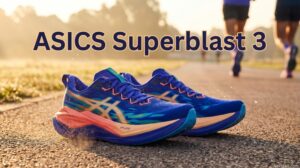
Superblast 3 is the first pair I put on the table for someone who wants a premium long-run trainer without a plate dictating the stride. ASICS combines FF LEAP with FF BLAST PLUS and a forefoot trampoline pod. The large platform gives me room to run easy, settle into steady pace, then finish with more intent. The stated 8 mm drop is familiar to many runners, but the overall height is the real change to test.
What wins me over is the role range. A lively foam can be useful even when I am not trying to race. I use a long progression as the deciding session: the first easy miles must remain comfortable, and the last quicker miles must feel controlled rather than wobbly. If the shoe only excites me for thirty seconds on a store floor, I have not learned enough.
I would skip it if I want a low, close-to-ground platform, need a highly corrective stability design, or mainly run short recovery outings. The stack and price have to earn their place. I also check the thin tongue and midfoot hold carefully; a tall shoe with mediocre lockdown is an expensive mismatch.
Ken’s call: Choose it for a long-run-led week and a broad pace range. Pass if your best daily trainer already covers that job comfortably.
Mizuno Neo Vista 2: my soft long-run cruiser

Neo Vista 2 is the option I put beside Superblast when the runner asks for a softer, more rolling sensation. The nitrogen-infused ENERZY NXT top layer, Wave plate, and Smooth Speed Assist geometry create a guided transition. The knit upper feels different from a conventional mesh trainer, so I check whether it holds the midfoot after the first few miles rather than judging it only while standing.
I assign it longer steady work, relaxed progression runs, and outings where I want cushioning without the sharper demand of a racing shoe. Its generous foam can make the road feel less harsh, but softness is personal. A runner who likes a direct, quiet landing may find the platform busy or too compliant.
My decision point is control on bends and mild camber. I jog straight, turn, and then run at the pace I actually plan to use. If the foot moves inside the upper or the platform asks for constant correction, I do not buy it merely because the foam feels comfortable. If it stays centered, it earns the long-run slot.
Ken’s call: Choose it when long-run comfort and a rolling ride are the priority. Pass if you prefer a firm, low, understated trainer.
Saucony Endorphin Speed 5: my speed-session crossover
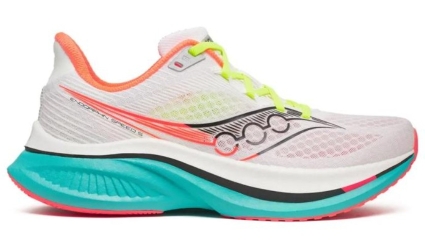
Endorphin Speed 5 is my answer when the word super really means a repeatable workout shoe. PWRRUN PB foam and a semi-rigid nylon plate make it easier to move from warm-up to tempo without the all-or-nothing feel of some race shoes. Its stated 36 mm heel and 28 mm forefoot stack also make it a more moderate platform than the tallest choices here.
I give it cruise intervals, continuous tempo, strides after an easy run, and long runs with a purposeful faster section. At faster rhythm it feels like the right tool; for slow recovery shuffles, I may prefer a quieter and softer daily trainer. That distinction matters more than calling either shoe ‘better.’
The fifth version has more heel outsole coverage and a redesigned plate. I still inspect grip and heel hold on my own route. I would not force this shoe into a runner’s only-pair role if their easy pace feels rushed in it. If nylon guidance is the goal, I compare other options in my nylon-plated shoe shortlist.
Ken’s call: Choose it for tempo and faster mixed-pace training. Pass when easy-day comfort is the main purchase goal.
HOKA Mach X 3: my controlled plated tempo option
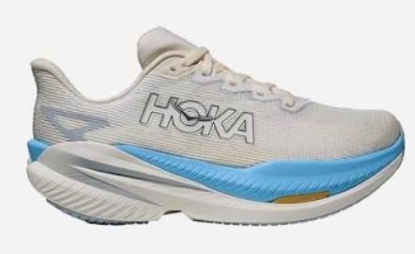
Mach X 3 has a distinct job in my rotation: steady-to-fast training with a guided rocker. HOKA places a PEBA top layer over a second foam and a Pebax plate, then shapes the forefoot transition with its speed-oriented rocker. The stated 5 mm drop is lower than several other picks here, so I introduce it gradually when coming from a higher-drop daily shoe.
I use it for sustained tempo and marathon-pace blocks rather than pretending it is a featherweight track shoe. The upper, collar, and tongue updates are meaningful only if they solve my own lockdown test. A plate can add guidance, but it does not rescue a heel that lifts or a forefoot that slides sideways.
If the rocker matches my stride, Mach X 3 feels purposeful without the sheer height of the extreme-stack option. If I need to work against its transition, I move back to Endorphin Speed 5 or a simpler tempo trainer. The winner is the pair that lets me focus on the workout, not the mechanism under my foot.
Ken’s call: Choose it for a guided, plated tempo feel. Pass if the rocker or lower drop changes your stride in an uncomfortable way.
PUMA MagMax NITRO 2: my max-cushion daily option
MagMax NITRO 2 belongs in this list for runners who want a high-cushion training experience before they want speed. Its stated 46 mm heel and 38 mm forefoot stack create a substantial platform; the PUMAGRIP outsole is one reason I consider it for ordinary outdoor mileage rather than treating it as a delicate novelty.
I give it easy runs, steady cruising, and long outings at a settled rhythm. It is not the pair I reach for when I want short repetitions and fast direction changes. The mass and amount of foam can feel reassuring for one runner and cumbersome for another. My test is simple: can I keep my normal easy cadence without feeling the shoe steer me?
I inspect the rearfoot from behind and run a few gentle turns. A tall platform needs to feel centered under my own mechanics. If that is true and the upper secures my foot without pressure, MagMax is a strong comfort-first alternative. If not, I choose a lower daily trainer even if the cushioning feels plush in the shop.
Ken’s call: Choose it for cushioned easy-to-steady road mileage. Pass if you want one light shoe for frequent speedwork.
adidas Prime X3 Strung: my extreme-stack specialist
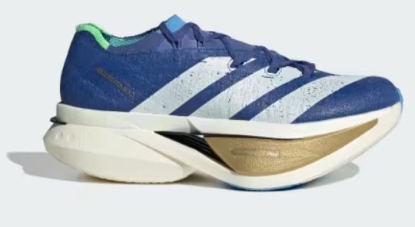
Prime X3 Strung is an optional specialist, not my default recommendation. Three Lightstrike Pro layers, an upper carbon plate, carbon-infused rods, and a stated 49 mm heel stack create a conspicuous ride. I only consider it for smooth-road sessions where the runner already knows they enjoy a tall, mechanically assertive platform.
My first test is control, not bounce. I check a turn, mild camber, a downhill section, and the last minutes of a steady run when form is less crisp. If the upper cannot keep the foot centered, the construction does not earn a place. I also leave it out of plans for regulated road races that apply a 40 mm sole-thickness limit; I check the exact event and current approval rules before choosing competition footwear.
This is a high-cost, high-specificity purchase. A runner who wants a single reliable trainer for every surface will get more use from Superblast 3 or a conventional daily shoe. I reserve Prime X3 for someone who can name the session and accept the tradeoffs before paying for it.
Ken’s call: Choose it only for a deliberate smooth-road training role after a real on-run stability check. Pass if you need one everyday shoe or a regulated race shoe.
The tradeoffs that change my ranking
There is no meaningful one-to-six finish order without a runner and a workout. I use this matrix after the initial shortlist to expose where a shoe’s strengths stop helping.
| If your priority is… | I try first | I compare next | I watch for |
|---|---|---|---|
| One premium pair for long and steady runs | Superblast 3 | Neo Vista 2 | Too much height at easy pace |
| Soft, rolling long-run feel | Neo Vista 2 | MagMax NITRO 2 | Loose knit or unstable turns |
| Fast workouts with some daily use | Endorphin Speed 5 | Mach X 3 | Easy pace that feels forced |
| Rocker-guided tempo | Mach X 3 | Endorphin Speed 5 | Calf response to a new geometry |
| Cushioned easy mileage and grip | MagMax NITRO 2 | Superblast 3 | Bulk and delayed turnover |
| Extreme smooth-road experience | Prime X3 Strung | Superblast 3 | Camber, turns, and race-rule eligibility |
Numbers on a spec sheet help me identify a risk, but they do not predict a runner’s comfort by themselves. My stack-height guide shows what extra millimeters can change; my energy-return guide explains why perceived bounce is not a promise of faster race times.
My ten-minute fit and ride test
I take my usual running socks and test the pair late enough in the day that the foot is not at its smallest. I do not size up automatically just because a shoe is tall. I need actual toe space, secure heel hold, and a midfoot that stays seated when I turn.
- Stand and lace normally: I leave room in front of the longest toe and check that the forefoot is supported, not squeezed.
- Walk briskly for two minutes: I notice heel slip, tongue pressure, arch intrusion, and whether the rocker feels abrupt.
- Jog at my real easy pace: I reject a shoe that only feels cooperative when I speed up, unless I am buying it solely for workouts.
- Add a short faster segment: I see whether the shoe handles the exact session I want it for, rather than guessing from a standing bounce test.
- Turn and test a gentle slope: I check lateral control and downhill toe pressure; I do not deliberately test traction by trying to slip.
- Recheck the upper: I should not need painful lacing to stop the foot moving inside a tall platform.
If the toe box is the sticking point, I use my toe-box fit checklist; for the whole shoe, I follow my running-shoe fit protocol and the comfort filter I use in the store. A wide version can fix width, but it cannot make the wrong rocker or platform geometry feel right.
How I place a super trainer in a real week
A super trainer becomes valuable when its use is frequent enough to justify owning it and distinct enough to avoid duplicating a pair already in the closet. Here is how I would assign the shoes in two common setups.
| Rotation | Easy runs | Hard or long session | Why it works |
|---|---|---|---|
| Two-pair setup | Calm daily trainer | Superblast 3 or Endorphin Speed 5 | One reliable default plus one shoe with a distinct role |
| Long-run focus | Daily trainer | Neo Vista 2 or Superblast 3 | The premium pair earns the longest workout |
| Speed focus | Daily trainer | Endorphin Speed 5 or Mach X 3 | The faster shoe handles tempo and intervals |
| Comfort focus | MagMax NITRO 2 | Separate tempo or race shoe if needed | The max-cushion shoe handles volume, not every pace |
I do not assume rotation magically extends the total mileage of two pairs. It can make each pair last longer on the calendar and gives me a fresh comparison when one starts to feel different. My smallest useful rotation system explains how I assign jobs without buying redundant shoes.
I retire or downgrade a pair when its grip, structure, lockdown, or ride changes in a repeatable way. The one-fail, two-signal replacement test is more useful than a fixed mileage alarm, especially when the shoe loses its fast feel before it becomes unsafe for easy running.
Is the premium worth it for you?
I ask three questions before spending: which run does this improve, which current pair would it replace, and would I still want it if it were less bouncy in the shop? If I cannot answer the first two, I am buying novelty. If a less expensive trainer is already comfortable and controlled for my weekly work, the super trainer has to add a distinct capability.
I do not equate a higher price with fewer injuries or guaranteed speed. Geometry, foam, fit, strength, workload, and the runner interact. I would rather buy the shoe that lets me repeat the intended session without distraction. My running-shoe value test makes the cost-per-use and role comparison more concrete.
If I want speed but dislike plates, I compare the non-plated racing options before making a super trainer do two jobs badly. If I want one all-rounder, I favor the shoe whose ordinary miles feel good, because those are the miles I will actually run most often.
How I made this shortlist
I build the shortlist from the models’ documented construction and the training job each is designed to handle, then apply my fit and ride gates: useful pace range, upper hold, stability in turns, comfort over the intended distance, outsole coverage, and the cost of the tradeoff. A manufacturer specification tells me what to test; it does not prove that every runner will feel the same result. I exclude a shoe when a non-negotiable fit or control check fails, however exciting its specifications appear.
My final check is deliberately ordinary: I ask whether the shoe still feels useful after the excitement of the first few strides has faded. I want the intended pace to feel natural, the foot to stay centered, and the upper to remain comfortable late in the run. That is the standard I would use even if the shoe were less fashionable or the colorway less tempting.
Frequently asked questions
What is a super trainer?
I use the term for a training shoe that borrows high-performance foam, a pronounced rocker or high stack, and sometimes a plate from race-shoe design while remaining useful for repeatable training. A plate is optional; the shoe’s training role is the deciding feature.
Which super trainer is best for most runners?
I start with the ASICS Superblast 3 when a runner wants one premium shoe for long runs and steady work without a plate. I switch to the Saucony Endorphin Speed 5 when the main job is faster sessions, or to the PUMA MagMax NITRO 2 when easy-run comfort matters more than turnover.
Do super trainers need a carbon plate?
No. A lively foam and useful geometry can make a strong super trainer without any plate. Nylon or Pebax plates can add guidance and stiffness, while a carbon system can make a shoe more specialized. I choose by the workout and fit instead of plate material alone.
Can I wear a super trainer every day?
Yes, if the shoe stays comfortable and controlled at easy pace and fits securely after your feet warm up. I would not force a tall, aggressive shoe into recovery days when a calmer daily trainer feels better. One pair can cover many runs, but it does not have to cover all of them.
Can I race in a super trainer?
Many super trainers work well for informal races and some road events. For regulated competition, I check the current event rules and the exact model’s approval rather than assuming every high-stack shoe is legal. The Prime X3 Strung’s stated 49 mm heel stack makes it a training specialist for races that apply a 40 mm road-shoe limit.
Are super trainers worth the extra money?
I pay the premium when the shoe solves a real training job, fits well, and replaces a second specialized pair or improves the sessions I run most often. If a standard daily trainer already handles my easy and long miles, I spend only for a distinct workout role. Bounce in the shop is not enough.
How should a super trainer fit?
I want secure heel and midfoot hold, toe space after swelling, and no need to overtighten the laces. I test a few turns and a gentle downhill because a tall or soft platform can expose fit problems that standing still hides. Width and upper shape matter more than the size label.
How long do super trainers last?
There is no single mileage cutoff. I track grip, outsole wear, platform lean, upper hold, and a repeatable change in ride. A shoe may lose its fast-workout feel before it becomes unusable for easy running; structural failure or unreliable traction ends its running role sooner.
My final call
For most runners who ask me for one premium long-run super trainer, I start the fitting process with Superblast 3. I move to Neo Vista 2 for a softer rolling ride, Endorphin Speed 5 or Mach X 3 for faster workouts, and MagMax NITRO 2 for cushioned easy mileage. Prime X3 Strung stays a specialist. The final choice happens on the foot and on the intended route, not in the ranking headline.

Written by Ken — the runner behind NextGait. Across 12 years of running and evaluating footwear, I choose shoes by the work they do in a real training week: fit, control, comfort at the intended pace, and the tradeoff I can live with. More about me →