
Quick answer: The New Balance FuelCell SuperComp Elite v5 is my best half marathon running shoe for most runners because it combines a smooth carbon-assisted transition with enough control for the final 5K. I choose the Nike Vaporfly 4 for a lighter, sharper feel and the Saucony Endorphin Speed 5 when one pair must train and race.
A half marathon exposes the difference between a shoe that feels exciting for five minutes and one that stays useful for 13.1 miles. After 12 years of running, I rank these shoes by what happens when pace rises, feet swell, corners arrive, and form becomes less tidy—not by plate material or price alone.
Quick Picks: My Top 3 Half Marathon Shoes
| Best for | Shoe | Why I pick it | Price |
|---|---|---|---|
| Best overall | New Balance FuelCell SuperComp Elite v5 | The most balanced half-marathon choice in my rotation: efficient, smooth, and easier to settle into than more aggressive super shoes. | Check price |
| Best lightweight race feel | Nike Vaporfly 4 | A light, sharp option for runners who want the shoe to disappear once goal pace arrives. | Check price |
| Best training-to-race value | Saucony Endorphin Speed 5 | My practical pick when one nylon-plated shoe must handle workouts, long runs, and the race itself. | Check price |
If none of these three matches your foot or goal, use the full reviews below. For a broader starting point, my running-shoe finder organizes options by purpose, surface, support, and fit.
10 Best Half Marathon Running Shoes: In-Depth Reviews
I treat each shoe as a tool with a specific job. The number is less important than the match: a runner who values calm stability should not copy the runner who wants the lightest possible platform.
1. New Balance FuelCell SuperComp Elite v5 — Best overall
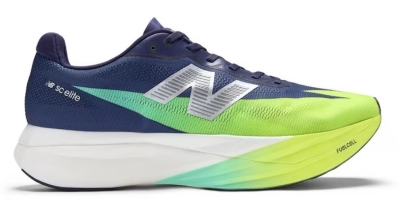
My 13.1-mile verdict: This is the shoe I would hand to the largest group of neutral runners who want a carbon racer without an overly demanding ride.
Across 202 logged miles in my men’s US 10.5 D pair, the Elite v5 earned its place by staying composed after the first impression wore off. The PEBA-based FuelCell midsole and carbon plate create a smooth roll rather than a violent snap. At half-marathon effort, that lets me settle into rhythm instead of constantly trying to activate the shoe.
The fit is performance-oriented but not needlessly punishing on my foot. Heel hold is reliable, the upper disappears once laced, and the forefoot has enough structure to keep the platform aligned. I still advise runners with broad or high-volume feet to try it late in the day; race fit should feel secure, never numb.
I would use it for a goal race, long intervals, and one or two rehearsals with extended race-pace work. I would skip it for easy daily mileage or if I needed strong guidance for late-run inward collapse. My full running-shoe fit guide explains the pressure checks I use before a shoe reaches race day.
2. Nike Vaporfly 4 — Best lightweight race feel
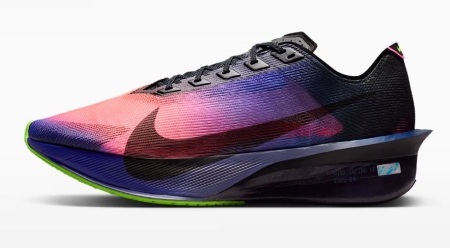
The Vaporfly 4 feels quickest when I am already running quickly. After 299 miles with the model, the quality I value most is not softness; it is how little shoe I notice around my foot when cadence is high and the road is straight. The ZoomX midsole and full-length carbon Flyplate deliver a compact, sharp transition that suits a decisive race effort.
This is my choice over the Elite v5 when low mass and a more direct toe-off matter more than forgiveness. The tradeoff appears on tight turns and when fatigue makes my landing less centered. The platform asks for confidence, and the upper is less accommodating of extra width or swelling than a roomy trainer.
Choose it when: Your goal pace is well rehearsed, the fit is already proven, and you want a 10K-to-half-marathon racer that feels light rather than plush.
I would not make the Vaporfly 4 a first race-day experiment. My Vaporfly 4 review covers its fit and late-run behavior in more detail.
3. Saucony Endorphin Speed 5 — Best training-to-race value
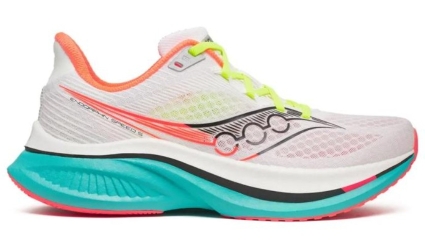
The Endorphin Speed 5 solves a different problem: it lets me prepare in the same geometry I plan to race. Its winged nylon plate is less rigid than a carbon race plate, so easy warm-ups do not feel as awkward and controlled tempo running still gets a smooth SpeedRoll transition.
For a runner buying one performance shoe, that versatility matters more than a small race-day weight advantage. I can use it for threshold sessions, progression long runs, and the half marathon without saving it in a box. The platform also feels less nervous when my form gets tired than many narrow super shoes.
The compromise is absolute speed. It does not give me the same stripped-back sensation as the Vaporfly 4, and runners chasing every second may prefer carbon. But for a first half marathon, a sub-two-hour attempt, or a durable training-and-racing rotation, it is often the more rational buy. See my Endorphin Speed 5 review for the complete ride breakdown.
4. ASICS Superblast 3 — Best non-plated option

I do not assume a plate is required to race well. The Superblast 3 gives me a deep, responsive platform with enough geometry to hold pace without forcing a rigid lever under the foot. Over 75 logged miles, its strongest quality has been range: it can absorb a steady long run, then respond when I finish with controlled half-marathon effort.
This is the option I favor for runners who dislike plate pressure, want more forefoot room, or would rather own a premium super trainer than a race-only shoe. The broad base feels reassuring late in the run, although its stack and physical volume make it less nimble than the Vaporfly in crowded turns.
I size it for secure hold, not extra length. If your heel moves when the shoe is fresh, 13.1 miles will not fix it. My Superblast 3 review details how that high platform behaves beyond race pace.
5. ASICS Metaspeed Sky Tokyo — Best for stride-led speed
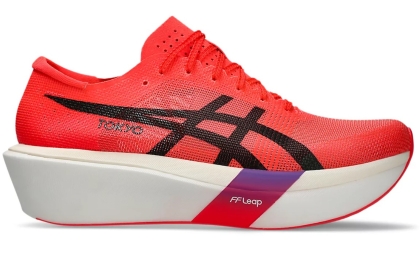
The Metaspeed Sky Tokyo is the more distinctive recommendation here. In 197 miles, I found it most convincing when I increased speed by covering more ground per step and let the higher-positioned carbon plate work with that longer stride. The dual-foam construction feels light and purposeful, not like a softened daily trainer.
I choose it only after the runner proves the match. It can feel brilliant in a straight race-pace segment and less intuitive during slow jogging, abrupt turns, or a choppy cadence. That is why I test it against the Vaporfly on the same route rather than deciding from brand language about stride style.
My tie-breaker: If the Sky Tokyo feels natural at goal pace without changing where I land or how I hold tension, it stays on the shortlist. If I have to perform a special stride to make it work, it leaves.
Read my Metaspeed Sky Tokyo review before choosing it from specifications alone.
6. Nike Alphafly 3 — Best maximum-propulsion option
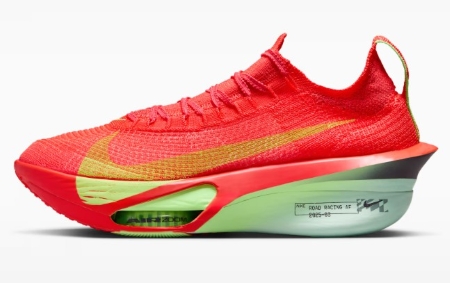
The Alphafly 3 is not my automatic upgrade from the Vaporfly. It is a more pronounced system: ZoomX foam, a full-length Flyplate, and Air Zoom units create a highly assisted toe-off when I land and load it cleanly. Across 95 test miles, it felt most valuable during sustained race rhythm, not during stop-start workouts.
The reward comes with conditions. Fit through the midfoot, confidence on corners, and the sensation under the arch must all be right. Some runners feel efficient and protected; others feel as if the shoe is deciding the stride for them. I take that reaction seriously because small irritation at mile 3 becomes a large problem at mile 11.
I reserve it for runners who have already completed a long race-specific session in it. If maximum propulsion is not worth the fit risk, the Elite v5 is my calmer alternative. My Alphafly 3 review explains the distinction.
7. adidas Adizero Adios Pro 5 — Best new-generation carbon racer
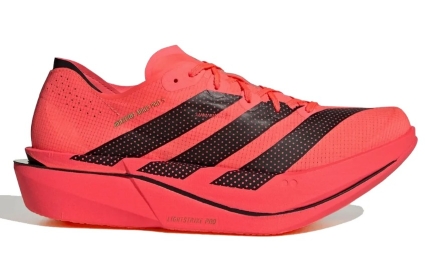
The Adios Pro 5 is the newest race-focused option in this list. adidas moved to a carbon-fiber-infused ENERGYRIM structure with Lightstrike Pro foam and a lighter, more stripped-back build. On paper that makes it highly relevant to 13.1 miles: minimal mass, strong forward geometry, and enough foam for sustained road pace.
I keep my recommendation narrower than the launch story. A new platform must prove heel hold, forefoot pressure, cornering, and outsole behavior on the runner who will race it. I would use the Pro 5 for a fast half only after a workout with continuous goal-pace miles; I would not buy it in race week and assume the newest version is automatically the best fit.
Best match: An experienced neutral racer who wants a light carbon shoe and is willing to validate an entirely new geometry before committing.
8. PUMA Deviate NITRO Elite 4 — Best outsole grip
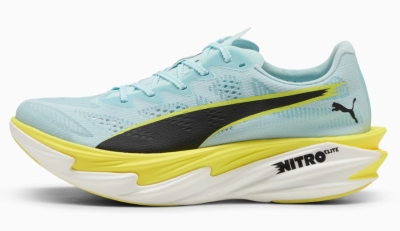
When the forecast includes rain, I move outsole behavior higher in the ranking. The Deviate NITRO Elite 4 pairs a light NITROFOAM Elite midsole with a carbon PWRPLATE and PUMAGRIP rubber. That combination gives it a useful identity: a genuine racer that does not treat traction as leftover material.
I like it most for urban half marathons with painted crossings, damp corners, and frequent direction changes. The ride is firmer and more connected than the softest super shoes, which can help a runner who wants clear ground feedback. It may disappoint someone shopping for a floating, marshmallow-soft sensation.
My decision is simple: if the upper locks the heel without crushing the forefoot and the shoe stays quiet through a wet corner rehearsal, it earns race consideration. If grip is not a concern and I want a smoother roll, the Elite v5 remains easier to recommend.
9. Saucony Endorphin Pro 5 — Best first carbon race shoe
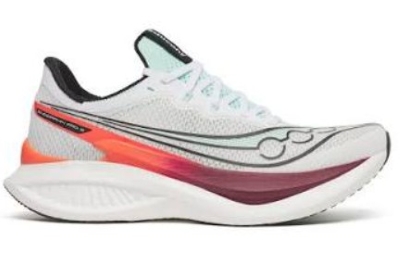
After 142 miles, the Endorphin Pro 5 stands out for how clearly its rocker guides me forward. The slotted carbon plate works with PWRRUN PB and a layer of PWRRUN HG rather than making the shoe feel like a flat, rigid board. That makes it one of my easier carbon recommendations for a runner stepping up from the Endorphin Speed.
I would choose it over the Speed 5 when the half marathon is the priority and race-day efficiency matters more than daily versatility. I would keep the Speed 5 when the shoe must also handle frequent training. The Pro is more specialized, but its transition is less abrupt than some lightweight racers.
The heel must still be secure and the rocker must meet your stride at goal pace. My Endorphin Pro 5 review covers the full 142-mile verdict.
10. On Cloudboom Strike 2 — Best cushioned race platform
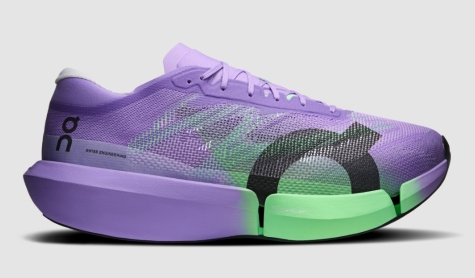
The Cloudboom Strike 2 belongs on the shortlist for runners who want a substantial amount of race cushioning without moving to a training shoe. On positions it for half marathons and marathons, using Helion HF foam, CloudTec Sphere geometry, and a carbon Speedboard in a 191-gram reference build.
Its appeal is sustained comfort at speed. I would compare it directly with the Elite v5 for a runner who wants a more cushioned race experience, then let heel hold, rocker timing, and cornering decide. I would not choose it only because a tall platform looks protective; the shoe still has to stay centered when one leg tires before the other.
Race-week rule: A premium race shoe is not validated by a living-room try-on. I need one continuous goal-pace block, several turns, and the exact socks I will wear before it reaches the start line.
How I Rank Half Marathon Running Shoes
I rank for the distance, not for the first mile. A half marathon asks a shoe to feel economical at goal pace, remain stable as coordination fades, and fit a foot that is warmer and slightly larger than it was at the start.
| Ranking lens | What I check | What loses points |
|---|---|---|
| Goal-pace efficiency | Whether the transition feels automatic during sustained work | A shoe that only comes alive in short sprints |
| Late-run control | Landing, cornering, and toe-off after fatigue appears | Softness that becomes lateral movement |
| Fit under swelling | Heel lock, instep pressure, toe clearance, and forefoot width | Numbness, toe contact, or compensatory gripping |
| Ride-to-runner match | How plate, rocker, foam, and stride work together | Needing an artificial gait to activate the shoe |
| Race practicality | Grip, lacing repeatability, and rehearsal value | A fast straight-line ride with unreliable turns or hold |
My test sequence has three gates. First, I run easy enough to hear fit problems. Second, I add controlled goal-pace work and turns. Third, I use the shoe late in a longer run and check whether it still lets me run normally. A model cannot win on specifications after failing any of those gates.
Logged mileage strengthens a verdict, but I do not manufacture a mileage claim for a new release. My established observations include 202 miles in the SC Elite v5, 299 in the Vaporfly 4, 75 in the Superblast 3, 197 in the Metaspeed Sky Tokyo, 95 in the Alphafly 3, and 142 in the Endorphin Pro 5. Newer models remain narrower recommendations until their longer-term record is equally mature.
For the underlying tradeoff, compare my guides to carbon-plated running shoes and carbon versus nylon plates. I rank the complete shoe, never the plate in isolation.
How to Choose Half Marathon Running Shoes
Start with your actual race goal
A first-time finisher and a runner racing for a personal best do not need the same compromise. For a comfortable finish, I prioritize familiar fit, stable cushioning, and a shoe that already handles the long run. For a time goal, I add mass, propulsion, and race-pace efficiency—but never at the cost of control.
Match the platform before choosing the plate
Carbon, nylon, and no plate can all work. I first decide whether I want sharp and light, smooth and rolling, or flexible and forgiving. Then I test whether the platform stays centered when I land slightly off-axis. My race shoe versus daily trainer guide helps separate a true race need from marketing pressure.
Fit for mile 11, not minute one
I shop late in the day, wear my race socks, and use the same insole setup I will race in. I want a locked heel, a calm midfoot, and comfortable space beyond the longest toe. Buying extra length to solve width usually creates sliding, so I use the running-shoe size guide and seek the correct width instead.
Use a three-run race test
- Run 1 — fit: 25–35 easy minutes, several turns, and a complete pressure check after the foot warms.
- Run 2 — pace: an easy warm-up followed by controlled half-marathon-goal-pace work; I watch whether the ride becomes smoother or more demanding.
- Run 3 — fatigue: a longer run within current training capacity with goal-pace work late, using race socks, lacing, hydration, and fuel.
The shoe test belongs inside a sensible build, not on top of missing fitness. My first half marathon training plan and half marathon nutrition plan cover the preparation the shoe cannot replace.
Stop signal: I stop testing if pain is sharp, worsening, changes my gait, or remains after the run. A shoe guide cannot diagnose or treat an injury.
Frequently Asked Questions
What are the best half marathon running shoes overall?
I choose the New Balance FuelCell SuperComp Elite v5 for the broadest mix of efficiency, comfort, and control. The Nike Vaporfly 4 is my lighter, sharper alternative, while the Saucony Endorphin Speed 5 is the better value when the same shoe must cover training and racing.
Do I need carbon-plated shoes for a half marathon?
No. A carbon shoe can improve the race-day system for some runners, but fit, stability, pacing, and preparation matter more than the plate label. I would rather race a well-matched ASICS Superblast 3 than a carbon racer that makes me tense or unstable.
Can I run a half marathon in daily trainers?
Yes. A comfortable daily trainer is a sensible choice for a first half marathon or a completion-focused race. It should already feel controlled during a long run near your expected finish time and should not create hot spots, heel slip, or late-run wobble.
How much cushioning do I need for 13.1 miles?
I want enough cushioning to keep my stride organized after mile 9, not the softest possible step-in feel. Too little protection can become harsh, while a very soft narrow platform can become unstable. The useful amount is the one that stays predictable at goal pace.
Should half marathon shoes fit tighter than training shoes?
No. I want secure heel and midfoot hold, but I still need room for forefoot swelling. I leave comfortable space beyond my longest toe and reject any shoe that causes numbness, toe contact, or persistent arch pressure during a race-pace run.
How many miles should I put on race shoes before race day?
I use at least one short run, one goal-pace workout, and one longer run with a controlled race-pace segment. That is enough to expose fit, lacing, cornering, and fueling problems without using race day as the first serious test.
Should beginners choose plated or non-plated half marathon shoes?
I start with predictability. A flexible trainer or nylon-plated shoe is often easier to manage, but a stable carbon model can also work. The deciding question is whether the shoe feels natural at the runner’s actual goal pace, not whether elite runners wear it.
Can I use the same shoes for half marathon training and racing?
Yes. The Saucony Endorphin Speed 5 is my clearest one-shoe answer here. Whatever model you choose, save enough outsole and midsole life for race day and complete the key long runs in the exact socks, lacing, and insoles you plan to use.
When should I replace half marathon running shoes?
I do not replace shoes from mileage alone. I look for a material change in cushioning, grip, upper hold, or stability, plus unusual soreness that repeats in that pair. A race shoe should still behave predictably in its final rehearsal.
My Final Recommendation
If I had to recommend one half marathon shoe to the widest group of neutral runners, I would choose the New Balance FuelCell SuperComp Elite v5. Its smooth transition, manageable geometry, and late-run control make it easier to trust across 13.1 miles than a more extreme racer.
I would choose the Nike Vaporfly 4 when the runner is experienced, the fit is proven, and the goal is the lightest, sharpest race feel. I would choose the Saucony Endorphin Speed 5 when one purchase must cover both the build-up and race day. For everyone else, the right answer is the model that passes the three-run test without asking the body to negotiate with it.

About Ken
🏃 2,000+ miles👟 60+ shoes tested📍 Atlantic City, NJ
Hey, I’m Ken — a runner, data nerd, and the person behind NextGait. I’ve been running for 12 years, logging more than 2,000 miles across roads, trails, and the occasional midnight boardwalk sprint. In that time I’ve personally tested 60+ pairs of running shoes — not sponsored demos, but real training miles until the outsoles wore through.
My reviews are built on spreadsheets, GPS data, and honest opinions — I’ll tell you when a shoe disappointed me just as quickly as when it blew me away. If something on this site helped your run, that’s the whole point. Read my full story →