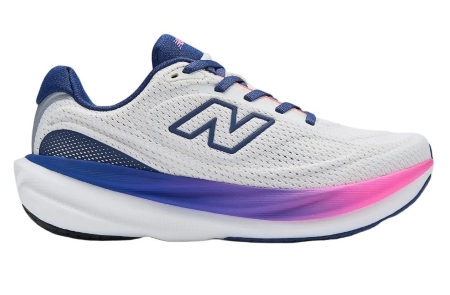
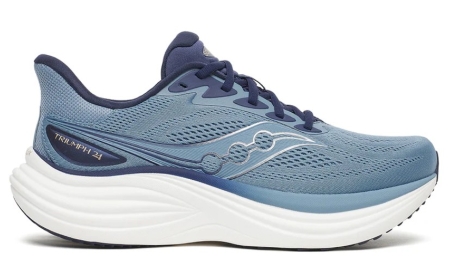
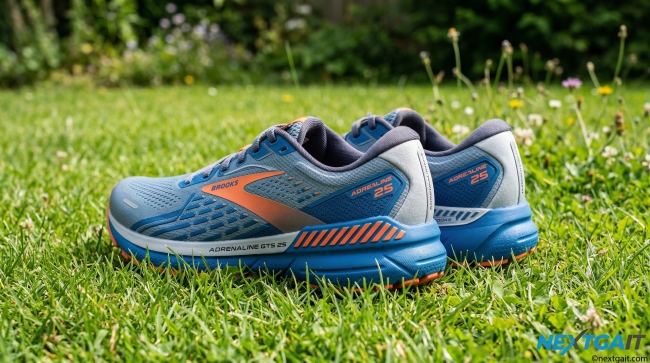
Best Running Shoes for Knee Pain (2026): 10 Expert Picks

Last rechecked July 25, 2026: I verified the ranked models against current US manufacturer pages or current buyer guides. I also removed outdated specifications, unsupported pain-reduction claims, and older models that no longer deserve a current top-10 position.

Short answer: The adidas Supernova Rise 3 is the best running shoe for knee pain as a first comparison because it combines a stable-neutral base, moderate drop, cushioning, and a Wide option without aggressive correction. HOKA Bondi 9 is my rocker pick. ASICS Gel-Kayano 32 is my stability pick.

That answer needs one guardrail: knee pain is a location, not a shoe diagnosis. A new pair can change comfort and mechanics, but it cannot identify patellofemoral pain, a tendon problem, an iliotibial band complaint, arthritis, a meniscus injury, or a stress injury.

The best running shoes for knee pain therefore are not the ten softest shoes. They are ten different fitting tools. The job is to identify which combination of fit, platform stability, rocker, and familiar geometry lets your normal easy stride stay quiet.

This guide treats the phrase best running shoes for knee pain as a comparison question, not a treatment claim. Every pick has a clear best use, a clear limitation, and a runner who should skip it.


Quick Picks: Best Running Shoes for Knee Pain

ShoeMy pickBest use case
Adidas Supernova Rise 3Best overallRunners who want a balanced daily trainer before considering either extreme softness or strong guidance
HOKA Bondi 9Best max-cushion rockerEasy running and walking when a smooth rocker feels better than a flexible traditional trainer
ASICS Gel-Kayano 32Best stability shoeRunners who feel better with guidance and become less controlled as fatigue increases
New Balance Fresh Foam X More v6Best low-drop max cushionRunners already comfortable in lower-drop shoes who want a wide, highly cushioned easy-day platform
Brooks Glycerin GTS 23Best plush guidanceLong easy runs when the runner wants a plush platform plus less intrusive sidewall guidance
ASICS Gel-Nimbus 28Best neutral long-run cushionNeutral runners who want a familiar 8mm ride, secure heel, and deep cushioning for easy mileage
Saucony Hurricane 26Best lighter max stabilityRunners who want a broad, guided max-cushion shoe without Kayano or Glycerin GTS weight
New Balance 1080v15Best width rangeRunners who need a precise width or instep match and prefer a light, soft neutral trainer
Saucony Triumph 24Best lighter premium cushionRunners who prefer a conventional high-drop daily trainer but want less bulk than most max-cushion shoes
Brooks Adrenaline GTS 25Best traditional supportRunners who want predictable GuideRails support, a secure upper, and a conventional 10mm ride
What is in this guideClick to expand

The Direct Answer

If you have no diagnosis and no established shoe preference, compare Supernova Rise 3 with Bondi 9. The adidas gives you a balanced, stable-neutral baseline. The HOKA tells you whether a more obvious rocker and lower offset feel smoother.

If both feel unstable, compare Kayano 32 with Nimbus 28. They share an 8mm offset and ASICS cushioning language, but Kayano adds adaptive guidance. That head-to-head comparison is more informative than deciding you ‘overpronate’ from a footprint.

If width is the main fit problem, start with 1080v15. If you already run comfortably in 4mm shoes and want maximum cushion, try More v6. If you have years of success in 10mm shoes, Triumph 24 or Adrenaline GTS 25 avoids an unnecessary geometry experiment.

Ken’s one-sentence rule: Buy the shoe that feels most natural during an easy jog and leaves no worse response the next morning, not the shoe with the most medical-sounding technology.


When Shoes Are Not the Next Step

Do not shop your way around a knee that needs assessment. Mayo Clinic advises prompt medical care for inability to bear weight, marked swelling, inability to fully bend or straighten the knee, deformity, fever with redness and swelling, or severe pain after injury.

  • Stop and seek urgent care after major trauma, a visible deformity, a sudden large swelling, or when you are unable to bear weight.
  • Get urgent advice for a red, hot, swollen joint with fever or illness because infection is possible.
  • Arrange an assessment for locking, recurrent giving way, persistent night pain, or symptoms that keep returning.
  • Do not continue a run when pain becomes sharp, changes your gait, or grows from one mile to the next.
  • Do not use a softer shoe to mask a rapidly worsening problem.

For common front-of-knee symptoms, my runner’s knee guide explains the usual clinical pattern and why the diagnosis should not be reduced to one weak muscle or a tight IT band.


Knee Pain Is a Symptom, Not a Shoe Category

Location and behavior matter. The table below is a conversation starter, not a self-diagnosis tool. Several conditions overlap, and the same runner can have more than one contributor.

PatternCommon cluesWhat footwear can testWhat footwear cannot establish
Front or around the kneecapOften aggravated by running, stairs, squats, hills, or prolonged sittingWhether a familiar drop, smoother rocker, or more stable base changes comfortWhether the diagnosis is patellofemoral pain or the cause of it
Outer side of the kneeOften appears after a repeatable time or distance and may relate to load or terrainWhether a stable platform reduces unwanted shoe movementWhether the IT band, lateral meniscus, tendon, or another structure is responsible
Below the kneecapPain may be load related during faster running, jumping, or hillsWhether the shoe supports a controlled return at easy paceTendon diagnosis, severity, or an appropriate rehab dose
Joint-line pain, swelling, catching, or lockingCan follow a twist or occur with degenerative changeVery little until a clinician has assessed the kneeMeniscus injury, arthritis, or structural damage
Diffuse ache with stiffnessMay occur with osteoarthritis or a general load spikeComfort, fit, and confidence during clinician-approved activityDisease severity or whether continued running is appropriate

Outer-knee pain deserves its own differential rather than a generic stability prescription. See my shoe guide for IT band symptoms for a focused explanation of what a shoe can and cannot change.

Downhill trail pain also behaves differently from flat-road pain because braking demand and terrain control change. The practical distinctions are covered in my downhill knee-pain guide.


What the Evidence Supports

The strongest honest conclusion is that footwear can alter running biomechanics, but a lab change in joint load is not the same as a clinical cure. Studies often use small samples, short exposures, healthy runners, and modeled joint forces rather than long-term pain or injury outcomes.

A 2023 systematic review and meta-analysis found low-certainty evidence that minimalist footwear slightly reduced peak patellofemoral loads during running compared with conventional footwear. The evidence for rocker shoes was very uncertain, and medial support insoles did not clearly alter patellofemoral load.

A 2022 heel-to-toe drop study found higher modeled patellofemoral stress in 10mm and 15mm shoes than zero-drop shoes in 18 healthy runners. Another small heel-lift study reported lower stress with an 11mm lift. Those apparently conflicting findings are exactly why I will not prescribe one drop from a headline.

A 2022 footwear-practice review concluded that evidence supporting pronation control, impact modification, preferred movement path, or comfort paradigms remains limited. Its practical proposal favored shoes that are comfortable, relatively light, and minimally controlling for many runners. Read the focused clinical review.

The comfort-filter idea is useful, but it is not a guarantee of injury prevention. The original running-shoe mythbusting review challenged impact and pronation as simple injury predictors and proposed comfort and preferred movement as better questions for research.

For patellofemoral pain, a 2024 best-practice guide places education and knee-targeted exercise at the center of care. Hip exercise, prefabricated orthoses, taping, manual therapy, or running retraining may support that plan when individual assessment findings justify them.

What this means in the store: Cushioning, drop, rockers, and stability are comparison variables. None is a diagnosis, and none has enough clinical evidence to be called universally knee protective.


How I Ranked Them

Ken’s ranking rule

A shoe moves up this list when its complete geometry solves a clear fitting problem with fewer tradeoffs. I prioritize immediate comfort, stable landings, secure fit, useful width options, a transition that matches the runner, and current verifiable specifications.

A shoe moves down when its benefit depends on an unsupported medical promise, a sudden drop change, excessive softness, intrusive guidance, an old model, or a narrow use case. I do not award points for the words ‘joint protection,’ ‘alignment,’ or ‘shock absorption’ unless the practical ride supports the claim.

What this review does and does not claim

This is an expert editorial ranking informed by current product specifications, footwear research, clinical guidance, model behavior, fit geometry, and direct comparison logic. It is not a controlled clinical trial, and I will not invent mileage, pain scores, diagnoses, or unnamed testers to make the article sound more authoritative.

  • Fit: heel hold, midfoot pressure, toe-room shape, width options, and orthotic volume.
  • Ride: softness, rebound, rocker timing, flexibility, and whether the shoe feels predictable at easy pace.
  • Stability: platform width and sidewall behavior, not a simplistic pronation label.
  • Transition risk: how far the shoe moves from the runner’s current drop, support, and stack.
  • Use case: easy mileage, long runs, walking, faster work, or a supervised return.
  • Evidence language: acute biomechanical findings are kept separate from pain and injury outcomes.
  • Freshness: official current models and specs take priority over discounted older versions.

For a broader explanation of stability design, including why modern shoes use geometry more often than hard posts, read my overpronation running-shoe guide.


Comparison Table

RankShoeBest forDropSupport typeWidths
1adidas Supernova Rise 3Best overallAbout 7mm (34.8/27.9mm from the US listing)Stable neutralRegular and Wide
2HOKA Bondi 9Best max-cushion rocker5mmStable neutralRegular, Wide, and Extra Wide in selected US versions
3ASICS Gel-Kayano 32Best stability shoe8mmAdaptive stabilityStandard, Wide, and Extra Wide in selected US versions
4New Balance Fresh Foam X More v6Best low-drop max cushion4mmNeutralStandard, Wide, and Extra Wide on the women’s US listing
5Brooks Glycerin GTS 23Best plush guidance8mmStructured supportMedium and Wide in current US listings
6ASICS Gel-Nimbus 28Best neutral long-run cushion8mmNeutralStandard, Wide, and Extra Wide in selected men’s US versions
7Saucony Hurricane 26Best lighter max stability6mmCenterPath guidanceRegular and Wide
8New Balance 1080v15Best width range6mmNeutralMen: B to 4E; women: 2A to 2E
9Saucony Triumph 24Best lighter premium cushion10mmNeutralRegular and Wide
10Brooks Adrenaline GTS 25Best traditional support10mmStructured supportNarrow through Extra Wide in selected US versions

Manufacturer weights are reference values and vary by gender, size, and production. Drop can also vary slightly in manufacturing, and stack measurements from independent labs may differ from brand figures.


The 10 Best Running Shoes for Knee Pain

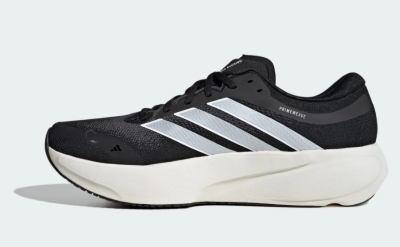
1. Adidas Supernova Rise 3 – Best overall

Why it ranks here: It is the least prescriptive first comparison: a moderate offset, broad and composed platform, real Wide option, and enough cushioning without turning the run into a balance exercise.

Best forDropWeight referenceSupportManufacturer
Runners who want a balanced daily trainer before considering either extreme softness or strong guidanceAbout 7mm (34.8/27.9mm from the US listing)Not stated on the current adidas US product pageStable neutralCheck Price

My first shoe for a knee-pain fitting is usually the one that gives the runner useful information, not the one with the largest stack. Supernova Rise 3 sits in that middle ground. Its Dreamstrike+ platform feels cushioned without the deep sink that can make some max-cushion shoes feel late and unstable.

The base is more planted than the soft label suggests. That matters when a runner reports that the knee becomes irritated only after form gets loose late in an easy run. The shoe does not force the foot through a hard medial post, yet it gives the landing enough structure that the runner can tell whether a stable-neutral platform is the right direction.

The current US page lists a 0.27-inch drop, with a 1.37-inch heel and 1.10-inch forefoot. I treat that as roughly 7mm, not as a therapeutic number. It is simply a moderate starting point for someone who has been running in ordinary 8mm to 10mm trainers and should not make a sudden move to zero drop.

The Primeweave upper has useful volume, and adidas sells a Wide version. Still, the heel can feel less locked than Brooks or ASICS on a narrow rearfoot. If you tighten the top eyelets hard enough to create pressure across the ankle, the fit is wrong even if the midsole feels good.

For deeper context, read my complete running-shoe guide.

  • What I like: Balanced ride; Stable without aggressive correction; Wide version; Good value in the current premium market.
  • What I do not like: Heel hold is not universal; Energy return is ordinary rather than exciting; Official US page omits a reference weight.
  • Who should skip it: Skip it if the heel moves in the correct size or if your symptoms improve only in a clearly rockered shoe.

2. HOKA Bondi 9 – Best max-cushion rocker

Why it ranks here: The Bondi is not ranked for softness alone. Its useful combination is a broad base, rearfoot seating, 5mm offset, and Smooth MetaRocker that can make the transition feel less abrupt.

HOKA Bondi 9 womens
Best forDropWeight referenceSupportPrice
Easy running and walking when a smooth rocker feels better than a flexible traditional trainer5mm10.5 oz / 297.7g (men’s reference)Stable neutralCheck Price

Bondi 9 is the shoe I compare against a conventional trainer when the runner says stairs, downhills, or late-stance knee flexion feel provocative. The rocker changes the timing of the ride enough to be informative. It does not prove that knee load is lower, and it does not replace an assessment.

HOKA lists a 5mm drop and 10.5-ounce men’s reference weight. The supercritical EVA is softer and livelier than older Bondis, but the platform remains deliberate. At recovery pace it rolls well. At faster pace it can feel like too much shoe, especially for a light runner with quick ground contact.

The rearfoot-focused Active Foot Frame helps the heel sit inside the platform instead of balancing above it. That is why Bondi can feel more stable than its height suggests. The tradeoff is a strong geometry that some runners notice immediately and never stop noticing.

Fit is the veto. The arch contour and tapered standard upper do not suit every foot. I would choose the correct width before adding length, then compare a short easy jog with the Supernova Rise 3. Whichever shoe lets the stride remain quiet and natural wins; the ranking does not.

For deeper context, read my full HOKA Bondi 9 review.

  • What I like: Smooth rocker; Broad stable base; Plush but controlled ride; Several US width options.
  • What I do not like: Bulky for speed work; Arch and rocker can feel intrusive; Premium price.
  • Who should skip it: Skip it if the rocker pulls you forward, the arch presses, or the height makes turns feel uncertain.

3. ASICS Gel-Kayano 32 – Best stability shoe

Why it ranks here: Kayano 32 offers a broad platform and adaptive 4D Guidance System without the abrupt edge of an old medial post. It is the strongest choice when guidance passes a direct comfort comparison.

ASICS Gel-Kayano 32
Best forDropWeight referenceSupportPrice
Runners who feel better with guidance and become less controlled as fatigue increases8mm10.6 oz / 300g (men’s reference)Adaptive stabilityCheck Price

Kayano 32 is not the default answer for pronation. Pronation is normal, arch height does not diagnose shoe need, and a store video cannot tell you that a stability shoe will fix a knee. Kayano belongs here because some runners clearly feel calmer and more centered in it than in a soft neutral trainer.

ASICS combines FF BLAST PLUS foam, PureGEL, an 8mm offset, and the 4D Guidance System. The effect is progressive rather than corrective. The broad heel and forefoot do much of the work, while the medial geometry becomes more noticeable when the runner loads that side.

The ride is protective but not mushy. On easy and long runs it stays consistent, and the upper holds the midfoot better than many knit max-cushion shoes. At 300g for the men’s reference size, it is not the shoe I would buy for short intervals.

The decisive test is not whether your ankle rolls inward. Compare it with Nimbus 28 at the same easy pace. If Kayano reduces perceived wobble without pressing the arch or steering the foot, it is the better option. If both feel equally stable, take the neutral shoe and avoid support you do not need.

For deeper context, read my full Gel-Kayano 32 review.

  • What I like: Adaptive rather than harsh stability; Broad platform; Secure upper; Useful width range.
  • What I do not like: Heavy; Guidance is unnecessary for many runners; Arch interaction can be polarizing.
  • Who should skip it: Skip it if a neutral shoe already feels controlled or if the medial geometry creates pressure or changes your stride.

4. New Balance Fresh Foam X More v6 – Best low-drop max cushion

Why it ranks here: It provides deep forefoot cushioning, a broad footprint, and multiple widths, but I rank it below Bondi because its 4mm offset requires more respect for the runner’s previous shoe history.

Best forDropWeight referenceSupportManufacturer
Runners already comfortable in lower-drop shoes who want a wide, highly cushioned easy-day platform4mm241g / 8.5 oz (women’s reference; official page has a unit typo)NeutralCurrent specs

More v6 looks like the obvious knee-pain answer because there is so much foam underfoot. I do not use that shortcut. Soft cushioning can improve comfort, but more stack does not guarantee less knee pain, lower injury risk, or better mechanics.

What the shoe does offer is a broad neutral base and a 4mm offset. The Fresh Foam X midsole has a soft, slow-compressing feel that works best at easy pace. Runners who already use 4mm to 6mm shoes may find the ride natural. Someone coming from 10mm to 12mm should not make the switch during a painful week.

The women’s US page lists Standard, Wide, and Extra Wide, which makes the shoe useful for a high-volume foot. New Balance’s displayed weight line contains an obvious ounces typo, so I use the stated 241g reference and flag the source instead of silently repeating bad data.

The shoe is less agile than its listed weight suggests. A tall, soft platform can ask the foot and ankle to stabilize more on cambered roads or corners. I keep it for flat easy mileage, not as a universal prescription and not as a reason to continue running through escalating symptoms.

For deeper context, read my guide to cushioned running shoes.

  • What I like: Deep forefoot cushioning; Broad platform; Multiple widths; Comfortable at easy pace.
  • What I do not like: Very soft ride; Low drop can increase calf and Achilles demand; Official page contains a weight-unit error.
  • Who should skip it: Skip it if you are abruptly moving from a high-drop shoe or if tall soft platforms make you feel unstable.

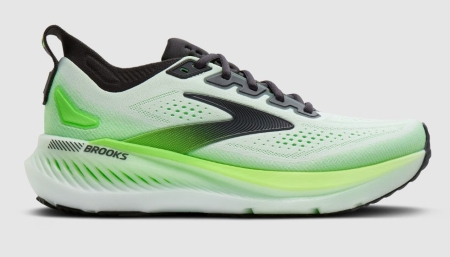
5. Brooks Glycerin GTS 23 – Best plush guidance

Why it ranks here: It combines Brooks’ GuideRails with an 8mm offset and a more cushioned forefoot, giving stability seekers a softer alternative to Adrenaline without using a hard post.

Brooks Glycerin GTS 23
Best forDropWeight referenceSupportManufacturer
Long easy runs when the runner wants a plush platform plus less intrusive sidewall guidance8mm11.0 oz / 311.8g (men’s reference)Structured supportCurrent specs

Glycerin GTS 23 is the stability shoe for the runner who likes Kayano’s purpose but not its feel. Brooks uses GuideRails along the sides of the platform. They stay fairly quiet when the foot remains centered and become more apparent with excess side-to-side motion.

The DNA TUNED midsole has a soft heel and a more responsive forefoot, with 2mm more forefoot cushioning than the previous version. That makes steady running smoother, but the 11-ounce men’s reference weight is noticeable. This is a comfort trainer, not a fast-day shoe.

The upper is accommodating through the forefoot but secure through the waist. I still check the lateral rail carefully. A runner who lands near the outer edge may feel it as a ridge, and any new pressure that changes foot placement can travel upstream rather than solve the original complaint.

I rank it ahead of Nimbus only for people who have already established that guidance improves comfort. For a neutral runner, the standard Glycerin 23 or Nimbus 28 is simpler. GTS is an option, not an upgrade.

For deeper context, read my full Glycerin GTS 23 review.

  • What I like: Plush cushioning with guidance; Eight-millimeter middle-ground drop; Secure fit; Wide version.
  • What I do not like: Heavy; GuideRails can be felt by some runners; Costs more than Adrenaline.
  • Who should skip it: Skip it if lateral rails are noticeable or if the neutral version feels equally stable.

6. ASICS Gel-Nimbus 28 – Best neutral long-run cushion

Why it ranks here: Nimbus is a conventional neutral answer with verified current specs, a useful width range, and less mechanical steering than the stability shoes above it.

ASICS Gel-Nimbus 28 Review
Best forDropWeight referenceSupportManufacturer
Neutral runners who want a familiar 8mm ride, secure heel, and deep cushioning for easy mileage8mm9.9 oz / 281g (men’s reference)NeutralCurrent specs

Nimbus 28 is what I reach for when a runner says, ‘I want cushioning, but I do not want the shoe to tell me how to run.’ It pairs FF BLAST PLUS and PureGEL with an 8mm offset and a familiar neutral transition.

ASICS lists the men’s reference at 281g, about 20g lighter than the prior version. It still feels substantial, but the weight no longer dominates the ride. The foam is soft enough for easy miles while the heel remains more contained than in many highly flexible knit shoes.

The engineered knit upper is forgiving, and selected men’s listings include Wide and Extra Wide. Check the instep, because extra width does not always add enough vertical space. A runner should not need to leave the midfoot loose just to avoid lace pressure.

Nimbus does not earn a higher rank because comfort is personal and its geometry is not uniquely knee specific. It is a well-executed neutral trainer. That honest description is more useful than claiming the gel absorbs force before it reaches the knee.

For deeper context, read my full Gel-Nimbus 28 review.

  • What I like: Smooth neutral ride; Current verified specs; Useful width options; Secure rearfoot.
  • What I do not like: Still bulky for faster running; Softness may feel vague to some runners; No special offloading promise.
  • Who should skip it: Skip it if the platform feels too soft or if you consistently prefer an earlier rocker.

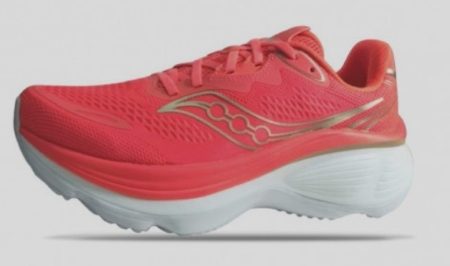
7. Saucony Hurricane 26 – Best lighter max stability

Why it ranks here: Hurricane 26 uses a broad 41/35mm platform, higher sidewalls, 6mm offset, and CenterPath rocker, yet its listed weight stays close to an ordinary daily trainer.

saucony hurricane 26
Best forDropWeight referenceSupportManufacturer
Runners who want a broad, guided max-cushion shoe without Kayano or Glycerin GTS weight6mm9.2 oz / 262g (men’s reference)CenterPath guidanceCurrent specs

Hurricane 26 is the most interesting stability update in this list. Saucony builds guidance through a broad base, raised sidewalls, and a rockered CenterPath shape. The intent is to keep the foot moving through the center without a hard wedge under the arch.

The current buyer’s guide lists a 41/35mm platform, 6mm drop, 9.2-ounce men’s reference weight, and Wide availability. The incrediLUX foam feels softer than the old Hurricane lineage, while the sidewalls stop the platform from feeling completely unstructured.

That combination works for runners who want guidance but find Kayano and Glycerin GTS heavy. It can also feel overbuilt to a neutral runner. A broad base is generally reassuring, but high sidewalls can rub or steer the foot when the last does not match.

Treat the 6mm drop as a transition variable. If your current shoe is 10mm or 12mm, use the Hurricane first for short easy sessions rather than replacing every run at once. New knee pain is a poor time to change support, drop, volume, and workout intensity together.

For deeper context, read my stability running-shoe guide.

  • What I like: Guidance without a hard post; Relatively light; Broad rockered platform; Wide version.
  • What I do not like: High sidewalls can feel directive; New geometry has less long-term history; Too much shoe for some neutral runners.
  • Who should skip it: Skip it if you do not need guidance or if the sidewalls contact your arch or lateral foot.

8. New Balance 1080v15 – Best width range

Why it ranks here: The width ladder solves more real fitting problems than a generic ‘support’ label. It lets runners gain forefoot room without buying excess length and losing heel control.

New Balance Fresh Foam X 1080v15
Best forDropWeight referenceSupport
Runners who need a precise width or instep match and prefer a light, soft neutral trainer6mm9.2 oz / 261g men’s; 7.3 oz / 208g women’s referenceNeutralCheck Price

The 1080v15 earns its ranking through fit. New Balance offers men’s widths from B through 4E and women’s widths from 2A through 2E. That range matters because a shoe that is too narrow can change how the foot loads, while sizing up for width can leave the heel sliding.

Infinion foam gives the v15 a very soft, light ride. The 6mm offset is moderate enough for many runners, but the platform is less guided than Bondi, Kayano, or Hurricane. A runner who likes freedom will appreciate that. A runner who feels unstable in soft foam will not.

Do not assume the widest option is the safest. Excess volume can make the foot move inside the shoe and force the toes to grip. The correct fit holds the heel and midfoot without pressure, while leaving the forefoot enough space to spread naturally.

I use the 1080 as a fit solution, not a knee-pain solution. When the shoe disappears on the foot and a short jog feels smooth, it becomes a strong daily trainer. If the runner notices the foam wobbling under the arch, another width will not fix the platform.

For deeper context, read my wide running-shoe guide.

  • What I like: Exceptional width range; Light for its cushioning; Six-millimeter offset; Soft upper.
  • What I do not like: Very soft neutral ride; Can feel unstable under fatigue; Correct width varies by last.
  • Who should skip it: Skip it if soft foam increases side-to-side movement or if the heel slips in the width your forefoot needs.

9. Saucony Triumph 24 – Best lighter premium cushion

Why it ranks here: Triumph 24 pairs a 43/33mm platform with a surprisingly light listed weight, giving high-drop runners a premium cushion option without forcing a low-drop transition.

Saucony Triumph 24
Best forDropWeight referenceSupport
Runners who prefer a conventional high-drop daily trainer but want less bulk than most max-cushion shoes10mm8.8 oz / 250g (men’s reference)NeutralCheck Price

Triumph 24 is for the runner whose current shoe history matters more than a trend toward lower drop. Saucony lists a 43/33mm stack, 10mm offset, and 8.8-ounce men’s reference weight. The incrediLUX foam feels lively, but the transition remains familiar.

That familiarity can be valuable during a return to easy running. A runner who has spent years in 10mm shoes does not need to move to 4mm because a laboratory model showed lower patellofemoral stress in a different group. Load can shift toward the calf, Achilles, and foot instead.

The Triumph is not strongly guided, yet the platform has enough width to stay composed at easy pace. The Wide version is useful, although Saucony’s forefoot shape is not as generous as the widest New Balance options.

I rank it ninth because its 10mm drop and lively foam are not universally comfortable for anterior knee symptoms. It becomes a top-five option when the runner already thrives in that geometry and wants a lighter long-run shoe.

For deeper context, read my full Saucony Triumph 24 review.

  • What I like: Low weight for the stack; Familiar 10mm geometry; Wide version; Versatile premium ride.
  • What I do not like: High drop is not right for everyone; Lively foam can feel less stable; Not strongly rockered.
  • Who should skip it: Skip it if high-drop shoes consistently increase front-of-knee symptoms or if the foam feels too active.

10. Brooks Adrenaline GTS 25 – Best traditional support

Why it ranks here: Adrenaline offers the most predictable fit and support package here, plus an unusually broad width range. It ranks tenth because the ride is firmer and less fluid than the leaders.

Brooks Adrenaline GTS 25
Best forDropWeight referenceSupport
Runners who want predictable GuideRails support, a secure upper, and a conventional 10mm ride10mm10.6 oz / 300.5g (men’s reference)Structured supportCheck Price

Adrenaline GTS 25 is the conservative stability pick. Brooks added cushioning in the heel and forefoot, retained GuideRails, and lists a 10mm drop with a 10.6-ounce men’s reference weight. The result is secure and familiar rather than plush.

The shoe works best for runners who dislike tall, soft platforms. It keeps the foot contained, the heel counter is dependable, and selected US versions range from Narrow through Extra Wide. Orthotic users should still remove the stock liner and recheck heel depth before assuming compatibility.

GuideRails are not a knee brace. They limit excess side movement at the shoe, but they cannot diagnose the source of knee pain or correct the entire leg. I keep Adrenaline in the ranking because some runners prefer its quiet predictability to a more dramatic rocker.

The drawback is ride quality. It feels less smooth than Supernova Rise 3 and less cushioned than Glycerin GTS 23. Choose it when the fit is clearly better, not because the word ‘support’ sounds medically safer.

For deeper context, read my full Adrenaline GTS 25 review.

  • What I like: Predictable support; Excellent width range; Secure upper; Familiar 10mm geometry.
  • What I do not like: Firmer and less fluid; Heavy for moderate cushioning; GuideRails can be unnecessary.
  • Who should skip it: Skip it if you want a soft neutral ride or if the side rails are noticeable during an easy jog.

Popular Shoes I Did Not Rank

Exclusions matter in a medical-adjacent buying guide. These shoes are not necessarily poor products. They miss this list because timing, geometry, fit, or use case makes them a weaker first recommendation.

Shoe or categoryWhy it is not rankedWho may still consider it
Brooks Ghost Max 4Brooks lists an August 1, 2026 US release, so it is still a preorder at this audit date. Ranking a production fit before normal retail availability would be premature.Runners who can wait and want a 6mm GlideRoll shoe with a broad base and orthotic room
HOKA Clifton 11It is lighter than Bondi and uses an 8mm Smooth MetaRocker, but Bondi provides the clearer rocker-versus-balanced comparison for this specific guide.Runners who fit HOKA well and find Bondi too bulky
Zero-drop and minimalist shoesThey may lower modeled knee load in some conditions, but a sudden transition can increase demand on the foot, calf, and Achilles. They are not a casual fix during active pain.Experienced low-drop runners using them within a clinician-reasoned plan
Carbon-plated racersThey can change ankle and knee work, but aggressive rockers, narrow uppers, and unstable race foams make them poor first-line experiments during a flare.Symptom-controlled runners who have already proven the exact race shoe
Discounted old modelsA good older shoe can be a smart value, but stock, foam age, widths, and return policies become inconsistent. A top current guide should not rank a model that readers cannot reliably fit.Runners replacing a known model with an identical fit from a reputable seller

The current Ghost Max 4 timing is a good example of why freshness matters. I would rather label a promising shoe as a watchlist model than manufacture certainty one week before its listed release.


The Two-Shoe Fit Test

Never try one shoe in isolation. Bring two meaningfully different options to the same fitting: balanced versus rockered, neutral versus guided, or familiar drop versus moderately lower drop. Use the same socks, pace, and surface.

  • Check both feet late in the day. Size to the larger foot without using extra length to solve width.
  • Leave roughly a thumb’s width ahead of the longest toe, then confirm the heel stays seated.
  • Reject pressure under the arch, at the lateral rail, across the instep, or around the little toe.
  • Walk, perform a few controlled bodyweight squats if appropriate, and jog at easy pace.
  • Run a gentle figure eight. The toes should not grip to stabilize a tall platform.
  • Notice whether the shoe changes cadence or foot placement without conscious effort.
  • Begin with a short easy run, then compare symptoms later that day and the next morning.
  • Return the shoe if it requires a painful break-in or if the gait becomes protective.

Women and men should use the width that matches the foot, not the marketing category. My separate women’s running-shoe guide explains common heel, instep, and forefoot fitting issues without assuming every woman needs a softer shoe.

Flat feet also do not create a universal stability requirement. The decision tree in my flat-feet running-shoe guide starts with comfort and function, then uses guidance only when the comparison supports it.

Fit veto: Heel slip, toe gripping, arch pressure, numbness, obvious wobble, or a worse next-morning response overrules every award in this guide.


Drop, Cushion, Rockers, and Stability

Heel-to-toe drop

Drop is the height difference between the heel and forefoot. It can alter joint angles and demands, but the shoe’s rocker, foam, flex, stack, and your running technique all interact with it. Two 8mm shoes can feel more different than a 6mm and a 10mm shoe.

A lower drop may reduce modeled patellofemoral load in some runners while increasing calf, ankle, Achilles, and foot demand. A higher drop can do the opposite in some conditions. My heel-drop guide for runners gives the full transition logic.

Cushioning and shock absorption

Softness is a sensation; shock attenuation is a measured response; pain is a clinical outcome. They are related but not interchangeable. A shoe can feel soft while the runner stiffens the leg, or feel moderately firm while the complete stride remains comfortable.

Do not chase a lab threshold as if it were a medical dose. A useful cushioned shoe should remain stable, fit the foot, and allow the runner’s normal mechanics. The most comfortable model in standing may not be the best model after 40 minutes.

Rocker geometry

A rocker curves the sole so the body rolls forward with less shoe flex. The timing can feel smooth, early, late, or intrusive depending on stride and foot length. Current evidence does not support calling every rocker knee unloading.

Stability and pronation

Modern stability shoes use wide bases, sidewalls, rails, and asymmetric foam more often than hard medial posts. These features can improve perceived control, but pronation alone is not an injury diagnosis.

The clinical footwear review cited above also finds limited support for pronation-control paradigms. That is a better starting point than assigning every low arch or visible inward roll to a motion-control shoe.


What Helps Beyond Shoes

For gradual front-of-knee pain, training load is often a larger lever than footwear. A sudden increase in weekly distance, hills, speed, long-run length, or frequency can exceed current capacity even when the shoe is appropriate.

Do not use the old 10-percent rule as a law. Compare what changed in the two to four weeks before symptoms: total minutes, hard sessions, downhill running, strength work, sleep, and recovery. Reduce the provoking dose enough to restore a tolerable response, then rebuild from actual capacity.

The structure in my running-injury prevention guide helps separate load errors from shoe issues. It also explains why no shoe can compensate indefinitely for repeated spikes.

Exercise selection should follow the diagnosis and irritability. For patellofemoral pain, current guidance supports knee-targeted exercise, with hip work added when assessment supports it. A generic list of stretches is not an adequate rehab plan.

Running retraining can be useful for selected runners. A 2026 systematic review and meta-analysis found that several technique changes altered modeled patellofemoral loading. That does not mean every runner should switch foot strike or chase 180 steps per minute.

Cadence is best treated as an individual experiment, often with a small change rather than a magic number. See my running cadence guide before using a metronome to overhaul your stride.

Low-impact aerobic work can maintain fitness while running volume is reduced, but the mode must also be comfortable. My cross-training guide for runners compares cycling, pool running, elliptical work, and strength training by purpose.


A Criteria-Based Return to Running

There is no responsible universal return date because diagnosis, tissue irritability, prior training, and goals differ. Use criteria and a clinician’s guidance when symptoms are persistent or significant.

  • Normal walking and daily tasks are comfortable enough that you are not limping.
  • The knee is not increasingly swollen, hot, locking, or giving way.
  • You can complete clinician-approved strength and impact tasks with an acceptable response.
  • The first run is short, flat, conversational, and separated from speed or hill work.
  • Pain does not become sharp or progressively increase during the run.
  • Gait remains normal, without shortening one side or protecting the painful leg.
  • Symptoms return to baseline by the next morning before duration or frequency increases.
  • A flare leads to load reduction and reassessment, not a switch to an even softer shoe.

Easy running is useful only when it is actually easy. Use my easy-run pace guide to control intensity, and keep the first weeks boring enough to reveal whether the knee is tolerating the progression.

Recovery days are part of the loading plan, not lost training. The decision rules in my runner recovery guide help separate a normal training sensation from a pattern that needs more rest or assessment.

Monitor the shoe as well as the knee. My running-shoe replacement guide uses changes in fit, ride, traction, and side-to-side symmetry instead of pretending every midsole expires at one mileage.


Frequently Asked Questions

What are the best running shoes for knee pain?

The adidas Supernova Rise 3 is my best starting comparison because it is cushioned, broad, moderately dropped, and stable without aggressive guidance. HOKA Bondi 9 is better when a pronounced rocker feels smoother. ASICS Gel-Kayano 32 is better only when adaptive stability clearly improves comfort. No model treats every cause of knee pain.

Can running shoes fix knee pain?

No. A shoe can change comfort and running mechanics, but knee pain is a symptom with many possible causes. Persistent, worsening, swollen, traumatic, locking, or unstable knee symptoms need a qualified clinician. For patellofemoral pain, current best-practice guidance centers education and knee-targeted, sometimes hip-targeted, exercise rather than footwear alone.

Is more cushioning always better for painful knees?

No. Cushioning changes the feel of impact, but softness and stack height do not reliably predict pain or injury. Some runners feel better in deep foam; others become less stable or change their stride. Compare a balanced trainer with a max-cushion model and judge the run plus the next-day response.

Are stability running shoes better for knee pain?

Only for runners who are more comfortable and controlled in them. Pronation is normal, and arch height or a store treadmill video cannot prescribe a stability shoe by itself. Compare the stability and neutral versions at the same easy pace. Choose guidance only when it improves comfort without adding pressure or steering.

What heel drop is best for runner’s knee?

There is no universal best drop. Biomechanical studies report different acute effects, and changing drop can move demand between the knee, calf, Achilles, and foot. Start near the geometry your body already tolerates. Change gradually and avoid combining a major drop change with a mileage increase or active flare.

Are low-drop shoes good for patellofemoral pain?

They may reduce modeled patellofemoral loading in some laboratory conditions, but that does not make them a universal treatment. Low-drop and minimalist shoes can add demand to the ankle, calf, Achilles, and foot. A clinician may use footwear or gait changes selectively after assessing the runner.

Are rocker shoes good for knee pain?

A rocker can make the heel-to-toe transition feel smoother, but evidence that rocker soles reliably reduce patellofemoral load is uncertain. Try one against a conventional trainer. Keep it only if the rocker timing feels natural and symptoms during and after the run are no worse.

Should I buy shoes based on overpronation?

Not from pronation alone. All runners pronate to some degree. Comfort, fit, running history, symptom response, and the complete shoe geometry are more useful than a single arch or ankle label. A running physical therapist can assess whether movement is actually relevant to your symptoms.

Can worn-out shoes cause knee pain?

An old pair can feel different as foam, outsole, and upper wear, but there is no universal mileage at which a shoe suddenly becomes injurious. Compare the old pair with a fresh pair of the same model. Replace when the ride, fit, traction, or comfort has meaningfully deteriorated, not by mileage alone.

Should I stop running if my knee hurts?

Stop the session if pain is sharp, worsening, changes your gait, or comes with swelling or instability. Mild symptoms still deserve load adjustment and monitoring. Seek urgent care after major trauma, sudden swelling, deformity, inability to bear weight, a locked knee, or fever with a red hot joint.

Can I run with patellofemoral pain?

Some runners can continue with modified volume, speed, and terrain as part of a clinician-guided plan. The decision depends on irritability, function, and next-day response. A shoe may be an adjunct, while education and progressive knee-targeted exercise remain central in current guidance.

What shoe is best for knee pain and flat feet?

Flat feet do not automatically require stability shoes. Start with the shoe that fits the whole foot, then compare a stable neutral model such as Supernova Rise 3 with Kayano 32 or Hurricane 26. Choose the guided shoe only if it feels more natural and comfortable.

What shoe is best for knee pain and wide feet?

New Balance 1080v15 offers the broadest published width ladder in this list. Bondi 9, Kayano 32, Nimbus 28, Adrenaline GTS 25, and More v6 also have useful wider versions. Width codes do not describe toe-box shape or instep volume, so the standing and running fit test still matters.

Are carbon-plated shoes good for knee pain?

Not as a first-line solution. Plates and aggressive rockers change joint work and can feel stable at speed, but narrow race uppers and soft high-stack foams may be poor choices during active pain. Prove a daily trainer first and introduce a race shoe only when ordinary running is controlled.

Do knee braces or insoles replace the right shoe?

No. A prescribed orthosis can be useful for selected runners, especially when a functional test improves, but it still needs enough shoe volume and a compatible platform. A brace or insert does not replace diagnosis, progressive loading, or a shoe that fits.

How should new running shoes feel on the first run?

Quiet. The heel should stay secure, the midfoot should not be squeezed, the toes should not grip, and the platform should feel stable on turns. Do not expect a painful break-in. Start with a short easy run and check symptoms later that day and the next morning.

Do expensive shoes protect knees better?

No. Price reflects materials, branding, and product positioning, not proven knee protection. A less expensive shoe with the right fit and familiar geometry is a better choice than a premium model that changes your stride or creates pressure.

When should knee pain be assessed by a professional?

Arrange an assessment when pain persists, recurs, limits normal activity, or is not responding to sensible load reduction. Seek urgent care for major trauma, deformity, sudden marked swelling, inability to bear weight, locking, giving way, or fever with redness and warmth.


Final Verdict

The adidas Supernova Rise 3 is my best overall starting point because it is balanced, stable without aggressive control, moderately dropped, and available in Wide. HOKA Bondi 9 is the better choice when its rocker clearly feels smoother. ASICS Gel-Kayano 32 is the best stability option when guidance passes a direct neutral-versus-stability test.

The ranking narrows the wall; it does not diagnose the knee. Compare two shoes, keep the rest of training stable, use a short easy run, and judge the next-morning response. When symptoms are persistent, swollen, traumatic, locking, or gait-changing, stop shopping and get the knee assessed.

That is the standard I use for the best running shoes for knee pain: useful choices, current facts, and no promise that footwear can do the work of diagnosis or rehabilitation.

Medical note: This guide helps you compare running-shoe features. It does not diagnose knee pain or replace care from a physician or licensed physical therapist.

Leave a Comment

Your email address will not be published. Required fields are marked *

Scroll to Top