
Nike Vomero 18 vs HOKA Bondi 9: after 175 running miles in my Vomero and 310 in my Bondi, I would buy the Nike for a runner who wants one highly cushioned road trainer to cover most easy and long days. I would buy the HOKA for someone who enjoys a lower-drop rocker, a foot held inside a broad platform, and deliberately slow recovery miles. I would buy neither on cushioning alone: the upper and the way the rocker meets your stride can reverse that recommendation in minutes.
I ran both in men’s US 10.5 on my 182-pound frame, mainly over Atlantic City roads and boardwalks. Over 12 years of running, I have learned to make the last third of a run count more than the first ten steps in a shop. Here is the decision I make after the feet warm and the easy pace starts to feel honest.
My quick decision: which one earns the easy miles?
| Your priority | My starting pick | The fit test that can reverse it |
|---|---|---|
| One cushioned shoe for most road mileage | Vomero 18 | Its tongue or heel transition creates pressure |
| Slow recovery or long time on feet | Bondi 9 | Its low-drop rocker makes calves or toes work awkwardly |
| A guided, higher-heel transition | Vomero 18 | You feel the rearfoot intrude on landing |
| A cradled, centered platform | Bondi 9 | The sidewalls crowd your foot |
| Fast repeats or race pace | Neither | Choose a dedicated workout shoe |
The distinction is more useful than “which is softer?” Both have a lot of foam. Vomero’s two-layer sole lets me settle into a wider range of easy-road rhythms. Bondi’s broad, rockered base makes my slow post-workout shuffle feel deliberate and contained. If I could keep only one, I would keep Vomero for my usual road week; the Bondi has a clear recovery role in my rotation.
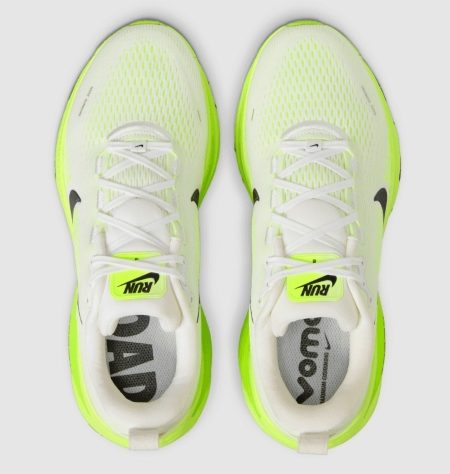

The exact pairs behind my verdict
| What I checked | Nike Vomero 18 | HOKA Bondi 9 |
|---|---|---|
| My running log | 175 miles | 310 miles |
| My size | Men’s US 10.5 | Men’s US 10.5 |
| Listed heel-to-toe drop | 10 mm | 5 mm |
| Midsole | ZoomX above ReactX | Supercritically foamed EVA |
| Geometry I notice | Tall heel, bevel, and forward roll | Deep cradle, broad base, and rocker |
| Longest outing in my log | 14 miles | 15 miles |
| Fit issue I test first | Tongue alignment and instep pressure | Sidewall room and heel hold |
Those 485 miles are two separate logs, not a head-to-head laboratory trial. Bondi has 135 more miles of wear, so I am more confident about how that pair ages. I do not treat my log as proof that every runner will feel the same softness, stability, or longevity.
What the midsole actually feels like on the road
Vomero 18: layered cushion with a more adaptable rhythm
The ZoomX layer sits above ReactX in Vomero 18. My landing feels cushioned, yet the shoe does not simply collapse under me. A shaped heel and rockered transition move me toward the forefoot; once I find its rhythm, the sole feels smoother than its size suggests. On an 8:15-per-mile easy run along the Atlantic City Boardwalk from Albany Avenue, I could let the shoe roll without forcing the pace. My full Vomero 18 review has the single-shoe story.
I still notice the shoe underfoot. A tall, beveled heel is a feature only if it meets the ground where your stride expects it. If I land on a sloped road edge, I check whether I am quietly adjusting my foot to accommodate the rearfoot. The soft top layer also does not make the entire shoe uniformly soft; the ReactX underneath and the sole’s geometry shape what I feel.
Bondi 9: the foot sits inside the ride
Bondi 9 uses supercritically foamed EVA and a broad, rockered sole. My foot sits down within raised midsole walls rather than balancing on a narrow block of foam. On a slow recovery run after a hard 18-miler, the quiet contact and stable-feeling base made six gentle miles on the Somers Point path easier to keep gentle. After another hard long run, I used the pair for a 12-mile easy flush and valued its steady, muted landing more than any sense of bounce. My Bondi 9 review goes further into that recovery role.
I would call the Bondi protective and controlled, not lively. The rocker helps me move forward at easy pace, but when I ask for quicker turnover I feel the amount of shoe I am carrying. It is a neutral model with a stable-feeling cradle; that does not turn it into a prescription stability shoe. If you dislike feeling sidewalls around the foot, the same feature that settles me may feel intrusive to you.
The 10 mm versus 5 mm drop changes the conversation
Nike lists 10 mm for Vomero 18 and HOKA lists 5 mm for Bondi 9. That five-millimeter gap is useful context, especially for a runner accustomed to one end of the range. I do not read it as a direct measure of calf load: foam compression, heel bevel, rocker placement, and where I land all affect how much difference I feel.
When I switch between them, Vomero gives me a more noticeable heel-led entry; Bondi asks me to move with its lower-drop rocker. I test that by walking, jogging easily, and returning to a familiar pace, then paying attention to whether my calves, arch, or heel feel unusually worked. I would introduce a very different geometry gradually within a normal training week rather than assume a soft upper or thick stack erases the transition.
My session-by-session choice
| Session | What I feel in Vomero 18 | What I feel in Bondi 9 | My choice |
|---|---|---|---|
| Recovery jog after a hard day | Cushioned, but its roll stays noticeable | Calm and contained at deliberately slow effort | Bondi |
| Ordinary easy road run | More natural choice across my easy rhythms | Comfortable when I keep the pace quiet | Vomero |
| Long aerobic run | My log reaches 14 miles | My log reaches 15 miles | Fit and rocker decide |
| Run-walk or a long day on feet | Try the heel transition at walking speed | Broad cradle suits my unhurried time on feet | Bondi |
| Steady progression | Can follow a modest lift in effort | Feels cumbersome when I chase turnover | Vomero |
| Fast intervals | Too much platform for my preferred mechanics | Too much platform for my preferred mechanics | Neither |
These are roles in my rotation, not pace promises. If I need a true workout shoe, I use a separate pair; my daily trainer versus tempo shoe guide explains that division. A recovery shoe succeeds when it helps me hold the intended easy effort, not when it tempts me to turn the run into a test.
Fit is where my recommendation can flip
My US 10.5 Vomero holds the heel and midfoot closely, while its forefoot feels more tapered on me. On a humid 12-miler, the thin tongue moved sideways and the knot pressed into my instep. Before I recommend that shoe, I check tongue centering and lace pressure after the foot has warmed. Tightening harder to hide heel slip would make that problem worse.
Bondi’s jacquard upper and gusseted tongue stayed more settled in my long runs. I get just enough front room for my slightly wide forefoot, but the sidewalls and toe volume can make another foot feel boxed in. Its flared, padded collar holds my rearfoot without rubbing my Achilles. That is my fit, not a width guarantee. I check toe spread, space above the nails, pressure along both sidewalls, and heel movement separately. My warm-foot running-shoe fit checklist shows the same process for any model.
The short try-on I would do before paying
- Wear your normal running socks and check both horizontal and vertical toe room.
- Walk long enough to feel where each heel lands and when its rocker takes over.
- Jog at the effort you actually plan to use, then briefly change cadence.
- Try a mild turn or camber and notice whether the platform stays centered.
- Recheck the Vomero tongue and instep, and the Bondi sidewalls and toe volume.
- Choose only if the better shoe still feels right after the first-step novelty fades.
Late-run control, outsole, and what wear has taught me
Bondi’s broad platform gives me a more settled feeling when my legs are tired, particularly at slow pace. Vomero feels secure when I land cleanly into its heel, but I pay more attention on slanted pavement. Neither shoe makes wet paint, metal covers, or slick boardwalk planks safe by default. I slow down on those surfaces and assess the actual rubber and conditions rather than infer grip from a product name. My outsole and traction guide goes through that check.
At 175 miles, my Vomero shows localized outsole wear while the upper remains intact. At 310 miles, my Bondi shows rubber smoothing at the main landing zone, foam creasing and a softer feel, yet the mesh is still sound. The older Bondi record tells me more about its late-life ride, not that the Nike will last fewer miles. I revisit the same easy route and ask whether the pair still holds my foot and lets me move naturally. I do not prescribe a replacement mileage from these two samples.
A cold 14°F dawn also changed my Bondi experience: the thick midsole felt denser and more cumbersome than it did on mild days. That is why I would not decide its year-round role from a warm shop fitting. I cannot claim the same cold-weather behavior for my Vomero without a comparable logged outing.
Who I would steer toward each shoe
- I would buy Vomero 18 if I needed one maximal-cushion road trainer for easy miles and long runs, liked its heel-to-toe roll, and passed its tongue and instep test.
- I would buy Bondi 9 if my priority was slow recovery, run-walk time, or a contained ride inside a broad platform, and its lower drop felt natural after a proper jog.
- I would buy neither if the rocker fought my stride, the upper needed overtightening, or the missing role was fast training rather than easy mileage.
- I would keep my current shoe if it already delivers comfortable, controlled easy miles; a thicker midsole alone is not an upgrade.
I would seldom buy both for a small rotation because their easy and long-road jobs overlap. If you already own a lighter HOKA and are wondering whether Bondi adds a real recovery role, my Bondi 9 versus Clifton 10 comparison is the next read. If Vomero’s heel transition does not suit you but you still want substantial cushion, my Vomero 18 versus Gel-Nimbus 28 comparison tests a different easy-run feel. For the broader decision about complementary shoes, use my rotation guide.
FAQ: Vomero 18 vs Bondi 9
Is Nike Vomero 18 or HOKA Bondi 9 better for recovery runs?
I reach for Bondi 9 when I want an intentionally slow recovery shuffle and a centered, muted ride. I choose Vomero 18 when I want more flexibility across the rest of my easy road week and its heel transition suits me.
Which shoe feels softer?
Both have substantial cushioning, but softness changes with pace, temperature, and where I load the sole. My Bondi feels quieter and more contained at slow effort; Vomero feels more layered and rolling. I would judge them after a short jog, not by pressing the foam.
Which is better for long runs?
My Vomero log reaches 14 miles and my Bondi log reaches 15. I lean Vomero when the long run may vary in rhythm, and Bondi when it will stay deliberately easy. Late-run upper comfort and platform control can reverse that choice.
Are Vomero 18 and Bondi 9 stability shoes?
Both are neutral road shoes. Bondi’s broad base and foot cradle feel stable to me, but neither replaces a shoe chosen for a specific support need.
Is the 10 mm versus 5 mm drop a reason to switch?
It is a reason to try both carefully, not a verdict by itself. I notice the higher heel entry in Vomero and the lower-drop rocker in Bondi; I also watch how my normal stride responds after warm-up.
Can I use either shoe for walking?
I can use both for walking, but I would test the transition at walking speed. Bondi’s broad cradle is my first try for a long, unhurried day; Vomero can win if the Bondi rocker or sidewalls feel restrictive.
My final verdict
If I could recommend only one starting point for a runner shopping for a cushioned daily road shoe, I would start with Nike Vomero 18. It covers more of my ordinary week. If the assignment is specifically slow recovery or long time on feet, I would start with HOKA Bondi 9 and let its cradle and low-drop rocker make their case. In either direction, I would let the warm-foot fit and the final minutes of an easy jog decide the purchase.

Written by Ken — 12 years of running, 12,500+ miles, 63 shoes tested, 36 races from 5Ks to a 50K ultra. I run 30–40 miles a week on the Atlantic City Boardwalk and review every shoe with real training miles, not one-run demos. More about me →