
Nike Vomero 18 vs ASICS Gel-Nimbus 28: after 175 miles in my Vomero and 260 in my Nimbus, I reach for the ASICS when the goal is a quiet recovery run or a long, easy outing after a hard week. I choose the Nike when I want a more pronounced forward roll and its close heel-to-midfoot fit agrees with my stride. Both are highly cushioned road shoes; the difference is how securely and calmly they carry me through the last third of the run.
My comparisons come from men’s US 10.5 pairs on my 182-pound frame, mostly on Atlantic City roads and boardwalks. Twelve years of running have taught me to distrust a verdict based on standing comfort alone. I want to know what happens after the feet warm, when cadence drops, and when the road is imperfect. Those checks decide my recommendation here.
The decision in one table
| If your main need is… | My first pick | What could change it |
|---|---|---|
| Recovery miles after a hard training week | Gel-Nimbus 28 | The tall platform or late forefoot roll feels intrusive |
| Long, unhurried road running | Gel-Nimbus 28 | Vomero’s heel geometry fits your landing better |
| A guided, forward rocker sensation | Vomero 18 | The rearfoot feels awkward or the instep gets pressure |
| A warm-foot fit with more front space | Gel-Nimbus 28 | Its knit or lace setup feels too loose on your foot |
| Fast intervals or race pace | Neither | Use a purpose-built workout shoe |
My starting rule is simple: if I want the shoe to disappear at easy effort, I start with Nimbus. If I prefer to feel a more directed roll through the step, I try Vomero. I do not buy either until the fit remains comfortable once the feet have warmed.
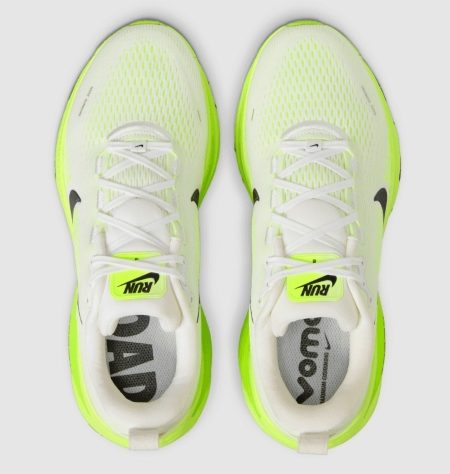
My field card: the exact versions and miles
| Detail | Nike Vomero 18 | ASICS Gel-Nimbus 28 |
|---|---|---|
| My running log | 175 miles | 260 miles |
| My size | Men’s US 10.5 | Men’s US 10.5 |
| Listed drop | 10 mm | 8 mm |
| Midsole construction | ZoomX top layer with ReactX underneath | FF BLAST PLUS cushioning with rearfoot PureGEL |
| My ride cue | Taller-feeling heel and a more directed roll | Calm, substantial cushion with a centered feel |
| First fit check | Tongue and instep pressure | Forefoot room and heel lock |
| Long-run log | Up to 14 miles | Up to 17 miles |
Those 435 miles are separate training records, not a controlled 435-mile test. Nimbus has the older log, so I know its wear and late-run behavior more fully. I use that difference in evidence maturity when the two pairs feel close.
Why two tall shoes do not run alike
Vomero 18: two foams and an assertive transition
Vomero 18 stacks a ZoomX layer above ReactX. On my foot, it feels substantial at landing and then asks me to move through a noticeable rocker. I can settle into an 8:15 boardwalk rhythm and feel the shoe organize the transition. That makes an easy run efficient for me when the rearfoot meets the ground where the shoe expects it. My 175-mile Vomero 18 review covers that pair in more detail.
I would not sell it as a pure marshmallow. Two soft-sounding foam names do not guarantee a uniformly soft step; the carrier layer, sole width, and speed of compression all matter. A runner who enjoys the guided roll may love it. Another runner may feel the heel arrive too early or the platform steer them. I test that on a mild road crown, not only a level shop floor.
Nimbus 28: space and a steadier easy rhythm
My Nimbus 28 has been the pair I trust after a demanding week. Following a 50-mile training week, I took it through 14 recovery miles on the boardwalk and appreciated how little thought it demanded from tired legs. FF BLAST PLUS and PureGEL describe its construction; my reason for choosing it is the way its upper and platform let me settle at easy effort without fighting for toe room. My Nimbus 28 review gives the single-shoe detail.
High stack does not mean I can ignore the surface. A detour into loose sugar sand made the Nimbus feel tall and awkward under lateral corrections. I would not make that a road verdict; I would keep a high-cushion road shoe on the surfaces it serves best. Its upper also needs a warm-foot test, because roomy at the front and secure at the heel are separate questions.
The listed 10 mm versus 8 mm drop is only one clue
Vomero 18 lists 10 mm from heel to forefoot, while Nimbus 28 lists 8 mm. That difference is real on paper, yet heel compression, bevel, rocker timing, and where I load the sole can change the sensation more than a ruler reading. I can feel the Nike’s rearfoot and guided roll differently from the ASICS transition even before I look up either number.
I do not use drop to prescribe away pain. If I rotate between these shoes, I watch how the calves, heel, and foot placement respond over a normal session. A new ache or changed gait is a reason to stop and reassess fit and training load, not proof that one brand is wrong for everyone.
Which one goes into each training day?
| Session | Vomero 18 in my use | Nimbus 28 in my use | My pick |
|---|---|---|---|
| Recovery jog | Protective, but I feel its geometry | My calmer post-workout option | Nimbus |
| Ordinary easy run | Smooth when the heel roll suits me | Easy to settle and hold effort | Fit decides |
| Long aerobic run | Has handled up to 14 miles in my log | Has handled up to 17 miles in my log | Nimbus on current evidence |
| Moderate progression | Can move, but still a substantial trainer | Can follow pace, but not a workout specialist | Neither as first choice |
| Fast intervals | Too much shoe for my preferred turnover | Too much shoe for my preferred turnover | Neither |
| Walking mixed with running | Try the two-foam feel at walking pace | Check whether the tall platform feels natural | Walk in both |
These are effort categories, not a fixed minutes-per-mile chart. A shoe that makes me run harder than the plan calls for has failed the recovery job, however pleasurable its first bounce. My daily trainer versus tempo shoe guide explains why I keep a faster option separate.
Fit after warm-up is the first veto
In my US 10.5, Vomero secures the heel and contains the midfoot closely. Nimbus leaves me more forefoot expansion while its padded rearfoot holds well. Neither same-size label predicts your fit. I check horizontal toe width, vertical space over the nails, instep pressure, and heel lift separately, using the socks I actually run in.
The Nike exposed a specific weak point for me on a humid 12-miler: its thin tongue shifted sideways and the lace knot pressed into the top of my foot. I would check tongue alignment and lace pressure before trusting it on another warm long run. In the Nimbus, I make sure the knit still holds my heel when the front has enough room. If I need to overtighten either shoe to keep the foot centered, I start again with size or last shape. My running-shoe fit checklist gives the complete process.
My seven-minute store test
- Stand in normal running socks and check front and vertical toe clearance.
- Walk slowly to compare heel transitions before judging running cushion.
- Jog easily until the first-step novelty fades.
- Turn broadly both ways and notice heel movement or sidewall pressure.
- Lift cadence briefly, then return to planned easy effort.
- Check the Nike tongue and both pairs’ instep after the foot warms.
- Name the exact weekly session the winner will improve.
Late-run control, grip, and durability
Both are neutral road shoes. On my familiar paved surfaces, Nimbus is the one I trust more to stay centered as my legs tire. That judgment has a boundary: on loose sugar sand its tall platform asked me to make small foot-placement corrections, so I would not carry a road-control verdict over to unstable ground. Vomero can feel secure when its heel geometry suits my landing, but I would check it on mild camber before buying. Neither is a substitute for a support-focused model if a runner needs more guidance. For a distinct support comparison, my Kayano 32 versus Nimbus 28 guide asks the right next question.
I separate dry asphalt from wet paint, metal covers, damp wood, and sand. A compound name alone cannot certify traction on all of them. On a new surface I slow down and pay attention to the exact condition and pair age. My outsole-rubber guide explains that check.
At 175 miles in Vomero, my outsole has visible localized wear and the upper remains sound. At 260 in Nimbus, I see rubber smoothing and foam creasing but no upper failure. I cannot honestly turn two different pair ages into a universal durability winner or a replacement-mileage promise. I repeat a familiar route as wear builds and ask whether the fit and ride still do the assigned job.
Who should buy which?
- Buy Vomero 18 when you want a tall dual-foam trainer with a pronounced forward transition, and its heel and tongue fit your stride without pressure.
- Buy Gel-Nimbus 28 when easy or recovery mileage dominates your week and you want more forefoot room with calm, centered late-run behavior.
- Buy neither if the upper fails after warm-up, a tall platform demands corrections, or your missing shoe is really for fast workouts.
- Keep your current pair if it already covers long and easy road miles without a problem.
I would rarely buy both for a small rotation; their main jobs overlap. My rotation guide helps me decide whether a second cushioned trainer adds a true role. If the answer is only “another soft shoe,” I keep the money.
FAQ: Vomero 18 vs Gel-Nimbus 28
Is Vomero 18 or Nimbus 28 better for recovery runs?
I choose Nimbus 28 after demanding training because it helps me hold a quiet easy rhythm and gives my forefoot room. Vomero 18 is a valid alternative when its more directed roll fits the runner better.
Which feels softer?
I would not decide by a foam name or a standing test. Vomero has a soft ZoomX top layer over ReactX, while Nimbus pairs FF BLAST PLUS with rearfoot PureGEL. My Nimbus feels calmer on easy runs; Vomero feels more structured through its transition.
Which is better for long runs?
My Nimbus 28 log reaches 17 miles and my Vomero 18 log reaches 14. I start with Nimbus for an unhurried long road run, then let late-run fit and control decide for another foot.
Are both stability shoes?
No. Both are neutral high-cushion road shoes. A secure upper or broad base can feel centered without providing the specific guidance of a support model.
Which has more room in the toe box?
Nimbus 28 gives my US 10.5 foot more comfortable expansion in the front. I still check heel hold and vertical toe space after warm-up rather than judging width alone.
Do I need both in a rotation?
Usually not. Their recovery, easy, and long-road roles overlap. I would buy both only if each has a clearly different job on my own foot and neither duplicates an existing pair.
My final verdict
Today I would buy Gel-Nimbus 28 for the runner whose main need is calm recovery and long easy road mileage. I would choose Vomero 18 for the runner who enjoys a more guided heel-to-toe roll and passes its tongue and instep fit test. My 175- and 260-mile logs make that a considered choice, but the final ten minutes of your own intended run should settle the purchase.

Written by Ken — 12 years of running, 12,500+ miles, 63 shoes tested, 36 races from 5Ks to a 50K ultra. I run 30–40 miles a week on the Atlantic City Boardwalk and review every shoe with real training miles, not one-run demos. More about me →