
For one road-race shoe that can cover both distances, I start with the Nike Vaporfly 4. On a corner-heavy 5K, I would compare it with the adidas Adizero Takumi Sen 11; for a flowing 10K, I would also test the ASICS Metaspeed Sky Tokyo. The right answer changes with the course and the foot inside the shoe.
I have logged miles in the first four models below. For the other six, I give a design-and-fit shortlist—not a fictional run report.
Quick Picks: My Top 3 for 5K and 10K
| Race need | My pick | Why I shortlist it | Price |
|---|---|---|---|
| One pair for 5K and 10K | Nike Vaporfly 4 | Quick transition with enough race range | Check price → |
| A bend-heavy 5K | adidas Adizero Takumi Sen 11 | Precise placement when I change direction | Check price → |
| A flowing 10K | ASICS Metaspeed Sky Tokyo | Keeps my longer-rep rhythm organized | Check price → |
These are road-racing picks. For a track meet, I check the current footwear rules and the oval’s surface separately. If you are choosing a first fast shoe for training as well as racing, the Magic Speed 5 or newly released Endorphin Speed 6 may be more useful than a pure racer.
10 Best Running Shoes for 5K and 10K: In-Depth Reviews
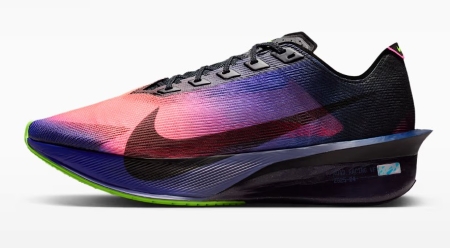
1. Nike Vaporfly 4 — Best single race shoe for both distances
| Best race job | Ride | Evidence | Main trade-off |
|---|---|---|---|
| Road 5K and 10K | Carbon-plated, light road racer | 299 miles logged in this version | Close fit and narrow-feeling platform |
If I had to pack one pair before seeing whether a race course favors the 5K or the 10K, this would be it. The Vaporfly 4 has a light, quick transition that lets me change pace without hauling a broad platform through every turn. That versatility is why it leads my list; it is not a claim that it is the fastest shoe for every foot.
My 299-mile log in this exact version includes fast work long enough to reveal the fit, not just a fresh-out-of-box impression. At 5K effort I value how quickly it lets me get back over the forefoot. At 10K effort I value that the cushioning does not feel like an abrupt compromise in the later miles. On my US 10.5 D foot I lace the heel deliberately before the warm-up; the upper is secure, but I would never use extra lace tension to solve a shape mismatch.
I would compare it with the Takumi Sen on a course full of sharp bends. A close race fit can be helpful on an open, dry road and troublesome if your forefoot needs more room or the course is cambered. My mileage is a record of my use, not a replacement-life promise for another runner.
My call: My first try-on for one road racer that must cover both distances. I keep it only if the heel stays quiet and my foot lands confidently through a fast turn.
What I do not like: The snug fit and focused platform will not flatter every foot. It is an expensive answer if you mainly need a workout shoe.
2. adidas Adizero Takumi Sen 11 — Best for a bend-heavy 5K

| Best race job | Ride | Evidence | Main trade-off |
|---|---|---|---|
| Technical road 5K; fast 10K if fit holds | Short-race geometry with EnergyRods | 270 miles logged in this version | Close midfoot fit and less cruising comfort |
A tight 5K course can make a beautifully bouncy shoe feel cumbersome. The Takumi Sen 11 earns its place because I can place my foot precisely when the road changes direction, then get back to pace without a long settling phase. That matters more to me than an impressive first straightaway.
I have 270 miles logged in this version, much of it around faster road repetitions. It feels more purpose-built for short racing than a soft daily trainer. I check the close midfoot in the exact thin socks I will race in: enough hold for the final turn, no pressure across the top of the foot. For a 10K, I add a longer race-pace segment to find out whether that secure fit remains comfortable rather than assuming a good 5K fit will carry twice as far.
On wet paint, a sloped intersection or a crowded turn, I still rehearse grip and placement. No model name guarantees traction on every surface. If a runner cannot tolerate its close fit, I would move to a roomier race option before trying to stretch the shoe by sizing long.
My call: My first comparison against the Vaporfly for a turn-heavy 5K. I would race the 10K in it only after a longer goal-pace test.
What I do not like: A narrow or pressured midfoot can spoil the race. It is less relaxed than a cushioned 10K cruiser.
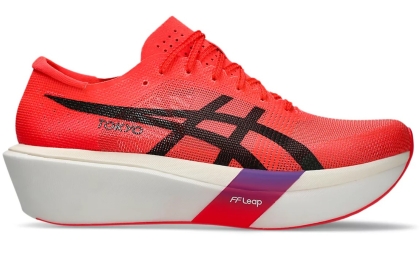
3. ASICS Metaspeed Sky Tokyo — Best for a flowing 10K
| Best race job | Ride | Evidence | Main trade-off |
|---|---|---|---|
| Open-road 10K; fast, straight 5K | Carbon racer with stride-oriented geometry | 197 miles logged in this version | High-energy ride needs matched-effort comparison |
The Sky Tokyo is the shoe I reach for when an open course lets me build and hold speed rather than brake for the next corner. It feels most persuasive to me in longer reps: when my stride opens naturally, the platform supports a smooth forward rhythm instead of asking me to increase turnover artificially.
My 197-mile log in this exact version gives me more than a showroom reaction. Yet my experience does not prove a universal ‘stride runner’ rule. I compare Sky and Edge at the same effort, in the same session when possible, and look at the last two repetitions. The right shoe lets me stay organized when I would otherwise reach ahead or tighten my shoulders. That late-rep answer matters more for a 10K than a few spectacular seconds at the start.
The Sky is a premium, race-specific purchase. I would not tell a runner with a compact, quick step that they must lengthen it to suit the shoe; I would let the Edge or another model win the trial.
My call: Choose it for a flowing 10K when matched-effort reps feel smoother than in the Edge Tokyo—not because a stride label describes you.
What I do not like: Less appealing for stop-start courses, and the ride can tempt an overlong step if the geometry does not match you.
4. ASICS Metaspeed Edge Tokyo — Best for compact turnover
| Best race job | Ride | Evidence | Main trade-off |
|---|---|---|---|
| 10K or 5K at quick cadence | Carbon racer with turnover-oriented geometry | 113 miles logged in this version | Fit and rhythm must beat Sky head-to-head |
The Edge Tokyo is not a consolation prize for runners who fail the Sky. When my speed comes from getting the next foot down promptly, it can feel cleaner and less demanding than asking the stride to open. That distinction is especially useful across a 10K, where small disruptions accumulate.
I logged 113 miles in this version, including 10K-paced work. My decisive check is a paired session with the Sky, not a cadence number from a watch. I use the same route, similar effort and the same socks; then I ask which shoe lets me hold a relaxed posture in the final interval. The Edge stays in my shortlist when it makes the quick step feel ordinary rather than forced.
A short store jog cannot settle this comparison. I also check that the upper keeps the heel in place without narrowing the forefoot. A secure race fit should disappear from attention after the gun, not demand periodic readjustment.
My call: My pick over the Sky only when a matched-effort workout confirms a more repeatable rhythm.
What I do not like: Its specialist geometry will not help a runner who has to alter their natural mechanics to feel it work.
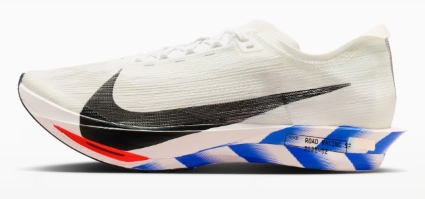
5. Nike Streakfly 2 — Best short-race specialist
| Best race job | Ride | Evidence | Main trade-off |
|---|---|---|---|
| Road mile and sharp 5K | Low-mass carbon short racer | Design-and-fit shortlist; no personal mileage log | Less 10K forgiveness |
For an all-out 5K, I would consider the Streakfly 2 before assuming a marathon-flavored supershoe is automatically better. Its light, stripped-back build is meant for the rapid changes of a shorter race. The point is not that every runner is faster in less shoe; it is that less shoe can be easier to place when the pace and corners get sharp.
I have not logged personal miles in this version. My shortlist judgment rests on its design and the race job it is built to do. To earn a place in my race bag, it would need to pass a workout with 5K-paced repetitions, a genuine bend and the final acceleration after I am already tired. I would check heel security and forefoot room after the warm-up, when the foot has expanded.
For a 10K I would demand more: a sustained goal-pace block that proves the direct feel stays comfortable beyond the first fast miles. If I also race a half marathon, the Vaporfly is the more sensible single purchase.
My call: A targeted 5K option for runners who prefer a direct, low-mass race feel and can verify the fit at speed.
What I do not like: More specialized than most runners need; 10K comfort is a question to test, not a given.
6. New Balance FuelCell SuperComp Pacer v2 — Best lower-profile carbon option
| Best race job | Ride | Evidence | Main trade-off |
|---|---|---|---|
| Turn-heavy road 5K; controlled 10K | Carbon plate in a relatively grounded racer | Design-and-fit shortlist; no personal mileage log | Less plush protection than tall racers |
Some runners step into a tall supershoe and lose the road beneath them. The SC Pacer v2 is my alternative to try when precise placement is worth more than a deeper, softer stack. For a 5K with repeated direction changes, that lower-feeling stance is a practical advantage—provided the shoe itself fits.
I have not logged personal miles in this version, so I would not call it my tested fastest pick. I would put it next to the Takumi Sen 11 on the intended course, then run a controlled 180-degree turn and a sustained 10K-pace section. If it lets me land under my body and accelerate cleanly out of the bend, it has earned attention. If the forefoot pinches, no amount of carbon responsiveness rescues it.
The Pacer is a race tool rather than an all-purpose recovery trainer. I would be cautious recommending it for a first 10K to someone who knows they need a more protective platform late in the race.
My call: Try it when a tall race shoe feels vague on turns, then let a course-specific workout decide.
What I do not like: A more grounded ride can ask more of the legs; fit and 10K protection are individual.
7. ASICS Magic Speed 5 — Best workout-to-race value

| Best race job | Ride | Evidence | Main trade-off |
|---|---|---|---|
| Intervals, tune-ups, 5K and 10K | Plated trainer/racer crossover | Design-and-fit shortlist; no personal mileage log | Less specialized than a flagship racer |
I would rather see a runner arrive at the start line in a familiar shoe than buy an unfamiliar flagship racer because its specifications look quicker. The Magic Speed 5 is the practical plated option in this list: a pair that can take repeated goal-pace sessions, a tune-up and the actual race.
This is a design-based recommendation; I have not built a personal mileage log in the Magic Speed 5. The current version’s lighter, lower setup and reworked plate make it relevant for the 5K and 10K, but I would still test it after a full warm-up. I want the plate to feel useful at pace without making easy recovery jogs awkward. I also want the upper to hold through the final corner without lace pressure.
The value argument has a limit. If a side-by-side race-pace session shows that a dedicated racer feels materially smoother and the budget allows it, I would buy the racer. If not, the workout miles and race-day familiarity are a strong reason to keep this one.
My call: My first plated try-on for the runner buying one fast pair for both training and racing.
What I do not like: Not as stripped-down or aggressive as a pure race shoe; the plate feel may still be too directive for some runners.
8. Brooks Hyperion Elite 6 — Best secure premium alternative
| Best race job | Ride | Evidence | Main trade-off |
|---|---|---|---|
| Road 10K; fast 5K if it corners well for you | Carbon SpeedVault+ plate, DNA GOLD foam | New-version design assessment; no personal mileage log | Premium price; 5K handling needs a trial |
The Elite 6 replaces the Elite 5 in my current shortlist, but I will not pretend a new number guarantees a better 5K. Brooks redesigned the premium carbon racer around an updated DNA GOLD platform and SpeedVault+ plate. Its low listed mass makes it a serious 10K candidate; the buying question is whether its race fit stays secure at my own pace and through my own corners.
I do not have logged miles in the Elite 6. I would compare it with the Vaporfly in a session that includes at least one longer 10K-pace interval and a tight turn. I care about the heel and midfoot staying quiet when I accelerate again, then about the ride still feeling composed as the repetition stretches. The 5K case is weaker until that corner test is passed; a highly cushioned racer is not automatically nimble just because it is light.
This is also a specialist-priced shoe. I would not pay for it to do ordinary easy miles, and I would check the return policy and fit rather than extrapolate from reviews of the Elite 5.
My call: A premium 10K alternative to the Vaporfly if its updated fit and platform work better for your foot; do a bend-heavy test before making it a 5K pick.
What I do not like: I cannot transfer Elite 5 durability or ride impressions to the 6, and the price needs a genuine race-day advantage to justify it.
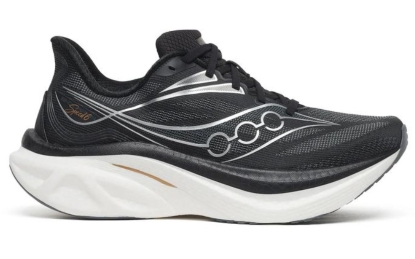
9. Saucony Endorphin Speed 6 — Best one-pair training and racing choice
| Best race job | Ride | Evidence | Main trade-off |
|---|---|---|---|
| Speed workouts, community 5K and 10K | PWRRUN PBX foam and redesigned nylon plate | New-version design assessment; no personal mileage log | Less race-specialized than top carbon picks |
If I can own only one faster shoe, I would start here rather than spend all my budget on a race-only pair. The Speed 6 is the current version: Saucony changed the foam and redesigned the nylon plate, so it is not a Speed 5 with a fresh upper. Its intended overlap—fast training and racing—is exactly what many 5K and 10K runners need.
I have not logged miles in the Speed 6, and my prior Speed 5 experience cannot verify its new fit or ride. I would run it through a week of controlled work: short 5K-paced reps, a longer 10K-pace segment, and easy warm-up and cool-down miles. That sequence exposes whether the rocker and plate feel natural across the entire session. I would also test a turn when tired, not only on the first stride.
For a fast, flat 5K where every second matters, a lighter dedicated racer may win. For the runner who wants to train repeatedly in the race shoe and show up confident in its fit, the Speed 6 can be the smarter purchase if the new version passes the try-on.
My call: My practical one-pair shortlist for workouts and road racing—conditional on testing this new version rather than trusting Speed 5 miles.
What I do not like: It is not as focused as a dedicated short-race shoe, and the new foam-and-plate combination needs individual testing.
10. adidas Adizero Adios 9 — Best direct traditional fast-road feel
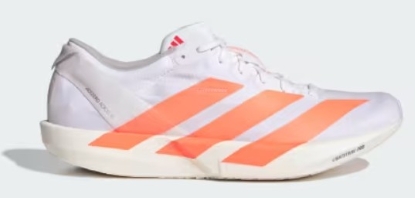
| Best race job | Ride | Evidence | Main trade-off |
|---|---|---|---|
| Low-stack-feeling 5K; 10K if protection is enough | Fast, relatively direct road shoe | Design-and-fit shortlist; no personal mileage log | Less cushioning than high-stack racers |
The Adios 9 is here for a runner who has tried modern supershoes and still wants to feel the road. A direct platform can make foot placement and pace changes easier to judge, especially on a local 5K with repeated turns. I do not equate more foam with a better race when the runner feels unsteady on it.
I have no personal mileage log in this version, so I would compare it with a plated option rather than declare a winner from the construction. My test is a controlled 5K-pace interval followed by a longer segment close to 10K effort. If my calves tighten or the forefoot begins to feel beaten up before the latter ends, I would choose more protection. If my form remains light and the corners feel cleaner, its traditional feel has a real purpose.
Adidas currently still sells the Adios 9; I would not swap in a rumored successor. I would also make sure a retailer’s listing is the performance road shoe, not a similarly named lifestyle model.
My call: A worthwhile alternative when your fastest relaxed stride comes from direct ground feel rather than a high rocker.
What I do not like: The trade for that connection is less cushioning, especially late in a 10K.
How I Tested and Verified These Shoes
I rank a race shoe by what happens after the exciting first stride. I use a warm-up, accelerations, a 5K-paced repetition, a longer 10K-pace segment and a final fast rep with a realistic bend. I listen for heel movement, toe pressure, awkward braking and whether I can keep my posture when tired. For my first four picks, the miles stated above are from my log in those exact versions; repeated use is useful evidence, not a controlled lab trial or a universal durability guarantee.
| Decision check | What I ask | Why it changes the ranking |
|---|---|---|
| 5K turn and acceleration | Can I plant, turn and regain pace without sliding? | A nimble race shoe can beat a bouncier one on a technical course. |
| 10K rhythm | Is the final sustained block as organized as the first? | Protection and fit matter more as the race lengthens. |
| Warm-foot fit | Any heel lift, lace pressure or toe squeeze after warming up? | A secure race fit must not become a distraction. |
| Evidence boundary | Have I run this exact version, or am I assessing its design? | New releases deserve a new test; predecessor miles do not transfer. |
For the six shoes without a personal mileage log, my recommendation is narrower: I identify the course and runner they might suit, plus the test that could disqualify them. I would not use a brand’s marketing claim, a plate label or a watch-derived stride category as proof that a shoe will make you faster. My speedwork-shoe guide covers the training side of the same decision.
How to Choose a 5K or 10K Running Shoe
I start with the course, not the carbon plate. A flat, flowing 10K rewards a ride I can hold for a long block; a crowded 5K with multiple tight corners makes secure foot placement more valuable. If rain is likely, I rehearse a controlled turn on a similar surface. I do not assume a dry-road favorite will behave the same way on wet paint.
Then I choose between a specialist racer and one fast pair for the whole training cycle. If I already own a comfortable daily trainer and race regularly, a dedicated racer can make sense. If I need one pair for intervals, tune-ups and the race, I compare plated workout shoes first. My carbon-plated comparison, nylon-plated guide and non-plated racing guide separate those jobs.
Fit is my veto. I try the shoe in race socks after warming up, check length and width independently, and run a turn at speed. A tighter upper is not a faster upper if it numbs toes or pushes me onto the edge of the platform. My running-shoe fit guide helps with that check. Finally, I match the shoe to a realistic race plan; the opening mile should follow the work I have practiced in my 5K pacing guide or 10K training plan.
Full Comparison Table
This table is a shortlist by race job, not a claim that I laboratory-tested all ten or that one shoe is universally fastest. “Logged” means miles in this exact version; “design” means I still want a runner-specific try-on and workout.
| Shoe | Where I would use it | Evidence | Reason to pause |
|---|---|---|---|
| Nike Vaporfly 4 | Road 5K and 10K | 299 miles logged in this version | Close fit and narrow-feeling platform |
| adidas Adizero Takumi Sen 11 | Technical road 5K; fast 10K if fit holds | 270 miles logged in this version | Close midfoot fit and less cruising comfort |
| ASICS Metaspeed Sky Tokyo | Open-road 10K; fast, straight 5K | 197 miles logged in this version | High-energy ride needs matched-effort comparison |
| ASICS Metaspeed Edge Tokyo | 10K or 5K at quick cadence | 113 miles logged in this version | Fit and rhythm must beat Sky head-to-head |
| Nike Streakfly 2 | Road mile and sharp 5K | Design-and-fit shortlist; no personal mileage log | Less 10K forgiveness |
| New Balance FuelCell SuperComp Pacer v2 | Turn-heavy road 5K; controlled 10K | Design-and-fit shortlist; no personal mileage log | Less plush protection than tall racers |
| ASICS Magic Speed 5 | Intervals, tune-ups, 5K and 10K | Design-and-fit shortlist; no personal mileage log | Less specialized than a flagship racer |
| Brooks Hyperion Elite 6 | Road 10K; fast 5K if it corners well for you | New-version design assessment; no personal mileage log | Premium price; 5K handling needs a trial |
| Saucony Endorphin Speed 6 | Speed workouts, community 5K and 10K | New-version design assessment; no personal mileage log | Less race-specialized than top carbon picks |
| adidas Adizero Adios 9 | Low-stack-feeling 5K; 10K if protection is enough | Design-and-fit shortlist; no personal mileage log | Less cushioning than high-stack racers |
Frequently Asked Questions
Can I use the same running shoe for a 5K and a 10K?
Yes. I choose one pair if its fit stays secure at 5K pace and its cushioning still works late in a 10K. Vaporfly 4 is my versatile race-first pick; Endorphin Speed 6 is the training-and-racing alternative if its new fit passes a workout.
What matters more for a 5K shoe: weight or grip?
I will give up a few grams for secure foot placement and grip on the course I actually race. A lightweight shoe that makes me slow down through turns has missed the point.
Do I need a carbon plate for a 5K or 10K?
No. A plate can help a shoe deliver its intended ride, but fit, control and sustainable pace matter more than the plate label. I compare a plated option against a shoe I already run well in.
Should I race a 5K in the same shoe I use for workouts?
Often, yes. A familiar shoe such as Magic Speed 5 or Endorphin Speed 6 can be a better choice than an untested specialist. If a dedicated racer clearly feels better in repeated goal-pace work, I may keep it for race day.
How should a 5K or 10K race shoe fit?
I want the heel and midfoot secure without toe squeeze, numbness or pressure across the top of the foot. I test in race socks after warming up; buying extra length is not a cure for insufficient width.
How do I test a new shoe before race day?
I use an easy warm-up, several strides, repeats at planned race pace and at least one realistic turn, then inspect fit in the final repetition. For a 10K I add a longer sustained block. I do not debut an unfamiliar pair on the start line.
Are road racing shoes appropriate for a track 5K or 10K?
I chose these for road races. For a sanctioned track meet I check the current event rules and approved footwear before assuming a road racer is allowed or practical on the oval.
What if the course is wet and turn-heavy?
I rank fit, predictable traction and cornering ahead of bounce. I rehearse on a similar surface in race socks and do not promise any outsole will grip every wet painted line.
Will the newest version automatically be better than the old one?
No. I replaced Brooks Hyperion Elite 5 and Saucony Endorphin Speed 5 here because the 6 versions are available, not because an unrun update is guaranteed to improve my race. I test the current fit and ride independently.
My Final Recommendation
If I needed one race shoe for both road distances, I would begin with the Vaporfly 4 and see whether its fit remains quiet through a full rehearsal. I would switch to the Takumi Sen 11 for a bend-heavy 5K if its close midfoot worked for me, or compare the Metaspeed Sky Tokyo with the Edge at matched effort for a flowing 10K. For one pair to train and race in, I would test Magic Speed 5 against the new Endorphin Speed 6; I would not assume the new Saucony rides like the 5. The winner is the shoe in which I can run my last hard repetition as cleanly as my first.
Before I buy, I run the course-specific workout, check the fit with warm feet, and make sure the shoe leaves enough budget for the training that matters more than gear. Race morning gets a familiar pair, familiar socks and a pace plan I have already practiced.

Written by Ken — the recreational distance runner behind NextGait. I use 12 years of running experience to turn races, field tests, and repeatable workouts into a useful pace range without letting one number run the week. More about me →