
The best running shoes for flat feet are not automatically the shoes with the biggest arch bump or the strongest stability label. A low arch is a foot shape. Overpronation is a movement pattern, and many runners with flat feet move comfortably in neutral shoes. I put arch shape, dynamic pronation, and shoe response in context in the running biomechanics guide. For a fuller framework covering arch, width, volume, flexibility, and asymmetry, use my running foot types guide.
The useful question is whether the shoe fits your full weight-bearing foot and stays comfortable and centered once you start running.
I am Ken, a 5-foot-10, 182-pound runner who mildly overpronates. My ranking is built around what I can actually assess in a shoe: pressure under the arch, width after the foot spreads, heel security, platform movement, rocker timing, and whether support becomes intrusive over a run. I do not diagnose flat feet from a footprint, and a shoe review cannot replace a clinical exam.
What is in this guideClick to expand
- Quick Picks
- Ken’s Ranking Rule
- Evidence at a Glance
- Flat Feet vs. Overpronation
- Flexible vs. Rigid Flat Feet
- Choose Your Support Level
- Top 10 Reviews
- Comparison Table
- Speed, Racing, and Trail
- 10-Minute Fit Test
- Orthotics and Insoles
- Strength and Training Load
- When to See a Clinician
- Durability and Replacement
- FAQ
- Final Verdict
Quick Picks: Best Running Shoes for Flat Feet
Start with the support category that matches your running motion, then solve width and volume. Product names in this table use affiliate links. No internal links are used in Quick Picks.
| Shoe | Best for | Why it ranks |
|---|---|---|
| Brooks Adrenaline GTS 25 | Best overall | it combines unobtrusive guidance, dependable heel hold, a forgiving 10mm drop, and the deepest width range in this ranking without feeling like an old hard-post stability shoe. |
| ASICS GEL-Kayano 32 | Best premium adaptive stability | its broad platform and 4D GUIDANCE SYSTEM geometry add support progressively while preserving a cushioned ride, and the Extra Wide option solves fit problems the geometry cannot. |
| Saucony Guide 19 | Best natural-guidance daily trainer | CenterPath uses a broad base and sidewall geometry to guide the foot without an intrusive arch piece, making it a strong first stability shoe for runners unsure how much support they need. |
| New Balance Fresh Foam X 860v15 | Best for wide flat feet | it combines a 4E option with a stable rocker and a non-post support system, giving broad, low-arch feet enough platform and upper volume without forcing them into a longer shoe. |
| HOKA Gaviota 6 | Best max-cushion HOKA stability | its H-Frame, wide footprint, rocker, and multiple widths provide the most complete HOKA package for runners who want deep cushion plus guidance. |
| Brooks Glycerin GTS 23 | Best plush GuideRails support | it adds the same unobtrusive GuideRails concept as the Adrenaline to a softer, more premium platform, with 4E room for broad feet or higher-volume orthotics. |
| HOKA Arahi 8 | Best streamlined HOKA stability | it delivers HOKA’s current H-Frame support in a lighter, lower-bulk package, making it better for daily mileage when Gaviota feels excessive. |
| Brooks Ghost Max 3 | Best neutral option | flat arches do not automatically require correction, and Ghost Max 3 supplies a broad neutral base, controlled cushioning, orthotic room, and 4E fit without changing the runner’s motion. |
| ASICS GT-2000 14 | Best lighter-value stability | it provides meaningful guidance, an 8mm drop, Extra Wide availability, and lower weight than the premium stability shoes, without stripping away daily-training comfort. |
| Brooks Beast GTS 26 | Best maximum support and orthotic platform | its broad platform, 12mm drop, GuideRails, removable insole, and D-to-4E fit make it the clearest option when lighter guidance repeatedly proves insufficient or an orthotic needs a stable host shoe. |
10 Best Running Shoes for Flat Feet: In-Depth Reviews
Each shoe wins a defined job rather than a generic popularity contest. Read the fit and skip notes. They are the parts most likely to prevent an expensive mismatch.
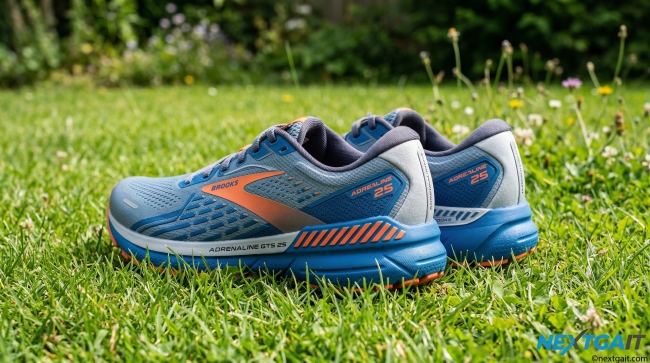
1. Brooks Adrenaline GTS 25 – Best overall
Brooks Adrenaline GTS 25 is best overall because it combines unobtrusive guidance, dependable heel hold, a forgiving 10mm drop, and the deepest width range in this ranking without feeling like an old hard-post stability shoe.
| Guidance level | Drop | Weight | Platform | Widths |
|---|---|---|---|---|
| Moderate guidance | 10mm | 10.6 oz / 300.5g (men’s reference size) | DNA LOFT v3 with GuideRails support | B, D, 2E, and 4E for men in the US |
The Adrenaline GTS 25 is the shoe I would put on the table first, not the shoe I would force onto every flat foot. Its GuideRails sit around the heel and only become obvious when the foot moves far enough to engage them.
On a steady road run, the result feels more like a well-centered daily trainer than a corrective device.
The 10mm drop and secure rearfoot make it especially easy for runners moving from conventional trainers. DNA LOFT v3 is soft enough for daily mileage, but the base does not feel vague when I turn or land slightly off center.
That balance matters more to me than a dramatic arch contour.
Fit is the decisive advantage. Men’s B, D, 2E, and 4E options let you solve width without buying excess length.
The shoe is less exciting at tempo pace, and runners who hate any guidance may prefer Ghost Max 3, but its lack of surprises is exactly why it wins overall.
Ride: Familiar, controlled, and easy to place.
Fit: Start true to size. Compare widths in the same length and reject any version that leaves the arch sitting on the edge of the insole.
What I like: Guidance is present without a hard medial post; Excellent heel and midfoot hold; B-to-4E men’s sizing; 10mm drop is easy to transition into.
What I do not like: Ride is more dependable than lively; Heavier than a neutral speed-oriented trainer; GuideRails can feel unnecessary to stable neutral runners.
Who should skip it: Skip it if a neutral shoe already stays centered or if the GuideRails feel noticeable during an easy jog.
Read my full Brooks Adrenaline GTS review.
2. ASICS GEL-Kayano 32 – Best premium adaptive stability
ASICS GEL-Kayano 32 is best premium adaptive stability because its broad platform and 4D GUIDANCE SYSTEM geometry add support progressively while preserving a cushioned ride, and the Extra Wide option solves fit problems the geometry cannot.

| Guidance level | Drop | Weight | Platform | Widths |
|---|---|---|---|---|
| Moderate-to-high adaptive guidance | 8mm | 10.5 oz / 298g (men’s reference size) | 4D GUIDANCE SYSTEM with FF BLAST PLUS and FF BLAST PLUS | Standard, Wide, and Extra Wide |
The Kayano 32 is my premium choice for the runner whose foot and shoe both drift inward late in a run. ASICS replaced the previous guidance language with 4D GUIDANCE SYSTEM, combining a firmer medial foam with geometry designed to respond as load increases.
The important part is not the trademark. It is that the medial side feels integrated instead of like a rigid wedge.
Underfoot, the dual-foam setup is protective and smooth rather than quick. The broad heel and midfoot make the tall stack feel calmer than it looks, while the 8mm drop avoids the low-drop calf demand of some max-cushion rivals.
I would use it for easy miles, long runs, and recovery days rather than intervals. For the footwear side of the buildup, see how I choose shoes for marathon training.
The upper has real volume options: Standard, Wide, and Extra Wide. Still, more room is not automatically better.
If the heel starts lifting in Extra Wide, move down a width before cinching the laces hard enough to irritate the instep.
Ride: Plush, substantial, and progressively supportive.
Fit: Try Standard and Wide at the same length. The medial side should feel quiet while jogging, not like a lump under the arch.
What I like: Support increases smoothly instead of feeling abrupt; Plush long-run cushioning; Wide and Extra Wide options; Stable for a tall platform.
What I do not like: Heavy and expensive; Too much structure for some runners; Not an agile workout shoe.
Who should skip it: Skip it if you want a light flexible trainer or if the support is obvious before fatigue appears.
Read my full ASICS Gel-Kayano review.
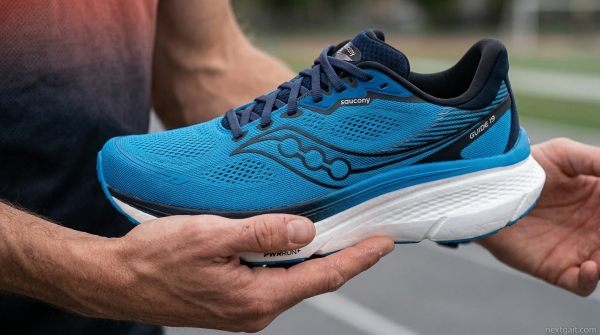
3. Saucony Guide 19 – Best natural-guidance daily trainer
Saucony Guide 19 is best natural-guidance daily trainer because CenterPath uses a broad base and sidewall geometry to guide the foot without an intrusive arch piece, making it a strong first stability shoe for runners unsure how much support they need.
| Guidance level | Drop | Weight | Platform | Widths |
|---|---|---|---|---|
| Light-to-moderate guidance | 6mm | 9.7 oz / 275g (men’s reference size) | 35/29mm PWRRUN with CenterPath geometry | Standard and Wide |
Guide 19 is the transition shoe in this group. It suits runners who feel unstable in a soft neutral trainer but do not want the weight or structure of a Kayano or Beast.
CenterPath relies on a broad platform, raised sidewalls, and a guided transition rather than a classic medial post.
The 35/29mm PWRRUN stack feels cushioned but not mushy. At easy pace, I notice the wide landing zone more than the support mechanics, which is a good sign.
The 6mm drop gives the shoe a smoother forward roll, though runners arriving from 10 or 12mm should introduce it gradually.
Standard and Wide cover many feet, but there is no extra-wide tier. The forefoot is accommodating rather than square.
If your flat arch spreads substantially under load, stand on the removable insole and check both edges before judging the upper.
Ride: Smooth, broad, and less corrective than traditional stability.
Fit: True to size for most runners. Use Wide for forefoot spill, not extra length, and check that the heel remains locked without a runner’s knot.
What I like: Geometry-led guidance feels natural; Lighter than many stability shoes; Broad and predictable landing; Good value for daily mileage.
What I do not like: No extra-wide option; 6mm drop may require adaptation; PWRRUN is not especially springy.
Who should skip it: Skip it if you need maximum motion control, 4E width, or a very soft ride.
Read my full Saucony Guide review.
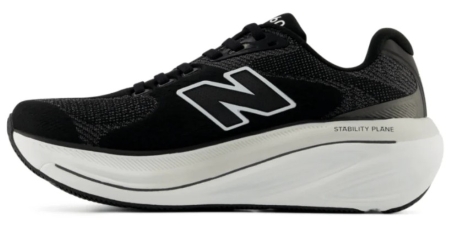
4. New Balance Fresh Foam X 860v15 – Best for wide flat feet
New Balance Fresh Foam X 860v15 is best for wide flat feet because it combines a 4E option with a stable rocker and a non-post support system, giving broad, low-arch feet enough platform and upper volume without forcing them into a longer shoe.
| Guidance level | Drop | Weight | Platform | Widths |
|---|---|---|---|---|
| Moderate guidance | About 8mm | About 11.8 oz / 335g (independent men’s US 9 measurement) | Fresh Foam X with a Stability Plane and rocker | B, D, 2E, and 4E for men |
The 860v15 earns this spot because width is often the first problem with a low, spreading arch. New Balance offers men’s B through 4E, and the Stability Plane sits within the midsole rather than building a hard block under the medial arch.
The result is support you feel as resistance to excess movement, not constant pressure.
Fresh Foam X gives the shoe a protective landing, while the rocker keeps its weight from feeling completely flat-footed. It is still a substantial trainer.
Independent men’s US 9 measurements are around 11.8 ounces, and New Balance’s displayed weight can vary by SKU and width, so I would not buy it for fast sessions.
Do not jump straight to 4E. Too much width lets the heel and midfoot swim, which cancels the stable platform underneath.
Choose the narrowest version that contains the entire forefoot without sidewall pressure.
Ride: Protective, guided, and deliberately substantial. Fit: Use the removable insole as a footprint template. Keep the normal length and compare D, 2E, and 4E side by side.
What I like: Useful B-to-4E men’s range; Stability Plane avoids a hard arch sensation; Rocker smooths the heavy build; Protective daily cushioning.
What I do not like: Heavy; Can feel warm and substantial; Too much width reduces upper security.
Who should skip it: Skip it if you want a light flexible shoe or if your foot moves securely in neutral trainers.
Read my running shoes for wide feet guide.
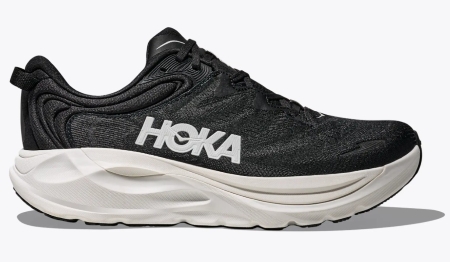
5. HOKA Gaviota 6 – Best max-cushion HOKA stability
HOKA Gaviota 6 is best max-cushion hoka stability because its H-Frame, wide footprint, rocker, and multiple widths provide the most complete HOKA package for runners who want deep cushion plus guidance.
| Guidance level | Drop | Weight | Platform | Widths |
|---|---|---|---|---|
| High cushioned guidance | 6mm | 10.25 oz (men’s reference size) | Broad max-cushion base with H-Frame support | Three men’s width options in the US |
Gaviota 6 is the HOKA I choose when a runner wants Bondi-like protection but feels the ankle working too hard inside neutral max cushion. The H-Frame wraps guidance around the platform instead of pressing a dense post into the arch.
On straight easy miles, the shoe feels broad and settled.
The rocker is useful when a stiff big toe or limited ankle motion makes a flexible shoe feel laborious. That same geometry can be wrong when the roll begins ahead of or behind your natural transition. For how rocker location, curvature, and stiffness change transition, read my running shoe rocker-geometry guide.
Jog before buying; walking around the store does not reveal rocker timing.
Three width options improve the odds of a clean fit. The penalty is bulk: this is a long-run and recovery shoe, not the model I would choose for quick direction changes.
Runners wanting a leaner HOKA should look at Arahi 8.
Ride: Plush, rockered, and confidence-building at easy pace.
Fit: Check rocker timing during a jog and walk down a ramp to test heel hold. Choose width before changing length.
What I like: Deep cushion with real guidance; Broad H-Frame platform; Multiple width options; Rocker works well at easy pace.
What I do not like: Bulky on turns; Rocker timing is individual; Too much shoe for stable neutral runners.
Who should skip it: Skip it if you want ground feel, flexibility, or one shoe for speed sessions.
Read my best cushioned running shoes guide.
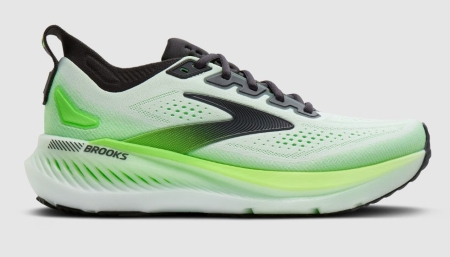
6. Brooks Glycerin GTS 23 – Best plush GuideRails support
Brooks Glycerin GTS 23 is best plush guiderails support because it adds the same unobtrusive GuideRails concept as the Adrenaline to a softer, more premium platform, with 4E room for broad feet or higher-volume orthotics.
| Guidance level | Drop | Weight | Platform | Widths |
|---|---|---|---|---|
| Moderate cushioned guidance | 8mm | 11.0 oz / 311.8g (men’s reference size) | DNA TUNED foam with GuideRails | D, 2E, and 4E for men |
The Glycerin GTS 23 is what I recommend when Adrenaline feels controlled but not cushioned enough. DNA TUNED uses different cell structures through the heel and forefoot, producing a softer landing and a more responsive toe-off.
GuideRails add boundaries without changing the shoe into a hard-post trainer.
I prefer it for long easy runs and recovery days, especially when a runner wants support only after the stride begins to wander. The 8mm drop is a useful middle ground.
It also gives the shoe a less abrupt heel-to-toe feel than high-drop Adrenaline.
The cost is weight and price. At 11 ounces, it is not nimble, and stable runners can buy the neutral Glycerin instead.
D, 2E, and 4E options are valuable, particularly when an orthotic needs more interior volume.
Ride: Soft at landing, controlled through transition.
Fit: True to size for most feet. With an orthotic, remove the stock insole and confirm the heel is not pushed above the counter.
What I like: Plush cushion with unobtrusive GuideRails; D-to-4E men’s sizing; Secure long-run upper; 8mm drop is versatile.
What I do not like: Heavy; Premium price; Less efficient for faster running; Neutral version may be enough.
Who should skip it: Skip it if you want a light trainer or do not need the GTS guidance system.
Read my full Brooks Glycerin GTS review.
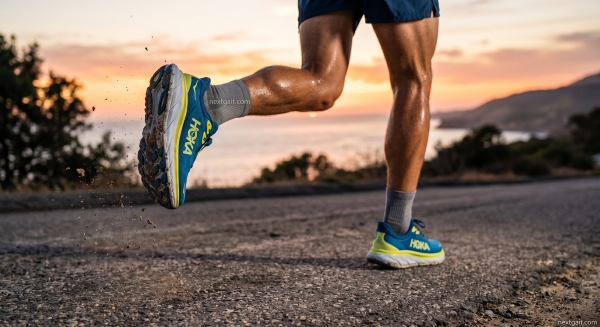
7. HOKA Arahi 8 – Best streamlined HOKA stability
HOKA Arahi 8 is best streamlined hoka stability because it delivers HOKA’s current H-Frame support in a lighter, lower-bulk package, making it better for daily mileage when Gaviota feels excessive.
| Guidance level | Drop | Weight | Platform | Widths |
|---|---|---|---|---|
| Moderate guidance | 8mm | 9.8 oz (men’s reference size) | H-Frame stability geometry | Three men’s width options in the US |
Arahi 8 is not a stripped Gaviota. It has its own firmer, more direct personality.
The H-Frame guides the foot within a broad chassis, and the 8mm drop makes this version easier to approach for runners coming from conventional daily trainers.
At 9.8 ounces, it changes pace more willingly than Gaviota 6 or Kayano 32. I still view it as a daily stability shoe rather than a workout model.
Its foam favors control over bounce, which will please runners who distrust soft platforms and disappoint runners expecting the classic plush HOKA sensation.
The multiple widths help, but HOKA shape remains specific. Check the medial midfoot and the little-toe side after several minutes of running.
A stable platform cannot rescue an upper that pinches a spreading forefoot.
Ride: Firm, guided, and more traditional than Gaviota.
Fit: Use the correct width and jog long enough for the foot to spread. No part of the H-Frame should feel like direct arch pressure.
What I like: Lighter than most stability shoes; H-Frame support feels integrated; 8mm drop is approachable; Three width choices.
What I do not like: Firm ride; Not as plush as HOKA branding suggests; Midfoot shape can be polarizing.
Who should skip it: Skip it if you want max cushion or if the medial midfoot feels narrow.
Read my full HOKA Arahi review.
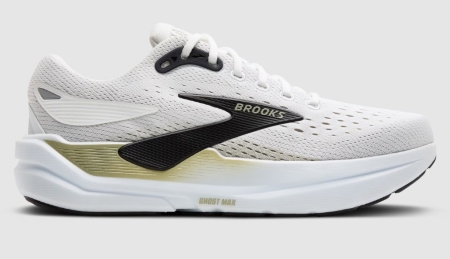
8. Brooks Ghost Max 3 – Best neutral option
Brooks Ghost Max 3 is best neutral option because flat arches do not automatically require correction, and Ghost Max 3 supplies a broad neutral base, controlled cushioning, orthotic room, and 4E fit without changing the runner’s motion.
| Guidance level | Drop | Weight | Platform | Widths |
|---|---|---|---|---|
| Neutral, inherently stable | 6mm | 11.2 oz / 317.5g (men’s reference size) | Broad DNA LOFT v3 base with GlideRoll rocker | D, 2E, and 4E for men |
Ghost Max 3 is the deliberate neutral inclusion. If your arches are low but your stride is comfortable and centered, adding guidance can solve a problem you do not have.
This shoe creates inherent stability through a broad base, firmer protective foam, and a rocker rather than through a corrective support system.
The GlideRoll shape reduces forefoot bending at easy pace and works well for long straight road runs. The shoe is heavy, but its transition feels smoother than the scale suggests.
I also like the removable insole and interior volume for runners bringing their own orthotics.
D, 2E, and 4E options make it useful for broad flat feet. The key is to distinguish stable from supportive: Ghost Max resists tipping because of geometry, but it will not provide the same medial guidance as Kayano, Adrenaline, or Beast.
Ride: Firm-protective, stable, and smoothly rockered.
Fit: Choose the width that contains the forefoot while keeping the heel secure. Confirm your foot bends where the rocker expects it to roll.
What I like: Stable without corrective support; D-to-4E sizing; Orthotic-friendly interior; Controlled rocker for easy mileage.
What I do not like: Heavy; Not designed for speed; 6mm drop and rocker require a short adaptation; No dedicated guidance.
Who should skip it: Skip it if you need clear pronation guidance or dislike a stiff rockered transition.
Read my Brooks Ghost review for a lower-stack alternative.
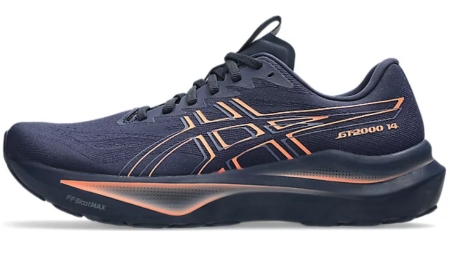
9. ASICS GT-2000 14 – Best lighter-value stability
ASICS GT-2000 14 is best lighter-value stability because it provides meaningful guidance, an 8mm drop, Extra Wide availability, and lower weight than the premium stability shoes, without stripping away daily-training comfort.
| Guidance level | Drop | Weight | Platform | Widths |
|---|---|---|---|---|
| Light-to-moderate guidance | 8mm | 9.52 oz / 270g (men’s reference size) | FF BLAST PLUS with 3D guidance geometry | Standard, Wide, and Extra Wide |
GT-2000 14 is the practical ASICS. It gives up some plushness and rearfoot mass versus Kayano, then returns a more agile ride and a friendlier price.
FF BLAST PLUS and the 3D guidance geometry keep the shoe smooth rather than rigid.
I like it for runners whose stability needs are moderate and who still want strides or short tempo segments in the daily trainer. The medial forefoot pod adds direction late in stance, but the shoe does not feel as controlling as Beast or as cocooned as Kayano.
Standard, Wide, and Extra Wide are a major strength. The cushioning is only moderate by current standards, so runners seeking a deep recovery-day ride may prefer Glycerin GTS or Gaviota.
Ride: Moderately cushioned, nimble, and quietly guided.
Fit: Start true to size and compare widths. The heel should remain secure with the lower eyelets relaxed.
What I like: Lighter than premium stability models; Quiet guidance; Extra Wide available; Useful across more paces.
What I do not like: Less plush for long recovery runs; Not maximum support; Upper can feel ordinary for the price.
Who should skip it: Skip it if you need maximum control or the deepest cushioning in the category.
Read my full ASICS GT-2000 review.
10. Brooks Beast GTS 26 – Best maximum support and orthotic platform
Brooks Beast GTS 26 is best maximum support and orthotic platform because its broad platform, 12mm drop, GuideRails, removable insole, and D-to-4E fit make it the clearest option when lighter guidance repeatedly proves insufficient or an orthotic needs a stable host shoe.
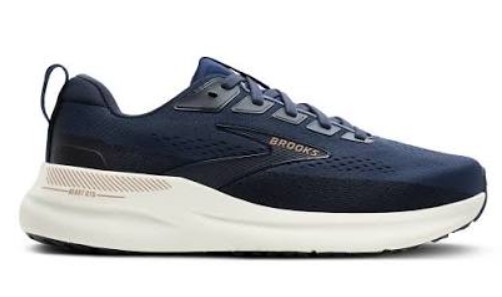
| Guidance level | Drop | Weight | Platform | Widths |
|---|---|---|---|---|
| Maximum guidance | 12mm | 12.5 oz / 354.4g (men’s reference size) | Broad base with GuideRails and orthotic room | D, 2E, and 4E for men |
Beast GTS 26 belongs at the end of the ranking because maximum support is a specific tool, not the default answer to flat feet. Its broad base and GuideRails resist movement more firmly than the shoes above.
For the runner who repeatedly collapses a softer platform or uses a substantial orthotic, that predictability can be valuable.
The 12mm drop reduces ankle dorsiflexion demand relative to lower-drop choices, but it also creates a more traditional heel-to-toe feel. At 12.5 ounces, the shoe is unapologetically heavy.
I would reserve it for easy running, walking, and cases where control matters more than versatility.
D, 2E, and 4E widths plus a removable insole make it easier to fit orthoses. Do not stack support blindly: a corrective insert on top of a strongly guided shoe can create unwanted pressure or shift the heel too high.
Ride: Firm, highly controlled, and built for predictability.
Fit: Bring the exact orthotic you use. Remove the stock insole, then check heel depth, arch pressure, toe room, and lateral stability while running.
What I like: Most controlled platform in the ranking; D-to-4E sizing; Good host for many orthotics; 12mm drop suits some calf or Achilles-sensitive runners.
What I do not like: Very heavy; Too corrective for many flat-footed runners; Firm and slow; Support can conflict with an orthotic.
Who should skip it: Skip it unless lighter guidance has been insufficient or a clinician has helped define the support requirement.
Read my best stability running shoes guide.
Full Comparison Table
Adrenaline GTS 25 is the balanced default, while Ghost Max 3 is the important neutral choice and Beast GTS 26 is the specialist maximum-support option. Reduce the list to two or three shoes before trying them under load.
| Shoe | Support approach | Drop | Widths | Best use | Main warning |
|---|---|---|---|---|---|
| Brooks Adrenaline GTS 25 | DNA LOFT v3 with GuideRails support | 10mm | B, D, 2E, and 4E for men in the US | Best overall | Skip it if a neutral shoe already stays centered or if the GuideRails feel noticeable during an easy jog. |
| ASICS GEL-Kayano 32 | 4D GUIDANCE SYSTEM with FF BLAST PLUS and FF BLAST PLUS | 8mm | Standard, Wide, and Extra Wide | Best premium adaptive stability | Skip it if you want a light flexible trainer or if the support is obvious before fatigue appears. |
| Saucony Guide 19 | 35/29mm PWRRUN with CenterPath geometry | 6mm | Standard and Wide | Best natural-guidance daily trainer | Skip it if you need maximum motion control, 4E width, or a very soft ride. |
| New Balance Fresh Foam X 860v15 | Fresh Foam X with a Stability Plane and rocker | About 8mm | B, D, 2E, and 4E for men | Best for wide flat feet | Skip it if you want a light flexible shoe or if your foot moves securely in neutral trainers. |
| HOKA Gaviota 6 | Broad max-cushion base with H-Frame support | 6mm | Three men’s width options in the US | Best max-cushion HOKA stability | Skip it if you want ground feel, flexibility, or one shoe for speed sessions. |
| Brooks Glycerin GTS 23 | DNA TUNED foam with GuideRails | 8mm | D, 2E, and 4E for men | Best plush GuideRails support | Skip it if you want a light trainer or do not need the GTS guidance system. |
| HOKA Arahi 8 | H-Frame stability geometry | 8mm | Three men’s width options in the US | Best streamlined HOKA stability | Skip it if you want max cushion or if the medial midfoot feels narrow. |
| Brooks Ghost Max 3 | Broad DNA LOFT v3 base with GlideRoll rocker | 6mm | D, 2E, and 4E for men | Best neutral option | Skip it if you need clear pronation guidance or dislike a stiff rockered transition. |
| ASICS GT-2000 14 | FF BLAST PLUS with 3D guidance geometry | 8mm | Standard, Wide, and Extra Wide | Best lighter-value stability | Skip it if you need maximum control or the deepest cushioning in the category. |
| Brooks Beast GTS 26 | Broad base with GuideRails and orthotic room | 12mm | D, 2E, and 4E for men | Best maximum support and orthotic platform | Skip it unless lighter guidance has been insufficient or a clinician has helped define the support requirement. |
For condition-specific shortlists, compare the guides for running shoes for knee pain, plantar fasciitis, and Achilles tendon irritation. Shoes can change comfort and loading, but they do not diagnose the source of pain.
How I Ranked Running Shoes for Flat Feet
I ranked comfort under motion first, then platform stability, guidance quality, full weight-bearing fit, width choice, heel security, transition, orthotic compatibility, and training usefulness. A high arch wall received no credit by itself.
Ken’s ranking rule: Support should be quiet. If I feel a shoe correcting me on every step, pressing one point under the arch, or steering the foot away from its preferred path, it moves down. The best shoe supplies only enough guidance to remain comfortable when the stride gets tired.
| Factor | What passes | What fails |
|---|---|---|
| Arch contact | Broad, even contact without a hotspot | A hard ridge or edge under the medial arch |
| Platform | Stays calm after the foam warms | Delayed wobble or repeated ankle correction |
| Guidance | Appears only when the foot moves far enough | Constant steering or a forced lateral shift |
| Width | Foot stays on the insole at full load | Forefoot or midfoot spills over the platform |
| Upper | Heel and midfoot stay centered with relaxed lacing | Sliding, heel lift, or lace pressure |
| Transition | Bends or rolls where the foot expects | Rocker timing fights the stride |
A ranking cannot reproduce your foot inside the shoe. I use the list to narrow the wall to two or three models, then let a running try-on decide the winner.
What About Speedwork, Racing, and Trail Running?
Flat-footed runners can use fast and trail shoes, but the daily stability ranking should not be copied blindly into those jobs. Motion can change with pace, and uneven terrain makes upper security, platform width, and traction more important.
| Use | Starting point | Why | Reject it when |
|---|---|---|---|
| Tempo and intervals | ASICS MAGIC SPEED 5 after a stable try-on | The 7mm plated platform is lighter and more responsive than daily stability shoes; a Wide version exists in the US | The medial midfoot hangs over, cornering feels unstable, or the plate pressures the arch |
| 5K to marathon racing | Use the fast shoe that remains centered at race pace | Race shoes prioritize weight and energy return, not guidance; a familiar daily shoe can still be the better choice | The narrow waist, soft foam, or aggressive rocker makes you correct every landing |
| Trail running | Brooks Cascadia 19 as a stable neutral trail starting point | Trail Adapt, a secure upper, rock protection, and wet/dry traction address uneven terrain more directly than a road-shoe stability label | The fit slides on descents or the Medium/Wide choices do not contain the midfoot |
ASICS lists MAGIC SPEED 5 as a 7mm, carbon-plated speed and race shoe with Standard and Wide US options. Brooks lists Cascadia 19 at 10.7 ounces with a 6mm drop and Trail Adapt System.
Build speed in a familiar shoe before adding a plated model; the tempo-run guide explains the workout itself. For off-road fit and traction, use the trail-running shoe guide.
The 10-Minute Flat-Foot Fit Test
A shoe for flat feet must pass after the foot spreads and the midsole warms, not just during a seated try-on. Bring your normal socks and orthotics, and test both shoes because feet are rarely identical.
- Minute 0, stand: look straight ahead and notice pressure, not just softness. Reject a sharp arch ridge.
- Minute 1, check the insole: the forefoot and medial midfoot should not hang over the platform.
- Minute 2, walk downhill: the heel should stay seated and the toes should not strike the front.
- Minutes 3-6, easy jog: listen for repeated slapping and notice whether the ankle keeps correcting the platform.
- Minutes 7-8, turn: make broad left and right turns. The upper should keep the foot over the midsole.
- Minutes 9-10, steady pace: check whether support becomes more obvious as cadence and load change.
- After stopping: note hotspots under the arch, navicular area, heel, and first metatarsal before they fade.
A wet-foot test can describe a footprint, but it cannot tell you how much support to buy. Uneven outsole wear can be useful when comparing left and right shoes over time, but it is not a stand-alone gait diagnosis.
Forefoot shape can override the stability ranking. Use the bunion running-shoe guide when first-toe pressure is the limiting issue, and the heavy-runner shoe guide when foam behavior under greater load matters most.
Flat Feet and Overpronation Are Not the Same Thing
Flat feet describe arch shape; pronation describes motion, and normal pronation is part of shock management. A low arch can remain comfortable and stable. A visibly higher arch can still move inward substantially during running.
Foot posture alone is a weak shoe prescription. Moderate pronation did not increase injury risk in neutral shoes, although the highly pronated subgroup was too small to settle that question.
I do not prescribe a stability shoe from a wet footprint, shoe-wear pattern, or standing photo alone. Those observations can start a fitting conversation; they cannot finish it.
A randomized trial found fewer running injuries in the motion-control group overall, with benefit in a secondary subgroup analysis among runners classified with pronated feet. That finding supports matching support to motion; it does not show that every person with a flat arch needs maximum control.
Use my overpronation shoe guide when inward motion, not arch height alone, is the main issue. Video can add context, but comfort during running and symptom history still matter.
Low arch plus no pain and no instability can work in a neutral shoe. Low arch plus uncomfortable inward drift may benefit from guidance. New or progressive painful flattening needs assessment, not a stronger shoe ordered from a chart.
Orthotics, Insoles, and Stability Shoes
An orthotic needs enough interior volume and a stable host shoe, but that host does not always need maximum guidance. The insert, midsole geometry, upper, and your foot operate as one system.
- Remove the stock insole unless the orthotic was specifically designed to sit on top of it.
- Check that the orthotic does not lift the heel above the counter or shorten usable toe-box depth.
- Run on the insert you plan to use; standing comfort misses sliding and edge pressure.
- Avoid automatically stacking an aggressive insert with maximum-control geometry.
- Recheck fit when changing shoe models because the same insert sits differently on each last.
Foot orthoses can alter some biomechanical measures in asymptomatic runners with flat feet, but the evidence did not establish a universal injury-prevention prescription.
For high-volume inserts, compare the running insole fit guide. A podiatrist or sports physical therapist can help when an orthotic creates new pressure, the shoe and insert fight each other, or symptoms persist. If you run with an insert, use my running with orthotics guide for sockliner removal, volume, heel hold, and break-in.
Strength, Mobility, and Training Load
Foot and calf strength can improve capacity and control, but exercise does not promise to rebuild a structurally low adult arch. Treat strength as training, not as a cosmetic arch-restoration project.
- Calf raises: progress from two legs to one while keeping pressure through the big toe.
- Short-foot holds: gently draw the forefoot toward the heel without curling the toes.
- Single-leg balance: keep the tripod of heel, first metatarsal, and fifth metatarsal in contact.
- Tibialis posterior work: use controlled inversion and calf-raise variations when appropriate.
- Hip and trunk strength: train the entire chain instead of treating the arch in isolation.
Progress one variable at a time. A new stability shoe, new orthotic, lower drop, and mileage increase introduced in the same week make it impossible to identify what caused a good or bad response.
The running injury-prevention guide explains load management beyond footwear. New runners can use the beginner shoe guide to keep the first rotation simple.
When Flat Feet Need a Clinician
Seek assessment when flattening is new, progressive, painful, mostly on one side, or accompanied by weakness or swelling. Those features are different from lifelong flexible flat feet that have never limited activity.
- New pain or swelling behind or below the inside ankle bone
- A foot that has visibly changed shape over months or years
- Difficulty performing a single-leg heel raise that was previously possible
- Increasing outward drift of the forefoot or collapse on one side
- Numbness, night pain, trauma, or pain that changes walking gait
- Symptoms that continue despite sensible load reduction and a comfortable fit
If discomfort is centered at the knee, use the runner’s-knee symptoms and rehab guide to understand why the shoe is only one part of the system.
Durability and When to Replace the Shoe
Replace a stability shoe when its geometry, cushioning, outsole, or upper no longer does the job, not when a universal mileage alarm rings. Surface, body mass, gait, model, weather, and rotation can all change useful life.
| Check | Still serviceable | Replacement warning |
|---|---|---|
| Midsole | Both shoes sit level | One shoe leans or stays compressed medially |
| Ride | Support feels like the fresh pair | Old pair feels harsher, softer, or less centered |
| Outsole | Rubber protects the landing path | Wear changes the shoe angle or exposes foam |
| Upper | Heel and midfoot remain held | Stretch allows repeated sliding |
| Symptoms | Normal recovery | Discomfort appears repeatedly only in the older pair |
Track mileage as context, then compare old and fresh pairs. My guide to when to replace running shoes gives a full inspection process.
Rough pavement may expose stability loss earlier than a smooth treadmill. Compare the guides for concrete running shoes and treadmill running shoes when surface is a major part of the decision.
Frequently Asked Questions
These answers separate arch shape from motion and keep the recommendation specific. No single shoe can promise injury prevention, pain relief, or a corrected arch.
What are the best running shoes for flat feet?
Brooks Adrenaline GTS 25 is the best overall running shoe for flat feet because it combines quiet GuideRails support, secure fit, a 10mm drop, and men’s widths from B to 4E. ASICS GEL-Kayano 32 is the plush premium choice, while Brooks Ghost Max 3 suits low arches that do not need correction.
Do flat feet need stability running shoes?
No. Flat feet describe arch shape, while a stability shoe addresses movement and comfort. Use neutral shoes when they feel stable and symptom-free; consider guidance when neutral platforms feel uncomfortable or drift excessively during running.
Are neutral running shoes bad for flat feet?
Neutral shoes are not inherently bad for flat feet. A broad, well-fitted neutral model can work when the runner is comfortable and the foot stays centered. Ghost Max 3 is included for exactly that profile.
Is more arch support better for flat feet?
No. A high or rigid arch contour can create pressure without improving the run. The useful amount of support is the least amount that keeps movement comfortable and predictable.
What is the best running shoe for wide flat feet?
New Balance Fresh Foam X 860v15 is the best starting point for wide flat feet because men’s sizing spans B through 4E and the Stability Plane avoids a hard medial post. Brooks Adrenaline GTS 25 and Ghost Max 3 also reach 4E.
Can flat-footed runners use low-drop or zero-drop shoes?
Yes, some can. Arch height does not ban a drop category. Transition gradually because lower-drop shoes can increase demand on the calf, ankle, and Achilles relative to the runner’s previous footwear.
Should I use orthotics with stability shoes?
Sometimes, but the combination must be tested. Remove the stock insole, confirm enough heel and toe-box depth, and make sure the orthotic and shoe guidance do not create pressure or overcorrection.
How can I tell whether a stability shoe is too supportive?
Warning signs include a persistent arch hotspot, pressure along the medial edge, forced movement toward the outside, numbness, or a stride that feels less natural as the run continues.
How often should runners with flat feet replace shoes?
There is no flat-feet mileage rule. Replace the shoe when it leans, stays compressed, loses upper hold, wears through the landing path, or repeatedly feels less comfortable and stable than a fresh pair.
Can running shoes fix flat feet?
No running shoe permanently changes adult foot structure. Shoes can improve fit, comfort, and the way load is managed during use. New or painful progressive flattening should be evaluated by a qualified clinician.
What are the best affordable running shoes for flat feet?
Start with Saucony Guide 19 or ASICS GT-2000 14, then compare current sale pricing with the previous version in the same line. A discounted shoe is good value only when its width, arch contact, and guidance pass the same running fit test as the current model.
Can runners with flat feet wear racing or trail shoes?
Yes. Flat-footed runners can use racing and trail shoes when the platform and upper remain secure for the specific pace and terrain. Test race shoes at speed and trail shoes on turns and descents rather than assuming a road stability label transfers to both.
Final Verdict
Brooks Adrenaline GTS 25 is my best overall running shoe for flat feet because its support stays quiet, the 10mm drop is approachable, the upper holds well, and men’s widths span B through 4E. It solves more common fit and guidance problems with fewer compromises than the rest of the field.
Choose ASICS GEL-Kayano 32 for plush adaptive stability, Saucony Guide 19 for lighter geometry-led guidance, and New Balance 860v15 for broad feet. Choose Brooks Ghost Max 3 when your arch is low but your running motion does not need correction. Beast GTS 26 is a specialist option, not the automatic upgrade.
The final decision belongs to the 10-minute run. A good shoe should become less noticeable as you settle in. When an arch ridge, unstable platform, loose heel, or overbearing support keeps asking for attention, put the shoe back.
Pingback: Altra Torin 8 Review: My Verdict After 65 Miles
Pingback: Saucony Guide 19 Review: 124+ Miles Tested (2026) | NextGait