
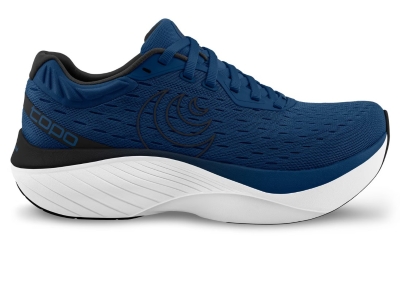
My Topo Athletic Atmos 2 verdict after 192 miles: I give it 7.4/10 for my rotation. I buy into this shoe for a specific combination: my toes have room to spread, the midfoot and heel stay connected, and the tall ZipFoam platform makes long, easy pavement miles feel calm. I would not buy it for a snappy tempo workout or for loose ground. On the right road route, though, it does the quiet, useful work a recovery shoe should do.
I have spent 12 years running in and evaluating shoes. The Atmos 2 made its best case during a 90-minute run along the Margate seawall, where concrete and wooden planks felt less sharp underfoot and I could simply keep an easy rhythm. Its worst moment came when I detoured onto loose sugar sand in Wharton State Forest: the high platform felt tall and uncertain, and I wanted a lower, grippier shoe. That contrast is the center of my buying advice.
Topo Atmos 2: My Quick Buying Answer
| Question | My answer |
|---|---|
| Best role | Recovery, easy road miles, comfortable long runs and walking. |
| My test | 192 running miles in men’s US 10.5 at about 182 lb, mainly on South Jersey road and boardwalk routes. |
| Long-run experience | I have taken it to 13 miles; the cushioning and centered feel stayed consistent for me. |
| Fit | True to my regular length, generous at the toes and more secure through the middle and heel. |
| Ride | Plush protection with a controlled roll; less quick to snap forward than a fast trainer. |
| Main limit | The 40 mm heel platform felt awkward on loose sand and is built for roads, not technical ground. |
| My score | 7.4/10 for the easy and recovery role it fills in my rotation. |
If my toes are squeezed in a conventional trainer but my heel dislikes a loose wide shoe, Atmos 2 is one I would actually try on. If my main problem is speed rather than fit and pavement comfort, I would start elsewhere. The Amazon button opens Atmos 2 search results; I would confirm the version, width, seller and return terms before choosing a listing.
Jump to a section (17 sections)
How I Tested the Atmos 2
My experience record covers 192 running miles in a men’s US 10.5, at roughly 182 lb. Most miles came on asphalt, concrete and coastal boardwalk routes. I used the shoe for recovery, steady aerobic running and long outings up to 13 miles. I paid attention to toe spread after my foot warmed, heel and midfoot hold, the amount of underfoot give at easy effort, the timing of the rocker, and whether the tall platform stayed composed as I tired.
The Margate seawall run showed me the value of the shoe at its intended effort: the ZipFoam softened repeated hard-surface contacts for 90 minutes without making the stride feel sloppy. The Wharton sand detour showed me the boundary: once the surface gave way under the tall sole, I had to slow down and pay attention to ankle control. I do not take that as proof of a defect on roads; I take it as a clear reason to keep the Atmos on firm ground.
I describe what happened in my pair. I do not have a controlled force test, a traceable laboratory rebound measurement, or a public session-by-session protocol that would let me promise a particular injury outcome or mileage lifespan to someone else.
The Fit Is the Real Reason to Consider This Shoe
Topo’s shape is more useful to me than a generic “wide shoe” label. My toes can spread across the front without the middle of the shoe becoming baggy. In my usual US 10.5, the length was right, the midfoot felt held, and the heel counter kept me centered on straight paved runs. I did not have to buy extra length just to stop the outside of my forefoot pressing into the upper.
The distinction matters for shoppers with different feet. A broad forefoot and ordinary instep may love the Standard width. A truly broad midfoot or high instep may need Wide, yet a narrow heel could lose hold there. I would start in my normal size, warm my foot on an easy run, then check toe space, pressure over the laces and any heel lift on a turn. My wide-foot shoe guide explains why toe-box shape, width and upper volume must be judged separately.
The upper felt secure enough for my easy and long runs without squeezing my toes. That is the combination I want from Topo. It is not a promise that the same last will fit every wide foot: if the instep feels compressed or the heel slips when I lace comfortably, I would change width or model rather than hope the problem disappears.
What the ZipFoam Feels Like Under Me
The Atmos 2 has a lot of foam, but its ride is more controlled than the stack height suggests. At easy effort I feel the heel settle and the platform move forward gradually. It takes the sting out of hard road and boardwalk surfaces without the deep sink I get in some softer max-cushion shoes. That makes it easier for me to place each step and keep a relaxed cadence.
Landing and the middle of the shoe
On my ordinary paved routes, my landing stayed centered over the broad sole. The heel does not feel like a sharp block, and the midfoot gives me a stable path toward toe-off. The 5 mm offset and high forefoot mean this does not feel like a traditional high-drop heel shoe. I prefer that even, rolling sensation on recovery days.
Forefoot and faster turnover
The thick forefoot protects me from repetitive pavement feel, but it is not the shoe I choose for a forceful toe-off. It can follow a short pace increase, yet the response is gradual rather than explosive. I can enjoy a steady aerobic run in it; when the workout becomes long tempo blocks or intervals, I choose a lighter, livelier pair.
I would not equate “max cushioning” with a guarantee of the softest shoe in the category. On my foot, Atmos 2 balances plushness with control. If someone wants an extremely compressive, floating sensation, I would have them try the Bondi 9 or Gel-Nimbus 28 next to it and decide by the run, not the foam description.
Where It Belongs in a Training Week
| Session | My experience | My decision |
|---|---|---|
| Recovery run | The broad, protective platform lets me keep the effort quiet and unhurried. | One of its best jobs. |
| Easy daily miles | Toe room and steady ZipFoam make repetitive road running comfortable. | Good when I am not pushing pace. |
| Steady aerobic run | It holds a rhythm but does not invite a hard finish. | Useful within its comfort range. |
| Long easy run | My pair stayed cushioned and centered up to 13 miles. | A valid long-run option for my fit. |
| Tempo and intervals | The tall, gradual ride gives me less snap than I want. | I choose a faster shoe. |
| Walking | The same toe room and protective platform work well at slower movement. | A strong second use. |
I assign the Atmos by effort, not by copying another runner’s pace. I use it when I can breathe easily and let the same step repeat. If I need to change direction sharply or push the final miles fast, I prefer a shoe with less height and a quicker response. This is a useful recovery tool, not a shoe that should do every job.
My Long-Run Experience Through 13 Miles
I have used Atmos 2 on long runs reaching 13 miles along the Atlantic City and Ocean City coastal corridors. The cushioning kept hard pavement from becoming intrusive, the broad base stayed composed as my legs tired, and the toe box left room as my feet warmed. I did not feel a repeatable late-run loss of cushioning in those outings. For my stride, the shoe remained a comfortable choice through that distance.
The 90-minute Margate seawall run captures the same quality on a shorter clock: I could settle in and stop managing the shoe. That does not make the Atmos my automatic marathon pick. For a marathon I would still rehearse a longer session at intended effort, with the same socks and fueling, and check that the 5 mm geometry feels good the next morning.
A high stack can be comfortable in a straight line yet less assured when the route becomes uneven. I therefore keep my long runs on paved or reliably firm ground. The sugar-sand detour was enough evidence for me that a high road platform and loose sand are a poor pairing.
What Changed from the Original Topo Atmos?
The Atmos 2 keeps the core idea I recognize from the original: anatomical toe room, a lower 5 mm offset and a lot of road cushioning. The update brings more foam underfoot, an upgraded ZipFoam midsole, a revised engineered-mesh upper and new strategic outsole rubber zones. Topo lists the second version at 40 mm under the heel and 35 mm under the forefoot, with a lighter men’s reference weight than the tall appearance suggests.
| The choice | Original Atmos | Atmos 2 |
|---|---|---|
| Platform | Already a tall, protective road design. | Higher 40/35 mm geometry with more cushioning. |
| Ride direction | The firmer, more planted reference in my experience. | More compliant and easier for my recovery miles. |
| What I would buy | Keep it if I value the older, more grounded feel. | Try it if I want more comfort without losing the Topo toe shape. |
I would not replace a perfectly fitting first Atmos just because the second version has more foam. I would wear them back to back at easy effort and check which one keeps my heel centered and my toes free. The Topo Phantom 4 is also worth a look if I want the brand’s toe shape with a less specialized daily-training feel.
Five-Millimeter Drop, High Stack, and Stability
Topo lists a 5 mm heel-to-toe drop. I feel a relatively even platform rather than a pronounced heel bias. The broad base gives me inherent stability on flat pavement, but this is still a neutral shoe: there is no corrective post or rail telling my foot where to go. On ordinary straight routes at about 182 lb, that geometry felt well controlled for me.
A runner coming from a much higher-drop shoe may feel a change in calf or ankle demand. I would introduce Atmos 2 with short easy runs and avoid changing hills, speed and weekly volume at the same time. A lower number does not force a better strike or guarantee fewer injuries. If the next morning repeatedly feels wrong, I would shorten the trial or choose another geometry.
The tall stack asks for a different decision on soft or uneven ground. On loose sugar sand it felt like I was standing too high above an unstable base. That is where a broad road outsole stops helping me. For someone who needs active stability on pavement, I would compare a dedicated guided shoe rather than assume width alone solves the need.
Atmos 2 Specs That Explain My Experience
| Published design | How I use it in the buying decision |
|---|---|
| 40 mm heel / 35 mm forefoot stack | High protection for firm road surfaces; also more height to manage on unstable ground. |
| 5 mm listed drop | A lower heel bias that I introduce gradually if I am coming from a high-drop trainer. |
| 9.9 oz men’s size 9 reference weight | A size-specific catalogue figure, not the measured weight of my US 10.5 pair. |
| Updated ZipFoam midsole | The controlled, cushioned landing I like at easy effort. |
| Recycled engineered mesh | A secure, ventilated upper in the brand’s toe-room shape. |
| Strategic rubber zones | Road traction and some flexibility without turning it into a trail outsole. |
| Standard and Wide options | Toe shape and overall width are two separate fit choices. |
I do not use a catalogue number as a substitute for a run. The 40/35 mm geometry helps explain why concrete feels less sharp; the sand detour explains why the same height can be the wrong tool elsewhere. Both observations are more useful than calling the shoe simply “soft” or “stable.”
Grip and What 192 Miles Tell Me About Wear
On my ordinary dry road and boardwalk routes, the outsole felt predictable. I would still shorten my stride on wet painted lines, slick wood and metal covers; I do not have a controlled wet-friction comparison that earns it a special rain ranking. The smooth, firm paths around town match this shoe far better than sugar sand, mud or technical trails.
At 192 miles, my pair remains usable. I see expected wear in my landing area and ordinary midsole creasing, while the upper has stayed intact and the shoe still holds my foot. I cannot turn that snapshot into a universal retirement distance or a percentage of rebound retained. I will keep watching grip, heel wear and whether the same easy run feels different; my running-shoe replacement checklist sets out those signals.
The wear decision also depends on surface. Concrete and wooden planks keep the outsole working in a repeatable pattern; sharp gravel and loose ground add different stresses. For daily miles on hard pavement, my concrete-running guide gives alternative fits and ride styles.
The Shoes I Would Try Beside Atmos 2
| Alternative | I choose Atmos 2 when… | I choose the alternative when… |
|---|---|---|
| Topo Phantom 4 | I want more underfoot cushion for slow and long pavement miles. | I want a simpler, more versatile Topo daily ride. |
| HOKA Clifton 10 | Toe shape and my preference for a 5 mm, controlled high-stack ride decide the fit. | I want a lighter-feeling everyday transition. |
| HOKA Bondi 9 | I want more toe freedom and a less deeply soft landing. | I want a more obvious max-cushion rocker and plushness. |
| ASICS Gel-Nimbus 28 | Anatomical forefoot shape matters more than luxury step-in softness. | I want a softer, traditionally wrapped upper. |
| ASICS Novablast 5 | I want calm recovery miles with less bouncy movement. | I need easier progression and faster daily pace changes. |
I would compare two finalists in the same socks on a short easy run, then add a few brisk steps. The shoe that still holds my heel while my toes relax is the one I keep. Atmos 2 has a distinctive answer to the fit question; it does not have to win every ride comparison.
How I Use Atmos 2 in My Rotation
Atmos 2 gets the gentle side of my schedule: recovery after a hard day, longer easy road running, and walking-heavy days when I want the front of my foot to spread. I do not ask it to be my interval shoe. A lighter, quicker daily trainer handles the sessions where turnover and pace changes matter.
That division keeps me honest about its score. The Atmos is a useful specialist for my feet and firm local routes, not a universal one-shoe answer. If I could own only one pair and my forefoot fit easily in conventional shapes, I might choose a broader-purpose trainer. If conventional toe boxes repeatedly squeeze me, the Atmos fit could outweigh that narrower speed range.
Who Should Buy the Topo Atmos 2?
- I would shortlist it if I want my toes to spread while the midfoot and heel still feel held.
- I would try it for easy or recovery miles on concrete, asphalt and boardwalk.
- I would consider it for comfortable long runs if the 5 mm geometry already suits my lower legs.
- I would include it for walking when I value toe room and a cushioned but controlled platform.
Before buying online, I would confirm that the listing says Atmos 2, choose the correct Standard or Wide version, and check seller and returns. The Amazon button opens search results because availability changes by size and color; I would choose the exact variant that passes my fit test.
Who Should Skip the Topo Atmos 2?
- I would skip it as my main tempo or interval shoe if I want a snappy toe-off.
- I would choose a lower, grippier shoe for frequent sand, loose gravel or technical trail.
- I would not force it if the toe box fits but the instep presses or the heel lifts.
- I would transition gradually or choose another drop if my calves dislike a move from a higher-offset shoe.
- I would compare softer models if my priority is the deepest, most pillowy max-cushion feel.
If fit is the deciding issue, my wide-foot guide can help narrow the next try-on. If I mainly need a shoe for long race efforts rather than recovery, I use the long-distance shoe guide to compare late-run fit and pace demands.
What I Like and What I Would Change
| What I like | What I would change |
|---|---|
| Anatomical toe room with secure midfoot and heel on my foot | Tall stack feels uncertain on loose sugar sand |
| Calm ZipFoam cushioning on concrete and boardwalk | Gradual response is less useful for hard speedwork |
| Comfortable easy long runs up to 13 miles for me | Five-millimeter drop takes adjustment for some runners |
| Broad, predictable neutral platform on firm roads | Toe room does not solve every high-instep or narrow-heel fit |
My 7.4/10 reflects that tradeoff. Atmos 2 succeeds at the slow and steady job I give it and has a toe shape I value; it does not cover my faster training or unstable-surface needs.
My Final Verdict After 192 Miles
The Atmos 2 is a shoe I understand best after leaving the store and running a real coastal route. Over 192 miles, its combination of open toe space, close midfoot hold and controlled ZipFoam cushioning has made easy pavement running comfortable. It remained composed for my long runs up to 13 miles. The same high platform that protects me on boardwalk planks felt awkward on sugar sand, and the gradual response never made me want to use it for speedwork.
I would buy it when forefoot shape and calm recovery comfort are the priorities. I would try it on carefully, introduce the 5 mm drop sensibly, and keep it on roads. In that role, it earns 7.4/10 in my rotation.
Topo Athletic Atmos 2 FAQs
Is Atmos 2 a stability shoe?
No. Topo lists it as neutral. I feel a broad, centered platform on firm roads, but there is no corrective support system. I would compare a dedicated stability model if that is the type of guidance I need.
Does Atmos 2 fit true to size?
My normal men’s US 10.5 worked for length. My toes had room to spread while the midfoot and heel stayed more fitted. I would test instep pressure and heel lift after the foot warms up.
Is it good for wide feet?
It can be, especially if the main problem is a tapered toe box. Topo also offers Standard and Wide versions. I would choose by the whole foot: toes, midfoot, instep and heel.
What is its stack and drop?
Topo lists 40 mm under the heel, 35 mm under the forefoot and a 5 mm heel-to-toe drop. The height explains its protection on pavement and part of why I avoid it on loose sand.
Is Atmos 2 good for long runs?
For me, yes at an easy effort. My experience extends to 13 miles, with cushioning and platform control still comfortable. I would rehearse a longer run before choosing it for a marathon.
Can I run tempo in it?
I can add a short pickup, but I do not choose it for a sustained hard workout. The tall, controlled platform feels better at easy and steady efforts than at fast turnover.
What changed from the original Atmos?
Atmos 2 adds cushioning, updates the ZipFoam, revises the engineered-mesh upper and changes outsole rubber placement. I find the second version more compliant for recovery running while the older shoe felt more planted.
How durable has Ken’s pair been?
At 192 running miles, mine remains usable, with ordinary contact-area wear and foam creasing but an intact upper and consistent fit. I would not promise a universal lifespan from one pair.
Can I use it for walking?
Yes. The toe room and protective road platform work well for walking on firm surfaces. I would still test the rocker and 5 mm offset on stairs and longer walks before using it all day.

Written and tested by Ken, NextGait founder with 12 years of running-shoe evaluation. My observations here come from 192 Atmos 2 miles on South Jersey roads, boardwalks and firm coastal routes.