
Topo Atmos 2 vs HOKA Bondi 9: I would try the Atmos 2 first if toe spread is the limiting fit problem and the snug midfoot feels secure. I would try the Bondi 9 first for a more cradled, muted ride on slow recovery miles, provided its front does not crowd the foot. Both brands list a 5 mm drop; that number cannot tell me whether the upper fits or the rocker arrives at the right point in my stride. My shoe tracker lists 192 miles in Atmos 2 and 310 in Bondi 9, but I choose by fit and use case rather than adding those totals into a winner score.
I used men’s US 10.5 pairs at about 182 pounds on South Jersey roads and boardwalks. My test has three questions after the feet warm: can the toes spread without upper pressure, does the rocker feel natural at my usual easy pace, and does the foot stay centered as I tire? Those questions make the buying decision more reliable than comparing cushioning labels alone.
The decision in one table
| Your main concern | My starting pick | What could overturn it |
|---|---|---|
| Toes need room to spread | Atmos 2 | The upper is too low over your instep |
| Slow recovery on firm roads | Bondi 9 | Its sidewalls or toe shape crowd your foot |
| A structured, gradual easy-run rocker | Atmos 2 | You want deeper underfoot softness |
| A cradled, pronounced forward roll | Bondi 9 | The rocker feels forced at your pace |
| Walking and standing mixed with runs | Atmos 2 to try first | The Bondi feels more natural at walking speed |
| Fast intervals | Neither | Choose a lighter workout shoe |
I would not call Atmos 2 a “wide shoe” without qualification. Its anatomical front gives my toes more horizontal freedom, while its midfoot and heel fit close. Vertical room over the forefoot can still be the deal-breaker. Bondi sits my foot within a broad platform, yet its front is more contained on my foot. This is why I separate toe shape, upper volume, and sole width rather than using one width label for everything.
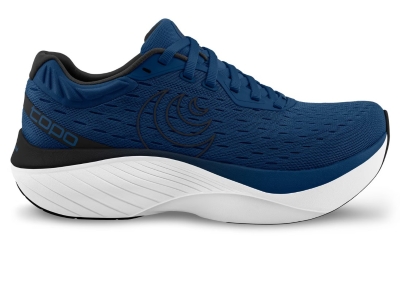

The exact shoes and miles behind my verdict
| Detail | Topo Athletic Atmos 2 | HOKA Bondi 9 |
|---|---|---|
| Pair total in my shoe tracker | 192 miles | 310 miles |
| My size | Men’s US 10.5 | Men’s US 10.5 |
| Listed drop | 5 mm | 5 mm |
| Midsole | ZipFoam | Supercritically foamed EVA |
| Fit I notice | Anatomical toe box, close midfoot and heel | Foot held within pronounced midsole walls |
| Transition I notice | Gradual, less insistent rocker | More pronounced, guided roll |
| Longest run in my log | 13 miles | 15 miles |
These are separate pair totals from my shoe tracker, not a controlled head-to-head test or an independently audited activity export. Bondi has 118 more recorded miles, so its later wear tells me more about that pair at that point in use. I cannot infer that one model is more durable from two shoes with different mileage and conditions.
Why the same 5 mm drop produces two different strides
Atmos 2: room at the toes, structure under the foot
Atmos 2 combines ZipFoam with a tall, gradually rockered platform. On my foot the cushioning protects against the Margate seawall’s hard concrete and boards, but it does not swallow the landing. During a 90-minute easy outing there, I could keep a relaxed rhythm while my toes had room to work. The close midfoot holds that roomy front in place; I do not have to lace it until my toes go numb. My Topo Atmos review gives the broader model context.
Its structure also sets a limit. A gradual rocker can feel natural at easy pace, but it does not give me a springy kick when I try to turn a recovery run into a workout. On loose sugar sand, the tall sole made lateral corrections awkward for me. I keep this road shoe on firm ground and do not describe a generous toe box as a substitute for trail stability.
Bondi 9: a deeper cradle and quieter landing
Bondi 9’s supercritical EVA and broad, rockered base put my foot lower within the midsole sidewalls. On a 12-mile post-long-run flush, I appreciated the muted contact and steady, contained feeling at a deliberately slow pace. The shoe helps me keep recovery work from becoming a progression. My Bondi 9 review covers the single-shoe details.
I notice more shoe around my foot than I do in Atmos. The sidewalls and front fit can feel reassuring or restrictive, depending on the runner. When I try to increase cadence, I feel the bulk and the rocker more clearly. I choose Bondi for time on feet and recovery, not because I expect it to handle every speed or foot shape.
My choice through a normal running week
| Session | Atmos 2 in my use | Bondi 9 in my use | My choice |
|---|---|---|---|
| Ordinary easy road run | Structured, gradual transition | Heavily cushioned and guided | Atmos when the toes need space |
| Recovery after a hard session | Calm, but I feel more structure | My quieter, slower option | Bondi |
| Long unhurried run | My log reaches 13 miles | My log reaches 15 miles | Fit and late-run control |
| Run-walk or long standing day | Stable-feeling platform on my foot | Soft, cradled, but more rocker | Walk in both |
| Steady pace increase | Neither feels like a workout specialist | Bulk becomes noticeable | Use another shoe |
| Short intervals | Not my tool for quick turnover | Not my tool for quick turnover | Neither |
These are roles, not universal pace cutoffs. A max-cushion shoe succeeds when it lets me keep the intended effort without fighting its fit or geometry. If a runner is actually missing a faster daily option, my daily trainer versus tempo shoe guide helps name that job before buying another recovery pair.
Fit is the deciding test, especially for a wide forefoot
My Atmos 2 gives my toes noticeably more horizontal spread while the heel and midfoot stay held. I still test the volume over the joints at the front and under the tongue. A foot can have enough width but too little height; pushing against the top of the upper late in a run is not solved by more space to either side. The snug middle makes instep pressure a separate check. If that is your recurring problem, my high-instep shoe guide shows what to test before assuming a wider toe box will fix it.
My Bondi 9 has just enough room for my slightly wide front, with a secure flared collar and a tongue that stays put. Another runner with a broad or high-volume forefoot could meet the sidewall or upper earlier than I do. I ask the foot to warm up, then check toe spread, vertical clearance, pressure at both sides, and whether the heel lifts. My running-shoe fit checklist gives the full method.
The store test I would do before choosing either
- Wear your normal running socks and check toe width and height separately.
- Walk at your real walking pace; compare how the two rockers move under you.
- Jog easily until the first-step cushioning surprise fades.
- Try a broad turn and mild road crown; notice any sidewall or upper pressure.
- After warming, recheck Atmos instep volume and Bondi front/sidewall room; reject pressure that grows as you move.
- Choose the pair that stays comfortable at the pace you will use most.
Control, grip, cold weather, and wear
Both are neutral road shoes with stable-feeling features. Atmos combines a secure upper, broad platform, and relatively structured transition. Bondi seats the foot within raised foam walls and rolls it forward. Neither is automatically a support prescription. I look for the same sign on a mild road camber: does my foot stay centered without small corrections as I tire?
My Bondi felt markedly denser and clumsier on a freezing 14°F boardwalk morning than on mild days. I do not have a matched cold outing in Atmos 2, so I will not declare a winter winner. I also separate outsole traction from how much water or cold changes the midsole. On damp boards, paint, and metal covers I slow down and evaluate the actual surface. My outsole-rubber guide explains that check.
At the recorded 192-mile point, my Atmos showed localized outsole wear and moderate foam creasing, with its upper still sound. At the recorded 310-mile point, my Bondi showed smoother rubber at the main contact zones, deeper creasing, and a softer feel, while its upper remained intact. The older Bondi pair gives me more information about that pair’s later use, not proof that Atmos will outlast it. I repeat a familiar easy route and retire a shoe from recovery duty when fit or control no longer works for me.
Who I would buy each shoe for
- Buy Atmos 2 when toe spread is the first problem, you like a close heel and midfoot, and its gradual rocker works through a warm easy run.
- Buy Bondi 9 when your priority is very slow recovery and a contained feel within the midsole, and its front fit does not crowd your foot.
- Buy neither if the tall platform feels unstable on your usual route, the upper presses after warm-up, or you need a fast workout shoe.
- Keep your current pair if it already covers easy and recovery miles without a fit or control problem.
I would rarely buy both for a small rotation because their slow-road roles overlap. My shoe-rotation guide helps me assign a distinct purpose to a second pair. If you like HOKA but want less bulk, my Bondi 9 versus Clifton 10 comparison is the logical next read.
FAQ: Atmos 2 vs Bondi 9
Is Topo Atmos 2 or HOKA Bondi 9 better for wide feet?
I start with Atmos 2 for toe spread. Its anatomical front is roomier on my foot, but I still test instep and vertical volume. Bondi 9 gives me adequate room but holds the front more closely, so a broad forefoot may prefer Topo.
Which shoe feels softer?
My Bondi 9 feels more muted and cradled at slow recovery pace. Atmos 2 feels cushioned but more structured. Softness depends on where and how you load the sole, so I would jog in both rather than judge by pressing the foam.
Do both shoes really have a 5 mm drop?
Both brands list 5 mm. They do not feel identical to me because the rocker, foam compression, sidewalls, and fit differ. I would test the full stride, not make the decision from the shared drop.
Which is better for long runs?
My Bondi log reaches 15 miles and my Atmos log reaches 13. I choose Bondi for deliberately slow recovery length and Atmos when I need more toe room and a less insistent roll. Late-run fit can reverse either choice.
Can I walk in Atmos 2 and Bondi 9?
Yes, but walking is a separate test. I try Atmos first when I want toe freedom and a gradual roll; Bondi may win if its deeper cradle feels more comfortable at the slower contact time.
Are Atmos 2 and Bondi 9 stability shoes?
Both are neutral road shoes. Each has features that can feel centered under my foot, but neither should be treated as an individual support prescription.
My final verdict
I would buy Topo Athletic Atmos 2 for the runner who wants toes free to spread inside a secure, structured max-cushion road shoe. I would buy HOKA Bondi 9 for the runner who wants a deeper, quieter cradle for slow recovery and whose front foot fits inside it without pressure. The two pair histories inform my choice; your warm-foot test on a firm route should settle the purchase.

Written by Ken — the runner behind NextGait. Across 12 years and 36 races from 5Ks to a 50K, I have learned to judge a shoe after ordinary training miles, not only the first step. My shoe notes describe fit, ride, and wear as I experienced them; a different foot can reverse my choice. More about me →